This political report for the week of February 8–14, 2026, is compiled based on coverage from the World Socialist Web Site (WSWS.org).
1. Imperialism and War
Preparations for War Against Iran
The United States has repositioned substantial military assets—including the USS Abraham Lincoln carrier group, additional aircraft and logistics infrastructure—to prepare for what officials describe as a “sustained, weeks-long” military campaign against Iran. This build-up accompanies tightened sanctions and continued diplomatic manoeuvring, with high-level Trump–Netanyahu conclaves coordinating strategy and escalatory rhetoric toward Tehran. The repositioning signals an expectation of reciprocal strikes and prolonged regional confrontation, occurring alongside sharp transatlantic diplomatic tensions at the Munich Security Conference.
This military mobilisation represents imperialist decision-making divorced from democratic accountability, driven by competition for regional dominance and resource control. War preparations will deepen social misery both in Iran and across the region while accelerating global polarisation. The working class internationally must mount independent anti-war mobilisations: strikes, mass actions and political organisation to block military adventurism and the domestic austerity that invariably accompanies rearmament spending.
Complicity in Israeli Genocide
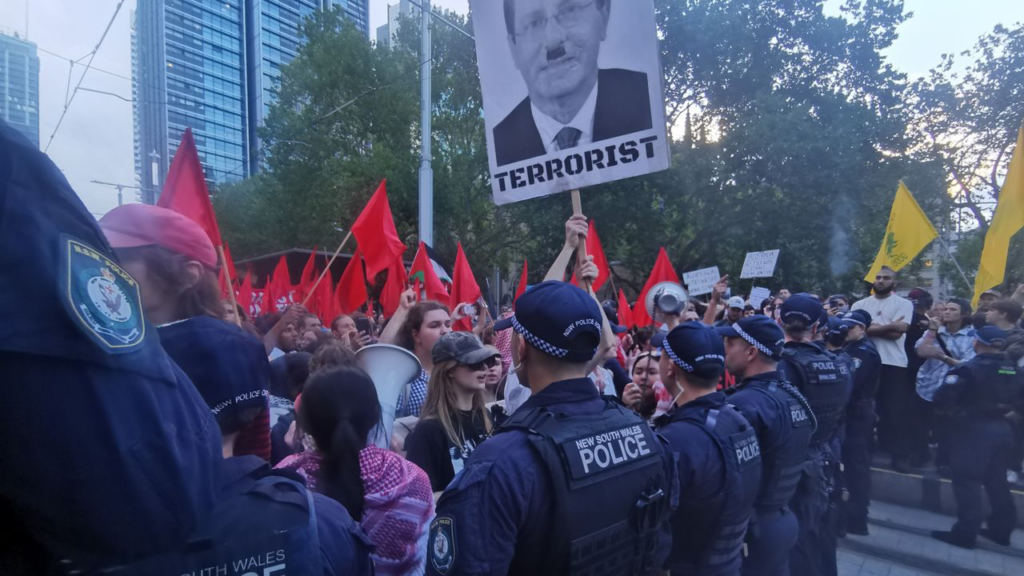
Israeli policies in the West Bank have escalated dramatically, with expanded settlement construction, tightened movement restrictions and explicit annexationist measures designed to “bury the idea of a Palestinian state.” German officials, including Parliament President Klöckner, visited Israel in what amounts to tacit endorsement of genocidal policies, signalling Berlin’s political alignment with Israeli security doctrine. Meanwhile, Australian police violently suppressed mass protests opposing Israeli President Herzog’s state visit to Sydney, deploying riot squads, horse charges and kettling tactics that left demonstrators—including filmmaker James Ricketson—bloodied and arrested. Labor governments imposed protest bans and extended police-state powers to protect visiting war criminals.
These actions confirm that European and allied governments are active accomplices in imperialist aggression. The suppression of dissent through state violence exposes the class character of bourgeois democracy: when challenged on fundamental questions of war and genocide, ruling elites deploy repression regardless of party labels. Workers must oppose their own governments’ participation in imperialist crimes through international solidarity and industrial action, not appeals to the very state institutions orchestrating repression.
Militarisation and Inter-Imperialist Rivalry
Germany is transforming a regional airport into a military fortress as part of NATO’s eastern-flank expansion, deepening preparations for imperialist confrontation. The Munich Security Conference revealed sharp US–EU tensions over strategy, burden-sharing and confrontations with Russia and China, exposing fissures within NATO alliances. Social-democratic parties across Europe are converting wholesale to pro-war positions: Germany’s SPD is drafting a programme stressing military readiness and “national strengthening,” while conscription plans advance despite youth opposition organised by socialist student groups.
Inter-imperialist rivalry intensifies the danger of global conflict as capitalist powers compete for markets, resources and geopolitical advantage. Workers must oppose their own governments’ militarism and build international solidarity to prevent war profiteering and the conversion of Europe into a staging ground for imperialist confrontation.
2. Authoritarian Consolidation and State Repression
Criminalisation of Dissent
Türkiye imprisoned 77 members of the Socialist Party of the Oppressed (ESP) and placed six Left Party members under house arrest, with charges relying on informant testimony that conflated legal party activism with terrorism. Evidence presented in court included routine political literature such as copies of The Communist Manifesto. In Australia, new “prohibited hate group” laws echo 1951 Cold War-era attempts to ban communism, while Queensland’s LNP government matched Labor by banning “prescribed phrases” at protests. Princeton University abruptly cancelled a scheduled discussion by Norman Finkelstein on Gaza, implementing new policies to limit campus dissent and free speech.
These measures demonstrate how bourgeois states weaponise counter-terror and hate-speech legislation to criminalise legal socialist organising and suppress opposition to imperialist policy. The expansion of police-state powers is bipartisan: Labor and conservative governments alike deploy repression to defend capitalist interests. The defence of democratic rights requires mass working-class mobilisation and political independence, not reliance on bourgeois courts or appeals to the same state apparatus orchestrating repression.
Immigration Enforcement as State Terror
ICE operations have intensified across the United States, with mass workplace raids targeting Amazon Flex drivers in Michigan, meatpacking workers in Colorado facing deportation threats to break strike authorisations, and routine abductions dwarfing media-sensationalised individual kidnapping cases. The Department of Justice moved to gut asylum rights through regulatory changes designed to accelerate deportations. At the Dilley detention centre, a toddler’s near-fatal medical neglect case exposed life-threatening conditions and systematic denial of care. Palestinian detainee Leqaa Kordia suffered a delayed medical emergency after one year of detention at a Texas ICE facility.
Immigration detention operates as a racist, punitive apparatus designed to discipline precarious labour and fragment working-class solidarity. Deportation threats function as employers’ weapons to intimidate workers and prevent collective action. The defence of immigrant workers requires workplace solidarity committees, mass mobilisation against detention regimes and political organisation that links immigrant rights to broader working-class struggles against state repression.
Police Violence and Authoritarian Measures
Minnesota police rioted against protesters outside the Whipple Federal building, deploying indiscriminate baton charges and mass arrests. NSW riot police violently attacked demonstrators opposing Herzog’s visit, with eyewitness accounts documenting kettling, horse charges and denial of medical attention to injured protesters in custody. Massive security operations in Milan deployed snipers and heavy policing against protests opposing Trump administration presence at the Winter Olympics, though dockworker strikes delayed arms shipments and athletes publicly criticised ICE.
State violence is escalating to protect imperialist policy and criminalise dissent. The international coordination of repression—from Australia to the United States to Europe—reveals the class function of bourgeois states under crisis. Defensive mobilisation requires united working-class action and democratic organising, not appeals to the institutions wielding violence.
3. Austerity and Economic Warfare
Corporate Restructuring and Worker Attacks
Stellantis recorded a $26 billion charge tied to its electric-vehicle strategy reversal and simultaneously delayed plant reopenings, cut dividends and pushed buyout schemes affecting American workers. UPS is preparing a second driver buyout program while planning 30,000 layoffs in 2026, shifting labour costs despite sustained profitability. BYD’s Xi’an high-voltage electrical equipment factory imposed steep cuts to piece-rate bonuses that reduced many workers’ take-home pay below 2,000 yuan monthly, provoking wildcat strikes met with police repression.
Corporate crisis is weaponised to intensify exploitation: immense private wealth accrues to billionaire owners while workers face precarious pay, forced exits and degraded conditions. Buyout programmes and “voluntary” redundancies are designed to weaken collective strength and force exits that erode bargaining power. The strategic response requires coordinated rank-and-file mobilisation, rejection of unilateral management schemes and international solidarity to resist the global race to the bottom.
Public Service Destruction
The UK lost WHO measles elimination status due to falling vaccination rates and deliberate public-health neglect—a direct outcome of neoliberal austerity that prioritises profit over population health. New Zealand’s capital faces environmental disaster from a massive sewage leak, exposing capitalist underinvestment in essential infrastructure. Los Angeles authorities moved to dismantle federal oversight of homelessness as the crisis deepens, shifting responsibility to avoid redistributive demands. A UN report warned of global “water bankruptcy” affecting billions, with scarcity and contamination exacerbated by private control of resources and climate breakdown.
The rollback of public health, infrastructure and essential services is rooted in the capitalist drive to divert social resources toward private accumulation and war preparation. Restoring public goods requires mass working-class pressure to force socialised control, democratic planning and international cooperation—issues only resolvable through political struggle against capitalist property relations.
Trade War and Economic Coercion
Trump threatened to block the opening of the Gordie Howe International Bridge as part of escalating economic warfare against Canada, weaponising infrastructure to extract concessions. New Zealand’s coalition government fractured over the India Free Trade Agreement, with populist objections masking the reality that such deals serve corporate profit and intensify wage competition, privatisation and precarious labour.
Economic warfare is an extension of imperialist diplomacy. Free-trade agreements deepen exploitation and cross-border wage competition while populist nationalism channels working-class anger into reactionary scapegoating. Workers on both sides of borders must unite internationally to resist bourgeois brinkmanship and oppose both neoliberal trade regimes and chauvinist diversion.
4. Class Struggle and Bureaucratic Betrayal
Healthcare Workers’ Resistance
Nurses at NewYork-Presbyterian overwhelmingly rejected a tentative agreement that the New York State Nurses Association attempted to force through via an illegitimate snap vote, continuing their strike under rank-and-file defiance. The Kaiser healthcare workers’ strike expanded as 3,000 pharmacy and laboratory workers joined 31,000 already on strike, significantly widening disruption. San Francisco’s 6,400 educators struck for the first time since 1979, drawing mass rallies and broad community support before union bureaucrats and Democratic Party figures brokered a tentative agreement that concedes austerity and fails special-education demands.
These struggles expose the gulf between rank-and-file militancy and union apparatus. Bureaucratic sellouts are imposed to protect political ties with the Democratic Party and stabilise capitalist rule. The NYSNA’s snap-vote manoeuvre, the attempt to isolate Kaiser strikers and the intervention of Nancy Pelosi to contain San Francisco educators all demonstrate that union leaderships function as barriers to sustained class struggle. Winning safe staffing, liveable wages and healthcare as a social right requires democratically elected strike committees, strike pay drawn from union assets, expansion of strikes across facilities and sectors, and political independence from both union bureaucrats and bourgeois parties.
Industrial Militancy and Betrayal
Refinery workers denounced the United Steelworkers’ national pattern deal as a sellout prioritising corporate interests, with BP Whiting workers facing isolation if concessions are accepted. The UAW hailed a Volkswagen Tennessee contract as “historic” amid rank-and-file criticism that gains are modest and concessions linger. Will Lehman, a Mack Trucks rank-and-file activist, launched a campaign for UAW president demanding abolition of the Solidarity House bureaucracy and creation of workplace committees. In Norway, a union organised a sham strike that imposed financial burdens on members while failing to press management, forcing workers to pay for bureaucratic theatre.
National pattern agreements and bureaucratic compromises fragment struggle and normalise concessions. Union apparatuses routinely betray workers by containing mobilisation, isolating militants and deferring to management. The necessary alternative is democratic coordination across plants, refusal of bureaucratic imposition and preparation for escalated, coordinated strike action under workers’ control.
International Worker Struggles
Tens of millions of Indian workers joined a one-day national strike against the Modi government’s labour “reforms” and removal of employment guarantees, though participation remained politically confined by Stalinist-linked federations channelling dissent toward bourgeois opposition parties. Peru saw mass protests uniting transport workers, students and families of state-repression victims against austerity and violence. Colorado meatpacking workers authorised strike action over dangerous conditions despite ICE deportation threats. High school students in Carson, Royal Oak and Detroit suburbs staged walkouts protesting ICE raids, authoritarianism and war, joining broader youth mobilisations.
These struggles demonstrate the international scope of working-class resistance and the potential for cross-generational, cross-border solidarity. However, episodic protests and one-day token strikes cannot substitute for sustained, politically independent organisation. Without rank-and-file leadership breaking from nationalist and reformist containment, such mobilisations risk canalisation into bourgeois electoral channels or bureaucratic dead-ends.
5. Elite Criminality and Political Decay
Revelations tying Lord Peter Mandelson to Jeffrey Epstein networks have engulfed Keir Starmer’s Labour government, producing resignations and police inquiries. Jeremy Corbyn called for a Chilcot-style inquiry while insisting much remain shielded on “national security” grounds, demonstrating the political bankruptcy of Corbynism: seeking establishment solutions that protect state secrets and preserve bourgeois stability rather than mobilising independent working-class opposition. Leaked Epstein files implicate Trump and other political figures, with testimony at the Bondi hearing exposing cover-ups and secret “domestic terrorist” lists targeting dissidents. The FBI identified billionaire Leslie Wexner as a co-conspirator in 2019 but took no action.
The Mandelson-Epstein scandal exposes intimate links between political elites and the financial oligarchy, revealing how the ruling class operates with systemic impunity. Parliamentary inquiries and legalistic remedies cannot break oligarchic power because state institutions exist to shield ruling-class crimes. Only mass working-class mobilisation and independent political organisation can hold elites accountable and overturn the structures protecting them.
6. Political Bankruptcy of Reformism
Corbynism and Pseudo-Left Opportunism
Internal battles within Your Party saw factional purges and contrasting programmes, with Zarah Sultana’s Grassroots Left emphasising parliamentary reform and alliances with NGOs, unions and identity-based coalitions. Corbyn’s historical record of accommodation to Labour’s Blairite right and Sultana’s reformist trajectory both reproduce illusions that have repeatedly failed the working class. Alexandria Ocasio-Cortez’s appearance at the Munich Security Conference signals her full integration into establishment foreign-policy circles, providing pseudo-left cover for imperialist strategy.
Corbynism’s “broad church” historically subordinated the left to Blairite interests; Sultana-style reformism proposes parliamentary solutions that will capitulate under capitalist crisis. Figures like AOC function to contain working-class anger within bourgeois institutions. Objective economic developments—globalisation, financial oligarchy, declining profitability—have rendered social-democratic reformism impotent. Only revolutionary organisation rooted in workplaces, independent of bourgeois parties and grounded in international socialist strategy, can defend social rights.
Stalinist Betrayal
The Communist Party Marxist–Kenya published a diatribe openly defending Stalin and endorsing Stalinist historical falsifications while aligning with reactionary bourgeois regimes. The Turkish Communist Party held a mass Ankara rally glorifying Stalinist figures and promoting revisionist Soviet narratives. In Venezuela, Morenoite currents formed alliances with Stalinist parties supporting bourgeois nationalist regimes through electoral manoeuvres.
Praising Stalin today is not abstract historiography but a political programme that betrays working-class independence by subordinating socialist aims to bourgeois nationalism and petty-bourgeois interests. Stalinist tendencies function as props for capitalist regimes, providing pseudo-left legitimacy for reactionary policies and undermining international solidarity. Trotskyism remains the necessary continuity of revolutionary Marxism against both Stalinist bureaucratic liquidation and nationalist illusions.
Electoralism and Municipal Dead-Ends
DSA-aligned councilmember Nithya Raman entered the Los Angeles mayoral race presenting symbolic progressive rhetoric while actual policy remains confined within bourgeois constraints. New York City Mayor Mamdani announced symbolic tax-the-rich rhetoric while cutting homelessness support, prioritising market interests. The military-aligned Bhumjaithai Party won Thailand’s election through defections and right-wing consolidation, reflecting the bankruptcy of nominally “democratic” bourgeois parties.
Electoral manoeuvres cannot substitute for independent workplace organisation. Symbolic reforms and progressive branding deflect from fundamental class conflict while subordinating working-class demands to capitalist institutional limits. Parliamentary routes have been exhausted; only mass organisation and direct working-class action can secure social rights.
7. The Revolutionary Alternative
The week’s events confirm a central reality: global capitalist crisis produces simultaneous assaults on living standards, democratic rights and international peace. Imperialism drives toward war in the Middle East while intensifying repression domestically. Austerity destroys public services and infrastructure. Corporate restructuring weaponises crisis to deepen exploitation. Elite criminality operates with systemic impunity.
Against these attacks, working-class resistance is mounting: nurses rejecting bureaucratic sellouts, educators striking, refinery and meatpacking workers authorising action, youth walking out against ICE terror, millions in India protesting labour destruction. Yet episodic militancy remains fragmented and politically contained by union bureaucracies, reformist parties and pseudo-left opportunism.
The strategic answer is the independent, international organisation of the working class around a Trotskyist programme: democratically elected rank-and-file committees in every workplace and school; coordination across industries, borders and continents; political independence from all bourgeois and reformist parties; and the construction of a mass revolutionary party to expropriate the oligarchy, end imperialist war and place social power in workers’ hands. The International Committee of the Fourth International (ICFI) and the Socialist Equality Parties organise this political work. Workers seeking to connect their struggles to organised resistance can join at https://www.wsws.org/en/special/pages/sep/us/join.html.