By Sanjaya Jayasekera.
The ongoing conflict between Sri Lanka’s singers, lyricists, and composers over royalties and copyright is not a personal quarrel or a legislative oversight. It is the music industry colliding with the irreducible logic of capitalist property relations — and the Intellectual Property Act No. 36 of 2003 lays that logic bare with brutal clarity.
The Act defines the “author” of a musical work as the physical person who created it — the composer of the melody and the writer of the lyrics. To the author belong the economic rights: the exclusive right to reproduce, adapt, distribute, perform, broadcast, and commercially exploit the work. To the author also belong the moral rights: the right to be named, the right to object to distortion or mutilation prejudicial to honour or reputation.
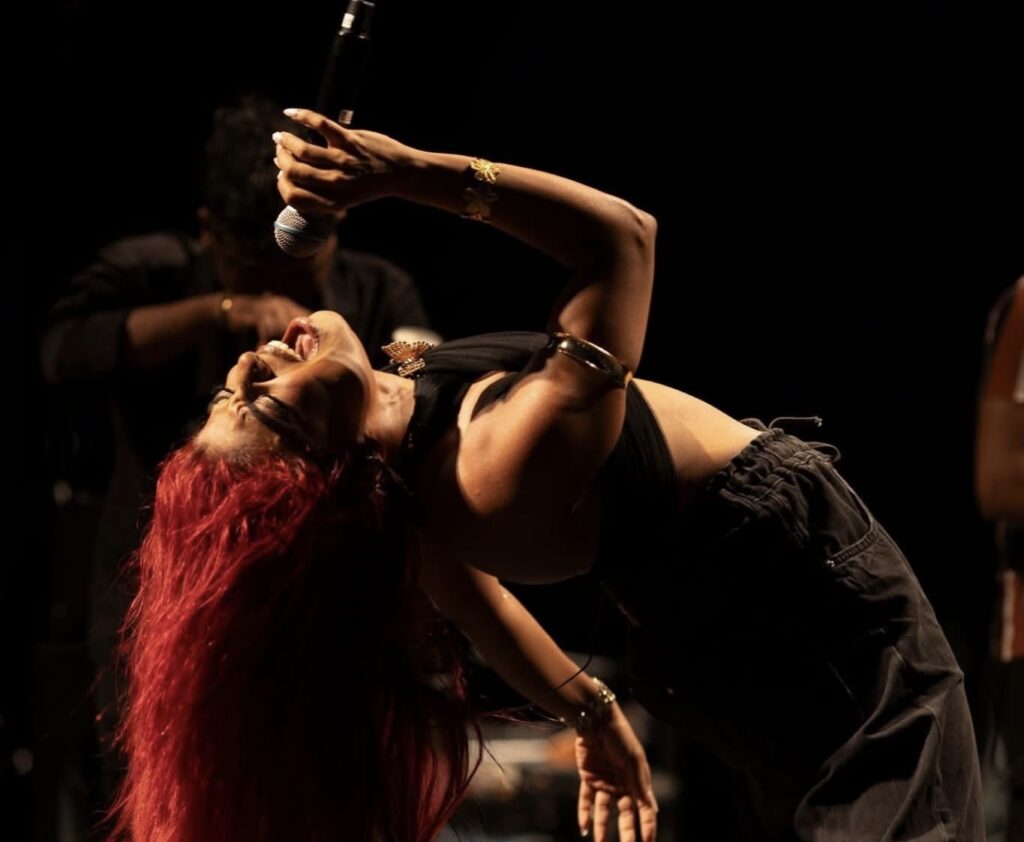
The singer is not the author. The singer is a “performer,” relegated to a separate chapter on “Related Rights.” Under Section 17, the performer has limited exclusive rights over the broadcasting and fixation of an unfixed performance. But Section 17(2) extinguishes even these: once the singer authorises the incorporation of the performance into a recording, those exclusive rights cease. The singer’s sole remaining entitlement is Section 19 — a right to “a single equitable remuneration” whenever the recording is broadcast or publicly performed, shared with the producer. No moral right. No copyright. No ownership of the finished product.
The voice that gave the song its soul has no claim. The law can grasp what is fixed on paper — notation, words — as property. What is embodied in performance — the timbre, the phrasing, the breath, the interpretative intelligence that transforms marks on a page into music — is not recognised as “creative” in the legal sense. It is labour rendered unto the property of others.
This is the correct logic of bourgeois law. It is not a mistake awaiting correction. The law does what capitalist property law must do: disaggregate a collaborative artistic whole into assignable, tradable units of ownership. The composer and lyricist own the melody and the words. They can sell them — separately. Other singers will perform them. The lyrics can be set to a new melody. The melody can be synchronised with different words. Content creators will feed both into artificial intelligence to generate new works. The singer who first gave the song life has no legal standing to object, because the singer owns nothing.
And here Marxists must be precise. This recombination, this improvisation, this ceaseless transformation of existing cultural material — a song sung by a different voice, lyrics adapted to a new melody, a melody reimagined with new words — is how art has always developed. These are not violations to be legally restrained. They are the processes through which music breathes. Marxists do not oppose this. We do not defend the “moral right” of the original creator to freeze a work in amber. That moral right is itself a bourgeois legal construct. The tragedy is not that songs can be reimagined — it is that under capitalism, reimagination takes the form of dispossession, where one set of artists profits from the labour of another while the law sanctifies the arrangement.
Trotsky, in Literature and Revolution (1924), grasped the fundamental contradiction of art under class society. He observed that art under capitalism “flourished in the abundance and in the leisure of the governing classes, and remained in their keeping.” The artist was, in the final analysis, a dependent of the bourgeoisie — and when the axe of revolution cut down the old props, “the element of keeping which was almost intangible when social relations were undisturbed, was bared in all its crudity.” What Trotsky described for the writer and painter applies with equal force to the musician. The seeming independence of the artist is an illusion sustained by the market. When the market turns, the illusion shatters, and what remains is the brute fact of property.
The Sri Lankan Act merely codifies this dependency with juridical precision. The composer and lyricist may feel themselves secure in their ownership — but they too are dependent on the market, on publishers, on streaming platforms, on the very property regime that temporarily advantages them. The singer is one step further down the chain of dispossession. But the chain itself is the problem.
Trotsky insisted that “culture feeds on the sap of economics, and a material surplus is necessary, so that culture may grow, develop and become subtle.” “Art needs comfort, even abundance.” Under capitalism, that abundance is channelled into private accumulation. The material security that would free artists to collaborate without fear is denied to them, and in its place they are given property rights to fight over. The lyricist sues the composer. The singer sues both. The record label takes its cut. The streaming platform takes the rest. Everyone fights everyone because the system forces them to. Former collaborators become adversaries. Art becomes an asset to be litigated.
A socialist society abolishes this entire framework. By overthrowing bourgeois property relations in art, it eliminates both the commodification that sets artists against one another and the ownership claims that restrict how culture can be reworked and reimagined. The socialist state guarantees the material security of all cultural workers — composers, lyricists, singers, instrumentalists, sound engineers — through public funding and democratic planning. Freed from the anxiety of survival, no artist needs to sue another over royalties. Freed from property claims over melody and verse, no artist can block another from reinterpreting, adapting, or transforming a work. Technology, including AI, becomes a tool of creative liberation for all, not a weapon to dispossess some for the profit of others. Creative energies, liberated from the tyranny of the market, are directed toward the enrichment of human life.
The crisis of Sri Lanka’s music industry is not a legal problem awaiting a better royalty formula. It is a class question. The working class must take up the fight — not to adjudicate between singers and lyricists under the existing property regime, but to overthrow that regime entirely. Only on the foundation of human need, not private greed, can art truly flourish — freely, collectively, without owners and without fences.