By Sanjaya Jayasekera.
Comrades, Friends,
We must briefly clarify our position against false moralists and Sinhala chauvinist voices who falsely accuse us of being lenient toward the LTTE — claiming that we only highlight crimes committed by the military of the southern Sinhala state during the Northern-Eastern war, while failing to report the separate crimes of the LTTE.
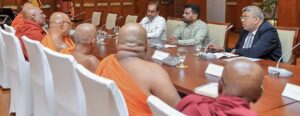
We all know that the LTTE committed brutal war crimes. Nowhere have we denied this. We have every reason to reject those crimes, along with the reactionary political program and ideology that motivated them — and we do so unequivocally, completely, and without political qualification. The LTTE’s bombings of Sinhala civilians, the massacre of thirty-three Buddhist monks and novices at Aranthalawa in 1987, the ethnic cleansing of seventy-five thousand Muslims from the Northern Province in 1990, the assassination of political opponents and trade unionists, the abduction of Tamil children as soldiers, and the brutal suppression of every independent socialist and democratic tendency within Tamil society — these were all political crimes against the working class. We condemn them as such without reservation.
However, merely listing those crimes accomplishes nothing politically. We are a political organization — a Trotskyist political leadership being built as the socialist vanguard of the working class of Sri Lanka and South Asia, not an NGO compiling human rights reports. Our task is not to demonstrate moral equivalence between two sets of criminals. Our task is to explain to the working class the class nature of those crimes, who they served, and how the working class must respond to them.
The LTTE’s Terror was Strategy, Not Madness
The LTTE committed all these crimes in pursuit of a specific political program: Tamil ethnic separatism — the establishment of a separate pro-imperialist capitalist state in which the Tamil bourgeoisie and international finance capital could exploit Tamil labor. The primary threat to this program was not the Sri Lankan military. It was the possibility that Tamil workers and poor living in the North, East, and Colombo would unite with the Sinhala working class to find a common solution to the national question on the basis of class struggle. That unity — the unity of Sinhala and Tamil workers against their common class enemy — was the one development the LTTE could not survive politically.
Therefore, the LTTE systematically worked to prevent it. Division was its political oxygen. Instilling deep-seated hatred between Tamil and Sinhala communities was not a byproduct of its strategy — it was central to it. This is why the LTTE never made a class appeal to Sinhala workers. An ethnic nationalist organization that defines the Sinhala nation as the enemy is structurally incapable of making such an appeal. Instead, it pursued the deliberate terrorization of the Sinhala population: bomb attacks in crowded Colombo streets and railway stations, massacres of Sinhala and Muslim farming communities in border villages, the attack on the Temple of the Tooth Relic — the most sacred site of Sinhala Buddhist culture. As a separatist movement, it also carried out these attacks to demographically consolidate its claimed territory through ethnic cleansing.
These were not mad acts or simple reprisals. They were calculated political decisions by a leadership that understood — with cold clarity — that communal terror served its separatist program. Every bomb on a Colombo commuter train pushed Sinhala workers who might otherwise have questioned the war back into the arms of the ruling class. Every border village massacre made it politically impossible for Sinhala farmers to regard their Tamil neighbors as anything but “Tigers” or “terrorists.” This was the deliberate, strategic manufacture of hatred — the substitution of ethnic terror for class politics, the substitution of communal division for working-class unity.
A Political Symbiosis: LTTE and the Southern Ruling Class
On the other hand — and this is the decisive political point that only a Marxist analysis makes visible — escalating Sinhala-Tamil alienation was precisely what the ruling class in the South also required. In fact, the LTTE committing these crimes was exactly what the southern ruling class needed.
Following the so-called independence of 1948, the political program pursued by successive Colombo governments was built upon anti-Tamil and anti-Muslim chauvinism deployed systematically against the unity of working and oppressed people. The Citizenship Act of 1948 stripped a million Tamil plantation workers of their voting rights. The 1956 Sinhala-only language act institutionalized Tamil national oppression. The 1972 constitution entrenched Buddhist supremacism. And when the Sinhala working class demonstrated its revolutionary potential — in the 1953 hartal that brought workers of all communities together and drove the UNP government to its knees — the ruling class built the SLFP on a Sinhala chauvinist platform specifically to prevent that unity from repeating itself. When public sector workers launched the largest general strike in Sri Lankan history in 1980 demanding decent wages, Jayawardene sacked 100,000 of them — and then organized the 1983 pogrom that burned Tamil Colombo and ignited the full-scale civil war.
Sri Lankan capitalists learned the “divide and rule” method from British imperialists — as the catastrophic partition of India demonstrated — and applied it with devastating consistency. The LTTE executed this exact political method in its most barbaric form. Tactically, by terrorizing Sinhala workers and farmers into viewing every Tamil person as a “Tiger,” it trapped Tamil youth within a separatist political dead end, cutting them off from Sinhala class allies and conscripting their anger and sacrifice into its military battalions. Strategically, it handed the southern ruling class precisely the communal polarization it required to suppress working-class unity, justify military budgets, silence anti-war opposition, and brand every critic of the war as a terrorist sympathizer.
The youth and workers who carry this alienation forward today — who fill Sinhala chauvinist social media with hostility toward Tamil Mullivaikkal commemorations, who cheer the “War Heroes” mythology — are victims of this despicable politics jointly produced by both the LTTE and the southern ruling class. The LTTE’s terrorism and the ruling class’s chauvinism were not opposing forces. They were a political symbiosis, each sustaining the other’s grip on their respective populations at the expense of working people on both sides. These dynamics become clearly visible only within a Marxist analysis.
Indeed, part of the LTTE’s separatist politics was to sever the Sinhala people from the Tamil people through terror, and thereby to feed Sinhala chauvinism. Those who continue to advance this Sinhala chauvinism against the Tamil people today are merely carrying forward the political strategy first perfected jointly by the southern capitalist class and the LTTE. In this precise historical sense, the LTTE’s political paternity belongs to the Colombo ruling class — it was the monstrous product of a ruling class that manufactured racist war as its answer to the 1980 general strike and the threat of Sinhala-Tamil working-class unity.
Accountability Exposes the State that Protected the Criminals
Now, we say clearly: if there are LTTE leaders responsible for those crimes, they must be held accountable. And here we must be precise about what the current situation actually is.
The LTTE’s top political and military leadership — Prabhakaran, Soosai, Charles, Balasingham and others — are dead, killed in 2009 or before. But not all responsible figures are dead. Karuna Amman — Vinayagamoorthy Muralitharan — commanded LTTE forces in the Eastern Province and bears command responsibility for atrocities committed there, including the Aranthalawa massacre. Pillayan — Sivanesathurai Chandrakanthan — operating after 2004 defection as an anti-LTTE paramilitary under the protection of Sri Lankan military intelligence, led pro-government paramilitary forces responsible for child soldier abductions and political assassinations. KP — Kumaran Pathmanathan — managed LTTE arms procurement and international networks. All three are alive today.
And here lies the decisive exposure of the entire system: the southern Sinhala supremacist state that demands we “also” discuss LTTE crimes is the same state that gave Karuna Amman a diplomatic passport, appointed Pillayan as Chief Minister of the Eastern Province, and integrated these figures into its own political apparatus — shielding them from any accountability for their crimes, including Aranthalawa. Any genuine inquiry into LTTE war crimes would therefore expose not only the state’s criminal complicity in protecting Karuna and Pillayan — it would expose the state’s own political responsibility for producing the LTTE through the 1983 pogrom and decades of systematic anti-Tamil oppression, and would drag into the light its own direct war crimes at Mullivaikkal, Chemmani, Mannar, and across thirty years of military occupation. The southern state is not prepared for that. This is precisely why no such inquiry will ever be permitted by the Colombo ruling class — and why they suppress the truth about both sets of crimes simultaneously.
The Political Question, Not the Moral Ledger
The state in the South is a political and repressive institution — not simply a collection of individuals who committed crimes. The massacres, the enforced disappearances, the mass graves at Chemmani — these were not accidental overreaches. They were the structural implementation of state terror, deployed to defend the capitalist order. That state stands ready to commit these crimes again today and tomorrow — not only against Tamil people, but against the Sinhala, Tamil, and Muslim working class as a whole, as it implements IMF austerity, criminalizes strikes, and prepares its military apparatus for deployment against workers who resist.
Therefore, what matters to us is not aligning lists of crimes to demonstrate that “both sides are morally wrong.” The most important matter is not the moral question but the political question. Morally speaking, all these crimes are indeed crimes — we condemn them all. But political accountability rests fundamentally with the Sinhala supremacist capitalist state of the South. That is the living institution. That is the armed apparatus. That is the class enemy that remains intact, shielding its own criminals, and threatening the working class today.
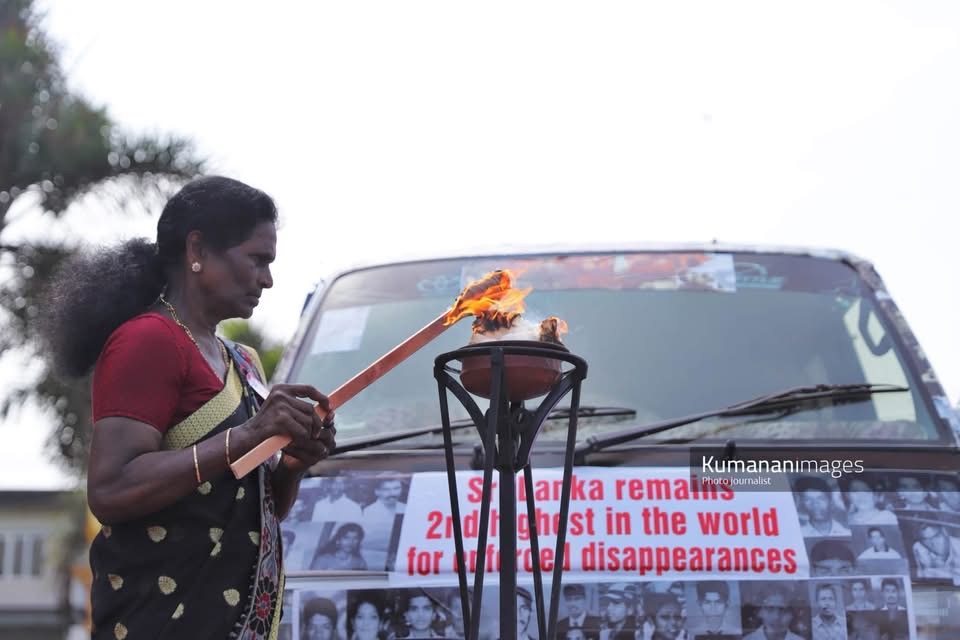
No mainstream media outlet in the South goes beyond glorifying “war heroes.” All southern media maintain silence regarding the crimes committed by state forces during the war in the North and East. We are among the very few exposing this truth — at political cost, as the history of our movement’s persecution by both the state and the LTTE demonstrates. Three Revolutionary Communist League members were murdered by the JVP. Five SEP members were kidnapped by the LTTE itself. We have never capitulated to either.
Therefore, to the Sinhala chauvinists who challenge us to write about LTTE crimes as a test of our “independence,” we say: admit that the southern Sinhala government’s military committed war crimes in the North and East. Demand that the southern mainstream media and every government since 2009 expose those crimes one by one. Demand the prosecution of Karuna for Aranthalawa — which your own government prevented. But we tell you: neither you nor the ruling class you serve, consciously or unconsciously, can ever do that. Because doing so would expose the entire system you are defending.
Highlighting the crimes of the southern state does not negate the crimes of the LTTE. In fact, precisely because the southern state attempts to cover up its own crimes and conceal the truth, it has been impossible to establish any genuine accountability mechanism for the crimes committed by the LTTE leadership and its surviving affiliates. To do so would require acknowledging the war crimes of the southern state, as well as the criminal complicity of the state in the post-defection crimes of Karuna and Pillayan. The southern state is not prepared for that — which is why it suppresses the truth about all of it. That is why we must stand for the truth and expose it against every attempt at suppression.
The Only Way Forward: International Socialist Unity
Our primary goal is to organize workers and oppressed people to prevent this country from being pushed into further separatist extremes, communal killings, and new crimes. Seventeen years after the war’s end, with 23 percent of the population in poverty, with Tamil land still under military occupation, with the disappeared still unaccounted for, and with the JVP/NPP government simultaneously hosting “War Heroes Day” ceremonies and implementing IMF austerity that devastates Sinhala and Tamil workers alike — the Tamil national question is not resolved. It has intensified. As long as the southern capitalist state cannot resolve it, Tamil nationalist capitalist leaders will attempt to bring separatism back to the forefront by exploiting the genuine, unaddressed grievances of the Tamil masses.
To prevent this, the working class must be continuously educated about the true nature of this capitalist state and its apparatuses of repression — that this state is established against the oppressed people and workers regardless of ethnicity, religion, or caste, the very divisions the ruling class manufactures, maintains, and capitalizes on; that its military is its repressive machine; that the “War Heroes” it glorifies are the war criminals it protects. The state’s crimes must not be buried by time or repression. They must be brought to the surface and remembered — because new generations cannot understand the true nature of the existing state without that history. Sinhala workers, farmers, and youth must properly understand this political reality to prevent this country from heading toward ethnic massacres once again. And Tamil workers, farmers, and youth must understand that justice for Mullivaikkal, for the disappeared, for the occupied lands — cannot come from Tamil nationalist parties representing the Tamil elite, nor from imperialist tribunals serving geopolitical interests, but only from the unified struggle of the working class of all communities.
The ruling political class, the Buddhist hierarchy aligned with the state, the media ecosystem serving ruling-class interests, and their racist proxy organizations are once again preparing to re-ignite anti-Tamil and anti-Muslim communalism. The JVP/NPP government’s limited and cosmetic gestures toward Tamil grievances — its carefully calibrated electoral manoeuvres designed to attract Tamil votes while maintaining the full apparatus of military occupation and suppression — are being weaponized by these forces as “proof” of capitulation to the Tamil diaspora and betrayal of the Sinhala nation. This propaganda is a deliberate falsification. The Dissanayake government has not resolved a single fundamental Tamil democratic demand: the military occupies Tamil land, the disappeared remain unaccounted for, and the Prevention of Terrorism Act remains intact. What the chauvinists present as “concessions” are the flimsiest of facades behind which the full machinery of Sinhala supremacist state power continues to operate. As the effects of the global economic crisis and imperialist war preparations encroach upon the country — forcing ever more severe austerity and driving an explosive growth of working-class struggles that the Dissanayake government has artificially suppressed with the collaboration of the trade union bureaucracy — the ruling class will inevitably resort to all its tried and tested methods of dividing the working class along ethnic and religious lines. The working class and youth of all nationalities must be alert to the rising fascistic tendencies that the post-war militarization, the “War Heroes” patriotism mythology, and the systematic cultivation of Sinhala-Buddhist supremacist organizations by successive governments have bred within Sri Lankan society — tendencies now finding their most visible expression in the social media campaigns targeting Tamil and Muslim communities, and which the ruling class will not hesitate to mobilize as organized street violence when the deepening economic crisis and the explosion of working-class struggles demand it.
To accomplish these tasks, we are building a revolutionary socialist leadership under the international socialist perspective — the perspective of the Fourth International, founded by Leon Trotsky in 1938, and carried forward by the International Committee of the Fourth International (ICFI). It is only under such a perspective that youth and workers in the North, South, and East can recognize past crimes and pain, unite against the common class enemy — the capitalist ruling class and the system it defends — and fight together for a Socialist Republic of Sri Lanka and Tamil Eelam as part of a Federation of Socialist Republics of South Asia, the perspective advanced by the ICFI in November 1987. Only under this framework, which resolves the Tamil national question through working-class power rather than communal partition or capitalist statehood, will there be no room for renewed separatism, no justification for new massacres, and genuine justice for all victims of this war.
Join us in this struggle. We are the Socialist Lead of Sri Lanka and South Asia (SLLA) and we publish theSocialist.lk.