By Sanjaya Jayasekera, Editor, theSocialist.LK | Member, the Socialist Lead of Sri Lanka and South Asia (SLLA).
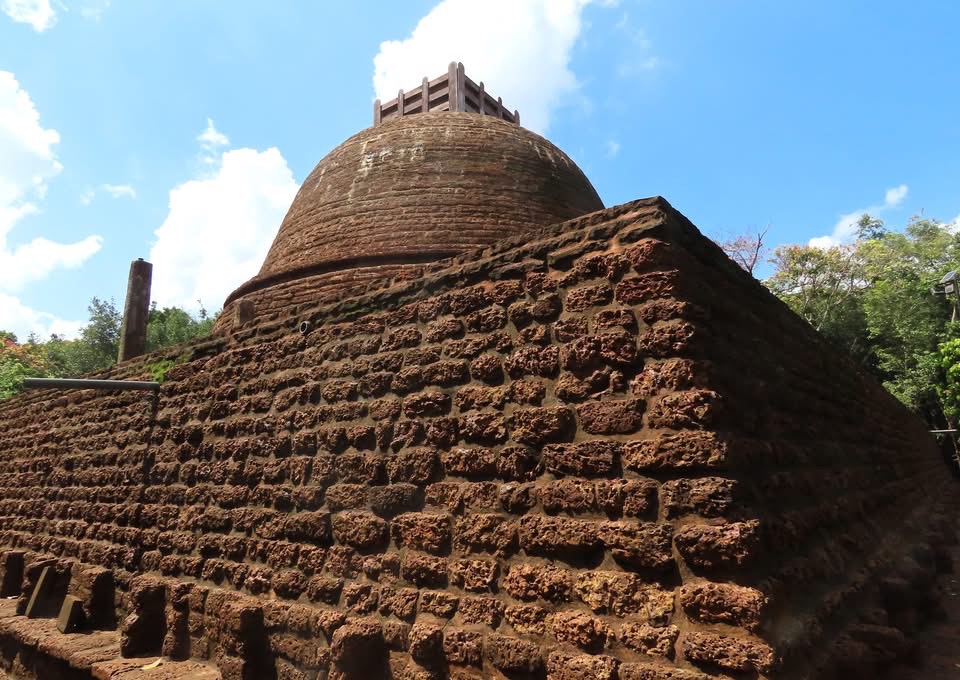
The ruling classes of every epoch have reached into the past to justify the crimes of the present. When the political and ideological representatives of the bourgeoisie invoke ancient scriptures, chronicles, and mythological epics — the Hebrew Bible, the Vedas, the Ramayana, the Mahavamsa — to claim territories, dispossess living peoples, and incite communal violence, they are not engaged in a scholarly recovery of history. They are performing a class function: converting the contested and often mythological record of the distant past into a weapon against the working class in the present.
The working class must categorically reject this reactionary logic on principled grounds. No event from millennia past — no migration, no conquest, no divine promise inscribed in a religious text — can constitute a legitimate claim against the rights of communities living today. The decisive criterion is not what allegedly occurred in the age of myth or chronicle, but the incontestable right of populations to the lands they actually inhabit in the present and in recent history. To displace, dispossess, or delegitimize a living people on the basis of a text of contested authorship and indeterminate antiquity is not the recovery of historical justice — it is the manufacture of present injustice in the name of the irretrievable past.
This principle is confirmed, not contradicted, by the broader record of human civilization. The legacies of ancient Rome, Greece, Mesopotamia, and Egypt are not the exclusive national property of the contemporary states that occupy those territories. They are the common inheritance of all humanity. Civilizations across recorded history determined their reach through conquest, displacement, and war — methods which the modern world, through hard and bloody experience, has recognized as barbaric and repudiated in international law. The Westphalian principle of territorial sovereignty, and the post-1945 international legal order built upon it, rest precisely on the recognition that conquest confers no permanent title, and that the rights of present populations cannot be overridden by the claims of the dead over the living.
It is therefore not merely wrong but utterly reactionary — a politically manufactured regression — to label communities as “invaders” on the basis of ancient texts, or to evict them from lands they have inhabited for generations on the grounds that a scripture or chronicle awarded those lands to someone else. The myths and narratives contained in the Old Testament, the Vedas, the Mahavamsa, or the Ramayana are part of humanity’s literary, spiritual, and intellectual heritage. They are not title deeds. Their selective appropriation by any ethnic or religious group to justify present-day dispossession is not a defence of identity — it is the exploitation of the past in the service of a definable and identifiable class interest in the present.
The Core Logic: Whose Interests Does It Serve?
The starting point of any serious political analysis of this abuse of history is not “is this historically accurate?” but rather “who benefits from this narrative, and why now?” When ruling classes in South Asia reach back millennia into myth, chronicle, or scripture to manufacture territorial or ethnic claims, they are not engaging in scholarship — they are performing a class function. They are diverting the rage and anguish of exploited workers and peasants, who face mass unemployment, dispossession, caste degradation, and social collapse, away from the class enemy at home and toward a manufactured communal enemy.
This is the essence of what Marxists call communalism: the mobilization of religious or ethnic identity to mask class antagonisms. The Vedas, the Ramayana, the Mahavamsa, the Mahabharata and Torah did not spontaneously leap into political life. They were conjured there by ruling elites at precise historical moments when class contradictions sharpened to the point of threatening bourgeois order.
India: Hindutva, Ancient Myths, and the Fascist Project
The most developed and dangerous example in South Asia is the project of Hindutva — the Hindu supremacist ideology pioneered by V.D. Savarkar and institutionalized through the RSS (Rashtriya Swayamsevak Sangh) and its political arm, the BJP (Bharatiya Janata Party). The BJP-RSS nexus [1] is not a religious movement but a political one — rooted in the interests of a section of the Indian bourgeoisie that found secular nationalism too broad, too accommodating of the Muslim minority, and too threatening to its social hierarchy.
The Hindutva project rests on the claim that the Indian subcontinent is essentially, primordially, and eternally a Hindu civilization — and that Muslims, Christians, and others are therefore either foreign intruders or permanent guests with no legitimate roots. This mythology is constructed directly from ancient texts and religious narratives: the Vedas as “original” Indian civilization, the Ramayana as a historical record of Ram’s territorial dominion, the Mahabharata as a founding epic of Hindu nationhood. The mythology serves a precise political purpose — to retroactively delegitimize the presence of 200 million Muslims who have lived on the subcontinent for over a thousand years and whose ancestors were, in the vast majority, not “invaders” at all but local converts.
The most revealing concrete expression of this was the Babri Masjid campaign. The Vishwa Hindu Parishad (VHP) and BJP argued that the 16th-century mosque in Ayodhya had been built by the Mughal emperor Babur on the birthplace of the mythological Ram — a site identified on the basis of a text of dubious historicity. In 1992, a BJP-orchestrated mob tore down the mosque, triggering nationwide pogroms that killed thousands. Three decades later, India’s Supreme Court, in what the World Socialist Web Site (WSWS) rightly called an act of judicial capitulation to fascism [2], awarded the site to the Hindu communalists, and in January 2024, Modi personally inaugurated [3] the new Ram temple in a spectacle explicitly designed to fuse state power, religious myth, and electoral mobilization ahead of the 2024 general election.
What is happening here is precisely what we stated above: a myth — in this instance, not even a verified historical claim, but a story from a religious epic — is transformed into a territorial deed. Ram’s “birthplace” in a text of unknown authorship becomes grounds for demolishing a standing structure inhabited for centuries and dispossessing a real community living in the present. This was placing one historic crime atop another — the 1992 mob demolition being the first, and the 2024 state sanctification of it the second. The ruling class has not merely tolerated this political theology; Modi and the BJP have made it the organizing principle of the Indian state.
The class function is transparent. As the WSWS noted, “Modi and his BJP have ratcheted up their communalist offensive as the social crisis has deepened.”[4] India under Modi has seen accelerating inequality, mass unemployment, the devastation of peasant livelihoods (hence the enormous farmers’ protests), and the catastrophic mismanagement of the COVID-19 pandemic. The louder the Hindutva mythology, the more the BJP needs to silence the class questions underneath it.
Furthermore, the imperialist powers — Washington, London, and others — have not only tolerated but embraced this. The Hindu rashtra project—transforming India from a constitutionally secular republic into an explicitly Hindu nation— is not an obstacle to global capital; it is perfectly compatible with it, because it disciplines, divides, and suppresses the Indian working class while keeping India safely within the orbit of US geopolitical strategy. Ancient mythology in the service of communalism is, in this sense, also in the service of imperialism.
Pakistan and the Region: Partition and Its Legacies
The entire Indian subcontinent was reshaped by the catastrophe of the 1947 Partition — itself a product not of inevitable ancient hatreds between Hindus and Muslims, but of the specific political choices of the Indian bourgeoisie (Congress), the Muslim League, and above all the British imperialists, who used divide-and-rule as the mechanism of their exit. The “two-nation theory” — the claim that Hindus and Muslims constitute two fundamentally separate nations that cannot coexist — is precisely the logic our argument critiques: it takes religious and cultural difference and makes it an ontological, quasi-historical, territorial destiny. It was politically manufactured, not historically inevitable. And the consequence — over one million dead in weeks, fifteen million displaced — was entirely real and entirely contemporary.
The legacies of that choice continue to generate the nuclear standoff between India and Pakistan, the perpetual wound of Kashmir, and the periodic eruption of communal violence within India itself. Every BJP-orchestrated anti-Muslim pogrom — Gujarat 2002, the Citizenship Amendment Act (CAA) protests of 2019-20, the ongoing persecution of Muslims through mob violence and “love jihad” anti-conversion laws — is a continuation of that logic: the use of religious identity to territorialize, to mark populations as belonging or not belonging, to claim that some people’s present habitation is illegitimate because of the distant past.
Zionist Israel’s “Promised Land” Myth as a political weapon
The case of Zionist Israel is perhaps the most consequential, and certainly the most intensely debated, instance of the phenomenon analyzed throughout this essay — the weaponization of ancient religious texts to justify the dispossession, subjugation, and now the genocidal destruction of a living people in the present.
Zionism’s founding mythology rests on the proposition that the Hebrew Bible (Tanakh) — the Old Testament, the Torah — constitutes a divine land grant to the Jewish people — a title deed that supersedes the rights of those who have actually inhabited Palestine for centuries. The territory of historic Palestine was, according to this reading, “promised” by God to the Jewish people. Crucially, Zionism’s origins were secular: Theodor Herzl’s project was a bourgeois-nationalist response to European antisemitism, and the biblical connection was instrumentalized purely for political utility, to mobilize a geographically dispersed population around a cohering myth.
Over decades of state-building, however, this secular nationalist project was transmuted into a theologically and racially supremacist one. The settler movement — which now holds direct governmental power through Itamar Ben-Gvir’s National Security Ministry and Bezalel Smotrich’s Finance Ministry — operates entirely within the framework of biblical land entitlement [5]. The settlers do not argue in the language of post-1948 international law, or of UN resolutions, or of the Westphalian system. They argue in the language of Genesis and Joshua. The map of “Greater Israel” encompasses Lebanon, Jordan, and parts of Syria, Saudi Arabia and Iraq. It is the explicit territorial program derived from maximalist readings of the biblical Promised Land. The Palestinians “should leave and go to other countries,” Settler leader Daniella Weiss declares. The entire civilian population of Gaza is to be expelled to make way for Jewish settlement — “Our mission is to settle Israel.” Weiss dismisses the argument that this act is a war crime by referring to it as “a light felony.” In this worldview, international law is simply irrelevant: a divine mandate cannot be constrained by “the whims of legislation”. Ancient scripture trumps the entire post-1945 international legal order constructed to prevent a repetition of the Holocaust.
Netanyahu’s invocation of the Amalek doctrine — an Old Testament commandment for total extermination of the Amalekites — to kill every man, woman, child, and infant, and to spare nothing — as justification for the Gaza assault represents this theology in its most operationally explicit form [6]. The “Theology of Revenge” elaborated by Meir Kahane, brought into the highest levels of state power, frames Palestinians as a mythical enemy whose destruction is a religious obligation. This application of a biblically-grounded, racially supremacist, exterminationist ideology to a real, living civilian population is nothing but fascism.
The Nakba of 1948, in which 750,000 Palestinians were violently expelled through at least 31 documented massacres [7], represents the foundational material translation of this mythology. The systematic weaponization of antisemitism charges to silence criticism constitutes what the ICFI identifies as semantic inversion — suppressing the most principled traditions of the Jewish workers’ movement itself, which was overwhelmingly internationalist and socialist rather than Zionist.
The Marxist analysis [8], however, insists that the Hebrew Bible is not the cause of genocide but its ideological cover. Zionism from inception served imperial interests — from the Balfour Declaration to Israel’s current role as a garrison state for US imperialism. The only genuine alternative is the unity of Jewish and Arab workers in a unified socialist state, which alone can break the chains that nationalist mythology forges for all.
Sri Lanka: The Mahavamsa and the Catastrophe of Sinhala Buddhist Supremacism
The post-colonial history of Sri Lanka stands as a blood-stained testament to the weaponization of history in the service of capitalist class rule.
The island of Sri Lanka has never been, at any point in its recorded history, the exclusive domain of a single ethnic or religious civilization. Its ancient history is one of continuous migration, cultural interchange, and political entanglement between Sinhala-speaking and Tamil-speaking peoples, between Buddhist and Hindu traditions, between the island’s populations and those of the South Indian subcontinent. Any claim to ethnic exclusivism is not merely politically reactionary — it is historically illiterate.
The Mahavamsa — the ancient accretive, redactional Pali chronicle, compiled by monk Mahanama in the 5th century CE, and subsequently continued in the Culavamsa — is the primary literary source through which Sinhala Buddhist supremacism constructed its founding mythology. It presents the island as the divinely ordained sanctuary of the Buddhist Dhamma, with the Sinhalese as its appointed guardians. Sinhala Buddhist supremacism rests on the implicit claim that Tamils in Sri Lanka are essentially a recent foreign implantation, a product of invasions and migrations from South India that disrupted an originally Sinhala Buddhist civilization. The historical record, including the Mahavamsa itself, demolishes this claim. Tamil-speaking and Dravidian peoples had a presence in the island that is contemporaneous with, and in some respects antedates, the Sinhala Buddhist cultural formations that the chronicle celebrates. The island’s ancient history was one of thoroughly entangled Sinhala-Tamil interaction, and the ancient kingdoms were constituted across ethnic lines that were fluid, not fixed. The Mahavamsa’s own hero, Dutugamunu (161–137 BCE), fought his celebrated war against the South Indian king Elara with Tamil commanders in his army — and had Elara buried with full honors. The chronicles record Tamil kings ruling Anuradhapura, South Indian mercenaries serving Sinhala rulers, and Buddhist monasteries receiving Tamil patronage. Archaeological evidence from Anuradhapura includes Tamil-language Brahmi inscriptions from as early as the 3rd century BCE, testifying to a multilingual, multi-ethnic urban community at the very outset of recorded history. The ethnic boundary that supremacism projects onto ancient history simply did not exist in the form it requires.
Into this already complex historical landscape, Sinhala supremacists have inserted the Kalinga Magha invasion of 1215 CE as their most potent political weapon. According to the Culavamsa, Magha was a prince from Kalinga — modern coastal Odisha in eastern India — who arrived with a large mercenary force, captured Polonnaruwa, and ruled for approximately two decades. The chronicle records systematic devastation: the destruction of Buddhist temples, persecution of monks, and the collapse of the elaborate northern irrigation civilization. The demographic consequence was catastrophic — a mass southward migration of the Sinhala population, the abandonment of the great hydraulic infrastructure of the northern dry zone, and the permanent shift of Sinhala Buddhist civilization toward the island’s southwest.
The supremacist argument constructed upon this event runs as follows: the north and east was originally Sinhala Buddhist territory; the Kalinga invasion destroyed that civilization and created a demographic vacuum subsequently filled by Tamil settlers from South India; therefore the Tamil claim to a “traditional homeland” in the north and east is historically fraudulent, and the Sinhala state is historically entitled to assert sovereignty over those territories.
Every element of this argument is a falsification. First, Kalinga Magha was not Tamil. His army was a multilingual mercenary force recruited from across the subcontinent — Keralans, Chola soldiers, various South Indian contingents. To retroactively brand his invasion a “Tamil” conquest is a 20th-century political projection onto a 13th-century reality in which such ethnic categories carried no such meaning. Second, the Tamil presence in the north and east long predates 1215 CE. Archaeological and inscriptional evidence establishes continuous Tamil-speaking habitation in the Jaffna peninsula going back at minimum to the early centuries of the Common Era. The Chola kingdoms had maintained settlements and networks in the north for centuries before Magha’s arrival. The Tamil kingdom of Jaffna emerged from an already-existing population, not from a post-invasion colonial implantation. Third, and most decisively: even if the demographic argument were entirely conceded, it would provide no political or legal foundation whatsoever for present dispossession. The Tamil communities that built their civilization in the north and east over the subsequent centuries — constructing the Jaffna kingdom, developing Tamil literature and learning, establishing agricultural communities across generations — possess an incontestable claim to those territories grounded in centuries of actual, documented, continuous habitation.
The Mahavamsa was the ideological reservoir from which this communalism drew its cultural legitimacy. The story of Dutugamunu’s war against Elara — rewritten in the supremacist reading as a heroic Sinhala Buddhist struggle against Tamil invasion — became the template for presenting the island’s entire political history as an eternal civilizational conflict between Sinhala Buddhism and South Indian/Tamil aggression. The Kalinga Magha invasion fitted neatly into this framework: here was documented proof, from the chronicle itself, of a catastrophic invasion from India that had “destroyed” the Sinhala civilization of the north. The 800-year gap between 1215 and the present, during which Tamil communities had built their own deep-rooted civilizational presence in those territories, was ideologically collapsed — rendered irrelevant by the supremacist insistence on the “original” Sinhala claim. To argue that one medieval displacement justifies a contemporary dispossession is precisely the reactionary logic this entire essay demolishes. Projecting present-day ethnic categories of “Sinhala territory” and “Tamil territory” onto the pre-modern past is an anachronism that falsifies the actual historical record.
The modern political operationalization of this mythology was a deliberate ruling-class construction, not an organic cultural development. The Buddhist revivalist movement of late 19th-century colonial Ceylon was organized by wealthy Sinhala landowners and businessmen who felt threatened by the colonial hierarchy’s preference for the English-educated, Christianized elite. Their principal ideologue, Anagarika Dharmapala, fashioned from the Mahavamsa an ideology proclaiming the Sinhalese a unique Aryan race — an ideology whose followers in the 1930s explicitly invoked Nazi racial doctrine [9]. The decisive political deployment came in 1956, when S.W.R.D. Bandaranaike, confronted with the revolutionary potential of unified Sinhala-Tamil working-class struggle demonstrated in the 1953 hartal, reached for communalism as the only available weapon against socialist internationalism. The “Sinhala Only” Official Language Act transformed communal tendency into state doctrine, systematically excluding Tamils from public employment, higher education, and civic life.
The only alternative to the communalism of the ruling class was provided by the Lanka Sama Samaja Party (LSSP), which had, through the 1940s and into the 1950s, built a genuinely unified working-class movement across communal lines on the basis of socialist internationalism. It was precisely the subsequent degeneration and betrayal of the LSSP — culminating in its joining the bourgeois SLFP coalition government of Sirima Bandaranaike in 1964, and its co-authorship of the 1972 constitution enshrining Sinhala Buddhism as the state’s official foundation — that removed the working-class alternative and allowed communal ideology to fill the vacuum.
The consequences of this communal trajectory were not mythological. They were spelled out in state policy over subsequent decades: the 1948 disenfranchisement of Tamil plantation workers; the 1956 Official Language Act; the systematic discrimination against Tamils in university admissions, public service, and economic life; the anti-Tamil pogroms of 1958, 1977, 1981, and the catastrophic 1983 “Black July” in which hundreds of Tamils were killed by state-organized mobs; the burning of the Jaffna Public Library in 1981, destroying irreplaceable Tamil manuscripts — a cultural act of devastation whose parallel with the Taliban’s destruction of the Bamiyan Buddhas was noted by the WSWS, with the observation that Sri Lankan political and Buddhist hierarchical reactions were “mixed with a good deal of rank hypocrisy.” Each of these acts was accompanied by ideological justification drawn from the Mahavamsa’s narrative of Sinhala Buddhist civilizational priority and existential threat from “Tamil invaders.” The state built on the Mahavamsa’s narrative of eternal civilizational siege — amplified by the weaponized memory of Kalinga Magha — reached its logical terminus in mass killing and permanent military occupation of the north and east, the archaeological and cultural erasure of Tamil heritage in the north, and the accelerated Sinhala colonization of territories with centuries of Tamil habitation and cultural development.
The Mahavamsa did not cause this catastrophe, nor did the Kalinga invasion of 1215. The correct political conclusion from all of this history is not that the Mahavamsa is factually wrong about ancient invasions, that the Kalinga Magha invasion did not happen, or that the suffering inflicted on the Sinhala Buddhist civilization of the northern dry zone in the 13th century was not real. The Sinhala Buddhist civilization of Anuradhapura and Polonnaruwa was genuinely great — and it was also genuinely interpenetrated with Tamil, South Indian, and pan-Buddhist cultural currents that the supremacist reading must airbrush out of existence. None of this — however real and however terrible — provides any political or legal or moral basis for the present subjugation, discrimination, dispossession, or mass killing of Tamil people who have inhabited the north and east of Sri Lanka for centuries of documented, continuous, and deeply rooted civilizational life. The class interests of the Ceylonese / Sri Lankan bourgeoisie, serving international capital, wielding Sinhala Buddhist communal ideology as an instrument against working-class unity, caused the present catastrophe. What the ruling class of Sri Lanka has done is seize upon the genuine complexity and genuine suffering of the island’s ancient history and weaponize it in the service of a thoroughly modern project: the construction of a communal state that divides the working class, legitimizes the exploitation of both Sinhala and Tamil workers by the same capitalist class, and perpetuates a fratricidal war whose only beneficiaries are the ruling elites on both sides of the ethnic divide. The ancient chronicles were its chosen costume.
Today, the ICFI’s perspective — the United Socialist States of Sri Lanka and Eelam, unifying Sinhala and Tamil workers against their common class enemy — remains the only politically coherent answer to the Tamil National question. It is not an answer that springs from ignoring history, but from understanding it: understanding that the working class of Sri Lanka, across all the ethnic lines drawn by its rulers, shares a common class interest that is more powerful than any ancient chronicle, and that the realization of that interest is the only path out of a tragedy that ancient myths did not create and ancient myths cannot resolve.
The Deadly Anachronism: The Nation Projected Backward, the Past Conscripted to Murder the Present
Every ethnonationalism examined in this essay — Sinhala Buddhist supremacism, Tamil separatism, Hindutva, Zionism — rests on a common act of historical falsification. Before a temple is demolished, before a language is banned, before a militia kills in the name of ancient right, modern national identity is projected backward through time. The claim is made that “the Sinhalese,” “the Tamils,” “the Hindus,” “the Jewish people” have existed as cohesive, politically self-conscious nations across millennia, so that contemporary political claims acquire the appearance of immemorial, transhistorical right superseding the actual lives of actual populations in the present.
This is the deadly anachronism: the imposition of a historically specific, relatively recent category — the modern nation — onto social formations organized on entirely different material foundations, in which “national identity” as modern politics understands it was literally inconceivable. It is deadly not metaphorically but concretely: this anachronism has triggered pogroms, civil wars, and genocide against people whose actual crime is existing in the present.
The Marxist materialist tradition supplies the tools to demolish it. The modern nation is not eternal; it is a historically specific product of capitalism, forged through bourgeois revolutions that overthrew feudalism, established formal legal equality, created national markets, and standardized language through state institutions [10]. None of these preconditions existed in pre-modern Sri Lanka. The ancient hydraulic state organized social life through caste, monastic landownership, and tributary obligation, not through horizontal national citizenship. A peasant in an Anuradhapura village could no more have conceived of themselves as part of a unified “Sinhalese nation” than a medieval English villein could have conceived of modern English nationhood. Their social world was bounded by village, caste, and the immediate apparatus of revenue extraction. Language was not yet national identity; Old Sinhala was no more the vehicle of a continuous “Sinhalese nation” than Anglo-Saxon was of modern Englishness.
This is confirmed by the Mahavamsa’s own content. The chronicle’s boundaries between “Sinhala” and “Tamil” were political and dynastic, not ethnic in the modern racial sense: a South Indian king who patronized Buddhism could be absorbed into the island’s political culture, while a Sinhala king who failed the Sangha was condemned regardless of ethnicity. The categories were religious and customary, not national.
This is precisely why the Kalinga Magha invasion of 1215 functions so effectively as supremacist ideology despite being, on close examination, nothing of the sort. Magha was not Tamil; his mercenary army was multiethnic, drawn from across the subcontinent. To brand his conquest a “Tamil invasion” is to retroactively impose/project twentieth-century ethnic categories onto a thirteenth-century political event that did not operate by them. And even granting the chronicle’s account of devastation and southward migration in full, this establishes nothing about the present: the Tamil communities that subsequently built the Jaffna kingdom, its literature, and its agricultural civilization over the following eight centuries possess rights grounded in that continuous, documented habitation — not in whatever happened, or did not happen, in 1215.
One should ask the following questions to delve in further: Did a racial identity of “Sinhalese” actually exist in ancient Sri Lanka? Was this identity recognized across all strata of the social hierarchy? And could a low-caste peasant or an “untouchable” laborer in the feudal Anuradhapura system identify themselves as part of a unified “Sinhalese” racial community alongside the king, the Buddhist monk, and the landowning aristocrat? The answer to all three questions, from the standpoint of historical materialism, is an unequivocal and demonstrable no. What Sihala actually designated in the ancient chronicles was primarily a dynastic-linguistic-religious complex rooted in the legitimation needs of the monarchy and the Buddhist Sangha — not a biologically or even culturally homogeneous population understood to possess a common heritable destiny across all social strata. Examining why this is so takes us to the very foundations of the ideological fraud of modern ethnonationalism, revealing its class function with clinical precision. These issues demand separate and complete treatment, beyond the space of this essay.
The same anachronism operates with identical structure, and identical falsity, in Tamil nationalism. The LTTE’s claim to an eternal “traditional Tamil homeland” mirrors the Sinhala supremacist claim it opposes — both require projecting modern ethnic-territorial categories onto a past that did not contain them. As the ICFI has insisted, the demand for Tamil Eelam did not arise from some immemorial national consciousness finally awakening [11]; it arose from the betrayal of socialist internationalism by the LSSP, leaving Tamil workers to the mercy of Sinhala chauvinism and channeling justified grievance into a bourgeois separatist project serving the Tamil capitalist class, not the Tamil worker.
The grammar is identical across every case examined: an ethnic or religious category is first essentialized as unchanging across history; this essence is then extended backward and forward through time, collapsing the real discontinuities produced by changing modes of production; it is then anchored to a territory as an eternal homeland; and finally, any population currently inhabiting that territory outside the dominant category is delegitimized as intruder or invader, however long their actual residence. Marxism answers each step: human beings are constituted by historically specific social relations, not immutable essence; the ancient and modern bearers of an ethnic label are not the same people; no ancient claim overrides the rights of the living; and the population targeted for displacement is a present community possessing full contemporary rights.
The class function is decisive. The Mahavamsa was not weaponized by Sinhala peasants but by the Ceylonese bourgeoisie, above all Bandaranaike, to defeat the threat posed by Sinhala-Tamil working-class unity demonstrated in the 1953 hartal. As Trotsky’s theory of Permanent Revolution anticipated, the bourgeoisie of belated capitalist development, incapable of delivering genuine democratic transformation, substitutes communal mystification — ancient chronicles, eternal homelands — for the program it cannot fulfill.
The answer is not a counter-anachronism, asserting Tamil priority to match Sinhala priority. It is class analysis: the worker in a Colombo factory, the Tamil plantation laborer, the Jaffna fisherman share a present social reality of exploitation that no ancient chronicle can illuminate and no mythology can resolve. The ancient Sinhalese are not the modern Sinhalese; the ancient Tamils are not the modern Tamils. To identify an ancient identity with a modern identity is a fiction—a dangerous anachronism that serves the present bourgeois class interests. What unites the working people of the island today is not blood inherited from a thousand years ago but the shared necessity of overthrowing the capitalist state that manufactures their division — the perspective embodied in the fight of ICFI and SLLA for the United Socialist States of Sri Lanka and Eelam.
The Westphalian system, the right of self-determination and other principles
The invocation of ancient mythology and pre-modern history to deny the rights of a living community of people constitutes a reactionary abuse of history and an affront to well-founded political, philosophical and legal principles.
The post-1648 and post-1945 international imperialist order does rest on the principle of the inviolability of borders and the illegitimacy of conquest as a title to territory — which is precisely why it is reactionary and legally absurd to argue that a mythological event from three thousand years ago or a medieval conquest constitutes a present-day territorial claim. The populations of the present have rights derived from their present existence, not from their ancestors’ movements over millennia.
However, from a Marxist standpoint, we must go further than the Westphalian framework. The system of nation-states itself is a product of the bourgeois epoch, and in the imperialist period it has become a structure for the division of the world working class along national lines, for the subordination of smaller nations to great powers, and for the containment of socialist revolution within national borders. The ultimate answer to communal chauvinism is not the liberal nation-state — which can always be captured by communalists, as India demonstrates — but the international unity of the working class across all the lines that bourgeois ideology draws between them.
All peoples have the right of self-determination—the right of a population to determine its own political existence, to choose its own governance, and to exercise sovereignty over the territory it inhabits. This principle has both a bourgeois-democratic and a Marxist dimension. This right attaches to the people presently inhabiting and constituting the political community of a given territory — not to an ethnic, religious, or genealogical group claiming descent from ancient inhabitants. The right is grounded in present, actual, social existence. [12] A population that lives on a territory, builds its social life there, has its families and institutions and culture rooted there, is a “people” in the operative sense — and that status cannot be dissolved by a rival claim based on texts written thousands of years ago.
The principle of effective occupation (occupatio) is the basis for territorial sovereignty in cases where other grounds are disputed. The doctrine holds that sovereignty is acquired and maintained through actual, continuous, and peaceful administration of a territory, while a military occupying power does not acquire sovereignty over the territory it occupies.
The principle of jus sanguinis (right of blood descent — the principle that one’s ancestry determines one’s nationality) — cannot be applied to create an entitlement for an alien community to physically displace the people who have the right of the soil
(jus soli — the principle that one’s actual habitation, actual birth on the land determines one’s nationality).
Bourgeois international law correctly identifies the principles — self-determination, prohibition of territorial conquest by force, the illegality of genocide, the rights of present populations — but it has no mechanism of enforcement that operates independently of the great-power balance.
The Class Alternative
The fundamental point is this: the invocation of ancient myth and pre-modern history to justify present dispossession, discrimination, or ethnic hierarchy serves a ruling-class function. The Hebrew Bible is not the cause of the genocide. It is the ideological cover for a project whose real motor forces are material and geopolitical.
The biblical mythology of the Promised Land serves this imperial project in precisely the same way that the Mahavamsa served the Sinhalese ruling class and Hindutva serves the Indian bourgeoisie: it provides a transcendent, quasi-sacred justification for arrangements that are, in their actual content, the product of class interest, colonial history, and great-power geopolitics. The Israeli ruling class does not wage genocide against Palestinians because it is driven by sincere religious conviction, any more than Modi demolished the Babri Masjid because he genuinely believed Ram was born on that precise spot. The ideology is functional. It mobilizes a population, suppresses internal class opposition, and legitimizes externally what would otherwise be recognized as — and is recognized internationally as — a crime against humanity.
The ancient myth or pre-modern history is a weapon of the bourgeoisie against the working class — not a survival instinct of oppressed peoples. Hindu workers in Gujarat and Muslim workers in Dhaka share more materially with each other than either shares with Modi or the Bangladeshi garment factory owner. Sinhalese and Tamil plantation workers on the same estates were repeatedly united in strikes before the communalists — backed by the bourgeoisie — broke that unity. The myths of the Mahavamsa and the Ramayana are deployed precisely to shatter that unity and to ensure that exploited workers look sideways at the neighbor of a different religion or ethnicity—“Othering” process— rather than upward at the class that exploits them both.
The working class of the subcontinent — Indian, Sri Lankan, Pakistani, Bangladeshi — faces the same enemy: the domestic ruling class operating within the framework of global capitalism. The answer to Hindutva, Sinhala Buddhist supremacism, Pakistani religious nationalism, and all other forms of communalism is not a counter-mythology, not a rival ancient claim, but the political organization of the working class on a socialist and internationalist program.
We must be based on the principle that the ancient heritage belongs to all of humanity, not to a single community that may be misled to identify with it, that no ethnic group can appropriate it as a title deed of present-day dominion, and that living populations have rights based on their present existence. This principle must be defended. It must be defended not in the abstract liberal terms of “tolerance” or “pluralism,” which have proved utterly impotent before the fascist onslaught of the BJP and the Rajapakse and his successor regimes. It must be defended on the basis of working-class solidarity, socialist politics, and the fight to overthrow the bourgeois states that manufacture and deploy communal mythology as a weapon of class rule.
[1] India: the BJP-RSS nexus—Fascistic movement plays critical role in India’s ruling coalition, Keith Jones, 20 June 1998 <https://www.wsws.org/en/articles/1998/06/bjpz-j20.html>
[2] With ruling on razed mosque, India’s Supreme Court validates Hindu supremacist violence, Keith Jones, 11 November 2019 <https://www.wsws.org/en/articles/2019/11/11/babr-n11.html>
[3] Modi inaugurates a Hindu supremacist temple on the site of the razed Babri Masjid: One historic crime atop another, Wasantha Rupasinghe, Keith Jones, 21 January 2024 <https://www.wsws.org/en/articles/2024/01/22/zmxv-j22.html>
[4] Facing an international outcry, India’s Hindu supremacist government cynically distances itself from top BJP officials’ anti-Muslim incitement, Wasantha Rupasinghe and Keith Jones, 12 June 2022 <https://www.wsws.org/en/articles/2022/06/13/cmew-j13.html>
[5] A devastating insight into Zionism: Louis Theroux: The Settlers, Paul Bond, 12 May 2025 <https://www.wsws.org/en/articles/2025/05/12/brdo-m12.html>
[6] The Israeli state’s fascist ideology and the genocide in Gaza, David North, 18 December 2023 <https://www.wsws.org/en/articles/2023/12/19/pers-d19.html>
[7] Israel and the Palestinians: A state founded on dispossession and ethnic cleansing—Part Two, Jean Shaoul, , 24 October 2023 <https://www.wsws.org/en/articles/2023/10/24/equm-o24.html>
[8] Mario Kessler’s Socialists against Antisemitism and Leon Trotsky on Antisemitism: The Marxist movement and the fight against antisemitism and Zionism, Clara Weiss, 2 July 2025 <https://www.wsws.org/en/articles/2025/07/03/ajbz-j03.html>
[9] Sri Lankan independence: 60 years of communalism, social decay and war, The Socialist Equality Party (Sri Lanka), 4 February 2008 <https://www.wsws.org/en/articles/2008/02/sril-f04.html>
[10] History in the service of ideology—Review of The Construction of Nationhood: Ethnicity, Religion and Nationalism, by Adrian Hastings, Ann Talbot, 30 April 1999 <https://www.wsws.org/en/articles/1999/04/hist-a30.html>
[11] Statement of the International Committee of the Fourth International, Globalization and the International Working Class, Sri Lanka and the Tamil question (1998) <https://www.wsws.org/en/special/library/globalization-international-working-class/3>
[12] Marxism does not simply endorse the bourgeois principle of self-determination at face value. Lenin’s treatment of the national question — the most sophisticated Marxist analysis of it — insists on the conditional character of the support socialists give to the right of self-determination. The working class supports the democratic right of oppressed nations to self-determination not as an absolute metaphysical principle, but as a concrete democratic demand in the struggle against national oppression, which itself is a product of imperialism and capitalism. Lenin’s conditional approach means that support for self-determination is always subordinated to the question: does this serve the international unity of the working class and the struggle against capitalism? The point is always to end oppression, not to create new nationalist frameworks that will themselves become instruments of class exploitation. The Palestinian right to self-determination is not supported by Marxists because of some absolute national principle, but because the Palestinian people are a colonized, brutally oppressed people whose democratic rights — to live on their land, to govern themselves, to be free from mass murder — are being systematically violated by an imperialist settler-colonial project. Supporting those democratic rights is a condition of the internationalist unity of the working class.