By Sanjaya Jayasekera.
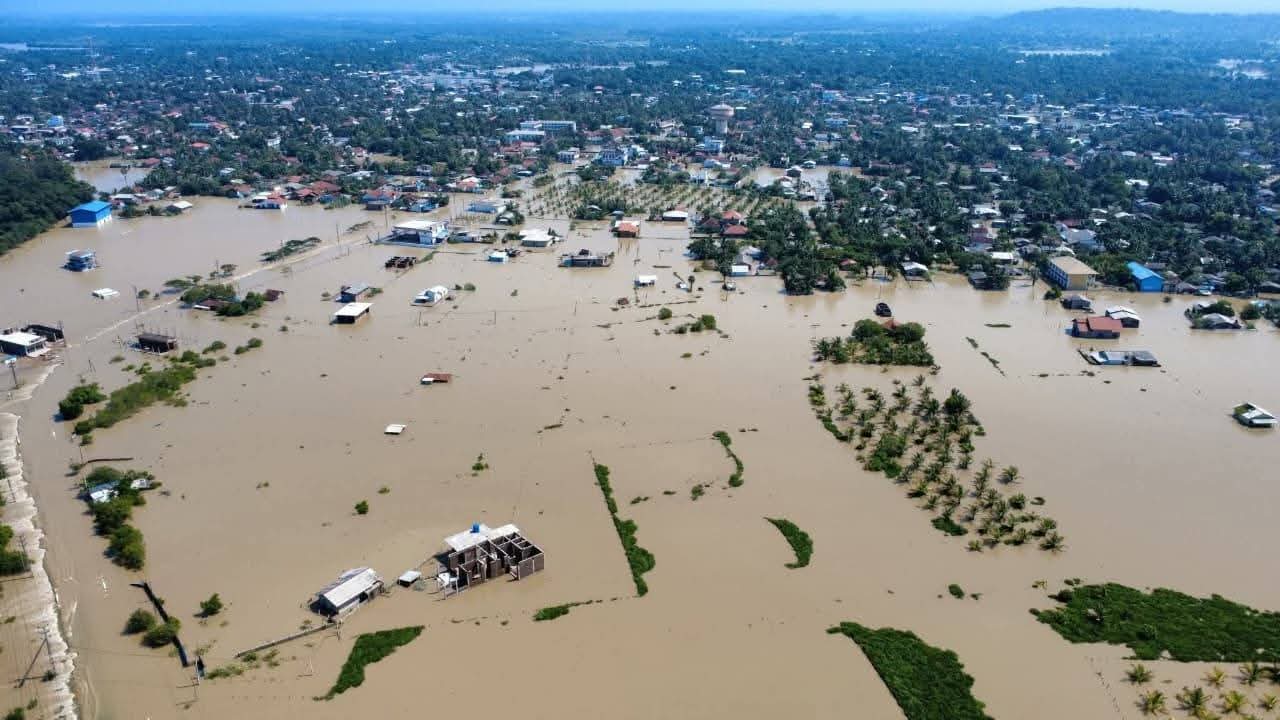
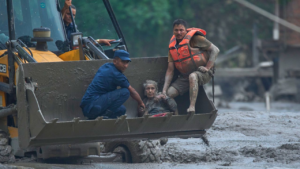
President Anura Kumara Dissanayake declared a state of emergency on November 28, invoking the draconian Public Security Ordinance (PSO) in response to the catastrophic devastation wrought by Cyclone Ditwah. The cyclone has claimed at least 410 lives, with nearly 400 people still missing, marking Sri Lanka’s deadliest natural disaster since 2017. Nearly one million people have been affected, with over 180,000 sheltering in government-run safety centers.
The president’s address to the nation on November 29 carefully employed populist rhetoric, calling upon the people to “unite” and “ shed all party and political differences” in rebuilding the nation. He was careful to present the emergency measures as purely administrative necessities for disaster management. Yet the class character of these emergency powers reveals itself unmistakably in the fine print.
The Emergency Regulations gazetted alongside the state of emergency grant sweeping powers that extend far beyond disaster relief. These include provisions criminalizing “causing disaffection among public officers,” prohibiting “affixing or distributing posters, handbills or leaflets which are prejudicial to public security, public order or the maintenance of supplies and services essential to the life of the community”, and suppressing information deemed to constitute “rumours or false statements” that might cause “public alarm”. The Centre for Policy Alternatives, a Sri Lankan think tank, has raised alarm that such “overbroad regulations risk undermining civil liberties, including fundamental rights of freedom of movement, assembly, expression, and due process”. It notes that emergency laws have been put in place in spite of less-severe but specific laws available for disaster management like the Disaster Management Act of 2005.
What Dissanayake did not mention in his address—but what the working class must understand—is that these emergency powers provide the legal framework for strike-breaking, the deployment of armed forces against working class struggles, and the imposition of savage austerity measures under the guise of “national reconstruction.” The appointment of a Commissioner-General of Essential Services under the Emergency Regulations signals precisely this intention.
Preliminary estimates place economic damage due to floods, landslides and wind at over $500 million, hitting agriculture hardest in a nation still reeling from the 2022 economic crisis. The Foreign Ministry has indicated that Rs. 31 billion is required as of November 28 for restoration of agriculture, irrigation tanks, and damaged canals. Repairing and reconstruction of damaged roads, railway tracks, bridges, electrical supplies, and government buildings will cause significant costs. More than 57,000 hectares of farmland have been affected, devastating rural producers already struggling under the weight of debt and market dependency.
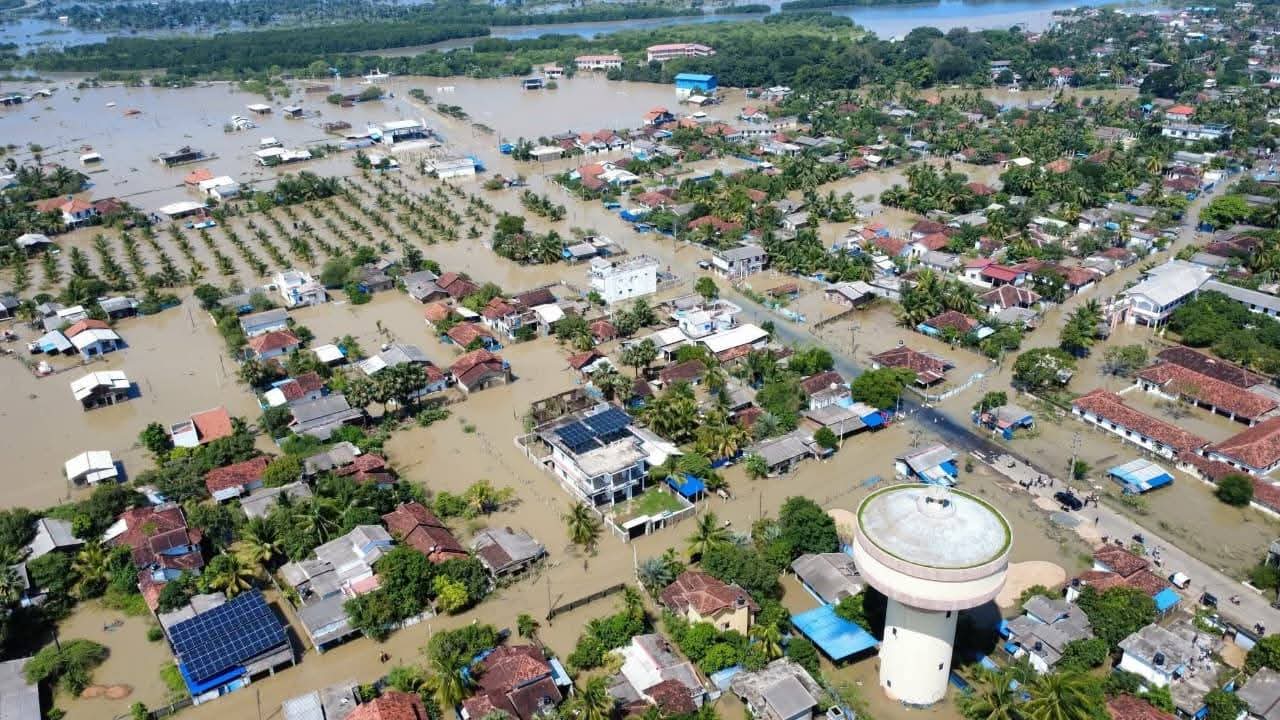
The catastrophe strikes at the most vulnerable layers of society with particular ferocity. Authorities have warned of rising food insecurity, as submerged farmland, damaged storage facilities and severed supply routes threaten shortages and price increases in the weeks ahead. For the working class and rural poor, this translates into imminent hunger and malnutrition—a direct consequence not merely of ‘natural’ disaster, but of the systematic neglect of agricultural infrastructure and food security under decades of neoliberal policy.
The government confronts this crisis while imprisoned within the iron cage of the International Monetary Fund program. As noted by former minister and Chairman of the island’s Parliamentary Committee on Public Finance, Harsha de Silva, the fundamental challenge lies in “working within the fiscal limits of the International Monetary Fund (IMF) programme imposed on Sri Lanka, which caps primary expenditure at 13 per cent of GDP”. Substantial external investments will be necessary for long-term rebuilding, particularly given IMF expenditure constraints, he has said.
This is the objective economic reality: the NPP government, having pledged to maintain the IMF agreement negotiated by its predecessor, possesses no means to address the disaster except through further attacks on the living standards of the working class. The calls for “international aid” and “donations from expatriates and Sri Lankan companies” are a prelude to the next calling by the government: “dedication “ from public employees from their salaries, benefits and working hours.
The disaster itself cannot be understood as a purely “natural” phenomenon. Meteorologists note that Ditwah’s intensification was fueled by warm sea surface temperatures, a trend linked to global warming. Cyclone Ditwah struck Sri Lanka simultaneously with devastating cyclones battering Indonesia, Thailand, Malaysia, and other Southeast Asian nations, affecting millions across the region in what constitutes a broader catastrophe driven by extreme weather phenomena.
The intensification of such disasters is the direct consequence of global capitalism’s relentless exploitation of nature. The advanced imperialist powers—principally the United States, European Union, and Japan—bear overwhelmingly disproportionate historical responsibility for greenhouse gas emissions, yet it is the working masses of Asia, Africa, and Latin America and in the same centers of imperialism who suffer the most catastrophic consequences.
Moreover, within Sri Lanka itself, decades of unregulated capitalist development have systematically destroyed natural flood barriers, eliminated wetlands, and concentrated vulnerable populations in disaster-prone areas without adequate infrastructure. The government has made no serious effort to relocate those in danger zones or allocate necessary funds for long-term disaster preparedness. Every rupee extracted from the working class through taxation was funneled toward debt servicing including interest repayment to international financial institutions rather than invested in flood control systems, early warning infrastructure, or climate adaptation measures.
The working class of Sri Lanka must approach the declaration of emergency with the full weight of historical experience. Every previous government—from the UNP to the SLFP, from Rajapaksa to Wickremesinghe—has employed states of emergency not primarily to address genuine crises, but to suppress working class resistance to austerity and exploitation.
The Public Security Ordinance, one of the dangerous weapons of the arsenal of the ruling class, inherited from British colonial rule and perfected under successive bourgeois governments, has served as the legal instrument for the brutal suppression of strikes, the militarization of labor disputes, and the criminalization of social opposition. On November 26, the President under Section 12 of the PSO called out all the members of the three armed forces for the purpose of maintenance of ‘public order’ all over Sri Lanka, a move resorted to by all his predecessors. PSO grants the President the power to declare curfew without the need to declare a state of emergency. On November 28, the President also declared several services as essential public services in terms of Section 2 of the Essential Public Services Act. The provisions of this law prevent workers in transport, health, education, and other sectors from exercising their fundamental right to strike.
The NPP government, despite the anti-establishment populist rhetoric of Janatha Vimukthi Peramuna (JVP), now finds itself administering the same capitalist state apparatus, bound by the same class interests, compelled by the same imperialist financial architecture. Its invocation of emergency powers follows the identical logic of its predecessors: the defense of capitalist property relations and implementation of imperialist dictates takes absolute priority over human life.
The working class must understand that the bourgeoisie—whether represented by traditional right-wing parties or by parties of petty-bourgeois populism like the NPP—is fundamentally incapable of providing even the basic necessities of a decent life: adequate housing in safe locations, comprehensive disaster preparedness, food security, or protection from climate catastrophe.
The disaster unfolding in Sri Lanka is a microcosm of the global crisis of capitalism. As climate disasters intensify, as social infrastructure crumbles under austerity, as inequality reaches obscene proportions, the bourgeois nation-state reveals itself as an obsolete and reactionary institution, incapable of coordinating the international cooperation necessary for human survival.
The fight against emergency rule, against IMF austerity, against climate catastrophe, cannot be waged within the framework of bourgeois parliamentarism or through appeals to the “national unity” invoked by Dissanayake. It requires the independent political mobilization of the working class on an international socialist program.
This means:
- Unconditional opposition to the state of emergency and all restrictions on democratic rights
- Full compensation for the lives lost and property damaged and resettlement with decent living conditions
- Rejection of all IMF-imposed austerity measures and repudiation of external debt accumulated under previous regimes, and expropriation of Banks and financial conglomerates that act as agents of imperialism, without compensation.
- Massive public investment in climate adaptation infrastructure, funded by the expropriation of the wealth hoarded by the capitalist class
- International coordination of climate disaster response under workers’ control, not imperialist “aid” programs that calls for further austerity
- The building of action committees in workplaces, neighborhoods, and villages to organize independent relief efforts and resistance to emergency rule
The alternative is clear: either the working class breaks free from the prison of capitalism and imperialism through international socialist revolution, or humanity faces a descent into barbarism marked by escalating trade war, climate catastrophe, militarized repression, social collapse and nuclear war.
The experience of Cyclone Ditwah must serve as a catalyst for the political awakening of the Sri Lankan working class. The disaster exposes with pitiless clarity the bankruptcy of all variants of bourgeois rule, including that of NPP/JVP populism. Only through the revolutionary overthrow of capitalism and the establishment of workers’ power—in Sri Lanka, South Asia and internationally—can humanity secure its future against the twin catastrophes of climate change and imperialist war. This requires, first and foremost, the building of the world party of the socialist revolution, the International Committee of the Fourth International (ICFI).