This political report for the week of March 15-21, 2026, is compiled by thesocialist.lk based on coverage from the World Socialist Web Site (WSWS).
I. Imperialism and War: The Escalating Offensive Against Iran and the Middle East
The dominant political fact of the week was the accelerating US-Israeli war against Iran and the wider Middle East, now crossing into qualitatively new and more dangerous territory. The Trump administration formally requested over $200 billion in supplemental war funding from Congress — a figure that exceeds the peak annual cost of the Iraq war and dwarfs the entire US expenditure on arming Ukraine over three years. Defence Secretary Hegseth confirmed the figure could “move” upward. This astronomical request, on top of the existing $839 billion defence budget, is not a contingency measure but a preparation: the administration is actively deliberating ground-invasion scenarios, including the seizure of Kharg Island — the hub for 90 percent of Iran’s oil exports — and the securing of Iran’s enriched uranium stockpiles.[1]
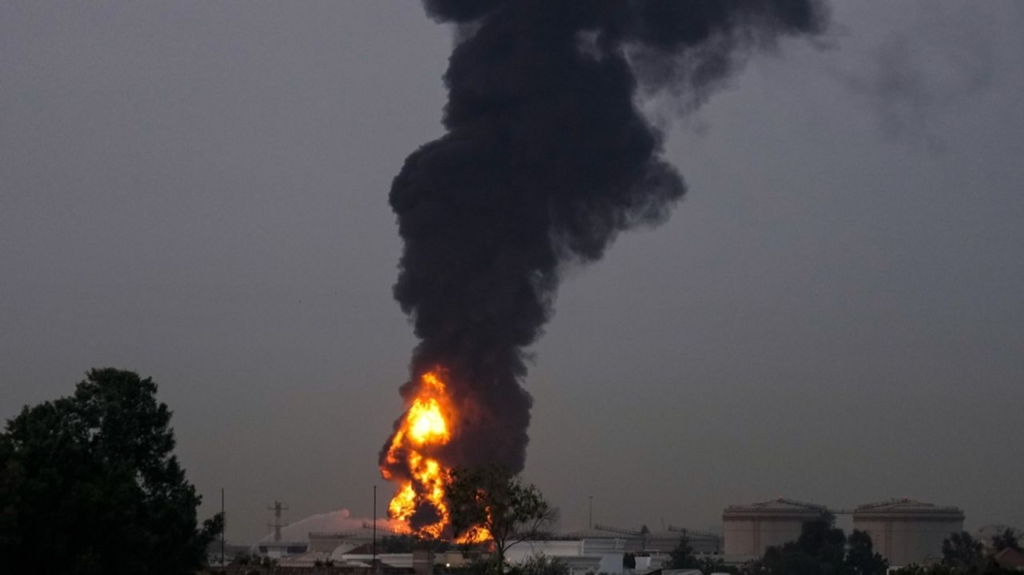
The USS Tripoli, carrying approximately 2,200 Marines of the 31st Marine Expeditionary Unit, was confirmed steaming through the Strait of Malacca toward the Persian Gulf. Republican senators and congressmen openly called for the seizure of Kharg Island, with Senator Lindsey Graham posting: “He who controls Kharg Island, controls the destiny of this war.” US intelligence official Joe Kent resigned his post at the National Counterterrorism Center, declaring he could not “in good conscience support the ongoing war in Iran” and stating that Iran had posed no imminent threat — a rare fissure within the ruling apparatus that nonetheless does not alter imperialism’s strategic drive.[2]
The war has already produced mass civilian casualties and cultural devastation in Iran. US-Israeli air strikes struck museums, historical sites and cultural infrastructure alongside residential areas, with Iran’s Red Crescent reporting at least 47,000 residential units destroyed. The bombing of Iran’s cultural heritage is not incidental but structural: a deliberate strategy to break social cohesion and erase national memory in order to facilitate imperial domination.
Israel’s ground invasion of Lebanon opened a new and bloody front in this expanding war. Israel moved from intensive air and artillery strikes to a large-scale ground operation across southern Lebanon, with plans — confirmed by Axios — to seize the entire area south of the Litani River. Senior Israeli officials stated openly: “We are going to do what we did in Gaza.” In Lebanon, over 960 people had been killed and at least 2,400 wounded since Israel launched its assault on 2 March, including at least 110 children. The invasion is not a “border security” action but a planned occupation modelled on the genocidal campaign in Gaza, conducted under the full military and political umbrella of Washington.[3]
European powers moved to deepen their complicity. EU governments circulated conditions for participation in operations tied to the Iran war, including “freedom of navigation” missions in the Strait of Hormuz. Iran formally warned the UK that allowing US bombers to use RAF Fairford and other British bases constituted direct participation in aggression. Germany and Canada’s prime ministers attended a massive NATO Arctic exercise explicitly preparing for confrontation with Russia, demonstrating that the drive toward generalised war is not confined to the Middle East.
India’s alignment with the imperialist aggression was also exposed: New Delhi co-sponsored UN language condemning Iran’s defensive responses while refusing to condemn US-Israeli aggression, tightening military and economic ties that reflect India’s own geostrategic ambitions within the imperialist world order.
The WSWS placed the war in its broadest context: military spending on this scale will be paid for through the destruction of social programmes. Within 24 hours of the $200 billion request being confirmed, the Postmaster General warned Congress that the USPS would run out of cash within a year. Trump’s “One Big Beautiful Bill” had already imposed $1 trillion in cuts to Medicaid over a decade, $536 billion to Medicare, and $186 billion to food assistance — the largest cut to food aid in US history. War and social devastation are two arms of a single class offensive.[4]
II. The Rising Class Struggle and the Treachery of the Union Bureaucracy
The week was marked by a powerful upsurge of working-class resistance in the United States and internationally — and by the systematic efforts of trade-union bureaucracies to contain, isolate, and betray these struggles.
The JBS meatpacking strike at Greeley, Colorado entered its third day and remained the focal point of the WSWS’s class-struggle coverage. Approximately 3,800 workers — the overwhelming majority immigrants, speaking over 50 languages — struck the largest beef plant in the US in the largest meatpacking stoppage since the Hormel strike of 1985–86. Workers walked out over poverty wages (starting at $23 an hour), murderous line speeds, dangerous chemical exposures, inadequate PPE, abusive supervision, and housing abuses affecting Haitian workers lured to the plant through TikTok advertisements. As one worker stated: “We cannot continue to be worked like slaves.”[5]
The WSWS documented the central contradiction in the strike: the enormous militant energy of the rank and file, constrained and threatened by the UFCW bureaucracy. UFCW Local 7 had already signalled it would limit the strike to two weeks; the national UFCW had deliberately kept Greeley outside the 2025 national JBS contract to isolate these workers. The company moved immediately to divert cattle to its Cactus, Texas plant, with UFCW Local 540 in Cactus offering no solidarity. The IWA-RFC issued a perspective calling on workers to form independent rank-and-file strike committees, appeal to workers at every JBS facility, and build international solidarity against this Brazilian-owned multinational whose ultimate masters are BlackRock, Vanguard, and the global financial oligarchy.[6]
BP locked out approximately 900 workers at its Whiting, Indiana refinery after workers voted 98.3 percent against the company’s “last, best and final” offer. The proposed contract would have cut hourly wages by $8–$10, eliminated 100 union positions, introduced AI with no job protections, and closed the environmental department. BP moved to operate the refinery with temporary and contract workers — a dangerous provocation in a facility surrounded by residential neighbourhoods on the shore of the world’s largest freshwater body. The WSWS called for national and international solidarity and warned that the USW apparatus would seek to impose concessions.
The UAW bureaucracy’s role as “management’s enforcer” at Columbia University was exposed when Region 9A officials threatened the student workers’ local with “receivership” if it did not narrow its demands, particularly those tied to campus democratic rights. UAW presidential candidate Will Lehman condemned the apparatus’s conduct directly, calling it subordination of worker militancy to managerial and state imperatives.
The betrayal of the Kaiser Permanente strike was confirmed and deepened. The UNAC/UHCP bureaucracy had abruptly ended the 31,000-worker walkout in California and Hawaii without a contract, without a tentative agreement, and without a membership vote. A partial “settlement” cut workers’ wage demands from nearly 30 percent to 21.5 percent over four years — barely keeping pace with inflation — and secured no retroactive pay. Workers at Kaiser subsequently staged a 25,000-strong one-day sympathy strike in defence of mental healthcare. The WSWS called for a decisive “No” vote on the sellout and the formation of rank-and-file committees at every Kaiser facility.[7]
The UAW–University of California tentative agreement was similarly denounced: weak raises, preserved no-strike clauses, and a deal rushed through without adequate membership review for 48,000 UC academic workers. The WSWS called for a “No” vote and independent rank-and-file committees.
In Los Angeles, UTLA and SEIU announced a possible April 14 LAUSD strike, with thousands of educators rallying against layoffs, understaffing, and the war on Iran. The WSWS drew the sharpest lessons from the San Francisco teachers’ betrayal, where the union bureaucracy, acting hand in glove with the Democratic Party, shut down a powerful four-day strike on the district’s terms — and within days, preliminary layoff notices were issued.[8]
Other labour flashpoints included: 6,000 DHL Express Teamsters voting overwhelmingly to authorise strike action; the RMT bureaucracy calling off planned driver strikes on the London Underground without a settlement; American Axle workers speaking out against UAW betrayals ahead of contract talks; a Ford worker, Gregory Knopf, killed at the Sharonville Transmission Plant when a press machine activated during maintenance; and Australian educators at the University of Newcastle striking over real pay cuts, with a pivotal Victorian educator strike set for 24 March.
The overall pattern confirms the WSWS analysis: the trade-union bureaucracies function not as instruments of workers’ struggle but as institutional stabilisers of capitalist rule, working systematically to isolate strikes, suppress rank-and-file initiative, and subordinate workers to management and the state.
III. Austerity, Social Catastrophe and the Crisis of Capitalism
The war has not interrupted but intensified the social catastrophe capitalism imposes on the working class. The US Federal Reserve, gripped by uncertainty as the war drives oil prices upward and disrupts supply chains, admitted that its forecasts were unreliable. Fed officials were simultaneously discussing rate cuts and potential hikes — a paralysis that reveals capitalism’s inability to reconcile competing imperatives. The social costs will, as always, be borne by workers through inflation, unemployment, and austerity.[9]
Los Angeles registered six homeless deaths per day — a direct structural product of the commodification of housing and healthcare. Michigan was struck by the worst tornadoes since 1980, killing four, exposing how decades of austerity have hollowed out public infrastructure and emergency preparedness. A meningitis outbreak in the UK, linked to chronic underfunding of public health services, claimed multiple fatalities. In Australia, the central bank raised interest rates again amid recession warnings, punishing workers for inflation. Portugal’s celebrated 2025 economic “miracle” was exposed as a bourgeois construction: corporate profits rose while wages stagnated and public services deteriorated.
These are not isolated incidents but expressions of a single, systemic reality: capitalism generates wealth for the few by imposing social catastrophe on the many.
IV. Authoritarian Consolidation and Democratic Rights
The assault on democratic rights accelerated in multiple forms during the week. In North Texas, activists were convicted under sweeping “material support for terrorism” statutes for political solidarity activities — a landmark case criminalising dissent. Amazon workers were locked out of a warehouse during a tornado warning, footage showing managers denying shelter; the company prioritised property over lives.
In Australia, Queensland police arrested two protesters for displaying the slogan “from the river to the sea” under new LNP “hate speech” legislation. In Germany, cultural censorship intensified: municipal authorities moved to exclude left-wing bookshops from fairs, and the culture minister cancelled presentation of the Booksellers’ Prize at the Leipzig Book Fair under political pressure.
Italy’s Meloni government advanced judicial “reforms” — the Nordio Reform — to separate the careers of judges and prosecutors and weaken checks on executive power. The WSWS identified this not as a “technical” adjustment but as a political preparation for state suppression of mass opposition to war and austerity. Trump’s CDL Final Rule stripped approximately 200,000 immigrant truck drivers of commercial licences — a direct attack on immigrant labour designed to discipline and destabilise worker organisation.
ICE expanded its terror: hundreds of immigrants were illegally detained in Michigan; a Haitian asylum seeker died in Pittsburgh following ICE detention; ICE raids in Vermont and Kansas continued with expanded detention infrastructure.
These measures are not aberrations but the logical expression of a capitalist ruling class preparing to crush the mass opposition it knows is coming.
V. The Political Bankruptcy of Reformism and the Defence of Trotskyism
The WSWS devoted significant coverage to exposing the political role of pseudo-left and reformist formations in disorienting the working class at a moment of acute historical crisis.
Kshama Sawant was profiled and critiqued: bold socialist rhetoric combined with repeated accommodation to municipal politics and reformist outcomes that leave capitalist power structures intact. The Australian Greens’ posturing against the Iran war was exposed as performing contained dissent within parliamentary channels, providing no genuine opposition to imperialist aggression. Canada’s NDP and affiliated unions similarly offered rhetorical opposition while remaining subordinated to the framework of the capitalist state. Spanish trade unions watered down anti-war positions to avoid antagonising the PSOE government.
The Morenoite rebrand as the Permanent Revolution Current was dissected as a revisionist manoeuvre: new branding masking continuity with nationalist and opportunist politics that dilute genuine Trotskyism and derail working-class revolutionary leadership.
The London meeting of the SEP (UK)— marking the 40th anniversary of the struggle that led to the expulsion of the Workers Revolutionary Party from the ICFI — was a centrepiece of the week’s political coverage. Addressed by David North, Chris Marsden, and Peter Schwarz, the meeting reaffirmed that the 1985–86 split was a decisive defence of Trotskyism against the petty-bourgeois, nationalist, and opportunist degeneration embodied by the Healy-Slaughter-Banda leadership. The speakers drew the direct connection between the historical struggle against revisionism and the present tasks: as the ICFI argued then and reiterated in London, the survival of revolutionary leadership requires uncompromising defence of the theory of Permanent Revolution, proletarian internationalism, and programmatic clarity. David North warned that the imperialist drive toward war — in the Middle East and beyond — aims to abolish the political gains of the 20th century and can only be answered by the international, politically independent working class.[10]
The week’s events confirm the ICFI’s perspective: the objective crisis of capitalism is driving the working class toward mass resistance. The decisive question is the construction of revolutionary leadership — the building of rank-and-file committees independent of the union apparatus, their international coordination, and the development of mass socialist parties capable of transforming class struggle into a conscious political offensive for workers’ power.
[1] Trump’s $200 billion Iran spending request reveals scale of US war plans — https://www.wsws.org/en/articles/2026/03/20/iuck-m20.html
[2] US ground invasion looms as Iran war escalates — https://www.wsws.org/en/articles/2026/03/21/xaes-m21.html
[3] Israel begins its long-planned ground invasion of Lebanon — https://www.wsws.org/en/articles/2026/03/17/yvdv-m17.html
[4] As Trump demands $200 billion for Iran, USPS announces it will run out of money next year — https://www.wsws.org/en/articles/2026/03/20/myla-m20.html
[5] “We cannot continue to be worked like slaves”: Colorado meatpacking workers strike at JBS plant — https://www.wsws.org/en/articles/2026/03/17/idqv-m17.html
[6] Organize the working class to support the JBS meatpacking strike! — https://www.wsws.org/en/articles/2026/03/18/pers-m18.html
[7] Kaiser strike betrayed: UNAC/UHCP ends 31,000-worker walkout, advances sellout agreement — https://www.wsws.org/en/articles/2026/03/19/coob-m19.html
[8] Lessons from the San Francisco strike: How the unions, Democratic Party and pseudo-left betrayed the teachers — https://www.wsws.org/en/articles/2026/03/21/hbhr-m21.html
[9] Trump’s $200 billion Iran funding request points to massive scale of war plans — https://www.wsws.org/en/articles/2026/03/19/qzqr-m19.html
[10] London meeting marks 40 years since the expulsion of the Workers Revolutionary Party — https://www.wsws.org/en/articles/2026/03/15/rogt-m15.html