Statement by the Socialist Lead of Sri Lanka and South Asia (SLLA)
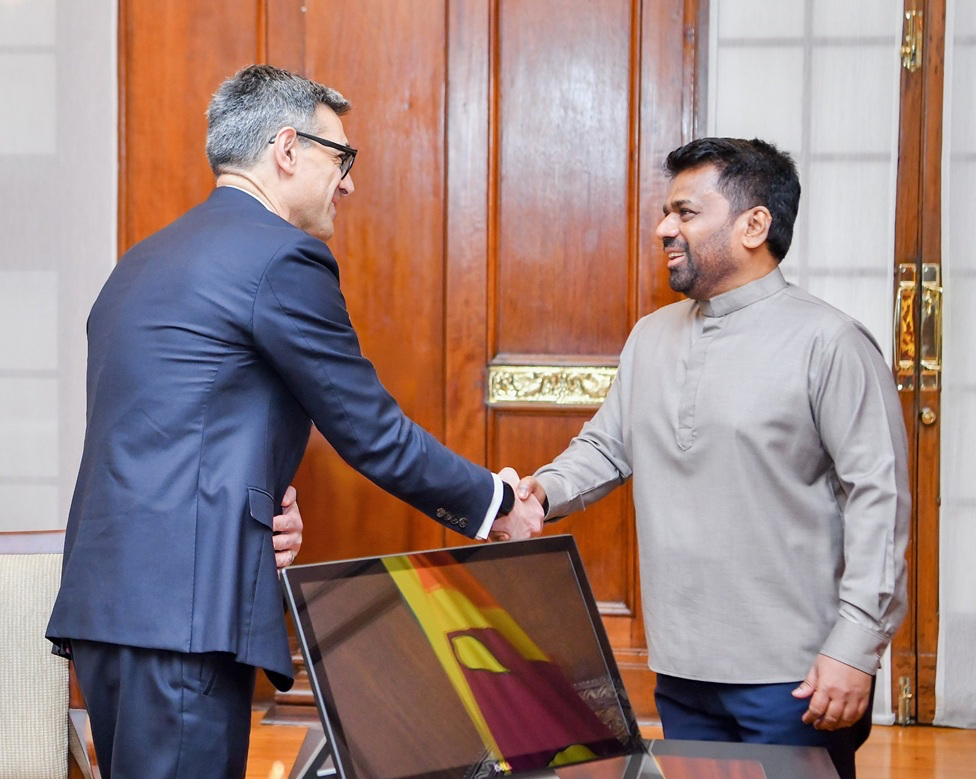
On June 5, 2026, the Janatha Vimukthi Peramuna (JVP)/National People’s Power (NPP) government of President Anura Kumara Dissanayake published a special gazette notification for a bill to establish the “Chartered Institute of Media Professionals of Sri Lanka (CIMP).” Tabled by the Ministry of Health and Mass Media, the bill is packaged in the soothing language of “introducing and maintaining professional standards” and “elevating quality.” This is a calculated fraud. A close examination of the bill’s provisions — its definitions, its institutional architecture, its disciplinary mechanisms — reveals an instrument of state censorship designed to discipline, silence, and ultimately eliminate independent journalism, above all the social media content creators and anti-government commentators whom the Dissanayake regime views as a mortal threat to its grip on power.
The working class and all defenders of democratic rights must reject this bill in its entirety. It is not a measure to improve journalism. It is a weapon for the suppression of democratic discourse, conceived in direct continuity with the long and bloody history of media repression in Sri Lanka, and fully consonant with the international offensive against press freedom being waged by capitalist governments across the globe.
The Architecture of State Control
The bill establishes a statutory body corporate — the Chartered Institute — whose design is transparently that of a state-controlled gatekeeper over who may legitimately practice journalism. Five features of the legislation expose its authoritarian character beyond any doubt.
First, the Institute introduces a system of state-created accreditation. Section 3(i) declares that one of the Institute’s objects is “to accredit the media professionals in media professionalism at the evaluation of their efficiency.” Section 4(o) empowers the Institute “to take necessary steps to introduce, develop, maintain and monitor professional standards.” Section 4(t) authorizes it “to maintain and publish a register of members.” Taken together, these provisions convert the fundamental democratic right of freedom of expression into a state-sanctioned privilege. The government positions itself as the ultimate arbiter of who may enroll, register, and be certified as a “qualified” media professional. Freedom of the press is an inherent right, not a license to be granted or revoked by the capitalist state. The very premise of the bill is an assault on this principle.
Second, the definition of “media professional” is deliberately vast and all-encompassing. Section 27 defines the term to include “writers, content developers, content editors, anchors, presenters, broadcasters, journalists, editors, publishers, media owners, media managers, media educators, media researchers, media technicians and camerapersons in the field of media.” The inclusion of “content developers” is particularly revealing. This wide net is cast with a specific purpose: to trap independent bloggers, social media commentators, and alternative left-wing media platforms under the disciplinary apparatus of the state. The Dissanayake administration is acutely threatened by unaligned online media. Mainstream corporate media networks in Sri Lanka are tightly controlled by oligarchs or the state itself. Working-class anger, exposures of government compliance with International Monetary Fund (IMF) austerity, and socialist political analysis find expression through alternative content creators and independent social media channels. By bringing “content developers” under the heel of a chartered state apparatus, the government is building a weapon to silence precisely these voices.
Third, the bill establishes a state-vetted Disciplinary Committee empowered to investigate “professional misconduct.” Section 12(1)(c) provides for the appointment of a Disciplinary Committee. Section 23(1) mandates that this committee “shall hold an inquiry whenever the Council refers any matter to the Disciplinary Committee in respect of a professional misconduct of a member.” Section 23(2) then defines “professional misconduct” as “an act or omission which shall be determined by rules of the Council made under section 26” — a definition so circular and elastic that it amounts to a blank cheque for the political punishment of journalists who refuse to toe the government’s line. Section 24 empowers the Council to “disenroll any member,” or in the alternative to “warn, reprimand or suspend him from membership for such period not exceeding one year.” The power to strip a media worker of professional credentials is the power to destroy a career — and to send a message of intimidation to every other journalist in the country.
Fourth, the bill creates an “Interim Council” appointed entirely by the state. Section 5(4)(a) provides that until the Governing Council is elected, the Minister shall appoint an Interim Council consisting of “the Secretary to the Ministry of the Minister” and “six other persons who have distinguished themselves with proven knowledge, eminence and at least twenty years’ experience in the field of media, nominated by the Secretary to the Ministry of the Minister.” This Interim Council is granted the power under Section 5(4)(b) to make rules “in respect of the number of members to be selected and the criteria to select such members to the Institute” and “to elect and appoint members and the office bearers to the Council.” The Interim Council thus controls who gets into the Institute in the first instance and who may sit on its permanent Governing Council. The entire institutional architecture — the membership criteria, the internal rules, the definition of what constitutes an offense — will be shaped entirely by political appointees of the capitalist state. The Institute will be, from its inception, an instrument of the government.
Fifth, the bill conspicuously lacks any explicit guarantee that membership in the Institute will never be a prerequisite to practice journalism. This omission is not accidental. It signals that the Institute is designed to become a mandatory gatekeeper. Unregistered or deregistered journalists could rapidly find themselves legally blocked from entering press conferences, obtaining state accreditation, accessing public events, or securing employment. The Institute is a mechanism for the de facto licensing of journalism — and therefore for the de facto banning of journalists the state finds inconvenient.
A Continuum of Repression
The CIMP Bill does not emerge from a vacuum. It is the latest in a long continuum of state attacks on press freedom in Sri Lanka, stretching back decades and across every bourgeois government.
The Press Council Act of No. 05 of 1973, introduced by the Sri Lanka Freedom Party-led coalition government — which included the Lanka Sama Samaja Party and the Stalinist Communist Party — established a government tribunal (Press Council) with the powers of a district court, empowered to conduct inquiries that could lead to imposition of fines and jail terms against journalists. Its chairman and members are appointed by the president. Among its targets was Kamkaru Mawtha, the newspaper of the Revolutionary Communist League — the forerunner of the Socialist Equality Party. Last September, the cabinet spokesperson announced that the cabinet has approved to amend the Press Council Act to expand its regulatory scope to encompass modern digital, electronic, and online media platforms. The historical irony is sharp: the JVP, whose own cadres were slaughtered by the thousands after the abortive 1971 uprising, today deploys the same mechanisms of press control pioneered by the regime that repressed them, now directed against the working class and its political representatives.
The Rajapakse regime (2005–2015) escalated media repression to police-state levels. In 2009, it revived the Press Council Act. In 2012, it moved to gag websites, extending the Press Council’s reach to online media. In 2013, it unveiled a “Code of Media Ethics” whose vaguely phrased clauses — banning publications that “offend against the expectations of the public” or “contain information which could mislead the public” — gave the government unlimited scope to suppress criticism. During this period, 16 journalists and media workers were killed by pro-government death squads, and Sunday Leader editor Lasantha Wickrematunge was murdered in broad daylight.
The Online Safety Act brought by the Ranil Wickremasinghe government in January 2024, purporting to counter “fake news”, attacked social media activism decisively. It dealt a major blow to freedom of expression by granting a government-appointed commission sweeping powers to police and censor online speech. Under the guise of preventing online harms, the law criminalizes legitimate dissent, investigative journalism, and social media criticism, threatening activists and content creators with severe prison sentences.
The JVP/NPP government is deepening this authoritarian inheritance, not breaking from it. In November 2024, within weeks of taking office, it announced it would not abolish the Prevention of Terrorism Act (PTA), despite having pledged to do so during the election campaign. Instead, it introduced a new “Protection of the State from Terrorism Act” (PSAT) that broadens the definition of terrorism to encompass strikes, protests, and dissent. In November 2025, following Cyclone Ditwah, Dissanayake declared a state of emergency and issued regulations making it a criminal offense — punishable by up to ten years’ imprisonment — to communicate or publish any supposedly “false” statements that could allegedly cause “public alarm.” Deputy Minister Sunil Watagala explicitly instructed police to treat social media critics “not merely as suspects but as offenders.” These powers were deployed to enforce deeper austerity under the guise of “rebuilding.” The state of emergency has now been extended six times,[1] giving Dissanayake sweeping dictatorial powers.
On May 28, 2026 — just one week before the Chartered Institute gazette — President Dissanayake issued a special gazette declaring the Government Press and State Media as essential services, effectively outlawing industrial strike action in those sectors. The Chartered Institute Bill is the ideological twin of this hardline measure. Together they form a pincer: the state attacks media workers’ right to withhold their labour, while simultaneously constructing a disciplinary apparatus to control what those workers may write and who may write at all.
The International Offensive Against Press Freedom
The Dissanayake government’s bill forms part of a global offensive by capitalist states to bring the press — and especially online media — under state and corporate control.
In December 2010, the Hungarian parliament under Prime Minister Viktor Orbán passed a comprehensive media law subordinating all public and private media to the control of a state “media council” composed of Orbán’s partisans. The council was empowered to impose fines of up to €730,000 for reporting deemed “politically unbalanced.” As the WSWS noted at the time [2], Orbán’s authoritarian course was not a “European oddity” but a preparation for “a new round of brutal social attacks” demanded by the international financial markets. The muzzling of the media and the bolstering of the state apparatus were undertaken in direct anticipation of the social conflicts that austerity would unleash.
Germany’s Network Enforcement Act (NetzDG), which came into force in 2018, created a legal framework for internet censorship under the pretext of combating “hate speech” and “fake news.” As the WSWS documented, [3] the law was “part of an international offensive to attack free speech online, aimed at suppressing left-wing and socialist views.”
In 2022, Britain’s Ofcom revoked the broadcast licenses of RT, couching the ban in the language of “impartiality” and “freedom.” In 2025, the European Union’s 17th sanctions package against Russia extended to banning pro-Russia and pro-Palestine media, representing what the WSWS called [4] “an open attack on the democratic right to freedom of the press.”
The pattern is unmistakable. Across the world, capitalist governments facing mounting social opposition are constructing legal and institutional mechanisms to police public discourse. The language is always the same: “professional standards,” “ethics,” “combating disinformation.” The purpose is always the same: to suppress working-class opposition and anti-capitalist analysis.
Austerity Requires Repression
The Chartered Institute Bill cannot be understood in isolation from the broader trajectory of the JVP/NPP government. Dissanayake came to power in September 2024 on a wave of popular discontent, posturing as an anti-establishment outsider. Within days of the new parliament convening, the government jettisoned its election pledge [5] to renegotiate the IMF bailout and committed itself to implementing the austerity program in full.
The record since then has been one of relentless attacks on the working class. The government has restructured and privatized state-owned enterprises, sharply increased fuel prices by approximately 40 percent since February 2026, raised electricity tariffs by 32 percent, hiked gas prices by 31 percent, and maintained strict spending limits even as a quarter of the population has fallen below the poverty line. In April 2026, an IMF delegation lavished praise [6] on Dissanayake, commending his “strict adherence to IMF dictates.” The president boasted that “Sri Lanka has met all targets set under the programme.”
The government now faces a deepening crisis [7]: a worsening balance of payments deficit, a sliding rupee, soaring oil import costs driven by the US-Israeli war on Iran, and simmering resistance from workers and the rural poor. It has responded with essential services orders, police violence against protesters, the arrest of student activists, the deployment of the military as strike-breakers, and the repeated extension of emergency rule. The Chartered Institute Bill is the latest escalation in this authoritarian trajectory — a preemptive strike against the dissemination of truth, against the journalism that exposes the real conditions of working people and provides the political analysis necessary for the working class to cohere into a unified revolutionary force.
The JVP: From Death Squads to “Professional Standards”
The JVP’s present role as the enforcer of media censorship must be understood in light of its political history. As the ICFI and WSWS have documented over decades [8], the JVP is not and has never been a socialist or workers’ party. It is a right-wing, nationalist, and communalist movement, steeped in Sinhala populism. In 1988–89, it carried out a campaign of assassinations in which hundreds of left-wing political opponents, trade unionists, and workers — including members of the Revolutionary Communist League — were killed. It was the most trenchant advocate of the racist war against the Tamil minority that culminated in the May 2009 massacre of 40,000 Tamils.
The JVP’s transformation into a party of bourgeois rule — implementing IMF austerity, deploying police-military repression, and now constructing a state apparatus for media censorship — is not a betrayal of its original principles. It is the logical culmination of its class character as a petty-bourgeois nationalist formation. The same party that once physically liquidated its left-wing opponents now seeks to silence them through the bureaucratic mechanisms of a “Chartered Institute.” The methods have been modernized; the objective — the suppression of working-class political independence — remains the same.
The Pseudo-Left and the Trade Unions: Enablers of Repression
The working class cannot look to the pseudo-left organizations or the trade union bureaucracy to defend democratic rights. The Frontline Socialist Party, which falsely postures as a left-wing opponent of the government, collaborates with the union apparatus, whitewashing its betrayals and channeling workers into dead-end negotiations and appeals to parliament. The trade unions affiliated with the JVP/NPP maintain a deathly silence and actively block all anti-government action by their members. Unions tied to opposition parliamentary parties — the Samagi Jana Balawegaya and the Sri Lanka Podujana Peramuna — call only limited actions aimed at defusing genuine working-class opposition.
None of these forces will mount a principled defense of press freedom, because all of them — government and opposition alike — support the IMF program that is immiserating the working class. All of them fear the independent political mobilization of workers and youth. All of them have an interest in controlling public discourse. The Chartered Institute of Media Professionals Bill is a bipartisan project in its essentials, just as the emergency regulations after Cyclone Ditwah were urged by opposition leader Sajith Premadasa before Dissanayake declared them.
Build the Independent Mobilization of the Working Class
The fight against the CIMP Bill is inseparable from the fight against IMF austerity, against imperialist war, and for the political independence of the working class. Freedom of the press is not a bourgeois luxury to be set aside until “economic demands” are won. It is a vital weapon in the class struggle. The working class needs unfettered access to information, analysis, and political debate — including and especially the revolutionary Marxist perspective advanced by the ICFI, the World Socialist Web Site and thesocialist.lk — to arm itself for the battles ahead.
The SLLA calls on workers, youth, journalists, online content creators, and all defenders of democratic rights to:
- Reject the Chartered Institute of Media Professionals Bill in its entirety! This is not a bill to be amended — it is a bill to be defeated!
- No to state licensing of journalists! Freedom of the press is a right, not a privilege granted by the capitalist state!
- Defend the right of social media content creators and online commentators to publish without state interference!
- Abolish the Press Council Act, the Prevention of Terrorism Act, the proposed Protection of the State from Terrorism Bill, and all repressive legislation inherited from previous regimes!
- No to the essential services ban on Government Press and State Media workers! Defend the right to strike!
- For the building of independent action committees across all workplaces to fight IMF austerity and the assault on democratic rights!
- For the unity of Sri Lankan workers with their brothers and sisters in South Asia and internationally against the common enemy — global capitalism and its state institutions!
- For a workers’ government based on workers’ committees, not the capitalist parties and their trade union appendages!
- For the socialist reorganization of society — the only foundation for genuine democracy and press freedom!
The Dissanayake government is constructing the architecture of a police state because it knows that the social crisis it is deepening through IMF austerity will generate mass opposition. The working class must answer by constructing its own independent organizations — action committees in every workplace and neighborhood, democratically controlled and politically armed with a socialist-internationalist program. The fight against media censorship is a fight for the political independence of the working class. It is a fight that can only be won through the building of a revolutionary party and the mobilization of the international working class against the capitalist system in its entirety.
We, the Socialist Lead of Sri Lanka and South Asia, wage this fight in solidarity with the international programme of the International Committee of the Fourth International. We urge workers, youth, intellectuals and all defenders of democratic rights to join us in advancing this struggle and building the revolutionary leadership necessary for the fight for socialism.
[1] Sri Lanka NPP government imposes Emergency Laws following Cyclone Ditwah disaster: A warning to the working class, Sanjaya Jayasekera (2 December 2025) <https://www.thesocialist.lk/sri-lanka-npp-government-imposes-emergency-laws-following-cyclone-ditwah-disaster-a-warning-to-the-working-class/>
Sri Lankan government extends draconian state of emergency, Saman Gunadasa (15 May 2026) <https://www.wsws.org/en/articles/2026/05/16/fkbi-m16.html>
[2] The demolition of press freedom in Hungary, Markus Salzmann, Peter Schwarz (24 December 2010) <https://www.wsws.org/en/articles/2010/12/hung-d24.html>
[3] Germany’s “Network Enforcement Law” goes into effect: A move to censor the Internet, Johannes Stern (4 January 2018) <https://www.wsws.org/en/articles/2018/01/04/netz-j04.html>
[4] Ban on Red Media: EU sanctions against Russia attack press freedom, Marianne Arens (28 May 2025) <https://www.wsws.org/en/articles/2025/05/29/qopq-m29.html>
[5] Sri Lankan president announces JVP/NPP government will implement savage IMF austerity program in full, Saman Gunadasa, Keith Jones (22 November 2024) <https://www.wsws.org/en/articles/2024/11/23/kjdl-n23.html>
[6] IMF delegation praises Sri Lankan government’s austerity measures, Saman Gunadasa(7 April 2026) <https://www.wsws.org/en/articles/2026/04/08/abhi-a08.html>
[7] Sri Lanka’s ruling NPP secures a strong parliamentary majority to enforce IMF dictates: Build the SEP to fight the cuts! Statement of the Socialist Lead of Sri Lanka and South Asia (SLLA) (16 November 2024) <https://www.thesocialist.lk/sri-lankas-ruling-npp-secures-a-strong-parliamentary-majority-to-enforce-imf-dictates-build-the-sep-to-fight-the-cuts/>
JVP/NPP government in Sri Lanka preparing further attacks on workers amid growing crisis, Saman Gunadasa (21 May 2026) <https://www.wsws.org/en/articles/2026/05/22/ingw-m22.html> n
[8] The Sri Lankan elections: JVP assumes responsibility for defending capitalism amid a deepening revolutionary crisis, Keith Jones (23 September 2024) <https://www.wsws.org/en/articles/2024/09/24/gpzw-s24.html>