By Sanjaya Jayasekera.
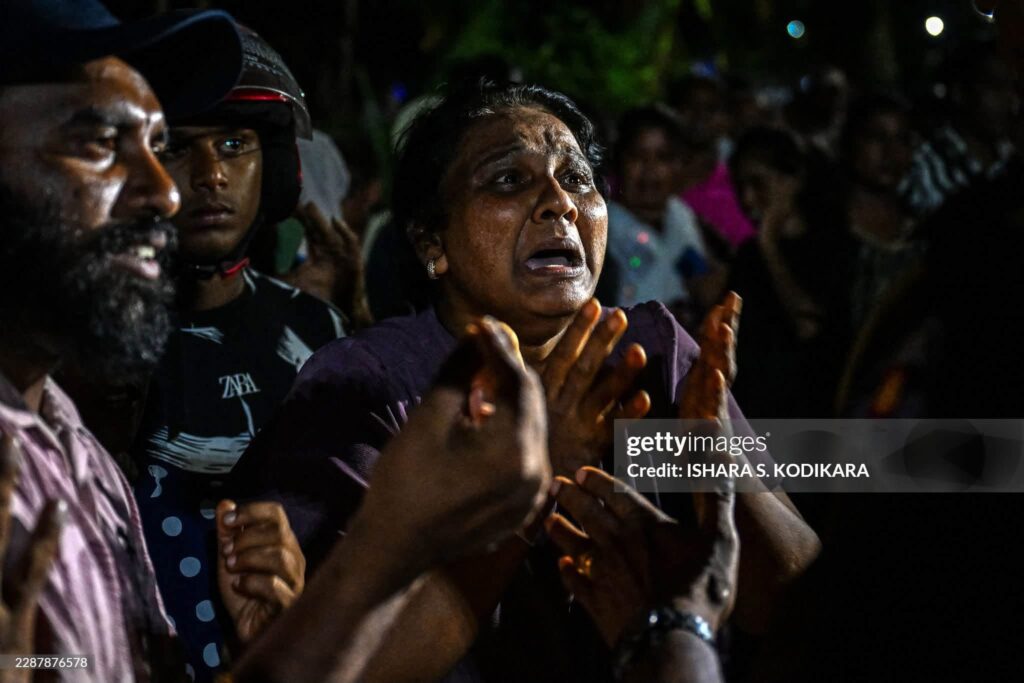
On August 1-2, 2026, a riot erupted at Mahara Prison, north of Colombo, causing severe damage to its already unlivable infrastructure and reportedly resulting in the death of one inmate. This is the second prison riot in less than a month and followed the massacre in the Negombo prison early last month.[1] The vast majority of detainees at Mahara — as throughout Sri Lanka’s prison system, where approximately 75 percent of inmates are unconvicted remand prisoners — are held in indefinite judicial limbo, warehoused in facilities built for 11,762 that now hold more than 42,000. The conditions are, by any objective standard, a form of systematic torture: prisoners forced to sleep standing, defecate into shopping bags, survive on food that “even cats and dogs” would reject, confined to as little as 1.2 square metres of space.[2] In 2023, 67.8 percent (31,822) of those imprisoned were jailed due to their inability to pay fines — a form of criminalization of poverty. A recent National Audit Office report finds that over 15,000 remain in prolonged remand custody due to delay in government analyst reports. The riot was not an act of criminality. It was an explosion of outrage of human beings subjected to torturous conditions that the capitalist state has deliberately created and deliberately maintains.
But it is not the riot itself that most starkly reveals the political trajectory of Sri Lankan society. It is the response — both of the state and of a significant and vocal section of the public.
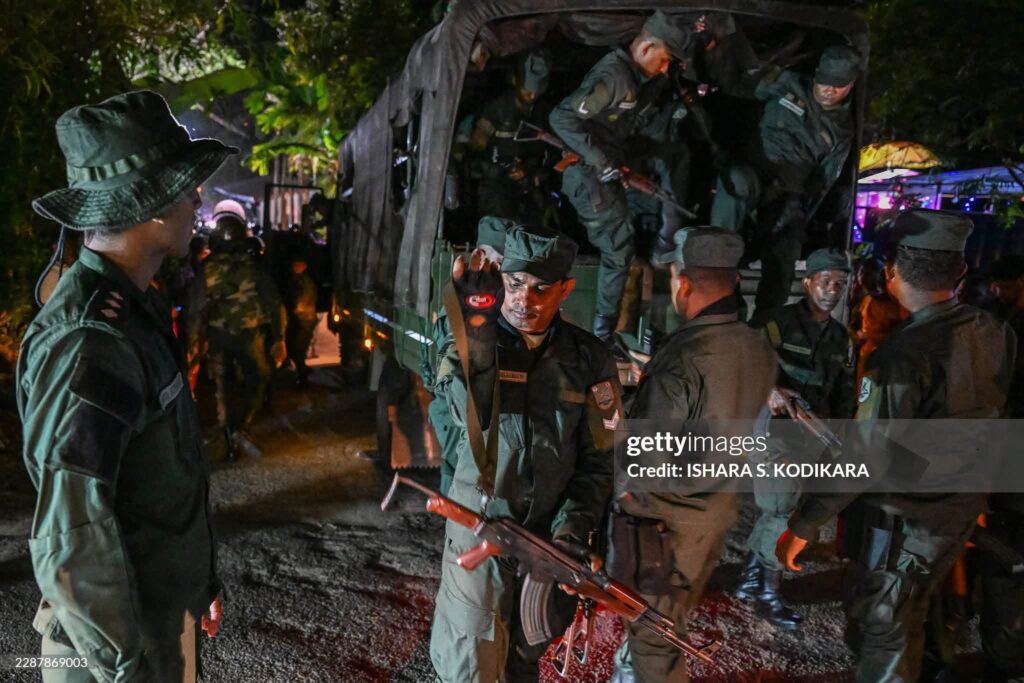
In the hours following the Mahara unrest, as was in the aftermath of the Negombo prison incident, a significant segment of society — concentrated in the Sinhala middle class of the south and amplified across social media — began openly proposing measures that belong to the lexicon of fascism. “Break their limbs.” “Shoot them in the head.” “Exterminate the drug residue.” These are not the mutterings of isolated cranks. They are the publicly expressed, socially sanctioned political proposals of a layer of the population that has been systematically prepared over decades to regard certain categories of human beings as unworthy of life. The comments sections of mainstream news outlets and the feeds of social media platforms have become open forums for the advocacy of extrajudicial murder, for the vilification of grieving families, for the glorification of the STF and the military, deployed by the JVP/NPP government, to crush prison riots. The corporate media has done nothing to challenge this — because it cannot, because the media itself has been a primary vehicle for the ideological preparation that has produced it.
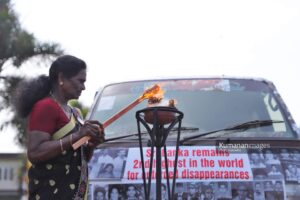
Following the Mahara unrest, in a video of an elderly mother of a remand prisoner, published on Dasatha News facebook page, she demanded the release of the names of inmates affected by the riot and subsequent military crackdown — including those killed, transferred to other prisons, or hospitalized. In the video, she holds the ruling class and the police accountable for creating a society dominated by drug lords who prey on the sons of impoverished mothers. She explains that her son was framed through drug planting — a widespread practice by the Sri Lanka Police, a routine mechanism for criminalizing poverty and filling the remand prisons with the sons and daughters of the poor.

The video attracted hundreds of scathing, inhumane, and morally bankrupt comments. Commentators vilified her for giving birth to her son, blamed her entirely for his drug addiction, and condemned her for failing to raise him properly. The same hostile barrage was directed at parents, siblings, and other relatives who gathered outside the Mahara and Negombo prisons during the riots and crackdowns to demand the safety of their loved ones — mothers weeping at the gates while gunfire echoed within, wives and children pleading for information, families who had traveled from distant villages only to be met with the deployment of armed drones, armored vehicles, and the Special Task Force.
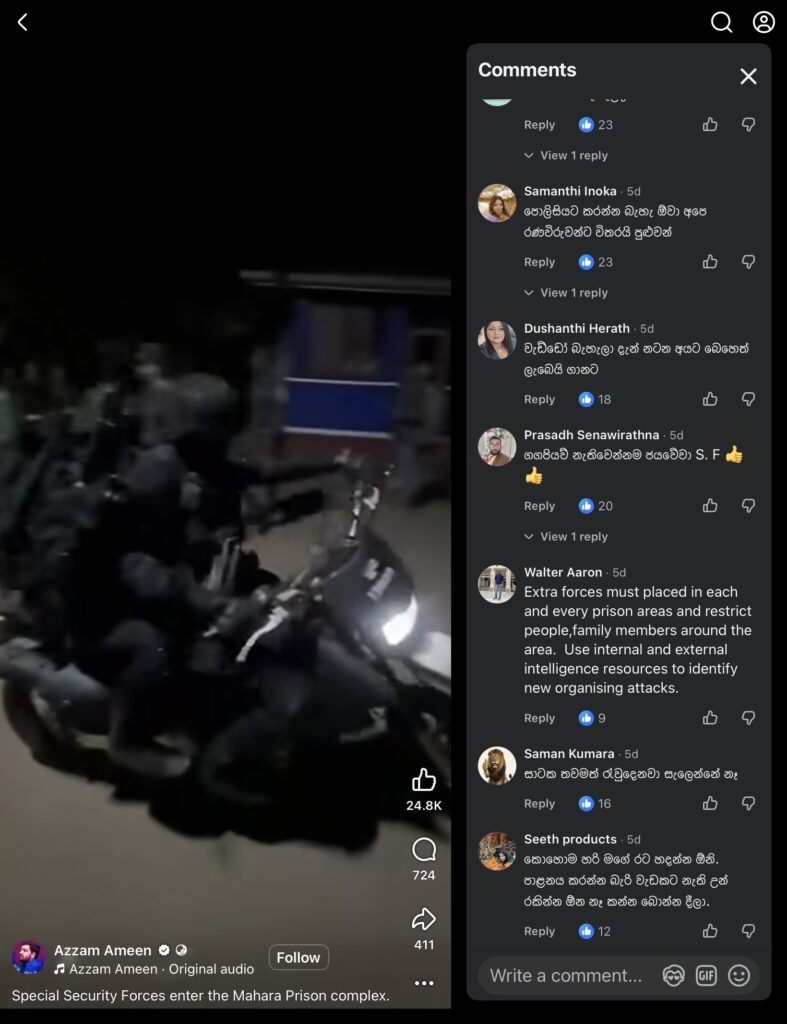
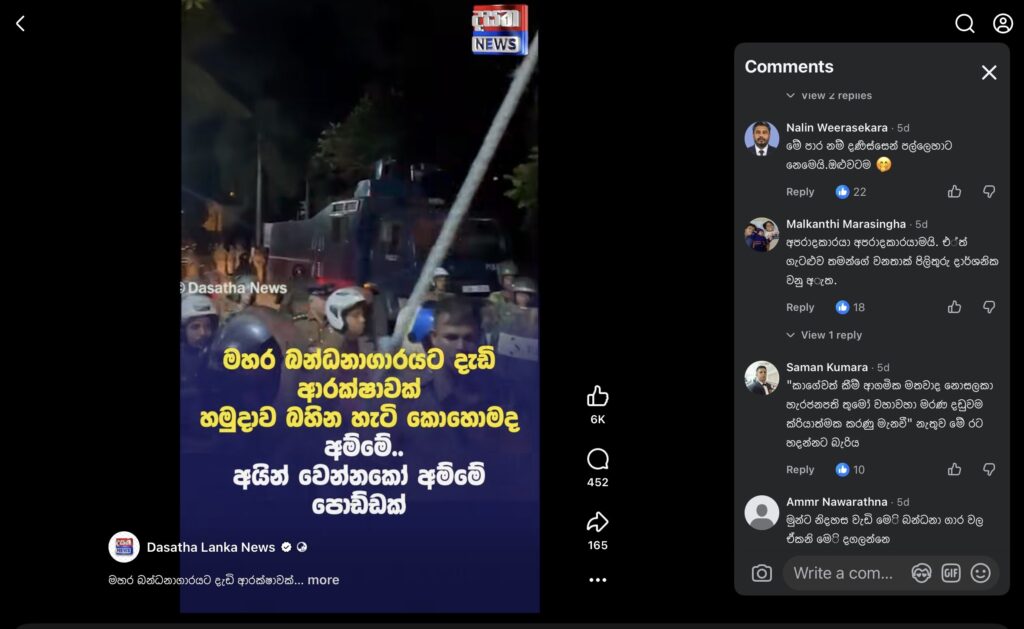
This is the face of the fascistic ideology now brewing in sections of the Sri Lankan middle class. It is not merely a political tendency expressed in abstract slogans about “law and order.” It is a social practice of systematic cruelty directed at the most vulnerable — at an elderly mother pleading for her son, at families demanding to know whether their loved ones are alive or dead. The same social media users who demand that prisoners be shot in the head are the ones who mock a mother’s grief, who blame her for the poverty into which her son was born, who insist that the state’s lethal violence is not merely justified but righteous.
This reaction reflects a profound moral decay. It is the ideological harvest of a society that has been taught, systematically and over generations, that lethal violence against the “enemy within” is not merely justified but heroic — and that those who love the enemy, who plead for the enemy, who gave birth to the enemy, are themselves contemptible. The elderly mother who demands to know whether her son is alive is not a grieving parent to be treated with compassion. She is an obstacle to the state’s campaign of terror, and the social media mob has been trained to treat her accordingly.
No public figure has yet gone on record in a formal media statement advocating the extrajudicial execution of prisoners. This tendency has not yet crystallized into an organized movement with a large social base. But it does not need to. The historical lesson of fascism — as demonstrated by the international resurgence of the far right — is that fascist movements are not mass movements from their inception. They begin as ideological currents within sections of the petty bourgeoisie, nurtured by the state and the media, that are activated and expanded when the ruling class requires a battering ram against the working class. The social media comments calling for prisoners to be shot, the mockery of a mother’s anguish, the vilification of families at the prison gates — these are the early ideological indicators of a tendency that the JVP/NPP government, facing mounting social opposition to IMF austerity, will seek to cultivate and mobilize.
The Genealogy of a Fascistic Ideology
The calls to shoot prisoners in the head did not emerge from nowhere. They are the latest expression of an ideological trajectory that can be traced with precision.
The 26-year communal war against the Liberation Tigers of Tamil Eelam (LTTE), concluded in 2009 with the slaughter of an estimated 40,000 Tamil civilians in the final months alone, was not merely a military campaign. It was a project of ideological mobilization on a mass scale. The state, Sinhala-Buddhist saffron forces, and the media jointly constructed a narrative in which the Tamil population — and by extension any population that could be designated as an internal threat — was dehumanized. The war was presented not as a conflict between the Sinhala and Tamil ruling classes, each seeking to exploit “their” workers, but as a civilizational struggle for the “Sinhala motherland” against a barbaric enemy. The Sri Lankan military mercilessly pounded the no-fire zone with artillery shells, deliberately targeting hospitals, aid centres and designated civilian areas. Grisly video evidence later emerged of Sri Lankan soldiers executing naked, bound and blindfolded men in cold blood. [3] When the LTTE defences collapsed, the military murdered surrendering LTTE leaders and herded some 300,000 civilians into army-controlled detention camps.
The Sri Lankan military was glorified as the savior of the nation. War heroes were celebrated in state ceremonies, their images plastered across billboards, their “sacrifices” invoked in political speeches. The military budget was expanded, not contracted, after the war ended. Military “leadership training” was imposed on university students. [4] The armed forces were integrated into the civil administration, including in schools, with retired and serving generals appointed to key government positions. The glorification of the military was inseparable from the cultivation of Sinhala-Buddhist chauvinism, which presented the Sinhala majority as the authentic nation and all others as threats to its integrity.
This ideological campaign did not end with the war. It was repurposed. As the Socialist Equality Party (SEP) warned in 2021: “The military and its brutal methods developed during the war are now being prepared for use against the working class, as unrest grows over the worsening social conditions facing working people.” [5] The “war on terror” became the “war on drugs,” which became the “war on the underworld.” The enemy was no longer the Tamil separatist but the drug dealer, the criminal, the “underworld figure” — categories that, in practice, encompass the poorest and most marginalized layers of the working class.
The World Socialist Web Site (WSWS) explained the logic of these campaigns as early as 2009: the “war on the underworld” was launched “to divert growing popular discontent and to justify the further strengthening of the state apparatus in preparation for social unrest.”[6] The same analysis applies with equal force today. The JVP/NPP government’s escalating “war on drugs” is a rehearsal for police-state measures, the main target of which is the working class that come into struggle.
The middle-class social media users who now call for prisoners to be shot in the head are the products of this decades-long ideological conditioning. They have been taught to see the state’s lethal violence as legitimate, to regard due process as an obstacle to “security,” and to view certain categories of the poor as subhuman.
The Same Tendency, the Same Targets
But this tendency is not new. It is the same social layer, animated by the same ideology, that has for the past few years populated the comments sections of mainstream media with the glorification of the military and the dehumanization of its victims. When the daily excavations of skeletal remains at the Chemmani-Siththupaththi mass grave are reported — the bones of Tamil men, women, and children who were “disappeared” by state forces, buried in unusual positions, and dumped together in shallow pits — this same social media mob posts comments calling to “make soup out of their bones and have it.” When Tamil communities in the North and East protest the military’s continued occupation of their lands — a permanent network of army camps established during the war and never dismantled — this same tendency demands the deployment of the army to crush them. When Tamil families who have spent decades searching for their loved ones demand accountability for the tens of thousands slaughtered in the final months of the war, this same social layer mocks their grief and insists the killings were justified. When the skeletal remains of 136 individuals were unearthed in Mannar after 74 days of excavation, the same voices jeered, defending the military.
The calls to shoot prisoners in the head are not a departure from this chauvinist culture. They are its extension. The ideological machinery that was built to dehumanize the Tamil “terrorist” has been repurposed to dehumanize the Sinhala “criminal.” The mechanism is identical: construct a subhuman category, mobilize revulsion against it, and demand that the state kill without process, without mercy, without accountability. The war against the LTTE provided the template. The “war on drugs” provides the new target. The underlying logic — that certain categories of human beings may be killed by the state with impunity, without trial, without process, without mercy and that those who call for their killing are patriots — is the same.
The decades-long campaign of militarization and Sinhala-Buddhist chauvinism has prepared this social layer to serve as the shock troops of reaction. The glorification of war heroes, the celebration of military “victory,” the refusal to acknowledge war crimes, the mockery of mass graves — all of this has cultivated an ideological disposition that regards lethal state violence not as a crime to be prosecuted but as a virtue to be celebrated. The middle-class youth who posts “shoot them in the head” on Facebook is not expressing an idiosyncratic opinion. He is expressing the logical endpoint of an ideology that has been systematically inculcated through the education system, the media, and the political culture of the post-war period. He is the product of a society that has never held its killers to account and has instead elevated them to the status of national heroes.
The same social layer revealed its moral character with unmistakable clarity during Israel’s genocidal war on Gaza, which since October 2023 has claimed the lives of tens of thousands of Palestinian civilians — men, women, and children slaughtered under the banner of “fighting terrorism.” Across social media, this section of the Sinhala middle class expressed vociferous indifference to the genocide and open support for Zionist Israel’s crimes. The same dehumanization mechanism was at work: Palestinians were “terrorists,” their deaths were “necessary,” their suffering was deserved. That the JVP/NPP government itself has conspicuously failed to condemn Israel’s planned seizure of Gaza, pointedly omitting any mention of genocide or ethnic cleansing from its official statements, is no coincidence. The ideological framework that justifies the slaughter of prisoners at Mahara or Negombo, the mockery of Chemmani’s dead, and the indifference to Gaza’s murdered children is one and the same: the conviction that lethal state violence against a dehumanized enemy is not a crime but a form of justice. This is the moral universe that decades of militarization and chauvinism have built.
The social base that the JVP/NPP government is cultivating is this. The party that opposed UN human rights investigations into war crimes, that integrated retired military officers into its political apparatus, that retains the Prevention of Terrorism Act and expands police-state powers — this party governs with the tacit support of the social media mob that demands bullets for prisoners and mocks the bones of the disappeared. It does not need to issue formal statements endorsing such sentiments. It needs only to continue what it is already doing: glorifying the security forces, refusing accountability for past and present massacres, and framing its “war on drugs” as a civilizational struggle against subhuman enemies. The social media tendency will do the rest, providing the popular ideological cover that the state requires to escalate its violence — against prisoners today, against striking workers and protesting youth tomorrow.
The JVP/NPP: Architects of Militarization
The present leaders of this militarization campaign are the Janatha Vimukthi Peramuna (JVP) and the National People’s Power (NPP) government. This is a fact of immense political significance that must be stated without equivocation.
The JVP campaigned for the 2024 elections on a platform of “systemic change.” It made promises to workers, peasants, and youth across every corner of society. It presented its program as a vision of social righteousness, of clean government, of a break with the corrupt and violent past. It rode to power on the back of the massive Aragalaya uprising of 2022, in which about a million working people rose up against the Rajapaksa regime and the unbearable social conditions produced by the crisis of Sri Lankan capitalism and the 2022 sovereign default.
Today, that same JVP/NPP holds power while actively driving militarization forward. It has retained the Prevention of Terrorism Act, which it explicitly promised to abolish. It has invoked essential services laws to criminalize strikes across key sectors. It has introduced the Protection of the State from Terrorism Act (PSTA), vastly expanding state repressive powers. It has announced a plan to recruit 10,000 retired military personnel into the police force — many of whom have combat experience from the 26-year anti-Tamil communal war. It has established over 14,000 Public Safety Committees across all village officer divisions, institutionalized as a force operating under the police — a revival of the intelligence-gathering committees set up by Gotabhaya Rajapaksa during the war, with JVP members reportedly appointed to them in almost all areas.[7]
The JVP’s collaboration with the military apparatus is not new. During the war, the Sinhala chauvinist JVP was a virulent advocate of the military campaign against the LTTE, demanding an all-out military solution and vehemently opposing any concessions to Tamils. [8] [9] [10] In 2010, it formed a sordid electoral alliance with former army commander Sarath Fonseka, the general who oversaw the final military offensives. In 2023, as it prepared for government, the JVP/NPP established formal collectives of retired military and police officers — the Retired Tri-forces Collective and the Retired Police Officers Collective — integrating figures most likely including individuals connected to crimes and human rights abuses during the war into its political apparatus.
The betrayal of the Tamil population of the North and East is among the most damning indictments of the JVP/NPP government. During the 2024 presidential and parliamentary election campaigns, Dissanayake and the JVP/NPP made explicit promises to Tamil voters: the release of all political prisoners, the return of civilian land seized by the military, and the provision of information to families of the tens of thousands of missing persons. On the basis of these pledges — and driven by deep disaffection with the traditional Tamil bourgeois parties that had betrayed them for decades — a significant section of Tamil voters swung behind the JVP/NPP in the November 2024 parliamentary election, handing the party a plurality of votes in all but one district in the North and East. Every one of these promises has been broken. The government now claims that political prisoners were convicted on criminal charges and therefore cannot be released. Some land has been returned, but an estimated 2,600 acres still remain under military control, and tens of thousands of acres seized from ordinary working people during the war remain in the hands of the armed forces. Instead of revealing the fate of the disappeared, the government proposes limited financial reparations to victims’ families while protecting the perpetrators. The JVP/NPP has categorically rejected United Nations Human Rights Council resolutions calling for investigations into war crimes. Its opposition to any human rights investigation flows from its Sinhala chauvinist politics and ardent support for the protracted anti-Tamil civil war and is insisting on the lie that the military committed no war crimes. The Tamil masses who voted based on promises of “systemic change”— in spite of the long record of JVP’s anti-Tamil chauvinism — have instead received the same military occupation, the same denial of justice, the same criminalization of their dead.
Now, the JVP Justice Minister visits the Sittupattu mass grave site (on 19 June), faces hundreds of protesters demanding truth and accountability, and walks past them to promise justice “within two years.” But the obscenity does not end there. After standing at Sri Lanka’s largest mass grave — over 400 skeletal remains, including the bones of infants — the minister, answering questions from people at a meeting held at the Jaffna Divisional Secretariat Office publicly cast doubt on whether Chemmani is even a mass grave at all, suggesting it may simply be a normal graveyard. He stated, “first of all, it is a cemetery, cause of death of bones should be inspected, and complaints are required before we can proceed with DNA identification”. In another press statement, the Minister raised doubts as to who the perpetrators were, attempting to discredit strong allegations against the armed forces.[11] This is not confusion. This is not ignorance. This is the language of cover-up. It is the language of impunity spoken aloud.
This is the party that now governs Sri Lanka. This is the party that presides over the prison massacres at Negombo and Mahara. This is the party whose media allies portray dead prison guards as “heroes” who “sacrificed their lives” — the right-wing Island newspaper declaring: “The drug mafia has flexed its muscle again. The government has embarked on an ambitious campaign to rid the country of narcotics, and rightly so.” [12] On August 3, its Sinhala language daily, Divina named the military-STF intervention in the Mahara prison as a “humanitarian mission”, which echoed the term used to refer to the military onslaught in the final phase of the civil war. This is the party that is precisely accountable for the massive inhumanity, savagery, and moral decay represented by the calls to shoot prisoners in the head.
The Middle Class and the Fascist Mobilization
The social media posts proposing the extrajudicial execution of prisoners are not evenly distributed across the population. They emanate disproportionately from the Sinhala middle class of the south — the petty bourgeoisie, the lower-level professionals, the small business owners, the university-educated and unemployed youth who have been traditionally taught to see themselves as the guardians of the nation’s moral order. This is the classic social base of fascist movements, and its emergence in Sri Lanka follows a pattern that Marxism has long understood.
The middle class occupies a contradictory position in capitalist society. It is not part of the bourgeoisie — it does not own the means of production on a scale that frees it from the necessity of work. But it is terrified of falling into the proletariat, of losing its precarious status, of being swallowed by the poverty that surrounds it. In periods of capitalist crisis, when its economic position is threatened by inflation, unemployment, and the collapse of small enterprises, the middle class becomes politically volatile. It can be mobilized either in alliance with the working class against the bourgeoisie — or, as history has repeatedly demonstrated, as the shock troops of reaction against the working class.[13]
The decades-long campaign of militarization and Sinhala-Buddhist chauvinism has prepared the Sri Lankan middle class to choose the latter path. The glorification of war heroes, the demonization of internal enemies, the constant invocation of “national security” — all of this has cultivated an ideological disposition that sees violence as the solution to social problems. What is developing among sections of the disgruntled Sinhala middle class is not a diffuse or generalized social conservatism. It is a far-right political current, bearing all the essential characteristics of fascism as the Marxist tradition has understood it: the glorification of lethal state violence as a social good, the systematic dehumanization of designated internal enemies, the contempt for due process and legal norms, and the conviction that extrajudicial killing is a legitimate instrument of “law and order.”
This tendency may not yet have a large social base. It is concentrated among a significant section of social media users — particularly youth and the middle class — who wage this militaristic, demoralized, inhumane campaign as a matter of defending law and order and security. The JVP/NPP government is its political beneficiary and its tacit patron — because it understands that when working-class resistance intensifies, this far-right current will be available for mobilization as the street-level enforcers of state terror.
The government and the ruling class are aware of these developments and are tacitly encouraging them. This is the decisive political point. The social media mob that calls for bullets in prisoners’ heads is not acting against the state. It is acting in harmony with a state that has itself just carried out a shoot-to-kill operation at Negombo, that has deployed the STF and the military against unarmed prisoners, that has subjected transferred inmates to retaliatory torture resulting in at least two post-transfer deaths.[1] The state kills; the social media mob applauds; the government appoints a committee of retired judges to bury the truth. Each element reinforces the others.
SLPP as the direct institutional patron of the far-right
This far-right current is not an amorphous social mood. It is being politically organized. Its most direct institutional patrons are the Rajapaksa family’s Sri Lanka Podujana Peramuna (SLPP), which has installed Namal Rajapaksa — the son of former president Mahinda Rajapaksa — as its national organizer, and the Buddhist clergy that vociferously backs him.
The SLPP and its clerical allies portray the JVP/NPP government as betraying the Sinhala nation by granting concessions to Tamils in order to secure the support of the Tamil diaspora. This is a calculated distortion, but it contains a kernel of political reality. The JVP/NPP was indeed fully supported by sections of the Tamil diaspora — Tamil capitalist expatriates, the wealthy, and the elite — and continues to seek their backing. These layers in turn expect the government to deliver the full implementation of the Thirteenth Amendment to the constitution, including the devolution of police and land powers, as the price of their political loyalty. The JVP/NPP, however, has no intention of fulfilling these expectations. It has released only an insignificant extent of occupied lands, while military occupation of the North and East continues unabated.
The SLPP exploits this contradiction to posture as the savior of Buddhism and the Sinhala nation, directly encouraging far-right fascistic elements who wage Sinhala-Buddhist racist provocations in the North — such as the illegal expansion of the Tissa Viharaya temple on seized Tamil land, the erection of Buddha statues as deliberate communal provocations in Trincomalee, and the ongoing campaign by Buddhist chauvinist groups to assert Sinhala-Buddhist supremacy over Tamil and Muslim communities. The SLPP’s aim is transparent: to outflank the JVP/NPP from the right, to mobilize the most backward and violent sections of the Sinhala middle class, and to position itself as the political leadership of the fascistic tendency now brewing in Sri Lankan society.
The JVP/NPP, for its part, has repeatedly demonstrated that it will not confront this reactionary mobilization but will accommodate and appease it — because it shares its fundamental ideological premises and will require its services when working-class resistance intensifies. The middle-class social media mob that demands bullets for prisoners and mocks the Chemmani dead is not an isolated phenomenon. It is the raw material of a political movement that already has its leaders, its institutions, and its patrons — and that is being prepared for deployment against the working class.
The Trajectory: From Prisoners to Workers
The critical political question is: where does this trajectory lead?
The government will in due course direct these fascistic tendencies against working-class struggles. The middle class that today demands bullets for prisoners will tomorrow demand bullets for strikers. The social media mob that dehumanizes “drug residue” will be mobilized to dehumanize workers who defy essential services orders, youth who protest IMF austerity, peasants who resist land grabs. The ideological machinery that was built to prosecute the war against the LTTE and then repurposed for the “war on drugs” will be repurposed again for the war on the working class.
As the Socialist Lead of Sri Lanka and South Asia (SLLA) warned in November 2024, The JVP/NPP government is already preparing the ground. [14] The 14,000 Public Safety Committees, staffed with JVP members and operating under police supervision, are mechanisms for surveillance, intelligence gathering, and repression against political opponents and workers engaged in struggle. The recruitment of 10,000 retired military personnel into the police force is a direct preparation for the violent suppression of social unrest. The government expects strong resistance from youth and students and has already deployed the police to violently suppress teachers’ protests and student demonstrations. School Development Officers were beaten and detained by police in December 2024 for demanding their rights. Allied health science graduates were violently suppressed and arrested in March and April 2025.
The JVP/NPP is implementing the IMF austerity program to the letter. Dissanayake retains the main portfolios of finance and defence to ensure the government’s foremost task of ruthlessly implementing IMF austerity measures is directly in his hands. For 2026, the allocation of funds to the Ministry of Defence is 530 billion Rupees. On the very first day the majority-JVP/NPP parliament convened, the government jettisoned its election pledge to renegotiate the IMF bailout. The measures include significant tax increases targeting workers, the lowering of the income-tax threshold directly affecting the middle class, the slashing of vital public services and a fire-sale of state-owned enterprises, destroying hundreds of thousands of jobs. Parliament unanimously approved these IMF austerity measures in December 2024. Dissanayake’s budgets were fully dictated by the IMF. The working class and the poor suffer heavily due to sky-rocketing prices of consumer items, including essential food items, while the JVP-controlled majority trade unions have artificially suppressed the working class struggles.
The government knows it sits on a social powder-keg. The austerity measures it implements will generate mass opposition. It is haunted by the 2022 Aragalaya. Its response is to build the repressive apparatus in advance, to cultivate the ideological climate in which lethal violence against protesters will be accepted, and to prepare the middle-class shock troops who will condemn and vilify the worker, hail the military-police crack-down and provide the political cover for state terror.
The JVP’s general secretary Tilvin Silva has declared that “there will be no other governments after this government.” President Dissanayake has said the government “cannot be shaken for decades.” These are not expressions of democratic confidence. They are threats. They announce that the JVP/NPP will not peacefully surrender power, that it is preparing to rule through force, that the fascistic ideology now being cultivated in the middle class is an essential component of its political strategy.
The Crisis of Sri Lankan Capitalism
The prison system — and the fascistic ideology that demands its victims be shot — is a concentrated expression of the broader social catastrophe produced by Sri Lankan capitalism. According to the United Nations Development Program (UNDP), the country was among the most unequal in the Asia-Pacific region by 2023. The Super-Rich comprise just 1 percent of the population but command a massive 31 percent of the total personal wealth in the country. The Working Class and the Poor comprise half of the entire population but collectively own less than 4 percent of the overall national wealth.
The plantation workers of the central hill country — the descendants of indentured laborers brought from India by British colonialism — continue to live in conditions of abject poverty. The urban poor of Colombo’s slums, the rural farmers crushed by debt and the removal of fertilizer subsidies, the youth who face permanent unemployment — these are the social layers from which the prison population is drawn.
They are the human products of a system that subordinates human need to private profit. And when they resist — when they protest, when they strike, when they explode — the state answers with bullets. When the middle class applauds those bullets, it is not expressing a pathology. It is expressing the logic of a system that requires the dehumanization of its victims in order to sustain itself.
The Warning and the Task
Workers must recognize this danger. The calls to shoot prisoners in the head are not a temporary aberration. They are a political warning. The same forces that today demand the extrajudicial execution of remand prisoners will tomorrow demand the same for striking workers, for protesting students, for anyone who threatens the “stability” that the ruling class requires to continue its exploitation. The social media tendency that mocks the bones of the Chemmani dead, vilifies a remand prisoner’s grieving mother, and calls for bullets in the heads of prisoners is being cultivated as the ideological battering ram of a government preparing for class war.
The revolutionary party must be conscious of these subtle developments in the social consciousness and expose the growing dangers. This means neither exaggerating the tendency into something it is not yet — a mass fascist movement — nor dismissing it as the harmless venting of online cranks. It means identifying it precisely for what it is: an emergent ideological current, rooted in the material crisis of the middle class, cultivated by decades of militarization and Sinhala-Buddhist chauvinism, and tacitly encouraged by a government that will require it when working-class resistance to austerity intensifies. It means exposing the continuity between the dehumanization of Tamils, the mockery of mass graves, and the demand for bullets in prisoners’ heads — because all three are expressions of the same logic, nurtured by the same state, and aimed at the same ultimate target: the working class.
The working class must defeat the ruling class’s militarization program and ideology. This requires an independent political mobilization, organized through action committees in every workplace and neighborhood, that breaks decisively with all capitalist parties — including the JVP/NPP — and their trade union appendages. It requires the building of a revolutionary party, armed with the program of socialist internationalism, that fights for the unity of Sinhala, Tamil, and Muslim workers across ethnic divisions and builds an alliance of the working class with all oppressed layers, the peasantry and the youth against the ruling class that foments divisions among them to strengthen capitalist class rule.
The fight against fascistic ideology cannot be separated from the fight against the capitalist system that produces it. The middle class that calls for prisoners to be shot is itself a product of a society in crisis — economically threatened, ideologically disoriented, politically manipulated by a ruling class that requires it as a battering ram against the working class. The only force capable of defeating this reactionary mobilization is the organized working class, united across all communal lines, advancing its own socialist program as the alternative to the barbarism of capitalism in decay.
The Negombo dead, the Mahara brutalized prisoners, the tens of thousands slaughtered at Mulliwaikkal, the tens of thousands of rural youth killed in 1988–89, the skeletons still being unearthed at Chemmani and Mannar, the forcibly disappeared, the tortured and the warehoused — The blood of the Sri Lankan working class and oppressed cries out against a system that produces only death and misery. The task of the SLLA is to build the revolutionary party to organize the working class, in alliance with the middle class, the petty-bourgeoisie, the rural poor and the urban impoverished, to put an end to it — through the revolutionary overthrow of capitalism and the construction of a workers’ state, in Sri Lanka, South Asia and internationally, as part of the world party of socialist revolution, the International Committee of the Fourth International.
[1] The Negombo Prison Massacre: Class Violence and the Capitalist State in Sri Lanka, The Socialist Lead of Sri Lanka and South Asia (SLLA) (11 July 2026).<https://www.thesocialist.lk/11-07-2026-the-negombo-prison-massacre-class-violence-and-the-capitalist-state-in-sri-lanka/>
[2] Inmates face torture after prison riots in Sri Lanka, Wasantha Rupasinghe (10 July 2026) <https://www.wsws.org/en/articles/2026/07/11/uohf-j11.html>
[3] Video evidence of Sri Lankan government war crimes, Sarath Kumara (29 August 2009) <https://www.wsws.org/en/articles/2009/08/slkl-a29.html>
[4] Sri Lanka: Military discipline for university students, Panini Wijesiriwardena (24 January 2011) <https://www.wsws.org/en/articles/2011/01/sril-j24.html>
[5] Twelve years since the end of Sri Lanka’s communal war, Socialist Equality Party (Sri Lanka) (26 May 2021) <https://www.wsws.org/en/articles/2021/05/27/slwr-m27.html>
[6] Sri Lankan government launches “war on the underworld” Sarath Kumara (3 August 2009) <https://www.wsws.org/en/articles/2009/08/slcr-a03.html>
[7] Sri Lankan government to expand repressive police apparatus, N. Ranges (19 June 2025) <https://www.wsws.org/en/articles/2025/06/20/ioqy-j20.html>
[8] An abrupt turn in Sri Lanka’s civil war once again reveals the fascist character of the JVP, Nanda Wickremasinghe (8 September 2000) <https://www.wsws.org/en/articles/2000/09/jvp-s08.html>
[9] Sri Lanka: JVP vehemently opposes any concessions to Tamils, Wije Dias (11 June 2009) <https://www.wsws.org/en/articles/2009/06/sril-j11.html>
[10] Sri Lankan government negotiates with JVP ally on program for all-out war, K. Ratnayake (28 August 2006) <https://www.wsws.org/en/articles/2006/08/sril-a28.html>
[11] “We are currently exhuming bodies in Chemmani. First, we need to determine whether those deaths occurred naturally or due to trauma. The other issue is that within a very short period in that area, the LTTE was in control, the Indian Army was there, and other paramilitaries from that time were also there. The army came much later. Therefore, an investigation is underway to identify the relevant individuals. We will conduct it properly.” Adaderana Facebook on 29 July 2026. [“චෙම්මනි මිනී ගොඩගනිමින් අපි ඉන්නෙ. ඒව සමහරවිට ස්වභාවිකව වෙළා ද, එහෙම නැත්නම් ට්රොමා එකකින් උනාද කියල ඉස්සෙල්ල බේරගන්නට ඕන. අනික් ගැටලුව ඔය ප්රදේශයේ ඉතා කෙටි කාලයක් තුළ LTTE එකත් පාලනයේ ඉඳළ තියෙනව, ඉන්දියන් හමුදාවත් ඉඳළ තියෙනව, ඒකාලෙ හිටපු අනිත් පැරාමිලිටරිස් ඉඳළ තියෙනව. හමුදාව එන්නෙ ඊට ගොඩාක් පස්සෙ. ඒ නිසා අදාළ පුද්ගලයො හොයාගැනීමට විමර්ශන කටයුත්තක් තිබෙනව. ඒක අපි හරියට කරනව.”]
[12] Inmates face torture after prison riots in Sri Lanka, Wasantha Rupasinghe (10 July 2026)<https://www.wsws.org/en/articles/2026/07/11/uohf-j11.html>
[13] Bourgeoisie, Petty Bourgeoisie and Proletariat: Jacobinism, Social Democracy and Fascism – The Political Programs of the Petty Bourgeoisie, Leon Trotsky, (August 1932) <https://www.marxists.org/archive/trotsky/1932/08/onlyroad2.htm >
[14] Sri Lanka’s ruling NPP secures a strong parliamentary majority to enforce IMF dictates: Build the SEP to fight the cuts! Statement of the Socialist Lead of Sri Lanka and South Asia (SLLA), the Revolutionary Left Faction (RLF) of the Socialist Equality Party (SEP) of Sri Lanka (16 November 2026) <https://www.thesocialist.lk/sri-lankas-ruling-npp-secures-a-strong-parliamentary-majority-to-enforce-imf-dictates-build-the-sep-to-fight-the-cuts/>