By Sanjaya Jayasekera, Member, The Socialist Lead of Sri Lanka and South Asia (SLLA), the Revolutionary Left Faction of the Socialist Equality Party (SEP) of Sri Lanka. SEP is the Sri Lankan section of the International Committee of the Fourth International (ICFI), which publishes the World Socialist Web Site (WSWS).
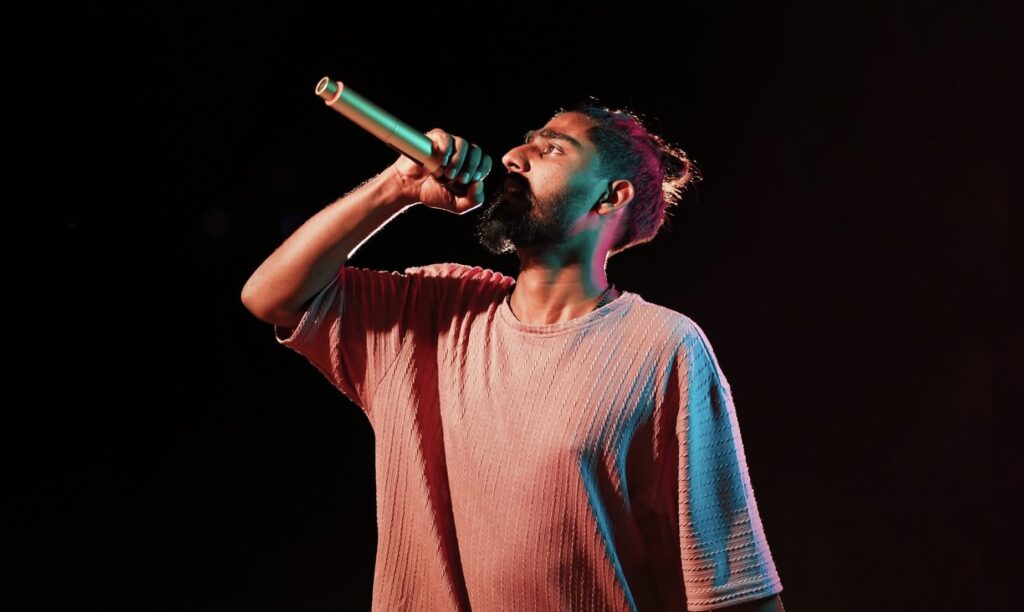
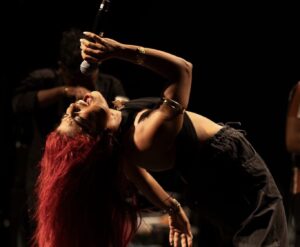
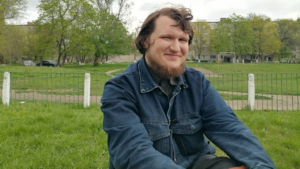
On a day (June 2) that should have passed unremarkably in Kilinochchi, the Jaffna District Crime Detective Bureau, acting through Chavakacheri police, arrested a 24-year-old musician. His name is Ganesh Kumar Sankeethan (Sangeethsan) — known by his stage name “HipHop Sangee” (YouTube Channel name) — and his crime, according to the state, was uploading songs that the police allege indirectly glorify the separatist Liberation Tigers of Tamil Eelam (LTTE). He was remanded for two weeks under Section 3(h) of the Prevention of Terrorism Act (PTA), his lawyer K. Sayanthan verified.
Sangeethsan, a rapper, has earned widespread recognition within the local Tamil hip-hop community for compositions that combine social commentary with cultural storytelling. Many of his works are available through his social media accounts. Before we go any further, let us consider what one of those songs contains. It is not vague cultural expression or ambiguous artistic metaphor. It invokes அண்ணன் — Elder Brother — the term used in Eelam Tamil political culture to refer to Velupillai Prabhakaran. It speaks of the Tiger flag arriving in triumph. It honors the மாவீரன் — the Great Heroes, the fallen LTTE cadres — by name and by the imagery of their sacrifice. It calls on them to return and build the nation. It invokes கார்த்திகை — November — the month of Maaveerar Naal, the annual mourning of the LTTE dead, as its emotional and symbolic landscape: flowers are brought to the fallen, their weeping families cry out to them, and the dead are called back to build the nation.
These are the lyrics of a young man from a war-ravaged district who grew up surrounded by grief, who found in music a way to articulate what his community has been undemocratically forbidden to say openly since May 2009.
We state these facts not to hand ammunition to those who want Sangeethsan kept in a cell. We state them because this article is committed to a principle that the Sri Lankan state and its chauvinist supporters on social media are equally committed to destroying: that honest politics must begin with the truth, not with convenient omissions. The question before us is not whether Sangeethsan’s lyrics express a political program we endorse. They do not — and we will explain why, plainly and without condescension, in the paragraphs that follow. The question before us is a different and more fundamental one: does any democratic society have the right to imprison a 24-year-old for the political content of his songs?
The answer is no. Unequivocally, no.
Freedom of political expression — including the freedom to express a politics that is wrong, mistaken, or even one that others find deeply objectionable — is a right that the working class defends with the greatest vigilance, with one principled and non-negotiable exception: fascist speech and fascist organization. We defend such expressions not because all political ideas are equally correct, but because the repressive legal machinery constructed to silence Tamil grief today is the same machinery that will be turned on striking workers, protesting students, and anyone else who challenges the authority of the capitalist state tomorrow. This is not a theoretical warning. It is the documented history of the PTA, other security laws and essential services laws in Sri Lanka, which have been used against Sinhala rural youth, students, Muslim youth, Tamil journalists, plantation workers, electricity workers and port workers with equal and indiscriminate brutality.
This article is not written primarily for those for whom what we discuss here is their daily experience. It is written for Sinhala youth, for middle-class families in Colombo and Kandy and Galle, for workers on plantations and in factories, who have been told their entire lives that the Tamil question was settled in May 2009, that “terrorism” was defeated, and that any sympathy for Tamil political expression is a conspiracy against the nation. It is written for those who, upon seeing Sangeethsan’s lyrics circulated on social media, may have felt the trained reflex: Tiger flag, Prabhakaran, Tamil Eelam — this is exactly what the PTA is for.
It is written to ask: who taught you to feel that reflex? Who benefits from it? And what has it cost you — not as a Sinhala person, but as a worker, as a young person, as someone whose living standards are being destroyed by the same state that is filling its remand prisons with Tamil youth and artists?
A Ban Designed Not to Fight Terror, But to Manufacture It
The formal proscription of the LTTE has been maintained continuously since the government of Mahinda Rajapakse banned it by gazette in January 2009, just months before the military’s final offensive ended the civil war. A final gazette in 2011 consolidated and extended this proscription to cover “related activities.” Every government since — Sirisena’s, Wickremesinghe’s, Gotabaya’s, and now Dissanayake’s JVP/NPP government — has maintained this framework intact.
When the Socialist Equality Party (SEP) opposed the original 2009 ban, it explained with precision what the ban was actually for. The statement issued at the time noted that the ban “has no direct bearing on the LTTE — the government is already waging war against the Tamil separatist organisation.” It warned that the decree’s sweeping powers to proscribe organisations “connected with or representing” the LTTE could “immediately be used against the Tamil National Alliance, a parliamentary political party.” And it predicted, with complete accuracy, that “such broad definitions, however, could be applied to any organisations, including political parties, trade unions or student bodies, that are regarded as opponents of the government.”[1]
Seventeen years later, those warnings have been borne out in case after case. The PTA has been used to imprison Tamil detainees for years without trial, to torture a young Muslim poet named Ahnaf Jazeem for writing verse that condemned ISIS and imperialist war, and to harass Tamil journalists. The JVP/NPP government — elected on a promise to abolish the PTA — has already used the Act against Muslim youth who expressed opposition to the Gaza genocide. In August 2025, the Counter Terrorism and Investigation Division (TID) questioned a Tamil journalist who reported on mass graves in the North. The new Protection of the State from Terrorism Act (PSTA) being drafted to replace the PTA reproduces its essential features while expanding the scope of what can be defined as a “terrorist act” to include actions that “intimidate the public” or “compel the government to do or abstain from doing any act” — language that could criminalize strikes, protests, and any form of organized resistance.
The instrument changes. The purpose remains identical: to place in the hands of the capitalist state an infinitely elastic legal weapon that can be pointed at anyone, at any time.
The Criminalization of Memory is Not an Accident
To understand why a 24-year-old rapper from Kilinochchi sits in a remand prison for singing about Tamil Eelam, you have to understand what kind of region Kilinochchi is, and what kind of wound the state is insisting must never be named.
Kilinochchi was the administrative capital of LTTE-controlled territory. It was also the site of some of the most intense fighting and civilian displacement in the final years of the war. The surrounding region of the Vanni was the theater of the last stages of a conflict in which, according to United Nations estimates, tens of thousands of Tamil civilians were killed. The survivors of that catastrophe — the families who lost fathers, mothers, husbands and children, who spent months in detention camps, who rebuilt lives from rubble — now live in a society where any public expression of that experience can be treated as a criminal act.
Sangeethsan is not a terrorist. He is a young man who grew up in the aftermath of that catastrophe, processing it in the only way artists know how: through music. To understand what is really at stake — politically and morally — we must read what he actually sang, and then ask not whether we agree with every word, but whether any democratic society can justify locking a young person in a remand cell for singing them.
This is not incidental to the logic of the PTA. It is the logic of the PTA. The state knows perfectly well that a military revival of the LTTE is structurally impossible and virtually non-existent. There is no evidence of serious LTTE organizational infrastructure, no military command, no armed force in the field. The proscription is maintained not because the LTTE poses a threat, but because the legal apparatus of the proscription remains extraordinarily useful — for precisely this: to convert political grievance into criminality, to transform memory into evidence, and to force the Tamil population into a permanent condition of political silence under pain of imprisonment.
This is what the SEP observed in August 2022, when the Wickremesinghe government, in the very same extraordinary gazette in which it delisted some Tamil diaspora groups for diplomatic purposes, continued to maintain the proscription framework: “The continued proscription of Tamil and Muslim groups is part of ongoing efforts by one government after another to whip up Sinhala chauvinism and discrimination against the country’s oppressed minorities. Facing the mass opposition of workers and the poor, the crisis-ridden Wickremesinghe regime is determined to keep communal tensions alive and deepen the repressive measures.” [2]
The pattern is consistent across every government of the post-independence era. The names change — UNP, SLFP, PA, UPFA, SLPP, JVP/NPP. The policy does not. This is not an accident. This is the function that communalism has always served in Sri Lanka: as the SEP noted in its analysis of 60 years of post-independence history, “Six decades of independence have brought ordinary working people nothing but communal conflict, deepening social misery and increasingly anti-democratic methods of rule.” The beneficiaries of that dynamic have never been ordinary Sinhala working people. They have been the ruling class, which has used ethnic division to rule a fractured country and impose economic policies that serve capital at the expense of all working people, regardless of their ethnicity.[3]
Read the Lyrics — Then Ask the Right Question
Let us be honest about what Sangeethsan sang in the song that we referred to above. His lyrics are not ambiguous cultural nostalgia. They invoke அண்ணன் — Elder Brother — a term that in the context of Eelam Tamil political culture refers unambiguously to Velupillai Prabhakaran. They speak of a Tiger flag arriving in triumph. They use the term மாவீரன் (Maaveeran) — Great Hero — the specific honorific reserved for fallen LTTE cadres. They invoke the month of கார்த்திகை (Karthikai/November), which is the month of Maaveerar Naal, the annual commemoration of the LTTE’s dead. They call upon the heroes to “come back” and “build the nation.” They speak of warriors whose “sulfur-scented bodies blended into the wind” — the gunpowder of the battlefield rendered as the smell of sacrifice. This is explicitly a song of mourning for, and celebration of, the LTTE’s slain fighters and their leader. The lyrics read, in part:
The Tiger flag of our Elder Brother is arriving, make way and clear the path!
Tamil Eelam dances in roaring triumph, his name echoes in every direction!
O great heroes who died protecting the soil, time shall never forget you!
Come back, come back, please come back again, to display your bravery and to build the nation! [most approximate English Translation]
These sentiments, as expressed, justify no arrest. We understand the content of it because any serious political analysis must begin with reality. But we unequivocally say that the 24-year-old youth from Kilinochchi should not be imprisoned for writing and singing this song.
Sangeethsan’s song is not fascist speech. The working class does not defend fascist speech — it demands the prosecution of fascist outfits and their financial backers. This distinction is not arbitrary. It is rooted in the nature of fascism itself: unlike any other political tendency, however wrong, fascism does not seek to win political argument — it seeks to annihilate the very conditions under which political argument is possible. Sangeethsan’s song is the very expression of a grief-stricken and oppressed people rendered in music. But this legal machinery, constructed to silence Tamil grief and working-class resistance, is never — without a single exception in the entire post-independence history of Sri Lanka — the machinery turned against the Sinhala chauvinist and communalist outfits that the ruling class courts, funds, and shelters precisely when the class struggle sharpens. The Bodu Bala Sena’s incitement of anti-Muslim pogroms, the Sihala Urumaya’s ethnic provocations — none of these drew the ferocity of the PTA. The state does not point its anti-terror machinery at the forces of communalism. It points it at the forces of class struggle. That asymmetry is not incidental. It is the entire point.
To genuinely serve Tamil youth — and to speak honestly to Sinhala workers who need to understand what is happening — we must ask the harder question that state repression is designed to prevent anyone from asking: What does it mean that a generation of Tamil youth in Kilinochchi and Jaffna and Mullaithivu genuinely love Prabhakaran and genuinely mourn the LTTE’s dead?
It means something real and painful. As already said, these young people grew up in the rubble of a bloody war. They grew up in a region under continuous military occupation, where soldiers still control Tamil lands, where surveillance is a fact of daily life, where their elders were disappeared, where mass graves continue to be discovered. They grew up in districts where, even before the 2022 economic collapse, poverty levels in Mullaithivu district reached 40 percent. In this reality, Prabhakaran is not a political program to them. He is a symbol of the idea that someone, once, stood up and fought back.
The grief is real. The anger is legitimate. The desire for dignity is not only human — it is politically necessary. And the passion that Tamil youth pour into songs like Sangeethsan’s is the raw material of a generation searching desperately for something to believe in.
The question that our revolutionary movement poses is therefore not: “How do we suppress this passion?” The question is: “Why is this passion flowing into Tamil nationalism instead of socialist politics?” And the answer to that question leads us directly back to the Colombo ruling class — and to the specific responsibility of the Sinhala working class and its potential for genuine solidarity with Tamil workers and the poor. The state that criminalizes Sangeethsan’s song is not only persecuting Tamil youth. It is actively working to ensure that their passion never finds its correct political destination.
Who is being Deceived, and Why
Here we must speak directly to the Sinhala readers of this article — especially to young people who, when Sangeethsan’s arrest was discussed on social media, may have felt that instinctive reaction: he shouldn’t have been singing about Tamil Eelam, that’s LTTE territory, what did he expect?
That reaction is not yours. It was installed in you.
For decades, the Sri Lankan ruling class and its corporate media have conducted a systematic program of militarization of the society and political conditioning. Sinhala children grew up with a version of national history in which the Tamil struggle for democratic rights was, from its very origins, portrayed as a foreign conspiracy and a terrorist project. The legitimate grievances that produced the Tamil national movement — the systematic language discrimination of 1956, the anti-Tamil pogroms of 1958, 1977, and 1983, the deliberate exclusion of Tamils from state employment and university admissions — were erased from public consciousness. In their place was substituted a permanent security narrative of fear mongering: we are under threat, we must be vigilant, any sympathy for Tamil identity is sympathy for terrorism. War has been rationalized as necessary, and the military has been glorified as “war heroes” (Rana Viru), ready to be deployed against any struggle of the working class united across ethnic divisions.
This communalist project was never a natural outgrowth of Sinhala culture or Buddhism. It was a deliberate political construction, launched by the Sri Lanka Freedom Party in 1956 as an electoral strategy to outbid the conservative UNP, and then reproduced by every faction of the ruling class because it served a vital class function: it prevented the Sinhala and Tamil working class from recognizing their common interests and uniting against the system that exploited them both.
The result can be seen today on TikTok, Facebook, and X. The moment a Tamil artist, journalist, or ordinary citizen uses the vocabulary of their own history — “Tamil Eelam,” “homeland,” “genocide,” “accountability”, “war crimes”, “commemoration” — sections of Sinhala social media erupt in denunciation. These users do not consider themselves tools of the state. Many of them are themselves suffering from the same economic devastation — unemployment, inflation, the IMF’s austerity measures, collapsing public services — that Tamil workers in the North and East are suffering. They have been successfully redirected. The enemy they have been given is not the class that rules them, but the neighbor who speaks a different language and carries a different wound.
Here is the dialectic that the ruling class has maintained for seven decades, and which it is essential for Sinhala workers and youth to understand: Sinhala chauvinism produces Tamil nationalism, and Tamil nationalism, in turn, reinforces Sinhala chauvinism. Each tendency is the mirror image and the fuel of the other. When Colombo discriminated against Tamil language rights in 1956, it created the conditions for Tamil political mobilization. When that mobilization was met not with redress but with pogroms, it created the conditions for Tamil armed separatism. When Tamil separatism launched attacks on Sinhala civilians, it was used by the Sinhala ruling class to justify yet more state terror against Tamils — and to intimidate Sinhala workers who might otherwise have seen through the charade. And when the state now arrests a 24-year-old for singing about Prabhakaran or Tamil Eelam, it ensures that another generation of Tamil youth will conclude — understandably, though incorrectly — that there is no path forward except through Tamil nationalism.
The LTTE’s political program was the program of an aspiring Tamil bourgeoisie, not the Tamil working class. As the ICFI analysis of the LTTE’s defeat made clear, the LTTE was utterly incapable of making a political appeal to Sinhala workers precisely because its perspective was based on ethnic struggle rather than class struggle — and its denunciations of the entire Sinhala population for the crimes of the Colombo government ensured that the very working-class unity that could have changed everything was permanently foreclosed.[4] The LTTE’s violent attacks on ordinary Sinhalese civilians served the same reactionary purpose as the government’s Sinhala supremacism: to divide the working class along ethnic, religious and linguistic lines and thereby strengthen the hand of Sinhala chauvinist forces in Colombo. The LTTE’s military defeat in 2009 resolved nothing. It left the Tamil masses with their democratic rights still denied, their land still occupied, their poor still impoverished — and their youth still searching for a political direction.
That is the political vacuum into which songs like Sangeethsan’s speak. They should not be criminalized and suppressed. They should be answered — with a socialist program that offers Tamil workers what Prabhakaran could never offer: genuine unity with the Sinhala and Muslim working class in a common fight against the capitalist state that oppresses all of them.
The State that Imprisons Sangeethsan will come for You Next
This is the point that must be grasped most clearly by Sinhala workers and youth who might be tempted to view Sangeethsan’s arrest as a Tamil problem, not their problem.
The PTA was enacted in 1979 to suppress Tamil militant organizations. But, it was never only about Tamils. It was used to bloodily suppress the JVP uprisings of 1988–1990 — killing tens of thousands of oppressed Sinhala rural youth. It has been used against Sinhala journalists, trade unionists, and political opponents. And under the JVP/NPP government that came to power promising to abolish it, the PTA has been invoked against Muslim and Tamil youth and it has used the Essential Public Services Act against electricity workers who protested and postal workers who struck.
The logic is identical in every case: the same state apparatus that defines Tamil cultural expression as “terrorism” will define your strike, your protest, your social media post criticizing the IMF as “terrorism” whenever it becomes convenient. The elastic definitions being written into the new PSTA — acts that “intimidate the public” or “compel the government to abstain from doing any act” — are not aimed at a nonexistent LTTE or any other such outfit. They are aimed at the working class. All of it. Sinhala, Tamil, Muslim.
The infrastructure of surveillance and military occupation maintained in the North and East since 2009, nominally to prevent an LTTE revival, serves a second function that should be legible to any honest observer: it is a standing model and template for the kind of state control that the ruling class intends to extend southward as the social and economic crisis deepens. A state that has kept an entire population under military surveillance for seventeen years after the end of a war, that imprisons a 24-year-old musician for his song lyrics, is a state that has long since abandoned any pretense of democratic governance.
The Way Forward: Unity of the Working Class against the Capitalist State
Sangeethsan must be released immediately and unconditionally. The charges against him must be dropped. The PTA should be abolished, and its successor legislation, the PSTA — which is the same weapon with a new label — should not pass. The military occupation of the North and East must end. All political prisoners held under these laws must be freed.
These are not Tamil demands. They are the demands of the entire working class, because the democratic rights of any section of the working class are the democratic rights of all of it.
The Socialist Equality Party, in which we, the SLLA, represent a revolutionary tendency, has maintained this position without deviation since its founding as the Revolutionary Communist League, through the entire 26 years of the civil war and its aftermath. We opposed the communal war when the JVP was supporting it. We defended Tamil democratic rights when the trade union bureaucracies were silent. We campaigned for the release of Tamil detainees held without trial under the PTA when no other political party would. And we have always done so on the basis of a clear class analysis: not because we gave political support to the LTTE’s separatism — which program represented the interests of a section of the Tamil bourgeoisie, not Tamil workers and farmers — but because the defense of democratic rights is inseparable from the unity of the working class, and because Tamil workers and farmers could defend their own interests only by uniting with Sinhala working people in a common struggle against capitalism.
To Tamil youth who love these songs, who light candles in November and weep for the Maaveerar: your grief is not misplaced, and your passion for dignity is a political resource, not a pathology. But Prabhakaran’s program failed — not because he was betrayed by the international community or outgunned by the army, but because a separate Tamil capitalist state could only ever reproduce the poverty and exploitation that Tamil workers already endure, in a new flag’s colors. The answer to discrimination and communal oppression is not to be found in a separate state, but in the unification of the oppressed in a common struggle for socialist revolution. The state that murders Tamil aspirations with the PTA is the same state that destroys Sinhala workers’ living standards with IMF austerity. Your enemy is not the Sinhala worker in a factory in Colombo. Your enemy is the class that rules them both. The revolutionary tradition that actually fought for your rights — that opposed the communal war when the JVP was cheering it on, that campaigned for Tamil political prisoners when no other party would, that demanded the withdrawal of the military from the North and East — is the Trotskyist tradition of the Socialist Equality Party. That is the tradition worthy of your passion and your fight.
The arrest of Sangeethsan is not an isolated incident. It is the latest manifestation of a strategy that has defined Sri Lankan capitalism since independence: divide the oppressed along ethnic lines, criminalize the memory of the oppressed, and use the machinery of anti-terrorism law to suppress any movement that threatens the rule of capital. Every government has played this game. The JVP/NPP, which rode to power on the wave of the 2022 Aragalaya uprising with promises of democratic reform, is playing it now.
The answer to this strategy is not Tamil separatism, which has proven a dead end that cost hundreds of thousands of lives. Nor is it Sinhala Buddhist chauvinism, which has served as the ideological cover for every act of state terror. [5] The answer is the political unity of Sinhala, Tamil, and Muslim workers, organized independently of all factions of the capitalist class and all its parties, fighting for the common program of socialist internationalism that addresses the interests of all working people against the IMF’s austerity, against militarism, against the entire apparatus of communalist state repression. This unity demands an unconditional and outright refusal to be trapped by the communal divisions that the ruling class has imposed on all of us.
Free Sangeethsan Now! Abolish the PTA—No Replacement! Build the united socialist movement of the working class!
[1] SEP opposes Sri Lankan government’s ban on LTTE, The Socialist Equality Party (Sri Lanka), 24 January 2009 <https://www.wsws.org/en/articles/2009/01/sril-j24.html>
[2] Sri Lankan government continues proscription of Tamil and Muslim groups and individuals, Saman Gunadasa 17 August 2022 <https://www.wsws.org/en/articles/2022/08/17/wfcd-a17.html>
[3] Sri Lankan independence: 60 years of communalism, social decay and war, The Socialist Equality Party (Sri Lanka) 4 February 2008 <https://www.wsws.org/en/articles/2008/02/sril-f04.html>
[4] Sri Lanka: the defeat of the LTTE and the dead-end of nationalism, Bill Van Auken, 21 May 2009 <https://www.wsws.org/en/articles/2009/05/pers-m21.html>
[5] Tamil separatism, however mistaken its program, arose as a response to systematic national oppression. Sinhala Buddhist chauvinism is the ideology of the oppressor nation’s ruling class — it is supremacist in its very foundations, asserting the primacy of Sinhala Buddhist identity over all other communities as a justification for state discrimination, pogroms, and military terror. “Chauvinism” is the Marxist term of art for aggressive, supremacist nationalism deployed in the service of a ruling class — named after Nicolas Chauvin, the symbol of blind, belligerent national superiority. It carries the correct political charge that “nationalism” does not, in relation to Sinhala Buddhist class hegemony.