War Crimes

Commemoration

Katuwana Massacre: Relatives commemorate victims after 36 years of intimidation and continuing impunity

Our Correspondent.
Commemoration
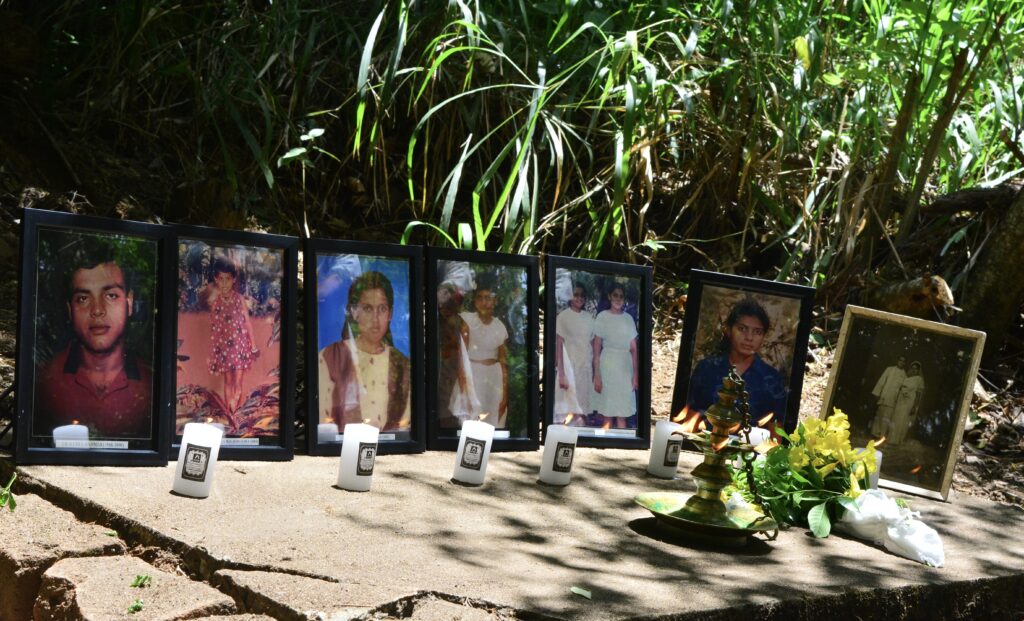
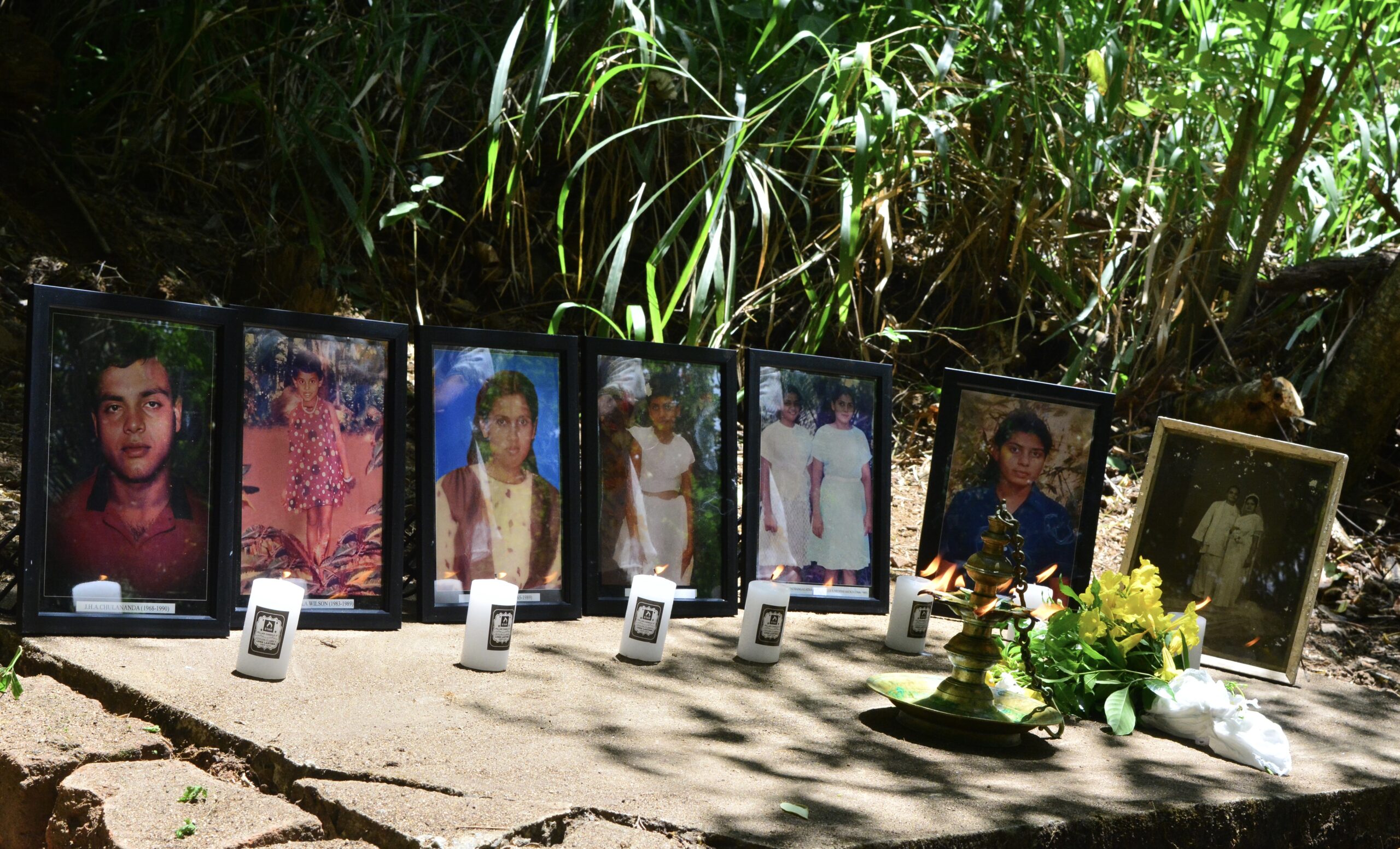
Katuwana Massacre Victims – From right: Sisiliyana, Edwin, Nilmini, Mathangalatha, Sujithaseeli, Chandraleka and Niranjala. Chulananda, first from the Left, was assassinated in 1990.

On August 27, at Katuwana, in Hambantota District, the relatives of the seven family members, who were massacred by Sri Lanka Army in August 1989, held an event of commemoration of their loved-ones, at the same location where they were bombed. This was the first time a commemoration event was held in remembrance of these victims of state terror after 36 years of impunity and oppression. theSocialist.lk reporters were present at the occasion.

On that fateful night, three and half a decade plus one year ago, Sri Lanka army of the Singha Regiment – 6th Battalion invaded the house of the family, where the only male who was at home at the time was the 63 year old father, J.H.A. Edwin, a Sinhalaese traditional medical physician. The others were the 53-year-old mother, H.A. Sisiliyana; the three young daughters, namely J.H.A. Nilmini Asoka (25), J.H.A. Mathangalatha (20), J.H.A. Sujithaseeli (15); a niece, W.A. Chandraleka (24), and the 6 year old granddaughter, N.A. Niranjala Wilson. All were ethnic Sinhalese. The army killed them all on the spot or, according to some witnesses—who were also killed later—the four young girls were carried to the army camp, raped for three days and killed. The house was bombed and the family was burnt with the house. 

The relatives displayed the pictures of their loved ones and lit candles. Two surviving daughters, their husbands, grandchildren and their families and friends observed minutes of silence. Even decades later, their tears have not dried. Vimukthi, a grandson of Edwin addressed the gathering. He stated as follows: 

This is the first time in 36 years that we have been able to gather here publicly to speak their names…They were silenced by guns and disappeared into the shadows of mass graves and tire pyres.

For 36 long years, we could not hold this historic event in commemoration of their memory. We could not come here, speak their names, and mourn openly. The state of terror, the climate of repression, and the continued threat against those who sought truth and justice kept families like ours silent. But silence is not forgetfulness. These years have only deepened our grief and strengthened our determination.

Today we break that silence… Those who carried them out—from the military, death squads and the police to those who directed them—must be held accountable before history, if not yet before law.

Our relatives’ blood cries out not for revenge, but for truth and justice. It cries out for recognition that these lives mattered, that the poor, the villagers, the youth killed in those years were not expendable.

We carry your names and the memories of cruelties inflicted on you forward as a profound mark of protest, so that such crimes must never be repeated.

May your memory give courage to all who fight for truth, justice and dignity and against State repression.”

He also read out the name of J.H.A. Chulananda (22), the only son of Edwin and Sisiliyana, whom he stated was “a young man who aspired to justice and social equality but was misled by the reactionary political forces of the era”, and who was killed by Beliatta Police in October 1990.  He was said to be a member of fascist Janatha Vimukthi Peramuna (JVP) during the 1988-1990 insurgency. When the Army failed to capture or kill him, evidently, the massacre of his entire family was orchestrated as an act of reprisal and terrorization. 
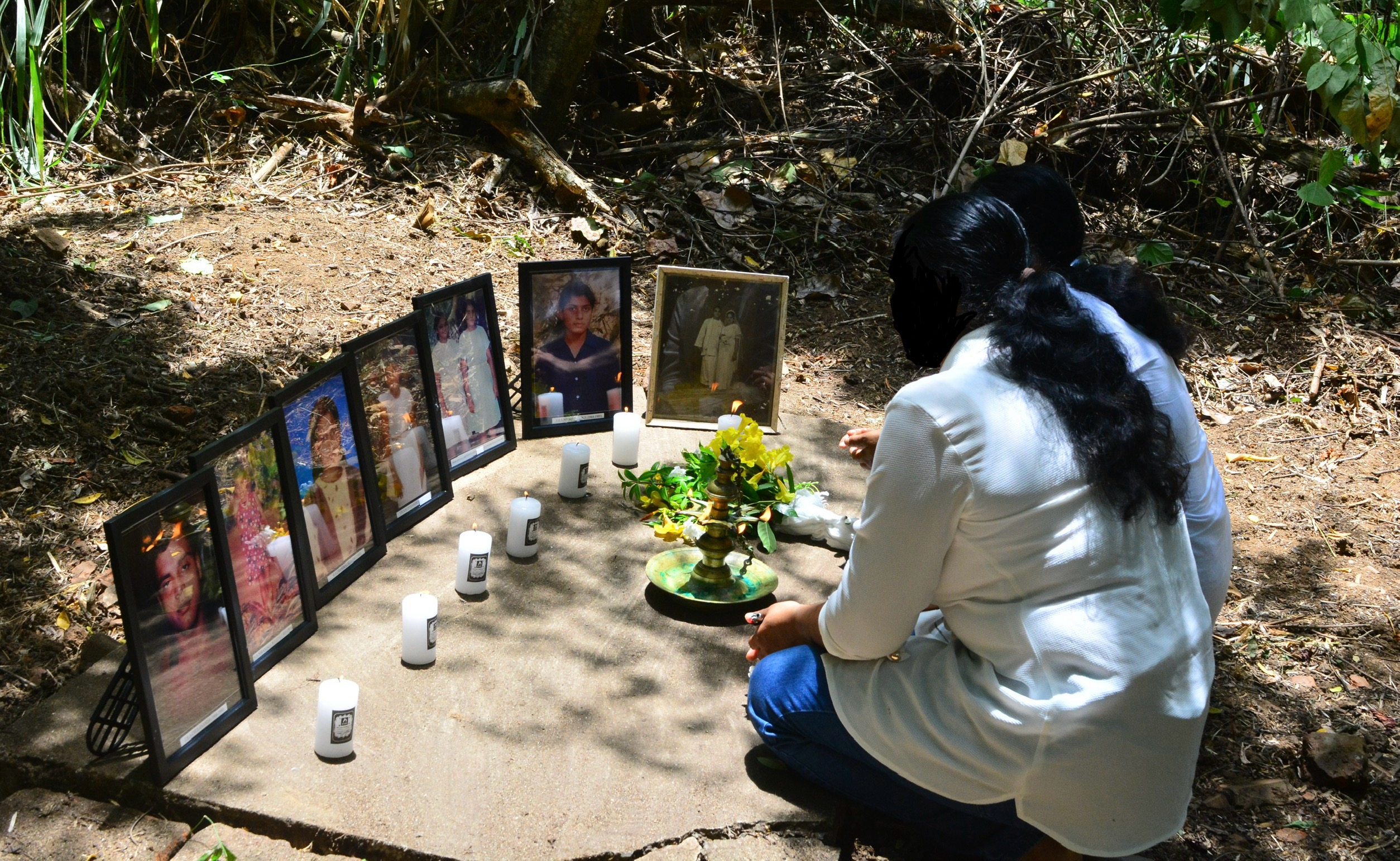
Katuwana massacre commemoration
Family members of the Katuwana Massacre victims commemorate their loved ones, marking 36 years of impunity.

Testimonials 

We talked to the victims’ relatives. Edwin’s eldest surviving daughter Chandani (63) related to us her harrowing story of years of pain, endurance and struggle:

“People called my father Weda Mahattaya. He was very much loved by people. He was a very  innocent, kind and honest man. He walked slowly, smiled pleasantly, spoke gently, and wore a sarong and the national dress. Formerly, as a monk, he had published a number of Ayurvedic books. Many people who received medicinal treatment from him have met me and told me about the compassionate, and often free, treatment they received from my father and mother. 

Our family is a large one of six daughters, and my brother, Chulananda, was the only son. Our family’s economy was founded on meager but stable earnings from my father’s Ayurvedic practice. We had paddy land and acres of coconut, cinnamon and citronella land, which my father cultivated and managed. Due to litigations on land disputes, which my father all won, he lost financially, and his businesses collapsed.  We all lived in a thatched house, made of wattle and mud. However, my father could still afford to feed all of us well, educate us, and also help the needy. 

By 1971, my father was a strong supporter of the Sri Lanka Freedom Party (SLFP) and Sirimavo Bandaranaike. However, by 1977, he was fed-up with and dissatisfied with the United Front government and voted for the United National Party, whose leader J.R.Jayawardene promised a “Dharmista Samajaya” [A society led by noble principles].  

We all went to Katuwana Maha Vidyalaya (school). My brother did not continue his education after grade seven. He was very kind-hearted, sociable, and very helpful to the villagers. He cared for his friends and neighbors more than his own family. He often stayed away from home longer than he stayed at home. He was outstanding, intelligent, fair-looking and, naturally, the youth considered him as their leader.  He wanted to do a job, but also never wanted to leave the village. I think he had made connections with the JVP since late 1987. 

My brother had earned the wrath of village thugs and  father’s former opponents. Once they even attempted to take his life by stabbing him. He narrowly escaped with his life, but his friend succumbed to the injuries. 

In 1979, I married a teacher and lived separately. One of my older sisters married a police officer and went to live in Welimada in early 1989. All other sisters were with my parents at home, Loku (Sujithaseeli), the next to youngest preparing for her Ordinary Level Examinations. Hichchi (Mathangalatha) was studying for the Advanced Level (A/L) examination. Neela (Nilmini) was attending vocational training courses after A/L in expectation of a job.

During the school vacation in August 1989, my two elder sisters [Nilmini and Mathangalatha] came to visit us at our residence at Walasmulla [17 km from Katuwana] by bus. Our parental home was just about half a kilometer away from the Army camp located in the Katuwana Govi Jana Seva [Aggrarian Services Center] premises. While my sisters were passing the army camp, some soldiers had shouted and remarked, “well, go, have a round and come”. That was on 26th August, a Saturday. 

My sisters had lunch with us. That was our last meal together. All my three children were much fond of staying with their grandparents and aunts. So, all three were crying and pleading to go with their aunts.  Finally,  my daughter, Niranjala went with them. 

On the morning of August 29th, my husband went to Katuwana with a friend to bring our daughter back home, as school vacation was ending. My husband saw the bombed house; he saw burning human flesh and a skull. Nobody was alive, including my child.  

After the incident, I went to lodge a complaint at Walsamulla Police, as there was no police station in Katuwana at the time. The police refused to record my complaint. The Officer in Charge (OIC), K.M. Premathilake put his pistol to my mouth and shouted, ‘You woman, keep your mouth shut. Those who take arms will perish by arms.’

Exactly on my 28th birthday, on October 22, 1990, my husband received information from one Silva that my brother had been killed by Beliatta Police. Dasanayake, OIC of the Beliatta Police, who had shot my brother, had quickly informed K. Danapala, the newly elected Provincial Councillor (PC), about the killing. Danapala [who expired a few years ago] feared my brother would pose a threat to his life, which was never the case. My brother’s body had been burnt on a tyre-pyre, after the body was shown to the satisfaction of Danapala.

Danapala too had had a land dispute with my father a long time ago. He lost a court case he had filed against my father. There was also a caste difference between Danapala and us. My father, and almost that entire block of the village, belonged to a higher caste than Danapala’s. Katuwana had a number of such blocks of houses called “Mandi”, where people of different castes lived.” 

Chandani’s husband, Chamal (69), related his traumatic experiences as follows:

”On the morning of 29 August, I went with a friend of mine in his car to Katuwana to bring my daughter back home. My friend wanted to meet Danapala Manthree (PC) and request his help to get his nephew released from Walasmulla Army camp. At the road barrier at the Katuwana Army Camp, the army stopped our car. My friend told them we were going to meet Manthree Thuma (Danapala). So, we were allowed to proceed. 

When we reached the place where the house was situated, I could not see the house. I could only see the smoke. I went closer. I could not believe my eyes. The house was demolished and everything was burning. I could see human flesh burning inside the house close to the main door. I saw a skull burning. I could not stand up. One or two villagers came to me and held me tight. A sister of my mother-in -law came to me and said, ‘Nobody is alive. Everybody is burnt’. I shouted, calling my daughter’s name. The aunt told me, ‘You should leave now. If the army comes and finds you, they will kill you too”. My friend then pushed me inside the car and brought me back home. I told my wife everything. She was devastated.

A couple of weeks later, Gamini, one of Danapala’s home guards [Grama Arakshaka – members of government’s Civil Security Force], told me that he and another guard were present with the army when they committed the crime, and asked me not to search for the family as everybody was killed by the army. He told me that the four sisters were taken to Katuwana army camp, raped and tortured there for three days, and then killed. It was not long afterwards that I came to know that both those guards were assassinated.

During the same period, we were trying to lodge complaints at police stations and even searched for them at army camps, as we believed they were still alive in some detention center. When my wife and I went to lodge a complaint at Walasmulla Police, we were chased away. I even dared to go to Walasmulla army camp to meet Captain P.L.U. Buddadhasa of the 6th Battalion, Singha Regiment, to find out some information about my relatives. He just told me, ‘Do not search for them. They are all dead. Do some religious observances for them’.  When I went to complain to the ASP [Assistant Superintendent of Police] office at Tangalle, ASP Ekanayake warned me, saying, ‘You are a teacher; do not try to search for them. Otherwise, you will lose your own life.’

I was able to lodge a complaint at Middeniya Police only in late September 1994, after Madam Chandrika Kumaratunga was elected President. We were also able to complain to the Presidential Commission on Disappearances. The Muttetuwegama Commission’s final report contains the seven names of our relatives.

However, the court case never proceeded after 1998. We have learned that the Police had colluded with Danapala to systematically bury the case, four years after the collection of samples from the massacre site. 

Due to the lasting psychological shock my wife and I had to endure, I could not continue my work as a teacher with sincerity. Therefore, I decided to retire under the Circular No.44/90. Thereafter, the conditions of our family worsened. I had to struggle for sustenance for my family of four children.

Chandrika soon resumed the war with the LTTE [Liberation Tigers of Tamil Eelam]. By 1998, we learned of the crimes committed by the Sri Lankan army against innocent Tamil people in Jaffna. The case of Krishanti Kumaraswamy and her family’s murder at Chemmani shook our souls. Then we realized the extent of the crimes Tamils must have been forced to suffer in the North, sometimes even beyond the crimes committed against our family. Later, Mahinda Rajapaksa continued the war, and his and all succeeding governments praised the mercenaries as ‘Rana Viruvo’ [war heroes]. Throughout, we were silenced.”

He also told us about his experience with the false “human rights” crusaders of the time: 

“The orphaned youngest sister of my wife was studying and living with us during that period. Once, in early 1997, I went with her to meet Mahinda Rajapaksa at his Carlton office, seeking his help to find a job for her. My parents had worked for D.A. Rajapaksa and I myself had, as a youth, campaigned for Mahinda’s elections. So, I knew him personally. After waiting a long time to meet him, we forcibly entered his room and informed him of our predicament after the massacre of the family. He shouted at us: ‘Look, these people have worked for the JVP and got themselves killed, and now have come seeking my help to get jobs’. My sister-in-law was crying. She never received a job from him, nor any assistance.” 

The other surviving daughter, Indumathi expressed her first hand experience of the wrath the local politician had toward the family: 

“Since my father supported the UNP in elections in late 1988 and early 1989, after the general elections, my father went with me to talk to Danapala Manthree. Our parental home was just a few yards away from his residence. He was the uncle of Ananda Kularathna, then UNP cabinet minister from the Mulkirigala seat. We later came to understand that my brother was at that time full time engaged in the activities of the JVP, which had ordered people not to vote at elections [the provincial council election in the Southern Province was held in June 1988]. Danapala seemingly saw his life as threatened by the JVP and its military wing, Deshapremi Janatha Viyaparaya (DJV). However, villagers say my brother never left any room for harm to be inflicted upon anybody in the village, not even on those who envied our family. Danapala ferociously denied any help in finding jobs for me or anyone else in our family. He shouted: ‘There is a terrorist in your house. If it were not for Weda Mahattaya, you and your house would already have been reduced to ashes.’ 

But, neither my parents nor anybody even dreamt of an impending massacre, because we had not heard of such incidents before. 

About two days before the bombing of our home, my elder sister Neela sent me a letter saying that the previous day there had been a bomb blast in the area targeting the army, which had killed several soldiers. My sister wrote that now they felt their lives were also in danger. I think the day she posted that letter was the day she and Hichchi visited my eldest sister at her home in Walasmulla. When she sent that letter, our youngest sister was with me at my house. So, her life was saved.”

Sunitha, the youngest surviving daughter and now a teacher, tearfully recalled her loving parents, her brother, and the harassment by the armed forces:

“My father was a Bodhisattva [a reference to the noble lives of Buddha before enlightenment]. As a skilled physician, sought after by people from different parts of the country, I witnessed how miraculously he saved the lives of many patients who had been brought after snakebites. I also saw how skillfully he cured limb and arm injuries caused by various accidents. My mother was the perfect match for my father. Like a goddess, she was dedicated day and night to treating patients. 

Our father had written and published a couple of Veda Grantha [medicinal books]. They were written in verse form. Sarpa Visha Sanharaya I and II [Neutralizing Serpent Venom], Bilindu Roga Sanharaya [Treating Pediatric Illnesses] were very popular, and Manthra Sathakaya [Hundred Mantras] is a book still being sold in bookstores.

He never harmed anybody, not even an insect. I cannot understand how cruel one must be to aim a weapon at such a man of glory and kill him. This world is cursed!

My brother was very handsome. He was always helpful and empathetic toward others. He was a leader to the village youth. Sometimes, village youth even betrayed him, not because of any wrongdoing he committed, but to save themselves when they were arrested for small disputes and fights.

About ten months before the massacre of our family, the chief of the Katuwana Army Camp came to our former house with other soldiers and asked my father to remove all necessary belongings, as they were going to burn our house at 7:00 p.m. that night. My father pleaded with him: “Do not harm us. If my son has done anything wrong, you may punish him.” But they burned our house. The house by the side of Rukmalpitiya Road, where our family was living at the time of the massacre, was built later, about a hundred meters away from the former house on the same road.

I remember, during the period of state terror, the army often intruded into our home and searched everywhere inside. We were always terrorized. They knew very well that my brother was not there, and that only our elderly parents and we girls were present. They questioned us about our brother and even searched for books. Sometimes, they even came in the middle of the night while we were sleeping. Then they would ask us to turn off the lamps (kerosene lamps) and search here and there.”

A systematized killing spree 

In both the South and the North, the Sri Lankan ruling elite deployed the full apparatus of the state—the military and police, death squads, the Prevention of Terrorism Act, and Emergency Regulations—to eliminate perceived threats to capitalist rule from the political right and, above all, against the innocent rural poor and the oppressed. Theorizing the causes of large scale disappearances during the period, Asian Human Rights Commission (AHRC) report in December 1997 stated,

 “[U]nder the emergency regulations, all restraints on law enforcement officers were removed, and the power to dispose of dead bodies was left to the sole discretion of these officers. Judicial supervision was suspended. There were no provisions even to keep records of the disposed bodies.”

The report further stated as follows:

“Disappearances were the result of a very deliberate policy and were implemented meticulously according to a plan. Law enforcement officers received instructions to arrest, kill and dispose of the bodies. Enacting emergency regulations made this legally possible. The police were constantly coached to carry out killings, and there were methods of supervising how many were to be killed in each area. Incentives were given through the distribution of money for killer squads. 

Liquor was also provided to these squads to keep them in a mood conducive to participation in such activities. Lists of those who were to be killed were distributed. Special interrogations were held in special places for interrogation. In many instances, the decision to kill was made during these interrogations, and people were murdered in the secret surroundings of these places. Law enforcement officers mingled with illegal elements in undertaking these activities. Politicians were given direct access to these groups so that they could execute the wishes of these politicians.”

The Commission Report and the Buried Lists

In November 1994, president Kumaratunga appointed three presidential commissions to  inquire into incidents of involuntary removals or disappearances of persons after 1 January 1988. The commission chaired by Manouri Muttetuwegama inquired into incidents in Western, Southern and Sabaragamuwa Provinces.

In response to the Commission’s request to provide information on the officers who were attached to the Katuwana Army Camp at the time, on 30 June 1997, the Army replied “not mentioned” in their records—the same answer given in response to most of the other camps. The Commission did not take any further steps to obtain the information from the Army.

The alleged perpetrators of these crimes were shielded by the very recommendations of the Commission itself. While the Commission “found the information and material upon which the allegations of the witnesses were based to be prima facie credible,” it nevertheless stated: “we recommend that the lists of names of persons alleged to have been responsible for involuntary removals or disappearances sent by us under separate cover be not published,” until further investigations were carried out. No such “further investigations” were ever undertaken by Kumaratunga’s government or by successive governments, thereby granting the perpetrators lifelong impunity and protection to commit further crimes. To this day, these confidential lists and the witness testimonies remain undisclosed to the public.

theSocialist.lk has pointed out the class character of the government’s policies of repression during the counterinsurgency in the South, which were later carried forward against the ethnic Tamil population in the North and East, in order to defend the capitalist unitary state and the interests of finance capital. 

These atrocities of the capitalist state cannot—and could not—be prevented, nor justice established, without the abolition of the parasitic state, its military, police, laws, and capitalist class rule. This is the historic task of the working class, rallying behind it the petty bourgeoisie and the oppressed masses, as part of the united struggle of the South Asian and international working class for socialist policies.
Katuwana Massacre: Relatives commemorate victims after 36 years of intimidation and continuing impunity Read More »

Chemmani

චෙම්මනි සමූහ මිනීවළවල් ශ්‍රී ලංකා රාජ්‍යයේ පන්ති යුද ප්‍රතිපත්ති හෙලිදරව් කරයි

සංජය ජයසේකර විසිනි.

Chemmani
චෙම්මනි සමූහ මිනීවළ 2025 අගෝස්තු 01 දින. ඡායාරූප අනුග්‍රහය Kumanan Kana ෆේස්බුක් පිටුවෙනි.

යාපනයේ අලුතින් අනාවරණය කරගත් චෙම්මනිහි අරියාලෙයි “සිත්තුපත්ති” හින්දු සුසාන භූමියේ සමූහ මිනීවළේ දෙවැනි අදියරේ කැණීම්වල 28 වැනි දිනය අවසන් වන විට ඇටසැකිලි 147ක්—ඒ අතර බිළිඳන්, කුඩා දරුවන් සහ මාස දොළහකට අඩු ළදරුවන් ගේද වන ඒවා—ගොඩගෙන ඇත. අඩි දෙකක් තරම් වන නොගැඹුරු වළකින් සොයා ගන්නා ලද මෙම ඇටසැකිලි සහ ඉතිරි පහදු–සමහර සිරුරු එකිනෙක මත ගොඩගැසී ද, සමහර සිරුරු පණපිටින් වළලනු ලැබූ බව අඟවමින් අතපය නැවීගිය ආකාරයෙන් ද වන සේ–පිළිවෙලක් නොමැතිව විසිරී තිබුණි. සියලු දෙනාම ඇඳුම් රහිතව වූ අතර, ඔවුන්ගේ ළදරුවන් සමඟ කාන්තාවන් එතැනම මරා දැමීමේ පැහැදිලි සලකුණු ද, කඩිමුඩියේ භූමදාන කිරීමද සහ ඇඟ සීතල කරවන මානවකෘති ද–1990 ගණන්වල යුනෙස්කෝව විසින් පරිත්‍යාග කරන ලද ඒවා වැනිම වූ පාසල් බෑගයක්, ළදරු සෙල්ලම් බඩුවක් සහ පෝෂණ (කිරි) බෝතලයක්, කුඩා වීදුරු වළලු, සපත්තු මේස්, සෙරෙප්පු, මැෂින් තුවක්කු  බඳක් යැයි සැක කරන්නක්, බිදීම් සහිත හිස් කබල්–දක්නට විය. මෙම සොයාගැනීම්, දැනටමත් පවතින වාර්තා සහ සාක්ෂි සමගින්, මොවුන් ස්වභාවික විපත්වලට හෝ අහඹු ප්‍රචණ්ඩත්වයට ගොදුරු වූවන් නොව, ක්‍රමානුකූලව, රාජ්‍ය විසින් සංවිධානාය කළ සමූහ ඝාතන ව්‍යාපාරයක ගොදුරු බවට සැකයක් ඉතිරි නොකරයි.

යාපනය මහේස්ත්‍රාත් ඒ.ඒ.ආනන්දරාජා ගේ අධීක්‍ෂණය යටතේ  සහ පුරාවිද්‍යා මහාචාර්ය රාජ් සෝමදේවගේ නායකත්වයෙන් සිදුකෙරෙන කැණීම, අගෝස්තු 6 වැනිදා තාවකාලිකව නවතා දමා අගෝස්තු 22 වැනිදා නැවත ආරම්භ කිරීමට නියමිතය. අගෝස්තු 3 සහ 4 යන දිනවල මෙම ලේඛකයා එම ස්ථානයේදී මහේස්ත්‍රාත්වරයා සමඟ ද, අතුරුදහන් වූවන් පිළිබඳ කාර්යාලයේ (OMP) විධායක අධ්‍යක්ෂ ජේ. තත්පරන් හා  මහාචාර්ය සෝමදේව සමගද සෘජුවම කතා කළේය. එයින් හෙළි කරන ම්ලේච්ඡත්වයේ සහ මානව ඛේදවාචකයේ පරිමාණය පිළිබඳව පමණක් නොව, අහිංසක සිවිල් වැසියන්ට එරෙහිව සිදු කරන ලද අපරාධ සම්බන්ධයෙන් එය සපයන ප්‍රතික්ෂේප කළ නොහැකි සාක්ෂි සඳහාද මෙම සොයාගැනීමේ වැදගත්කම සියල්ලෝම තහවුරු කළහ. 

Chemmani visit
චෙම්මනි සොහොන් බිමේ, වමේ සිට, 2025 අගෝස්තු 3: යාපනය මහේස්ත්‍රාත් ඒ.ඒ. ආනන්දරාජා; ජේ. තත්පරන්, අතුරුදහන් වූවන් පිළිබඳ කාර්යාලයේ (OMP) විධායක අධ්‍යක්ෂ; සහ ලේඛකයා. ඡායාරූප අනුග්‍රහය Kumanan Kana ෆේස්බුක් පිටුවෙනි.

චෙම්මනි, 1998 සිට අද දක්වා: රාජ්‍ය හමුදා සමූහ මිනීවළ වලට සම්බන්ධ කිරීම

1995 න් පසු යාපනය වාඩිලා ගත් ශ්‍රී ලංකා සන්නද්ධ හමුදාවන්ට මෙම සමූහ මිනී වලවල් සම්බන්ධ කිරීම සඳහා කිසිවකුට අඳුරේ අතපත ගෑමට අවශ්‍ය නැත. සමූහ මිනීවළවල් පවතින බවත් රාජ්‍ය හමුදාව විසින් සමූලඝාතන සිදු කළ බවත් අන්ත දක්ෂිණාංශික සිංහල ජාතිවාදීන් විසින් පවා පිළිගෙන ඇති අවිවාදිත සත්‍යයකි. චෙම්මනි ගොඩගැනීම් වලින් තැතිගත් පිවිතුරු හෙළ උරුමයේ නායක සහ හිටපු ඇමැතියෙක් වූ වර්ගවාදී හා යුධකාමි උදය ගම්මන්පිල මාධ්‍යයට පැවසුවේ, “උතුර යුද්ධයෙන් විනාශ වී ඇති නිසා සමූහ මිනීවළවල් කොතැනක හෝ මතුවෙයි. ඒවා හාරා [ඒවා ගැන] අදහස් දැක්වීම තේරුමක් නැති වැඩක් සහ මුදල් නාස්තියක්,” යනුවෙනි.

ආසියානු මානව හිමිකම් කොමිසම (AHRC) 1997 දෙසැම්බරයේ මෙසේ වාර්තා කළේය: “මෑත කාලයේ යාපනය අර්ධද්වීපයෙන් අතුරුදහන් වූ 600 දෙනෙකුගේ පමණ ඉරණම  කුමක් ද යන්න නොදනී”. 18 හැවිරිදි දෙමළ පාසල් සිසුවියක් වන ක්‍රිෂාන්ති කුමාරස්වාමි දූෂණය කර ඝාතනය කිරීමේ චෝදනාවට වරදකරු වූ ශ්‍රී ලංකා යුද හමුදාවේ කෝප්‍රල් දේවගේ සෝමරත්න රාජපක්ෂ, ”අපි කිසිවකු මැරුවේ නැහැ. අපි සිරුරු වැළලූවා පමණයි. සිරුරු 300-400 වළ දමා ඇති ස්ථාන පෙන්වීමට අපිට හැකියි,”කොළඹ මහාධිකරණයට ප්‍රකාශ කිරීමත් සමඟ 1998 ජූලි මාසයේදී “චෙම්මනි” යන නාමය ලෝකයේ අවධානයට ලක්විය.

1999 ජූනි මස ගොඩ ගැනීම් වලට ආසන්න පෙරාතුවේ යාපනය මහේස්ත්‍රාත් අධිකරණයේදී, ඔහු මෙසේ කීවේය: “අරියාලෙයි ප්‍රදේශයේ මිනිසුන් අත්අඩංගුවට ගෙන, වධ හිංසා පමුණුවා, වළදැමූ ආකාරය මට ඔබට පෙන්විය හැකියි… චෙම්මනි වල සිරුරු වළ දැමූ ස්ථාන 10 ක් මට ඔබට පෙන්විය හැකියී. මා සමඟ වරදකරුවන් වූ අනෙක් හතර දෙනාට තවත් ස්ථාන හයක් පෙන්විය හැකියි.”

1995 දී ශ්‍රී ලංකා හමුදාව අර්ධද්වීපය යළි අත්පත් කර ගැනීමෙන් පසු “අතුරුදහන් වූ” සිවිල් වැසියන් සිය ගනනක් අඩංගු යාපනය ප්‍රදේශයේ රහසිගත සමූහ මිනීවළවල් ජාලයක් රාජපක්ෂගේ සාක්ෂියෙන් හෙලිදරව් විය. 1990 දශකයේ අගභාගයේදී, චෙම්මනි හි සීමිත කැණීම් මගින් පුද්ගලයන් 15 දෙනෙකුගේ අස්ථි කොටස් තහවුරු විය; නමුත්, දේශපාලන බාධා කිරීම්, සාක්ෂිකරුවන් බිය ගැන්වීම, ක්‍රියාපටිපාටිමය බාධා, සහ හිතාමතාම සාක්ෂි විකෘති කිරීම්–රට පුරා විසිරී ඇති වෙනත් බොහෝ සමූහ මිනීවළවල් මෙන්–බොහෝ ස්ථාන දශක දෙකකට වැඩි කාලයක් තිස්සේ අත නොගසා පැවතීම සහතික කළේය. 

මුල් චෙම්මනි මිනීවළට කෙටි දුරක් පමණින් පිහිටි වත්මන් අරියාලෙයි සමූහ මිනීවළ, රාජපක්ෂගේ ප්‍රකාශවල සත්‍යතාව තහවුරු කරන අතර ශ්‍රී ලංකා හමුදාව මෙම කුරිරුකම්වලට සෘජුවම සම්බන්ධ කරයි. මාධ්‍ය වාර්තා, මිලිටරි මුරපොලවල් වල නතර කිරීමෙන් පසු  සහ වටලෑම් වලදී අතුරුදහන් වූ සිය ගණනක් දෙමළ සිවිල් වැසියන් ලේඛනගත කර ඇත. එකල චෙම්මනි මධ්‍යම හමුදා කඳවුර සුසාන භූමියට යාර කිහිපයක් ආසන්නයේ  පිහිටා තිබීම, ඇටසැකිලි අහඹු ලෙස ස්ථානගතව පැවතීම, ඇඳුම් පැළඳුම් නොතිබීම, සිරුරු සමඟ හමු වූ මිලිටරි භාණ්ඩය සහ මොට්ට ආයුධයකින් ලද තුවාල පිළිබඳ සාක්ෂි යන සියල්ල හමුදා පැහැරගැනීම්, වධහිංසා පැමිණවීම් සහ සෘජු මරා දැමීම් හා ගැලපේ.

Chemmani the dead
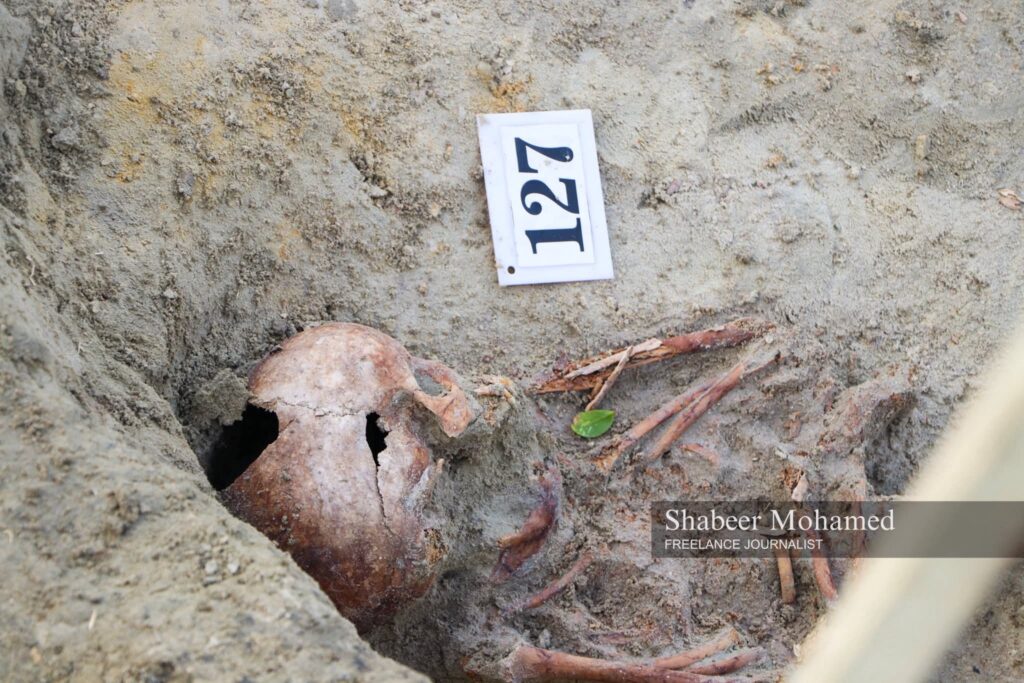
2025 අගෝස්තු 6 වන දින චෙම්මනි සමූහ මිනීවළෙන් හමු වූ වින්දිතයෙකුගේ කැඩුණු හිස් කබල. ඡායාරූපය: ෂබීර් මොහොමඩ්

රාජ්‍ය මර්දනය: උතුරේ සිට දකුණට

1988-90 ෆැසිස්ට්වාදී ජනතා විමුක්ති පෙරමුනට (ජවිපෙ) එරෙහි ප්‍රතිකැරැල්ලේදී දකුණේ සිද්ධි 16,700කට වඩා සත්‍යාපනය කර ඇති බව 1997 දෙසැම්බරයේ සඳහන් කරමින් AHRC අතුරුදහන්වීම්වල ක්‍රමානුකූල ස්වභාවය ලේඛනගත කළේය.  අපරාධකරුවන්ට එරෙහිව නඩු පැවරීම් හුදෙකලා අවස්ථා කීපයක පමණක් ආරම්භ කරන ලද අතර, ඒ සියල්ලේන්ම පාහේ කිසිදු වරදක් සිදුකළ බවට තීන්දු නොකෙරුණි. ශ්‍රී ලංකාවේ පාලක ප්‍රභූව, දකුණේ සහ උතුරේ, හමුදාව සහ පොලිසිය, ඝාතක කල්ලි, ත්‍රස්තවාදය වැලැක්වීමේ පනත සමග දඬුවම් නොලබා  මිනීමැරීමට සහ මළ සිරුරු බැහැර කිරීමටද, සමූහ මිනීවළවල් භාවිතා කිරීමටද නීතිමය බලපත්‍රයක් ලෙස සේවය කළ හදිසි නීති රෙගුලාසි සමග රාජ්‍යයේ සම්පූර්ණ යාන්ත්‍රණය යොදවා, ධනපති පන්ති පාලනයට, දේශපාලන දකුණෙන් සහ සියල්ලටම ඉහළින් අහිංසක ගැමි දුප්පතුන් සහ පීඩිතයන්ගෙන්  එල්ල වනවා යැයි  ඔවුන් සිතූ තර්ජනය අහෝසි කිරීමට කටයුතු කළහ.

කෙසේ වෙතත්, සිරුරු බැහැර කිරීමේ ක්‍රමවල වෙනස්කම් තිබුණි. දකුණේ, ටයර් සෑය–ප්‍රසිද්ධ ස්ථානවල මළ සිරුරු පුළුස්සා දැමීම–මහජනයා භීතියට පත් කිරීමට සහ විරෝධය දැක්වීමේ ප්‍රතිවිපාක ප්‍රදර්ශනය කිරීමට භාවිතා කරන ලදී. උතුරේ සහ නැඟෙනහිර ප්‍රදේශවල හමුදාව බොහෝ විට තම අපරාධ සඟවා ගනිමින්, මර්දනය දිගටම කරගෙන යන අතරේ, සෝදිසියෙන් වැළකී සිටීම සඳහා දුරස්ථ හෝ පාලිත ප්‍රදේශවල මළ සිරුරු වළදැමූහ.

මේවා “බලය ඉක්මවායෑම්” හෝ “අපගමන” නොව හිතාමතා තීන්දු කළ පන්ති ප්‍රතිපත්තියේ ප්‍රතිඵලය විය. නිදහස් වෙලඳපොල ආර්ථික ප්‍රතිපත්ති හඳුන්වා දීමේ පූර්ව කොන්දේසියක් ලෙස දහස් ගණනක් ඉවත් කර දැමීම සඳහා ගත් සෘජු දේශපාලන තීරණ සහ 1965 ඉන්දුනීසියානු සමූහ ඝාතන ශෛලිය භාවිතය මර්දනය සඳහා ආදර්ශයක් ලෙස ගැනීම ඇතුළුව අතුරුදහන්වීම් පිටුපස රටා හතක් AHRC හඳුනාගෙන ඇත.

අනුප්‍රාප්තික ආණ්ඩු, හවුල් අපරාධ

දිවයින පුරා අනාවරණය වී ඇති තවත් දුසිම් දෙකකට ආසන්න ප්‍රමාණයක් වන අනෙකුත් ඒවා  සමග, චෙම්මනි සමූහ මිනීවළවල්,  හමුදාවට පමණක් නොව, රාජ්‍ය ප්‍රචණ්ඩත්වය කෙරෙහි දණ්ඩමුක්තිය ලබා දුන් පාලන තන්ත්‍රයක මුලසුන දැරූ යූඑන්පී, ශ්‍රීලනිප, ශ්‍රී ලංකා පොදුජන පෙරමුණ සහ දැන් එන්පීපී/ජේවීපී යන සෑම ආන්ඩුවකටම එරෙහිව අධි චෝදනා ඉදිරිපත් කරයි.

අද “පිරිසිදු” සහ ප්‍රජාතන්ත්‍රවාදී බලවේගයක් ලෙස පෙනී සිටීමට උත්සාහ කරන ජනතා විමුක්ති පෙරමුන (ජවිපෙ), අවම වශයෙන් ප්‍රතිගාමී ඉන්දු-ශ්‍රී ලංකා ගිවිසුම අත්සන් කළ 1987 ජූලි මාසයේ සිට උතුරේ සහ දකුණේ මර්දනය නීත්‍යානුකූල කළ ජාතිකවාදී, ස්වෝත්තමවාදී සහ මිලිටරිවාදී ව්‍යාපාරවල ප්‍රධාන භූමිකාවක් ඉටු කළේය. ජනතා විමුක්ති පෙරමුණ එසේ කළේ හිටපු ජනාධිපතිවරු වන චන්ද්‍රිකා කුමාරතුංග සහ මහින්ද රාජපක්ෂ සමඟ සභාග ආණ්ඩුවලට හවුල් වෙමින් සිටියදීය. ජනතා විමුක්ති පෙරමුණේ දෑත් දෙමළ ජනතාවගේ ලේවලින් තෙත් වී ඇත. චෙම්මනි පිලිබඳ එහි වත්මන් නිශ්ශබ්දතාවය කම්කරු පන්තියට හා දුප්පතුන්ට එරෙහිව එය ආරක්ෂා කරන ධනේශ්වර රාජ්‍යයට සහ අධිරාජ්‍යවාදයට එහි ඇති සැබෑ පන්ති පක්ෂපාතීත්වය පිළිබඳ මහත් සේ හඬ නගයි.

හමුදාකරණය, බිය ගැන්වීම සහ මර්දනය

දකුණේ, එජාප රජය යටතේ රාජ්‍ය භීෂණයට  සහ ජවිපෙ ෆැසිස්ට්වාදීන්ට ගොදුරු වූවන්ට පොලිස් පැමිණිලි පවා ඉදිරිපත් කිරීමට සීමිත ඉඩක් විවෘත වූයේ, අතුරුදහන් වූවන්ගේ පවුල්වලට සත්‍යය සහ යුක්තිය පිළිබඳ ව්‍යාජ ප්‍රතිඥා දී ජනාධිපති කුමාරතුංග බලයට පත් වූ 1994 න් පසුව  පමණි.  වැඩි කල් නොගොස්, බෙදුම්වාදී දෙමළ ඊළාම් විමුක්ති කොටි (එල්ටීටීඊ) සංවිධානයට එරෙහි යුද්ධය යලි ආරම්භ කිරීමේදී පොදුජන එක්සත් පෙරමුණු (PA) ආන්ඩුව විසින් හමුදාව ඉහලම උත්කර්ෂයට නංවන ලදී. උතුරේ අඛන්ඩ මිලිටරිකරණය සහ මර්දනය, කම්කරු පන්තිය සහ සියලු විරුද්ධවාදීන් භීත කරමින් පැහැරගැනීම් සාමාන්‍ය දෙයක් බවට පත් කල ජනාධිපති රාජපක්ෂ යටතේ පුනර්ජීවනය කරන ලද යුද්ධය තුල, දකුණ මග හැරියේ නැත. මුළු කාලය පුරාම ජවිපෙ ගෙන ගියේ යුද්ධයට සහාය දෙන දුෂ්ට ස්වෝත්තමවාදී ව්‍යාපාරයකි. අද විශ්‍රාමික හමුදා නිලධාරීන් බොහෝ දුරට ජ්විපී/එන්පීපී ආණ්ඩුව යටතේ සුරක්ෂිත බලකොටුවක් සොයාගෙන ඇත. අතුරුදහන් වූවන්ගේ අගතියට පත් ඥාතීන්ට අධිකරණ ක්‍රියාවලීන් කරා යාම වැළැක්වූ කොන්දේසි මේවා වූ අතර, පොලිසිය සහ හමුදාව නඩු කටයුතු අවහිර කිරීමට සක්‍රීයව මැදිහත් විය.

ජාතිකවාදී උගුල් සහ අධිරාජ්‍යවාදයට කරන ආයාචනවල ආවෘත අන්තය

උතුරේ හෝ කොළඹ ක්‍රියාත්මක වන දෙමල ජාතිකවාදී සංවිධාන හෝ දෙමල ඩයස්පෝරාව ඉදිරි මාවතක් ඉදිරිපත් නොකරයි. ඔවුන්ගේ සැබෑ අරමුණ දෙමළ කම්කරු පන්තියට සහ දුප්පතුන්ට එරෙහිව තම වරප්‍රසාද ආරක්ෂා කර ගැනීම සඳහා උතුරු හා නැගෙනහිර ප්‍රභූ ස්වයං-පාලනයක් තහවුරු කර ගැනීමයි. එක්සත් ජාතීන්ගේ සංවිධානය, බටහිර ආන්ඩු සහ ජාත්‍යන්තර මානව හිමිකම් සංවිධාන වෙත ඔවුන් කරන ආයාචනා හුදෙක් කඩතුරාවක් පමණක් වී ඇති අතර, බොහෝ දුරට එක්සත් ජනපද අධිරාජ්‍යවාදය කොළඹට යටත් වන ලෙස බලපෑම් කිරීම සඳහා ඒවා යොදා ගනී. මේවා, යුද සමයේ කොළඹට, හමුදා, බුද්ධි අංශ සහ රාජ්‍යතාන්ත්‍රික පිටුබලය සැපයූ අධිරාජ්‍යවාදී බලයන්මය.

ඒ හා සමානව, සිංහල ජාතිකවාදය, “ඒකීය රාජ්‍යය සුරැකීමේ” සහ “ජාතික ආරක්ෂාව” ආරක්ෂා කිරීමේ ආවරණය යටතේ අතීත සහ වර්තමාන සමූලඝාතන සාධාරණීකරණය කරයි. වාර්ගික ජාතිකවාදයන් දෙකම සේවය කරන්නේ මර්දනයේ සහ දණ්ඩමුක්තියේ චක්‍රය අවසන් කළ හැකි එකම සමාජ බලවේගය වන කම්කරු පන්තිය බෙදීමට ය.

සමූල ඝාතන පන්ති යුද්ධයක් ලෙස

1988-90 කාලයේ දකුණේ සිදුකළ සමූලඝාතන මෙන්ම, 1983-2009 දෙමල විරෝධී සිවිල් යුද්ධයේදී උතුරු හා නැඟෙනහිර සිදුවූ ඒවා හුදෙක් වාර්ගික සුළුතරයකට එරෙහිව සිදු කරන ලද අපරාධ නොව, මූලික වශයෙන් පන්ති යුද්ධයේ ක්‍රියාවන් ය. වින්දිතයන්–JVP සබඳතා පිලිබඳ චෝදනා එල්ල වූ ග්‍රාමීය සිංහල තරුනයන් හෝ වේවා, එල්ටීටීඊයට ආධාර කළ බවට සැක කෙරෙන දෙමල ගැමියන් වේවා–අතිමහත් ලෙස ඇදී ආවේ කම්කරු පන්තියෙන්, රැකියා විරහිත තරුනයන්ගෙන් සහ පීඩිත ග්‍රාමීය දුප්පතුන්ගෙනි. ඔවුන්ව තුරන් කිරීමේ අරමුණ වූයේ දේශපාලන විරුද්ධත්වය තලා දැමීම සහ දේශීය ධනේශ්වරය සහ ජාත්‍යන්තර මූල්‍ය ප්‍රාග්ධනය විසින් ඉල්ලා සිටින “විවෘත ආර්ථික” ප්‍රතිපත්ති පිළිගැනීමට මහජනයා භීතියට පත් කිරීමයි.

හතරවන ජාත්‍යන්තරයේ ජාත්‍යන්තර කමිටුව (ICFI) අවධාරනයෙන් පැහැදිලි කර ඇති පරිදි, උතුරේ වින්දිතයින්ට යුක්තිය නොමැතිව දකුණේ වින්දිතයින්ට යුක්තිය ඉටු නොවනු ඇති අතර එහි ප්‍රතිලෝමයද සත්‍ය වනු ඇත. වාර්ගික බෙදීම මත 1948 දී පිහිටුවන ලද ධනේශ්වර රාජ්‍යය තමන්ටම එරෙහිව නඩු  පවරා ගැනීම සිදු නොකරන්නාක් මෙන්ම එසේ කරනුද නැත.

ඉදිරි මාවත: කම්කරු පන්තිය සහ පීඩිතයන් සඳහා සමාජවාදී වැඩපිලිවෙලක්

මර්දනය අවසන් කිරීම සහ අව්‍යාජ යුක්තිය සුරක්ෂිත කිරීම සඳහා ICFI පැහැදිලි ඉදිරිදර්ශනයක් ඉදිරිපත් කරයි: එනම්, දකුනු ආසියාවේ සමාජවාදී සමූහාන්ඩු සංගමයේ කොටසක් ලෙස, ශ්‍රී ලංකා-ඊලාම් එක්සත් සමාජවාදී රාජ්‍යයක් සඳහා අරගලයේ දී, කම්කරු පන්තියේ ස්වාධීන දේශපාලන බලමුලු ගැන්වීම තුල සිංහල, දෙමල සහ මුස්ලිම් කම්කරුවන් එක්සත් කිරීම යි.

මේ සඳහා, රැකියා විරහිත තරුනයින් සමග පීඩිත ග්‍රාමීය හා නාගරික දුගීන්, කම්කරු පන්තියේ නායකත්වය පිටුපස එක්සත් කිරීමට සටන් කරන, නොනවතින විප්ලවයේ ට්‍රොට්ස්කිවාදී වැඩපිලිවෙල මත පදනම් වූ විප්ලවවාදී පක්ෂයක් ගොඩනැගීමය අවශ්‍ය යි. මධ්‍යම පංතිය සහ සුළු ධනේශ්වරය ජාතිකවාදී මිත්‍යාවන්ගෙන් මිදී ජාතික හා ජාත්‍යන්තර වශයෙන් ඔවුන්ගේ සැබෑ පන්ති සහෝදර සහෝදරියන් සමඟ එක්විය යුතුය.

සත්‍යය නම් යුක්තිය ඉටුවනු ඇත්තේ හේග්, ජිනීවා හෝ වොෂින්ටනයෙන් නොව, යුද්ධය, ආඥාදායකත්වය සහ සමූහ මිනීමැරුම් බිහි කරන ධනේශ්වර ක්‍රමයට එරෙහිව කම්කරු පන්තියේ ජයග්‍රහණයෙන් බවයි. චෙම්මනි හි මිනීවලවල්  හුදෙක් අතීත කුරිරුකම්වල නටබුන් පමණක් නොවේ–ඒවා කම්කරු පන්තිය තවත් පරාජයකට ලක් වුවහොත් ශ්‍රී ලංකා රාජ්‍යය යලිත් කුමක් වෙතට යොමු වනු ඇත්ද යන්න පිලිබඳ අනතුරු ඇඟවීමකි. අධිරාජ්‍යවාදී පිටුබලය ලත් සියොන්වාදී ඊශ්‍රායලය විසින් පලස්තීනුවන් සමූලඝාතනය කිරීම තුලින් අපගේ ඇස් ඉදිරිපිට ප්‍රදර්ශනය කරන ලද මෙය දුරස්ථ වියහැකියාව ක් නොව ජීවමාන යථාර්ථයකි. 

මෙම ලිපිය 2025 අගෝස්තු 15 දින ඉංග්‍රීසි බසින් මෙම වෙබ් අඩවියේ පල කෙරුණි.

චෙම්මනි සමූහ මිනීවළවල් ශ්‍රී ලංකා රාජ්‍යයේ පන්ති යුද ප්‍රතිපත්ති හෙලිදරව් කරයි Read More »

Chemmani

The Chemmani Mass Graves expose the class war policies of the Sri Lankan State

By Sanjaya Jayasekera.

Chemmani
Chemmani Mass Graves on August 01, 2025. Photo courtesy of Kumanan Kana Facebook page.

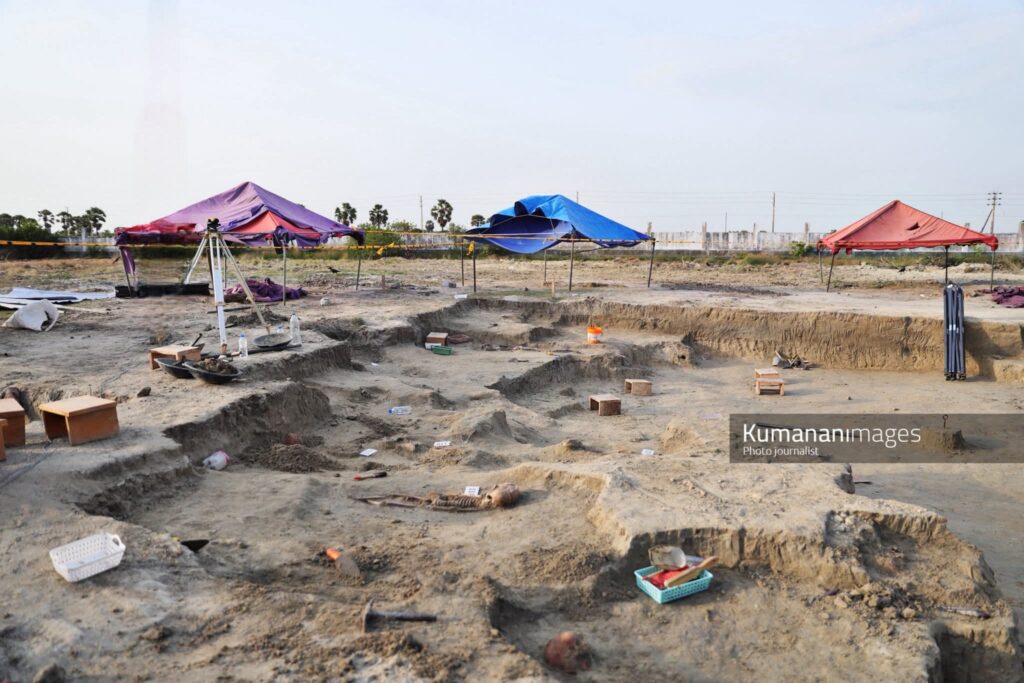
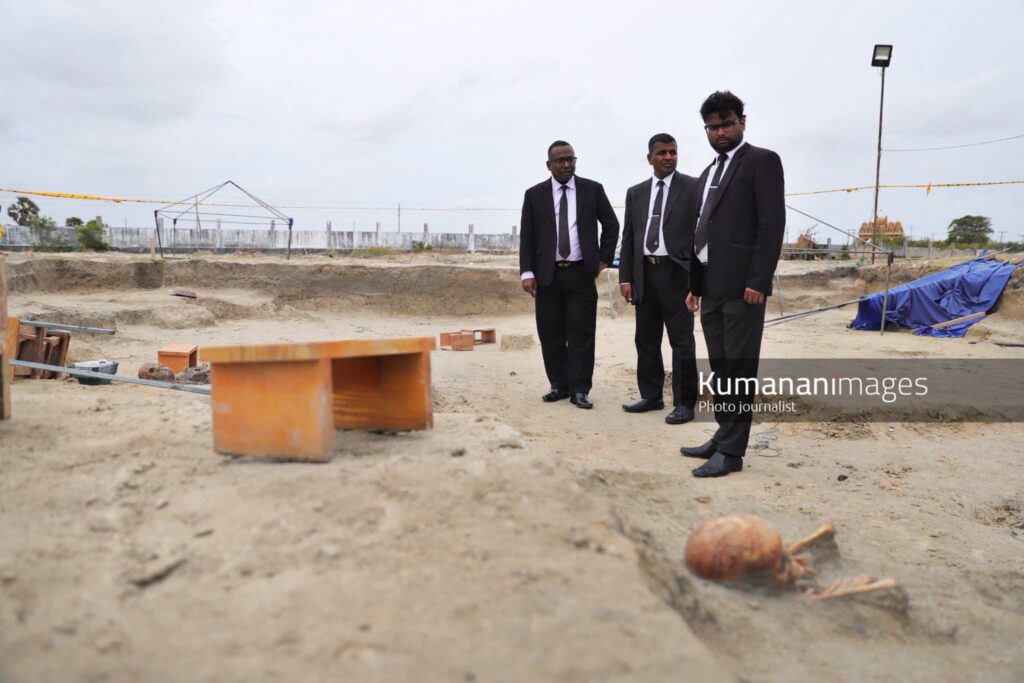
At the close of the 28th day of the second phase of excavations at the newly uncovered Chemmani–Ariyalai “Siththupaththi” Hindu Cemetery mass grave in Jaffna, 147 skeletons have been exhumed—among them toddlers, children, and babies less than twelve months old. The remains were unearthed in a pit as shallow as two feet, scattered without order—some bodies stacked atop one another, some with bent limbs suggesting they were buried alive. All were stripped of clothing, with clear signs of on-the-spot killings of women alongside their babies, hurried burials, and accompanied by chilling artifacts: a school bag identical to those donated by UNESCO in the 1990s, a baby’s toy and a feeding bottle, small glass bangles, socks, slippers, a suspected machine gun barrel, and fractured skulls. These discoveries, together with already available reports and evidence, leave no doubt that these were not the victims of natural disaster or random violence, but of a systematic, state-organised campaign of mass murder.

The ongoing excavation, conducted under the supervision of Jaffna Magistrate A.A. Anandarajah and led by archaeologist Professor Raj Somadeva, was temporarily halted on August 6 and is scheduled to resume on August 22. On August 3 and 4, this writer visited the site and spoke directly with the Magistrate; J. Thathparan, Executive Director of the Office of Missing Persons (OMP); and Professor Somadeva. All confirmed the significance of the discovery—not only for the scale of barbarism and human tragedy it reveals, but also for the irrefutable evidence it provides of crimes committed against innocent civilians.

Chemmani visit
From left at the Chemmani grave site, August 3, 2025: Jaffna Magistrate A.A. Anandarajah; J. Thathparan, Executive Director of the Office of Missing Persons (OMP); and the writer. Photo credit Kumanan Kana facebook page.

Chemmani from 1998 to today: Linking State Military to the Graves

One does not have to grope around to relate these mass graves to the Sri Lankan armed forces who occupied Jaffna after 1995. It is an indisputable fact—even acknowledged by ultra-right Sinhala racists—that mass graves exist and massacres were carried out by the state military. Alarmed by the Chemmani exhumations, racist warmonger Udaya Gammanpila, leader of the Pivithuru Hela Urumaya and a former minister, told the media: “The North is war-ravaged, so mass graves will appear anywhere. Digging them up and commenting [on them] is pointless and a waste of money.”

Asian Human Rights Commission (AHRC) reported  in December 1997: “The fate of about 600 people who disappeared from Jaffna Peninsula in recent times is unknown”. The name “Chemmani” entered the world’s attention in July 1998, when Sri Lanka Army Corporal Dewage Somaratna Rajapaksha, convicted for the rape and murder of 18-year-old Tamil schoolgirl Krishanthi Kumaraswamy, told the Colombo High Court: “We didn’t kill anyone. We only buried bodies. We can show you where 300 to 400 bodies have been buried.”

In Jaffna Magistrate Court, just prior to exhumations in June 1999, he said, “I can show you how people were arrested in Ariyalai, tortured and buried…I can show you 10 places in Chemmani where bodies are buried. The other four convicted with me can show another six places.”

Rajapaksha’s testimony exposed a network of clandestine mass graves in the Jaffna area, containing hundreds of civilians who had “disappeared” following the Sri Lankan military’s recapture of the peninsula in 1995. In the late 1990s, limited excavations at Chemmani confirmed the remains of 15 individuals, but political obstruction, witness intimidation, procedural impediments, and the deliberate tampering with evidence ensured that most sites remained untouched for over two decades—like many other mass graves scattered across the country.

The present Ariyalai mass grave—only a short distance from the original Chemmani site—confirms the truth of Rajapaksha’s claims and directly links the Sri Lankan army to these atrocities. Media reports from the period documented hundreds of Tamil civilians vanishing after being stopped at military checkpoints and round-ups. The close proximity of the central army camp at Chemmani at the time, few yards away from the burial site, random placement of the skeletons, absence of clothing, a military item found with the bodies, and evidence of blunt force trauma all fit the established pattern of military abductions, torture, and summary executions.

Chemmani the dead
The fractured skull of a victim found on August 6, 2025 at the Chemmani mass grave. Photo credit: Shabeer Mohamed.

State repression: from the North to the South

The AHRC documented the systematic nature of disappearances, noting in December 1997 that more than 16,700 cases had been verified in the South during the 1988–90 counterinsurgency against the fascist Janatha Vimukthi Peramuna (JVP). Only in isolated instances were prosecutions initiated against the perpetrators, and almost all of these resulted in no convictions. In both the South and the North, the Sri Lankan ruling elite deployed the full apparatus of the state—the military and police, death squads, the Prevention of Terrorism Act, and emergency regulations that served as a legal licence to kill and dispose of bodies with impunity, along with the use of mass graves—to eliminate perceived threats to capitalist rule from the political right and, above all, against the innocent rural poor and the oppressed. 

There were, however, differences in the methods of disposal. In the South, tyre pyres—burning corpses in public—were used to terrorise the population and demonstrate the cost of defiance. In the North and East, the army often concealed its crimes, burying the bodies in remote or controlled areas to evade scrutiny while continuing the repression.

These were not “excesses” or “aberrations,” but the outcome of deliberate class policy. The AHRC identified seven patterns behind disappearances, including direct political decisions to eliminate thousands as a precondition for introducing free-market economic policies, and the use of 1965 Indonesian-style mass killings as a model for repression.

Successive governments, shared crimes

The Chemmani mass graves, like nearly two dozen others uncovered around the island, indict not only the military but every government—UNP, SLFP, SLPP, and now NPP/JVP—that has presided over a regime of impunity for state violence.

The Janatha Vimukthi Peramuna (JVP), which today attempts to posture as a “clean” and democratic force, played a key role in the nationalist, chauvinist, and militarist campaigns that legitimised repression in both the North and the South—at least since July 1987, when the reactionary Indo–Sri Lanka Accord was signed. The JVP did so while entering into coalition governments with former presidents Chandrika Kumaratunga and Mahinda Rajapaksa. The JVP’s hands are soaked in the blood of Tamils. Its current silence on Chemmani speaks volumes about its real class allegiance—to the capitalist state and imperialism, which it defends against the working class and the poor.

Militarization, Intimidation, and Suppression

In the South, it was only after 1994—when President Kumaratunga came to power with phony pledges of truth and justice to the families of the disappeared—that limited space was opened for victims of state terror under the UNP government and of JVP fascists to lodge even police complaints. Soon, the military was elevated to the highest esteem by the People’s Alliance (PA) government in resuming the war against the separatist Liberation Tigers of Tamil Eelam (LTTE). The continued militarization and repression in the North did not spare the South, where abductions were commonplace under president Rajapaksa’s reinvigorated war, keeping the working class and all dissenters in a state of terror. All throughout, the JVP waged a sinister chauvinist campaign supporting the war. Today, retired military officers have largely found a safe haven under the JVP/NPP government. These were the conditions that prevented the aggrieved relatives of the disappeared from pursuing judicial processes, while the police and military actively intervened to block prosecutions.

Nationalist traps and the dead-end of appeals to imperialism

Neither Tamil nationalist organisations operating in the North or Colombo, nor the Tamil diaspora—whose real aim is to secure an elite self-rule in the North and East to safeguard their privileges against the Tamil working class and poor—offer any way forward. Their appeals to the United Nations, Western governments, and international human rights bodies have only been pretexts, largely for US imperialism to exert pressure on Colombo into submission. These are the very same imperialist powers that provided military, intelligence, and diplomatic backing to Colombo during the war.

Similarly, Sinhala nationalism justifies past and present massacres under the cover of “protecting the unitary state” and defending “national security.” Both ethnic nationalisms serve to divide the working class, the only social force capable of ending the cycle of repression and impunity.

Massacres as class war

Like the massacres in the South during 1988–90, those in the North and East during the 1983–2009 anti-Tamil civil war were not simply crimes committed against an ethnic minority, but primarily acts of class war. The victims—whether rural Sinhala youth accused of JVP links, or Tamil villagers suspected of aiding the LTTE—were overwhelmingly drawn from the working class, unemployed youth and oppressed rural poor. Their elimination was intended to crush political opposition and terrorise the masses into accepting the “open economy” policies demanded by the local bourgeoisie and international finance capital.

As the International Committee of the Fourth International (ICFI) has emphatically explained, there has been—and will be—no justice for the victims of the South without justice for the victims of the North, and vice versa. The capitalist state, founded in 1948 on communal division, cannot and will not prosecute itself.

The way forward: a socialist programme for the working class and the Oppressed

The ICFI advances a clear perspective for ending repression and securing genuine justice: the independent political mobilisation of the working class, uniting Sinhala, Tamil, and Muslim workers in the struggle for a Sri Lanka–Eelam United Socialist States, as part of the Union of Socialist Republics of South Asia.

This requires building a revolutionary party grounded in the Trotskyist programme of permanent revolution, fighting to unite the oppressed rural and urban poor, along with unemployed youth, behind the leadership of the working class. The middle class and petty bourgeoisie must break from nationalist illusions and join forces with their true class brothers and sisters, both nationally and internationally.

The truth is that justice will not come from The Hague, Geneva, or Washington, but from the victory of the working class over the capitalist system that breeds war, dictatorship, and mass murder. The graves at Chemmani are not merely relics of past atrocities—they are a warning of what the Sri Lankan state will resort to again if the working class suffers another defeat. This is not a distant possibility but a living reality, demonstrated before our eyes in the ongoing genocide of the Palestinians by imperialist-backed Zionist Israel.

The Chemmani Mass Graves expose the class war policies of the Sri Lankan State Read More »

Scroll to Top