Oppose Communally Driven State-Sponsored Demographic Engineering in the North and East of Sri Lanka: The Way Forward
By Sanjaya Jayasekera, Member, the Socialist Lead of Sri Lanka and South Asia (SLLA)
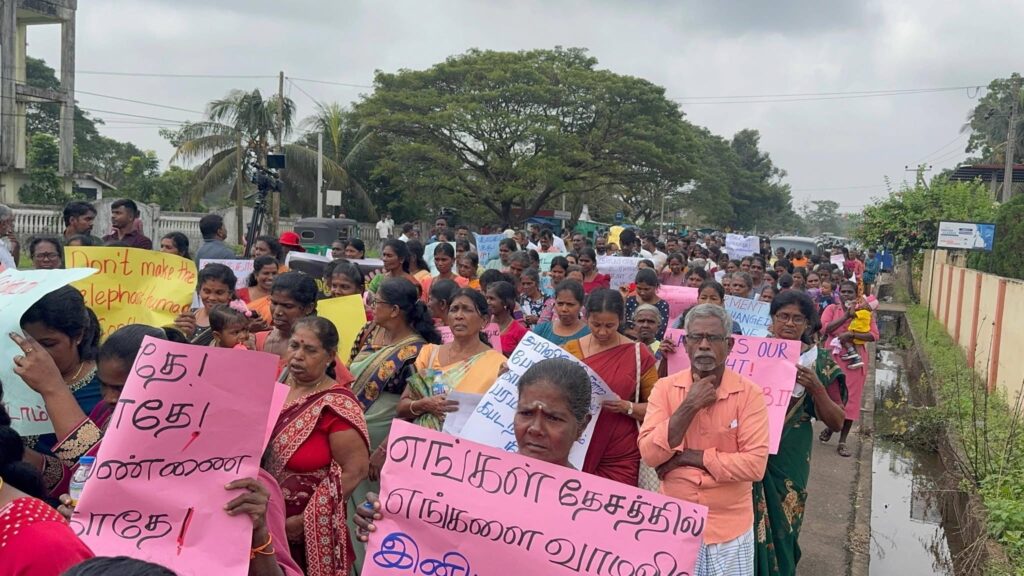
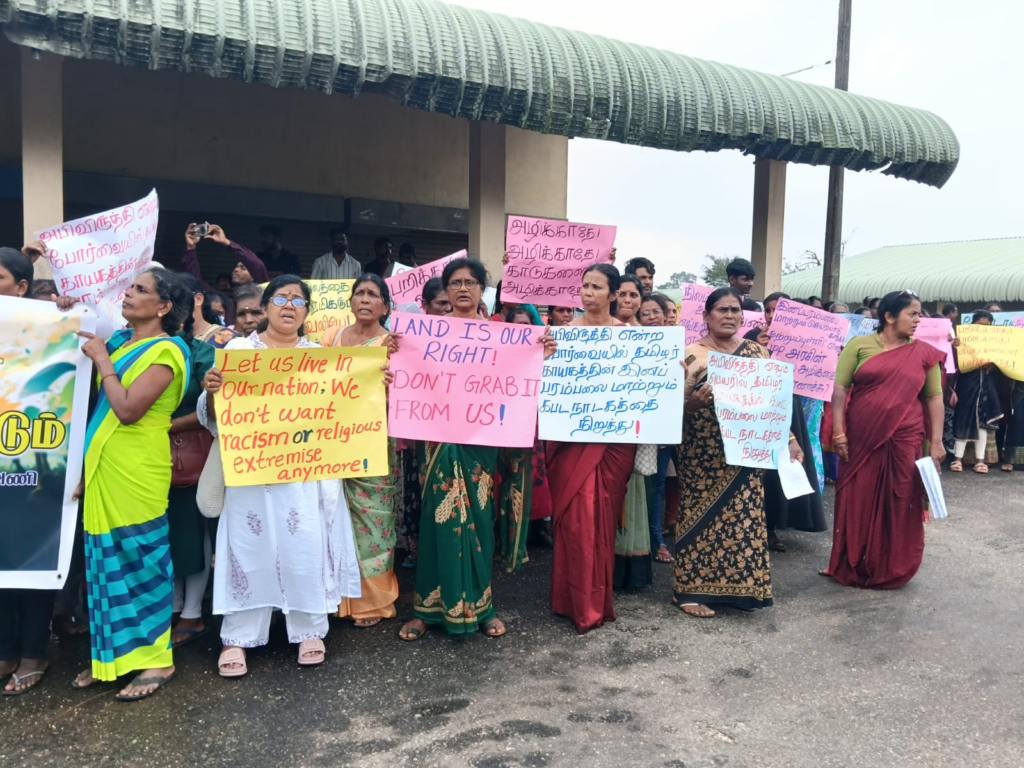
At a media conference held at the Jaffna Press Club premises on July 3, 2026, a Sinhalese speaker voiced a widely-held Sinhala-Buddhist communal argument: because Tamils, Sinhalese and Muslims live together in Colombo, the capital of Sri Lanka, Sinhalese could likewise be peacefully settled in Jaffna and the North and East. This is a misconceived justification for the state-sponsored Sinhalisation of Tamil-majority areas. The argument is a fraud. If accepted as a general principle, it would equally justify the state allocating land to Tamils in Matara, Weeraketiya, Dikwella, Tangalle, Ambalantota, Mirissa, Galle and Deniyaya — predominantly Sinhala areas of the south. The speaker would never accept that, because he exactly knows that state-sponsored settlement is not an invitation to voluntary coexistence, but is an instrument of power. What is being presented as a principle of multi-ethnic coexistence is in reality a justification for state-sponsored ethnic domination of the Sinhalese. The issue is not a matter of ethnicity, not whether Sinhalese, Tamils and Muslims can live together voluntarily. The issue is the political character of state-directed demographic engineering and the communal strategy of capitalist rule it serves.
The historical record
Since the sham independence of 1948, successive Sri Lankan governments have pursued demographic engineering in the North and East as a core pillar of communal rule. One of the first acts of the D.S. Senanayake government was to disenfranchise over a million Tamil-speaking plantation workers. The UNP applied from the outset the communal principle that, as Colvin R. de Silva prophetically declared in his 1948 speech opposing the Citizenship Bill, “the state must be coeval with the nation and the nation with the race.” He warned that this was “an outmoded idea and an exploded philosophy,” adding: “It is precisely under Fascism that the nation was to be made coeval with the race, and race the governing factor in the composition of the state.”[1]
The pattern intensified after the 1953 hartal, when the general strike shook bourgeois rule to its foundations. Bandaranaike concluded that only the stirring up of anti-Tamil prejudice could counter the influence of the Trotskyists in the working class. But the communal project was not confined to legislation and administrative discrimination. It was pursued with equal vigour through the physical transformation of the country’s demographic map.
From the 1950s onward, successive governments used state-sponsored irrigation and land colonisation schemes to resettle Sinhalese peasants from the wet zone into the dry-zone Northern and Eastern provinces. The Gal Oya project, initiated in 1949 under D.S. Senanayake, settled tens of thousands of Sinhalese colonists on land developed through the diversion of the Gal Oya river. The Sinhalese population of the combined Batticaloa-Amparai district, a mere 4,702 in 1911, had swelled to over 150,000 by 1981 — an increase far exceeding any possible natural growth rate, achieved through the systematic allocation of state land, irrigation infrastructure and cultivation rights to settlers brought from the Sinhalese-majority south. The administrative separation of Ampara from Batticaloa in April 1961 was presented as a measure of bureaucratic decentralisation necessitated by the region’s growth. In reality, it was the political consolidation of more than a decade of engineered demographic transformation. The redrawing of district boundaries carved a new Sinhalese-majority interior out of what had been Tamil- and Muslim-majority territory, severing it administratively from the coastal areas where Tamils and Muslims remained concentrated. By reshaping electoral boundaries to manufacture Sinhala parliamentary representation in what had been a Tamil-majority province, the Ampara partition was not an incidental by-product of development policy but an integral mechanism of the Sinhala bourgeoisie’s nation-building project — confirming that what was presented as technical administration and rural development was, from its inception, bound up with the ruling class’s strategy of fragmenting the working class along communal lines.
A similar dynamic unfolded at Kantale (Kanthalai), where the state settled peasants drawn from outside Trincomalee District in what had been a Tamil-majority village. The same logic was extended north-west into the Tamil-speaking areas of Anuradhapura District through the Padaviya Tank scheme, 65 km from Anuradhapura town. Across these projects, the pattern of land allocation was consistent and unambiguous: the Allai scheme assigned 65 percent of settler plots to Sinhalese colonists, and Kanthalai assigned 77 percent, in each case relegating the existing Tamil and Muslim population to a residual share. The cumulative demographic effect was stark — Trincomalee District’s Sinhalese population rose from roughly 15 percent in 1946 to 33 percent by 1981 — an increase that cannot be attributed to organic demographic growth and that testifies instead to the systematic character of state-directed colonization as an instrument of Sinhala-Buddhist nation-building.
The Mahaweli Development Programme, whose modern phase began under Dudley Senanayake’s government in the late 1960s following a 1969 UNDP/FAO master plan and was dramatically compressed from a planned thirty years into seven after the UNP’s return to power in 1977, took this process of engineered demographic transformation to a qualitatively new level. Settlement in Systems B, C, H and L brought overwhelmingly Sinhalese colonists into the Eastern and Northern provinces: in Systems H and C, 90 percent of settlers were Sinhalese and 10 percent Muslim, with no Tamils allocated land at all, despite the territory lying within the Eastern Province, then a majority-Tamil area. This composition was not incidental; a former senior Mahaweli Authority bureaucrat later acknowledged that the settlement of System L in Weli Oya (Manal Aru) in particular was designed to “destroy the land basis for the very existence of Eelam,” inserting a loyal Sinhala population into the narrow strip separating Tamil areas of the north from Tamil- and Muslim-inhabited areas of the east and driving a permanent geographic wedge into the claimed Tamil homeland.[2] Weli Oya was the most militarized expression of Sinhala colonization, and was settled clandestinely from the mid-1980s under a Buddhist-monk-led mobilization backed by President Jayewardene’s inner circle, with settlers armed and deployed as home guards alongside the army.
A 1985 government-appointed “study group” explicitly recommended — reported in Tamil Times, November 1985 — using Sinhala colonization to sever the territorial link between the Tamil-majority north and east. “The area [Trincomalee District] forms an ethnic bridge and colonization of this region by Sinhalese population can break this inter-district ethnic [Tamil] link”, the report proposed. Eight recommendations reported include transformation of the ethnic composition of the Tamil areas of the north and east in order that Sinhalese would constitute the majority by redrawing Sri Lanka’s map with boundary changes of provinces and by creating new districts. Jayewardene himself announced — reported in Los Angeles News on January 21, 1985 — plans to colonize the Northern Province with enough Sinhalese: “We consider Sri Lanka as one land belonging to all citizens, consisting of 75% Sinhalese and 25% other races. As such, we will settle Sri Lankans in this proportion throughout the island on state land”, he said at a public meeting at Anamaduwa.
This was not a program confined to the war years. It resumed after the LTTE’s military defeat in 2009, when the Mahaweli Authority and the military brought new waves of landless Sinhalese, mainly from Hambantota, into Weli Oya in the same clandestine manner as before. And it continues into the present, with the Sri Lankan cabinet of President Anura Kumara Dissanayake approving the revival of the Mahaweli System L’s Kivul Oya reservoir project in January 2026 — a scheme reported to confiscate over 1,600 acres of Tamil paddy land and settle more than 7,000 people, reportedly all Sinhalese, with no land allocated to the Tamil communities who have farmed the area for decades.
These programs were administered under the banner of national development and land reform. They were nothing of the kind. They shifted the ethnic composition of entire districts, fragmented the geographic contiguity of Tamil-majority territory, and became one of the central grievances underlying Tamil nationalist politics and, later, the armed conflict. The war that erupted in 1983 and the military occupation of the North and East provided cover for accelerated settlement. In the post-war period, as the WSWS reported in 2012, the Rajapakse government pursued a systematic policy of “Sinhalisation” — changing Tamil place names to Sinhala, erecting Buddha statues, and moving Sinhalese settlers northward “to change the population balance in politically and socially significant ways.” [3] The military controlled land allocation and barred displaced Tamils from returning to their villages.
The Sinhalese peasants settled in the Northern and Eastern provinces through these colonisation schemes were themselves victims of the same communal strategy. Granted land and state assistance as initial inducements, many were subsequently left to endure severe hardship. Established in militarily exposed frontier zones, they were repeatedly subjected to deadly attacks by the LTTE and other armed groups, while the state frequently failed to provide either adequate protection or long-term economic security. For many settler families, the promised improvement in living conditions never materialised. Yet these same schemes profoundly and permanently altered the demographic composition of historically Tamil-majority areas — an outcome that was not incidental but, as a substantial body of research has documented, a central political objective of successive governments. The objective record demonstrates that the Sinhala-chauvinist state subordinated the welfare of poor Sinhalese settlers, no less than that of the Tamil population, to its broader strategy of consolidating territorial and political control through communal division. Sinhalese peasants were deployed not as the principal beneficiaries of these schemes but as instruments of a reactionary state policy whose overriding purpose was the preservation of bourgeois rule through ethnic polarisation.
Tamil Eelam is Sri Lanka’s Gaza
The continued militarisation of the North and East, the land grabs and settler colonisation sponsored by the Sinhala-Buddhist chauvinist state, and the atrocities committed against Tamils since the early 1980s draw a sharp parallel between occupied Palestine and the North and East of Sri Lanka. The parallel is not incidental. It is verifiably reported that the Sri Lankan ruling class studied and adapted Zionist settler-colonialism as a precedent, with direct advisory contact between Israeli and Sri Lankan state agencies in the 1980s. The ideological foundations are strikingly similar. Just as Zionist ideology since the Nakba of 1948 has been built on the colonial assertion of a divine and historical claim to land, erasing the presence of the indigenous Palestinian population, Sinhala-Buddhist chauvinism rests on the anachronistic and false claim that Tamils were historically invaders of the island — a mythology that denies the centuries-long presence of Tamils in the North and East and provides the ideological cover for their dispossession. The material manifestation of both ideologies has been the same: state-sponsored settler colonisation. In Palestine, Zionist settlements have been systematically implanted to fragment Palestinian territory, seize water and land resources, and make the creation of a viable Palestinian state impossible. In Sri Lanka, from the Gal Oya project of 1949 through the Mahaweli Programme to the post-war military colonies, the state has resettled Sinhalese peasants in historically Tamil-concentrated areas to alter the demographic map, fragment territorial contiguity, and “destroy the land basis for the very existence of Eelam”. In both cases, the political objective was not merely territorial acquisition but the deliberate strengthening of communal divisions to prevent the unity of the working class. In both cases, the major imperialist powers — above all the United States — provided political cover, military support and diplomatic protection for the project. In both cases, the civilian population was subjected to military onslaught when it resisted: the slaughter of tens of thousands of Tamils at Mullivaikkal in 2009, like the genocidal assault on Gaza, was the bloody culmination of decades of occupation, colonisation and ethnic cleansing. Tamil Eelam is Sri Lanka’s Gaza — not as a rhetorical flourish, but as the product of the same logic of the capitalist nation-state, which, whether in Palestine or Sri Lanka, resorts to settler colonialism, communal war and permanent military occupation to suppress the democratic rights of oppressed peoples and to divide the working class along ethnic lines.
The class logic of communalism
The policies of demographic engineering have not promoted unity between Tamil and Sinhala workers. They have deepened mistrust and communal division. This serves the interests of the Sinhala ruling class by weakening the independent unity of the working class, while simultaneously providing Tamil nationalist bourgeois leaders with political ammunition to reinforce ethnic divisions and strengthen support for separatism. The Sinhala ruling class and the Tamil bourgeois nationalists are not genuine antagonists. They are symbiotic. Each feeds on the other, and both depend on preventing the unity of Tamil, Sinhala and Muslim workers on a class basis.
The demographic restructuring of the North and East serves a precise class function. It provides land and patronage to Sinhala settlers, creating a social base with a material stake in the communal order. It fragments the working class along ethnic lines, making it far harder for Tamil and Sinhala workers to recognise their common interests. And it provides the Tamil nationalist bourgeoisie with precisely the grievance around which to mobilise ethnic solidarity, reinforcing the very divisions that prevent the emergence of an independent working-class politics.
This was not inevitable. The Bolshevik Leninist Party of India (BLPI), the Trotskyist forerunner of the Socialist Equality Party and the Socialist Lead (SLLA), commanded the allegiance of the most class-conscious workers in the 1940s. On February 4, 1948, it mobilised 50,000 workers — Tamil, Sinhala and Muslim — on Galle Face Green to reject the fake independence arranged in the British Colonial Office. The BLPI warned that disenfranchising Tamil plantation workers would set a chain of discrimination in motion. The disaster came with the Lanka Sama Samaja Party’s political degeneration. Encouraged by the Pabloite revisionists in the Fourth International, the LSSP leaders increasingly adapted to Bandaranaike’s Sinhala populism, entering the SLFP government in 1964. By 1972, the former Trotskyist de Silva was drafting a constitution that enshrined Buddhism as the state religion and a Sinhala as the sole official language — a direct repudiation of everything he had fought for in 1948. The LSSP’s betrayal blocked the development of an independent revolutionary movement of the working class, opening the door to the JVP among Sinhala rural youth and the LTTE among young Tamils.
The way forward
The democratic rights of all communities cannot be secured through state-directed demographic manipulation. They require the conscious political unity of Tamil, Sinhala and Muslim workers against communalism and the capitalist state that has systematically exploited ethnic divisions for its own survival.
Where communities have been relocated through politically motivated settlement schemes, any future solution must uphold democratic rights, be voluntary, provide adequate compensation and livelihood guarantees, and be determined in consultation with the affected people — not imposed by the state in pursuit of communal objectives. But even such democratic measures can only be fully realised through a broader political struggle against the capitalist system that generates communalism as an instrument of rule.
The working class must reject all forms of nationalism and communalism — whether Sinhala supremacism or Tamil separatism. In solidarity with the socialist internationalist programme of the International Committee of the Fourth International (ICFI), the SLLA fights for a workers’ and farmers’ government and the convening of a genuine constituent assembly to abolish decades of discrimination and oppression on the basis of religion, ethnicity, caste and gender. Democratic rights can only be assured by ending social inequality through the socialist transformation of society.
The ICFI advances the perspective of a United Socialist States of Sri Lanka and [Tamil] Eelam, as part of a United Socialist States of South Asia. The ICFI’s “Tamil Eelam” is not the LTTE’s capitalist Eelam — it is a constituent part of a voluntary socialist federation, a socialist Tamil Eelam, guaranteed by a workers’ state. This is not a diplomatic formula for negotiations between capitalist nation-states. It is a guide to revolutionary action — the unification of Sinhala and Tamil workers in a common struggle against their common class enemy. As the 1987 statement of the International Committee of the Fourth International explained, the working class fights for the democratic rights of oppressed peoples “not as an appendage to the national bourgeoisie, but rather as its implacable enemy.”[4] The right of nations to self-determination cannot be realised through bourgeois and petty-bourgeois movements, no matter how courageous or militant. It can only be achieved as a by-product of the socialist revolution led by the proletariat, which, having established its dictatorship, guarantees to all oppressed peoples their legitimate democratic rights within a voluntarily united socialist federation.
What, then, is the way forward for the Sinhalese peasants who have been settled in the North and East under these reactionary programmes? For those already settled and granted title deeds over the years — many of whom have lived there for decades, raised families and know no other home — any resolution must be democratic and voluntary, not punitive. They must be guaranteed security of person and property, full democratic rights, and equal participation in the economic and social life of the region alongside their Tamil and Muslim neighbours. For those who were settled but never granted formal title deeds, the state must either regularise their tenure on terms determined in consultation with all affected communities, or provide adequate compensation and livelihood guarantees should they choose to relocate. For those Sinhalese presently being lured by the state into new settlement schemes — the most active front of the ongoing communal project — the answer is to refuse. Sinhalese workers, youth and peasants must reject the role the Sinhala-chauvinist state has assigned them as demographic pawns. The state that offers them land today will abandon them tomorrow, as it has abandoned generations of settlers before them, once their political utility is exhausted. The genuine interests of Sinhalese peasants lie not in accepting stolen land at the expense of Tamil and Muslim working people, but in joining with those same working people in a common struggle against the capitalist system that exploits and divides them all.
The working class has no interest in drawing borders on exclusive ethnic lines, nor in the demographic manipulation of one community against another. They should reject the idea that different ethnic groups must be separated into different states. The territorial referent of “Tamil Eelam” in our usage is the Northern and Eastern provinces — the areas where the Tamil population has historically lived as a concentrated community, where national oppression has been most acute, and where the demand for a separate Tamil state has been historically raised by the Tamil nationalist movement. But, we do so within the framework of a United Socialist States, on the basis of the democratic right of self-determination and the struggle for socialism — NOT on the basis of ethnic exclusivity of Tamils, nationalist “homeland” claims of a primordial birthright grounded in ethnic identity, or the cartographic pretensions of the Tamil bourgeoisie. The interest of the working class lies in abolishing the entire system of capitalist communal rule through the socialist transformation of society. Sinhalese workers, youth and peasants should recognise the reactionary character of state-sponsored settlement policies and the devastating consequences they have produced over decades. The allies of Tamil workers are not to be found in the separatist leaderships of the Tamil bourgeoisie, but among their Sinhala and Muslim class brothers and sisters. The fight against communally driven demographic engineering is inseparable from the fight for socialism.
Let us be clear
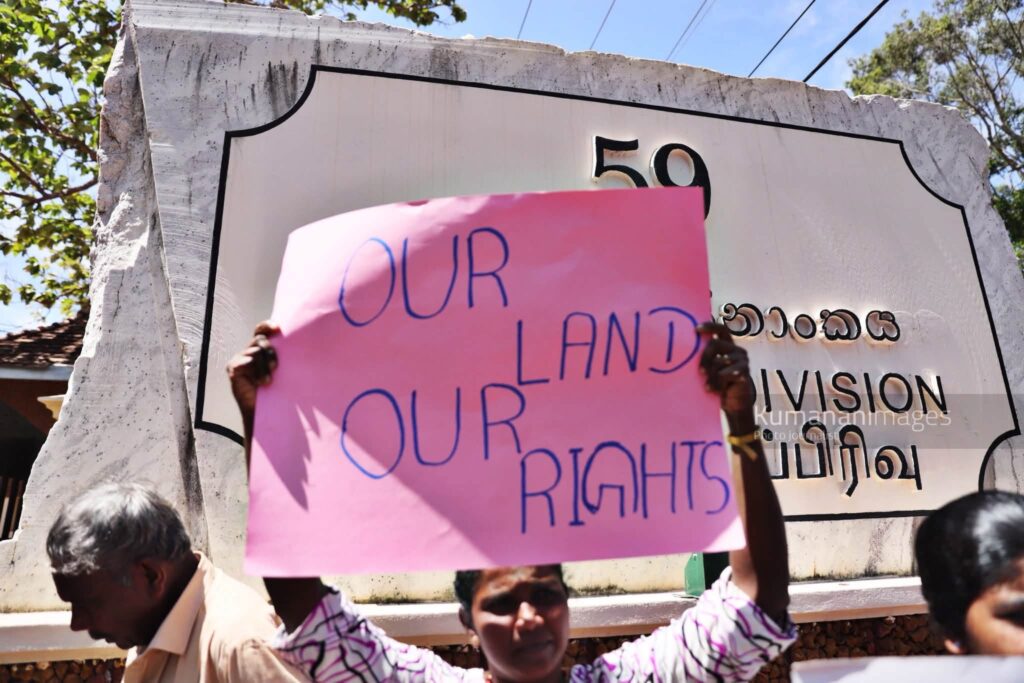
Seventeen years after the war, the democratic right of Tamil people to reclaim their occupied lands must be upheld without qualification. Whether or not individual Tamils possess formal title deeds is irrelevant to the legitimacy of their claim. These are historically Tamil neighbourhoods — areas where Tamils were historically concentrated, where their homes, Tamil villages and cultural places were situated. The absence of state-issued documentation does not extinguish the right of a people to the lands on which their community has lived for generations. On the contrary, the systematic denial or destruction of title deeds by the occupying state is itself an instrument of dispossession, not a legitimate basis for denying restitution.
The democratic right of Tamils to their own neighbourhoods must be recognised and restored. This is not a claim to ethnic exclusivity. No member of any other ethnic community is prevented from residing in these areas of his or her own will, without the intervention of the state. The right being asserted is not the bourgeois-nationalist demand for an ethnically pure territory, but the inviolable democratic right of a historically oppressed people to return to and live in their traditional neighbourhoods, their historical villages and towns — the places from which they were driven by communal war, military occupation and state-sponsored colonisation. There is no exclusive ethnic right to lands that Marxists recognise. But people of the same ethnicity who have shared a culture in traditional neighbourhoods of a community, recognised as their historical villages and towns, have an inviolable right to reside on those lands.
This distinction is fundamental. The Sinhala-chauvinist state has systematically violated this right for decades — through the Gal Oya and Mahaweli colonisation schemes, through the mass expulsions of the 1980s and 1990s, through the military land seizures that followed the 2009 slaughter, and through the ongoing policy of settling Sinhalese colonists on lands from which Tamil families have been barred from returning. The state invokes formal legal title to justify these seizures, but the legal framework itself is the product of the same communal project. To accept the state’s legal title as the arbiter of rights would be to accept the legitimacy of the dispossession.
The restoration of Tamil neighbourhoods, villages and towns is a democratic demand that the working class must champion. It requires the immediate and unconditional withdrawal of the military from the North and East, the dismantling of high security zones and army camps established on seized land, and the return of occupied lands to their traditional Tamil inhabitants. It requires that Sinhalese settlers who were implanted through state-sponsored schemes — particularly those who never received formal title — not be used by the state as a human shield to perpetuate occupation. Where settlers have been present for decades and know no other home, solutions must be democratic, voluntary and negotiated with the affected Tamil communities whose rights are primary. But the principle is clear: the democratic right of Tamils to their historical villages and towns is inviolable, and the state that violated it bears the responsibility for redress.
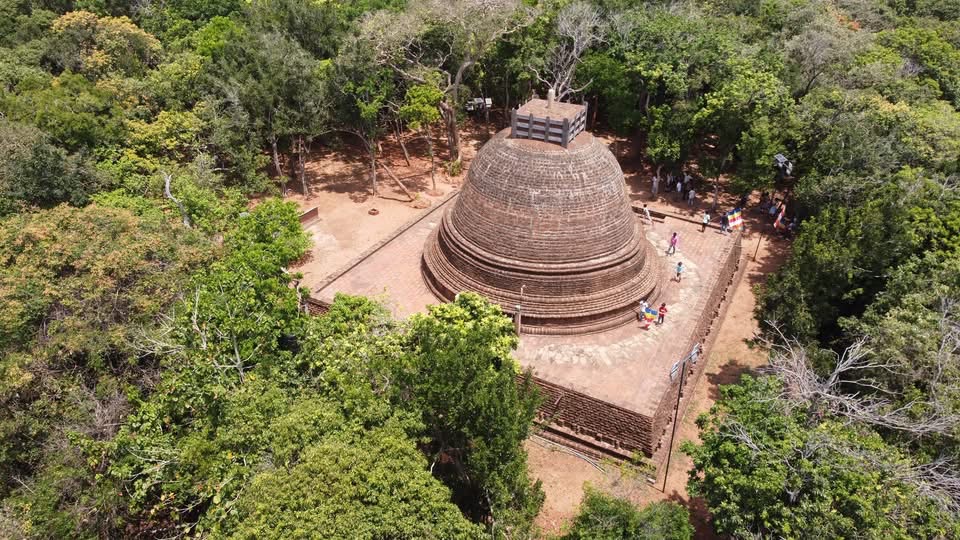
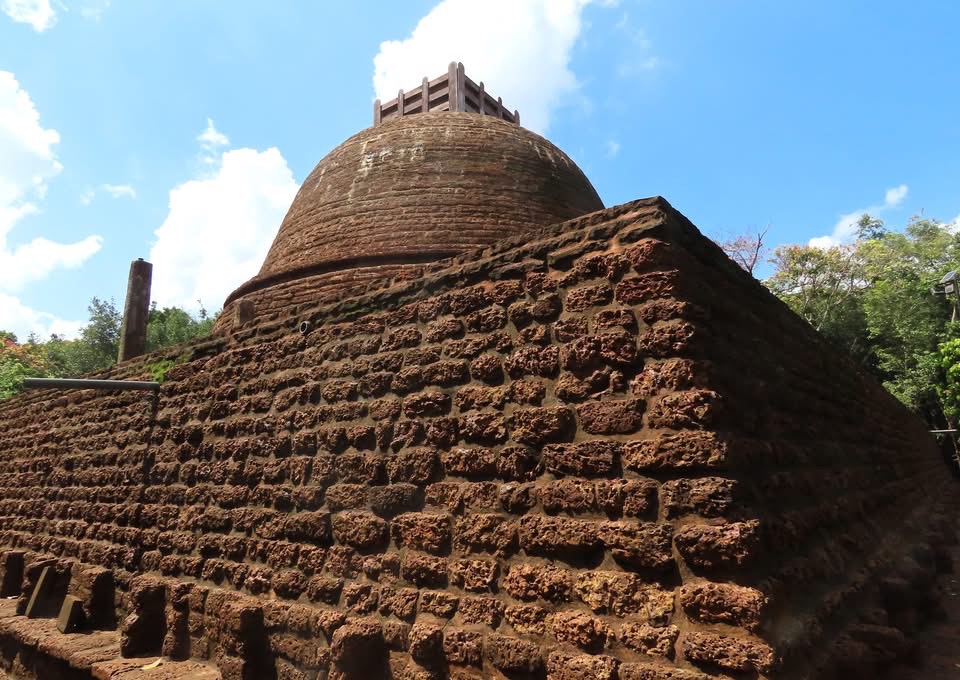
Finally, we should also emphasize one important principle in relation to claims concerning archeological sites that have given rise to renewed disputes over their exclusive rights: No ethno-religious group has an exclusive right to occupy an archaeological site, whatever its medieval or ancient origin. This principle must be stated emphatically, because it is precisely the claim of exclusive ancestral ownership that both Sinhala chauvinists and Tamil nationalists advance today, generating significant religious disputes over a number of ancient sites in the North and East. The Sinhala-Buddhist chauvinists assert that the island’s “ancient or historical identity” was exclusively Sinhala-Buddhist, and that Tamils have “encroached” on Buddhist sites “with the cruel intention of erasing evidence” of a unitary Sinhala state — a claim used to justify the construction of Buddhist temples on land cultivated by Tamil farmers, as at Kurundi in Mullaitivu, and the illegal erection of Buddha statues in Tamil-majority areas, as at Trincomalee. The Tamil nationalist parties respond with their own mirror-image claim of an exclusive Tamil “homeland” whose ancient sites belong to the Tamil nation alone. Both claims are reactionary. The archaeological heritage of the island is the common inheritance of all its working people, not the property of any ethnic or religious group. The sites themselves — whether Buddhist, Hindu, or of mixed and contested origin — are the product of centuries of shared history, migration, cultural exchange and coexistence, not of the exclusive settlement of one “race” or “nation.” The attempt to assign exclusive ownership of the past to one community is not an act of historical scholarship but a political weapon, deployed by the ruling class and its communalist auxiliaries to inflame ethnic hatred and divide the working class. The working class has no interest in the chauvinist contest over whose ancestors built which ruin. Its interest lies in defending the democratic right of all communities to their cultural and religious life, in opposing the state’s use of archaeology as an instrument of land seizure and communal provocation, and in uniting Tamil, Sinhala and Muslim workers against the capitalist system that manufactures these disputes to preserve its rule.
[1] Permanent Revolution and the National Question Today, David North (1993), (16 May 1998) <https://www.wsws.org/en/articles/1998/05/dnkb-m16.html>
[2] The Lure of Land: Peasant Politics, Frontier Colonization and the Cunning State in Sri Lanka, Thiruni Kelegama and Benedikt Korf (2023) Modern Asian Studies 1, Cambridge University Press <https://doi.org/10.1017/S0026749X22000506>
[3] ICG reports detail the militarisation in Sri Lanka’s North, Sampath Perera (24 March 2012) <https://www.wsws.org/en/articles/2012/03/sril-m24.html>
[4] The Situation in Sri Lanka and the Political Tasks of the Revolutionary Communist League, Statement of the International Committee of the Fourth International, David North, Keerthi Balasuriya (19 November 1987) <https://www.wsws.org/en/special/library/fi-15-1/05.html>