මීගමුව බන්ධනාගාර සමූලඝාතනය: පන්ති ප්රචණ්ඩත්වය සහ ශ්රී ලංකා ධනේශ්වර රාජ්යය
ශ්රී ලංකාවේ සහ දකුණු ආසියාවේ සමාජවාදී නායකත්වය (SLLA) විසිනි.
මෙම ලිපිය ඉංග්රීසි බසින් ‘The Negombo Prison Massacre: Class Violence and the Capitalist State in Sri Lanka’ යන සිරසින් 2026 ජුලි 11 දින theSocialist.lk වෙබ් අඩවියේ පළ කෙරිණි.
අවම වශයෙන් 28 දෙනෙකුට ජීවිත අහිමි කරමින් සහ 100කට ආසන්න පිරිසකට තුවාල සිදු කරමින් ජූලි 5-6 දිනවල මීගමුව රිමාන්ඩ් බන්ධනාගාරයේ සිදු වූ සංහාරය අසාමාන්යයක් නොවේ. එය ශ්රී ලාංකීය සමාජයේ වඩාත්ම පීඩිත සහ කොන් කරනු ලැබූ ස්ථරයන්ට එරෙහිව පන්ති යුද්ධයේ මෙවලමක් ලෙස එහි ආකෘතියෙන්ම ක්රියාත්මක වන දණ්ඩන (penal) පද්ධතියක නවතම සහ මාරාන්තික ප්රකාශනයයි. මෙම සංහාරය මගින්, හුදෙක් රුධිරයෙන් පමණක් දැකගත හැකි පැහැදිලි බවකින් යුතුව, ධනපති රාජ්යයේ සැබෑ ස්වරූපය නිරාවරණය කරයි. එනම්, දිළිඳුකම සාමාන්ය තත්ත්වයක් ලෙස නිපදවන දේපළ සබඳතා ආරක්ෂා කර ගැනීම සඳහා දිළිඳු ජනතාවට එරෙහිව යොදවා ඇති සන්නද්ධ මිනිසුන්ගෙන් සමන්විත ආයතනයක් ලෙස එය ක්රියාත්මක වීමයි.
මීගමුව මහා රෝහලෙන් සහ මූලික අධිකරණ පරීක්ෂණවලින් දැනට මතුවෙමින් පවතින පශ්චාත් මරණ පරීක්ෂණ සාක්ෂි මඟින් පැහැදිලි වන්නේ, “පාතාල මත්ද්රව්ය කල්ලි අතර ගැටුමක්” යැයි රජය විසින් කලබලයෙන් ගොතා ඉදිරිපත් කළ ප්රකාශය මඟින් වසාගැනීමට උත්සාහ කළේ කුමක්ද යන්නයි. මියගිය රැඳවියන් 20 දෙනාගෙන් අතිබහුතරයක් (රැඳවියන් 14 දෙනෙකු) මියගොස් ඇත්තේ හිස, පපුව සහ උඩුකය ප්රදේශවලට අධිවේගී ගිනිඅවිවලින් එල්ල වූ වෙඩි වැදීම් හේතුවෙනි. මියගිය බන්ධනාගාර ආරක්ෂකයින් සහ නිලධාරීන් හත්දෙනා (ජූලි 8 වනදා සැරයන්වරයෙකු තුවාල ලබා මියයෑමත් සමඟ මෙම සංඛ්යාව අට දක්වා ඉහළ ගියේය) ඝාතනයට ලක්ව ඇත්තේ මොට ආයුධ, කැඩීගිය ගඩොල් කැබලි සහ යකඩ පොලු වලිනි. ඒවා, සියල්ල අහිමි වූවන් විසින් සිය උග්ර ක්රෝධය පුපුරා යාම තුළ භාවිත කළ ආයුධයි. මෙය එකම පන්ති පද්ධතියක් (class system) විසින් නිර්මාණය කරන ලද, එකිනෙකට වෙනස් වූ මරණයේ ස්වරූප දෙකකි.
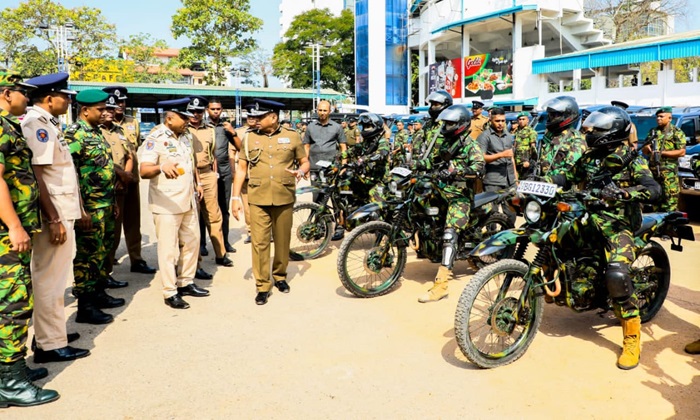
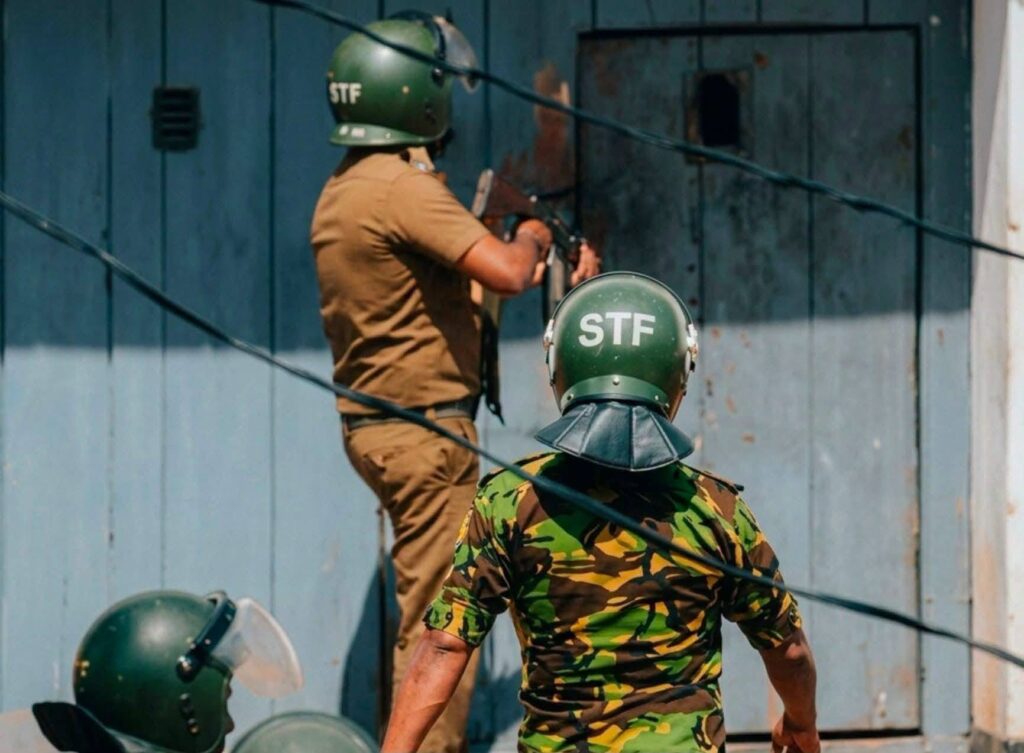
තත්ත්වය සමනය කිරීම රජයේ අරමුණ නොවූ බව ඔවුන්ගේ උපායමාර්ගික තේරීම් මඟින් තහවුරු වේ. ශබ්දවාහිනී යන්ත්ර මඟින් කිසිදු අනතුරු ඇඟවීමක් සිදු නොකෙරුනි. කඳුළු ගෑස්, ජල ප්රහාර හෝ රබර් උණ්ඩ කිසිවක් භාවිත නොකළේය. සාකච්ඡා මාර්ගයෙන් හෝ එකඟතාවයකින් ගැටලුව විසඳීමට ද කිසිදු උත්සාහයක් නොගැනිණි. ඒ වෙනුවට, පොලිසිය, යුද හමුදාව සහ 2012 වැලිකඩ බන්ධනාගාර සමූලඝාතනයට වගකිවයුතු, අපකීර්තියට පත් පැරමිලිටරිය වන විශේෂ කාර්ය බලකාය (STF), තාප්ප වලින් වට වූ පරිශ්රයක් තුළ සිරවී සිටි සිරකරුවන් දෙසට ඉලක්කයකින් තොරව වෙඩි තැබූහ. බන්ධනාගාරය අවට ප්රදේශය යුද කලාපයක් බඳු ස්වරූපයක් ගත් අතර, වෙඩි තැබීම් හඬ පරිශ්රය පුරා පැතිර යද්දී, පිටතට රැස්ව හඬා වැලපෙමින් තොරතුරු ඉල්ලා කෑගැසූ සිරකරුවන්ගේ ඥාතීන් වන බහුතරයක් දුප්පත් ගම්වැසියන් වූ මව්වරුන්, බිරින්දෑවරුන් සහ දරුවන් ආදී සිය ගණනක් බියවැද්දීම සඳහා සන්නද්ධ ආරක්ෂක අංශ, සන්නද්ධ රථ, මිලිටරි ජීප් රථ සහ ඩ්රෝන යානා යොදවා තිබුණි.
මිනී මැරීම් ජූලි 6 වනදායින් අවසන් වූයේ නැත. මීගමුව බන්ධනාගාරයේ සිට වෙනත් බන්ධනාගාර වෙත මාරු කර යැවීමෙන් පසු, රැඳවියන් අවම වශයෙන් දෙදෙනෙකුවත් මියගොස් ඇති බව ඇම්නෙස්ටි ඉන්ටර්නැෂනල් (Amnesty International) සංවිධානය ජූලි 9 වනදා තහවුරු කළේය. එය සිදුවූයේ , ආරක්ෂකයින් විසින් පළිගැනීමේ චේතනාවෙන් සිදු කරන ලද වධහිංසා පැමිණවීම් සහ පහරදීම් පිළිබඳ බරපතල චෝදනා මධ්යයේය. නොසන්සුන්තාවයට නායකත්වය දුන් බවට චෝදනා එල්ල වූ රැඳවියන් පස්දෙනෙකු රහසිගතව හුදෙකලා කර රඳවා තබා ඇති අතර, එමඟින් “ඔවුන්ගේ ජීවිතවලට බරපතල තර්ජනයක්” මතුව ඇති බව සිරකරුවන්ගේ අයිතිවාසිකම් සුරැකීමේ කමිටුව අනතුරු ඇඟවීය. මෙම සමූලඝාතනය, සංවිධානාත්මක පළිගැනීම්වල ස්වරූපයෙන් තවදුරටත් ඉදිරියට ඇදෙමින් පවතී.
අසත්ය ප්රචාරක යන්ත්රණය
මෙම ලේ වැගිරීම සම්බන්ධයෙන් රජය ඉදිරිපත් කරන පැහැදිලි කිරීම මුල සිට අග දක්වාම අසත්යයක් වන අතර, එයට මැනවින් ලේඛනගත වූ ඓතිහාසික වාර්තාවක් ඇත. බන්ධනාගාර තුළ ක්රියාත්මක වන මත්ද්රව්ය ජාවාරම් ජාලයක් සම්බන්ධයෙන් ඇති වූ ආරවුලක් හේතුවෙන් මෙම ප්රචණ්ඩත්වය හටගත් බව අධිකරණ අමාත්ය හර්ෂණ නානායක්කාර කියා සිටියේය. මෙම විග්රහයට අනුව, සිරකරුවන් යනු “පාතාල අපරාධකරුවන්” සහ “කුඩුකාරයින්” වේ. මෙය රාජ්ය ඝාතන පිළිගැනීමට මහජන මතය සූදානම් කිරීම සඳහා භාවිත කරන, මනුෂ්යත්වය හෑල්ලුවට ලක් කරන වාග් මාලාවකි. ප්රධාන දොරටුවේ පටු සිදුරකින් වෙඩි තබන අයුරු වීඩියෝ ගත වී තිබූ බන්ධනාගාර නිලධාරියෙකුගේ ක්රියාව සාධාරණීකරණය කළ වැඩබලන බන්ධනාගාර කොමසාරිස් ජනරාල් ප්රසාද් හේමන්ත කුමාර, එම වෙඩි තැබීම් “විශාල බන්ධනාගාර බිඳීමක් වැළැක්වීම සඳහා අත්යවශ්ය වූවක්” බව කියා සිටියේය.
මෙම විග්රහය, ජේවීපී/ජාජබ (JVP/NPP) රජයේ උත්සන්න වෙමින් පවතින “මත්ද්රව්යවලට එරෙහි යුද්ධය” සමඟ මනාව බද්ධ වන ඝාතන සඳහා වූ දේශපාලන ආවරණයකි. එම යුද්ධය වනාහි, දිළිඳුකම අපරාධයක් බවට පත් කිරීම සහ පොලිස් රාජ්ය බලතල ව්යාප්ත කිරීම සාධාරණීකරණය කිරීම සඳහා කලක් තිස්සේ භාවිත වන යාන්ත්රණයකි.
නිල අසත්ය ප්රකාශයන්හි ඓතිහාසික වාර්තාව විමසා බැලීමෙන් වැදගත් පාඩමක් උගත හැකිය. 2020 වසරේදී මහර බන්ධනාගාරයේදී රැඳවියන් 11 දෙනෙකු වෙඩි තබා ඝාතනය කිරීමෙන් පසු, රාජපක්ෂ රජය එම සිදුවීමට හේතුව ලෙස මානසික රෝග සඳහා භාවිත කරන ඖෂධ සහ මත්ද්රව්ය ජාවාරම්කරුවන්ගේ කුමන්ත්රණ ඉදිරිපත් කළේය. කෙසේ වුවද, එම ප්රකාශ පදනම් විරහිත බව මනෝ වෛද්යවරුන්ගේ විද්යායතනය විසින් ප්රතික්ෂේප කරන ලද අතර, වින්දිතයන් සියලු දෙනාම මියගොස් ඇත්තේ වෙඩි වැදීමෙන් බව පශ්චාත් මරණ පරීක්ෂණ මගින් තහවුරු විය. 2012 වසරේ වැලිකඩ බන්ධනාගාරයේදී රැඳවියන් 27 දෙනෙකු ඝාතනය කිරීමේ සිදුවීම ද අනුගමනය කළේ එම පිටපතමය. එහිදී රජය එය “දරුණු ගණයේ අපරාධකරුවන්ගේ” කැරැල්ලක් ලෙස හඳුන්වමින් ඊට දෝෂාරෝපණය කළ ද, බීබීසී සිංහල සේවය වෙත සිරකරුවෙකු ලබා දුන් සැලකිරීමකින් හෙළි වූයේ මෙම සමූල ඝාතනය සිදු කිරීමට පෙර විශේෂ කාර්ය බලකා (STF) කොමාන්ඩෝ භටයන් විසින්ම රැඳවියන්ට මාංචු දැමීම, පහර දීම සහ කඳුළු ගෑස් ප්රහාර එල්ල කිරීම මගින් එම ගැටුම ඇවිස්සූ බවයි.
දශක ගණනාවක් පුරා සහ විවිධ පාලන තන්ත්රයන් යටතේ මෙම රටාව නොවෙනස්ව පවතී: එනම් කුපිත කිරීම, ඝාතනය කිරීම, බොරු කීම සහ පරීක්ෂණ පැවැත්වීමයි. මෙහිදී “පරීක්ෂණ පැවැත්වීම” යන්නෙන් අදහස් කරන්නේ සත්යය යටපත් කරන සහ ඝාතකයන් වරදින් නිදහස් කරන වාර්තාවක් සැකසීම සඳහා විශ්රාමික විනිසුරුවරුන්ගෙන් සමන්විත කමිටුවක් පත් කිරීමයි. විශ්රාමික ශ්රේෂ්ඨාධිකරණ විනිසුරුවරයෙකුගේ ප්රධානත්වයෙන් යුත් ත්රිපුද්ගල කමිටුවක් පත්කිරීම පිළිබඳ නානායක්කාරගේ නිවේදනය, දේශපාලන තීන්ඩුවක් ලෙස හැඳින්වීම පවා තරම් නොවන කලින්ම පුරෝකථනය කළ හැකි වූ, මෙම චාරිත්රයේ නවතම පියවරයි.
මේ බන්ධනාගාර පුරවන්නේ කවුරුන්ද?
මීගමුව බන්ධනාගාරයේදී මියගිය පිරිස “පාතාල අපරාධකරුවෝ” නොවෙති. ඔවුන්ගෙන් අතිබහුතරයක් වරදකරුවන් ලෙස තවමත් තීරණය කර නොමැති, රිමාන්ඩ් භාරයේ පසු වූ රැඳවියන් ය. මොවුන් ලංකාවේ සමස්ත බන්ධනාගාර ජනගහනයෙන් සියයට 75 ක් පමණ වන සමාජ පන්තියකට අයත් පිරිසකි. ඔවුන්ව රඳවා තබා තිබුණේ පුද්ගලයන් 900 දෙනෙකු සඳහා ඉදිකරන ලද, නමුත් දැනට මනුෂ්යයන් 2,400 කට ආසන්න පිරිසක් ගාල් කර ඇති බන්ධනාගාරයක ය. ජාතික මට්ටමෙන් ගත් කල, රැඳවියන් 11,762 දෙනෙකුට ඉඩකඩ ඇති ලංකාවේ බන්ධනාගාරවල, මේ වන විට 42,000 කට අධික පිරිසක් රඳවා තබා ඇත. එය බන්ධනාගාර සඳහා නියමිත ධාරිතාව මෙන් හතර ගුණයකට ආසන්න ප්රමාණයකි.
මීගමුව බන්ධනාගාර කැරැල්ල සහ වෙඩි තැබීම අතරතුර තුවාල ලබා මියගිය වින්දිතයන් කිහිපදෙනෙක්. ඡායාරූපය සමාජ මාධ්යවලින් ලබාගන්නා ලද්දකි.
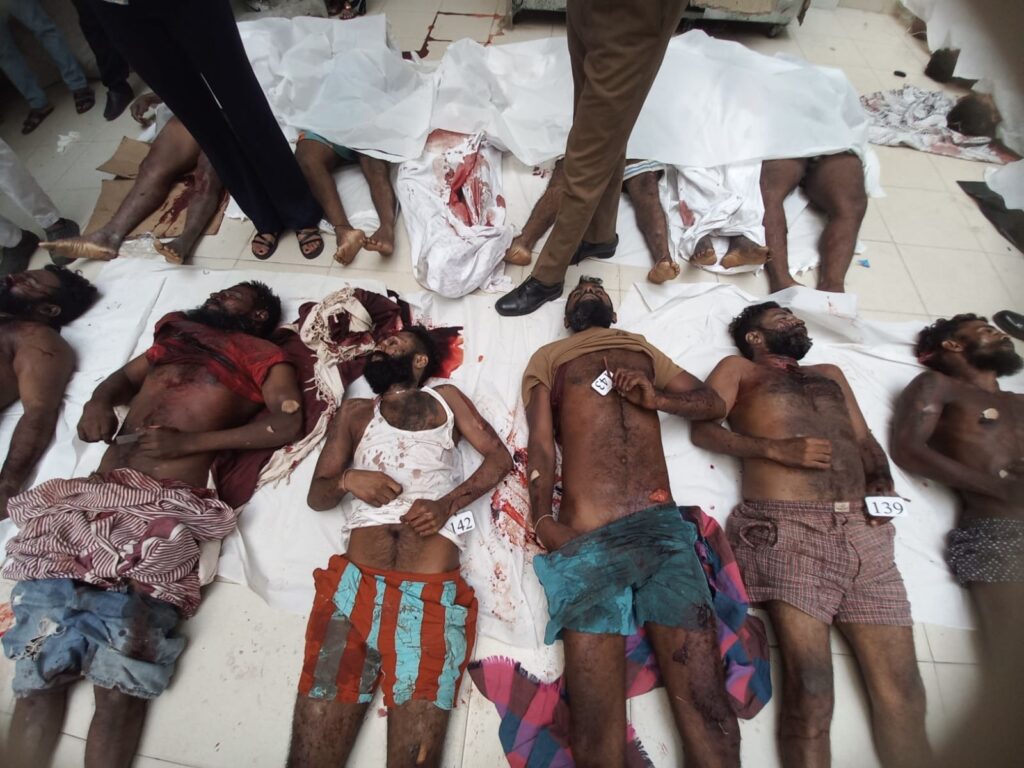
මොවුන් ඔප්පු වූ අපරාධ සඳහා දඬුවම් විඳින පුද්ගලයන් නොවේ. මොවුන් ප්රධාන වශයෙන්ම මත්ද්රව්ය ආශ්රිත චෝදනා මත අත්අඩංගුවට ගෙන, ඉන්පසු ඇප ලබා ගැනීමට හෝ නීතිමය සහාය ලබා ගැනීමට මූල්යමය හැකියාවක් නොමැතිකම හේතුවෙන් බොහෝ විට වසර ගණනාවක් තිස්සේ අවිනිශ්චිත අධිකරණමය සිරවීමක රඳවා තබා සිටින පිරිසකි. ඔවුන් දඬුවම් ලබන්නේ ඔවුන් විසින් කරන ලදැයි ඔප්පු වූ වරදකට නොව, ඔවුන්ගේ සමාජ තත්ත්වය හේතුවෙනි. එනම්, ඔවුන් දුප්පත්, සමාජයෙන් කොන් වූ සහ ධනවාදී අවශ්යතාවලට අතිරික්ත වූ පිරිසක් වීම නිසාය. මෙම රිමාන්ඩ් රැඳවියා යනු ධනේශ්වර “යුක්තියේ” පන්තිමය තර්කනය වඩාත්ම පිරිසිදුව ප්රකාශ වන සංකේතයයි.
ඔවුන්ව රඳවා තබා ඇති තත්ත්වයන් ක්රමානුකූල වධහිංසාවකට සමාන වේ. ශ්රී ලංකා මානව හිමිකම් කොමිෂන් සභාවේ 2021 වාර්තාව මඟින් සනාථ කර ඇති පරිදි, රැඳවියන්ට සිටගෙන නිදා ගැනීමටත්, මළපහ කිරීම සඳහා ෂොපින් බෑග් භාවිතා කිරීමටත් සිදු වී ඇත. එමෙන්ම එක් රැඳවියෙකු ප්රකාශ කළ පරිදි “බල්ලන් සහ බළලුන් පවා” ප්රතික්ෂේප කරන මට්ටමේ ආහාරවලින් යැපීමට ඔවුන්ට සිදුව තිබේ. මීගමුව බන්ධනාගාරය යනු පද්ධතිමය අසාධාරණත්වයේ ප්රකාශනයක් බඳු වූ, ඕනෑම මොහොතක පුපුරා යාමට ආසන්නව තිබූ එකකි. දැඩි අධික තදබදය, සාගත මට්ටමේ ආහාර, කිසිසේත්ම නොපවතින සනීපාරක්ෂක පහසුකම් සහ ආරක්ෂකයන්ගෙන් එල්ල වන දෛනික ප්රචණ්ඩත්වය එහි අනිවාර්ය අංග වේ. අවසානයේ එය පුපුරා ගිය විට, රාජ්යය ඊට ප්රතිචාර දැක්වූයේ ප්රතිසංස්කරණවලින් නොව, වෙඩි උණ්ඩවලිනි.
මෙය පද්ධතියේ කිසියම් බිඳවැටීමක් හෝ දෝෂයක් නොවේ. එය පද්ධතිය සැලසුම් කර ඇති පරිදිම ක්රියාත්මක වීමකි. රාජ්යය විසින් මෙවැනි සිතාමතා සැලසුම් කරන ලද කුරිරු තත්ත්වයන් පවත්වාගෙන යනු ලබන්නේ, වැළැක්විය නොහැකි පිපිරීමක් සිදු වූ විට, ඊට එරෙහිව අතිමහත් මාරාන්තික බලයක් මුදා හැරීම සඳහා ය. මෙම පිපිරීම සමූලඝාතනයක් සඳහා අවශ්ය නිදහසට කරුණ සපයන අතර, එම සමූලඝාතනය බන්ධනාගාර පවුරෙන් පිටත සිටින වැඩකරන පන්තිය බිය ගැන්වීම සඳහා වන ආදර්ශයක් ලෙස ක්රියා කරයි.
ආරක්ෂකයින්: නිල ඇඳුම් ඇඳි කම්කරුවෝ
මීගමුවේදී ගඩොල් සහ යකඩ පොලුවලින් පහර දී මරා දමන ලද බන්ධනාගාර නියාමකයින් සහ නිලධාරීන් සත්දෙනා ද දිළිඳු ග්රාමීය පවුල්වලින් සහ පහළ මධ්යම පාන්තික පසුබිමකින් පැමිණි අය වෙති. ඔවුන් මෙවැනි අනතුරුදායක සහ අවමන් සහගත රැකියාවන් තෝරාගත්තේ වෙනත් විකල්පයක් නොතිබූ බැවිනි. එහෙත්, ඔවුන් හුදෙක් තමන් විසින් නිර්මාණය නොකරන ලද පිපිරීමක දෙපාර්ශවයේ ගැටුමට මැදි වූ නිෂ්ක්රීය වින්දිතයන් නොවූහ. ඔවුහු එම පීඩනකාරී පරිසරය දිනපතා සෘජුවම නිර්මාණය කිරීමට දායක වූ මෙවලම් බවට පත්ව සිටියහ.
රැඳවියන්ට එල්ල වූ අතිශය කෲර වධහිංසා, අවමන් සහගත සහ අමානුෂික සැලකීම් මෙන්ම ක්රමානුකූල අවසංග්රහය (mistreatment) ක්රියාත්මක කරන ලද්දේ මෙම ආරක්ෂකයින් හරහා ය. පහරදීම් සිදු කළේ ඔවුන්ගේ දෑතින් ය. අපහාසාත්මක වදන් පිටවූයේ ඔවුන්ගේ මුවින් ය. කුසගින්නේ තැබීම, හුස්ම හිරවන සුලු දැඩි තදබදය සහ වෛද්ය ප්රතිකාර අහිමි කිරීම වැනි තත්ත්වයන් බලහත්කාරයෙන් පවත්වාගෙන ගියේ ඔවුන්ගේ මැදිහත්වීමෙනි. ශරීරයට ගඩොල් කැබලි සහ යකඩ මුගුරු වලින් ඇන ඔවුන්ව ඝාතනය කිරීමට හේතු වූ, එම දැඩි සහ පාලනය කරගත නොහැකි කෝපය, අරමුණක් නොමැතිව හෝ වැරදි දිශාවකට එල්ල වූවක් නොවේ. එය දිනෙන් දින, සතියෙන් සතිය සහ මාසෙන් මාසය රැඳවියන්ගේ ජීවිතය ජීවමාන අපායක් බවට පත් කළ සෘජු වගකිවයුත්තන් ඉලක්ක කර ගනිමින් පුපුරා ගිය කෝපයකි.
ධනේශ්වර දණ්ඩනීය යාන්ත්රණයේ ඇති ගැඹුරුම ඛේදවාචකය මෙයයි: එය හුදෙක් ශ්රමිකයන්ව අනතුරට මුහුණ දෙන පෙරමුණට ඇද දැමීම පමණක් සිදු නොකරයි. එය ක්රමානුකූලව ඔවුන්ගේ මිනිස්කම අහිමි කරමින් (dehumanize) ඔවුන්ව මිලිටරිකරණයට ලක් කරයි; ප්රචණ්ඩත්වය සඳහා ඔවුන්ව මානසිකව සූදානම් කරමින්, වධහිංසා පැමිණවීමට හුරු කරමින් සහ තමන්ගේම පන්ති සහෝදරයන් කෙරෙහි වෛර කිරීම සඳහා ඔවුන්ගේ මොළය සෝදා හරියි. කුසගින්නේ පසුවන රක්ෂිත බන්ධනාගාර රැඳවියෙකුට පහර දෙන බන්ධනාගාර නියාමකයා ද, සිරකුටි පුරවන එම ග්රාමීය අන්ත දිළිඳුකමේම තවත් එක් ප්රතිඵලයකි. නමුත්, රාජ්යය ඔහුගේ ආත්මය බිඳ දමා, ඔහුගේ සහෝදරත්වයේ හැඟීම උදුරාගෙන ඇත. වැලිකඩ බන්ධනාගාරයේ පිටත තාප්පයේ ලියා ඇති “සිරකරුවෝ ද මනුෂ්යයෝ ය” යන ව්යාජ සටන් පාඨයට පටහැනිව, සිරකරුවා යනු තමන් හා සමානවම එකම ක්රමවේදයක තවත් එක් ගොදුරක් ලෙස නොව, “කුඩුකාරයින් ”, “පාතාල නීචයන්” හෝ “මනුෂ්යයෙකු නොවන” අපරාධකරුවෙකු වැනි සතුරෙකු ලෙස දැකීමටත්, ඔහුට එල්ල කරනු ලබන ඕනෑම ප්රචණ්ඩත්වයකට ඔහු සුදුසු අයෙකු බව සිතීමටත් රාජ්යය එම නියාමකයාව පුහුණු කර ඇත. නිල ඇඳුම දරා සිටින තෙක්, මෙම නියාමකයා සවිඥානිකව මෙන්ම පූර්ණ වශයෙන්ම සේවය කරන්නේ ධනේශ්වර පාලක පන්තියට සහ එහි මර්දනකාරී යාන්ත්රණයටයි. බන්ධනාගාරයක් තුළට කිසි දිනෙක පය නොතබන පාලක පන්තිය, දුප්පතුන්ගේ එක් කොටසක් ලවා තවත් කොටසකට කෲර ලෙස වධහිංසා පැමිණවීම සඳහා යොදවන යාන්ත්රණයක් සාර්ථකව නිර්මාණය කර ඇත. අවසානයේදී මෙම ක්රියාවලිය තුළ ඒ දෙපාර්ශවයම විනාශ වී යයි.
සිරකරුවන්ගේ ක්රෝධය වැරදි ඉලක්ක කරා යොමු වූවක් නොවේ. එය එල්ල වූයේ පවත්නා ක්රමයේ කෲරත්වයේ සෘජු පාර්ශවකරුවන් බවට තමන්වම පත් කරගෙන සිටි පුද්ගලයන් වෙතය. මෙහි ඇති ඛේදවාචකය නම්, ධනවාදය පෙරලා දැමීමේ විප්ලවවාදී අරගලයේදී මේ දෙපාර්ශවයම දිළිඳුභාවයට ඇද දමන ධනේශ්වර පන්තියට එරෙහිව තම සගයන් විය හැකි සහ කම්කරු රාජ්යයක් යටතේ කිසිසේත්ම තමන්ගේ සතුරන් ලෙස ප්රතිපක්ෂ නොවන කම්කරුවන්ම, සිරකරුවන්ට ප්රහාර එල්ල කිරීම සඳහා පවත්නා ක්රමය තුළ ඉතිරි වී සිටි එකම ඉලක්කය බවට පත් වන පරිදි මෙම ව්යුහය සකස් කර තිබීමයි. මීගමුවේදී මියගිය බන්ධනාගාර නියාමකයින් එකවරම අපරාධකාරයන් මෙන්ම වින්දිතයන් ද වෙති. එනම් ඔවුහු ඝාතකයන් මෙන්ම ඝාතනයට ලක්වූවන් ද වෙති; පන්ති පීඩනයේ මෙවලම් වන අතරම තමන් ද පීඩාවට පත් වූවන් වෙති. තමන්ට ක්රියාත්මක වීමට වැටුප් ගෙවනු ලැබූ එම යන්ත්රණය විසින්ම ඔවුන්ව ද අමානුෂිකත්වයට (dehumanize) පත් කර ඇත. ආරක්ෂිත දුරක සිට මෙම සහෝදර ඝාතනය මෙහෙයවූ පාලක පන්තිය, සිරකරුවන් හෝ බන්ධනාගාර නියාමකයින් වෙනුවෙන් ශෝක නොවනු ඇත. එයට පුද්ගලික දේපළ ක්රමය පවත්වාගෙන යාම සඳහා ඔවුන් දෙපාර්ශවයේම මරණ අවශ්ය විය.
රාජ්ය ප්රචණ්ඩත්වයේ ඓතිහාසික ගමන් පථය
මීගමුව සමූලඝාතනය තේරුම් ගත යුත්තේ ශ්රී ලංකාවේ බලයට පත් වූ සෑම ධනේශ්වර පාලන තන්ත්රයක්ම අඛණ්ඩව පවත්වාගෙන ගිය දණ්ඩන ප්රචණ්ඩත්වයේ ඉතිහාසය තුළ පිහිටා ගනිමිනි. එම ලැයිස්තුව බියජනක ය: 2020 වසරේ මහර (වෙඩි තබා 11 දෙනෙකු ඝාතනය කිරීම), 2012 වසරේ වැලිකඩ (පොලිස් විශේෂ කාර්ය බලකායේ කොමාන්ඩෝ භටයන් විසින් 27 දෙනෙකු ඝාතනය කිරීම), 2011 වසරේ අනුරාධපුරය, 2000 වසරේ කළුතර, සහ 2000 වසරේ බිඳුණුවැව (රාජ්යය නිහඬව බලා සිටියදී සිංහල අන්තවාදී පිරිසක් විසින් දෙමළ රැඳවියන් 27 දෙනෙකු කපා කොටා ඝාතනය කිරීම) ඒ අතර වේ. 1983 දෙමළ විරෝධී කළු ජූලියේ කෝලාහලය අතරතුර වැලිකඩ බන්ධනාගාරයේදී, බන්ධනාගාර බලධාරීන්ගේ සහයෝගය ඇතිව සිංහල වර්ගවාදී සිරකරුවන් විසින් දෙමළ දේශපාලන සිරකරුවන් 53 දෙනෙකු ඝාතනය කරන ලදී.
බන්ධනාගාර සමූලඝාතනයන්හි මෙම ගමන් පථය, කම්කරු පන්තියට සහ පීඩිත ජනතාවට එරෙහිව ක්රියාත්මක වූ රාජ්ය ප්රචණ්ඩත්වයේ පුළුල් ඉතිහාසයෙන් වෙන් කළ නොහැක්කකි. 1988-89 කාලසීමාවේ පැවති ජවිපෙ කැරැල්ල අතරතුර, රාජ්ය බලකායන් විසින් දිවයිනේ දකුණු ප්රදේශයේ ග්රාමීය තරුණයන් දස දහස් ගණනක් ඝාතනය කරන ලදී. එය රාජ්යයේ කිසිදු දේශපාලන හෝ මිලිටරි නායකත්වයක් මෙතෙක් වගවීමකට ලක් නොවූ සමූහ ඝාතන මෙහෙයුමකි. ජනතා විමුක්ති පෙරමුණ ද එකී වකවානුව තුළම මව්බිම ආරක්ෂා කිරීමේ නාමයෙන්, කම්කරුවන්, වෘත්තීය සමිති ක්රියාධරයන් සහ දේශපාලන ප්රතිවාදීන් ඉලක්ක කර ගනිමින් දේශපාලන ඝාතන දියත් කිරීමේ ෆැසිස්ට්වාදී මෙහෙයුමක් දියත් කළේය. වත්මන් ජවිපෙ/ජාජබ (JVP/NPP) ආණ්ඩුව — එහි ප්රධාන ලේකම් ටිල්වින් සිල්වා මෑතකදී ප්රකාශ කර තිබුණේ “මෙම ආණ්ඩුවෙන් පසු වෙනත් ආණ්ඩු බිහි නොවන” බවයි — තමන්ගේම ශ්රේණීන් තුළ මෙම ඉතිහාසයට කිසිසේත්ම මුහුණ දී නොමැති අතර, වත්මන් ආණ්ඩුව සුජාත පාලක පක්ෂයක් ලෙස සලකන ධනේශ්වර මාධ්ය සහ දේශපාලන සංස්ථාපිතය විසින් ද එසේ කිරීමට ඔවුන්ට කිසිදු බලපෑමක් එල්ල කර නැත.
දෙමළ ඊළාම් විමුක්ති කොටි සංවිධානයට එරෙහිව වසර 26ක් පුරා පැවති සිවිල් යුද්ධය 2009 වසරේදී අවසන් වූයේ, එවකට ආරක්ෂක ලේකම් ගෝඨාභය රාජපක්ෂගේ මෙහෙයවීම යටතේ අවසන් මාස කිහිපය තුළ පමණක් දළ වශයෙන් දෙමළ සිවිල් වැසියන් 40,000ක් ඝාතනය කරමිනි. 1979 වසරේදී පනවන ලද ත්රස්තවාදය වැලැක්වීමේ පනත (PTA), එය අහෝසි කරන බවට මැතිවරණ සමයේදී පැහැදිලි පොරොන්දු ලබා දී තිබුණද, අනුර කුමාර දිසානායකගේ වත්මන් ජවිපෙ/ජාතික ජන බලවේගය රජය විසින් ද තවදුරටත් පවත්වාගෙන යනු ලබයි. දේශපාලන ප්රතිවාදීන් රඳවා තබා ගැනීමට, වධහිංසා පැමිණවීමට සහ අතුරුදහන් කිරීමට දශක ගණනාවක් තිස්සේ මෙම පනත භාවිතා කර ඇත. ස්ත්රී දූෂණය ඇතුළු අනෙකුත් වධහිංසා පැමිණවීමේ ක්රමවේදයන් ඇතුළත් දරුණු මානව හිමිකම් උල්ලංඝනය කිරීම් හියුමන් රයිට්ස් වොච් (Human Rights Watch) සංවිධානය විසින් ලේඛනගත කර ඇත. 2017 වසරේ රජයේ වාර්තාවලට අනුව, මෙම ත්රස්තවාදය වැලැක්වීමේ පනත යටතේ නඩු විභාගයකින් තොරව සිරකරුවන් 70 දෙනෙකු වසර පහකට වැඩි කාලයක් ද, 12 දෙනෙකු වසර 10කට වැඩි කාලයක් ද රඳවා තබා ගෙන සිට ඇත.
මීගමුව ඝාතන, “බන්ධනාගාර මත්ද්රව්ය ජාලයකට” එරෙහිව එල්ල කරන ලද කණගාටුදායක වුවද අවශ්ය වූ ප්රතිචාරයක් ලෙස දැන් හුවා දක්වන්නේ මෙන්න මේ කියන රාජ්යයයි. වධහිංසා පමුණුවන, අතුරුදහන් කරවන සහ සමූහ ඝාතන සිදු කරන රාජ්යයම, තමන් කළ දේ පිළිබඳව බොරු ගොතන රාජ්යය ද වෙයි. මෙම මුසාව ප්රචණ්ඩත්වයට ආනුශංගික වන්නේ නොවේ; එය ප්රචණ්ඩත්වයේම අත්යවශ්ය අංගයකි. වින්දිතයන් යනු සම්පූර්ණ මනුෂ්යයන් නොවන බව පිළිගැනීමට මහජන මතය මුලින්ම සකස් නොකර, මෙම ඝාතන ක්රියාවලිය ඉදිරියට ගෙන යා නොහැක.
මතවාදී ප්රහාරය: අමානුෂිකකරණය (dehumanization) පන්ති යුද්ධයේ කොටසක් ලෙස
මීගමුවේදී මියගිය පිරිස හැඳින්වීම සඳහා ආයතනික මාධ්ය විසින් “පාතාල අපරාධකරුවන්” සහ “කුඩුකාරයින් ” වැනි යෙදුම් භාවිත කිරීම පිටුපස නිශ්චිත මතවාදී කාර්යභාරයක් පවතී. එමඟින් මනුෂ්යත්වයට වඩා පහත් මට්ටමක ලා සැලකෙන පිරිසක් නිර්මාණය කෙරේ. ඔවුන්ගේ මරණ මනුෂ්ය ඝාතන ලෙස නොව, සමාජය පවිත්ර කිරීමේ ක්රියාවලියක් ලෙස අර්ථකථනය කෙරෙන අතර, එමඟින් රාජ්යයේ මාරාන්තික ක්රියාමාර්ග වෙනුවෙන් ඉහළ මධ්යම පාන්තික මහජන මතය බලමුලු ගන්වනු ලබයි. මෙය ෆැසිස්ට්වාදී ප්රතිමීත්වයේ තර්කනය වන අතර, ජාත්යන්තර වශයෙන් ඩොනල්ඩ් ට්රම්ප් වැනි පුද්ගලයන් විසින් විදේශික භීතිකාව (xenophobia) යොදා ගනිමින් සංක්රමණිකයන්ව යක්ෂාරෝපණය කිරීම සෘජුවම ප්රතිභිම්බගත කරයි. මෙහි අරමුණ එකම එකකි: එනම් දරිද්රතාවය අපරාධයක් ලෙස හුවා දැක්වීම, රාජ්ය භීෂණය සාධාරණීකරණය කිරීම සහ “අපරාධය” මෙන්ම දඬුවම යන දෙකම බිහි කරන පන්ති සබඳතා වසන් කිරීමයි.
ජාත්යන්තරව මෙන්ම ශ්රී ලංකාව තුළ ද ක්රියාත්මක වන “මත්ද්රව්යවලට එරෙහි යුද්ධය” යනු කිසිම දිනක මහජන සෞඛ්ය ප්රවර්ධනය උදෙසා ගනු ලැබූ පියවරක් නොවේ. එය අතිරික්ත ජනගහනය, එනම් ප්රාග්ධනයට ඔවුන්ගේ ශ්රම දායකත්වය අවශ්ය නොවන, එමෙන්ම ඔවුන්ගේ පැවැත්ම සමාජ ක්රමයේ ස්ථාවරත්වයට තර්ජනයක් සේ සැලකෙන, අතිමහත් බහුතරයක් සමාජයේ අතිශය දිළිඳුතම ස්ථරවලින් පැමිණෙන තරුණ පරපුර අපරාධකරුවන් බවට පත් කිරීම සහ ඔවුන්ව ගබඩා කර රඳවා තැබීම සඳහා සකස් කළ යාන්ත්රණයකි. රිමාන්ඩ් බන්ධනාගාර පිරී ඉතිරී යන මත්ද්රව්ය නඩු අතරින් අතිමහත් බහුතරයක් ව්යාජ චෝදනා මත පදනම් වූ ඒවා වේ. කාල් මාක්ස් විසින් සිය කැපිටල් (Capital I) කෘතියේ විශ්ලේෂණය කරන ලද ප්රාග්ධන සමුච්චකරණයේ ප්රාථමික අවධියේදී පැවති “අයාලේ යන්නන්ට එරෙහි නීති” (vagrancy laws) ඉටු කළ කාර්යභාරයම මේවා මඟින් ද ඉටු කෙරේ. එනම්, දේපළ අහිමි කරන ලද දිළිඳු ජනතාව පාලනය කිරීමටත්, ධනේශ්වර සූරාකෑමට හිතකර කොන්දේසි බලහත්කාරයෙන් බලාත්මක කිරීමටත් දණ්ඩනීය නීතිය භාවිත කිරීමයි.
ජනතා විමුක්ති පෙරමුණ/ජාතික ජන බලවේගය රජය සිය දේශපාලන ප්රහාරයේ ප්රධානතම මෙවලමක් බවට “මත්ද්රව්යවලට එරෙහි යුද්ධය” පත් කර ඇත. මෙවර මැයි දින රැලියේදී අදහස් දක්වමින් ජනාධිපති දිසානායක පාරට්ටු කර සිටියේ “2026 වසර ශ්රී ලංකා ඉතිහාසයට එක්වනුයේ දූෂිතයන්, වංචාකරුවන් සහ සොරුන් සිරගත කළ වසරක් ලෙස” බවයි. දූෂණයට සහ මත්ද්රව්යවලට එරෙහි මෙම වාග් සංග්රාමය ද්විත්ව අරමුණක් ඉටු කරයි: එක් අතකින්, දුප්පත්කම සහ පීඩනය නිර්මාණය කරන ධනේශ්වර ක්රමයට එරෙහිව පවතින මහජන ක්රෝධය, සමාජ පරිහානියට වගකිව යුතු යැයි සැලකෙන තනි තනි “අපරාධකරුවන්” වෙත හරවා යැවීමට මෙය ඉවහල් වේ; අනෙක් අතින්, කප්පාදු පියවරයන් හේතුවෙන් පැන නගින විරෝධතා දැඩි වන විට කම්කරු පන්තියට එරෙහිව භාවිත කිරීම සඳහා මර්දනකාරී රාජ්ය යාන්ත්රණය පුළුල් කිරීමට ද මෙය මඟ පාදයි.
ජවිපෙ/ජජබ: මර්දනයේ අඛණ්ඩතාව
මීගමුව සමූලඝාතනය සිදු වූයේ ‘ක්රම වෙනසක්’ (systemic change) ඇති කරන බවට වූ පොරොන්දු මත 2024 වසරේදී බලයට පත් වූ ජවිපෙ/ජජබ රජය යටතේ ය. මෙම ජනවරම, ගෝඨාභය රාජපක්ෂ බලයෙන් පහ කළ 2022 අරගලයේ ජනතා පිබිදීම තුළ මුල් බැසගත් එකක් වුව ද, මහජන අරගලය විප්ලවීය ගැටුමකට යොමු කරනු වෙනුවට පාර්ලිමේන්තු මාවත වෙත හරවා යැවූ වෘත්තීය සමිති නිලධාරිවාදය සහ ජවිපෙ/ජජබය විසින්ම එය දේශපාලනිකව පීලි පන්නවන ලදී. එම පාවාදීම අවසානයේ වික්රමසිංහගේ අගමැතිකමටත්, ජාත්යන්තර මූල්ය අරමුදලේ (IMF) කප්පාදු ණය වැඩසටහනත්, අවසානයේ දිසානායකගේ ජයග්රහණයටත් මඟ පෑදීය. ඒ අනුව පොරොන්දු වූ “වෙනස” යනු එම ධනපති පන්ති පාලනයේම අඛණ්ඩ පැවැත්මක් බව දැන් ඔප්පු වී ඇත. බලයට පත් වූ දා සිට ජවිපෙ/ජජබ රජය, ජාත්යන්තර මූල්ය අරමුදලේ කප්පාදු වැඩපිළිවෙළ විශ්වාසවන්තව ක්රියාවට නංවා තිබේ: මහා පරිමාණ පෞද්ගලීකරණයන්, සේවා යෝජනය අනියම් තත්වයට හෙළීම හා රැකියා අහිමි කිරීම්, සහනාධාර කප්පාදු කිරීම්, ත්රස්තවාදය වැළැක්වීමේ පනත (PTA) අහෝසි කරන බවට පොරොන්දු වුව ද එය දිගටම පවත්වාගෙන යාම, නව මර්දනකාරී නීති පැනවීම, හදිසි නීති බලතල ක්රියාත්මක කිරීම සහ කම්කරු විරෝධතා ප්රචණ්ඩ ලෙස මර්දනය කිරීම ඒ අතර වේ.
මීගමුව සමූලඝාතනය යනු තමන්ට පෙර සිටි පාලකයන් නියෝජනය කළ ධනපති පන්තියම නියෝජනය කරන සහ එම දේපළ සබඳතාම ආරක්ෂා කරන රජයක ස්වාභාවික හා තර්කානුකූල ප්රතිඵලයකි. “මේ ආණ්ඩුවෙන් පස්සේ වෙන ආණ්ඩු එන්නේ නැහැ” යනුවෙන් මෙවර මැයි දින රැලියේදී ජනතා විමුක්ති පෙරමුණේ ප්රධාන ලේකම් ටිල්වින් සිල්වා කළ ප්රකාශය හුදු අතිශයෝක්තියක් නොවේ. එය විරුද්ධ පක්ෂයේ දේශපාලනඥයන් වෙත නොව, සෘජුවම කම්කරු පන්තිය වෙත එල්ල කරන ලද තර්ජනයකි. ආර්ථික අර්බුදය තවදුරටත් උග්ර වෙමින් පවතින පසුබිමක සහ ඉරානයට එරෙහිව එක්සත් ජනපද-නේටෝ (US-NATO) යුද්ධය හේතුවෙන් ගෝලීය බලශක්ති සැපයුමට බාධා පැමිණ ඉන්ධන හා ආහාර මිල ගණන් තවදුරටත් ඉහළ යද්දී, ඉන් පැන නගින වැඩෙන සමාජ විරෝධයට මුහුණ දීම සඳහා ජවිපෙ/ජජබ රජය මෙලෙස පන්ති යුද්ධයකට සූදානම් වෙමින් සිටී.
ශ්රී ලංකා ධනවාදයේ අර්බුදය
බන්ධනාගාර පද්ධතිය යනු ශ්රී ලංකා ධනවාදය විසින් නිර්මාණය කර ඇති පුළුල් සමාජ ව්යසනයේ සංකේන්ද්රිත ප්රකාශනයකි. ශ්රී ලංකාව ආසියා-පැසිෆික් කලාපයේ වඩාත්ම අසමානතාවයෙන් යුත් රටවල් අතරින් එකකි. 2016 වසරේදී, මෙරට ධනවත්ම 10% ක පිරිස සමස්ත නිවාස ඒකකවලින් 70% ක් උපයන මුළු ආදායමට සමාන ආදායමක් උපයා ඇත. දශක ගණනාවක් තිස්සේ පැවති පරපෝෂිත ධනේශ්වර සංවර්ධනයේ, දූෂණයේ සහ ජාත්යන්තර මූල්ය ප්රාග්ධනයට යටත් වීමේ ප්රතිඵලයක් ලෙස 2022 වසරේදී විදේශ ණය පැහැර හැරීමට සිදුවීමත් සමඟ, මෙරට දරිද්රතා අනුපාතය වේගයෙන් ඉහළ නැංවූ ආර්ථික බිඳවැටීමක් ආරම්භ විය. නිවාස ඒකකවලින් අවම වශයෙන් 70% ක් වත් දිනකට එක් වේලක් මඟ හැරීම ඇතුළුව සිය ආහාර පරිභෝජනය සීමා කරමින් සිටි බව එක්සත් ජාතීන්ගේ සංවිධානය වාර්තා කළේය. නිල දත්තවලට අනුව ආහාර උද්ධමනය 57% ක් දක්වා ඉහළ ගියේය.
බ්රිතාන්ය යටත්විජිතවාදය විසින් ඉන්දියාවෙන් රැගෙන එන ලද ගිවිසුම්ගත බද්ධ ශ්රමිකයන්ගෙන් පැවත එන්නන්, එනම් මධ්යම කඳුකරයේ වතු කම්කරුවන්, සියවසකට අධික කාලයකින් කිසිදු වෙනසකට ලක් නොවූ, ජරාජීර්ණ වූ “ලයින් කාමර” තුළ ජීවත් වෙති. ඔවුහු යන්තම් ජීවිතය ගැටගසා ගැනීමට පවා ප්රමාණවත් නොවන වැටුප් ලබමින්, තවමත් අන්ත අසරණ දරිද්රතාවයේ කොන්දෙසි තුළ ජීවත් වෙති. කොළඹ මුඩුක්කු ආශ්රිතව වෙසෙන නාගරික දුප්පතුන්, ණය බරින් සහ පොහොර සහනාධාර අහිමි වීමෙන් පීඩාවට පත් ග්රාමීය ගොවීන් සහ ස්ථිර රැකියා විරහිතභාවයට මුහුණ දෙන තරුණ පරපුර ආදී සමාජ ස්ථරයන්ගෙන් බන්ධනාගාර ගත වන ජනගහනය බිහි වෙයි.
මේ සමාජ ස්ථරයන් යනු මානුෂීය අවශ්යතාවලට වඩා පෞද්ගලික ලාභය මුල් කරගන්නා පද්ධතියකින් බිහි වූ මිනිස් ප්රතිඵලයන්ය. ඔවුන් ඊට එරෙහි වන විට, එනම් ඔවුන් විරෝධය පාන විට, වැඩ වර්ජනය කරන විට, හෝ ප්රචණ්ඩ ලෙස නැගී සිටින විට රජය ඊට පිළිතුරු දෙන්නේ උණ්ඩවලිනි. මෙය පද්ධතියේ අසාර්ථකත්වයක් නොවේ. මෙම පද්ධතියේ ස්වභාවයම එයයි.
රාජ්යය පිළිබඳ මාක්ස්වාදී වටහා ගැනීම
ලෙනින්, රාජ්යය සහ විප්ලවය’ (The State and Revolution) යන කෘතියෙන් රාජ්යය අර්ථ දැක්වූයේ “පන්ති ප්රතිවිරෝධතාවල සමහන් කළ නොහැකි ස්වභාවයේ නිෂ්පාදනයක් සහ ප්රකාශනයක්” ලෙසය. එය මධ්යස්ථ බේරුම්කරුවෙකු හෝ සමාජ ගැටුම් විසඳීමේ යාන්ත්රණයක් නොවන අතර, එක් පන්තියක් විසින් තවත් පන්තියක් සංවිධානාත්මකව මර්දනය කිරීම සඳහා භාවිත කරන මෙවලමකි. රාජ්යය මූලික වශයෙන් සමන්විත වන්නේ “බන්ධනාගාර ආදිය තම අණසක යටතේ පවත්වාගෙන යන, අවිගත් මිනිසුන්ගෙන් සැදුම්ලත් විශේෂ බලකායන්ගෙන්” බව ඔහු අවධාරණය කළේය. බන්ධනාගාරය යනු රාජ්යයේ පන්තිමය ස්වභාවය සාමාන්යයෙන් වසා සිටින ප්රජාතන්ත්රවාදී-පාර්ලිමේන්තු පෙනුම ඉවත් කළ පසු දැකිය හැකි, එහි වඩාත්ම නිරුවත් ස්වරූපයයි. කොවිඩ් වසංගතය අතරතුර පී.සී.ආර්. (PCR) පරීක්ෂණ ඉල්ලා සිටි නිරායුධ සිරකරුවන්ට ආරක්ෂකයින් සහ කොමාන්ඩෝ භටයින් වෙඩි තබන විට, සහ බන්ධනාගාරයක් වටලා පිටත රැස්ව සිටින පවුල්වල සාමාජිකයින් බිය ගැන්වීම සඳහා රජය යුද, නාවික, ගුවන් හමුදා, විශේෂ කාර්ය බලකාය (STF) සහ සන්නද්ධ ඩ්රෝන යානා යොදවන විට, එහි වෙස්මුහුණ සම්පූර්ණයෙන්ම ගැලවී යයි.
ධනේශ්වර දණ්ඩන පද්ධතිය ප්රතිසංස්කරණය කළ නොහැක. මානව හිමිකම් කොමිෂන් සභා වාර්තා, බන්ධනාගාර නවීකරණය පිළිබඳ පොරොන්දු, සහ විමර්ශන කමිටු ආදී මේ සියල්ලම මහජන ක්රෝධය සමනය කර, එය නැවතත් ධනේශ්වර නීත්යානුකූලභාවය නමැති ආවෘත අන්තයකට යොමු කිරීම සඳහා වූ යාන්ත්රණයන් පමණි. මෙම සමූල ඝාතන ඇති කරන තත්ත්වයන්, එනම් සිරකරුවන් අධික ලෙස පිරී ඉතිරී යාම, දරිද්රතාවය නිසා සිදු කෙරෙන රක්ෂිත බන්ධනාගාරගත කිරීම්, දුප්පතුන් අපරාධකරුවන් බවට පත් කිරීම සහ ආරක්ෂක අංශවලට හිමි වී ඇති දඬුවම් නොලබා බේරීමේ හැකියාව (වගවීමෙන් මුක්තිය) ආදිය පද්ධතියේ කිසියම් දෝෂයන් නොවේ. ඒවා පද්ධතිය සැලසුම් කර ඇති ආකාරයටම නිවැරදිව ක්රියාත්මක වීමකි.
පාලනයට පත් වූ අනුප්රාප්තික ආණ්ඩු බන්ධනාගාර ප්රචණ්ඩත්වයට ප්රතිචාර දැක්වූයේ එකම හිස් චාරිත්රයකිනි. මහින්ද රාජපක්ෂ පුනරුත්ථාපනය පොරොන්දු විය. ගෝඨාභය රාජපක්ෂ පස් අවුරුදු ප්රතිසංස්කරණ සැලසුම් පොරොන්දු විය. සිරිසේන සංක්රාන්ති යුක්තිය පොරොන්දු විය. ජවිපෙ/ජාජබ “පද්ධතිමය වෙනසක්” පොරොන්දු විය. කමිටු පත් කරනු ලැබේ, සැලසුම් ප්රකාශයට පත් කරනු ලැබේ, නමුත් ප්රචණ්ඩත්වය ඇති කරන තත්ත්වයන්, එනම් සිරකරුවන් අධික ලෙස පිරී ඉතිරී යාම, නඩු විභාගයකින් තොරව රක්ෂිත බන්ධනාගාරගත කර තැබීම, කුසගින්න සහ වධහිංසා පැමිණවීම් ආදිය තව තවත් නරක අතට හැරේ. ඒවා නරක අතට හැරෙන්නේ ධනේශ්වර රාජ්යයට ඒවා අත්යවශ්ය බැවිනි. බන්ධනාගාරය පවතින්නේ දුප්පතුන් ශික්ෂණය කිරීමට, අතිරික්ත ශ්රමිකයන් ගබඩා කර රඳවා තැබීමට සහ කම්කරු පන්තිය බිය ගන්වා අවනත කර ගැනීමටය. එහි කාර්යභාරය සහමුලින්ම මර්දනකාරී එකක් වන බැවින්, එය කිසිසේත්ම ප්රතිසංස්කරණය කළ නොහැක.
විප්ලවවාදී පිළිතුර
මීගමුව බන්ධනාගාරයේදී මියගිය සිරකරුවන් මෙන්ම ආරක්ෂකයින්ද, ඝාතනය කරනු ලැබුවේ, පාලක පන්තිය පසෙකට වී බලා සිටිමින් පීඩිතයන් එකිනෙකාට එරෙහිව පොලඹවන අතර, එය සාධාරණය ඉටු කිරීමක් ලෙස හඳුන්වන ක්රමවේදයක් මගිනි. සිරකරුවන් ඝාතනය කරනු ලැබුවේ ඔවුන්ගේ ශ්රමය ප්රාග්ධනයට වටිනාකමක් නොමැති බැවින් ඔවුන්ගේ ජීවිතද වටිනාකමක් නොමැති දේ ලෙස සලකන රාජ්යයක් විසිනි. බන්ධනාගාර ආරක්ෂකයින් ඝාතනයට ලක් වූයේ ද එකී ක්රමය විසින්ම වන අතර, ඔවුන් එයට බඳවා ගෙන තිබුනේ එමඟින් තමන්ට කිසිසේත් ගැලවිය නොහැකි පරිදි මෙන්ම, තමන් එය නිර්මාණය කිරීමේ අවසාන මෙවලම් පමණක් වූ පුපුරණ සුලු කෝපයක මාවතට තමන්ව ඇද දමන භූමිකාවක් සඳහාය.
මීගමුව, මහර, වැලිකඩ මෙන්ම ධනේශ්වර දණ්ඩන ක්රමයේ මුළු මහත් ලේවැකි ඉතිහාසයටම ඇති එකම පිළිතුර නම්, සමස්ත ධනපති රාජ්යයට එරෙහිව වැඩකරන පන්තිය ස්වාධීන දේශපාලන බලවේගයක් ලෙස බලමුලු ගැන්වීමයි. මෙයින් අදහස් කරන්නේ, වාර්ගික බෙදීම් අභිබවා යමින් සිංහල, දෙමළ සහ මුස්ලිම් කම්කරුවන්ගේ එක්සත්කම උදෙසා සටන් වදින සහ ඔවුන්ව එකිනෙකාගෙන් වෙන් කර ධනේශ්වර පන්ති පාලනය ශක්තිමත් කිරීම සඳහා ඔවුන් අතර බෙදීම් ඇති කරන පාලක පන්තියට එරෙහිව, කම්කරු පන්තිය හා සියලු පීඩිත ස්ථරයන්, ගොවි ජනතාව සහ තරුණයින් අතර සන්ධානයක් ගොඩනඟන, සමාජවාදී ජාත්යන්තරවාදයේ වැඩපිළිවෙළින් සන්නද්ධ වූ විප්ලවවාදී පක්ෂයක් ගොඩනැගීමයි.
කර්මාන්තශාලා, කාර්යාල, වතුකරය සහ ග්රාමීය ප්රජාවන් නියෝජනය කරන රට පුරා සිටින කම්කරුවන්, සියලුම ධනේශ්වර පක්ෂවලින් සහ ඒවාට අනුබද්ධ වෘත්තීය සමිති නිලධාරිවාදයෙන් ස්වාධීන වූ තමන්ගේම ක්රියාකාරී කමිටු පිහිටුවා ගත යුතුය. මෙම කමිටු, සමාගම් ලාභය වෙනුවට මානුෂීය අවශ්යතා මුල් කරගත් වැඩපිළිවෙළක් ඉදිරියට ගෙන යන කම්කරුවන්ගේ සහ ග්රාමීය ජනතාවගේ ප්රජාතන්ත්රවාදී සහ සමාජවාදී මහා සම්මේලනයක පදනම විය යුතුය. එම වැඩපිළිවෙළට: විදේශ ණය ප්රතික්ෂේප කිරීම, කම්කරුවන්ගේ ප්රජාතන්ත්රවාදී පාලනය යටතේ බැංකු සහ ප්රධාන සමාගම් ජනසතු කිරීම, ජීවන වියදමට සරිලන සේ වැටුප් සංශෝධනය කිරීම, සැමට රැකියා සහතික කිරීම සහ දිළිඳු ගොවීන්ගේ හා සුළු ව්යාපාරිකයන්ගේ ණය අවලංගු කිරීම ඇතුළත් විය යුතුය.
ධනේශ්වර දණ්ඩන පද්ධතියට එරෙහි අරගලය, ධනවාදයට එරෙහි අරගලයෙන් වෙන් කළ නොහැක. බන්ධනාගාර ක්රමය මුළුමනින්ම තුරන් කළ හැක්කේ, ඒ සඳහා පසුබිම සකසන පන්ති සමාජය විප්ලවීය ලෙස පෙරළා දැමීමෙන් පමණි. ශ්රී ලංකාවේ සහ දකුණු ආසියාවේ සමාජවාදී නායකත්වයෙහි (SLLA) කර්තව්යය වන්නේ, එම අරගලය සඳහා කම්කරු පන්තිය සංවිධානය කිරීමට සමත් දේශපාලන නායකත්වය ගොඩනැඟීමයි. එය කළ හැක්කේ, ශ්රී ලංකාව තුළ සහ සමස්ත දකුණු ආසියාව පුරා, ලෝක සමාජවාදී විප්ලවයේ පක්ෂය වන හතරවන ජාත්යන්තරයේ ජාත්යන්තර කමිටුවේ (ICFI) ජාත්යන්තර අරගලයේ කොටසක් ලෙසින් පමණි.
මීගමුවේදී මියගියවුන් ඉල්ලා සිටින්නේ ඊට අඩු කිසිවක් නොවේ.
මීගමුව බන්ධනාගාර සමූලඝාතනය: පන්ති ප්රචණ්ඩත්වය සහ ශ්රී ලංකා ධනේශ්වර රාජ්යය Read More »