Trade Unions

Gen-Z

The Gen-Z Uprisings and the Crisis of Leadership: Permanent Revolution against ‘Leaderless’ movements and ‘Left Populism’ – Part 1

By Sanjaya Jayasekera.

We publish here Part 1 of a series examining the global wave of Gen Z protests, the deepening crisis of revolutionary leadership, and the necessity of fighting for the program of socialist internationalism on the basis of Leon Trotsky’s Theory of Permanent Revolution.

Gen-Z
“Gen Z” Madagascar supporters wave the skull and crossbones flag during a gathering at May 13 Square in Antananarivo, Madagascar, Saturday, Oct. 18, 2025. [AP Photo/Brian Inganga]

From the streets of Dhaka to Nairobi, from Colombo to Kathmandu, from Manila to every corner of the former colonial world—from Morocco to Peru, from Madagascar onward—a wave of youth-led uprisings has shaken the global capitalist order between 2022 and 2025. These movements have captured global attention with their scale, militancy, and apparent spontaneity. In September 2024, in Bangladesh, millions, predominantly angry youth, marched demanding the resignation of Prime Minister Sheikh Hasina1.  In Kenya, the largest and most sustained protest movement since its Independence from colonial Britain took place from June 20242 to last month, where Generation Z (Gen-Z) protesters stormed parliament and brought President William Ruto’s government to the brink of collapse over his proposed austerity law. Sri Lanka’s youth occupation of Galle Face Green in July 2022 forced President Gotabaya Rajapakse to flee the country. Nepal saw its government toppled amid deadly street battles last September. Last month, the Philippines witnessed its largest demonstrations in two decades, while, on October 14, Madagascar President Andry Rajoelina was toppled following a mass popular mobilization and subsequent military intervention. These movements unfolded alongside hundreds of mass demonstrations—mobilizing millions across Europe and around the globe—against Zionist Israel’s genocide in Gaza, against the Trump administration’s preparations for a presidential dictatorship in the United States, and against the growing belligerency of imperialism around the world.

In Bangladesh, the military installed Muhammad Yunus, a banker with close ties to Western imperialism, who immediately announced “robust and far-reaching economic reforms”—a transparent code for savage International Monetary Fund austerity. In Kenya, late opposition leader Raila Odinga, who had postured as champion of the masses, joined hands with Ruto’s government to implement the identical policies the protests opposed, while the country was designated a US “major non-NATO ally”. Sri Lanka’s uprising delivered power to Ranil Wickremesinghe, a pro-IMF stooge who ruthlessly enforced austerity using police-state repression. Nepal’s protests were exploited by the military to install a technocratic interim government headed by former Chief Justice Sushila Karki, sidelining all political parties while maintaining capitalist rule.

For the millions of youth who risked their lives in these struggles, the outcomes represent devastating betrayals. The fundamental questions facing the working class and the oppressed masses remain unresolved: How can youth secure jobs, education, and a decent future? How can democratic rights be defended against increasingly authoritarian regimes? How can the stranglehold of imperialist finance capital be broken? Most urgently, as the United States and NATO prepare for catastrophic wars against Russia and China, how can the working class and youth prevent themselves from becoming cannon fodder in conflicts that serve only the interests of rival capitalist powers? 

The answer lies not in the “leaderless”— so, fundamentally pro-imperialist and pro-capitalist— mythology promoted by pseudo-left organizations, nor in the anti-corruption frameworks that channel mass anger into support for one bourgeois faction against another. It requires understanding why these movements, despite their revolutionary potential, have been systematically hijacked by forces defending capitalism. It demands a return to the theoretical foundations established by Leon Trotsky in his Theory of Permanent Revolution and defended by the International Committee of the Fourth International (ICFI) against decades of Stalinist, Maoist, and Pabloite revisionism. Above all, it necessitates the independent political mobilization of the working class under revolutionary leadership—the building of sections of the ICFI in every country to wage the struggle for world socialist revolution. 

Global Gen-Z uprisings and their betrayed outcomes

The Gen-Z protest movements of 2022-2025 follow a remarkably consistent pattern across continents, revealing not isolated national phenomena but expressions of a single global crisis of capitalism.

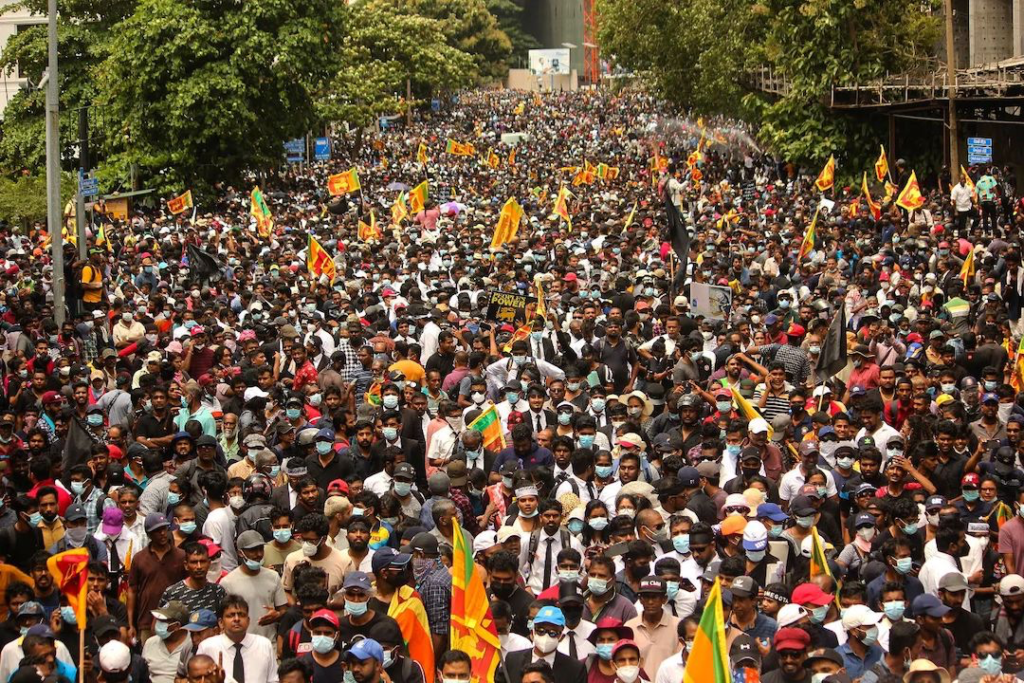
Sri Lanka 2022 provided the template. Between April and July, hundreds of thousands took to the streets as skyrocketing prices, fuel shortages, power-cuts, fertilizer cuts and crop destruction, and medicine scarcity made life unbearable. The COVID-19 pandemic and the economic disruption from the US-NATO proxy war against Russia in Ukraine had devastated global supply chains. Sri Lanka’s foreign reserves collapsed, forcing the government to default on its debt and halt vital imports. Mass protests erupted with demands that President Rajapakse resign—”Gota Go Home”—and that all 225 parliamentarians be removed, in which millions drawn from rural and urban poor participated across ethnic lines (except for the fact that the struggles could not gather support largely from the youth of Jaffna in the North of the country and from the up-country estate workers primarily because they saw no regime change in the South would solve any of their fundamental problems, and not necessarily due to the stronghold of discredited bourgeois Tamil nationalists and the trade union bureaucracy operating within those communities). Trade unions were compelled to call two limited one-day general strikes on April 28 and May 6, demonstrating the immense power of the working class when it intervenes. Rajapakse was forced to flee the country on July 13, 2022.

But the political leadership of the movement remained in the hands of trade union bureaucrats, the pseudo-left Frontline Socialist Party (FSP), youth proxies of the Janatha Vimukthi Peramuna (JVP) and middle-class groups at Galle Face Green, all of which subordinated the working class to demands for a transitional “interim government” that would preserve capitalist rule. Parliament was thus able to install Wickremesinghe, who imposed the IMF’s austerity program with an iron fist, using draconian legislation including the Essential Public Service Act to suppress worker opposition. The Socialist Equality Party (SEP) warned at the time: “The emancipation of the working class is the task of the workers themselves,” and that “there is no solution to the immense social problems and an end to the suppression of democratic rights within the existing social order.” However, the SEP’s forces remained limited, and it was not yet in a position to provide the mass revolutionary leadership necessary to mobilize a general strike and transform the popular uprising into a struggle for workers’ power. The decades-long betrayals of Stalinism, Maoism and nationalist trade union bureaucracies, and Pabloism within the Fourth International, had systematically undermined working-class consciousness, which in turn pressured the party into alienation, and prevented the emergence of a mass Trotskyist party capable of leading the working class, youth, and oppressed layers of the middle class in a united revolutionary offensive.

Bangladesh 2024 witnessed a similar trajectory compressed into explosive weeks. In July, university students organized under Students Against Discrimination began protesting a regressive job quota system. When Hasina’s government responded with murderous violence—unleashing police, military units, and Awami League thugs who killed scores of students—the protests escalated dramatically. By early August, millions were marching to Dhaka, expressing not merely anger over the quota system but accumulated rage over grinding poverty, massive inequality, and ruthless exploitation in the garment industry that produces billions in exports. The military, unable to contain the uprising, forced Hasina to resign and flee to India on August 5.

The military immediately installed an interim administration headed by Yunus, whose “close connections with US and European imperialist powers” were emphasized even in mainstream coverage. The Bangladesh National Party and Stalinist parties grouped in the Left Democratic Alliance pledged their full support. Throughout this upheaval, the trade unions and pseudo-left forces, including the Workers Party of Bangladesh, worked systematically to prevent the working class from intervening as an independent force with its own program3. The World Socialist Web Site (WSWS) correctly analyzed: “Workers and their families joined the student-initiated protests. However, they did so as individuals, not as a class, using strikes and other weapons of class struggle and advancing their own demands.”

Kenya’s Gen-Z insurgency in June-August 2024 represented perhaps the most politically advanced of these movements. Youth unemployment reaching 67 percent, combined with IMF-dictated tax increases in the Finance Bill 2024, ignited mass protests demanding President William Ruto’s resignation. The movement transcended the tribal divisions that the Kenyan ruling class has stoked for decades to weaken the working class4. On “Bloody Tuesday,” June 25, police opened fire on demonstrators, killing dozens as they stormed parliament. Over 60 would die in the uprising, with scores abducted by security forces.

Kenya Gen-Z
Protesters scatter as Kenya police spray water cannon at them during a protest over proposed tax hikes in a finance bill in downtown Nairobi, Kenya, June. 25, 2024. [AP Photo/Brian Inganga]

Ruto tactically withdrew the Finance Bill, but this concession only exposed the underlying conspiracy among the ruling class. In August, Raila Odinga’s Orange Democratic Movement (ODM)—which had postured as opposition—joined Ruto’s government5. The Central Organization of Trade Unions (COTU), led by Francis Atwoli, and influential Christian and Muslim clergy backed this coalition government. Austerity policies continue, the military has been deployed against civilian protesters for the first time in Kenyan history, and the country was designated a US “major non-NATO ally” by the Biden administration, positioning it as a proxy force in Washington’s preparations for war with China. 

The subsequent strike wave by teachers, transport workers, healthcare staff, and civil servants demonstrated the potential for working-class power. Yet COTU and the Stalinist Communist Party Marxist-Kenya (CPM-K) worked tirelessly to prevent these strikes from becoming a political challenge to the regime, insisting instead on “no politics” and “leaderless” organization that left the field open for bourgeois forces6.

The uprisings in Nepal (September 2025) and the Philippines (September 2025) confirmed that this pattern extends across Asia. In Nepal, protests triggered by a government ban on 26 social media platforms and fueled by deep resentment over the lavish lifestyles of “nepo kids”—the children of politicians exposed through viral videos—left at least 51 dead. The homes of prominent politicians including former prime ministers were vandalized and set ablaze. Parliament was stormed and burned. Prime Minister K.P. Sharma Oli was forced to resign, but the outcome was a technocratic interim government headed by Karki, with the military playing a decisive role behind the scenes. As the WSWS reported, Chief of Army Staff Ashok Raj Sigdel “warned that the military would be forced to declare a state of emergency if no political solution would be found,” compelling party leaders to consent to parliament’s dissolution.

The Philippines saw its largest demonstrations in two decades, with 100,000 rallying in Manila on September 21—the 53rd anniversary of Ferdinand Marcos Sr.’s declaration of martial law7. The protests were triggered by exposures of massive graft in flood control infrastructure—involving billions stolen through kickbacks to officials and fraudulent contracts. Yet the political character of these protests was “markedly middle-class.” Stalinist organization BAYAN and the pseudo-left Akbayan party led separate rallies, both increasingly aligned with bourgeois factions hostile to China and integrated into Washington’s war preparations. President Marcos Jr. announced his support for the protests “as long as they were peaceful,” attempting to contain any genuine threat to its rule.

Madagascar (October 2025) demonstrated the pattern’s most dramatic expression, with President Andry Rajoelina forcibly removed and exfiltrated by French military aircraft. The uprising erupted in late September when chronic power and water shortages—leaving over 75 percent of the population subsisting on less than €0.80 per day outraged—triggered protests led by the Gen Z Mada formation. When authorities arrested two city politicians who had planned a demonstration on September 25, protests spread rapidly across the island. The regime responded with murderous repression: at least 22 killed, hundreds injured, a dusk-to-dawn curfew imposed, and the appointment of General Zafisambo as Prime Minister on October 6 in a desperate militarization that only deepened the crisis.

On October 14, the CAPSAT military unit—which had itself backed Rajoelina’s rise to power in 2009—toppled him through a coordinated intervention. Colonel Michael Randrianirina announced the dissolution of the Senate and High Constitutional Court while maintaining the National Assembly, providing constitutional veneer to what was fundamentally a coup. Most revealing was French imperialism’s direct role: on October 12, Rajoelina fled aboard a French aircraft in an operation coordinated with Paris and approved by President Emmanuel Macron. The company facilitating his escape, TOA Aviation, was the same that had enabled fugitive automotive boss Renault CEO Carlos Ghosn’s extralegal flight from Japan. Macron emphasized “constitutional order” without condemning repression, exposing France’s concern not for democracy but for protecting strategic interests in Malagasy energy, telecommunications, and rare earth minerals.

The Malagasy Trade Union Solidarity collective, comprising about fifty unions, called a general strike demanding Rajoelina’s resignation and wage increases after a freeze since 2022, while calling on the Church and local elites for “dialogue”. The opposition parties Tiako i Madagasikara (TIM) and Malagasy Miara-Miainga (MMM) positioned themselves as alternatives. This was essentially an opportunistic role, “channeling popular anger into the narrow framework of institutional negotiations while safeguarding the foundations of capitalism.”8 The military intervention aimed to defend bourgeois order and preserve the interests of imperialism and the national bourgeoisie, replicating the pattern observed in Egypt and Tunisia 2011 where “the supposed neutrality or support of the army served to defuse mobilization, restore bourgeois order, and ensure the continuity of the capitalist system under a new facade.”

Across all these movements, certain features recur with striking consistency: economic crisis driven by IMF austerity and capitalist breakdown, and chronic social inequality; massive youth and middle-class participation; violent state repression; the promotion of “leaderless” organization by pseudo-left groups; the systematic blocking of independent working-class political action by trade union bureaucracies and parties based on the petty-bourgeoisie; and outcomes that serve imperialist strategic interests while intensifying the exploitation of the masses.

To be continued…

  1. World Socialist Web Site, ‘Bangladeshi Prime Minister flees to India amid mass uprising’ (6 August 2024) ↩︎
  2. World Socialist Web Site, ‘Mass protests against Kenyan President Ruto’s IMF-dictated Finance Bill‘ (20 June 2024) ↩︎
  3. World Socialist Web Site, ‘Bangladesh’s right-wing interim government moves to consolidate its power, end popular ferment’ (23 August 2024) ↩︎
  4. World Socialist Web Site, ‘Kenya’s Gen Z insurgency, the strike wave and the struggle for Permanent Revolution – Part 1‘ (3 October 2024) ↩︎
  5. World Socialist Web Site, ‘One year since the Gen-Z Uprising in Kenya: The need for a socialist and internationalist strategy’ (24 June 2025) ↩︎
  6. World Socialist Web Site, ‘Ruto’s new Kenyan coalition government to reinstate rejected tax measures’ (21 August 2024) ↩︎
  7. World Socialist Web Site, ‘Major protests against corruption in the Philippines’ (21. September 2025) ↩︎
  8. World Socialist Web Site, ‘Madagascar president Rajoelina flees with French aid amid mass Gen Z protests’ (19 October 2025) 
    ↩︎

The Gen-Z Uprisings and the Crisis of Leadership: Permanent Revolution against ‘Leaderless’ movements and ‘Left Populism’ – Part 1 Read More »

Powell

Fed launches probe into expanding private credit market

Ever since the global financial crisis of 2008, market analysts, regulators and media commentators have been pondering the question of what might be the next sub-prime.

Powell
Federal Reserve Chairman Jerome Powell addresses House Financial Services Committee hearing in Washington, Wednesday, June 21, 2023. [AP Photo/Andrew Harnik]

The crisis in the US sub-prime mortgage market was the trigger for the 2008 crisis in which a total collapse of the financial system was only averted by a massive intervention by the US Federal Reserve and the government. It was an expression of rampant speculation and in some cases outright criminal activity by some of the largest American banks.

In the years since 2008, one of the issues of greatest concern has been the rise and rise of the largely unregulated non-banking financial institutions (NBFIs). As so often happens when regulators try to fix a problem in one part of the capitalist system, the supposed solution creates another. This has been the case with regard to NBFIs.

The extraordinary growth of private credit, especially over the past decade, was the result of efforts to more tightly regulate the banks and prevent a recurrence of the bailouts in the wake of the 2008 crisis. Finance capital responded by extending the role of credit outside the traditional banking system.

However, as has been acknowledged by the International Monetary Fund and other international bodies, regulators have very little idea of the activities of these organisations, such as hedge funds, family companies and other funds operating in the world of private credit. The word most often used in reports is “opaque.”

Of particular concern is the connection of private credit to the banking system as a whole. While the private credit markets operate outside the banking system, they depend on it for the supply of funds. This has been increasing at an exponential rate.

According to a report in the Financial Times this week, the amount of lending which the big US banks have provided for private capital firms has risen 30-fold over the last decade, from $10 billion to $300 billion in 2023.

In an attempt to find out what is going on, the US Fed earlier this month announced that it would carry out an “exploratory analysis” to be conducted alongside its stress tests of the major banks with the aim of providing an insight into the “resiliency of the US banking system.” It hastened to assure the large banks that the exploration “would not affect large bank capital requirements.”

The major banks are intensely hostile to any measures that compel them to increase their capital reserves to cover potential losses because this means the withdrawal of funds that would otherwise be employed to make profit.

The Fed statement announcing the investigation, which will report its findings in June, said it would “examine the risks posed to banks” by NBFIs. It noted that US bank exposures to them had grown rapidly over the past five years and that the banks’ credit commitments to them totalled $2.1 trillion in the third quarter of 2024.

“This growth poses risks to banks, as certain NBFIs operate with high leverage and are dependent on funding from the banking sector.”

The exploratory analysis would examine two issues: credit and liquidity shocks in the NBFI sector during a global recession; and the effect of a market shock. The latter was defined as “a sudden dislocation to financial markets resulting from expectations of reduced global economic activity and higher inflation expectation” with distress in equity markets leading to defaults by major hedge funds.

While no one can forecast what exactly might set off a crisis, there are any number of potential triggers. 

The Fed statement pointed to some of them, including a sudden dislocation to markets caused by reduced growth expectations and higher inflation, and an appreciation in the value of the US dollar against other major currencies. Others were a rise in yield on short-term US Treasury bonds, and an increase in expected defaults leading to a widening of credit spreads—a divergence between interest rates for private credit compared to the rate on Treasury bonds.

Potential triggers not mentioned include a rapid fall in the stock market valuation of a major corporation. 

Last month, for example, the market capitalisation of the AI chip maker Nvidia, at one stage the biggest company by this metric in the world, fell by $600 billion in a single day. This resulted from the announcement by the Chinese firm DeepSeek that it had found a cheaper way of developing AI without using top-end chips.

Since then, the total market capitalisation loss by Nvidia has reached $850 billion, sliced off its market high of $3.66 trillion at the beginning of January.

What are initially paper losses for investors who bought at the height of the market frenzy have the potential to translate into real losses if the assets have to be sold to meet debt obligations and to set off a chain reaction.

There are also issues of concern in the very foundations of the bond market. What has been characterised as a conundrum has emerged since the Fed began cutting its interest rate last September. Over a period of three months, the Fed rate fell by 1 percentage point. However, instead of falling, as expected if “normal” conditions prevailed the yield (interest rate) on the 10-year US Treasury bond, the benchmark for the financial system, has risen by a percentage point.

A number of short-term issues have been put forward as the reason, including fears of renewed inflation fuelled by lower interest rates, and the effect of tariffs.

An analysis issued in January by Rashad Ahmed, an economist with the Office of the Comptroller of the Currency and Alessandro Rebucci, a professor at Johns Hopkins University, pointed to deeper processes.

They suggested that it may reflect “waning official demand for dollar-denominated safe assets, possibly driven by geopolitical concerns including fear of sanctions and asset freezes.”

As they pointed out, the “rise in 10-year yields coincides with a substantial reduction in dollar reserve assets held by foreign official institutions.”

The authors said that foreign official buyers may be shifting to fiat currencies other than the US dollar and also into gold, the price of which has risen by nearly 30 percent over the past year.

They concluded by saying the jury was still out on whether the dollar’s status as the dominant reserve currency was being undermined. However, they noted that “it is possible for even a small reduction in the US dollar share of foreign reserves to have a significant short-run impact on US Treasury markets.”

One of those impacts could well be in the private capital markets which have gorged themselves on low rates, building up debt to finance their speculative ventures, but now confronting a higher interest rate environment.

[This article was originally published in the World Socialist Web Site here on 14 February 2025]

Fed launches probe into expanding private credit market Read More »

Akd

ජාමූඅ නියෝග බලාත්මක කිරීමට ශ්‍රී ලංකාවේ පාලක ජාජබ ශක්තිමත් පාර්ලිමේන්තු බහුතරයක් ලබා ගනී: කප්පාදුවලට එරෙහිව සටන් කිරීමට සසප ගොඩනඟන්න!

ශ්‍රී ලංකාවේ සමාජවාදී සමානතා පක්ෂයේ (සසප) විප්ලවවාදී වාම කන්ඩායම (ආර්එල්එෆ්) හෙවත් ශ්‍රී ලංකාවේ සහ දකුනු ආසියාවේ සමාජවාදී නායකත්වයේ (එස්එල්එල්ඒ) ප්‍රකාශය.

ශ්‍රී ලංකාවේ මහ මැතිවරණය, පාර්ලිමේන්තුවේ තුනෙන් දෙකකට වඩා වැඩි බලයක් ලබා ගත් පාලක ජාතික ජන බලවේගයේ (ජාජබ) විශිෂ්ට ජයග්‍රහණයකින් අවසන් විය. ජාජබ යනු සැප්තැම්බර් මැතිවරණයෙන් තේරී පත් වූ විධායක ජනාධිපති අනුර කුමාර දිසානායකගේ පක්ෂය වන ප්‍රති-මාක්ස්වාදී ජනතා විමුක්ති පෙරමුණ (ජවිපෙ) සමන්විත සන්ධානයකි. 1978 ආණ්ඩුක්‍රම ව්‍යවස්ථාව සම්මත කිරීමෙන් පසු ශ්‍රී ලංකාවේ ධනේශ්වර පාලනයේ ප්‍රධානම මුක්කුවක් වූ විධායක ජනාධිපති ක්‍රමයේ කේන්ද්‍රීය ද්‍රැවීකරන බලය ප්‍රතිඵලය මගින් ඉස්මතු කෙරුනි.

Akd
ජනාධිපති අනුර කාමර දිසානායක (දකුණේ සිට දෙවැන්නා) 2024 නොවැම්බර් 11 වන දින ගම්පහදී පැවති මැතිවරණ රැලියේදී NPP හි අනෙකුත් නායකයින් සමඟ සිටගෙන සිටියි. අනුග්‍රහය: දිසානායකගේ X ගිනුම.

රටේ ජනාධිපති-පාර්ලිමේන්තු ක්‍රමය තුළ වඩාත්ම ප්‍රායෝගික තේරීම ලෙස ඔවුන් සැලකූ ජාජබ සඳහා ඡන්දය දීමට මිලියන හයකට අධික ජනතාවක් කැමැත්ත පළ කර ඇත. මෙම තීරණය, ජාජබ විසින් ප්‍රවර්ධනය කරන ලද සටන් පාඨයක් වන “ස්ථාවර ආන්ඩුවක්” සඳහා වූ ජනතා තේරීම පිලිබිඹු කරන අතර, එය, ජනාධිපතිවරයෙකු සහ වෙනත් පක්ෂයක් විසින් ආධිපත්‍යය දරන පාර්ලිමේන්තුවක අවශ්‍යතා අතර කන්ඩායම් ගැටුම් හේතුවෙන් ඇති වූ දේශපාලන අස්ථාවරත්වය පිළිබඳ ඔවුන්ගේ අතීත අත්දැකීම් මගින් මෙහෙයවනු ලැබීය. දක්ෂිනාංශික විරුද්ධ පක්ෂ විසින් දේශපාලන විකල්පයක් ඉදිරිපත් නොකළ බැවින්, ශක්තිමත් හෝ “වෙනස් වූ” විපක්ෂයකට වඩා ශක්තිමත් ජාජබ ආන්ඩුවක් සඳහා ජනතාව මනාපය පළ කර ඇත. 

ශ්‍රීලංපොපෙ-එජාප (ශ්‍රී ලංකා පොදුජන පෙරමුණ-එක්සත් ජාතික පක්ෂය) කලින් පාලක සභාගය සහ හිටපු විපක්ෂය වූ සජබ (සමගි ජන බලවේගය) ඡන්දදායකයින් ඉදිරියේ තරයේ අපකීර්තියට පත්ව තිබුණි. දිගු කලක් රට පාලනය කළ පරපෝෂිත ප්‍රභූ පන්තිය කෙරෙහි තිබූ මහා මහජන විරෝධයේ ප්‍රකාශනයක් ලෙස, ජනතාව 2022 මහජන අරගලයේ “225 ම එපා” යන සටන් පාඨය  (පාර්ලිමේන්තු මන්ත්‍රීවරුන් 225 ගැන වූ සඳහන) ක්‍රියාව ට නැංවීමේ  වේදිකාවක් බවට මහ මැතිවරණය පරිවර්තනය කළහ. ජාජබ මෙම හැඟීම ගසා කෑ  අතර, එය පාර්ලිමේන්තුව “පිරිසිදු කිරීමක්” සඳහා වන  කැඳවීමක රාමුවක් තුල  පිහිටුවීය.

කෙසේ වෙතත්, දිසානායකගේ සියලු ව්‍යාජ පොරොන්දු සහ ජනප්‍රිය අලංකාරෝක්තිය තිබියදීම, මැතිවරණ ප්‍රතිඵලය ජාජබ නායකත්වය කෙරෙහි පුලුල්ව පැතිරුනු විශ්වාසයක් නිශ්චිතවම පෙන්නුම් නොකරයි. 1990 ගණන්වල මුල් භාගයේ සිට ධනේශ්වර ප්‍රභූ පැලැන්තියේ විවිධ ආන්ඩු සමග හවුල් වී, පාර්ලිමේන්තු දේශපාලනයට අවතීර්ණ වීමෙන් පසු, ඔවුන්ගේ කප්පාදුවලට සහ ප්‍රජාතන්ත්‍ර විරෝධී පියවරයන්ට සහාය දැක්වීමේ ඉතිහාසයක් ජවිපෙට ඇත. ජවිපෙ නායකයින් හිටපු ජනාධිපතිනි චන්ද්‍රිකා කුමාරතුංග යටතේ අමාත්‍ය ධුර දැරූ අතර, යුද්ධයේ අවසන් අදියරේදී ඇස්තමේන්තුගත  දෙමළ ජනයා 40,000 ක් සමූලඝාතනය කිරීමකින් අවසන් වූ උතුරු නැගෙනහිර දෙමළ ජනයාට එරෙහිව හිටපු ජනාධිපති මහින්ද රාජපක්ෂගේ නැවත පණ ගැන්වූ වාර්ගික යුද්ධයට දැඩි ලෙස සහයෝගය දැක්වූහ. 

මැතිවරණ තුල දී, පුද්ගලයන්ට වඩා පක්ෂයට ඡන්දය දීමට ජනතාව දිරිමත් කරන බව පවසමින්, නායකත්ව කල්ලිය විසින් තෝරාගත් අය පමණක් ප්‍රවර්ධනය කෙරුනු අතර බොහෝ දුරට ජනතාව නොදන්නා අපේක්ෂකයින්ට මනාප සඳහා ප්‍රචාරක කටයුතු කිරීම ජාජබ/ජවිපෙ නායකත්වය විසින් තහනම් කෙරුණි. පක්ෂය උත්සාහ කළේ තමන් “ජනතාවගේ රජයක්” සහ සියලු ජනවර්ගවල පාලනයක් පිහිටුවන බවට ජනතාව ඒත්තු ගැන්වීමට ය. මෙය රැවටිලිකාරී ය. 

කම්කරු පන්තිය, නාගරික මධ්‍යම පන්තිය, ගොවීන්, කුඩා වෙළෙන්දන් සහ තරුනයන් බොහෝ දුරට ජාජබ නායකත්වය විසින් මෙහෙයවනු ලැබුවේ ජාත්‍යන්තර මූල්‍ය අරමුදලේ (IMF) (ජාමූඅ) නියෝග ක්‍රියාවට නැංවීම හැර ශ්‍රී ලංකාවේ ආර්ථිකය පුනර්ජීවනය කිරීමට විසඳුමක් නොමැති බව විශ්වාස කිරීමට ය. ජාජබ/ජවිපෙ නායකයන් මෙම වෙලඳපොල ගැති වැඩපිලිවෙලේ සැබෑ ඇඟවුම් පිලිබඳව ජනතාව අඳුරේ තැබීමට උත්සාහ කලහ: පුළුල් කප්පාදු ක්‍රියාවට දැමීම, නව්‍ය කල වාණිජකරණය සහ පුද්ගලීකරනය, වැටුප් හැකිලීම සහ කම්කරු වැඩවර්ජන මැඩ පැවැත්වීම ආදී හිටපු ජනාධිපති රනිල් වික්‍රමසිංහගේ ආණ්ඩු සමයේදී වැඩකරන ජනතාව විසින් ප්‍රතික්ෂේප කල පියවරයන්. දිසානායක ද කම්කරුවන්ගේ අරගල මර්දනය කිරීම සඳහා ආඥාදායක ජනාධිපති බලතල, පාර්ලිමේන්තු බහුතරය, උසාවි, බන්ධනාගාර පද්ධතිය සහ මිලිටරිය මත රදා සිටිනු ඇත.

දිසානායක සහ ජාජබ/ජවිපෙ තුල ඔහුගේ කවය, 2022 මුල්‍ය බංකොලොත් බව ප්‍රකාශයට පත් කරන ලද ධනේශ්වර ආර්ථිකය ගලවා ගැනීමේ කර්තව්‍යය භාරගෙන ඇත. ජාජබ ආන්ඩුව ස්ථාපිත කළ පසු, එය ජාත්‍යන්තර මූල්‍ය ප්‍රාග්ධනය සමග පෙලගැසුණු සහ  චීනය, රුසියාව සහ මැද පෙරදිග ඉරානය සමග එහි භූ දේශපාලන ගැටුම් වලදී ඇමරිකානු අධිරාජ්‍යවාදයට යටත් හවුල්කරුවෙකු ලෙස, දක්ෂිනාංශික හා ජාතිභේදවාදී පාලනයක් ලෙස ක්‍රියා කිරීමට සූදානමින් සිටී. චීනය සමග යුද්ධය සඳහා වෙලඳ හා මිලිටරි සැලසුම් ඇති, එමෙන්ම, සියලු බටහිර අධිරාජ්‍යවාදී බලවතුන්ගේ සහාය ඇතිව ගාසා තීරයේ සහ බටහිර ඉවුරේ පලස්තීනුවන්ට එරෙහිව ජන සංහාරක යුද්ධයක් දියත් කර ඇති බෙන්ජමින් නෙතන්යාහුගේ සියොන්වාදී ඊශ්‍රායල ආණ්ඩුවේ ක්‍රියා අනුමත කරනා එක්සත් ජනපදයේ තේරී පත් වූ ෆැසිස්ට්වාදී ජනාධිපති ඩොනල්ඩ් ට්‍රම්ප්ට සහය පළකරමින් ද, එක්සත් ජනපද අවශ්‍යතා සමඟ සහයෝගයෙන් කටයුතු කිරීමට ඇති කැමැත්ත දිසානායක දැනටමත් සංඥා කර ඇත.

2012 දී තනිකරම උපායශීලී පදනමක් මත කැඩී ගිය ජවිපෙ කන්ඩායමක් වන ව්‍යාජ-වාම පෙරටුගාමී සමාජවාදී පක්ෂය (පෙසප) විසින් ගෙන ගිය වැඩපිලිවෙලේ බංකොලොත් භාවය ද මැතිවරනය විසින් ඉස්මතු කර ඇත. “පද්ධති වෙනසක්” ඉල්ලා සිටි, පෙර නොවූ විරූ 2022 මහජන අරගල පාවාදීමේ ප්‍රධාන පාර්ශවකරුවන්ගෙන් එකක් වූයේ පෙසප ය. බලය ලබාගෙන සමාජවාදී ප්‍රතිපත්ති ක්‍රියාත්මක කිරීමට පාලක පන්තියට එරෙහිව කම්කරු පන්තිය ස්වාධීනව බලමුලු ගැන්වීමට දැඩි ලෙස විරුද්ධ වූ පෙසප, ජවිපෙ සහ විපක්ෂයේ සජබ විසින් යෝජනා කරන ලද අන්තර්වාර ආන්ඩුවකට සහාය දුන් අතර “පාර්ලිමේන්තුවෙන් පිටත බලයක්” යන සටන් පාඨය යටතේ උද්ඝෝෂනය කළේය. පෙසප, ජවිපෙ නායකයා ඡන්දෙයෙන් තෝරා පත් කර ගැනීම ජනතා අරගලවල ඉල්ලීම ඉටු කිරීමක් ලෙස ලෙස හුවා දක්වන අතරම, මහ මැතිවරනය තුලදී තත්කාර්යවාදී හැරීමක් ගනිමින්, පාර්ලිමේන්තු විපක්ෂයේ නියෝජනය අපේක්ෂාවෙන් ” විපක්ෂය වෙනස් කිරීම” ක් ඉල්ලා සිටියේය.

උතුරේ සහ මධ්‍යම කඳුකරයේ දෙමළ සුළුතරය බොහෝ දුරට ජාජබ ට ඡන්දය දුන්හ. ශ්‍රී ලාංකික දෙමළ ජනතාව බහුතරයක් ජීවත් වන යාපනය දිස්ත්‍රික්කයේ, ජාජබ ජනාධිපති අපේක්ෂක දිසානායක ජනාධිපතිවරණයේදී ලබා ගත්තේ 7.29% ක ඡන්ද ප්‍රතිශතයක් (ඡන්ද 27086) පමණක් වන අතර, බ්‍රහස්පතින්දා (14) පැවති මැතිවරණයේ දී එම ජනතාවම 24.85% ක ඡන්ද ප්‍රමානයක් (ඡන්ද 80830) ලබා දෙමින් ජාජබ ඉහළට ඔසවා තැබූහ. දශක ගනනාවක් තිස්සේ දකුණේ සිංහල ස්වෝත්තමවාදී ආන්ඩු සමග සහජීවනයෙන් සිටි සහ ජනතාවගේ පොරොන්දු ඉටු කිරීමට අපොහොසත් වූ දෙමල ජාතිවාදී පක්ෂ කෙරෙහි ඔවුන්ගේ අතෘප්තිය මෙම ඡන්ද වැඩිවීම තුල කොටසක් ලෙස පිලිබිඹු කරයි. එසේ වුවද, මෙම ඡන්දය, ජවිපෙ ස්වෝත්තමවාදී දේශපාලනය අනුමත කිරීමක් නොව, දිසානායකගේ ව්‍යාජ පොරොන්දු සහ කොන් කිරීම පිලිබද නොපැහැදිලි තර්ජන වලට මංමුලා සහගත ප්‍රතිචාරයක් වෙයි. 

එසේම, රටේ බොහෝ ප්‍රදේශවල සුළුතර මුස්ලිම් ප්‍රජාවන් ද නව රජයේ පොරොන්දු කෙරෙහි තම බලාපොරොත්තු තබා ඇති අතර, ඔවුහු වැඩි කල් නොගොස් දැඩි ලෙස කලකිරීමට පත් වීමට නියමිතය. 

පසුගිය මැතිවරණ දෙක පුරාවටම, ජවිපෙ/ජාජබ, පෙසප, සජබ, සහ විවිධ ජාතිවාදී පක්ෂ ඇතුළු සියලුම දේශපාලන පක්ෂ, අනුප්‍රාප්තික ආන්ඩුවල දූෂණය, අවපාලනය හෝ ජාතිවාදය යන කාරනා කෙරෙහි අවධානය යොමු කරනා’තර සමාජ-ආර්ථික අර්බුදයේ ගෝලීය සහ පන්ති මූලයන් වසන් කරමින් ජනතාව නොමඟ යැවීමට කැපවී සිටියෝය. එසේම, න්‍යෂ්ටික යුද්ධයේ ආසන්න තර්ජනය, ගාසා තීරයේ ජන සමූල ඝාතනය, ෆැසිස්ට්වාදයේ සහ ආඥාදායකත්වයේ නැගීම සහ යුරෝපයේ ප්‍රධාන ධනේශ්වර රටවල ද, ඇමරිකා එක්සත් ජනපදයේ සහ චීනයේ ද ගැඹුරු වන ආර්ථික අර්බුදය, ලඹදෙන  සෞඛ්‍ය හා පාරිසරික ව්‍යසනය යනාදී හදිසි ගෝලීය භූ-දේශපාලන ප්‍රශ්න වලින් වැඩකරන ජනයාගේ අවධානය වෙනතකට යොමු කිරීමට පන්තියක් ලෙස ඔවුන් ප්‍රවේශම් විය. 

දේශීය හා ජාත්‍යන්තර මාධ්‍ය ආයතනවල ව්‍යාජ නිරූපණයන්ට පටහැනිව, සමාජවාදී ප්‍රතිසංස්කරණවලට කිසිදු සම්බන්ධයක් නැති ජාජබ ආන්ඩුව තුළ කම්කරු පන්තියට සැනසීමක් නොලැබෙනු ඇත. පාර්ලිමේන්තුව තුළ පුලුල් දේශපාලන බලයක් ඇති ජාජබ/ජවිපෙ ආන්ඩුව, වැඩවර්ජන කිරීමට ඇති අයිතිය ඇතුළුව කම්කරු පන්තියේ ප්‍රජාතන්ත්‍රවාදී අයිතීන් කප්පාදු කරන නීති පැනවීමට  පසුබට නොවනු ඇත. වර්ගවාදය ඇතුළු අනුප්‍රාප්තික ආන්ඩු විසින් භාවිතා කරන ලද සාම්ප්‍රදායික යාන්ත්‍රණ සහ රාජ්‍ය මර්දනයේ ක්‍රමවලින් ඔබ්බට, ජාජබ ආන්ඩුව තමන්ගේම මෙවලම් දෙකක් භාවිතා කරනු ඇත: ඒ, වෘත්තීය සමිති නිලධරය සහ රටේ ග්‍රාමීය සහ නාගරික ප්‍රදේශ වල හොඳින් ජාලගත වූ ජාජබ/ජවිපෙ සුලු ධනේශ්වර කොටස් ය.  මෙම බලවේග 1980 ගනන් අග භාගයේ ඔවුන්ගේ අඳුරු ඉතිහාසය ප්‍රතිනිර්මාණය කරමින් දේශපාලන විරුද්ධවාදීන්ට සහ කම්කරු පන්තියට එරෙහිව ෆැසිස්ට්වාදී බලවේග ලෙස බලමුලු ගැන්විය හැකිය. මෙය කම්කරු පන්තියට දැඩි අනතුරු ඇඟවීමකි. 

ලෝකය, න්‍යෂ්ටික යුද්ධයේ, ආඥාදායකත්වයේ, ෆැසිස්ට්වාදයේ සහ කප්පාදුවේ යුගයකට අවතීර්ණව ඇත. සෑම රටකම කම්කරුවන්, තමන් මුහුණ දෙන මෙම ගෝලීය ප්‍රශ්නවලට එරෙහිව සටන් කිරීමට අධිෂ්ඨානවත් වනු ඇත. ශ්‍රී ලංකාවේ සහ කලාපයේ ජනතාව මුහුණ දෙන එදිනෙදා ජීවන ගැටලු මූලික වශයෙන් ස්වදේශිකව සම්භවිත ඒවා නොව, එක්සත් ජනපද මූල්‍ය වංශාධිපතිත්වය විසින් නායකත්වය දෙන ගෝලීය අධිරාජ්‍යවාදී ක්‍රමයේ ප්‍රතිවිරෝධතා වලින් පැන නැගුනු ඒවාය. මෙම ගැටළු ගෝලීය වන අතර ජාත්‍යන්තර විසඳුම් අවශ්‍ය වේ.

සමාජවාදී රේඛා ඔස්සේ ගෝලීය ආර්ථිකය ප්‍රතිසංවිධානය කිරීමටත් , අධිරාජ්‍යවාදී ක්‍රමයට එරෙහිව ඔවුන්ව මෙහෙයවීමටත්, ධනේශ්වර පන්තියෙන් දේශපාලන පාලනය දිනා ගැනීම සඳහා ඔවුන්ගේ කාර්මික බලය බලමුලු ගැන්වීම සඳහාත්, ශ්‍රී ලංකාවේ සහ දකුනු ආසියාවේ ඇතුළුව ලෝකයේ ජනතාවට ජාත්‍යන්තර කම්කරු පන්තියේ බහුජන පක්ෂයක් අවශ්‍ය වේ.  ජාජබ/ජවිපෙ, අනෙකුත් දක්ෂිනාංශික දේශපාලන පක්ෂ සහ ව්‍යාජ වම සමග සම්බන්ධ වෘත්තීය සමිති නිලධරයට එරෙහිව ස්වාධීන කම්කරු කමිටු පිහිටුවීම සහ ජාතික බෙදීම් සහ ජාත්‍යන්තර දේශසීමා හරහා මෙම කමිටු ප්‍රජාතන්ත්‍රවාදීව එක්සත් කිරීම, කම්කරු පන්තිය, තරුනයින් සහ පීඩිත ජනතාව අද මුහුණ දෙන කර්තව්‍යයයි.

මැතිවරන කාලය තුල මෙම වැඩපිලිවෙල පෙරට ගෙන ඒ සඳහා උද්ඝෝෂනය කලේ, හතරවන ජාත්‍යන්තරයේ ජාත්‍යන්තර කමිටුව (හජාජාක) සහ එහි ශ්‍රී ලංකා ශාඛාව වන ශ්‍රී ලංකාවේ සමාජවාදී සමානතා පක්ෂය (සසප) පමණි. කප්පාදුවට, ආඥාදායකත්වයේ අන්තරායට, යුද්ධයට හා ෆැසිස්ට්වාදයට එරෙහිව සහ සමාජවාදී ප්‍රතිපත්ති සඳහා වන මෙම වැඩපිලිවෙල සඳහා සටන් කිරීමට ශ්‍රී ලංකාවේ හා කලාපයේ කම්කරුවන්ගේ මහජන විප්ලවවාදී පක්ෂය ලෙස සසප ගොඩනැගිය යුතුය.

[මෙය the socialist.lk වෙබ් අඩවියේ නොවැම්බර් 16 දින ඉංග්‍රීසියෙන් පලවූ ලිපියේ සිංහල පරිවර්ථනය යි.]

ජාමූඅ නියෝග බලාත්මක කිරීමට ශ්‍රී ලංකාවේ පාලක ජාජබ ශක්තිමත් පාර්ලිමේන්තු බහුතරයක් ලබා ගනී: කප්පාදුවලට එරෙහිව සටන් කිරීමට සසප ගොඩනඟන්න! Read More »

Akd

Sri Lanka’s ruling NPP secures a strong parliamentary majority to enforce IMF dictates: Build the SEP to fight the cuts!

Statement of the Socialist Lead of Sri Lanka and South Asia (SLLA), the Revolutionary Left Faction (RLF) of the Socialist Equality Party (SEP) of Sri Lanka.

Sri Lanka’s general election concluded with a landslide victory for the ruling National People’s Power (NPP), which secured more than a two-thirds majority in Parliament. The NPP is a coalition consisting of the anti-Marxist Janatha Vimukthi Peramuna (JVP), the party of the Executive President Anura Kumara Dissanayake, who was elected in the September elections. The result highlights the centripetal power of the executive presidency, which has been central to Sri Lanka’s capitalist rule since the adoption of the 1978 Constitution.

Akd
President Anura Kamara Dissanayake (second from the right) stands with other leaders of NPP at an election rally on November 11, 2024 at Gampaha. Courtesy: X profile of Dissanayake.

Over six million people have opted to vote for the NPP, which is what they viewed as the most pragmatic choice within the country’s presidential-parliamentary system. This decision reflects the people’s choice for a “stable government,” a slogan promoted by the NPP, and was driven by their past experiences of political instability caused by factional conflicts between the interests of a president and a parliament dominated by a different party. People have expressed a preference for a strong NPP government over a strong or “changed” opposition, as no political alternative was presented by the right-wing opposition parties. 

The SLPP-UNP (Sri Lanka Podujana Peramuna-United National Party), the previous ruling coalition, and the SJB (Samagi Jana Balawegaya), the former opposition, were thoroughly discredited in the eyes of the electorate. Largely an expression of mass protest over the parasitic elite class that had long ruled the country, people converted the general elections into a platform to translate the 2022 mass struggle’s slogan, “No to the 225” (referring to the 225 members of parliament), into action. The NPP capitalized on this sentiment, framing it as a call for a “cleansing” of Parliament.

However, in spite of all the false promises and popular rhetoric of Dissanayake, the election result does not necessarily indicate widespread trust in the NPP leadership. JVP has a history of partnering with various governments of the capitalist elite since early 1990s, when they entered into parliamentary politics, and supporting their austerity and anti-democratic measures. JVP leaders held ministerial portfolios under former president Chandrika Kumaratunge and fervently supported the renewed communal war of former president Mahinda a Rajapaksa against the country’s Tamils in the North and East, which ended with a massacre of an estimated 40,000 Tamils during the final phase of the war. 

During the elections, the NPP/JVP leadership barred their largely unknown candidates from campaigning for preferential votes, promoting only those the leadership clique has chosen, and claiming that people are encouraged to vote for the party rather than the individuals. The party sought to persuade the people that it would establish a “government of the people” and of all ethnicities. This posture is deceptive. 

The working class, the urban middle class, peasants, small traders, and youth were largely led by the NPP leadership into believing that there was no solution to reviving Sri Lanka’s economy other than implementing the dictates of the International Monetary Fund (IMF). The NPP/JVP leaders sought to keep the people in the dark over the real implications of this pro-market program: sweeping austerity, renewed commercialization and privatization, shrinking wages, and the suppression of workers’ strikes – measures that the working people rejected under the government of the previous president, Ranil Wickremasinghe. Dissanayake, too, will rely on dictatorial presidential powers, a parliamentary majority, the courts, the prison system, and the military to suppress workers’ struggles.

Dissanayake and his circle within the NPP/JVP have undertaken the task of salvaging the capitalist economy, which was declared bankrupt in early 2022. Once the NPP government is established, it is poised to function as a right-wing and communalist administration aligned with international financial capital and as a subservient partner to American imperialism in its geopolitical conflicts with China, Russia, and Iran in the Middle East. Dissanayake has already signalled his willingness to collaborate with U.S. interests, even expressing support for the fascistic U.S. President-elect Donald Trump, who has trade and military plans for war with China, and approved actions of the Zionist Israeli government of Benjamin Netanyahu, which is waging a genocidal war against Palestinians in Gaza and the West Bank, backed by all Western imperialist powers.

The election also has highlighted the bankruptcy of the programme advanced by the pseudo-left Front Line Socialist Party (FSP), a faction of JVP which broke away in 2012 on purely tactical grounds. The FSP was one of the main stakeholders in the betrayal of the unprecedented mass struggles of 2022, which demanded a “system change”. Staunchly opposed to the independent mobilisation of the working class against the ruling class to take power and implement socialist policies, the FSP supported an interim government proposed by JVP and opposition SJB and campaigned under the slogan of a “power outside the parliament”. Taking a pragmatic turn during the general elections, the FSP called for a “changed opposition”, seeking representation in the parliamentary opposition, while cynically portraying the election of the JVP leader as a fulfilment of the demand of the mass struggles.

In the North and the central hills, the Tamil minority largely voted for the NPP. In the Jaffna District, where Sri Lankan Tamils are the majority, NPP presidential candidate Dissanayake secured only a 7.29% of the votes (27086) in the presidential elections, while in Thursday’s elections the same people propelled the NPP to the top, giving it 24.85% of the votes (80830). This increase of votes partly reflects their discontent with Tamil communalist parties, which were cohabiting with the Sinhala chauvinist governments of the South for decades, and failed to fulfill their promises. Nevertheless, this vote does not signify approval for the chauvinist politics of the JVP, but rather a misguided response to Dissanayake’s false promises and vague threats of marginalization. 

Likewise, in many parts of the country, minority Muslim communities also have placed their hopes in the promises of the new government, only to be bitterly disillusioned sooner rather than later. 

Throughout the last two elections, all the political parties, including the JVP/NPP, FSP, SJB, and various communal parties, were dedicated to misleading the people by focusing on the issues of corruption, mismanagement, or communalism in successive governments, while concealing the global and class roots of the socio-economic crisis. As a class, they were also careful to distract the working people from pressing global geo-political issues: the imminent threat of nuclear war, the genocide in Gaza, the rise of fascism and dictatorship, and the deepening economic crisis in the major capitalist countries in Europe, in USA, and China and the impending health and environmental catastrophe.

The working class will find no solace in the NPP government, which has no connection to Socialist reforms, contrary to the false portrayals by local and international media outlets. With sweeping political power in the parliament, the NPP/JVP government will not hesitate to enact laws curtailing the democratic rights of the working class, including their right to strike. Beyond the traditional mechanisms and methods of state oppression used by successive governments, including communalism, the NPP government will wield two more tools of its own: the trade union bureaucracy and the well-networked petty-bourgeois elements of NPP/JVP, prevalent in the country’s rural and urban areas.  These forces could be mobilized as fascistic forces against political opponents and the working class, replicating their dark history of the late 1980s. This is a stark warning to the working class. 

The world has entered an epoch of nuclear war, dictatorship, fascism and austerity – global issues that workers in countries are confronted with and will be determined to fight against. The everyday problems faced by the people of Sri Lanka and the region are not fundamentally homemade but stem from the contradictions of the global imperialist system, led by the US financial aristocracy.  These issues are global and need international solutions.

The people of the world, including those in Sri Lanka and South Asia, need a mass party of the international working class to lead them against the imperialist system and mobilise their industrial power to win political control from the capitalist class, in order to reorganize the global economy along socialist lines. Establishing independent workers’ committees against the trade union bureaucracy affiliated with the NPP/JVP, other right-wing political parties and the pseudo-left, and uniting these committees democratically across national divisions and international borders is the task before the working class, youth and the oppressed masses today.

It was only the International Committee of the Fourth International (ICFI) and its Sri Lankan section, the Socialist Equality Party (SEP) of Sri Lanka, that advanced and campaigned for this programme during the elections. To fight for this programme – against austerity, danger of dictatorship, war, and fascism and for socialist policies –  the SEP must be built as the mass revolutionary party of the workers of Sri Lanka and the region. 

Sri Lanka’s ruling NPP secures a strong parliamentary majority to enforce IMF dictates: Build the SEP to fight the cuts! Read More »

No

එන්පීපී/ ජාජබ ආන්ඩුව යටතේ වැඩවර්ජන අවසන්


එස්එල්එල්ඒ ලියුම්කරු විසිනි.

“ජාතික ජන බලවේගයේ (එන්පීපී) රජය යටතේ වැඩ වර්ජනවල කටුක ඉතිහාසය අවසන් වන අතර එය අතීතයට අයත් වනු ඇතැ” යිද, ඇඳිරි නීතිය අහෝසි වනු ඇතැයි ද  එන්පීපී මහ මැතිවරන අපේක්ෂක ලක්ෂ්මන් නිපුන ආරච්චි පැවසූ බව ඔක්තොම්බර් 1 දා ඩේලි මිරර් වාර්තා කලේය.

No
එන්පීපී මහ මැතිවරන අපේක්ෂක ලක්ෂ්මන් නිපුන ආරච්චි එන්පීපී මහ මැතිවරන අපේක්ෂක ලක්ෂ්මන් නිපුන ආරච්චි . Photo Credit: DailyMirror

මේ කියන්නේ, වෘත්තීය සමිති හරහා කම්කරු වැඩවර්ජන මර්දනය කෙරුනු හා පාවා දෙනු ලැබෙන යුගයක්, සමිති නායකයන් හා ග්‍රාමීය හා නාගරික ඔත්තුකරුවන් හා සිවිල් පොලීසියක් හරහා නොනිල ඇදිරි නීතියක් ක්‍රියාත්මක වන යුගයක් උදා වීමට නියමිත බවය.

එන්පීපී ආන්ඩුවක් යටතේ සාමාන්‍ය කම්කරුවන් සමිති නායකයන්ටම එරෙහිව සටනට පිවිසෙන යුගයක් නිර්මානය කෙරෙනු ඇත යන්න මෙහි අනිවාර්‍ය ප්‍රතිඵලයයි. දූශනය, නාස්තිය පිටු දකින බවට කරන ප්‍රලාප මධ්‍යයයේ ජාත්‍යන්තර මූල්‍ය අරමුදලේ (අයිඑම්එෆ්) කප්පාදු නිර්දේශ අකුරටම ක්‍රියාත්මක කිරීමට සපථ කර ඇති ජනාධිපති අනුර කුමාර දිසානායකගේ ආන්ඩුව අයිඑම්එෆ් හි ආශිර්වාදය ලත් ආන්ඩුවයි. කම්කරුවන් මෙම පිලිවෙත් වලට එරෙහිව ආන්ඩුවට එරෙහිව සටනට පිවිසීම සමිති නායකයන් සමග ගනුදෙනු බේරා ගැනීමට කම්කරුවන්ට ගතවෙන කාලය පිලිබද ප්‍රශ්නයක් පමනි. මේ බව හොදින් දන්නා ආන්ඩුව සමිති නිලධරය කම්කරුවන්ට එරෙහිව යොදා ගැනීමට සූදානමින් සිටින අතර අවශ්‍ය මර්දක නීති සම්පාදනය සදහා පාර්ලිමේන්තු බහුතරය ඉල්ලා සිටී.

ජනාධිපතිවරන උද්ඝෝෂනය මධ්‍යයේ ජනතා විමුක්ති පෙරමුනේ (ජවිපෙ) වෘත්තීය සමිති මධ්‍යස්ථානයේ ජාතික සංවිධායක හා අන්තර් සමාගම් සේවක සංගමයේ සභාපති වසන්ත සමරසිංහ සියලු වෘත්තීය සමිති වැඩ වර්ජන වික්‍රමසිංහ ආන්ඩුවට සහාය වන ඒවා බව පවසමින් වෘත්තීය ක්‍රියාමාර්ග අවසන් කරන බව නිවේදනය කලේය.

ඔක්තෝබර් 23 ඩේලි මිරර් වාර්තා කල පරිදි ජනාධිපති දිසානායක කටුනායක මැතිවරණ රැස්වීමකදී, කාලීන අවශ්‍යතාව ශක්තිමත්, බලගතු ආණ්ඩුවක් මිස විපක්ෂයක් නොවන බවත් එබැවින් නොවැම්බර් 14 මහ මැතිවරණයේදී  එන්පීපී නියෝජිතයන්ගෙන් පාර්ලිමේන්තුව පිරවීමට පියවර ගන්නා ලෙසත් ජනතාවගෙන් ඉල්ලා ඇත.

පාර්ලිමේන්තු විපක්ෂයක් පවා නොඉවසන මේ ශක්තිමත් ආන්ඩුව කුමක්ද සඳහා ද ? අවශ්‍ය මර්දන නීති සම්පාදනය කරමින්, දේශීය හා විදේශීය ධනපතීන් ආරක්ෂා කරමින් පන්ති යුද්ධය දියත් කිරීම සදහා ය. එන්පීපී/ජේවීපී “ජනතා ආන්ඩුවක්” ලෙස පෙනී සිටීම දැවැන්ත ප්‍රෝඩාවකි.

කම්කරුවන්ට ඇත්තේ එකම විකල්පයකි. ඒ සමිති නිලධරයට එරෙහිව කම්කරුවන් තම තමන්ගේම ක්‍රියාකාරී කමිටු ගොඩනගා ගනිමින් හා ඒවා ඒකාබද්ධ කරමින් සමාජවාදී ප්‍රතිපත්ති ක්‍රියාවට දැමීමේ ආන්ඩුවක් පිහිටුවීම සදහා තම කාර්මික ශක්තිය සංවිධානය කිරීමය.

මේ වැඩපිලිවෙල ඉදිරිපත් කරන්නේ ජාත්‍යන්තර කමිටුව හා සමාජවාදි සමානතා පක්ෂය පමනි. මහ මැතිවරනයේදී මෙම වැඩපිලිවෙලට චන්දය දෙන්න.

එන්පීපී/ ජාජබ ආන්ඩුව යටතේ වැඩවර්ජන අවසන් Read More »

Strike

Tamil Nadu government attempts to violently break up month-long strike by Samsung India workers

By Yuvan Darwin, Nandana Kumar

Tamil Nadu’s pro-investor DMK state government is seeking to crush a militant strike by around 1,500 workers at a plant on the outskirts of Chennai owned and operated by global tech manufacturer Samsung.

On Tuesday and Wednesday the government deployed police to attack the workers and their recently established union. Late Tuesday evening, police arbitrarily and illegally arrested ten office bearers in the union, before detaining several striking workers in a separate incident Wednesday. The crackdown came in the wake of demands by India’s national government, led by the Hindu-supremacist Bharatiya Janatha Party or BJP, for the Tamil Nadu state government to swiftly bring the job action to a halt.

Strike
Striking Samsung India workers. They have been barred by court injunction from going within 500 meters of the strike-bound plant.

The strike is taking place at Samsung India’s Sriperumbutur assembly plant located about 45 km from Chennai, the state capital. The workers have been on strike since September 9 without pay. They are demanding an end to brutal working conditions, a reduction in their long mandatory working hours and higher pay. They are also demanding the official registration of the newly formed Samsung India Workers Union (SIWU) and its recognition by the plant management. Formed by the workers in July of this year, the SIWU has affiliated with the Center of Indian Trade Unions (CITU), the trade union federation led by the Stalinist CPM (Communist Party of India, Marxist) which is a close ally and electoral partner of the pro-business DMK.

Acting in close consort with plant management, the DMK government has refused SIWU registration, since the plant management is adamantly opposed to the presence of a trade union at its plant. This is despite a statutory right to union registration within 45 days and workers enjoying a constitutional right to form their own trade union, which in Tamil Nadu as across India is never or practically never enforced.

In an open act of intimidation by the blatantly pro-Samsung DMK government, police were sent to knock on the doors of the ten union office bearers late Tuesday night, to take them into “preventive custody.” These illegal arrests were made despite the fact that the CITU, which is leading the strike, has meticulously stuck to the most minimal forms of peaceful state-sanctioned protest. It has kept the Samsung workers’ struggle completely isolated by deliberately not mobilizing the many thousands of workers it represents in numerous multinational companies located in the industrial zone where the Samsung plant is situated.

In a separate incident on October 8, a van carrying a group of Samsung workers overturned, with the workers in the van subsequently asserting that it was sabotaged by forces hostile to the strike. Five workers were injured. Instead of coming to the workers’ aid, a police sub-inspector harassed them, with the result that irate workers pushed him to the ground. 

Seizing upon this, the police arrested 8 workers and charged them with various criminal offenses, including causing “hurt to deter public servants from carrying on their duty.” After a Habeas Corpus writ was filed by the SIWU President and CITU leader Muthukumar, the police released all the workers, but not without first compelling them to furnish surety bonds. Instead of severely reprimanding the police for their egregious violation of the workers’ right to protection against arrest under false pretenses, the Madras High Court simply closed the case.

The police also set up arbitrary checkpoints to check the identities of striking workers. So high-handed were the police that one of them even boarded a public bus and demanded to see the company identification card from uniform-wearing Samsung workers, outraging other passengers.

Additionally, the police on Wednesday swooped into the protest site, located about 1.5 km from the plant, and violently dismantled the large tent the workers had erected to shelter themselves from heat and rain. The police then arbitrarily detained hundreds of workers present in various wedding halls without any charges and later released them.

These violent actions are in line with Tamil Nadu Chief Minister Stalin’s drive attract to foreign capital. Under successive DMK governments, Tamil Nadu has become a choice destination for transnationals such as Samsung, Foxconn and various other global corporations. The state has provided all sorts of benefits to attract these corporations, including generous tax breaks, building infrastructure using public funds and cheap land. Most importantly, however, the state has served as a cheap labour haven for these corporations.

In August, Stalin made a 17-day trip to the United States, where he met with various executives of top transnational corporations. He went there to tout the benefits of Tamil Nadu as a cheap-labour haven and sought to lure them into investing by promising all sorts of financial incentives. He was reportedly able to drum up investment pledges totaling 75 billion Rupees ($893 million).

The strike has caused concern in India’s BJP government, since it is seen as tarnishing Prime Minister Narendra Modi’s “Make in India” initiative. It is aimed at making India an alternative manufacturing hub to China by easing business regulations and maintaining low wages through ruthless state repression of workers.

India’s Labour Minister, Mansukh Mandaviya, addressed a letter to Chief Minister Stalin in which he demanded that the Tamil Nadu government intervene in the dispute to force an “early and amicable” resolution, according to Reuters. 

Stalin’s ministers have conspired with the autocratic Samsung India management to break the strike. This is underscored by the fawning statement made by an official spokesperson for the company: ‘We are cognizant of the Tamil Nadu government’s efforts to end the illegal strike and are thankful to the authorities for their constant support.”

In contrast, SIWU President and CITU leader Muthukumar stated to the daily Times of India: ‘We held talks with the ministers. But they did not agree to our major demands.”

Various ministers of the DMK government have held several rounds of talks with union and company officials, all with the goals of sabotaging the strike and getting the workers to go back to work. Industry Minister Raja exemplified the hostility of the DMK government towards the workers, recently lecturing them, “Rivals can take advantage of the strike and divert the attention from real issues. The government and the Chief Minister stand by you. Return to work in the interest of jobs for the youth and employment opportunities in the State.” 

To split the workers, Samsung Management recently announced that it has signed a Memorandum of Understanding (MoU) with what it termed a “Workers’ Committee,” that is with a small handful of workers it has been able to intimidate or buy off.

The company stated that it would pay a monthly increment of 5,000 rupees ($60) from October 1 to March 2025. It also promised to add more air-conditioned buses for transporting workers and improve the quality of food in the cafeteria. In the case of the death of a worker at the plant, Samsung India would pay a measly Rs. 100,000 ($1190) to the worker’s family.

The plant, which manufactures home appliances such as refrigerators and washing machines, is a critical facility for the company, accounting for 20 percent of its $12 billion revenue last year. The rest of the revenue came from the sale of cell phones, which the company assembles at its plant in Noida, a town in the northern state of Uttar Pradesh.

The MoU was rejected by the striking workers. At the same time however, the CITU, which is appealing to the pro-business DMK government to be “reasonable,” has indicated that it will call a halt to the strike if the SIWU union is registered and recognized. In other words, the CITU is willing to make some rotten compromise with the plant management about low pay, long hours of work and working conditions. Currently, Samsung workers are compelled to work 11 hours a day for 4 days in a week, with 3 hours paid at double the normal hourly rate.

The position taken by the CITU leaders goes to show that the CITU will function as an entirely pliant agency of management and the state. The CITU has a long history of leading workers’ strikes to defeat, despite workers showing great courage and militancy. For example, in 2010 the CITU made the workers at Foxconn and BYDcompletely surrender to management after the workers had waged a bitter and determined struggle for better wages and working conditions for close to two months. 

This is entirely in keeping with the rotten politics of its parent party, the Stalinist CPM, which has long been in a political coalition with the DMK and on the national level is aligned with the Congress Party, for decades the Indian bourgeoisie’s preferred party of government. The CPM along with other left parties, including the Communist Party of India (CPI) and Communist Party of India Marxist-Leninist (Liberation) have long promoted the DMK as a progressive friend of the working class. In reality, Chief Minister Stalin, as shown by his attempt to use police violence to break the strike, is determined to overcome any obstacle that would taint the reputation of Tamil Nadu as a business-friendly state.

[This article was originally published here in WSWS on 11October 2024]

Tamil Nadu government attempts to violently break up month-long strike by Samsung India workers Read More »

දස දහස් ගණනින් කොටුවට පැමිණි ගුරු විදුහල්පතිවරු

වැටුප්, දීමනා ලබා නොදීමේ ආන්ඩුවේ පියවර හා කම්කරු අරගල

එල්. පී. උදයප්‍රේම  විසිනි.

මේ වසර  ආරම්භයේ සිට පැන නැගුනු කම්කරු විරෝධතා හා වැඩ වර්ජන දිනපතා වර්ධනය වෙමින් පවතී. මාස දෙකකට ආසන්න වෙමින් පවතින විශ්ව විද්‍යාල අනධ්‍යන සේවක වර්ජනය හා දුම්රිය, ගුරු, තැපැල් ඇතුලු පිපිරී එන අවශේෂ අරගලයන් මගින් පෙන්වනු ලබන්නේ, ආන්ඩුවේ සමාජ ප්‍රතිවිප්ලවීය ප්‍රහාරයන්ට එරෙහි ව කම්කරු පංතියෙන් පැන නැගෙන බරපතල ප්‍රතිවිරෝධය යි.

දිවයින අලලා වැඩෙන්නේ වැටුප්, දීමනා රැක ගැනීමේ අරගලයකි. ආන්ඩුව හා ජාත්‍යන්තර මූල්‍ය අරමුදල ක්‍රියාවට දමන මෘග ආර්ථික සැලසුම් හා ආහාර ඇතුලු අත්‍යාවශ්‍ය ද්‍රව්‍ය මිල පිම්මේ  ඉහල යෑමෙන් ඇති කෙරෙන රුදුරු කොන්දේසි එකී අරගලය වඩාත් තීව්‍ර කරයි.

පැන නැගී ඇති වැඩි වැටුප් හා දීමනා සඳහා වූ අරගලය ආන්ඩුවේ ආර්ථික සැලසුම් සමග කෙලින් ම ගැටෙන බව  දන්නා ආන්ඩුවේ ප්‍රතිචාරය වී ඇත්තේ, රාජ්‍ය සේවයේ සියලුම අංශයන්හී වැටුප් වැඩි කිරීමක් හෝ දීමනා ලබා දීමක් සිදු නො කරන බව කල් තියා ප්‍රකාශයට පත් කිරීම ය. එය පංති යුද්ධය නිවේදනය කිරීමකි.

දස දහස් ගණනින් කොටුවට පැමිණි ගුරු විදුහල්පතිවරු

දිගු කාලයක් ඇදී යන, අනධ්‍යන සේවක වර්ජනය සම්බන්ධයෙන් ජනාධිපතිගේ උපදෙස් මත, අධ්‍යාපන අමාත්‍යාංශ ලේකම් තිලකා ජයසුන්දර පසුගිය 12දා,  වැටුප් වැඩිවීමක් සිදු නො වන බවට අධ්‍යාපන ප්‍රතිපාදන කොමිසමට දන්වා එවා ඇති ලිපියෙන් එය වඩාත් තහවුරු වේ. එය ආන්ඩුවේ මැති ඇමතියන් රෑ දවල් ජප කල ප්‍රකාශයට නිල මුද්‍රාව තැබීමකි.

වැටුප් වැඩිවීම් හා දීමනා ලබා නො දීමට ආන්ඩුව ගත් තීන්දුව කෙරෙහි වැඩ කරන ජනයා අතර බලගතු විරෝධයක් ජනනය කෙරෙන බව දන්නා ආන්ඩුව, වැඩ වර්ජන හා විරෝධතා වැලක්වීමට “විශේෂඥ කමිටුව” නමින් ප්‍රජාතන්ත්‍ර විරෝධී යාන්ත්‍රනයක් ප්‍රකාශයට පත් කර ඇත. 

වර්ජන හා විරෝධතා මගින් සේවකයන් ඉදිරිපත් කල සියලුම ඉල්ලීම් ජනාධිපතිවරයා විසින් අටවා ඇති  “විශේෂඥ කමිටුව”ට ඉදිරිපත් කල යුතු ය. විසඳුම් ලබා දීමට රජය සලකා බලන්නේ එකී ඉල්ලීම් පිලිබඳ මෙම ‘විශේෂඥ‘  කමිටුවේ නිර්දේශයන්ට අනුව මිස කම්කරු වෘත්තීය සමිතිවල ඉල්ලීම් උඩ නො වේ.

කම්කරු පංතියට රහසින්, ධනපති පාර්ලිමේන්තුවේ ද අනුමැතියකින් තොරව, හිටපු ජනාධිපති ලේකම්වරයකු වූ උදය සෙනෙවිරත්න නැමැත්තෙකුගේ සභාපතිත්වයෙන් හා තවත් ආන්ඩු ගැති නිලධාරීන් 4 දෙනෙකුගෙන් සැදුම් ලත් උක්ත කමිටුව ජුනි 11දා ජනාධිපතිවරයා විසින් අටවා ගැනුනකි. ඒ කමිටුවට මුවා වී ජනාධිපතිවරයා  මාන බලන්නේ, තම  ඉල්ලීම් පිලිබඳ ව ආන්ඩුවට හා බලධාරීන්ට බලපෑම් කිරීමට, තීරන වෙනස් කරවීමට කම්කරු පංතියට පවතින ප්‍රජාතන්ත්‍රීය අයිතිය උදුරා ගැනීමට බව පැහැදිලි ය.

එහි එල්ලය වන්නේ, ආන්ඩුවේ කම්කරු විරෝධී සැලසුම්වලට එරෙහි ව පැන නැගී එන කම්කරු පංතියේ  ප්‍රතිවිරෝධය උපන් ගෙයිම වලලා දැමීම යි. වර්ජන, අරගල නවතා ආන්ඩුව අටවා ඇති “විශේෂඥ කමිටුවට” යටත් වන ලෙස ආන්ඩුව කම්කරුවන්ට බල  කරන්නේ එබැවිනි.

වැටුප් ඇතුලු අයිතීන් රැක ගැනීමේ අරගලයේ නියැලී සිටින  වැඩ කරන ජනයා,  ආන්ඩුවේ  ප්‍රජාතන්ත්‍ර විරෝධී, ප්‍රකෝපකාරි ඉහත  පියවරයන් දැඩිව  ප්‍රතික්ෂේප කල යුතු ය. තම යුක්තියුක්ත ඉල්ලීම් දිනා ගැනීමට ඇති අයිතිය පැහැර ගැනීමට හෝ කම්කරු පංතිය දිනාගෙන ඇති ප්‍රජාතන්ත්‍රීය අයිතීන් උදුරා ගැනීමට ආන්ඩුවට ඉඩ නො දිය යුතු ය. විශේෂඥ කමිටු උගුල  ප්‍රතික්ෂේප කිරීම ඒ සඳහා ගත යුතු මූලික පියවරකි.   

ප්‍රජාතන්ත්‍රවාදී අයිතීන් තහනම් කිරීමට අර අඳින මෙබඳු  ප්‍රකෝපකාරී ක්‍රියා කම්කරු පංතියට අලුත් දේවල් නො වේ. වික්‍රමසිංහමත් ඇමතිකම් දැරූ 1977 එක්සත් ජාතික පක්ෂයේ ආන්ඩුවෙන් ද, සෙසු ආන්ඩුවලින් ද මේ දක්වාමත් අත් හදා බැලෙමින් පවතිනුයේ කම්කරු විරෝධී ක්‍රියාවන් ය.

අද ඒවා වඩාත් රුදුරු ලෙස ක්‍රියාවට දැමීමට ධනපති ආන්ඩු හැරී සිටින්නේ කම්කරු පංතියේ සකලවිධ උරුමය උදුරා ගැනීමෙන් තොරව තම පැවැත්ම රැක ගත නොහැකි බව ධනපති ආන්ඩු ඒත්තු ගෙන සිටින බැවිනි. වැඩ වර්ජන, විරෝධතා මැඬිමට පොලිසි හා කැරලි මර්දන ඒකක නිරන්තරයෙන් උසි ගැන්වීම වශයෙන් ද, අධිකරන තහනම් නියෝගයන්ට කම්කරු උද්ඝෝෂන යටත් කිරීම් වශයෙන් ද, චක්‍ර ලේඛන ඇතුලු විවිධ අනපනත් අලුතින් පනගන්වමින්  සටන්කාමීන් දඩයම් කිරීම් වශයෙන් ද මෙකී වැඩ පිලිවෙල දැනටමත් දියත් කර ඇත. ඊනීයා විශේෂඥ කමිටුව එහි දිගුවකි.

වෘත්තීය සමිතිවල ක්‍රියා කලාපය

වැටුප් වැඩිවීම් හා දීමනා ලබා දීමට නො හැකි යැයි  නිල ප්‍රකාශයක් කරමින් ද වැඩ වර්ජන “විශේෂඥ කමිටුව”ට යටත් කිරීමට කටයුතු කරමින් ද ජනාධිපතිවරයා ගෙන ඇති  පියවරට වෘත්තීය සමිති, සන්ධාන හා පෙරමුනු හුදු විරෝධතාවක්වත් දක්වා නැත. වැටුප් වැඩිවීම්, දීමනා ලබා දීමට නො හැකි ය යන ආන්ඩුවේ නිල ප්‍රකාශය වසාලමින් සමිති නායකයන් තොරොම්බල්  කරන්නේ ආන්ඩුවෙන් ඉල්ලීම් ලබා ගත හැකි බව යි. නොබෝදා,  ගුරු -විදුහල්පති වෘත්තීය සමිති සන්ධානයේ නායකයකු වන, ලංකා ගුරු සංගමයේ ලේකම් ජෝසප් ස්ටැලින්, “අමාත්‍යාංශය  දීමනාව ලබා දෙන බවට පොරොන්දු වී තිබේ”යැයි කල ප්‍රකාශය ඊට කදිම උදාහරනයකි . අමාත්‍යාංශය ඉටු නො කල මේ පොරොන්දුව “ලබා දෙන බවට” ස්ටැලින්  දශක දෙකකට වඩා වැඩි කාලයක් තම සාමාජිකයන්ට ම වමාරා ඇති බව  ඔහුට  අමතකවීමෙන් පෙන්නුම් කරන්නේ ඔහුගේ නිර්ලජ්ජිත ධනපති ගැති කමයි. ඊට බිංදු මාත්‍රයකින් වෙනස් නැති බව අනධ්‍යන, ගුරු විදුහල්පති, දුම්රිය, තැපැල් අරගල දශක දෙක තුන යට ගසා සිටීමෙන් සමිති නායකත්වය ඔප්පු  කර ඇත.

ආන්ඩුවේ හා වෘත්තීය සමිතිවල අවශ්‍යතාවන්ට සපුරාම පටහැනිව කම්කරු පංතියේ අව්‍යාජ අරගල පුපුරා යන්නට පටන් ගෙන ඇත්තේ සිය අයිතීන් රැක ගැනීමේ එල්ලයෙනි. මැයි හා ජුනි මස තුල පැන නැගුනු කම්කරු අරගල පෙන්වන්නේ ඒ වෛෂයික සත්‍යය යි.

ජුනි 21දා ට විශ්ව විද්‍යාල අනධ්‍යන සේවක වර්ජනයට දින 50ක් පිරීම වර්ජන රැල්ල තුල ම කැපී පෙනෙන සංසිද්ධියකි.

වැටුප් දීමනා වැඩි කිරීමක් සිදු නොවන බවට ජූනි 12 දා ආන්ඩුව  සිදු කල තර්ජනාත්මක ප්‍රකාශය මධ්‍යයේ අනධ්‍යන සේවකයන්ගේ ප්‍රති උත්තරය වී ඇත්තේ තම අරගලය තීව්‍ර කිරීමයි. ඉල්ලීම්  ලබා නොදෙන ආන්ඩුවට අභියෝග කරමින්, විශ්ව විද්‍යාල මූලික කොට ගනිමින් ජුනි 14දා සිට යලි විරෝධතාවන්ට අවතීර්න වීමත්, ලබන සතියේ දී සියලුම අනධ්‍යන සේවකයන්ගේ සහභාගිත්වයෙන් විරෝධතා උද්ඝෝෂනයක් කොලඹ පැවත්වීමට සංවිධාන කිරීමත් එම අරගලය කුලු ගැන්වීමකි.

ඊට සමාන්තරව වැටුප් විෂමතා විසඳන ලෙස ඉල්ලා, ජුනි 12දා සිට, ගුරු විදුහල්පති වෘත්තීය සමිති සන්ධානය, අධ්‍යාපන කලාප කාර්යාල මට්ටමින් විරෝධතා 100 ක් සංවිධාන කොට ඇත. සාමාන්‍ය පෙල විභාග ප්‍රශ්න පත්‍ර ඇගයීම් රාජකාරියේ නිරත ගුරුවරු, තමන්ට නියමිත සංයුක්ත දීමනාව ඉල්ලමින්, ඇගයීම් කටයුතුවලින් ඉවත් ව, 12දා, පැවත් වෙන විරෝධතාවට එක් වූහ.

ජූනි 25 දා විසඳුම් නොලැබුනහොත් දැඩි  සමිති  ක්‍රියා මාර්ග ගන්නා බවට ගුරු විදුහල්පති වෘත්තීය සමිති සන්ධානය මාධ්‍යයට ප්‍රකාශ කොට තිබුනේ මේ තතු මධ්‍යයේ ය. ඒ අනුව, 26 දා ගුරු විදුහල්පතිවරු අසනීප නිවාඩු දමා එක් දින  වැඩවැරීමකට සහභාගී වූ අතර එදින සවස පැවති ගුරු උද්ඝෝෂනය පොලීසිය කදුලු ගෑස් හා ජල ප්‍රහාර එල්ල කර මර්දනය කලේය. වර්ජනය පසුදා ද පැවැත්විනි.

දුම්රිය ස්ථානාධිපතිවරුන්ගේ උසස්වීම් අදාලව පවතින ගැටලු නො විසඳේ නම් වැඩ වර්ජනයකට යෑමට සිදු වෙන බව ශ්‍රීලංකා දුම්රිය ස්ථානාධිපති සංගමය ජුනි 12 දා  දුම්රිය බලධාරීන්ට හා ආන්ඩුවට අනතුරු ඇඟවී ය.  

ශ්‍රේනි උසස්වීම් ප්‍රශ්නය නොවිසඳීමෙන් ස්ථානාධිපතිවරුන්ගේ ඉහලම තනතුරු වන දිස්ත්‍රික් ප්‍රවහන පරික්ෂක ශ්‍රේනියට ඇතුල්වීමේ අවස්ථාව වැලකී යයි. මෙය විසඳන ලෙස  කාලයක් තිස්සේ  ඉල්ලීම් ඉදිරිපත් වී ඇත. 

ජුනි 6 දා දුම්රිය ධාවනාගාර 5න් 2ක දුම්රිය රියදුරන් වර්ජනයකට පිවිසුනේ ද ඔවුන්ගේ උසස්වීම්  හා බඳවා ගැනීම් ප්‍රමාදයට විරුද්ධව ය. ගැටලුව විසඳීමට දුම්රිය බලධාරීන් එකඟ වීමෙන් අනතුරු ව දින 3ක් පැවති වර්ජනය අත් හිටුවීමට සමිති නිලධරය තීන්දු ගත්තේ ය.

දිගු කාලයක සිට සිය ඉල්ලීම් උඩ විටින්විට වර්ජනයට ආ  තැපල් සේවකයන්, ජුනි12 දින අසනීප නිවාඩු වාර්තා කරමින් එක් දිනක් පමනක් සේවයෙන් ඉවත් වී සිටීමේ විරෝධතාවකට තැපැල් වෘත්තීය සමිති ඒකාබද්ධ පෙරමුන යොමු කලේ ය. වෘත්තීය සමිති 23ක් ඊට සහයෝගය දැක්වූ අතර 21000ක සේවක සංඛ්‍යාවක් විරෝධතාවට සහභාගී වූ බව වෘත්තිය සමිති පෙරමුන ප්‍රකාශ කරයි.

තැපැල් දෙපාර්තමේන්තුවේ 5000ට වැඩි පුරප්පාඩු ඇතත් එය පිරවීමට බලධාරීන් ක්‍රියා නො කරන බවට තැපැල් සේවකයෝ සඳහන් කරති. මේ මගින් වැඩි වැඩ කොටසක් සේවකයන් මත පැටවේ. උප තැපැල් ස්ථානාධිපති තනතුරේ 400ට ආසන්න සංඛ්‍යාවක් වැඩ බලන පදනමින් වසර ගනනාවක් සිටිති. ඒ සියල්ල ස්ථීර කිරීමත්, පුරප්පාඩු පිරවීමත් ඉල්ලීම් අතර ප්‍රධාන වේ.

මේ ඉල්ලීම් මේ මස 24දාට පෙර ලබා නො දෙන්නේ නම් අඛන්ඩ වෘත්තිය සමිති ක්‍රියා මාර්ග ගන්නා බව සමිති පෙරමුන ප්‍රකාශ කොට ඇත.

රජයේ මිනින්දෝරු නිලධාරිහු, මැනුම් කටයුතු පුද්ගලීකරනය කිරීමට ආන්ඩුව ගන්නා  පියවර නතර කිරීම ඇතුලු ඉල්ලීම් 10ක් මුල් කර ගත් විරෝධතාවකට පිවිසුනාහ. එහි පියවරක් ලෙස ජුනි 10 දා අසනීප නිවාඩු වාර්තා කොට සේවයෙන් ඉවත් වූහ.

එකී පියවර ගත්තේ, මේ වසරේ මාර්තු 28 දින සිට ඔවුන් අඛන්ඩ ව නිරත ව සිටින අකුරට වැඩ කිරීමේ වෘත්තීය ක්‍රියා මාර්ගයක් මධ්‍යයේ  ය.

මැනුම් සභාවට මිනිදෝරු නිලධාරීන් පත් කර ගැනීම, දීමනා යාවත් කාලීන කර ගැනීම, ඔවුන්ගේ  නවාතැන් හා ප්‍රවහන ගැටලු විසඳා ගැනීම, උසස්වීම් ලබා දීමේ විධිමත් බව, වාර්ෂික ස්ථානමාරු ගැටලු විසඳා ගැනීම, ශ්‍රේනි උසස්වීම් ලබා ගැනීම, තවමත් ස්ථීර නොකෙරුනු අය ස්ථීර කර ගැනීම සහ මිනින්දෝරු සේවාවේ පවතින පුරප්පාඩු 350 සම්පූර්න කර ගැනීම අනිකුත් ඉල්ලීම් අතර වේ.

ජුනි 3 දා උතුරු මැද පලාතට අයත් පලාත් පාලන ආයතනයන්හි අනියම් සේවකයන් ස්ථීර කරන ලෙස ඉල්ලමින් උද්ඝෝෂනයක් අනුරාධපුර නගර මධ්‍යයේ පැවැත්වින. ඊට සහභාගි වූ අනියම් කම්කරුවෝ ඩී.එස්. සේනානායක වටරවුමේ සිට පාගමනින් ප්‍රධාන මාර්ගය ඔස්සේ උතුරු මැද පලාත් සභාව ඉදිරියට පැමින එය  ඉදිරියේ විරෝධතා දැක් වූහ.

84000ට වැඩි අනියම් කම්කරුවෝ, දිවයින පුරා නගර සභා, මහනගර සභා සහ ප්‍රාදේශීය සභාවල සේවයේ නියුතු ව සිටිති. එම කම්කරුවන් අතර වසර  20ට වඩා වැඩි සේවා දිගුවක් ඇති කම්කරුවන්ගේ පවා සේවය ස්ථීර කොට නොමැත.

ශ්‍රී ලංකා පලාත් පාලන සේවක සංගමයේ උතුරු පලාත් ලේකම් එම්.ගිහානි  මෙසේ පවසයි: “අපි දැනට වසර 22ක් අනියම් සේවකයන් හැටියට සේවය කරනවා. ස්ථීර කරන බවට පොරොන්දු දීලා පාලකයෝ වරින්වර අපිව රැවට්ටුවා. බලධාරීන් සමග සාකච්ඡා  කලත් මෙතෙක් විසඳුම් ලබා දුන්නේ නැහැ.”

2015 දී මාර්ග සංවර්ධන අධිකාරියට බඳවා ගත් මාර්ග නඩත්තු කම්කරුවන් 1000කගේ සේවය මෙතෙක් ස්ථිර කර නැතැයි එම කම්කරුවන් සාමාජිකත්වය දරන එක්සත් පොදු සේවක සංගමය පවසයි. එනිසා  ජුනි 12දා රැකියා  ස්ථීර කරන ලෙස බලකරමින් ඔවුන් මහාමාර්ග අමාත්‍යාංශය ඉදිරිපිට විරෝධතාවක නියැලීමට නියමිත ය.

මාර්ග නඩත්තු කම්කරුවෙකුගේ දිනක වැටුප රු.825කි. මාසයකට හිමි නියමිත දින ගනන සේවය කලොත් රු.5000ක දීමනාවක් හිමි වේ. විවිධ දුෂ්කරතා මධ්‍යයේ ජීවත් වන කම්කරුවෙකුට එකී එල්ලය ජයගැනීම අසීරු කටයුත්තකි. එම නිසා ඔවුන්ට ලබා ගැනීමට හැකි වන්නේ රු.25000ට අඩු සොච්චම් වැටුපක් බව එම සංගමයේ ලේකම් නිහාල් අජිත් පැවසී ය. 

කම්කරු අරගලයන්ට සමාන්තරව  ජුනි 3දා බදුල්ල නගරයට රැස්වූ ඌව පලාතේ රැකියා විරහිත උපාධිධාරිහු රැකියා අවස්ථා තහවුරු කරන ලෙස ඉල්ලමින් විරෝධතාවක් පැවත් වූහ. පලාත් සභාව ඉදිරියේ  විරෝධතාව පැවත් වූයේ බදුල්ල විල්ස් පාක් ක්‍රිඩාංගනයේ සිට බදුල්ල නගරයේ බසාර් වීදිය, පහල වීදිය හා තැපැල්හල පාර ඔස්සේ පැමිනි පෙලපාලියකින් අනතුරුව ය.

රැකියා විරහිත සම සෞඛ්‍ය උපාධිධාරිහු රාජ්‍ය සේවයට වහා බඳවා ගන්නා ලෙස ආන්ඩුවට බලකිරීමේ උද්ඝෝෂනයක් ජුනි 12දා සෞඛ්‍ය අමාත්‍යාංශය ඉදිරිපිට පැවත් වූහ. මේ වනවිට  රැකියා නො ලැබුනු උපාධිධාරින් සංඛ්‍යාව 1000ට අධික ය.

හෙද, ඖෂධවේදී, භෞතචිකිත්සක ආදී සේවාවන්ට අදාලව උපාධිය සම්පූර්න කල උපාධිධාරින්ට රජය  රැකියා ලබා නොදෙන්නේ එම සේවාවල විශාල පුරප්පාඩු පවතිද්දී යැයි සම සෞඛ්‍ය විද්‍යා උපාධිධාරී එකමුතුව සදහන් කරයි .

කාලයක් තිස්සේ නො විසඳී පවතින ගැටලු වහා විසඳන ලෙස බලකරමින් මැයි 27දා සිට අකුරට වැඩ කිරීමේ විරෝධතාවක ග්‍රාම නිලධාරීහූ නියැලුනාහ. ජුනි 7දා ග්‍රාම නිලධාරි සංගමය සහ ජනාධිපති ලේකම් කාර්යාල නිලධාරීන් අතර සිදුකල  සාකච්චාවේදී විසඳුම් ලබා දෙන බවට වූ  පොරොන්දුව උඩ විරෝධතා තාවකාලික ව අත් හිටුවා තිබේ.

එලැඹ ඇති මැතිවරන තතු තුල සොච්චමක් ලබා ගැනීමට හා එමඟින් සාමාජිකයන් අතර වැහැරී ගිය තම අධිකාරිය යලි වාරු කර ගැනීමට සමිති නායකත්වයට  සුලු හෝ බලාපොරොත්තුවක් තිබුනේ නම්, ඉල්ලීම් නොදීමේ ආන්ඩුවේ පියවරෙන් එය බිඳ දමා ඇත. ජාමූඅ සහ ආන්ඩුව ගෙන යන පිලිවෙත පිලිගන්නා මේ වෘත්තීය සමිති – ලංකා විදුලි බල මන්ඩලය, තෙල් සංස්ථාව, ටෙලිකොම් ඇතුලු පුද්ගලිකරනයට මුහුන පා තිබෙන 400ට අධික රාජ්‍ය ආයතනයන්හී සමිති නායකත්වය – කම්කරු පංතියට විකල්පයක් ඉදිරිපත් කිරීමට අසමත්ව සිටි. ඒ වෙනුවට කම්කරු  අරගල අසංවිධානකොට තැබීම, ධනපති පාලකයන්ගේ බොරු සාකච්ඡාවල රස්තියාදු ගැස්සීම, කල් මැරීම හා අවශේෂ කම්කරු කොටස්වලින් භේද කොට හුදකලා කිරීම, සමිති  සිය පිලිවෙත බවට පත් කර ගෙන ඇත . 

මීට එරෙහි ව සටන් සංවිධානය කිරීමට, කම්කරු පංතියේ අව්‍යාජ අවශ්‍යතාව නියෝජනය කෙරෙන ලෙස තම සේවා  ස්ථානවල ප්‍රජාතන්ත්‍රවාදී බල සංස්ථා ලෙස කම්කරු කමිටු ගොඩ නැගීමට කම්කරුවන් මූලිකත්වය ගත යුතු වේ. කම්කරුවන්ට රහසින් තීන්දු ගන්නා සමිති නිලධරයේ යටිකූට්ටු වැඩ වෙනුවට  තමන්ගේ අරගලය කවර ක්‍රියා මාර්ග, පිලිවෙත් මත සංවිධාන කරන්නේ ද යන්න ප්‍රජාතන්ත්‍රවාදීව සාකච්ඡා කොට තීන්දු තීරන ගැනීමට මෙම කමිටු තුල කම්කරුවන් යොමු විය යුතු ය. ශ්‍රේනිවාදී හා භේදකාරී මොනම දෙයකට හෝ ඉඩ නොදෙන කම්කරු පංතියේ එකමුතුවකට මග සාදා ගත හැක්කේ ඒ හරහා පමනි.

කම්කරුවන්ගේ මෙම නව සංවිධාන තම අතට දේශපාලන බලය ලබා ගැනීම සඳහා ධනපති පාලක පංතියට හා ජාත්‍යන්තර මූල්‍ය අරමුදල ඇතුලු අධිරාජ්‍යවාදී මූල්‍ය කථිපයාධිපත්‍යයට එරෙහිව සමාජවාදී ජාත්‍යන්තරවාදී වැඩපිලිවෙලකින් මෙහෙයවා ගැනීමකින් තොරව කිසිදු සමාජ අයිතියක් ආරක්ෂා කර ගත හැකි නොවේ. යුද්ධය හා සමාජ ප්‍රතිවිප්ලවය පරාජය කිරීම සඳහා මෙම කමිටු ජාතිකවත්, ජාත්‍යන්තරවත්  එකමුතු කර සංවිධානගත කරන ජාත්‍යන්තර දේශපාලන වැඩපිලිවෙල ඉදිරිපත් කරන්නේ කම්කරුවන්ගේ ලෝක පක්ෂය වන හතරවන ජාත්‍යන්තරයේ ජාත්‍යන්තර කමිටුව (හජජාක) හා එහි ජාතික ශාඛා යි. අන් සියල්ලටමත් මත්තෙන්, හජජාක ලංකා ශාඛාව වන සමාජවාදී සමානතා පක්ෂය ගොඩ නැගීමත්, ඒ තුල ඉදිරි මහජන අරගලවලට නායකත්වය සම්පාදනය කල හැකි අව්‍යාජ විප්ලවවාදී නායකත්වය ස්ථාපිත කිරීමත් කම්කරු පන්තියේ ජීවිතය හා මරනය පිලිබඳ ප්‍රශ්නයකි. සසප නායකත්වයේ ප්‍රතිගාමී ප්‍රවනතාවන්ට එරෙහිව නායකත්වයේ මෙම අර්බුදය විසඳීමේ අරගලය සසප-වම ෆැක්ෂනය පෙරට ගනිමින් සිටී. එම අරගලය සමග බද්ධ වන ලෙස අපි අප පාඨකයන්ගෙන් ඉල්ලා සිටිමු.  

සටහන:  මෙම ලිපිය පල කිරිමෙන් පසු, කර්තෘ විසින් වෙබ් අඩවියේ දේශපාලන පිලිවෙත අනුව ලිපියට එක් කරනු ලැබ ඇති අවසන් ජේදයේ අවසන් කොටසට, ලිපියේ ⁣ලේඛක තම බලවත් නොඑකඟතාවය පලකර ඇති බව සලකන්න. 

වැටුප්, දීමනා ලබා නොදීමේ ආන්ඩුවේ පියවර හා කම්කරු අරගල Read More »

PiCKET

විශ්ව විද්‍යාල අනධ්‍යන සේවක වර්ජනය මාසය ඉක්මවයි

එල්.පී. උදයප්‍රේම විසිනි.

තම ඉල්ලීම් දිනා ගැනීමට රාජ්‍ය විශ්ව විද්‍යාල 17ක 13,000 ක් වූ අනධ්‍යන සේවකයන් දියත් කල අරගලයට ජුනි 5 දා වනවිට දින 33ක් පිරී ඇත.    

කම්කරු පංතියේ අවශේෂ  කොටස්වල සහයෝගය එකී අරගලයට අහිමි කල  වෘත්තීය සමිති නායකත්වයේ  ද්‍රෝහිත්වය, විශ්ව විද්‍යාලීය බලධාරීන් හා ආන්ඩුව විසින් ඊට  එරෙහිව මුදාහල මර්ධනය මෙන් ම කඩාකප්පල්කාරි ක්‍රියාවලට අභිමුඛ වෙමින් අනධ්‍යන  සේවකයන්ගේ අරගලය පෙරට ආවේ ය.

අනධ්‍යන සේවකයන්ගේ ධෛර්ය සම්පන්න අරගලයේ අත්දැකීම් සහ ක්‍රියා මාර්ගික ගැටලු විවේචනාත්මක සලකා බැලීම ආන්ඩුවේ ප්‍රහාරයට මුහුනදී සිටින කම්කරු පංතියට බරපතල පාඩම් ගෙන එන්නකි.

13-05-24- demo
විශ්ව විද්‍යාල අනධ්‍යන කාර්ය මණ්ඩලය අරඹා ඇති වෘත්තීය ක්‍රියාමාර්ගයට සමගාමීව මැයි 13 පාර්ලිමේන්තුව අසල පැවති විරෝධතාවය පොලීසිය පහර දෙති-අනුග්‍රහය Unions Lanka FB page

මෙහි කැපී පෙනෙන කාරනයක් වන්නේ, ධනපති ක්‍රමයට මෙම ප්‍රශ්න විසදිය හැකිය යන පදනම මත, ආන්ඩුවත් සමග සිදු කරන සාකච්ඡා හා බලපෑම්  මගින් වැටුප් හා දීමනා ලබා ගත හැකි යැයි සමිති නායකත්වය ගෙන ගිය මහා බොරුව,  මැයි 27දා ජනාධිපති රනිල් වික්‍රමසිංහගේ ප්‍රධානත්වයෙන් පැවති කැබිනට් මංඩලය ගත් තීන්දුව ල්මල්ගිල්ල් කීතු කර දැමීම යි.

කැබිනට් මංඩලයේ තීන්දුවට අනුව  අනධ්‍යන සේවකයන්ට පමනක් නොව සෞඛ්‍යය අංශයේ සේවකයන්, ගුරු වෘත්තිකයන් ඇතුලු රාජ්‍ය අංශයේ සේවකයන්ගේ “වැටුප් විෂමතා” විසඳීමට “මේ වසරේ” පියවරක් නො ගැනේ. ඒ සදහා ආර්ථික හැකියාවක් නැත.

වැඩ කරන ජනයාගේ අයිතීන්ට එරෙහිව කැබිනට් මංඩලය ගත් තීන්දු මාධ්‍යයට නිවේදනය කල ඇමති බන්දුල ගුනවර්දන ප්‍රකාශ කලේ, මේ ප්‍රශ්න 2025 අයවැයේ දී ද විසඳෙන්නේ නැති බව යි. ඉල්ලීම් විසඳීමට “රජයට කල හැකි උපරිමය” කිරීමට ජනාධිපති වික්‍රමසිංහ කැබිනට් මංඩලයේ දී දුන් පොරොන්දුව, ගුනවර්දනට අනුව, විසඳුමක් හැටියට කම්කරුවන් පිලිගත යුතු ව ඇත!

ඊට අමතරව “විශේෂඥ කමිටුවක්” තනා ඇතැයි සඳහන් කල ගුනවර්දන, කම්කරුවන් තම අරගලය නතර කොට එකී කමිටුවට සිය ඉල්ලීම් ඉදිරිපත් කල යුතු යැයි දැඩි ව අවධාරනය කලේ ය. ආන්ඩුවේ  තීන්දු පිලි ගනු! වෙනත් විසඳුමක් නැත!! යන තර්ජනය මෙ ප්‍රකාශය තුල අන්තර්ගත වී ඇත.

අනධ්‍යයන වෘත්තිය සමිති හවුල හෝ වෙනත් සමිතියක් හෝ මේ වන තෙක් ඊට එරෙහි කිසිදු ප්‍රතිචාරයක් දක්වා නැත.

වැඩ කරන ජනයාගේ යුක්තියුක්ත ඉල්ලීම් කෙරෙහි ධනපති පාලකයන්  දක්වන දුෂ්ඨ විරුද්ධත්වය වත්මන් පාලක පංතිය ගිලී සිටින ආර්ථික අර්බුදයෙන් පැන නගින්නකි. එකී අර්බුදය විසඳා ගැනීමට පාලක පංතිය හැරී සිටින්නේ කම්කරු පංතිය දිනා ගෙන සිටින සකලවිධ දේ උදුරා ගැනීමෙනි. එම ක්‍රියා මාර්ගයේ එල්ලය වන්නේ සටන් වැද දිනා ගත් වැටුප්, දීමනා හා සුබසාධනයන් කප්පාදු කිරීම පමනෙකින් නො නැවතී, රැකියා ම අහිමි කිරීම ය. ජාත්‍යන්තර මූල්‍ය අරමුදල යටතේ ප්‍රතිව්‍යුහගත කිරීමේ නමින් වික්‍රමසිංහ ආන්ඩුව  ක්‍රියාවට දමමින් සිටින්නේ එම වැඩ පිලිවෙලයි. සමගි ජන බල වේගය, ජාතික ජන බලවේගය ඇතුලු ධනපති විපක්ෂයේ ද, ව්‍යජ වාම කන්ඩායම්වල ද සහයෝගය විවිධාකාරයෙන් ඊට හිමි වේ. 

වික්‍රමසිංහ ආන්ඩුව යටතේ දිනපතා උග්‍ර වන ආර්ථික පීඩනය මධ්‍යයේ, වසර 8ට වැඩි කාලයක් නො විසඳී පැවති “වැටුප් විෂමතා” ගැටලුව මැයි 2 දා වර්ජනයක් ලෙස පිපිරුනි. හිලවු දීමනා ඇතුලු තවත් ඉල්ලීම් කීපයක්  වර්ජනයට මුල් වී  තිබේ .

ආන්ඩුව තම ඉල්ලීම් නොතකා හැරීම අභියෝග කරමින් විශ්ව  විද්‍යාල අනධ්‍යන සේවකයෝ, ජනවාරි 18 දා එක් දින වැඩ වර්ජනයකට අවතීර්න වෙමින් 2024 වසර ආරම්භ කලෝ ය. පෙබරවාරි 28 හා 29 දෙදින යලිත් ඔවුහු සංකේත වැඩ වර්ජනයකට එලඹුනෝ ය. සේවකයන් අතර වැඩෙන සටන්කාමිත්වය ඉදිරියේ කල් මරමින් සිටි අනධ්‍යන වෘත්තීය සමිති හවුල කලේ අප්‍රේල් 29 දා සිට අඛන්ඩ වැඩ වර්ජනයකට යන බව කම්කරුවන්ට අඟවා, වර්ජනයකට යාමට සිදු වී ඇත්තේ තමන්ගේ කැමත්තකින් නොවන බව ඇමතිවරයාට ලිපියකින් දැන්වීමයි. ඇමතිවරයාගෙන් හෝ ආන්ඩුවෙන් සිය සාමාජිකයන්ගේ “වැටුප් විෂමතා ” විසඳන ලෙස ඉල්ලීම් ඉදිරිපත් කරනවා  වෙනුවට ඔවුන් සිදු කලේ, සිය සාමාජිකයන්ගේ “පීඩනය හමුවේ වෘත්තිය සංවිධාන ලෙස අප සංගම්වලට මේ මොහොතේ නිහඬ ව සිටීමට හැකියාවක් නොමැත” යනුවෙන්  සිය අසරනකම ලියා යැවීමයි. මෙය සමිති නායකත්වයේ නිවට ධනපති ගැති  ස්වභාවය පෙන්වන්නකි.

වෘත්තිය සමිති හවුල අධ්‍යාපන ඇමතිවරයාට යැවූ ඉහත ලිපියෙන් එලිදරව් කෙරෙන්නේ, අනධ්‍යයන සේවකයන්ගේ අරගලය සංවිධාන නොකිරීමට ඔවුන් එකාවන්ව පෙල ගැසී සිටින අයුරුයි. මේ තතු යටතේ, දැන් පිපිරී ඇති අනධ්‍යයන  අරගලය නිශ්චිතව ම සමිති නායකත්වයේ සීමාවන්ට එරෙහි කැරැල්ලකින් පැන නැගුනක්ය යන්න පැහැදිලි ය.

මැයි 2දා වර්ජනයට ආ අනධ්‍යයන සේවකයෝ මැයි 7දා කොලඹ වෝඩ් පෙදෙසේ පිහිටි අධ්‍යාපන අමාත්‍යාංශය ඉදිරියේ බලගතු විරෝධතාවක නිරත වූහ. ඉන් දින 5ට ඉක්බිති, මැයි 12දා පාර්ලිමේන්තුවේ වටරවුමට එක් වූ අනධ්‍යන සේවකයෝ යලි විරෝධතාවක් පැවත්වීම මඟින් තම සටන්කාමිත්වය තවදුරටත් ප්‍රදර්ශනය කලෝය. අධිකරනයෙන් තහනම් නියෝග ලබා ගත්  පොලිසිය කැරැලි මර්දන ඒකක මෙහෙයවා ගනිමින් ජල හා කඳුලු ගෑස් ප්‍රහාර එල්ල කොට එකී විරෝධතාව විසුරුවා හැරීමට ක්‍රියා කලේ ද, 2007 අනධ්‍යයන සේවක වර්ජනයට නිකුත් කල චක්‍ර ලේඛනයක් යොදා ගනිමින් වර්ජිතයන් දඩයම් කිරීම ඇරඹුවේ ද මේ තතු තුල ය. අතිකාල හා වෙනත් දීමනා කපා හැරීමෙන් නොනැවතී රැකියාවෙන් ම පලවා හැරීමට චක්‍ර ලේඛන යොදා ගත හැකි බව විශ්ව විද්‍යාල බලධාරීන් මාධ්‍යයට සඳහන් කර තිබුනි. ඔවුන් ආදර්ශයට ගෙන ඇත්තේ, චක්‍රලේඛවලට මුවා වී විදුලි බල මන්ඩලයේ අරගලයට සහභාගී වූ සේවකයන් දඩයම් කිරීමට ලංවිම පාලන අධිකාරීන් ගත් ප්‍රජාතන්ත්‍ර විරෝධී පියවරයි. එමගින් විදුලි සේවකයන් 66 දෙනෙක් වැඩ තහනමට ලක් වූහ.

ලංවිම, ඛනිජතෙල් සංස්ථාව ඇතුලු ප්‍රතිව්‍යුහගතකරනයට ලක් ව පවතින සෑම ස්ථානයකම වෘත්තිය සමිති ක්‍රියා කරන ආකාරයෙන් ම අනධ්‍යයන වෘත්තිය සමිති නායකත්වය ද නියැලී සිටින්නේ, සිය සේවා අංශවල ගැටලු හා ඉල්ලීම් තම ආයතනයේ සෙසු සේවකයන්ගෙන් වෙන් කොට තබා ගැනීමේ ය; කම්කරු පංතියේ අවශේෂ කම්කරුවන්ගෙන් වෙන් කිරීමේ ය. අනධ්‍යයන සමිති විශ්ව විද්‍යාලයේ කථිකාචාර්යවරුන්ගේ හා ශිෂ්‍යයන්ගේ සහයෝගය ලබා නො ගැනීමෙන් එය ප්‍රකාශයට පත් කෙරුනි. එම කොන්දේසි යහමින් ගසාකන අනිකුත් සමිති ද සිය වගකීමෙන් පලායාමට එය ම යොදා ගනී. විශ්ව විද්‍යාලීය කථිකාචාර්යවරුන්ගේ වෘත්තිය සමිතිය අනධ්‍යන අරගලයට සහය නොදී රූටා යෑම මගින් එය පෙන්නුම් කෙරේ.  විශ්ව විද්‍යාල ප්‍රතිපාදන කොමිෂමේ සභාපති හමු වී සේවක ඉල්ලීම් ලබා දෙන ලෙස තමන් ආයාචනා කලේ යැයි කියමින් අන්තර්  විශ්ව විද්‍යාල ශිෂ්‍ය බල මන්ඩල නායකයෝ ද අනධ්‍යන අරගලය මඟ හැර ගියෝය. 

පෙරටුගාමි සමාජවාදී පක්ෂය, ජනතා විමුක්ති පෙරමුන හා  ඊනියා වාම සංවිධාන පතුරුවමින් සිටින්නේ, ධනපති ආන්ඩුවලට හා එහි ආයතනවල බලධාරීන්ට   බලපෑම් දමා නම්මා ගත හැකිය යන මාරක මිත්‍යාවයි. ධනපති ක්‍රමයට විකල්පයක් දැක ගත නොහැකි ව සිටින එබඳු  අවස්ථාවාදීහූ, ධනපති පිලිවෙත් යෝජනා කරමින් කම්කරු අරගල අනතුරට හෙලීමට උගුල් අදිති. දශක ගනනාවක් පුරා කම්කරු පන්තිය මේ ඛෙදවාචකය හරහා ගමන් කර ඇති අතර, අද දින ඔවුන් සමිති නායකත්වයන් දෙස බලන්නේ, එම අත්දැකීම් විසින් ජනිත බලගතු අවිශ්වාසයෙන් ද යුතුව ය.   

වැටුප් ,දීමනා ඇතුලු වැඩ කරන ජනයා දිනාගත් සුබසාධනයන් අතුගා දැමීමට  පිඹුරුපත් සකසා ගෙන සිටින ධනපති පාලක පංතියෙන් ස්වාධීන ව කම්කරු පංති  පිලිවෙතක්  මත සිය අයිතීන් රැක ගැනීමේ අරගලය සංවිධානය කිරීම තීරනාත්මක කාරනයක් වී ඇත්තේ මේ නිසා ය.

අධිරාජ්‍යවාදී මූල්‍ය අධිකාරියේ ප්‍රමුඛ ආයතනය වන ජාමූඅ ලංකාවේ පාලක පංතිය මෙහෙයවාගෙන ක්‍රියාවට දමන සංගත හිමියන්ගේ ආර්ථික සැලසුම් බැඳී තිබෙන්නේ අධිරාජ්‍යවාදී මුල්‍ය කතිපයාධීකාරයේ දුෂ්ඨ ලාභ අවශ්‍යතාවයන් සමග ය. ඊට එරෙහිව රටක් රටක් පාසා කම්කරුවන් හා පීඩිතයන් අතර වැඩෙන විරුද්ධත්වය ලංකාවේ පැන නැගෙන පංති අරගලය මගින් ප්‍රකාශයට පත්වෙන්නට පටන් ගෙන තිබේ.

ජාත්‍යන්තර මුල්‍ය අධිකාරියේ හා ලංකාවේ ධනපති පංතියේ ඒකාබද්ධ ප්‍රහාරයට මුහුන දීමට කම්කරු පන්තිය සමත් වන්නේ සිය පංතියේ ඒකාබද්ධ කාර්මික ශක්තිය දැනුවත් ව සංවිධාන කරගැනීමෙන් හා එම ශක්තිය සමාජවාදී ජාත්‍යන්තරවාදී පිලිවෙතක් තුල ක්‍රියාවේ යෙදවීමෙන් පමනෙකි. ආන්ඩුවේ ප්‍රහාරයට මුහුන දී සිටින කම්කරුවන් පටු ශ්‍රේනිවාදී හා භේදකාරී වෘත්තිය සමිති සීමාවන්ගෙන් කැඩී වෙන් වී ගත යුත්තේ එබැවිනි.  

කම්කරු පංතිය භේද කරන ධනපති දේශපාලනය ප්‍රතික්ෂේප කරමින්, ජාමූඅ නියෝග යටතේ ලංකාවේ පාලක පංතිය එල්ල කරන ප්‍රතිව්‍යුහගත සැලසුම් හා ඒ හරහා වේගවත් කරන වැටුප්, සුබසාධන හා රැකියා කප්පාදුවට එරෙහිව සමස්ත කම්කරු පංතියේ මහා වැඩ වර්ජනයක් සඳහා වූ දැනුවත් අරගලයකට අනධ්‍යයන සේවකයන් ඇතුලු කම්කරුවන් මූලිකත්වය ගත යුතුව ඇත. එය කල හැක්කේ ධනපති ආන්ඩු සමග සහයෝගය පවත්වන කම්කරු විරෝධී වෘත්තිය සමිතිවලින් ස්වාධීන වෙමින්, කම්කරු පංතිය තම කම්හල්වල, වතු, නිවහන් හා ගම්බද ප්‍රදේශයන්හී සටන් කමිටු ගොඩනැගීමට සිදු කරන අරගලය මඟිනි. සමාජවාදී ජාත්‍යන්තරවාදී නායකත්වය මගින් ඒවා මෙහෙයවනු ලැබිය යුතුය. ධනපති පක්ෂ හා ධනපති ඒජන්තයන්ගේ පිලිවෙත් ප්‍රතික්ෂේප කරමින්, එකී කමිටු වැඩ කරන මහජනයාගේ අව්‍යාජ අවශ්‍යතා නියෝජනය කරන ප්‍රජාතන්ත්‍රවාදී බල සංස්ථා බවට පත් කර ගත යුතු වේ.

* පුද්ගලිකරනය නතර කරනු ! රැකියා, වැටුප් හා සුබසාධන කප්පාදුව නතර කරනු !

*ජාමූඅ හා ලෝක බැංකු සැලසුම් ප්‍රතික්ෂේප කරනු ! 

*මහජනයා මත පටවන විදේශ  නය අහෝසි  කරනු !

විශ්ව විද්‍යාල අනධ්‍යන සේවක වර්ජනය මාසය ඉක්මවයි Read More »

Rw

ශ්‍රී ලංකා ආන්ඩුව සමාජ මාධ්‍ය මර්දන නීතිය සම්මත කරයි, නව ප්‍රති-ත්‍රස්ත පනතත් පාර්ලිමේන්තුවට

සංජය ජයසේකර විසිනි.

රට තුල විසම්මුතියේ නිදහස මර්දනය කිරීම සඳහා පාලක පන්තිය විසින් දිගු කලක් තිස්සේ සූදානම් කරන ලද 2024 අංක 9 දරන මාර්ගගත ක්‍රමවල සුරක්ෂිතභාවය පිලිබඳ පනත (OSA) නීතියක් ලෙස බලාත්මක කරමින් ශ්‍රී ලංකා කථානායක මහින්ද යාපා අබේවර්ධන පසුගිය බ්‍රහස්පතින්දා (01) ඊට තම අත්සන තැබීය. මෙම නීතිය ජනවාරියේ අග භාගයේ දී පාර්ලිමේන්තුවේ වැඩි ඡන්ද 46 කින් සම්මත කර ගන්නා ලද්දේ, පසුගිය ඔක්තෝම්බර් මාසයේ පනත් කෙටුම්පත ඉදිරිපත් කල අවස්ථාවේ සිදු කෙරුනු විභාගයේ දී, රටේ ශ්‍රේෂ්ඨාධිකරනය විසින් යෝජනා කරන ලද සීමිත සංශෝධනවලට පවා අනුකූල නොවන විධිවිධාන ද සහිතව ය. එවැනි යෝජනාවලට යටත්ව, නීතිය සමස්තයක් ලෙස ව්‍යවස්ථානුකූල බව ශ්‍රේෂ්ඨාධිකරනයේ  තීරනය විය.

මෙම නීතිය පැහැදිලිවම ප්‍රජාතන්ත්‍ර විරෝධී ය. එය ඔන්ලයින් ද්වාරයක (portal)  ප්‍රකාශයට පත් කෙරෙන “ඕනෑම ප්‍රකාශයක අසත්‍යතාවය” තීරනය කිරීමට සහ ප්‍රකාශ කිරීමට ඇති එකම බලය ලෙස  මාර්ගගත ක්‍රමවල සුරක්ෂිතභාවය පිලිබඳ කොමිෂන් සභාව (OSC) බල ගන්වන අතර, ඉක්බිතිව එවැනි ප්‍රකාශිත “සත්‍යය” ට  පටහැනි ප්‍රකාශයක් කරන හා  සන්නිවේදනය කරන ඕනෑම කෙනෙකුට නඩු පවරනු ඇත. 

“අසත්‍ය ප්‍රකාශය” යනු “එය වැරදි බව හෝ අසත්‍ය බව එය සිදු කරන්නා දන්නා වූ ද, නැතහොත් ඒ බවට විශ්වාස කරන්නා වූ ද  විශේෂයෙන් ම රැවටීමේ හෝ නොමග යැවීමේ චේතනාවෙන් සිදු කරන්නා වූ ද ප්‍රකාශයක්” ලෙස අර්ථ දැක්වේ. මෙම දැනුම හෝ විශ්වාසය OSC විසින් අසත්‍ය බව ප්‍රකාශ කරන ලද හෝ රජයේ බලධාරීන් සත්‍ය යැයි ප්‍රකාශ කර ඇති දේ මගින් හැඩගැසෙනු ඇතැයි උපකල්පනය කල යතුය.

“අසත්‍ය ප්‍රකාශ මාර්ගගත ලෙස සන්නිවේදනය කිරීම මඟින්”, (අ) “ජාතික ආරක්ෂාවට, මහජන සෞඛ්‍යයට හෝ මහජන සාමයට තර්ජනයක් ඇති කරවන” හෝ “විවිධ පන්තිවලට අයත් තැනැත්තන් අතර එදිරිවාදී සහ වෛරී හැඟීම් ප්‍රවර්ධනය කරන” (12 වගන්තිය); (ආ)  අධිකරණයට අපහාස කිරීමක් සිදුවන්නා වූ අසත්‍ය ප්‍රකාශයක් මාර්ගගත ගිණුමක් මඟින් හෝ මාර්ගගත ස්ථානයක් හරහා සන්නිවේදනය කරන (13); (ඇ) “කැරලි ගැසීමේ වරදක් සිදු කිරීමට හේතු වනු” ඇති පරිදි, “ප්‍රකෝප කරවීමෙන් හෝ පෙළඹවීමෙන්  කැරලි ගැසීමේ වරද සිදුවිය හැකි බවට වූ චේතනාවෙන් ම හෝ ඒ බව දැන දැන ම, …. ද්වේශ සහගතව හෝ නිකරුණේ මාර්ගගත ගිණුමක් මගින් හෝ මාර්ගගත ස්ථානයක් හරහා  අසත්‍ය ප්‍රකාශයක් සන්නිවේදනය” කරන (14); (ඈ) “අසත්‍ය ප්‍රකාශයක් සන්නිවේදනය කිරීම මගින් ආගමික වැඳුම් පිදුම් කිරීමක හෝ ආගමික පූජාවන්හි නීත්‍යනුකූලව යෙදී සිටින යම් රැස්වීමකට ස්වේච්ඡාවෙන් ම බාධා කරන” (15); (ඉ) “යම් පන්තියකට අයත් තැනැත්තන්ගේ ආගමික හැඟීම් නිග්‍රහයට පාත්‍ර කිරීමේ ඒකාන්ත සහ ද්වේශ සහගත චේතනාවෙන්, මාර්ගගත ගිණුමක් මගින් හෝ මාර්ගගත ස්ථානයක් හරහා වාචික හෝ ලිඛිත වචන මගින් හෝ ද්‍රව්‍යමය නිරූපණ මගින් අසත්‍ය ප්‍රකාශයක් සන්නිවේදනය කිරීමෙන් ඒ පන්තියේ ආගමට නැතහොත් ආගමික විශ්වාසවලට නින්දා කරන හෝ නින්දා කිරීමට තැත් කරන (16); (ඊ) ශ්‍රී ලංකා නාවික හමුදාවේ, යුද්ධ හමුදාවේ හෝ ගුවන් හමුදාවේ යම් නිලධරයකු, නාවිකයකු, සෙබළකු හෝ ගුවන් නැවියකු කැරලි ගැස්වීමේ චේතනාවෙන් හෝ මහජනයා අතර බියක් හෝ තැතිගැන්මක් ඇති කරවීමේ චේතනාවෙන් යම් අසත්‍ය ප්‍රකාශයක් සන්නිවේදනය කර එමගින් රජයට විරුද්ධ වරදක් හෝ මහජන සාමයට විරුද්ධව වරදක් සිදු කිරීමට යම් තැනැත්තකු පොලඹවන (19) ඕනෑම පුද්ගලයෙකුට එරෙහිව නඩු පැවරිය හැකිය; යමෙකුට (ඉලක්කගත තැනැත්තාට) “හිරිහැර කිරීමේ චේතනාවෙන්” එම පුද්ගලයාගේ හෝ ඔහුට සම්බන්ධ අයෙකුගේ යම් පෞද්ගලික තොරතුරක් (සත්‍ය හෝ අසත්‍ය) පල කිරීමෙන් හා එමගින් එම පුද්ගලයන්ට “හිරිහැරයක් සිදු කරවන ප්‍රකාශයක් සිතාමතා ම සිදු කරන හෝ සන්නිවේදනය කරන” අයෙක් ද පනත යටතේ වරදක් සිදු කරයි (20). එවැනි සියලු ප්‍රකාශ “තහනම් ප්‍රකාශ” වේ.

වරදක් සිදු කිරීමට තැත් කිරීම, අනුබල දීම සහ කුමන්ත්‍රනය කිරීම ද පනත යටතේ අපරාධ වැරදි වේ.

මෙම වැරදි සඳහා වන දඬුවම් වසර තුනේ සිට පහේ සිට හත දක්වා වූ සිරදඬුවම් පරාසයක පවතින අතර ඇතැම් අවස්ථාවල දී තදනන්තර ව සිදු වන වරද සඳහා රුපියල් මිලියනයක් දක්වා දඩ මුදල් සමඟ සිරදඬුවම දෙගුනයක් විය හැකිය.

අන්තර්ජාලයේ තහනම් ප්‍රකාශයක් අඩංගු (වෙබ් අඩවියක්, වෙබ් පිටුවක්, චැට් රූම් හෝ සංසදයක් වැනි) ස්ථානයකට අවසාන පරිශීලකයන්ගේ ප්‍රවේශයන් පිවිසීමට සම්බාධක පනවන සේ කවර හෝ අන්තර්ජාල සේවා සම්පාදකයෙකුට හෝ අන්තර්ජාල අතරමැදියෙකුට නියෝග කිරීමේ පුළුල් බලතල OSCය සතු ය. එවැනි ප්‍රකාශ ඉවත් කරන සේ නියෝග කිරීමට එයට හැකිය. වෙබ් අඩවියක්, සමාජ මාධ්‍ය ගිනුමක් හෝ වේදිකාවක් “අන්තර්ජාලයේ ප්‍රකාශිත ස්ථානයක්” ලෙස අසාදු ලේඛනගත කිරීමට ද එයට බලය ඇත. “චංචල, සහ නිශ්චල දේපොල අත්පත් කර ගැනීමට සහ ඒවා විකිනීමට, බදු දීමට, උකස් කිරීමට, හුවමාරු කිරීමට හෝ වෙනත් ආකාරයකින් බැහැර කිරීමට” ද කොමිසමට බලය තිබේ.

“ව්‍යාජ ප්‍රවෘත්තිකරණය” අපරාධයක් ලෙස නම් කළ යුතුය යන්න කලක සිට පාලක පන්තියේ ඉල්ලීමකි. එය පසුගිය කාලයේ අනුප්‍රාප්තික ආන්ඩුවල න්‍යාය පත්‍රයේ තිබුනි –  පාස්කු ඉරිදා බෝම්බ ප්‍රහාරයෙන් පසුව 2019 සිරිසේන-වික්‍රමසිංහ රජය සමයේ ද, ඉන් ඉක්බිති ව, ප්‍රධාන වශයෙන් සමාජ මාධ්‍ය හරහා සංවිධානය කෙරුනු  2022 අප්‍රේල්-ජූලි මහජන අරගල වලින් පසුව බලයෙන් පහකල හිටපු ජනාධිපති ගෝඨාභය රාජපක්ෂ යටතේ ද නීති කෙටුම්පතක් එසේ සූදානම් කර තිබුනි. “ජාත්‍යන්තර ප්‍රමිතීන්ට” අනුකූල වන සමාජ මාධ්‍ය සහ අන්තර්ජාල නියාමන නීතියක් ඉල්ලා සිටි සිවිල් සමාජ කන්ඩායම්, ජාත්‍යන්තර සංවිධාන සහ දක්ෂිනාංශික දේශපාලන පක්ෂ විසින් මතු කරන ලද පුලුල් විරෝධතා හේතුවෙන් මෙම උත්සාහයන් තාවකාලිකව පරාජයට පත් විය.

Rw
ශ්‍රී ලංකාවේ ජනාධිපති රනිල් වික්‍රමසිංහ 2024 පෙබරවාරි 4 වන දින කොලඹදී පැවති රජයේ 76 වැනි නිදහස් දින සැමරුම් උත්සවයේදී හමුදා පෙලපාලිවලට ආචාර කරයි. ඡායාරූපය: රොයිටර්

පනත් කෙටුම්පත පාර්ලිමේන්තුවට ඉදිරිපත් කරමින් මහජන ආරක්ෂක අමාත්‍ය ටිරාන් අලස් කියා සිටියේ කාන්තාවන්ට සහ ලමයින්ට සිදුවන අන්තර්ජාල හිරිහැරවලට එරෙහිව සටන් කිරීමට මෙම නීතිය අවශ්‍ය බවයි. මෙය කඩතුරාවක් පමනි. පාර්ලිමේන්තු මන්ත්‍රීවරුන්ගේ කීර්ති නාමයට හානි කරන “වැරදි තොරතුරු” මැඩලීමේ අභිප්‍රාය ද ඔහු හෙලි කලේය. මෙය මුලු පාර්ලිමේන්තුවම ප්‍රතික්ෂේප කල 2022 මහජන අරගල අතරතුර සිදු වූ පුලුල් සමාජ මාධ්‍ය ක්‍රියාකාරීත්වය පිලිබඳ සඳහනකි.

පාර්ලිමේන්තුවේ සිටින සෑම විරුද්ධ පක්ෂයක් ම, සමාජ මාධ්‍ය නියාමන නීතියක්  සියතෙහි තිබිය යුතුය යන්න සම්බන්ධයෙන් රජය සමඟ එකඟ වේ.

පාර්ලිමේන්තු විවාදය අතරතුර, ජාතික ජන බලවේගයේ (NPP) නායක අනුර කුමාර දිසානායක, අලස්ගේ ප්‍රකාශය සමඟ එකඟ වූයේ, “[සමාජ මාධ්‍ය තුල] සිදු නොවිය යුතු දේත් සිදුවෙමින් පවතින” බව පවසමිනි.

ජාත්‍යන්තර තාක්ෂනික දැවැන්තයින් ශ්‍රී ලංකාවේ අන්තර්ජාල අවකාශය අතහැර දමනු ඇතැයි ප්‍රධාන විපක්ෂයේ සමගි ජන බලවේගයේ (SJB) පාර්ලිමේන්තු මන්ත්‍රී හර්ෂ ද සිල්වා කනස්සල්ලට පත් විය. ඔහුගේ කනස්සල්ල, ආයෝජන ආකර්ෂනය කර ගැනීම සඳහා අසීමිත නිදහසක් ලබා දිය යුතු බවට හර්ෂ ද සිල්වා සලකන අධි-ලාභ ලබන තාක්ෂණික කර්මාන්ත හිමි ධනපතියන් පිලිබඳ ව ය. දැනටමත් ලොව පුරා මෙම සමාගම් නිදහස් භාෂනය මත රාජ්‍ය වාරනය පවත්වා ගෙන යාමේ හවුල්කරුවන් ලෙස ක්‍රියාත්මක ව සිටිති.

බලයට පැමිනියහොත් සහ එසේ බලයේ සිටින කල්හි, මෙම පක්ෂ ජාත්‍යන්තර මූල්‍ය ප්‍රාග්ධනයේ ඉල්ලීම් සපුරාලීම සඳහා කම්කරු පන්තියට සහ දේශපාලන විරුද්ධවාදීන්ට – විශේෂයෙන්ම  වාම විරුද්ධවාදීන්ට – එරෙහිව  මෙම නීති නිර්දය ලෙස භාවිතා කරනු ඇත.

ධනේශ්වර රාජ්‍යයේ සහ පාර්ලිමේන්තුවේ පීඩාකාරී නීති පද්ධතියට ඇති සිය යටහත් පහත් බව ප්‍රකාශ කරමින්, ව්‍යාජ වාම පෙරටුගාමී සමාජවාදී පක්ෂයේ (පෙසප) අධ්‍යාපන ලේකම් පුබුදු ජයගොඩ මාධ්‍ය වෙත පැවසුවේ, “මේ ආකාරයේ [නව නීතියෙන් ආවරනය වන] තත්වයන් සම්බන්ධයෙන් කටයුතු කිරීමට දැනටමත් නීති ඇති” නිසා  යෝජිත නීතිය අනවශ්‍ය වන බවය. එහි “මහජන කවුන්සිල” වැඩසටහන පාර්ලිමේන්තු ක්‍රමයටම ගැටගැසූ උපාංගයකි.

මධ්‍යම පාන්තිකයින් අතර තවත් මතයකට, ඉරිදා (04) දින “අනිද්දා” ව්‍යාජ වාම පත්‍රයට ගාමිනී වියන්ගොඩ විසින් ලියන ලද ලිපියකින් හඬක් දී ඇත. මෙම පනත් කෙටුම්පත, “ලඟදී එලැඹීමට නියමිත තීරනාත්මක මැතිවරනවල දී ඒවාට ආරක්ෂාකාරීව මුහුන දීමේ පරිසරයක් …කල්තියා සකසා ගැනීම සඳහා” රජයට අවශ්‍ය වන දේශපාලනික උපාමාරු යෙදීමක් බව වියන්ගොඩ පවසයි. තමාට ජනාධිපතිවරන ජයග්‍රහනයක් ලබාගැනීමේ අවස්ථාව දුර්ලභ  බව දන්නා ජනාධිපති රනිල් වික්‍රමසිංහ මෙම නීති සම්පාදනය කරන්නේ තමන් වෙනුවෙන් නොව,  ජාත්‍යන්තර මූල්‍ය අරමුදල (ජාමූඅ) විසින් නියම කරන ලද කප්පාදු පියවරයන් ජනතාවගේ කර මත පටවා ඉදිරියට යෑමට සූදානම් බව තහවුරු කර ඇති NPP හා SJB ඇතුලු ධනපති සංස්ථාපිතය සඳහා ය. මෙම රැඩිකල්වාදීන් ජනතාවගෙන් වසන් කරන සත්‍යය මෙයයි.

OSA නීතියක් බවට පත් කර ඇති අතරතුර, පවතින 1979 යේ  කුරිරු ‘ත්‍රස්තවාදය වැලැක්වීමේ පනත (PTA)’ යටතේ අත්අඩංගුවට ගැනීමේ, පරිපාලනමය වශයෙන් රඳවා තබා ගැනීමේ හෝ අත්අඩංගුවේ තබා ගැනීමේ සහ නඩු පැවරීමේ බලතල අභිබවා යමින් රජය නව ප්‍රති-ත්‍රස්ත නීතියක් ගෙන ඒම සඳහා කටයුතු කරමින් සිටී. පසුගිය මාසය තුල පාර්ශව 35 කට වැඩි සංඛ්‍යාවක් රටේ ශ්‍රේෂ්ඨාධිකරනය ඉදිරියේ යෝජිත නීතිය අභියෝගයට ලක් කලහ. ත්‍රස්තවාදය වැලැක්වීමේ පනත යටතේ වධහිංසාවට ගොදුරු වූ කවියෙක් වන අහ්නාෆ් ජසීම් උසාවියට පෙත්සමක් ඉදිරිපත් කරමින් මෙසේ කීවේ ය: “මෙම ඒකාධිපති නීතිය… මූලිකවම සැලසුම් කර ඇත්තේ කම්කරු පන්තියට එරෙහිව සාමූහික දඬුවම් කිරීමේ ආයුධයක් ලෙස භාවිතා කිරීමටය. එය මෙහෙයවනු ලබන්නේ පන්ති වෛරය විසිනි.”

වික්‍රමසිංහ ජනාධිපති ලෙස පත් කිරීමෙන් අනතුරුව වහා ම, ජාමූඅ විසින් නියම කරන ලද දරුනු කප්පාදු පියවරයන් ක්‍රියාවට නැංවීමට සූදානමින්, වැඩකරන ජනතාවට සහ දුප්පතුන්ට එරෙහිව තම ආන්ඩුවේ පන්ති යුද්ධය ප්‍රකාශ කලේය. මෙම පසුබිම තුල මෙම නීති, දේශපාලන විසම්මුතියට, විශේෂයෙන්ම වාමාංශික දේශපාලන අදහස් සහ ව්‍යාපාරවලට, මාධ්‍යවේදීන්ට සහ ක්‍රියාකාරීන්ට එරෙහිව බිය ගැන්වීම්, හිරිහැර කිරීම්, ප්‍රශ්න කිරීම්, අත්අඩංගුවට ගැනීම් සහ සිරගත කිරීම් සඳහා ද, වෙබ් අඩවි හා සමාජ මාධ්‍ය ගිනුම් අවහිර කිරීම සඳහා ද වික්‍රමසිංහගේ අවි ගබඩාවේ ඇති නව ආයුධ වේ. සමාජ මාධ්‍ය ක්‍රියාකාරීන්ට, කලාකරුවන්ට, විරෝධතාකරුවන්ට සහ වාර්ගික-සුලු ජාතීන්ට එරෙහිව කුරිරු ත්‍රස්ත විරෝධී, මහජන ආරක්ෂාවේ සහ වෛරී ප්‍රකාශන නීති භාවිතා කිරීම සම්බන්ධයෙන් ශ්‍රී ලංකා පොලිසිය කුප්‍රකට ය.

මෑතක දී අලස් විසින් “මත්ද්‍රව්‍ය උවදුරට එරෙහිව සටන් කිරීමට” විශේෂ පොලිස් බලකායන් යොදවනු ලැබ, දෙසැම්බර් 17 සිට 56,000 කට අධික පිරිසක් අත්අඩංගුවට ගනු ලැබ ඇත. “යුක්තිය” යන ව්‍යාජ නාමයෙන් යුතු මෙම මෙහෙයුම සැලසුම් කර ඇත්තේ, දරිද්‍රතාවයෙන් පෙලෙන නාගරික හා ග්‍රාමීය ප්‍රදේශ ත්‍රස්ත කිරීමටත්, රට පුරා වැඩකරන ජනතාව හා තරුනයන් බිය ගැන්වීමටත් ය. අලස් පවසන පරිදි, පාතාලය සහ මත්ද්‍රව්‍ය ජාවාරම “මුලිනුපුටා දැමීමේ” සැලසුම්වල කොටසක් ලෙස  පසුගිය මාසයේදී රජය මුහුනු හඳුනාගැනීමේ තාක්ෂනය භාවිතා කිරීම ආරම්භ කලේය.

රටේ වාර්ගික ව්‍යවස්ථාව යටතේ ඔහුට ලබා දී ඇති ඒකාධිපති බලතල සමඟින් වික්‍රමසිංහ පොලිස් රාජ්‍යයක් කරා බොහෝ දුර පැමින ඇත. ඔහු ත්‍රිවිධ හමුදාව වර්ජන කඩන්නන් ලෙස යොදවා ඇති අතර කම්කරු නායකයින් දඩයම් කිරීම සඳහා අත්‍යවශ්‍ය සේවා නීති භාවිතා කර ඇත.

කෙසේ වෙතත්, ගෝලීය අධිරාජ්‍යවාදී අර්බුදය, මහජනතාවට එරෙහි මෙම ප්‍රහාරයේ දී වික්‍රමසිංහ හුදෙකලා කර නැත. OSB පාර්ලිමේන්තුවට ඉදිරිපත් කිරීමට යන්තම් මාසයකට පෙර, එක්සත් රාජධානිය සමාජ මාධ්‍ය නිදහස ඉලක්ක කර ගනිමින් එවැනිම නීතියක් සම්මත කලේය. ඉන්දියාවේ, පුවත්පත් තොරතුරු කාර්යාංශය (PIB) විසින් “ව්‍යාජ” යැයි දැනුම් දෙනු ලබන මධ්‍යම රජය පිලිබඳ අන්තර්ගතයන් ඉවත් කිරීමට වෙබ් අඩවිවලට සහ සමාජ මාධ්‍ය වේදිකාවලට දැන් සිදු වේ. 

වෘත්තීය සමිති නායකයින් වික්‍රමසිංහගේ ජාමූඅ “ආර්ථික ප්‍රතිව්‍යුහගත කිරීමේ” සැලසුම්වලට යටත් වී ඇති අතර කප්පාදුවට එරෙහිව සටන් කිරීමට හෝ ප්‍රජාතන්ත්‍රවාදී අයිතීන් ආරක්ෂා කිරීම සදහා  ඔවුන්ට දේශපාලන වැඩපිලිවෙලක් නොමැත. මෙම මර්දන නීති අහෝසි කිරීමට සහ ප්‍රජාතන්ත්‍රවාදී අයිතීන් ආරක්ෂා කිරීමට සටන් කල හැක්කේ කම්කරු පන්තියට පමනක් වන අතර, එම සටන කල යුත්තේ එම පන්තියයි. වැඩකරන ජනතාවගේ ආන්ඩුවක් ගෙන ඒමටත්, ජාත්‍යන්තර මූල්‍ය ප්‍රාග්ධනයේ ග්‍රහනයෙන් ආර්ථිකය මුදවා ගැනීමට සහ සමාජවාදී ආකාරයෙන් ආර්ථික ජීවිතය ප්‍රතිව්‍යුහගත කිරීමටත්, වාර්ගික බෙදීම් සහ කර්මාන්ත ක්ෂේත්‍රයන් හරහා එක්සත් වූ ඔවුන්ගේම ස්වාධීන සංවිධාන තුල සංවිධානය වීම මේ සඳහා අත්‍යවශ්‍ය වේ.

(මෙහි ලිපිය පෙබරවාරි 09 දින theSocialist.lk හි පලකල  Sri Lanka government enacts social media crackdown law, tables new anti-terrorism law යන ලිපියේ සිංහල පරිවර්තනය යි. පරිවර්තනය සුනිල් ප්‍රනාන්දු හා පරාක්‍රම කුරුප්පු විසිනි)

ශ්‍රී ලංකා ආන්ඩුව සමාජ මාධ්‍ය මර්දන නීතිය සම්මත කරයි, නව ප්‍රති-ත්‍රස්ත පනතත් පාර්ලිමේන්තුවට Read More »

Yukthiya

“යුක්තියේ මෙහෙයුම“ නමින් පීඩිත තරුනයන් ඇතුලු මහජනයාට එරෙහිව මුදා හැර ඇති රාජ්‍ය භීෂනය පරාජය කරනු!

කොලඹ ක්‍රියාකාරී කමිටුවේ ප්‍රකාශය.

Yukthiya
Image courtesy:adaderana.lk

යුක්තියේ මෙහෙයුම නමින් මුදා හැර ඇති රාජ්‍ය භීෂනය, ආන්ඩුව, තරුනයන්ට සහ සෙසු පීඩිතයන්ට එරෙහි මර්දන උත්සන්න කරන එක් ආකාරයක් බව දැනටමත් පැහැදිලි වී ඇත. එහි ඉලක්කය දිග්ගැසෙමින් පවතින පන්ති අරගලයයි.

ආන්ඩුව හදිසියේ මත් කුඩු මර්දනයට පැන ගත්තේ මහජන වෛරයට පාත්‍ර වී ඇති ධනේශ්වර රාජ්‍යය බලහත්කාරයෙන් පවත්වා ගැනීමේ එක් පියවරක් ලෙස ය; ප්‍රචන්ඩත්වයෙන් සමාජය ත්‍රස්ත කර තබා ගැනීමට මෙන් ම, පසුගාමී සමාජ තට්ටුවක සහාය ගොනුකර ගැනීමට ය. පවතින නීතියේ සීමාවන් ඉක්මවා ක්‍රියා කිරීම සඳහා පොලිසියට අවසර දීම හා එම තත්වය රටේ සාමාන්‍යය බවට පත්කිරීම මේ මගින් දැනටමත් සිදු වී ඇත. මේ වනාහී නඩු විභාග නො පවත්වා චූදියන් මරා දැමීමට අවසර ලැබ ක්‍රියාත්මක වීම සම්බන්ධයෙන් දිගු ඉතිහාසයක් ඇති පොලිසියකි.

පිලියන්දල, මඩපාත පදිංචි වෘත්තීය ඡායාරූප ශිල්පියෙකු වන, අරුන ඉන්දික විජේසූරිය පොලිස් කොමිෂමට කර ඇති පැමිනිල්ලකින් හෙලිදරව් කරන මර්දන නාටක මාලාව, රට පුරා දැන් සිදුවන දෙයෙහි චිත්‍රයක් අප හමුවට ගෙන එයි. එකී පැමිනිල්ලට අනුව, දෙසැම්බර් 6 දා රාත්‍රී කැස්බෑව පොලිසිය තරුනයාගේ නිවසට කඩා පැන, එය සහමුලින් පරික්ෂා කර, සැක කටයුතු කිසිත් සොයා නොගත්  නමුත්, තරුනයා අත් අඩංගුවට ගෙන, නිදහස් කිරීම සදහා රුපියල් 10,000ක පගාවක් ඉල්ලා ඇත. පගා ගැනීම සදහා ඉදිරිපත් වී ඇත්තේ සාජන් අල්විස් සහ පොලිස් රියදුරු මදුශංක ය. ඉන්දිකගේ මිතුරෝ එම මුදල ලබා දුන්හ. පසු දින පොලිස් ඇප මත ඔහු මුදා හැරුනි. 

මේ ගැන පසුව දැනගත් ප්‍රසිද්ධ පුවත්පත් කලාවේදියෙකු හා දේශපාලන ක්‍රියාකාරියෙකු වන තරුනයාගේ පියා ශාන්ත විජේසූරිය මේ සම්බන්ධයෙන් පැමිනිලි කිරීමට කැස්බෑව පොලිසියට සිය පුතු සමග ගිය අතර, පොලිසිය පැමිනිල්ල බාර ගැනීම මග හැරියේ ය. පගාව ගැනීමට විරුද්ධව පැමිනිලි කිරීමට උත්සාහ කල නිසා පොලිස් දඩයක්කාරයෝ උරන වූහ. 

දෙසැම්බර් 13, සිවිල් ඇඳුමින් පැමිනි පොලිස් පිරිසක් අරුනට පහර දී ඔහුගේ නිවස ද පරික්ෂා කර නැවතත් ඔහු අත් අඩංගුවට ගත්හ. තරුනයා සිය ඥාති සහෝදරයෙකුට දුරකථන ඇමතුමක් දුන් විට පොලිසිය එම ඥාතියාගේ නිවස ද වට කලේ ය. නැවත, දෙසැම්බර් 17 පාන්දර 3ට පමන පගා ගැනීමේ චෝදනාවට ලක් වූ අල්විස් ඇතුලු පොලිසිය තරුනයාගේ නිවස වට කරන ලදී. එහිදී ෂෙහාන් නමැති තරුනයෙකු ද පොලිසිය සමග සිටි අතර, අයිස් පැකට් එකක් ලෙස පෙනී ගිය දෙයක් ෂෙහාන්ට පෙන් වූ පොලිසිය “ෂෙහාන්, මේක ඔයාට දුන්නේ අරුන නේ ද“ යි විමසුවේ ය. නමුත්, නිවස තුල දී පැන නැගි විරෝධතා හමුවේ, පොලිසිය “අරුන ඔයා අදත් දිනුම්“ ය අනතුරු හඟවමින් පසු බැස්සේ ය.

පසුව, පෙබරවාරි 2 දහවල් කැස්බෑව උසාවි භූමියේ දී, එම පොලිසියේ පෝල් නමින් හඳුන්වන නිලධාරියා, තරුනයාගේ පියා වන විජේසූරියට, “වැඩිය දැගලුවොත් වෙඩි තබන” බවට තර්ජනය කර ඇත. එදිනම සවස 5ට පමන තරුනයා ඡායාරූපකරනයේ යෙදී සිටි ස්ථානයකට කඩා වැදුනු පොලිසිය ඔහු අත් අඩංගුවට ගත් අතර, පසු දින ඔහු බැලීමට ගිය ඔහුගේ පෙම්වතිය පොලිසියේ කතාබහ පටිගත කලේ ය යන චෝදනාව මත අත් අඩංගුවට ගෙන පහර දී, ඇයගේ ඇඳුම් බලහත්කාරයෙන් ගලවා අයිස් ඇත්දැයි පරීක්ෂා කරමින් අතවර කර ඇත. තරුනයා බැලීමට ගිය ඥාති සහෝදරයා ද අත් අඩංගුවට ගෙන පසුව මුදා හරින ලදී. අයිස් දමා ඒ සමග උසාවියට ඉදිරිපත් කල තරුනයා අයිස් භාවිතා කර ඇතැයි ද ඒ අනුව පුනරුත්ථාපනයට දමන ලෙස ද පොලිසිය කල ඉල්ලීම උසාවිය ප්‍රතික්ෂේප කලේ ය. වෛද්‍ය පරීක්ෂනවලින් අයිස් භාවිත කලේ ය යන චෝදනාව නිශ්ප්‍රභ වී තිබිනි.   

මේ සිද්ධීන් ගැන පැමිනිලි කිරීමට තැනක් නැත. පැමිනිලි විභාග කරන තැන් දිගින් දිගටම පැමිනිලි බාර ගැනීම මග හැර ඇත. එවන් බොහෝ තැන්වලින් ලැබී ඇති පිලිතුර නම් ඔප්පු කිරීමට සාක්ෂි නැති බව ය.

පෙබරවාරි 6 සමාජ මාධ්‍ය වාර්තාවක් බද්දෙගම පොලිසිය එම වසමේ ගනේගම ජීවත් වූ දෙදරු පියෙකු වන ජීවන්ත කුමාර අයිස් ග්‍රෑම් 2යි මිලි ග්‍රෑම් 350ක් දමා අත් අඩංගුවට ගැනීමේ සිද්ධියක් වාර්තා කලේ ය. සිවිල් ඇදුමින් පැමිනි පොලිස් කන්ඩායම සිය සහෝදරයා වන ජිවන්තට හා එතනට පැමිනි අනික් සහෝදරයාට පහර දීම සහ ඉන් එක් අයෙක් සිය සහෝදරයාගේ සාක්කුවට කලු පැහැති පාර්සලයක් දැමීමට උත්සාහ කිරීම පාසැල් ශිෂ්‍යාවක් වන නැගනිය විසින් වීඩියෝ ගතකරන ලදී. ඇයට පහර දී දුරකථනය උදුරා ගත් පොලිසිය ජීවන්ත අත්අඩංගුවට ගෙන නඩු පැවරූ අතර සියල්ලට සාක්ෂි දැරූ දුරකථනය අතුරුදන් කර ඇත. ශිෂ්‍යාවට හා ඇගේ අනෙක් සහෝදරයාට කරාපිටිය රෝහලේ නේවාසිකව ප්‍රතිකාර ගැනීමට සිදු විය. ඇල්පිටිය ජ්‍යෙෂ්ඨ පොලිස් අධිකාරීවරයාට, ගාල්ල සහකාර පොලිස් අධිකාරීන්ට කල පැමිනිලිවලින් මෙම පීඩිත මිනිසුන්ට යුක්තිය ඉටු වනු ඇතැයි සිතීමට හේතුවක් නැත. 

මෙවැනි සිය ගනනක් සිද්ධීන් අතර, ජනවාරි 18 සිදු වූ, පොලිසිය සිවිල් ඇඳුමෙන් සිට අත දැමූ විට නතර නො කලේ යයි, නාරම්මල වඩු කාර්මිකයාගේ ලොරිය ලුහුබැඳ ගොස් ඔහුට වෙඩි තබා ඝාතනය කිරීමේ සිද්ධිය ප්‍රකට ය. මෙසේ ක්‍රියාත්මක වන ඊනියා යුක්තියේ මෙහෙයුම මානව හිමිකම් වැනි කිසිදු විරෝධතාවකට යටත් නො වී ඉදිරියට යනු ඇති බවට මහජන ආරක්ෂක ඇමති ටිරාන් අලස් පාර්ලිමේන්තුවේ දී සහතික කර ඇත.

දුරාචාරයට එරෙහි සදාචාරයේ නියෝජිතයන් ලෙස රාජ්‍ය මර්දන යන්ත්‍රය පෙනී සිටීමට දරන මේ ප්‍රයත්නය වංචනික ය, දුෂ්ට ය, නින්දිත ය. එය, ධනපති පන්ති පාලනයේ අර්බුදය පීඩිත මහජනතාව මත පටවමින් ජාත්‍යන්තර මූල්‍ය අරමුදලේ (IMF) කප්පාදු නියෝග ක්‍රියාත්මක කිරීමේ දී මතු වන කම්කරු, පීඩිත ජනයාගේ විරෝධතා මැඩ පැවැත්වීමේ මංමුලා සහගත ප්‍රයත්නයකි.

සියලු අපරාධවල මූලය බංකොලොත් ධනපති පන්තියේ පාලනයයි. එය ලංකාවට පමනක් සීමා වූවක් නොවේ. මේ ඉහවහා ගිය ආර්ථික, දේශපාලනික හා සමාජ ප්‍රශ්න ඇති කර තිබෙන්නේ මත් ද්‍රව්‍ය භාවිතා කරන්නන් විසින් නොවේ.  මත්ද්‍රව්‍ය ව්‍යාපාරය දේශපාලන සහාය ලත් ජාත්‍යන්තර හා දේශීය පරපුටු අපරාධ ජාලයන් හරහා ක්‍රියාත්මක වේ. මතට ඇබ්බැහිවීම ම යනු, නිමක් නැති ආර්ථික, දේශපාලන සමාජ ප්‍රශ්නවලින් නිපන් සමාජ අසහනයේ ප්‍රතිඵල වේ. මෙම තතු යටතේ ලංකාවේ ආන්ඩුව විසින් ක්‍රියාවට දමමින් සිටින දෛනික පොලිස් හමුදා පරීක්ෂාවන්, අඟලෙන් අඟලට පොලිස් හමුදා මාර්ග බාධක ඉදි කිරීම් හා සෝදිසි කිරීම් කම්කරු පීඩිත ජීවිත පොලිස් රාජ්‍ය කොන්දේසි වලට යට කිරීම සඳහාම සැකසූ යාන්ත්‍රනයක් මිස මත්ද්‍රව්‍ය මැඩීම කෙරෙහි කිසිදු සම්බන්ධයක් නැත. 

ලෝක බංකුවේ සංඛ්‍යා ලේඛන අනුව, සමාජය වෙලාගෙන පවතින දුප්පත්කම දිනෙන් දින ම වැඩි වන ආකාරය සංඛ්‍යා ලේඛනවලින් දැක්වේ. 2019 දී ලංකාවේ ජනගහනයෙන් සියයට 11.3 වූ දුප්පත්කම, 2020 දී 12.7ට ද, 2021 වසරේ 13.1 සිට 2022 දී 25 දක්වා ද ඉහල යමින්, 2024 දී 27.9 දක්වා මහා ජනකායක් වෙලා ගන්නා තතු කරා වර්ධනය වී ඇත. මෙය ලෝක පරිමානව පැතිරුනු ධනවාදයේ බංකොලොත්කමේ ප්‍රකාශනයකි. 2022 සැප්තැම්බර් හා 2023 මාර්තු අතර ලෝක දුප්පත්කම මිලියන 648 සිට 659 දක්වා මිලියන 11කින් වැඩි වූ බව ලෝක බැංකු වාර්තා පෙන්වා දෙයි. ඒ, දෛනිකව ඩොලර් 2.15 ට අඩු ආදායම් ගනන් බැලීමෙනි. නමුත් පහල මධ්‍යම හා ඉහල මධ්‍යම කාන්ඩයේ රටවල්, එනම් ඩොලර් 3.65 සහ 6.85 මට්ටම් සැලකිල්ලට ගත් කල එය තවත් මිලියන 28කින් ඉහල යයි. දුප්පතුන්, කුසගින්න, ලෙඩ රෝග හා අසහනය විසින් ගිල ගනු ලැබ ඇත. අනික් අතින් 1%ක් වන ඉහල ධනපතියන්ගේ ආදායම පිම්මේ ඉහල යමින් පවතී.

මෙහි ප්‍රතිඵල තුලට, මතට ඇබ්බැහි වීමේ සිට විවිධ අපරාධ හා සිය දිවි නසා ගැනීම දක්වා සමාජ ඛේදවාචකයක් උත්සන්න වීම ඇතුලත් ය. මෑත ම සිද්ධියක් නම්  පෙබරවාරි 11 වන දින තඹලගමුව දුම්රිය ස්ථානය අසල දී සිදු වූ, 14 වියැති දරුවෙකු දුම්රියට පැන දිවි නසා ගැනීම ය. දුම්රිය නලා හඩට අවනතව සෙසු දරුවන් මාර්ගයෙන් ඉවත් වූ අතර මේ දරුවා දැත දෙපසට විහිදාගෙන සිනාමුසුව දුම්රිය තමන් යට කරගෙන යන තෙක් බලා සිටීමේ බිහිසුනු අත් දැකීම විස්තර කරමින් රියදුරා පවසා ඇත්තේ තම ජිවිත කාලයේ මෙවන් දෙයක් දැක නැති බව ය‍. පසුව කල විමසීමක දී දරුවාගේ ලොකු අම්මා මාධ්‍යයට පවසා ඇත්තේ දරුවා උග්‍ර කෑම බීම හිඟයකින් පෙලුනු බවයි.

මහජනයාගේ අවධානය පවතින්නේ ද, පැවතිය යුතු වන්නේ ද මෙම ප්‍රශ්න කෙරේ ය. ලෝකය කම්කරුවන්ගේ, ගොවීන්ගේ හා තරුනයන්ගේ අරගලවලින් ඇලලී යමින් තිබේ. ආන්ඩු සමාජ මාධ්‍ය වාරන පනත්, ප්‍රති-ත්‍රස්ත පනත් ගෙන එමින් ප්‍රදර්ශනය කරන ප්‍රජාතන්ත්‍ර විරෝධය සහ භීෂනය පැතිරවීම කිසිසේත් ධනපති ආන්ඩුවල ශක්තියේ ප්‍රකාශන නොව, ඒවායේ ඓන්ද්‍රීය දුර්වලකමේ ප්‍රකාශනයන් වේ. එම ආන්ඩුවලට මහජනයාගේ එකදු ආර්ථික හා සමාජ අවශ්‍යතාවක් හෝ ඉටු කල නො හැකි ය. ලෝකයේ කොතැනක වුවත්, එවන් තන්ත්‍රයන්ට තව දුරටත් පැවතීමට හැකියාව ලැබී ඇත්තේ වෘත්තීය සමිති හා ව්‍යාජ වාම පෙරමුනු විසින් මහජන අරගල කඩාකප්පල් කිරීම, පාලනය කිරීම හා සම්මුති ගැස්සවීම සදහා පන්ති අරගලයේ සෑම සිද්ධියක් තුලටම කඩා වැදී ම නිසා ය. කම්කරුවන්, ගොවීන් හා සෙසු පීඩිතයන් වන අපි ස්ව-ආරක්ෂාව නිල ධනපති ආයතනවලින් කිසි සේත් නො ලැබෙන බවත්, ඒ වෙනුවට, එම සංස්ථාපිතයන්ට එරෙහිව කම්කරු පන්ති විප්ලවවාදී ක්‍රියා මාර්ගය යටතේ ස්වාධීන මහජන ව්‍යාපාරයක් ගොඩනැගීම තුලින් හැර අන් මගකින් නිදහස සහ ආරක්ෂාව සහතික නො වන බවත් වටහාගත යුතු වෙමු.

කොලඹ ක්‍රියාකාරී කමිටුව, පීඩිත මහජනතාවගේ ආරක්ෂාව සහතික කර ගත හැකි කමිටු වැඩපල හා නිවහන් ප්‍රදේශ  ආශ්‍රයෙන් ගොඩ නැගීමට පෙරට එන මෙන් ධනේශ්වර ප්‍රහාරවලට විරුද්ධ සියලු ප්‍රගතිශීලී ජනතාවගෙන් ඉල්ලමු. ධ⁣නපති පාලනය අවසන් කරමින්, ඒ හා බැඳී සමාජ ප්‍රගතියේ මාවත අහුරන සියලු ප්‍රවනතා සැබැවින් ම සමාජය තුලින් අතුගා දැමිය හැකි වන්නේ සහ එසේ කිරීම අවශ්‍යකර පවතින්නේ එවන් මහජන ව්‍යාපාරයකටම පමනි.

සියලු මර්දන නීති අහෝසි කරනු!

කම්කරු ගොවි ආන්ඩුවක් සඳහා පෙරට!!

“යුක්තියේ මෙහෙයුම“ නමින් පීඩිත තරුනයන් ඇතුලු මහජනයාට එරෙහිව මුදා හැර ඇති රාජ්‍ය භීෂනය පරාජය කරනු! Read More »

Scroll to Top