Marxist Theory

Gen-Z

ජෙන්-Z නැගිටීම් සහ නායකත්වයේ අර්බුදය: ‘නායකත්වයක් නොමැති’ ව්‍යාපාර සහ ‘වාම ජනතාවාදයට’ එරෙහිව නොනවතින විප්ලවය – 1 කොටස

සංජය ජයසේකර විසිනි.

ජෙන්-Z විරෝධතාවල ගෝලීය රැල්ල, විප්ලවවාදී නායකත්වයේ ගැඹුරු වන අර්බුදය සහ ලියොන් ට්‍රොට්ස්කිගේ නොනවතින විප්ලව න්‍යායේ පදනම මත සමාජවාදී ජාත්‍යන්තරවාදයේ වැඩපිළිවෙල සඳහා සටන් කිරීමේ අවශ්‍යතාවය විභාග කරන ලිපි මාලාවක 1 කොටස අපි මෙහි පළ කරමු. මෙම කොටස 2025 නොවැම්බර් 06 වන දින theSocialist.lk වෙබ් අඩවියේ The Gen-Z Uprisings and the Crisis of Leadership: Permanent Revolution against ‘Leaderless’ movements and ‘Left Populism’ – Part 1 යන සිරසින් ඉංග්‍රීසි බසින් පළ කෙරුණි. 

Gen-Z
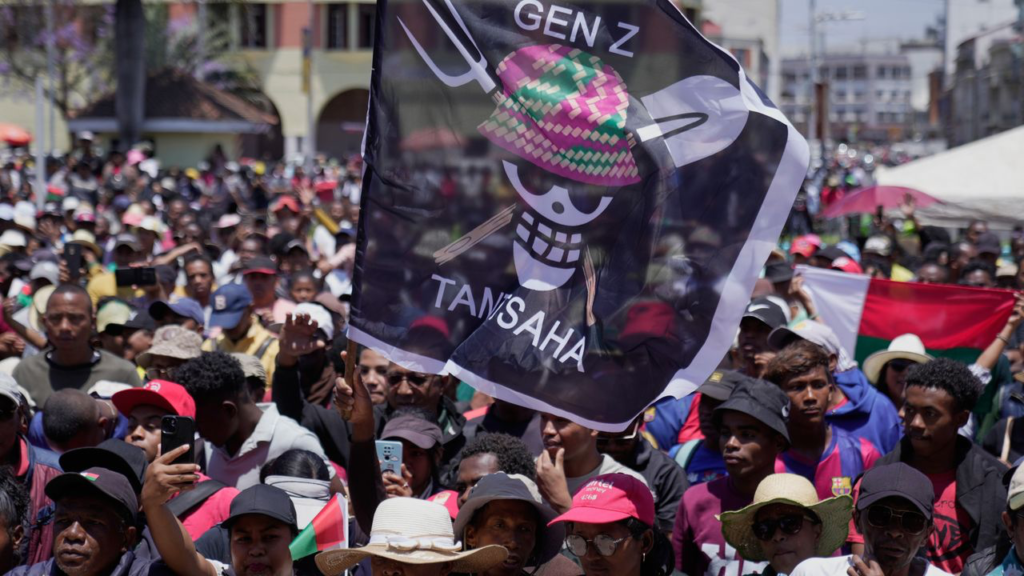
“Gen Z” Madagascar supporters wave the skull and crossbones flag during a gathering at May 13 Square in Antananarivo, Madagascar, Saturday, Oct. 18, 2025. [AP Photo/Brian Inganga]

ඩකා වීදිවල සිට නයිරෝබි දක්වා, කොළඹ සිට කත්මණ්ඩු දක්වා, මැනිලා සිට පැරණි යටත් විජිත ලෝකයේ සෑම අස්සක් මුල්ලක් නෑරම—මොරොක්කෝවේ සිට පේරු දක්වා, මැඩගස්කරයේ සිට ඉදිරියට—තරුණයින් විසින් මෙහෙයවන ලද නැගිටීම් රැල්ලක් 2022 සහ 2025 අතර කාලය තුළ ගෝලීය ධනවාදී ක්‍රමය  සොලවා ඇත. මෙම ව්‍යාපාර ඔවුන්ගේ පරිමාණය, සටන්කාමීත්වය සහ පෙනීමට ඇති ස්වයංසිද්ධතාවයෙන් ගෝලීය අවධානය දිනා ගෙන ඇත. 2024 සැප්තැම්බර් මාසයේදී, බංග්ලාදේශයේ, ප්‍රධාන වශයෙන් කෝපාවිෂ්ඨ තරුණයින් මිලියන ගණනක්, අගමැතිනි ෂෙයික් හසීනාගේ ඉල්ලා අස්වීම ඉල්ලා පෙළපාලි ගියහ1. කෙන්යාවේ, යටත් විජිත බ්‍රිතාන්‍යයෙන් නිදහස ලැබීමෙන් පසු විශාලතම සහ වඩාත්ම තිරසාර විරෝධතා ව්‍යාපාරය 2024 ජුනි මාසයේ2 සිට පසුගිය ඔක්තෝම්බරය දක්වා පැවැත්විණි. පසුගිය මාසයේ, ජෙනරේෂන් ඉසෙඩ් (ජෙන්-Z යනු ආසන්න වශයෙන් 1997 සහ 2012 අතර උපත ලැබූ ජන කණ්ඩායමයි) විරෝධතාකරුවන් ජනාධිපතිගේ යෝජිත කප්පාදු නීතිය හේතුවෙන් පාර්ලිමේන්තුවට කඩා වැදී  ජනාධිපති විලියම් රූටෝගේ රජය බිඳවැටීමේ අද්දරට ගෙන ආහ. 2022 ජූලි මාසයේදී ශ්‍රී ලංකාවේ තරුණයින් විසින් ගාලු මුවදොර පිටිය අත්පත් කර ගෙන ජනාධිපති ගෝඨාභය රාජපක්ෂ රටින් පලවා හරිනු ලබිණි. පසුගිය සැප්තැම්බර් මාසයේදී මාරාන්තික වීදි සටන් මධ්‍යයේ නේපාලයේ රජය පෙරළා දැමිණි. පසුගිය මාසයේ, පිලිපීනය දශක දෙකකින් එහි විශාලතම විරෝධතා දුටු අතර, ඔක්තෝබර් 14 වන දින, මහජන බලමුලු ගැන්වීමකින් ඉක්බිතිව සිදු වූ මිලිටරි මැදිහත්වීමකින් පසුව මැඩගස්කර ජනාධිපති ඇන්ඩ්‍රි රාජොයිලිනා බලයෙන් පහ කරන ලදී. ගාසා තීරයේ සියොන්වාදී ඊශ්‍රායලයේ ජන සංහාරයට එරෙහිව සහ එක්සත් ජනපදයේ ජනාධිපති ඒකාධිපතිත්වයක් සඳහා සූදානම් වෙමින්  ලොව පුරා  ආක්‍රමණකාරීත්වයක් දිගේලි කරන ට්‍රම්ප් පරිපාලනයට එරෙහිව, දස දහස් ගණනකගේ මහා විරෝධතා රැලි සිය ගණනක්  මෙම ව්‍යාපාර හා සමකාලීන විය.

බංග්ලාදේශයේ දී, බටහිර අධිරාජ්‍යවාදය සමඟ සමීප සබඳතා ඇති බැංකුකරුවෙකු වන මුහම්මද් යූනුස් හමුදාව විසින් පත් කරන ලද අතර, ඔහු වහාම “ශක්තිමත් හා දුරදිග යන ආර්ථික ප්‍රතිසංස්කරණ” ප්‍රකාශයට පත් කළේය—එය ජාත්‍යන්තර මූල්‍ය අරමුදලේ ම්ලේච්ඡ කප්පාදු සඳහා විනිවිද පෙනෙන කේතයකි. එක්සත් ජනපදයේ  “නේටෝ නොවන ප්‍රධාන සගයෙකු” ලෙස නම් කරන ලද කෙන්යාවේ දී, ජනතා වීරයා ලෙස පෙනී සිටි අභාවප්‍රාප්ත විපක්ෂ නායක රයිලා ඔඩින්ගා, විරෝධතාකරුවන් විරුද්ධ වූ ප්‍රතිපත්තින්ට සර්ව සමාන ප්‍රතිපත්ති ක්‍රියාත්මක කිරීම සඳහා රූටෝගේ රජය සමඟ අත්වැල් බැඳගත්තේය. ශ්‍රී ලංකාවේ නැගිටීම, පොලිස් රාජ්‍ය මර්දනය භාවිතා කරමින් කප්පාදුව අනුකම්පා විරහිතව ක්‍රියාත්මක කළ IMF ගැති ආවතේවකාර රනිල් වික්‍රමසිංහ වෙත බලය ලබා දුන්නේය. නේපාලයේ විරෝධතා, හමුදාව විසින් ගසාකනු ලැබුවේ, සියලුම දේශපාලන පක්ෂ පසෙකට කර ලමින් හිටපු අගවිනිසුරු සුෂිලා කාර්කිගේ නායකත්වයෙන් යුත් තාක්ෂණික(technocratic) අන්තර්කාලීන රජයක් ස්ථාපිත කිරීම සඳහා ය.

මෙම අරගලවලදී තම ජීවිත පරදුවට තැබූ මිලියන සංඛ්‍යාත තරුණයින් සඳහා ඒවායේ ප්‍රතිඵල විනාශකාරී පාවාදීම් නිරූපනණය කරයි. කම්කරු පන්තිය සහ පීඩිත ජනතාව මුහුණ දෙන මූලික ප්‍රශ්න තවමත් විසඳී නොමැත: තරුණයින්ට රැකියා, අධ්‍යාපනය සහ යහපත් අනාගතයක් සුරක්ෂිත කර ගන්නේ කෙසේද? වඩ වඩාත් ඒකාධිපතිවන  පාලන තන්ත්‍රයන්ට එරෙහිව ප්‍රජාතන්ත්‍රවාදී අයිතිවාසිකම් ආරක්ෂා කරන්නේ කෙසේද? අධිරාජ්‍යවාදී මූල්‍ය ප්‍රාග්ධනයේ ග්‍රහණය බිඳ දැමිය හැක්කේ කෙසේද? ඉතාමත් හදිසි ප්‍රශ්නය වන්නේ, එක්සත් ජනපදය සහ නේටෝව රුසියාවට සහ චීනයට එරෙහිව විනාශකාරී යුද්ධ සඳහා සූදානම් වෙද්දී, ධනේශ්වර බලවතුන්ගේ අවශ්‍යතාවලට පමණක් සේවය කරන මෙම ගැටුම්වලදී වෙඩි උන්ඩ බවට පත්වීමෙන් කම්කරු පන්තිය සහ තරුණයින් වළක්වා ගන්නේ කෙසේද? යන්නයි.

පිළිතුර පවතින්නේ ව්‍යාජ-වාම සංවිධාන විසින් ප්‍රවර්ධනය කරන ලද “නායකත්වයක් නොමැති”—එනම්, මූලික වශයෙන් අධිරාජ්‍යවාදී ගැති සහ ධනේශ්වර ගැති—මිථ්‍යා කථා තුළ හෝ, මහජන කෝපය එක් ධනේශ්වර කන්ඩායමක සිට තවත් ධනේශ්වර කන්ඩායමකට සහාය වීම දක්වා යොමු කරන දූෂණ විරෝධී රාමු තුළ නොවේ. මෙම ව්‍යාපාර, ඒවායේ විප්ලවීය විභවය තිබියදීත්, ධනවාදය ආරක්ෂා කරන බලවේග විසින් ක්‍රමානුකූලව පැහැරගෙන ඇත්තේ මන්දැයි තේරුම් ගැනීම එයට අවශ්‍ය වේ. එය ලියොන් ට්‍රොට්ස්කි විසින් ඔහුගේ නොනවතින විප්ලව න්‍යාය තුළ ස්ථාපිත කරන ලද සහ දශක ගණනාවක ස්ටැලින්වාදී, මාඕවාදී සහ පැබ්ලෝවාදී සංශෝධනවාදයට එරෙහිව හතරවන ජාත්‍යන්තරයේ ජාත්‍යන්තර කමිටුව (ICFI) විසින් ආරක්ෂා කරන ලද න්‍යායික පදනම් වෙත නැවත පැමිණීමක් ඉල්ලා සිටී. සියල්ලටත් වඩා, එය විප්ලවවාදී නායකත්වය යටතේ කම්කරු පන්තියේ ස්වාධීන දේශපාලන බලමුලු ගැන්වීමක් ඉල්ලා සිටී—එනම් ලෝක සමාජවාදී විප්ලවය සඳහා අරගලය කිරීමට සෑම රටකම ICFI හි ශාඛා ගොඩනැගීමයි.

ගෝලීය ජෙන්-Z නැගිටීම් සහ ඒවායේ පාවාදීමේ ප්‍රතිඵල

2022-2025 ජෙන්-Z විරෝධතා ව්‍යාපාර මහාද්වීප හරහා කැපී පෙනෙන ලෙස සංගත රටාවක් අනුගමනය කරමින්, හුදකලා ජාතික සංසිද්ධීන් නොව ධනවාදයේ තනි ගෝලීය අර්බුදයක ප්‍රකාශනයන් හෙළි කරයි.

ශ්‍රී ලංකාවේ 2022 අත්දැකීම අච්චුව සපයන ලදී. 2022 අප්‍රේල් සහ ජූලි අතර, අහස උසට නැඟෙන මිල ගණන්, ඉන්ධන හිඟය, විදුලි කප්පාදුව, පොහොර කප්පාදුව සහ බෝග විනාශය සහ ඖෂධ හිඟය ජීවිතය දරාගත නොහැකි තත්වයකට පත් කළ විට ලක්ෂ සංඛ්‍යාත ජනතාවක් වීදි බැස ගති. COVID-19 වසංගතය සහ යුක්රේනය තුළ රුසියාවට එරෙහි එක්සත් ජනපද-නේටෝ ප්‍රොක්සි යුද්ධයෙන් ඇති වූ ආර්ථික බාධාව ගෝලීය සැපයුම් දාමයන් විනාශ කර තිබුණි. ශ්‍රී ලංකාවේ විදේශ සංචිත බිඳ වැටුණු අතර, රජයට එහි ණය ගෙවීම පැහැර හැරීමට සහ අත්‍යවශ්‍ය ආනයන නතර කිරීමට සිදුවිය.  ජනාධිපති රාජපක්ෂ ඉල්ලා අස්විය යුතු බවට—”ගෝඨා ගෙදර යනු”—සහ පාර්ලිමේන්තු මන්ත්‍රීවරුන් 225 ක් වන සියලු දෙනා ඉවත් කළ යුතු බවට ඉල්ලීම් සමඟ මහජන විරෝධතා පුපුරා ගිය අතර, එහිදී ග්‍රාමීය හා නාගරික දුප්පතුන්ගෙන් මිලියන ගණනක් විවිධ ජනවාර්ගික කණ්ඩායම් හරහා සහභාගී වූහ (අරගලවලට රටේ උතුරේ යාපනයේ තරුණයින්ගෙන් සහ උඩරට වතු කම්කරුවන්ගෙන් බොහෝ දුරට සහයෝගය ලබා ගත නොහැකි වූයේ, ප්‍රධාන වශයෙන් දකුණේ කිසිදු පාලන තන්ත්‍ර වෙනසක් ඔවුන්ගේ කිසිදු මූලික ගැටලුවක් විසඳනු ඇතැයි ඔවුන් නොදුටු නිසා මිස අත්‍යවශ්‍යයෙන්ම, එම ප්‍රජාවන් තුළ ක්‍රියාත්මක වන අපකීර්තිමත් ධනේශ්වර දෙමළ ජාතිකවාදීන්ගේ සහ වෘත්තීය සමිති නිලධරයෙ ජීවග්‍රහණය නිසා නොවේ). අප්‍රේල් 28 සහ මැයි 6 යන දිනවල සීමිත එක්දින මහා වැඩවර්ජන දෙකක් කැඳවීමට වෘත්තීය සමිතිවලට බල කෙරුණු අතර, එය කම්කරු පන්තිය මැදිහත් වන විට එහි දැවැන්ත බලය පෙන්නුම් කළේය. රාජපක්ෂට 2022 ජූලි 13 වන දින රටින් පලා යාමට සිදුවිය.

නමුත් ව්‍යාපාරයේ දේශපාලන නායකත්වය වෘත්තීය සමිති නිලධාරීන්, ව්‍යාජ වාම පෙරටුගාමී සමාජවාදී පක්ෂය (FSP), ජනතා විමුක්ති පෙරමුණේ (JVP) තරුණ  බලල් අත්, සහ ගාලු මුවදොර පිටියේ මධ්‍යම පන්තික කණ්ඩායම් අත පැවතුනි. මොවුන් සියල්ල කම්කරු පන්තිය ධනේශ්වර පාලනය ආරක්ෂා කරන සංක්‍රාන්තික “අන්තර්කාලීන රජයක්” සඳහා වන ඉල්ලීම් වලට යටත් කළේය. මේ අනුව, කම්කරු විරෝධය මැඩපැවැත්වීම සඳහා අත්‍යවශ්‍ය මහජන සේවා පනත ඇතුළු කුරිරු නීති භාවිතා කරමින්, IMF හි කප්පාදු වැඩසටහන යකඩ හස්තයකින් ක්‍රියාත්මක කළ වික්‍රමසිංහ බලයට පත් කිරීමට පාර්ලිමේන්තුවට හැකි විය. සමාජවාදී සමානතා පක්ෂය (සසප) ඒ අවස්ථාවේ අනතුරු ඇඟවූයේ: “කම්කරු පන්තියේ විමුක්තිය කම්කරුවන්ගේම කාර්යයයි” සහ “පවතින සමාජ ක්‍රමය තුළ දැවැන්ත සමාජ ගැටලුවලට විසඳුමක් නොමැති අතර ප්‍රජාතන්ත්‍රවාදී අයිතිවාසිකම් මර්දනය කිරීම අවසන් කළ නොහැක” යනුවෙනි. කෙසේ වෙතත්, සසපයේ බලවේග සීමිත වූ අතර, මහා වැඩ වර්ජනයක් බලමුලු ගැන්වීමට සහ මහජන නැගිටීම කම්කරු බලය සඳහා අරගලයක් බවට පරිවර්තනය කිරීමට අවශ්‍ය මහජන විප්ලවවාදී නායකත්වය සැපයීමට ඒ  වනවිට පක්ෂයට නොහැකි විය. දශක ගණනාවක් තිස්සේ ස්ටැලින්වාදය, මාඕවාදය සහ ජාතිකවාදී වෘත්තීය සමිති නිලධරයන් සහ හතරවන ජාත්‍යන්තරය තුළ පැබ්ලෝවාදය විසින් සිදු කරන ලද පාවාදීම්, කම්කරු පන්ති විඥානය ක්‍රමානුකූලව අඩපණ කර තිබූ අතර, එමඟින් පක්ෂය දුරස්ථභාවී (alienation) වීමට පීඩනය යෙදුනෙන්, කම්කරු පන්තිය, තරුණයින් සහ මධ්‍යම පන්තියේ පීඩිත ස්ථර එක්සත් විප්ලවවාදී ප්‍රහාරයක් සඳහා මෙහෙයවිය හැකි මහජන ට්‍රොට්ස්කිවාදී පක්ෂයක් මතුවීම වැළැක්වීය.

බංග්ලාදේශයේ 2024 හි පුපුරන සුලු සතිවලට ලංකාවේ අත්දැකීමට සමාන රූපී වූ සම්පීඩිත ගමන් පථයක් දක්නට ලැබුණි. ජූලි මාසයේදී, වෙනස්කම්වලට එරෙහි ශිෂ්‍යයන් (Students against Discrimination) යටතේ සංවිධානය වූ විශ්ව විද්‍යාල සිසුන් ප්‍රතිගාමී රැකියා කෝටා ක්‍රමයට විරෝධය දැක්වීමට පටන් ගත්හ. පොලිසිය, හමුදා ඒකක සහ සිසුන් විශාල සංඛ්‍යාවක් ඝාතනය කළ අවාමි ලීග් මැරයන් මුදා හරිමින් මිනීමරු ප්‍රචණ්ඩත්වයෙන් හසීනාගේ රජය ප්‍රතිචාර දැක්වූ විට විරෝධතා නාටකාකාර ලෙස උත්සන්න විය. අගෝස්තු මුල වන විට, මිලියන ගණනක් ඩකා වෙත පෙළපාලි යමින් සිටියේ, කෝටා ක්‍රමය කෙරෙහි කෝපය නිසා පමණක් නොව, දැවෙන දරිද්‍රතාවය, දැවැන්ත අසමානතාවය සහ බිලියන ගණනින් අපනයන ආදායම් නිපදවන ඇඟලුම් කර්මාන්තයේ අනුකම්පා විරහිත සූරාකෑම  ආදිය කෙරෙහි ගොඩ ගැසුණු කෝපාග්නියෙනි. නැගිටීම පාලනය කිරීමට අසමත් වූ මිලිටරිය අගෝස්තු 05 දින හසීනාට ඉල්ලා අස්වී ඉන්දියාවට පලා යාමට බල කළේය.

මිලිටරිය වහාම යූනුස්ගේ ප්‍රධානත්වයෙන් යුත් අන්තර්කාලීන පරිපාලනයක් ස්ථාපිත කළේය. ඔහුගේ “එක්සත් ජනපද සහ යුරෝපීය අධිරාජ්‍යවාදී බලවතුන් සමඟ සමීප සම්බන්ධතා” ප්‍රධාන ධාරාවේ වාර්තාකරණයේදී පවා අවධාරණය කෙරුණි. වාම ප්‍රජාතන්ත්‍රවාදී සන්ධානයේ (Left Democratic Alliance) කාණ්ඩ ගැසී සිටි ස්ටැලින්වාදී පක්ෂ සහ බංග්ලාදේශ ජාතික පක්ෂය (Bangladesh National Party) ඔහුට ඔවුන්ගේ පූර්ණ සහයෝගය පොරොන්දු විය. මෙම පෙරළිය පුරාවටම, බංග්ලාදේශ කම්කරු පක්ෂය (Workers Party of Bangladesh) ඇතුළු වෘත්තීය සමිති සහ ව්‍යාජ වාම බලවේග, කම්කරු පන්තිය තමන්ගේම වැඩසටහනක් සමඟ ස්වාධීන බලවේගයක් ලෙස මැදිහත් වීම වැළැක්වීම සඳහා ක්‍රමානුකූලව කටයුතු කළහ3. ලෝක සමාජවාදී වෙබ් අඩවිය (WSWS) නිවැරදිව විශ්ලේෂණය කළ පරිදි: “කම්කරුවන් සහ ඔවුන්ගේ පවුල් සිසුන් විසින් ආරම්භ කරන ලද විරෝධතාවලට එක් විය. කෙසේ වෙතත්, ඔවුන් එසේ කළේ පන්තියක් ලෙස වැඩ වර්ජන සහ පන්ති අරගලයේ වෙනත් ආයුධ භාවිතා කරමින් සහ තමන්ගේම ඉල්ලීම් ඉදිරියට ගෙන යාමෙන් නොව පුද්ගලයන් ලෙසය.”

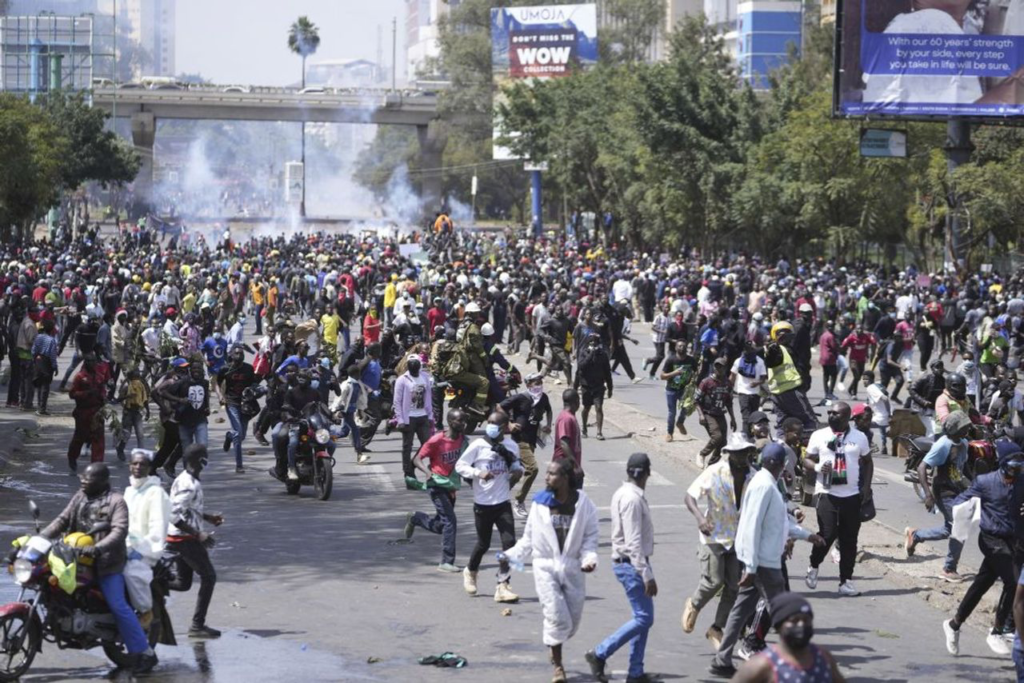
කෙන්යාවේ ජෙන්-Z කැරැල්ල 2024 ජුනි-අගෝස්තු මාසවල සිදු වුනු අතර, එය මෙම ව්‍යාපාර අතරින් සමහර විට දේශපාලනිකව වඩාත්ම ඉදිරියට ගිය එකක් විය. තරුණ විරැකියාව සියයට 67 දක්වා ළඟා වීම, 2024 මූල්‍ය පනත් කෙටුම්පතින් IMF විසින් නියම කරන ලද බදු වැඩි කිරීම් සමඟ ඒකාබද්ධව, ජනාධිපති විලියම් රූටෝගේ ඉල්ලා අස්වීම ඉල්ලා මහජන විරෝධතා ඇවිලවීය. කෙන්යානු පාලක පන්තිය දශක ගණනාවක් තිස්සේ කම්කරු පන්තිය දුර්වල කිරීම සඳහා අවුලුවා ඇති ගෝත්‍රික බෙදීම් ඉක්මවා මෙම ව්‍යාපාරය ගමන් කළේය4. ජුනි 25 “ලේවැකි අඟහරුවාදා” දින, විරෝධතාකරුවන් පාර්ලිමේන්තුවට කඩා වැදුණු විට පොලිසිය වෙඩි තැබූ අතර, ඉන් දුසිම් ගනනක් මිය ගියහ. නැගිටීමෙන් 60 කට වැඩි පිරිසක් මිය ගිය අතර, ආරක්ෂක හමුදා විසින් බොහෝ දෙනෙකු පැහැර ගන යන   ලදී.
Kenya Gen-Z
Protesters scatter as Kenya police spray water cannon at them during a protest over proposed tax hikes in a finance bill in downtown Nairobi, Kenya, June. 25, 2024. [AP Photo/Brian Inganga]

රූටෝ උපායශීලීව මුදල් පනත ඉල්ලා අස්කර ගත් නමුත් මෙම සහනය පාලක පන්තිය අතර යටින් පැවති කුමන්ත්‍රණය හෙළිදරව් කෙරුණි. අගෝස්තු මාසයේදී, විපක්ෂය ලෙස පෙනී සිටි රයිලා ඔඩින්ගාගේ ඔරේන්ජ් ප්‍රජාතන්ත්‍රවාදී ව්‍යාපාරය (Orange Democratic Movement-ODM) රූටෝගේ රජයට එක් විය5. ෆ්‍රැන්සිස් අටෝලිගේ නායකත්වයෙන් යුත් වෘත්තීය සමිති මධ්‍යම සංවිධානය (Central Organisation of Trade Unions-COTU) සහ බලගතු ක්‍රිස්තියානි සහ මුස්ලිම් පූජක පක්ෂය මෙම සභාග රජයට සහාය දැක්වූහ. ඉනික්බිති ද කප්පාදු ප්‍රතිපත්ති දිගටම පවතී; කෙන්යානු ඉතිහාසයේ පළමු වතාවට සිවිල් විරෝධතාකරුවන්ට එරෙහිව හමුදාව යොදවා ගැනුණි; බයිඩන් පරිපාලනය විසින් එම රට එක්සත් ජනපදයේ “නේටෝ නොවන ප්‍රධාන සගයෙකු” ලෙස නම් කරන ලද අතර, එය චීනය සමඟ යුද්ධය සඳහා වොෂින්ටනයේ සූදානමේ ප්‍රොක්සි (නියෝජිත) බලවේගයක් ලෙස ස්ථානගත කරන ලදී.

ගුරුවරුන්, ප්‍රවාහන සේවකයින්, සෞඛ්‍ය සේවකයින් සහ සිවිල් සේවකයින්ගේ පසුව ඇති වූ වැඩ වර්ජන රැල්ල කම්කරු පන්තියේ බලය සඳහා ඇති විභවය පෙන්නුම් කළේය. එහෙත් COTU සහ ස්ටැලින්වාදී කොමියුනිස්ට් පක්ෂය (මාක්ස්වාදී-කෙන්යාව) (Communist Party Marxist Kenya-CPM-K) මෙම වැඩ වර්ජන පාලන තන්ත්‍රයට දේශපාලන අභියෝගයක් බවට පෙරළීම වැළැක්වීම සඳහා වෙහෙස නොබලා කටයුතු කළ අතර, ඒ වෙනුවට “දේශපාලනයක් එපා” සහ “නායකත්වයක් නොමැති” සංවිධානයක් අවධාරනය කරමින් ධනේශ්වර බලවේග සඳහා ක්ෂේත්‍රය විවෘත කළේය6.

2025 සැප්තැම්බර් නේපාලයේ සහ පිලිපීනයේ නැගිටීම් තහවුරු කළේ මෙම රටාව ආසියාව පුරා පැතිරී ඇති බවයි. නේපාලයේ, සමාජ මාධ්‍ය වේදිකා 26 ක් තහනම් කිරීම සහ, බොහෝ දෙනා නැරඹූ වීඩියෝ හරහා හෙළිදරව් කරන ලද දේශපාලනඥයන්ගේ දරුවන් වන “නෙපෝ ළමයින්ගේ” සුඛෝපභෝගී ජීවන රටාවන් පිළිබඳ ගැඹුරු අමනාපයෙන් ඇති වූ විරෝධතා හේතුවෙන් අවම වශයෙන් 51 දෙනෙකු මිය ගියහ. හිටපු අගමැතිවරුන් ඇතුළු ප්‍රමුඛ දේශපාලනඥයන්ගේ නිවාස විනාශ කර ගිනි තබන ලදී. පාර්ලිමේන්තුවට කඩා වැදී පුළුස්සා දමන ලදී. අගමැති කේ.පී. ෂර්මා ඔලිට ඉල්ලා අස්වීමට බල කෙරුනි; නමුත් එහි ප්‍රතිඵලය වූයේ කාර්කිගේ නායකත්වයෙන් යුත් තාක්ෂණික අන්තර්කාලීන රජයක් වන අතර, හමුදාව තිරය පිටුපස තීරණාත්මක කාර්යභාරයක් ඉටු කළේය. WSWS වාර්තා කළ පරිදි, හමුදා මාණ්ඩලික ප්‍රධානී අශෝක් රාජ් සිග්ඩෙල් “දේශපාලන විසඳුමක් සොයාගත නොහැකි වුවහොත් හමුදාවට හදිසි තත්වයක් ප්‍රකාශ කිරීමට බල කෙරෙනු ඇති බවට” අනතුරු ඇඟවීම, පක්ෂ නායකයින් පාර්ලිමේන්තුව විසුරුවා හැරීම සදහා එකඟ වීමට බල කළේය.

දශක දෙකක් තුළ එහි විශාලතම පෙලපාලි අත් දුටු පිලිපීනයේ, සැප්තැම්බර් 21 වන දින—ෆර්ඩිනන්ඩ් මාකෝස් (ජේෂ්ඨ) යුද නීතිය ප්‍රකාශයට පත් කිරීමේ 53 වන සංවත්සර දින—මැනිලා නුවරදී 100,000 ක් දෙනා පෙළපාළි ගියහ7. ගංවතුර පාලන යටිතල පහසුකම්වල දැවැන්ත දූෂණයන්, එනම් නිලධාරීන්ට අල්ලස් සහ වංචනික කොන්ත්‍රාත්තු හරහා බිලියන ගණනක් සොරකම් කිරීම හෙලිදරව් වීමෙන් විරෝධතා ඇති විය. එහෙත් මෙම විරෝධතාවල දේශපාලන ස්වභාවය “සැලකිය යුතු ලෙස මධ්‍යම පන්තික” විය. ස්ටැලින්වාදී සංවිධානයක් වන බයාන් (BAYAN) සහ ව්‍යාජ වාම අක්බයාන් (Aknayan)  පක්ෂය වෙනම පෙළපාලි මෙහෙයවූ අතර, ඒ දෙකම චීනයට සතුරු ධනේශ්වර කන්ඩායම් සමඟ වඩ වඩාත් පෙලගැසී වොෂින්ටනයේ යුද සූදානමට ඒකාබද්ධ විය. ජනාධිපති මාකෝස් (කනිෂ්ඨ) විරෝධතා “සාමකාමී වන තාක් කල්” ඒ සඳහා තම සහයෝගය ප්‍රකාශ කරමින්, එහි පාලනයට සැබෑ තර්ජනයක් එල්ල වීමෙන් වළකාලීමට උත්සාහ කළේය.

මැඩගස්කරයේ (2025 ඔක්තෝබර්) බලහත්කාරයෙන් ඉවත් කල ජනාධිපති ඇන්ඩ්‍රි රාජොයිලිනා ප්‍රංශ හමුදා ගුවන් යානයක් මගින් රහසේ රටින් පැන යාමත් සමඟ මෙම රටාවේ වඩාත්ම නාටකාකාර ප්‍රකාශනය පෙන්නුම් කළේය.  ජනගහනයෙන් සියයට 75 ක් දිනකට යුරෝ 0.80 ට වඩා අඩු ආදායමක් ලබන රටේ සැප්තැම්බර් අග දී බල පැවැත් වුණු නිදන්ගත විදුලිය සහ ජල හිඟය මුල් කොටගෙන නැගිටීම පුපුරා ගියේ ජෙන්-Z මාඩා (Gen Z Mada) සංවිධානය  නායකත්වය සපයන ලද විරෝධතා ඇවිලී යාමත් සමඟ ය. සැප්තැම්බර් 25 වන දින විරෝධතාවක් සැලසුම් කළ නගරයේ දේශපාලනඥයන් දෙදෙනෙකු බලධාරීන් අත්අඩංගුවට ගත් විට, විරෝධතා දිවයින පුරා වේගයෙන් පැතිර ගියේය. පාලන තන්ත්‍රය මිනීමරු මර්දනයකින් ප්‍රතිචාර දැක්වීය: අවම වශයෙන් 22 දෙනෙකු මරා දැමුණි; සිය ගණනකට තුවාල කෙරුණි; සවස් යාමයේ සිට අලුයම දක්වා ඇඳිරි නීතිය පැනවුණි; සහ අර්බුදය ගැඹුරු කළ මංමුලා සහගත මිලිටරිකරණ පියවරක් වශයෙන් ඔක්තෝබර් 6 වන දින ජෙනරාල් සෆිසම්බෝ අගමැති ධුරයට පත් කෙරුණි.

ඔක්තෝබර් 14 වන දින, රාජොයිලිනා බලයට පත්වීමට 2009 දී සහාය දුන් CAPSAT හමුදා ඒකකය, සම්බන්ධීකරණ කරන ලද මැදිහත්වීමක් හරහා ඔහුව පෙරලා දැමීය. කර්නල් මයිකල් රැන්ඩ්‍රියනිරිනා, ජාතික සභාව පවත්වාගෙන යන අතර සෙනෙට් සභාව සහ ඉහළ ව්‍යවස්ථා අධිකරණය විසුරුවා හැරීම නිවේදනය කරමින්, මූලික වශයෙන් කුමන්ත්‍රණයක් වූ දෙයට ව්‍යවස්ථාමය ආවරණයක් ලබා දුන්නේය. වඩාත්ම හෙළිදරව්කාරක කාරණාව වූයේ ප්‍රංශ අධිරාජ්‍යවාදයේ සෘජු භූමිකාවයි: ඔක්තෝබර් 12 වන දින, පැරිසිය සමඟ සම්බන්ධීකරණය කරන ලද සහ ජනාධිපති එමානුවෙල් මැක්‍රොන් විසින් අනුමත කරන ලද මෙහෙයුමකදී රාජොයිලිනා ප්‍රංශ ගුවන් යානයකින් පලා ගියේය. ඔහුගේ පලායාමට පහසුකම් සැලසූ සමාගම වන TOA Aviation, පලාගිය මෝටර් රථ ව්‍යපාර ප්‍රධානී රෙනෝල්ට් හි ප්‍රධාන විධායක නිලධාරී කාලෝස් ගොස්න්ට ජපානයෙන් නීති විරෝධී ලෙස ගුවනින්  පැන යාමට ඉඩ සැලසූ එම සමාගම ම විය. මැක්‍රොන් මර්දනය හෙළා දැක්කේ නැතිමුත් “ව්‍යවස්ථාමය පටිපාටිය” අවධාරණය කළ අතර, ප්‍රජාතන්ත්‍රවාදය සඳහා නොව මැලගසි බලශක්ති, විදුලි සංදේශ සහ දුර්ලභ පෘථිවි ඛනිජ කෙරෙහි ප්‍රංශ මූලෝපායික අවශ්‍යතා ආරක්ෂා කිරීම සඳහා ප්‍රංශයේ උත්සුකය හෙළි කළේය.

වෘත්තීය සමිති පනහකින් පමණ සමන්විත මැලගසි වෘත්තීය සමිති සහයෝගිතා සාමූහිකය, 2022 සිට කැටි කරන ලද වැටුප් වැඩිවීම් සහ  රාජොයිලිනාගේ ඉල්ලා අස්වීම ඉල්ලා මහා වැඩ වර්ජනයක් කැඳවූ අතර, පල්ලියෙන් සහ ප්‍රාදේශීය ප්‍රභූන්ගෙන් “සාකච්ඡාවක්” ඉල්ලා සිටියේය. විරුද්ධ පක්ෂ වන ෂෛක ඉ මඩගසිකාරා(Tiako i Madagasikara-TIM) සහ මැලගසි මියාරා-මියායින්ගා (Malagasy Miara-Miainga-MMM) තමන් විකල්ප ලෙස ස්ථානගත වූහ. මෙය අත්‍යවශ්‍යයෙන්ම අවස්ථාවාදී භූමිකාවක් වූ අතර, “ධනවාදයේ අත්තිවාරම් ආරක්ෂා කරන අතරම මහජන කෝපය ආයතනික සාකච්ඡා වල පටු රාමුවට සිර කළේය.”8 මිලිටරි මැදිහත්වීමේ අරමුණ වූයේ ධනේශ්වර පටිපාටිය ආරක්ෂා කිරීම සහ අධිරාජ්‍යවාදයේ සහ ජාතික ධනේශ්වරයේ අවශ්‍යතා ආරක්ෂා කිරීමයි. එය, “හමුදාවේ කියාපාන මධ්‍යස්ථභාවය හෝ සහයෝගය, මහජන බලමුලු ගැන්වීම නිෂ්ක්‍රීය කිරීමට, ධනේශ්වර පටිපාටිය යථා තත්ත්වයට පත් කිරීමට සහ නව ව්‍යාජ මුහුණුවරක් යටතේ ධනේශ්වර ක්‍රමයේ අඛණ්ඩතාව සහතික කිරීමට සේවය කළ,” 2011 දී ඊජිප්තුවේ සහ ටියුනීසියාවේ නිරීක්ෂණය කළ රටාව අනුකරණය කිරීමක් විය. 

මෙම සියලු උද්ඝෝෂන ව්‍යාපාර හරහා, ඇතැම් ලක්ෂණ කැපී පෙනෙන සංගතතාවයකින් පුනරාවර්තනය වේ: IMF කප්පාදුව සහ ධනේශ්වර බිඳවැටීම මගීන් ධාවනය වන ආර්ථික අර්බුදය සහ නිදන්ගත සමාජ අසමානතාවය; දැවැන්ත තරුණ හා මධ්‍යම පන්තික සහභාගීත්වය; ප්‍රචණ්ඩ රාජ්‍ය මර්දනය; ව්‍යාජ වාම කණ්ඩායම් විසින් “නායකත්වයක් නොමැතිව” සංවිධානය වීම ප්‍රවර්ධනය කිරීම; වෘත්තීය සමිති නිලධරයන් සහ සුලු ධනේශ්වරය මත පදනම් වූ පක්ෂ විසින් ස්වාධීන කම්කරු පන්තියේ දේශපාලන ක්‍රියාමාර්ග ක්‍රමානුකූලව අවහිර කිරීම; සහ අධිරාජ්‍යවාදී  මූලෝ පායික අවශ්‍යතා සඳහා සේවය කරන අතරම මහජනතාවගේ සූරාකෑම තීව්‍ර කරන අවසන් ප්‍රතිඵල.

මතු සම්බන්ධයි…

  1. ලෝක සමාජවාදී වෙබ් අඩවිය, ‘මහජන නැගිටීම් මධ්‍යයේ බංග්ලාදේශ අගමැති ඉන්දියාවට පලා යයි’ (2024 අගෝස්තු 6) ↩︎
  2. ලෝක සමාජවාදී වෙබ් අඩවිය, ‘කෙන්යානු ජනාධිපති රූටෝගේ IMF නියෝග කළ මුදල් පනතට එරෙහිව මහජන විරෝධතා‘ (2024 ජුනි 20) ↩︎
  3. ලෝක සමාජවාදී වෙබ් අඩවිය, ‘බංග්ලාදේශයේ දක්ෂිණාංශික අන්තර්කාලීන රජය තම බලය තහවුරු කර ගැනීමටත්, මහජන කැළඹීම අවසන් කිරීමටත් පියවර ගනී’ (2024 අගෝස්තු 23) ↩︎
  4. ලෝක සමාජවාදී වෙබ් අඩවිය, ‘කෙන්යාවේ ජෙන්-Z කැරැල්ල, වැඩ වර්ජන රැල්ල සහ ස්ථිර විප්ලවය සඳහා අරගලය – 1 කොටස‘ (2024 ඔක්තෝබර් 3) ↩︎
  5. ලෝක සමාජවාදී වෙබ් අඩවිය, ‘කෙන්යාවේ ජෙන්-Z නැගිටීමෙන් වසරක්: සමාජවාදී සහ ජාත්‍යන්තරවාදී උපාය මාර්ගයක අවශ්‍යතාවය’ (2025 ජුනි 24) ↩︎
  6. ලෝක සමාජවාදී වෙබ් අඩවිය, ‘රූටෝගේ නව කෙන්යානු සභාග රජය ප්‍රතික්ෂේප කරන ලද බදු පියවර නැවත ස්ථාපිත කිරීමට යයි.’ (2024 අගෝස්තු 21) ↩︎
  7. ලෝක සමාජවාදී වෙබ් අඩවිය, ‘පිලිපීනයේ දූෂණයට එරෙහිව ප්‍රබල විරෝධතා’ (2025 සැප්තැම්බර් 21) ↩︎
  8. ලෝක සමාජවාදී වෙබ් අඩවිය, ‘ජෙන්-Z විරෝධතා මධ්‍යයේ මැඩගස්කර ජනාධිපති රාජොයිලිනා ප්‍රංශ ආධාර ඇතිව පලා යයි’ (2025 ඔක්තෝබර් 19)
    ↩︎
ජෙන්-Z නැගිටීම් සහ නායකත්වයේ අර්බුදය: ‘නායකත්වයක් නොමැති’ ව්‍යාපාර සහ ‘වාම ජනතාවාදයට’ එරෙහිව නොනවතින විප්ලවය – 1 කොටස Read More »

Gen-Z

The Gen-Z Uprisings and the Crisis of Leadership: Permanent Revolution against ‘Leaderless’ movements and ‘Left Populism’ – Part 1

By Sanjaya Jayasekera.

We publish here Part 1 of a series examining the global wave of Gen Z protests, the deepening crisis of revolutionary leadership, and the necessity of fighting for the program of socialist internationalism on the basis of Leon Trotsky’s Theory of Permanent Revolution.

Gen-Z
“Gen Z” Madagascar supporters wave the skull and crossbones flag during a gathering at May 13 Square in Antananarivo, Madagascar, Saturday, Oct. 18, 2025. [AP Photo/Brian Inganga]

From the streets of Dhaka to Nairobi, from Colombo to Kathmandu, from Manila to every corner of the former colonial world—from Morocco to Peru, from Madagascar onward—a wave of youth-led uprisings has shaken the global capitalist order between 2022 and 2025. These movements have captured global attention with their scale, militancy, and apparent spontaneity. In September 2024, in Bangladesh, millions, predominantly angry youth, marched demanding the resignation of Prime Minister Sheikh Hasina1.  In Kenya, the largest and most sustained protest movement since its Independence from colonial Britain took place from June 20242 to last month, where Generation Z (Gen-Z) protesters stormed parliament and brought President William Ruto’s government to the brink of collapse over his proposed austerity law. Sri Lanka’s youth occupation of Galle Face Green in July 2022 forced President Gotabaya Rajapakse to flee the country. Nepal saw its government toppled amid deadly street battles last September. Last month, the Philippines witnessed its largest demonstrations in two decades, while, on October 14, Madagascar President Andry Rajoelina was toppled following a mass popular mobilization and subsequent military intervention. These movements unfolded alongside hundreds of mass demonstrations—mobilizing millions across Europe and around the globe—against Zionist Israel’s genocide in Gaza, against the Trump administration’s preparations for a presidential dictatorship in the United States, and against the growing belligerency of imperialism around the world.

In Bangladesh, the military installed Muhammad Yunus, a banker with close ties to Western imperialism, who immediately announced “robust and far-reaching economic reforms”—a transparent code for savage International Monetary Fund austerity. In Kenya, late opposition leader Raila Odinga, who had postured as champion of the masses, joined hands with Ruto’s government to implement the identical policies the protests opposed, while the country was designated a US “major non-NATO ally”. Sri Lanka’s uprising delivered power to Ranil Wickremesinghe, a pro-IMF stooge who ruthlessly enforced austerity using police-state repression. Nepal’s protests were exploited by the military to install a technocratic interim government headed by former Chief Justice Sushila Karki, sidelining all political parties while maintaining capitalist rule.

For the millions of youth who risked their lives in these struggles, the outcomes represent devastating betrayals. The fundamental questions facing the working class and the oppressed masses remain unresolved: How can youth secure jobs, education, and a decent future? How can democratic rights be defended against increasingly authoritarian regimes? How can the stranglehold of imperialist finance capital be broken? Most urgently, as the United States and NATO prepare for catastrophic wars against Russia and China, how can the working class and youth prevent themselves from becoming cannon fodder in conflicts that serve only the interests of rival capitalist powers? 

The answer lies not in the “leaderless”— so, fundamentally pro-imperialist and pro-capitalist— mythology promoted by pseudo-left organizations, nor in the anti-corruption frameworks that channel mass anger into support for one bourgeois faction against another. It requires understanding why these movements, despite their revolutionary potential, have been systematically hijacked by forces defending capitalism. It demands a return to the theoretical foundations established by Leon Trotsky in his Theory of Permanent Revolution and defended by the International Committee of the Fourth International (ICFI) against decades of Stalinist, Maoist, and Pabloite revisionism. Above all, it necessitates the independent political mobilization of the working class under revolutionary leadership—the building of sections of the ICFI in every country to wage the struggle for world socialist revolution. 

Global Gen-Z uprisings and their betrayed outcomes

The Gen-Z protest movements of 2022-2025 follow a remarkably consistent pattern across continents, revealing not isolated national phenomena but expressions of a single global crisis of capitalism.

Sri Lanka 2022 provided the template. Between April and July, hundreds of thousands took to the streets as skyrocketing prices, fuel shortages, power-cuts, fertilizer cuts and crop destruction, and medicine scarcity made life unbearable. The COVID-19 pandemic and the economic disruption from the US-NATO proxy war against Russia in Ukraine had devastated global supply chains. Sri Lanka’s foreign reserves collapsed, forcing the government to default on its debt and halt vital imports. Mass protests erupted with demands that President Rajapakse resign—”Gota Go Home”—and that all 225 parliamentarians be removed, in which millions drawn from rural and urban poor participated across ethnic lines (except for the fact that the struggles could not gather support largely from the youth of Jaffna in the North of the country and from the up-country estate workers primarily because they saw no regime change in the South would solve any of their fundamental problems, and not necessarily due to the stronghold of discredited bourgeois Tamil nationalists and the trade union bureaucracy operating within those communities). Trade unions were compelled to call two limited one-day general strikes on April 28 and May 6, demonstrating the immense power of the working class when it intervenes. Rajapakse was forced to flee the country on July 13, 2022.

But the political leadership of the movement remained in the hands of trade union bureaucrats, the pseudo-left Frontline Socialist Party (FSP), youth proxies of the Janatha Vimukthi Peramuna (JVP) and middle-class groups at Galle Face Green, all of which subordinated the working class to demands for a transitional “interim government” that would preserve capitalist rule. Parliament was thus able to install Wickremesinghe, who imposed the IMF’s austerity program with an iron fist, using draconian legislation including the Essential Public Service Act to suppress worker opposition. The Socialist Equality Party (SEP) warned at the time: “The emancipation of the working class is the task of the workers themselves,” and that “there is no solution to the immense social problems and an end to the suppression of democratic rights within the existing social order.” However, the SEP’s forces remained limited, and it was not yet in a position to provide the mass revolutionary leadership necessary to mobilize a general strike and transform the popular uprising into a struggle for workers’ power. The decades-long betrayals of Stalinism, Maoism and nationalist trade union bureaucracies, and Pabloism within the Fourth International, had systematically undermined working-class consciousness, which in turn pressured the party into alienation, and prevented the emergence of a mass Trotskyist party capable of leading the working class, youth, and oppressed layers of the middle class in a united revolutionary offensive.

Bangladesh 2024 witnessed a similar trajectory compressed into explosive weeks. In July, university students organized under Students Against Discrimination began protesting a regressive job quota system. When Hasina’s government responded with murderous violence—unleashing police, military units, and Awami League thugs who killed scores of students—the protests escalated dramatically. By early August, millions were marching to Dhaka, expressing not merely anger over the quota system but accumulated rage over grinding poverty, massive inequality, and ruthless exploitation in the garment industry that produces billions in exports. The military, unable to contain the uprising, forced Hasina to resign and flee to India on August 5.

The military immediately installed an interim administration headed by Yunus, whose “close connections with US and European imperialist powers” were emphasized even in mainstream coverage. The Bangladesh National Party and Stalinist parties grouped in the Left Democratic Alliance pledged their full support. Throughout this upheaval, the trade unions and pseudo-left forces, including the Workers Party of Bangladesh, worked systematically to prevent the working class from intervening as an independent force with its own program3. The World Socialist Web Site (WSWS) correctly analyzed: “Workers and their families joined the student-initiated protests. However, they did so as individuals, not as a class, using strikes and other weapons of class struggle and advancing their own demands.”

Kenya’s Gen-Z insurgency in June-August 2024 represented perhaps the most politically advanced of these movements. Youth unemployment reaching 67 percent, combined with IMF-dictated tax increases in the Finance Bill 2024, ignited mass protests demanding President William Ruto’s resignation. The movement transcended the tribal divisions that the Kenyan ruling class has stoked for decades to weaken the working class4. On “Bloody Tuesday,” June 25, police opened fire on demonstrators, killing dozens as they stormed parliament. Over 60 would die in the uprising, with scores abducted by security forces.

Kenya Gen-Z
Protesters scatter as Kenya police spray water cannon at them during a protest over proposed tax hikes in a finance bill in downtown Nairobi, Kenya, June. 25, 2024. [AP Photo/Brian Inganga]

Ruto tactically withdrew the Finance Bill, but this concession only exposed the underlying conspiracy among the ruling class. In August, Raila Odinga’s Orange Democratic Movement (ODM)—which had postured as opposition—joined Ruto’s government5. The Central Organization of Trade Unions (COTU), led by Francis Atwoli, and influential Christian and Muslim clergy backed this coalition government. Austerity policies continue, the military has been deployed against civilian protesters for the first time in Kenyan history, and the country was designated a US “major non-NATO ally” by the Biden administration, positioning it as a proxy force in Washington’s preparations for war with China. 

The subsequent strike wave by teachers, transport workers, healthcare staff, and civil servants demonstrated the potential for working-class power. Yet COTU and the Stalinist Communist Party Marxist-Kenya (CPM-K) worked tirelessly to prevent these strikes from becoming a political challenge to the regime, insisting instead on “no politics” and “leaderless” organization that left the field open for bourgeois forces6.

The uprisings in Nepal (September 2025) and the Philippines (September 2025) confirmed that this pattern extends across Asia. In Nepal, protests triggered by a government ban on 26 social media platforms and fueled by deep resentment over the lavish lifestyles of “nepo kids”—the children of politicians exposed through viral videos—left at least 51 dead. The homes of prominent politicians including former prime ministers were vandalized and set ablaze. Parliament was stormed and burned. Prime Minister K.P. Sharma Oli was forced to resign, but the outcome was a technocratic interim government headed by Karki, with the military playing a decisive role behind the scenes. As the WSWS reported, Chief of Army Staff Ashok Raj Sigdel “warned that the military would be forced to declare a state of emergency if no political solution would be found,” compelling party leaders to consent to parliament’s dissolution.

The Philippines saw its largest demonstrations in two decades, with 100,000 rallying in Manila on September 21—the 53rd anniversary of Ferdinand Marcos Sr.’s declaration of martial law7. The protests were triggered by exposures of massive graft in flood control infrastructure—involving billions stolen through kickbacks to officials and fraudulent contracts. Yet the political character of these protests was “markedly middle-class.” Stalinist organization BAYAN and the pseudo-left Akbayan party led separate rallies, both increasingly aligned with bourgeois factions hostile to China and integrated into Washington’s war preparations. President Marcos Jr. announced his support for the protests “as long as they were peaceful,” attempting to contain any genuine threat to its rule.

Madagascar (October 2025) demonstrated the pattern’s most dramatic expression, with President Andry Rajoelina forcibly removed and exfiltrated by French military aircraft. The uprising erupted in late September when chronic power and water shortages—leaving over 75 percent of the population subsisting on less than €0.80 per day outraged—triggered protests led by the Gen Z Mada formation. When authorities arrested two city politicians who had planned a demonstration on September 25, protests spread rapidly across the island. The regime responded with murderous repression: at least 22 killed, hundreds injured, a dusk-to-dawn curfew imposed, and the appointment of General Zafisambo as Prime Minister on October 6 in a desperate militarization that only deepened the crisis.

On October 14, the CAPSAT military unit—which had itself backed Rajoelina’s rise to power in 2009—toppled him through a coordinated intervention. Colonel Michael Randrianirina announced the dissolution of the Senate and High Constitutional Court while maintaining the National Assembly, providing constitutional veneer to what was fundamentally a coup. Most revealing was French imperialism’s direct role: on October 12, Rajoelina fled aboard a French aircraft in an operation coordinated with Paris and approved by President Emmanuel Macron. The company facilitating his escape, TOA Aviation, was the same that had enabled fugitive automotive boss Renault CEO Carlos Ghosn’s extralegal flight from Japan. Macron emphasized “constitutional order” without condemning repression, exposing France’s concern not for democracy but for protecting strategic interests in Malagasy energy, telecommunications, and rare earth minerals.

The Malagasy Trade Union Solidarity collective, comprising about fifty unions, called a general strike demanding Rajoelina’s resignation and wage increases after a freeze since 2022, while calling on the Church and local elites for “dialogue”. The opposition parties Tiako i Madagasikara (TIM) and Malagasy Miara-Miainga (MMM) positioned themselves as alternatives. This was essentially an opportunistic role, “channeling popular anger into the narrow framework of institutional negotiations while safeguarding the foundations of capitalism.”8 The military intervention aimed to defend bourgeois order and preserve the interests of imperialism and the national bourgeoisie, replicating the pattern observed in Egypt and Tunisia 2011 where “the supposed neutrality or support of the army served to defuse mobilization, restore bourgeois order, and ensure the continuity of the capitalist system under a new facade.”

Across all these movements, certain features recur with striking consistency: economic crisis driven by IMF austerity and capitalist breakdown, and chronic social inequality; massive youth and middle-class participation; violent state repression; the promotion of “leaderless” organization by pseudo-left groups; the systematic blocking of independent working-class political action by trade union bureaucracies and parties based on the petty-bourgeoisie; and outcomes that serve imperialist strategic interests while intensifying the exploitation of the masses.

To be continued…

  1. World Socialist Web Site, ‘Bangladeshi Prime Minister flees to India amid mass uprising’ (6 August 2024) ↩︎
  2. World Socialist Web Site, ‘Mass protests against Kenyan President Ruto’s IMF-dictated Finance Bill‘ (20 June 2024) ↩︎
  3. World Socialist Web Site, ‘Bangladesh’s right-wing interim government moves to consolidate its power, end popular ferment’ (23 August 2024) ↩︎
  4. World Socialist Web Site, ‘Kenya’s Gen Z insurgency, the strike wave and the struggle for Permanent Revolution – Part 1‘ (3 October 2024) ↩︎
  5. World Socialist Web Site, ‘One year since the Gen-Z Uprising in Kenya: The need for a socialist and internationalist strategy’ (24 June 2025) ↩︎
  6. World Socialist Web Site, ‘Ruto’s new Kenyan coalition government to reinstate rejected tax measures’ (21 August 2024) ↩︎
  7. World Socialist Web Site, ‘Major protests against corruption in the Philippines’ (21. September 2025) ↩︎
  8. World Socialist Web Site, ‘Madagascar president Rajoelina flees with French aid amid mass Gen Z protests’ (19 October 2025) 
    ↩︎

The Gen-Z Uprisings and the Crisis of Leadership: Permanent Revolution against ‘Leaderless’ movements and ‘Left Populism’ – Part 1 Read More »

Webina

Nazism, big business and the working class: Historical experience and political lessons

This webinar was originally published in the World Socialist Web Site on 21 October 2025.

Nazism, big business and the working class: Historical experience and political lessons

On October 16, 2025, the World Socialist Web Site (WSWS) hosted a webinar examining the historical relationship between Nazism, big business and the working class—a discussion with urgent contemporary relevance. 

The discussion was chaired by David North, chairperson of the International Editorial Board of the WSWS and of the Socialist Equality Party in the United States. He was joined by three distinguished historians: David Abraham, professor emeritus of law at the University of Miami and author of The Collapse of the Weimar Republic: Political Economy and Crisis; Jacques Pauwels, Canadian historian and author of Big Business and Hitler; and Mario Kessler, senior fellow at the Centre for Contemporary History in Potsdam, Germany, whose scholarship focuses on the German Communist Party and European labor movements.

The webinar opened with North recounting the vicious academic campaign that destroyed Abraham’s career as a historian in the 1980s. After publishing his Marxist analysis of how conflicts within German capitalism facilitated Hitler’s rise, Abraham faced attacks from conservative historians Gerald Feldman and Henry Ashby Turner, who accused him of fraud. Abraham explained that the attack stemmed from “ideological animus, personal pique, and intellectual know-nothingism.”

In the discussion, Jacques Pauwels attacked the claim that Hitler’s rise was accidental or unconnected to capitalist interests. “Hitler’s so-called capture of power was merely a transfer or surrender of power,” he stated. “Without the financial and other support of industry and finance, in other words, big business, the rest of the German power elite, Hitler could never have risen to supremacy.” Pauwels described fascism as “the stick of capitalism, not to be used at all times, but certainly always ready behind the door.”

Mario Kessler addressed Hitler’s mobilization of the middle classes while preventing their left-wing radicalization toward socialism. He noted that the Nazi Party “never succeeded in making consistent inroads into the working class” and “never achieved an absolute majority of the votes” in any Weimar election. Hitler’s function was to “collect the votes of the unemployed people, the resentment of all who considered themselves losers of what was called the system.” Kessler stressed that “before Hitler and the German fascists could annihilate the Jews, they had to destroy the German and European labor movement.”

Pauwels demolished the myth that Hitler improved workers’ living conditions, documenting how “the German workers’ real wages fell dramatically under Nazi rule while corporate profits soared.” He revealed that work accidents and illnesses increased from 930,000 cases in 1933 to 2.2 million in 1939, calling Nazi policy “a high profit, low wage kind of policy.” The first concentration camp at Dachau was established not primarily for Jews but because “regular prisons were full of political prisoners, mostly social democrats and communists.”

The discussion then turned to contemporary parallels. North drew explicit connections between Weimar’s collapse and America’s current trajectory under the fascistic Trump administration, noting gold’s rise from $35 per ounce in 1971 to over $4,000 today as an “objective indication of a real crisis of the American economic system.” Abraham described the emerging alliance of “old right-wingers in the fossil fuel industry” with “anarcho-libertarians” from Silicon Valley, noting that Peter Thiel recently gave lectures invoking Carl Schmitt, the Nazi legal theorist, while identifying workers, leftists, minorities, and environmentalists as civilization’s “blockage,” which Abraham described as “a kind of new Judeo-Bolsheviks.”

North posed a critical question: “Do objective conditions create the possibility for a revolutionary orientation? Is fascism inevitable?” He argued that the same contradictions driving reaction also create revolutionary potential, citing how World War I produced both catastrophe and the October Revolution.

Christoph Vandreier, chairman of the Sozialistische Gleichheitspartei in Germany, addressed the rehabilitation of Hitler and the Nazis within German academia. He described how historian Jörg Baberowski declared in Der Spiegel that “Hitler was not cruel” and “was not a psychopath,” claiming the Holocaust “was not essentially different from shootings during the civil war in Russia.” Vandreier noted that “Baberowski was supported by almost the entire academia in Germany” and that such positions “are part of the mainstream” today, coinciding with Germany’s trillion-euro rearmament program.

The historians agreed that the struggle against historical falsification is inseparable from political struggle. Pauwels emphasized that “history is subversive” and that “the powers that be don’t really want us to know how we got into this trouble.” Abraham noted a modest revival of political economy studies after decades in which “the right captured Washington, the left captured the English department.”

North concluded by emphasizing the persistence of the same fundamental contradictions: “We are not only talking about the past, but we’re really discussing the present. The same issues, the same social forces are present today.” He predicted an “explosive turn by the working class and the most advanced sections of young people and workers toward Marxism, which is the only theoretical framework for which one can understand objective reality and on that basis build a revolutionary movement.”

Links to purchase literature from Mehring Books:

Nazism, big business and the working class: Historical experience and political lessons Read More »

Healy

ජී. හීලි නෙරපා හරී: හතරවන ජාත්‍යන්තරයේ ජාත්‍යන්තර කමිටුවේ (හජජාක) යෝජනාව – 1985 ඔක්තෝම්බර් 25

හතරවන ජාත්‍යන්තරයේ ජාත්‍යන්තර කමිටුව (හජජාක).

මෙහි නැවත පළකෙරෙන මෙම හජජාක යෝජනාව 1985 නොවැම්බර් 01 සිකුරාදා කම්කරු මාවත පත්‍රයේ පළ කෙරුණකි. හීලිගේ ජාතික අවස්ථාවාදය, කම්කරු විප්ලවවාදී පක්ෂය තුළ කල්ලිවාදී ගැටුම හා අවසානයේ එය ට්‍රොට්ස්කිවාදය පාවාදීම කෙරේ ගමන් කිරීම දක්වා ඉතිහාසය තුල එම පාවාදීමට එරෙහි ජාත්‍යන්තර කමිටුවේ අරගලයේ ප්‍රධානම සන්දිස්ථානයක් ලෙස ජෙරී හීලි නෙරපා හැරීම සැලකිය යුතුය. කවිපයේ ජාතික අවස්ථාවාදයේ ස්වරූපය අවබෝධකර ගැනීම සඳහා එම අරගලයේ ලේඛන බැරෑරුම්ව හා මූලධර්මාත්මකව හැදෑරිය යුතුය. එම හැදෑරීම හුදෙක් අතීත අත්දැකීමක් අවබෝධ කර ගැනීම සඳහා පමණක් නොව අපගේම ව්‍යාපාරයේ ඉතිහාසය හා වර්ථමානය අවබෝධ කරගැනීමේ හා පාඩම් උගැන්මේ අත්‍යවශ්‍ය කර්තව්‍යය කි. 

හතරවන ජාත්‍යන්තරයේ ජාත්‍යන්තර කමිටුවේ (හජජාක) යෝජනාව 

හතරවන ජාත්‍යන්තරයේ ජාත්‍යන්තර කමිටුව 1985 ඔක්තෝම්බර් 25 දා රැස්වීමේ දී පහත යෝජනාව සම්මත කලේය.

Healy
Gerry Healy, 1964

ජී.හීලි සිය සාමාජිකත්වයෙන් නෙරපා හරින හතරවන ජාත්‍යන්තරයේ ජාත්‍යන්තර කමිටුව (හජජාක) ඔහු බ්‍රිතාන්‍ය ශාඛාවෙන් නෙරපා හැරීමට කම්කරු විප්ලවවාදී පක්ෂයේ (කවිප) මධ්‍යම කාරක සභාව ගත් තීන්දුව අනුමත කරයි. 

හජජාක සහ කවිපයේ කේඩරය සිය පෞද්ගලික අරමුණු සඳහා යොදා ගනිමින් ද ඔවුන්ගේ අයිතීන් උල්ලංගනය කරමින් ද හීලි දීර්ග කාලහක් තිස්සේ ඔහුගේ දේශපාලන ආධිපත්‍යය බරපතලව වැරදි ලෙස පාවිච්චි කළේය. 

එසේ කිරීමේදී ඔහු හජජාකවේ සියලු ශාඛාවන් ඔහු කෙරේ රැඳවූ දේශපාලනික පිලිගැනීම හා විශ්වාසය වැරදි ලෙස පාවිච්චි කළේය.

ඔහු ගෙන ගිය භාවිතයන්, ට්‍රොට්ස්කිවාදී ව්‍යාපාරයේ ඓතිහාසිකව තේරුණු කේඩරයට පහර එල්ල කිරීමකින් සමන්විත විය. 

හීලි නෙරපා හැරීමට පාදක වූ හේතු පිළිබඳ දැවැන්ත සාක්ෂි හජජාක සතුවේ. 

ජී. හීලි විසින් කරන ලද දේශපාලනික එකතු කිරීම් හජජාක කිසිසේත් අමතක කර හෝ නොතකා නැත. එහෙත් මෙ  වැරදි කොතරම් බරපතල වන්නේද යත් මෙම ක්‍රියාමාර්ගය අනුගමනය කිරීම හජජාකවේ යුතුකම හා වගකීම වන්නේ ය. 

හජජාක තුළ දූෂනය ඉවසීමක් නැත. සියලුම නායකයින් සිය කටයුතු ගැන වග උත්තර කිව යුතු අතර පක්ෂයේ ව්‍යවස්ථාවට පිටින් ඔවුනට ක්‍රියා කළ නොහැක. 

තමාට එල්ල වූ චෝදනා බිඳ හෙළීමට හෝ තමා නෙරපා හැරීමට එරෙහිව කරුණු දැක්වීමට හෝ හීලි කිසිවිටෙකත් හජජාකව මුණ ගැසීමට කිසිදු උත්සාහයක් නොදැරීය.

ඊට විපරීතව, මෑත කාලයේ දී ඔහු‍, තමා දේශපාලන කුමන්ත්‍රණයක ගොදුරක් වී ඇතැයි පෙන්නුම් කිරීමටත් හජජාකවේ ප්‍රමුඛ සාමාජිකයන්ට එරෙහිව දුෂ්ට අවලාද ව්‍යාපාරයක් ගෙන යාමටත් තම පෞද්ගලික සම්බන්ධතා යොදා ගනිමින් හජජාකව තුළ ප්‍රතිපත්ති විරහිත කණ්ඩායමික ව්‍යාපාරයක් ගෙන ගියේය. 

හීලි නෙරපා හැරීමේදී, ඔහු අතීතයේ කරන ලද දේශපාලන එකතු කිරීම්, විශේෂයෙන්ම පැබ්ලෝවාදී සංශෝධනවාදයට එරෙහිව 1950 සහ 1960 ගණන්වල කරන ලද අරගලය, ප්‍රතික්ෂේප කිරීමේ අපේක්ෂාවක් හජජාකවට නැත. 

ඇත්තවශයෙන්ම නම් මේ නෙරපා හැරීම වනාහී, එම අතීත අරගලයන් පදනම් කෙරුණු ට්‍රොට්ස්කිවාදී මූලධර්මයන් ඔහු විසින් ප්‍රතික්ෂේප කිරීමේත් ඉතා ග්‍රාම්‍ය අවස්ථාවාදය කරා ඔහුගේ පල්ලම් බැසීමේත් අවසාන ප්‍රතිඵලය වේ. 

බ්‍රිතාන්‍යයේ ට්‍රොට්ස්කිවාදී ව්‍යාපාරයේ ප්‍රායෝගික හා සංවිධානාත්මක ජයග්‍රහණයන් ඒවාම පැන නැංවූවා වූ ස්ටැලින්වාදයටත්, සංශෝධනවාදයටත් එරෙහිව ඓතිහාසිකවත් ජාත්‍යන්තරවත් මුල් විහිදුනු අරගලයන් ගෙන් වඩ වඩාත් වෙන් කර ලීම වෙත හීලි ගේ දේශපාලනික හා පෞද්ගලික පරිහාණිය පැහැදිලිව ඇදී යයි. 

පක්ෂ තන්ත්‍රයේ වැඩීම තහවරු කිරීම වටා කේන්ද්‍රනය වූ ක්ෂනික ප්‍රායෝගික අවශ්‍යතා වලට මූළධර්මාත්මක ප්‍රශ්න වැඩි වැඩියෙන් යටත් කිරීම, දේශපාලනික අවස්ථාවාදය කරා පිරිහෙමින් ලෝකයේ පැරණිම ධනවාදී රටෙහි අධිරාජ්‍යවාදී පීඩනයන්ට ප්‍රතිබද්ධ ඔහුගේම දේශපාලනික හා සදාචාරාත්මක රැකවරනයන් වේගයෙන් ඛාදනය කර දැමීය. 

මෙම තතු යටතේ ඔහුගේ බරපතල ආත්මීය දුබලතා වඩ වඩාත් අන්තරාය කාරී දේශපාලන කාර්‍යයක් ඉටු කළේය. 

කවිපය හා හජජාකය තුළ තව තවත්, හිතුවක්කාරී ලෙස ක්‍රියා කරමින් හීලි, ලෝක පක්ෂයේ ඉදිරි පියවරයන් සම්බන්ධ කළේ හතරවැනි ජාත්‍යන්තරයේ මාක්ස්වාදී මූලධර්ම වලට හා එහි කේඩරයේ සාමූහික අරගලයට නොව ඔහුගේම  පෞද්ගලික දක්ෂතාවයන්ටය.

තම අන්තරකරණීය තීරණයන් තමා විසින්ම වර්ණනා කර ගැනීම නොවැලැක්විය හැකි ලෙසම යොමු වූයේ භෞතිකවාදී අපෝහකවාදය බරපතලව විකෘති කිරීම කරාත් හීලි දැඩි ආත්මීය විඥානවාදියෙකු හා තත්කාර්‍යවාදියෙකු බවට පරිවර්තනය වීම කරාත් ය. 

ජාත්‍යන්තර ට්‍රොට්ස්කිවාදී ව්‍යාපාරයේ කේඩරය වර්ධනය කිරීම පිළිබඳ සංකීර්ණ ගැටළු කෙරෙහි ඔහුගේ පෙර පැවති උනන්දුව වෙනුවට හීලිගේ භාවිතය ධනපති ජාතිකවාදී නායකයන් සමගත්  බ්‍රිතාන්‍යයේ වෘත්තීය සමිති හා ලේබර් පක්ෂ ප්‍රතිසංස්කරණවාදීන් සමගත් ප්‍රතිපත්ති විරහිත සබඳතා වර්ධනය කර ගැනීමට මුළු මනින්ම යෙදවුනි. 

ඔහුගේ පෞද්ගලික ජීවන රටාව ඊට සම්පාතික පරිහාණියකට භාජනය විය. 

වරෙකදී තමන් සටන් කළා වූ මූළධර්මයන් අතහැර දමන්නා වූත් ජාතික ශාඛාවන් ගොඩ නැගීමේ දී හජජාකට යටත් වීම ප්‍රතික්ශේප කරන්නාවූත් හීලි වැනි අය නොවැලැක්විය හැකි ලෙසම පංති සතුරාගේ පීඩනය යටතේ පිරිහෙන්නෝය.

මෙම ඓතිහාසික නීතියට නතු නොවන්නෙකු නැත. 

හජජාක යළි තහවරු කරන්නේ කවර නායකයෙකු වත් කම්කරු පන්තියේ ඓතිහාසික අවශ්‍යතාවයන්ට ඉහළින් පිහිටනු නැති බවයි. 

(අවධාරන අපෙනි)

ජී. හීලි නෙරපා හරී: හතරවන ජාත්‍යන්තරයේ ජාත්‍යන්තර කමිටුවේ (හජජාක) යෝජනාව – 1985 ඔක්තෝම්බර් 25 Read More »

T

The Socialist Equality Party is established in Turkey as a section of the International Committee of the Fourth International

Statement of the International Committee of the Fourth International

Reposted below is the ICFI Statement published in the World Socialist Web Site on 13 August 2025.

The International Committee of the Fourth International welcomes with pride and enthusiasm the establishment of the Sosyalist Eşitlik Partisi – Dördüncü Enternasyonal (Socialist Equality Party – Fourth International) as the Turkish section of the World Party of Socialist Revolution.

The formation of the section of the ICFI in Turkey is an event of immense historical significance. Although it was on the island of Büyükada (Prinkipo) in 1933 that the call for the building of the Fourth International was issued, the establishment of the SEP marks the first time that a party has been formed in Turkey based on the internationalist program and principles of Trotskyism.

The establishment of the Turkish section is the outcome of an intense and systematic process of theoretical, historical and political clarification. The foundations for the formation of a Trotskyist party in Turkey were laid by the late comrade Halil Celik, who initiated political discussions with the International Committee. Halil’s contact with the ICFI and his commitment to building its Turkish section resulted from his conclusion, drawn from years of painful experience with various forms of Pabloite opportunism, that relentless political struggle against these tendencies was necessary.

In 2014 the ICFI formally endorsed the efforts of comrade Halil, who had begun the education of a group of young socialists in the history of the Fourth International, to establish a section in Turkey. In 2018 the Sosyalist Eşitlik Grubu (Socialist Equality Group) was formed. 

Celia
Halil Celik (1961-2018)

Halil undertook the translation of major publications of the International Committee into Turkish. He wrote: 

In a country where the working class and socialist movement in general have been dominated by Stalinism, Maoism and petty-bourgeois nationalist tendencies for decades, these books are of prime importance in developing socialist consciousness among workers and youth. Publications of the contemporary Marxist literature produced by the world Trotskyist movement in Turkish, we believe, will contribute to laying the theoretical and political foundation for the building of the Turkish section of the International Committee of the Fourth International (ICFI).

Despite his untimely death on December 31, 2018, Halil had by then recruited and educated a cadre of Sosyalist Eşitlik Grubu that was determined to carry forward the fight for Trotskyism. 

In June 2022 the SEG submitted its application to join the ICFI. The resolution motivating the application stated: 

The building of a revolutionary party in any country is possible only on the basis of an international perspective, program and party. The only solution to the major problems in Turkey, which is in a critical position in terms of global geopolitics and class struggle, is the international socialist revolution. The founding of the SEP (Turkey) will be an expression of the global expansion of the ICFI, the only political tendency that assumes the task of solving the great historical problems.

The International Committee accepted the application of the SEG. This posed before the Turkish comrades the challenge of elaborating the historical foundations and principles of the new section. As there had never been a Trotskyist party in Turkey, this required the most exacting political work. It demanded not only a thorough assimilation of the history of the Fourth International, but also an analysis and explanation of the complex political and strategic issues that confront the Trotskyist movement in Turkey. 

While pursuing this theoretical work, contributing significantly to the editorial work of the World Socialist Web Site, and continuing their ambitious program of publishing critical works of the International Committee, the SEG undertook important political initiatives to expand the political presence of the ICFI. Of particular importance was the SEG’s organization, beginning in 2023, of annual meetings on the island of Büyükada to commemorate the life and work of Leon Trotsky.

In April 2025 the International Committee voted to approve the transformation of the SEG into the Sosyalist Eşitlik Partisi and its recognition as a section of the World Party of Socialist Revolution. This vote was taken following a careful review of the organization’s document, The Historical and International Foundations of the Socialist Equality Party (Turkey). 

The Sosyalist Eşitlik Partisi – Dördüncü Enternasyonal held its founding congress in Istanbul on June 13-15, 2025. In addition to the historical document, the SEP also adopted a Statement of Principles and a constitution. In accordance with Turkish law, the Sosyalist Eşitlik Partisi – Dördüncü Enternasyonal was obligated to apply in Ankara for formal recognition as a party by the state. The official certification was received in August. 

In a video statement announcing the formation of the SEP, posted on the World Socialist Web Site, its national chairman Ulaş Sevinç states:

The Sosyalist Eşitlik Partisi is unlike other political parties. We are part of the World Party of Socialist Revolution. We reject all forms of nationalism and fight for the international unity of workers, who have common interests and enemies worldwide. We reject petty-bourgeois identity politics, recognizing that the fundamental division in society is class-based.

All fundamental problems facing humanity are global problems stemming from the capitalist system. Since one cause of these problems is private ownership of the means of production and another is the division of the world into economically obsolete nation states, the solutions must also be international. The working class, as an international class, is the only social force capable of implementing these solutions. Rather than pursuing a “multipolar” capitalist world, the alternative to the nation-state system that leads to imperialist war and genocide is a federation of world workers’ states that will eliminate borders.

The ongoing genocide in Gaza is the most striking manifestation of the barbarism of the capitalist system and the decay of all parties defending it. As with other critical issues, it has become clear that the Palestinian question cannot be solved within the existing capitalist nation-state system. The same applies to the Kurdish question, which is an international issue. The only valid, progressive solution to these questions is a Socialist Federation of the Middle East, which will be established through the revolutionary mobilization of workers of all nationalities.

The Sosyalist Eşitlik Partisi unequivocally rejects the “lesser evil” policy and fights for the political independence of the working class. This means rejecting class-collaborationist “popular front” politics, which subordinate the working class to bourgeois parties and interests.

Regardless of their differences, all capitalist parties are in complete agreement on two fundamental issues: allegiance to imperialism and hostility toward the interests of the working class. For this reason, by their very nature, they cannot resolve any fundamental political issues, including the Kurdish question. They cannot establish a democratic regime, ensure social equality, or pursue an anti-imperialist foreign policy. As Leon Trotsky explained in his theory of permanent revolution, these tasks fall to the working class in the struggle for socialism. That is, the struggle for democracy is inextricably linked to the struggle for socialism.

The Sosyalist Eşitlik Partisi rejects the capitalist establishment parties and the pseudo-left parties that claim there is no alternative to collaborating with them. We call on workers and youth to build the Sosyalist Eşitlik Partisi as their own revolutionary party.

The Sosyalist Eşitlik Partisi is a “party of history.” Our party stands in the tradition of classical Marxism of Marx, Engels, Lenin, and Trotsky, as well as the tradition of the October Revolution of 1917. Since its founding in 1923, the Trotskyist movement has defended and developed this tradition against Stalinism, whose “national socialism” betrayed the revolution in the interests of the Kremlin bureaucracy’s “peaceful coexistence” with imperialism that led to the collapse of the USSR; against Social Democracy, whose reactionary program of reforming capitalism has failed; and against petty-bourgeois nationalism, which results inevitably in capitulation to imperialism and defeat.

The aim of the Sosyalist Eşitlik Partisi and the International Committee of the Fourth International, with which it is in political solidarity, is summed up in the following statement of Trotsky, founder of the Fourth International: “… the full material and spiritual liberation of the toilers and exploited through the socialist revolution.”

Join us in this struggle that determines the fate of all humanity. Visit sosyalistesitlikpartisi.org, review our documents, and join the party!

The foundation of the Socialist Equality Party in Turkey extends the work of the Trotskyist movement into a country that stands at a key strategic juncture of not only global geopolitics but also of the international class struggle. The massively powerful multi-national proletariat of Turkey is destined to play a gigantic role in the global struggle against capitalism and imperialism. 

Moreover, the raising of the banner of Permanent Revolution by our comrades in Turkey will inspire a new generation of workers and the most principled elements among the youth and intellectuals in the “emerging” countries of the Middle East, Central Asia and Africa. The political bankruptcy of the national bourgeoisie—i.e., its subservience to imperialism and inability to satisfy either the democratic aspirations or social interests of the masses—is vindicating every day the insistence of the Fourth International that the future of humanity depends upon the socialist revolution and the transfer of power to the working class.

Long Live the Sosyalist Eşitlik Partisi!

Long Live the International Committee of the Fourth International!

Forward to the World Socialist Revolution!

Read Statement of Principles of the Sosyalist Eşitlik Partisi – Dördüncü Enternasyonal (Socialist Equality Party – Fourth International)

Read: The Historical and International Foundations of the Sosyalist Eşitlik Partisi – Dördüncü Enternasyonal (Socialist Equality Party – Fourth International)

The Socialist Equality Party is established in Turkey as a section of the International Committee of the Fourth International Read More »

Bebel

ඕගස්ට් බෙබෙල් සහ කම්කරු පන්තියේ දේශපාලන පිබිදීම

“ඕගස්ට් බෙබෙල් සහ කම්කරු පන්තියේ දේශපාලන පිබිදීම” – August Bebel and the political awakening of the working class – යන මෙම ලිපිය ජර්මානු සමාජ ප්‍රජාතන්ත්‍රවාදී පක්ෂයේ නිර්මාතෲ වන ඕගස්ට් බෙබෙල්ගේ මරණයෙන් සියවන සංවත්සරය නිමිත්තෙන් 2013 අගෝස්තු මස ලෝක සමාජවාදී වෙබ් අඩවියට උල්රිච් රිපර්ට් විසින් ලියන ලද එකකි. එය සිංහලට පරිවර්තනය කොට අපි අප පක්ෂයේ (සසප) සහෝදරවරුන්ගේත්, කම්කරුවන්ගේත් අවඪානය සදහා මෙහි පලකරමු. 

Bebel
Bebel, c. 1900

ජර්මානු සමාජ ප්‍රජාතන්ත්‍රවාදී පක්ෂයේ (SPD) මුල් ඉතිහාසය, හතරවන ජාත්‍යන්තරයේ ජාත්‍යන්තර කමිටුවේ (ICFI) කේඩරය සඳහා තීරණාත්මක පාඩම් ගෙන එයි. 1869 දී ඕගස්ට් බෙබෙල් සහ විල්හෙල්ම් ලිබ්නෙක්ට් විසින් – මාක්ස් සහ එංගල්ස්ගේ දේශපාලන මග පෙන්වීම යටතේ – ආරම්භ කරන ලද SPD, විද්‍යාත්මක සමාජවාදයේ මූලධර්ම මත පදනම්ව කම්කරු පන්තියේ මහජන විප්ලවවාදී පක්ෂයක් ගොඩනැගීමේ පළමු අඛණ්ඩ උත්සාහය නියෝජනය කළේය. එය ජර්මනිය පුරා ලක්ෂ සංඛ්‍යාත කම්කරුවන් දැනුවත් කර සංවිධානය කළ අතර, ධනවාදයේ මිනීවළවල් හාරන්නන් ලෙස ඔවුන්ගේ ඓතිහාසික භූමිකාව පිළිබඳ සවිඥානකත්වයක් ඔවුන් තුළ ඇති කළේය.

උල්රිච් රිපර්ට්ගේ ලිපිය, ඕගස්ට් බෙබෙල් සහ කම්කරු පන්තියේ දේශපාලන පිබිදීම පිලිබද මෙම ඉතිහාසයට වටිනා ප්‍රවේශ ලක්ෂ්‍යයක් සපයයි. එය දක්ෂ කම්කරුවෙකුගේ සිට මාක්ස්වාදී නායකයෙකු සහ කම්කරු පන්තියේ විප්ලවවාදී අධ්‍යාපනඥයෙකු දක්වා බෙබෙල්ගේ පෞද්ගලික ගමන් පථය කෙරෙහි අවධානය යොමු කරයි. නමුත් චරිතාපදානයකට වඩා, ලිපිය ලෝක ඉතිහාසයේ හැරවුම් ලක්ෂ්‍යයක් ඉස්මතු කරයි: එනම්, කම්කරු පන්තිය දේශපාලනිකව ස්වාධීන බලවේගයක් ලෙස මතුවීම යි.

කෙසේ වෙතත්, පළමුවන ලෝක යුද්ධය පුපුරා යාමේදී ජර්මානු අධිරාජ්‍යවාදයට සහාය දීමට 1914 යුද ණය සදහා පක්ෂ වෙමින් SPD ය කළ පාවාදීමෙන් කූටප්‍රාප්තියට පත් වූ එහි පරිහානිය, අනුභූතිවාදය (empiricism) සහ මතුපිට පෙනුමට යටත් වීම තුළ මුල් බැසගත් ජාතික අවස්ථාවාදයේ මාරාන්තික ප්‍රතිවිපාක හෙළි කළේය. එස්පීඩී නායකත්වය ගත් තීරණය අහම්බයක් හෝ පුද්ගල දුර්වලතාවයක ප්‍රතිඵලයක් නොව, මාක්ස්වාදී මූලධර්මවලින් දීර්ඝ කාලයක් පසුබැසීමක ප්‍රතිඵලයකි.

මෙම පරිහානියේ හදවතේ තිබුණේ අනුභූතිවාදයට හැරීමයි – එය යටින් පවතින පන්ති ප්‍රතිවිරෝධතා විශ්ලේෂණය කිරීම වෙනුවට ක්ෂණික පෙනුම සහ මතුපිට කරුණු මතු කරන ක්‍රමයකි. මෙය SPD නායකත්වය ජාතික රාජ්‍යයට, නෛතික පාර්ලිමේන්තු රාමුවලට සහ ක්‍රමයෙන් ප්‍රතිසංස්කරණය කිරීමේ මිත්‍යාවන්ට අනුවර්තනය වීමට හේතු විය. එහි ප්‍රතිඵලය වූයේ නිර්ධන පංති ජාත්‍යන්තරවාදය අතහැර දැමීම, පක්ෂය ධනේශ්වරයේ අවශ්‍යතාවලට යටත් කිරීම සහ එය විප්ලවයට බාධාවක් බවට පරිවර්තනය වීමයි.

ජාත්‍යන්තර කමිටුවේ කේඩරය අත්‍යවශ්‍ය පාඩම උකහා ගත යුතුය: විප්ලවවාදී, ජාත්‍යන්තරවාදී සහ අපෝහක ඉදිරිදර්ශනයක් පවත්වා ගැනීමේ සටන සඳහා කිසිදු මහජන සහයෝගයක් හෝ ඓතිහාසික කීර්තියක් ආදේශ කළ නොහැක. එබැවින් රිපර්ට්ගේ ලිපිය SPD හි නැගීම හා පරිහානිය පිළිබඳ ක්‍රමානුකූල අධ්‍යයනයට පූර්විකාවකි – අද විප්ලවවාදී පක්ෂය ගොඩනැගීමට කැපවී සිටින විප්ලවවාදීන්ට මෙම ඉතිහාසය අත්‍යවශ්‍ය පාඩම් ගෙන දේ.

***

ඕගස්ට් බෙබෙල් මිය ගියේ වසර 100 කට පෙර මේ මාසයේය. ජර්මානු සමාජ ප්‍රජාතන්ත්‍රවාදී පක්ෂයේ (SPD) නිර්මාතෘ 1913 අගෝස්තු 13 වන දින ස්විට්සර්ලන්තයේ පැසුග් ස්පා නගරයේ දී හෘදයාබාධයකින් මිය ගිය බවට වූ පුවත ලොව පුරා කර්මාන්තශාලා සහ කම්කරු පන්ති දිස්ත්‍රික්කවල කම්පනයක් සහ ශෝකයක් ඇති කළේය. බෙබෙල් වැඩ කරන ජනතාව විසින් ආදරය කරන ලද අතර “කම්කරු කයිසර්” යන පදවි නාමයෙන් ගෞරවයට පාත්‍ර විය.

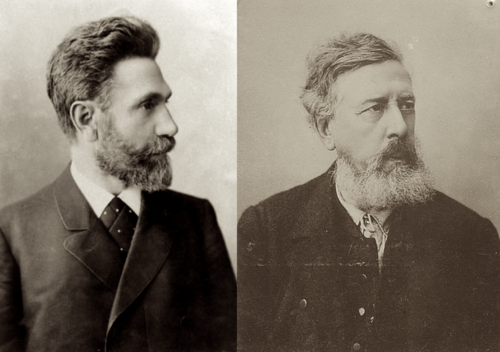
එයට ආසන්නයේම බෙබෙල්ට උපහාර දක්වමින් ලියොන් ට්‍රොට්ස්කි මෙසේ ලිවීය: “යුරෝපීය සමාජවාදයේ සමස්ත යුගයක්ම ගෙවී යමින් තිබේ.” බෙබෙල් “නැගෙමින් පවතින නව පන්තියේ මුරණ්ඩු සහ නොසැලෙන ව්‍යාපාරය මූර්තිමත් කළේය… මෙම දුර්වල හා මැලවී වී ගිය මහලු මිනිසා මුළුමනින්ම අධිෂ්ඨානයෙන් සාදන ලද, තනි ඉලක්කයක් කරා පුහුණු කරන ලද බවක් පෙනෙන්නට තිබුණි. ඔහුගේ චින්තනයේ, ඔහුගේ ප්‍රකාෂනයේ ව්‍යක්තභාවයේ සහ ඔහුගේ සාහිත්‍ය කෘති තුළ, එම ඉලක්කය කරා කෙලින්ම යොමු නොවූ බුද්ධිමය ශක්තියේ ක්ෂය වීමක් සඳහා ඔහු කිසි විටෙකත් ඉඩ නොදෙනු ඇත; ඔහු වාගාලංකාරයේ සතුරෙකු පමණක් නොව, ගර්විත සෞන්දර්යාත්මක හැඩදැමීමටද සම්පූර්ණයෙන්ම ආගන්තුක විය.  ඒ සමගම ඔහුගේ දේශපාලන ආත්මයේ ඉහළ සුන්දරත්වය ඒ තුළ ගැබ්ව තිබුණි. ඔහු තුළින්ම ඔහු පිළිබිඹු කලේ, තම නිදහස් පැය කිහිපය තුළ ඉගෙන ගන්නා, සෑම මිනිත්තුවක්ම අගය කරන සහ අත්‍යවශ්‍යම දේ ගිජු ලෙස ගිල ගන්නා පන්තියයි.” [ දේශපාලන පැතිකඩ: යුගයක් ගෙවී යයි (බෙබෙල්, ෂොරෙස්  සහ වයිලන්ට්), දෙසැම්බර් 1915-[Political Profiles: An Epoch Passes (Bebel, Jaurès and Vaillant), December 1915]

ට්‍රොට්ස්කි, බෙබෙල්ව පළමු ලෝක යුද්ධය ආසන්නයේ පැරිසියේ අවන්හලකදී ඝාතනය කරන ලද ප්‍රංශ සමාජවාදී ෂෝන් ෂොරෙස් (Jean Jaurés)  සමඟ සංසන්දනය කළේය. ෂොරෙස්- න්‍යායික පාණ්ඩිත්‍යය, කාව්‍යමය මනඃකල්පිතය සහ වංශාධිපති විලාසයෙන් සලකුණු වූ ලේඛන සහ දේශන පිලිබද ප්‍රංශ දර්ශනවාද මහාචාර්යවරයා සහ ජර්මානු හස්ත කර්මාන්තකරුවෙක් වීම නිසා ප්ලෙබියානු (plebean) ප්‍රජාතන්ත්‍රවාදයට සමාන න්‍යායික දෘෂ්ටියක් තිබූ – බෙබෙල් යන දෙදෙනාම වසර 100 කට පෙර යුද්ධය සමග අවසන් වූ ඓතිහාසික කාල පරිච්ඡේදය සංකේතවත් කළහ.

ට්‍රොට්ස්කි මෙසේ සඳහන් කළේය: “බෙබෙල් භෞතිකවාදියෙක්, ෂොරෙස් සාරසංග්‍රහවාදී විඥානවාදියෙක් (eclectic idealist), බෙබෙල් මාක්ස්වාදයේ මූලධර්මවල නොසැලෙන ආධාරකරුවෙක්, ෂොරෙස් ප්‍රතිසංස්කරණවාදියෙක්, අමාත්‍යවාදියෙක් යනාදී වශයෙන්. නමුත් දේශපාලනයේ මේ සියලු වෙනස්කම් තිබියදීත්, ඔවුන් ජර්මානු සහ ප්‍රංශ සංස්කෘතියේ ප්‍රිස්මය හරහා එකම ඓතිහාසික යුගයක් පිළිබිඹු කළහ. මෙය ජාත්‍යන්තර සබඳතාවල මෙන්ම දේශීය සබඳතාවල ද- සන්නද්ධ සාමයේ යුගය විය.”

මාක්ස් සහ එංගල්ස්ගේ සමීපතමයෙක් වූ ඔහුට වඩා අවුරුදු 14 ක් වයසින් වැඩි වූ විල්හෙල්ම් ලිබ්නෙක්ට් සමඟ සමීප සහයෝගයෙන්, ඕගස්ට් බෙබෙල් ජර්මානු කම්කරු පන්තිය පුබුදුවා හලේය. එතෙකුදු වුවත්, 1914 ව්‍යසනය වැළැක්වීමට ඔහුට නොහැකි විය.

බෙබෙල් විසින් අඩ සියවසකට අධික කාලයක් වෙහෙස නොබලා සිදු කරන ලද දැවැන්ත හා සාර්ථක දේශපාලන හා සංස්කෘතික අධ්‍යාපනික කටයුතුවල තීරණාත්මක පාඩම් රාශියක් අඩංගු වේ. ඒවායින් දෙකක් මෙහිදී සාකච්ඡා කෙරේ.

පළමුව, මාක්ස්වාදයේ ධජය යටතේ විප්ලවවාදී සමාජ ප්‍රජාතන්ත්‍රවාදීන් විසින් සාක්ෂාත් කරගත් දියුණුව, වැඩ කරන පුළුල් මහජනතාව ස්වාධීන දේශපාලන භූමිකාවක් ඉටු කිරීමට අසමත් බවටත්, “පහළින් එන ව්‍යාපාරයක්” අනිවාර්යයෙන්ම දක්ෂිණාංශික දිශාවකට වර්ධනය වන බවටත් පැතිර පවතින සංකල්ප ප්‍රතික්ෂේප කරයි. සුලු ධනේශ්වර බුද්ධිමතුන්ගේ නියෝජිතයින්, සියල්ලටත් වඩා ෆ්‍රැන්ක්ෆර්ට් ගුරුකුලය (හෝර්කයිමර්, ඇඩෝර්නෝ, මාර්කූස්, හබර්මාස් සහ වෙනත් අය-Horkheimer, Adorno, Marcuse, Habermas and others) සමඟ සම්බන්ධ  වූවන්, 1933 ව්‍යසනයෙන් වඩාත්ම අශුභවාදී පාඩම් උකහා ගත්හ. හිට්ලර්ගේ ජයග්‍රහණයට කම්කරු පන්තිය වගකිව යුතු බව ඔවුහු අවධාරනය කළහ.

ඇත්ත වශයෙන්ම, හිට්ලර්ගේ කේන්ද්‍රීය කර්තව්‍යය වූයේ සංවිධානාත්මක කම්කරු ව්‍යාපාරය සහ එය සටන් කළ ප්‍රජාතන්ත්‍රවාදී අයිතිවාසිකම් සහ සමාජ ජයග්‍රහණ විනාශ කිරීමයි. 1933 මාර්තු 24 වන දින සියලුම ධනේශ්වර පක්ෂ හිට්ලර්ට හදිසි බලතල ප්‍රදානය කරන නීති සම්පාදනයට පක්ෂව තීරණාත්මකව ඡන්දය දුන්නේ මේ නිසාය.

සමාජ ප්‍රජාතන්ත්‍රවාදීන්ගේ මාක්ස්වාදී නායකත්වය යටතේ කම්කරු පන්තිය විසින් ප්‍රජාතන්ත්‍රවාදී අයිතිවාසිකම් සහ සමාජ ජයග්‍රහණ සඳහා සටන් කළ බව ඓතිහාසික සත්‍යයකි. මේවාට සර්වජන ඡන්ද අයිතිය, නිදහස් පොදු අධ්‍යාපනය, පිරිමින්ගේ සහ කාන්තාවන්ගේ සමානාත්මතාවය, පැය අටේ වැඩ කරන දිනය සහ SPD හි වර්ධනය වන බලපෑම සහ නැගීම පිළිබඳ බියෙන් බිස්මාර්ක් විසින් හඳුන්වා දුන් අනිවාර්ය සමාජ රක්ෂණ වැඩසටහන් ඇතුළත් වේ.

බෙබෙල්ගේ එස්පීඩීය කම්කරු පන්තිය තුළ ගැබ් වූ දැවැන්ත ශක්තිය නිර්මාණාත්මක බලය සහ සංස්කෘතික විභවය හෙළිදරව් කළේය.

බෙබෙල් යටතේ එස්පීඩී පක්ෂයේ නැගීම, වෘත්තීය සමිති කම්කරු පන්තියේ ප්‍රධාන සංවිධාන බවට කරන ප්‍රකාශය ද විකණ්ඩනය කරයි. යථාර්ථය නම්  කම්කරු පන්තියේ නැගීම ආරම්භ වූයේ තමන්ගේම විප්ලවවාදී සමාජවාදී පක්ෂයක් සහිත දේශපාලන ව්‍යාපාරයක් ලෙස ය. වෘත්තීය සමිති පසුව මතුවී ඉක්මනින් සමාජවාදී ව්‍යාපාරයේ දක්ෂිණාංශය පිහිටුවා ගත්හ. ඔවුන් විප්ලවයේ දැඩි විරුද්ධවාදීන් වූ අතර, රෝසා ලක්සම්බර්ග්ට පහර දුන් අතර බෙබෙල්ගේ මරණයට පෙර වසරවලදී ඔහුව බ්ලැක්මේල් කළහ.

බෙබෙල්මත් කම්කරුවෙක් විය. ඔහු 1840 පෙබරවාරි මාසයේදී කොලෝන් හි දුප්පත් කනිෂ්ඨ ප්‍රෂියානු හමුදා නිලධාරියෙකුගේ පුතෙකු ලෙස උපත ලැබූ අතර, ඔහු වයස අවුරුදු අටේදී යුරෝපීය විප්ලවයන් අත්විඳින ලද්දේය. ඔහුගේ ස්වයං චරිතාපදානයේ දී, එම කාලය තුළදී ඔහු තම පළමු සංයුක්ත දේශපාලන පාඩම ලබා ගත් ආකාරය විස්තර කළේය. 1848-49 විප්ලවවාදී වසරවලදී, රයින්ලන්ඩ් කලාපයේ ජනරජවාදය (Republicanism) සඳහා පුළුල් සහයෝගයක් තිබුණි. [එක් අවස්ථාවක] තරුණ බෙබෙල් තවත් පන්තියේ මිතුරෙකු සමඟ පාසලේදී රාජාණ්ඩුවට පක්ෂව කතා කළ විට, ඔවුන්ට හොඳ ගුටි සංග්‍රහයක්  ලැබුනි. බෙබෙල් පසුව හාස්‍යජනක ලෙස සඳහන් කළ පරිදි එය පළමු “පන්ති ගුටිකෑම” විය.

ආධුනික ශිල්පියෙකු ලෙස ගත කළ කාලය තුළ ඔහු “කාර්මික අධ්‍යාපන සංගමයට” සම්බන්ධ වී දැඩි ස්වයං අධ්‍යාපනයක් ලබා ගත්තේය. 1863 දී ලයිප්සිග් හි ෆර්ඩිනන්ඩ් ලැසාල් (Ferdinand Lassalle) සාමාන්‍ය ජර්මානු කම්කරු සංගමය (General German Workers Association-ADAF) ආරම්භ කළ විට, බෙබෙල් තම දුරස්ථභාවය පවත්වා ගත්තේය. ලැසාල්ගේ විකේන්ද්‍රීය (eccentric) පෙනුම සහ ඒකාධිපති හැසිරීම නිසා ඔහු විකර්ෂනය වූ අතර ප්‍රතිගාමී ප්‍රෂියානු අගමැති ඔටෝ වොන්  බිස්මාර්ක් (Otto von Bismarck) වෙත ඔහුගේ ප්‍රවේශයන්ට දැඩි ලෙස විරුද්ධ විය.

ලසාල් සමඟ ගැටුමේදී, බෙබෙල් මාක්ස් සහ එංගල්ස්ගේ ලේඛන අධ්‍යයනය කළ අතර විල්හෙල්ම් ලිබ්නෙක්ට් සමග ඔහුගේ මිත්‍රත්වය ආරම්භ වූයේ ය. 1867 සරත් සෘතුවේ දී ඔහු ජර්මානු කම්කරු සංගම් සමිතියේ (Union of German Workers’ Associations) සභාපති ලෙස තේරී පත් වූ අතර, මාක්ස් විසින් සකස් කරන ලද ජාත්‍යන්තර කම්කරු සංගමයේ (International Workers Association) විධිවිදාන ඔහු ක්‍රියාත්මක කළේය. ඒවා ප්‍රකාශ කළේ, “කම්කරු පන්තියේ විමුක්තිය සඳහා කම්කරු පන්තිය තමන් විසින්ම සටන් කළ යුතුය” යනුවෙනි. මෙම පදනම මත, බෙබෙල් එතෙක් කම්කරු සංගම්වලට දැඩි ලෙස බලපෑම් කළ ධනේශ්වර ලිබරල්වාදයට එරෙහිව පැහැදිලි රේඛාවක් ඇඳීය.

වසර දෙකකට පසු, බෙබෙල් සහ ලිබ්නෙක්ට් 1869 අගෝස්තු මාසයේදී අයිසෙනාච් (Eisenach)  හිදී සමාජ ප්‍රජාතන්ත්‍රවාදී කම්කරු පක්ෂය (Social Democratic Workers Party-SDAP) ආරම්භ කළහ. බෙබෙල් විසින් රචිත පක්ෂ වැඩසටහන මාක්ස්වාදය දෙසට නැඹුරු වූ අතර, වෙනත් දේ අතර ධනේශ්වර නිෂ්පාදන ක්‍රමය අහෝසි කිරීම සඳහා කැඳවුම් කළේය. කෙසේ වෙතත්, “නිදහස් ජනතා රාජ්‍යයක් ස්ථාපිත කිරීම” සඳහා වූ ඉල්ලීම වැනි ලිබරල්වාදයේ බලපෑම තවමත් වැඩසටහන තුළ දක්නට ලැබේ.

Bebel lib
බෙබෙල්, විල්හෙල්ම් ලිබ්නෙක්ට්

ඊළඟ ගිම්හානයේදී, ඡන්දයට දින දෙකකට පෙර යුද්ධය ප්‍රකාශ කළ ප්‍රංශයට එරෙහිව සටන් කිරීම සඳහා ප්‍රෂියානු යුද ණය සම්බන්ධයෙන් උතුරු ජර්මානු රීච්ස්ටැග් හි පැවති ඡන්ද විමසීමකදී, ලිබ්නෙක්ට් සමඟ එක්ව ඡන්දය දීමෙන් වැළකී සිටීමෙන් පසු බෙබෙල් වෛරයේ රැල්ලකට මුහුණ දුන්නේය. 1871 මැයි මාසයේදී බෙබෙල් පැහැදිලිවම පැරිස් කොමියුනය ආරක්ෂා කළ විට කෝපය උත්සන්න විය.

පසුව බෙබෙල් සහ ලිබ්නෙක්ට් යන දෙදෙනාම රාජද්‍රෝහී ක්‍රියාවකට සූදානම් වීම සම්බන්ධයෙන් වරදකරුවන් වූ නමුත්, බොහෝ කම්කරුවන් විසින් ඔවුන්ගේ ස්ථාවරය සඳහා ඔවුන්ව ප්‍රශංසාවට ලක් කෙරුණි. 1872 ජූලි මාසයේදී  හියුබර්ටස්බර්ග් (Hubertusburg) බන්ධනාගාරයේ ඔහුගේ දඬුවම ආරම්භ කිරීමට බෙබෙල් දුම්රියෙන් එළියට ආ විට, දුම්රිය සේවකයින් රාජ්‍ය නායකයෙකුට ගරු කරන්නාක් මෙන් ඔහුට ආචාර කළහ.

බෙබෙල් තම සිරගත කාලය ඔහුගේ “කාන්තාව සහ සමාජවාදය” (Women and Socialism) නම් පොත ලිවීමට යොදා ගනිද්දි , ලසාල් සහ එස්ඩීඒපී අනුගාමිකයින් එකිනෙකාට සමීප විය. බෙබෙල් සිරෙන් නිදහස් වී මාසයකට පසු, එක්සත් කිරීමේ සම්මේලනය 1875 මැයි මාසයේදී ගෝතා හිදී පැවැත්විණි. මෙම සම්මේලනය සියල්ලටම වඩා මාක්ස් විසින් ගෝතා වැඩසටහනට (Gotha programme) කරන ලද තියුණු විවේචන සඳහා ප්‍රසිද්ධය.

එක්සත් වීමෙන් පසු, ජර්මනියේ සමාජවාදී කම්කරු පක්ෂය (SAPD) වේගයෙන් වර්ධනය වූ අතර, වසර 15 කට පසු එහි නම ජර්මනියේ සමාජ ප්‍රජාතන්ත්‍රවාදී පක්ෂය (SPD) ලෙස වෙනස් කළේය. එක්සත් වීමෙන් වසර තුනකට පසුවෙද්දීම, පක්ෂයට ප්‍රාදේශීය පුවත්පත් 47 ක් තිබූ අතර, එහි මධ්‍යම ආයතනය ලෙස Vorwärts (Forwards) පැවතිණි. එය රයික්ස්ටාග් (Reichstag) මැතිවරණවලදී සියයට 10 ක ඡන්ද ප්‍රතිශතයක් ලබා ගත් අතර, එය එක්සත් වීමට පෙර සංවිධාන දෙකෙහිම ඒකාබද්ධ එකතුවට සාපේක්ෂව සියයට 40 ක වැඩිවීමක් විය. බිස්මාර්ක් ඔහුගේ ප්‍රති-සමාජවාදී නීතියෙන් ප්‍රතිචාර දැක්වීය. පක්ෂයේ සියලුම සංවිධාන සහ පුවත්පත් තහනම් කරන ලදී, නමුත් පාර්ලිමේන්තු කන්ඩායම සහ එහි නියෝජිතයින්ගේ වැඩ නීති විරෝධී කිරීමට බිස්මාර්ක් දැරූ උත්සාහය අසාර්ථක විය.

නීති විරෝධීව සිටි වසරවලදී බෙබෙල් දේශපාලන කීර්තිය සහ න්‍යායික පැහැදිලිකම ලබා ගත්තේය. තියුණු කන්ඩායම් සටන් ඇති විය. මධ්‍යස්ථවාදීන් සහ රැඩිකල්වාදීන් පක්ෂයේ ප්‍රමුඛ ස්ථානය සඳහා අරගල කළහ. අවසානයේ රැඩිකල්වාදීන් ජයග්‍රහණය කළ අතර, එය සියල්ලටම වඩා බෙබෙල්ගේ උසස් උපායික හැකියාවන් සහ කීර්තිය නිසා විය. මෙම ජයග්‍රහණයට ප්‍රධාන හේතුව වූයේ බෙබෙල්ගේ කන්ඩායම අනන්‍ය වූ මාක්ස්වාදයේ වර්ධනය වෙමින් පැවති අධිකාරය යි. එංගල්ස්ගේ ඩූරිං විරෝධය (Anti-Dühring) ප්‍රකාශයට පත් කිරීම කම්කරු ව්‍යාපාරය තුළ සමාජවාදයේ අධිකාරී හඬ බවට මාක්ස්වාදය පත් කර තිබුණි.

බෙබෙල් සහ ඔහුගේ ආධාරකරුවන් මාක්ස්වාදී මූලධර්ම සහ විප්ලවවාදී ඉදිරිදර්ශනයක් පැහැදිලිව ඉදිරිපත් කරන තරමටම, කර්මාන්තශාලා තුළ එස්පීඩීයේ පැවැත්ම වැඩි වැඩියෙන් වර්ධනය විය. 1889 මහා වැඩ වර්ජන ව්‍යාපාරයේදී මෙය පැහැදිලිව දිස් විය. රුහර්හි පතල්වල වැඩ නතර කිරීම් ආරම්භ වූ අතර, පසුව ඉක්මනින් ආකන්, සාර්ලන්ඩ්, සැක්සනි සහ සයිලීසියාව (Ruhr, Aachen, the Saarland, Saxony and Silesia) දක්වා ව්‍යාප්ත විය. රුහර්හි පතල් කම්කරුවන් 97,000 ක් (ශ්‍රම බලකායෙන් සියයට 86 ක්) වැඩ වර්ජනයට එක් විය. සන්නද්ධ ගැටුම් ඇති වූ අතර සොල්දාදුවන් මැදිහත් වූ නමුත් වැඩ වර්ජන දිගටම වර්ධනය විය. 1890 අප්‍රේල් වන විට, වැඩ වර්ජන සංඛ්‍යාව 715 දක්වා ළඟා වූ අතර, ගොඩනැගිලි, රෙදිපිළි සහ ලෝහ කර්මාන්තවල මුළු කම්කරුවන් 289,000 ක් සහභාගී වූහ.

එම වසරේම රයික්ස්ටාග් මැතිවරණයේදී, එස්පීඩී පක්ෂය තම ඡන්ද මුළු ප්‍රමාණය සියයට 20 දක්වා දෙගුණ කළේය. සති කිහිපයකට පසු බිස්මාර්ක් ඉල්ලා අස් වූ අතර, එම වසරේ ඔක්තෝබර් මාසයේදී සමාජවාදී විරෝධී නීති අවලංගු කරන ලදී.

නීත්‍යානුකූල පක්ෂයක් ලෙස එස්පීඩී පක්ෂය ඊටත් වඩා වේගයෙන් වර්ධනය විය. 1890 දී සමාජවාද විරෝධී නීති අවසානයේ සිට 1914 දී පළමු ලෝක යුද්ධය පුපුරා යාම දක්වා වූ ශත  වර්ෂ කාලක කාල පරිච්ඡේදයක තුළ එය ජර්මනියේ විශාලතම පක්ෂය බවට පත්විය. නමුත් පක්ෂයට ලැබුණු ඡන්ද සංඛ්‍යාව කම්කරු ව්‍යාපාරය තුළ එහි බලපෑමේ පුළුල් බව හා ගැඹුර සම්පූර්ණයෙන්ම පැහැදිලි නොකරයි.

ඒ කාලයේ දී, එස්පීඩී පක්ෂය ඓතිහාසික වශයෙන් සුවිශේෂ සංසිද්ධියක් විය: මන්දයත්, එය පළමු සැබෑ මහජන කම්කරු පන්ති පක්ෂය විය. එය සමාජයේ සියලු ධනය නිර්මාණය කළ සහ පන්ති රහිත සමාජයක් ගොඩනැගීමට සමත් වන පන්තියක විචිත්‍ර අපේක්ෂාවන්, උද්යෝගය සහ නිර්මාණශීලිත්වය අවදි කළේය.

20 වන සියවස උදා වෙද්දී, කම්කරු පන්ති ජීවිතයේ සියලු අංශ එස්පීඩී ය විසින් සංවිධානය කරන ලදී. පහත සංඛ්‍යාලේඛන මගින් එස්පීඩී හි වර්ධනය හා බැඳුණු කම්කරු පන්තියේ සංස්කෘතික සංවර්ධනය නිරූපණය කෙරේ. 1900 සහ 1914 අතර බෙබෙල්ගේ පක්ෂය පුස්තකාල 1,100 ක් ආරම්භ කිරීමට සම්බන්ධ විය. මෙම පුස්තකාලවල වෙළුම් 80,000 කට අධික එකතුවක් තිබුණි. 1914 වන විට පක්ෂයේ වැටුප් ලේඛනයේ පුස්තකාලයාධිපතිවරුන් 365 ක් සිටියහ.

කෙසේ වෙතත්, එස්පීඩී හි වේගවත් නැගීම සහ දේශපාලන බලපෑම වැඩිවීම භයානක ප්‍රතිවිපාක ගෙන දුන්නේය. එය 1895 අර්ෆර්ට් වැඩසටහනේ (Erfurt Programme) දක්වා තිබූ එහි  විප්ලවවාදී ඉදිරිදර්ශනය සහ පක්ෂයේ එදිනෙදා කටයුතුවල නොවැළැක්විය හැකි ප්‍රතිසංස්කරණවාදී ස්වභාවය අතර ගැටුම තීව්‍ර කළේය.

පක්ෂයේ ප්‍රමුඛ න්‍යායාචාර්යවරයා ලෙස මතු වූ කාල් කෞට්ස්කි, “උපරිම සහ අවම වැඩසටහන් (maximum and minimum programmes)” යන ඔහුගේ සංකල්පය සමඟින් විප්ලවවාදී ඉලක්ක සහ පක්ෂයේ ප්‍රතිසංස්කරණවාදී ක්‍රියාකාරකම් අතර පරතරය පියවීමට උත්සාහ කළේය. පළමුවැන්න එස්පීඩීයේ ඓතිහාසික ඉලක්ක නියෝජනය කළ අතර දෙවැන්නෙහි පක්ෂයේ ප්‍රායෝගික ඉල්ලීම් අඩංගු විය. ඔහු තවමත් විප්ලවවාදී වැඩසටහන ආරක්ෂා කළ නමුත්, පක්ෂයේ භාවිතය (practice) ඒ වන විටත් “කළ හැකි දෙය (possibilism)” ලෙස හැඳින්වූ රාමුවට අවස්ථාවාදී අනුවර්තනයකින් සංලක්ෂිත විය.

පක්ෂය තුළ වර්ධනය වන අවස්ථාවාදය සහ වෘත්තීය සමිතිවල වැඩිවන බලපෑම සමඟ ඇති වූ අනතුර බෙබෙල් අවතක්සේරු කළේය. 1890 ගණන්වල මැද භාගය වන තෙක්, වෘත්තීය සමිතිවල වර්ධනය පක්ෂයට වඩා පසුගාමී වූ අතර එය වෘත්තීය සමිතිවලට දේශපාලන නායකත්වය සහ ද්‍රව්‍යමය සහයෝගය ලබා දුන්නේය. නමුත් 1895 දී ආරම්භ වූ සහ පළමුවන ලෝක යුද්ධය පුපුරා යන තෙක්ම පැවති ප්‍රධාන ආර්ථික උත්පාතයක් වෘත්තීය සමිතිවල දැවැන්ත ව්‍යාප්තියක් දිරිමත් කළ අතර, ඔවුන් සහ පක්ෂය අතර සම්බන්ධතාවය මූලික වශයෙන් වෙනස් කළේය. වෘත්තීය සමිති සැලකිය යුතු මූල්‍ය සම්පත් ලබා ගත් විට, ඔවුන් සමාජවාදී ව්‍යාපාරයට වඩ වඩාත් සතුරු විය.

මෙයට හේතුව ධනවාදය යටතේ වෘත්තීය සමිතිවල භූමිකාවයි. ඔවුන් කම්කරුවන් නියෝජනය කරන්නේ ඉතා නිශ්චිත ආර්ථික භූමිකාවක, එනම් ඔවුන්ගේ ශ්‍රම ශක්තිය (labour power) විකිණීම තුලයි. ධනේශ්වර ආර්ථික සබඳතා ඔවුන්ගේ පැවැත්මේ පදනම වන බැවින්, වෘත්තීය සමිතිවල මූලික ප්‍රවණතාවය වන්නේ පන්ති අරගලය මර්දනය කිරීම සහ සමාජවාදී ව්‍යාපාරයට එරෙහි වීමයි. රෝසා ලක්සම්බර්ග්ට බොහෝ වෘත්තීය සමිති සම්මේලනවලදී කතා කිරීම තහනම් කරන ලද්දේ මේ හේතුවෙනි.

වෘත්තීය සමිතිවල වර්ධනයට සමගාමීව අවස්ථාවාදයේ න්‍යායාචාර්යවරයා ලෙස එඩ්වඩ් බර්න්ස්ටයින් මතු විය. ජාතික රාමුව තුළ කම්කරුවන්ගේ ආදායම් ප්‍රතිශතයේ නිරන්තර වැඩිවීමක් ඒවාට සහතික කළ හැකි බව වෘත්තීය සමිති ඔප්පු කර ඇති බව ඔහු කියා සිටියේය. එබැවින්, පෙනෙන ආකාරයට කම්කරු පන්තිය දරිද්‍රතාවයට ඇද වැටීම පිළිබඳ මාක්ස්ගේ න්‍යාය ප්‍රතික්ෂේප කරනු ලැබ ඇත. කම්කරු පන්තියේ දිගුකාලීන අවශ්‍යතා සාක්ෂාත් කරගත හැකිවනු ඇත්තේ විප්ලවවාදී ඉදිරිදර්ශනයකින් නොව, වෘත්තීය සමිති විසින් සාක්ෂාත් කර ගන්නා ලද ප්‍රතිසංස්කරණ නිරන්තරයෙන් සමුච්චය කිරීමෙන් යන ස්ථාවරය බර්න්ස්ටයින් ආරක්ෂා කළේය.

බෙබෙල් පක්ෂයේ විප්ලවවාදී සහ අවස්ථාවාදී අංශ අතර වැඩෙන බෙදීම් සමනය කිරීමට සහ බෙදීමක් වැළැක්වීමට උත්සාහ කළේය. 1905 රුසියානු විප්ලවයෙන් පසුව, 1906 දී මැන්හයිම් හි පැවති පක්ෂ සම්මේලනයේ මහජන වැඩ වර්ජනය (mass strike) පිළිබඳ විවාදයෙන් පසු පක්ෂයෙන් වෙන් වන බවට විවෘතව තර්ජනය කරමින් වෘත්තීය සමිති බෙබෙල්ව හිර කිරීමට උත්සාහ කළේය. බෙබෙල් වෘත්තීය සමිති සමඟ රහසිගත ගිවිසුමකට එකඟ වූ අතර, එය ඊලග වසරවලදී සමිතිවල සහ පක්ෂය තුළ අවස්ථාවාදී ප්‍රවණතාවයේ බලපෑම ශක්තිමත් කළේය.

1914 දී එස්පීඩී නායකත්වය යුද වියදම් සඳහා ඡන්දය දුන් විට බිහිසුණු ප්‍රතිවිපාක පැහැදිලි විය. වසර හතරකට පසු, නොවැම්බර් විප්ලවය ලේ වැකි ලෙස මර්දනය කිරීමට සහ රෝසා ලක්සම්බර්ග් සහ කාල් ලිබ්නෙක්ට් ඝාතනය සංවිධානය කිරීමට ඔවුන් ෆ්‍රයිකෝප්ස් (Freikorps) හමුදා එක්රැස් කළහ.

ඔහුගේ ජීවිතයේ අවසාන වසරවලදී, අධිරාජ්‍යවාදී යුගයට මාරුවීමේදී මතුවූ විප්ලවවාදී අභියෝගවලට මුහුණ දීමට තරම් තත්වයක ඔගස්ට් බෙබෙල් තවදුරටත් සිටියේ නැත.

එස්පීඩීයේ ඛේදවාචකය ලියොන් ට්‍රොට්ස්කි තරම් සංක්ෂිප්තව හා දීප්තිමත් ලෙස කිසිවෙකු ගෙනහැර දැක්වූයේ නැත: “ජර්මානු නිර්ධන පංතියේ සංවිධානය අඛණ්ඩව වර්ධනය විය, අරමුදල් වැඩි විය, පුවත්පත්, නියෝජිතයින් සහ නාගරික මන්ත්‍රීවරුන් සංඛ්‍යාව අඛණ්ඩව ගුණ කරන ලදී. ඒ සමඟම ප්‍රතිගාමීත්වය එහි සියලුම ස්ථාවර සඳහා ස්ථිරව රදා පැවතුනි. ජර්මානු සමාජ ජීවිතයේ ධ්‍රැවීය බලවේග දෙක අතර ගැටුමේ නොවැළැක්විය හැකි බව ගලා ආවේ මෙතැනිනි. නමුත් මෙම ගැටුම දිගු කලක් තිස්සේ ඇති නොවූ අතර, සංවිධානයේ බලවේග සහ සම්පත් කෙතරම් ස්වයංක්‍රීයව වර්ධනය වූවාද යත්, එවැනි තත්වයකට හුරුවීමට මුළු පරම්පරාවකටම කාලය තිබුණි. එමෙන්ම, සෑම කෙනෙකුම තීරණාත්මක ගැටුමේ නොවැළැක්විය හැකි බව ගැන ලිව්වත්, කතා කළත් හෝ කියෙව්වත්- එකම මාර්ගයක් ඔස්සේ එකිනෙක දෙසට යන දුම්රිය දෙකක් අතර ගැටුමේ නොවැළැක්විය හැකි බව මෙන් – අවසානයේ ඔවුන් තුළම මෙම අනිවාර්යතාව  සංවේදනය කිරීමට ඔවුනට නොහැකි  විය. වයස්ගත බෙබෙල් අනෙක් බොහෝ දෙනෙකුගෙන් කැපී පෙනුනේ සිදුවීම් ඒවායේ පරිසමාප්තියට මාරාන්තික ලෙස හේතු වන බවට වූ නිශ්චිත හැගීමකින් ඔහු තම අවසාන කාලයේ ජීවත් වූ බැවිනි. ” [ඉහත කෘතිය]

ඕගස්ට් බෙබෙල් සහ කම්කරු පන්තියේ දේශපාලන පිබිදීම Read More »

Malaka

Bahuchithawadiya: The Social Crisis of Youth reduced to Pessimism and Caricature

By Sanjaya Jayasekera.

Malaka Dewapriya’s film Bahuchithawadiya (The Undecided) is an ambitious but ultimately disoriented work that attempts to offer a portrait of the youth adrift in post-civil-war urban Sri Lanka. The film takes the form of a character study, which according to Director’s own introduction, “presents a  reflection of the youth of this time, who are searching for easy ways to survive due to lack of job security and are immersed in the dream of escaping this country, using social media, smartphones, and iPhones to achieve their old dream, and making all connections their victims.” 

Bahuchithavadiya
Bahuchithawadiya. Image courtesy of film’s official facebook page.

The film has garnered attention for its experimental tone and portrayal of alienation among the impoverished unemployed – jobless or precariously employed and exploited in the gig economy – youth in Colombo. However, beneath its cinematic form, the film offers a bleak, superficial depiction of social decay and a disheartening and ultimately reactionary indictment of working-class and unemployed youth—not as victims of capitalism, but as the agents of their own moral downfall.

The protagonist, Sasitha (Kalana Gunasekara), is a delivery worker in Colombo, the industrial capital of the country. He is employed under precarious conditions by a miserly boss. With no prospects for economic or social mobility, Sasitha turns his attention to seducing women online—married, unmarried, older, younger—all in the hopes of securing a visa to a European country or gaining some financial benefit. His duplicity and exploitation of these women are portrayed not as unwilling and temporary predatory responses to a brutal economic system but as intrinsic and permanent features of his character. What emerges out of him is not a layered human being, but a cypher of cynicism and indecision. Herein lies one of the film’s most serious failings: the absence of any serious attempt to explain the portrayal of Sasitha’s behavior through the social forces and material conditions in which he lives.

Dewapriya has captured certain surface features of social life. The film presents a series of acidic behaviours—adultery, betrayal, cheating, exploitation, desperation—yet none are given sustained focus or examined in depth to reveal their underlying contradictions. As a result, the viewer is left with a collection of symptoms, rather than an understanding of the social reality that gives rise to them. This is not merely an aesthetic or artistic shortcoming, but a deeply ideological one. An artist does not simply replicate life; he is not a photographer. He bears the responsibility of discovering truth. By isolating Sasitha’s personal corruption from the real world that produces it and stands in contradiction to it, Bahuchithawadiya, despite its claims to realism, ultimately proves to be profoundly evasive and dishonest.

It is not enough to show that a character, representing “contemporary youth”, is indecisive, manipulative, and amoral. One must ask: why? What has shaped this poisonous character? What forces act upon him? Who is responsible for his life? Is his behaviour inevitable? Dewapriya seems uninterested in these questions. The result is a film that verges on character assassination. Sasitha is not portrayed as a victim of the capitalist system, nor as someone with even the faintest sense of resistance to its injustices. Instead, he appears as its willing accomplice—both seeking to benefit from its corruption and attempting, paradoxically, to escape its consequences. In the final analysis, he is shown not as someone shaped by a toxic social order, but as one of its architects. “The youth”, as we have known it, has ceased to be!

The viewer is invited to conclude that the crisis of contemporary youth lies in their own character: their indecision, their dishonesty, their lack of conviction. This is an old slander, repeated countless times by the middle class and its intellectual spokespersons, who recoil in fear at the sight of the impoverished, unemployed, and restless young. That this view should find cinematic expression in a country that in 2022 witnessed one of the most significant mass uprisings of youth in recent history is both telling and damning. Ultimately, the youth does not happen to find their class enemy. 

The film’s final scene shows Sasitha mechanically resuming his practice of seducing women online, without the slightest remorse—even after having been caught red-handed in his previous deceptions. This serves as a conclusive testament that the filmmaker is less concerned with exploring the real social and psychological dynamics shaping youth behavior, and more intent on confirming a middle-class ideology that views oppressed youth as inherently selfish, untrustworthy, incorrigible, and erratic.

The film’s central concept—”Bahuchithawadiya”—suggests a permanent, innate condition of moral and psychological ambiguity. This is entirely ahistorical and unscientific. The youth of Sri Lanka are indecisive not because they are naturally cynical or morally bankrupt. They are uncertain because their lives are uncertain: jobless, underpaid, precariously housed, exploited. The labor market offers no security. Political parties offer no hope. Trade unions have betrayed them. Their so-called indecision is not a failing; it is a symptom of a broader social crisis.

Indeed, the idea that Sri Lankan youth are fundamentally morally degraded is refuted by events themselves. In 2022, tens of thousands of young people took to the streets in an unprecedented mass uprising, protesting the unbearable cost of living, fuel shortages, authoritarian repression, and the corruption of the ruling political establishment. This movement did not emerge suddenly from a generation lost in nihilism, but from a population forced to resist and confront the consequences of decades of neoliberal policy and imperialist subjugation.

To assert, as the film does, that youth have no direction because, in the backdrop of a predatory economy,  they are inherently flawed, is to participate in a reactionary ideological project. Dewapriya offers the youth no future and no past. They are merely floating signifiers of decay, cynicism, and amorality. They are uninfluenced by any sense of resistance, struggle, solidarity, or political awakening. Even in Colombo, the epicenter of industry and protest, Sasitha never encounters a strike, a rally, or even a conversation that hints at collective resistance. There is not even a passing allusion to conscious class war measures–austerity, privatization, debt crises, or the militarization of public life following the end of the civil war—realities that are inescapable features of everyday life in the country. The working class —despite its overwhelming presence and historical importance—is nowhere to be found. Instead, we are shown a hermetically sealed world of urban apartments and transactional relationships, in which everyone is either a victimizer or a dupe.

Sasitha flicks through television channels airing religious sermons, astrology segments, and reality shows—programs ostensibly meant to shape the youth—but never news, politics, or protest. The enemy is distant, and the struggle is futile. This is no accident, but a deliberate artistic choice—one that lays bare the filmmaker’s class perspective.

Class struggle is the highest expression of both class resistance and solidarity—one that leaves no room for pettiness, selfishness, or moral cynicism. It imparts to working-class youth a profound sense of social responsibility, discipline, and empathy forged through collective struggle. To preserve the middle-class caricature of youth as aimless, self-serving, and unreliable, it becomes essential that they not be shown to be confrontated with class struggle. This is precisely the path the filmmaker has chosen: by omitting any encounter with collective resistance, the film ensures that its protagonist remains trapped within a framework that validates bourgeois prejudices rather than illuminating social truth.

Bahuchithawadiya shares a great deal with the postmodern cinema that has emerged internationally in recent decades—films that purport to critique society by depicting its filth and moral decay, but which in reality offer no understanding of why things are the way they are, and certainly no path forward. These are not works of art that cognize life in its fullness and movement—but snapshots of despair, stripped of causality and agency.

One would compare this to a film like Dharmasena Pathiraja’s Ahas Gauwa (1974), where the main character Wije is shaped by his encounters with the working class. That film ends not with resignation, but with the protagonist joining a trade union struggle, suggesting a transformation in consciousness. Or consider Boodee Keerthisena’s Mille Soya (2004), which, while also centered on the desire to migrate, does not present its characters as predators or cowards, but as desperate and conflicted individuals shaped by historical pressures. In these works, characters evolve, struggle, and relate to the social forces around them. They are alive in history. In today’s society, gripped by deep crisis, a heightened degree of class resistance is not only inevitable but increasingly evident.

Sasitha—so too his roommate—is not shown looking for work: he submits no job applications. He engages in no political talk at all. He has no interest in news. He speaks of migrating to Europe but takes no meaningful steps to do so. The film ends as it began: in stasis. This is not an artistic exploration of paralysis, but a refusal to engage with reality. Real young people in Sri Lanka today are not simply wallowing in nihilism. They are searching for work, forming relationships, joining protests, and trying to understand their place in a collapsing world. Dewapriya‘s Sasitha is not a representation of this generation; he is a libel against it.

Commenting on the depiction of unemployed youth in Take Me Somewhere Nice (2019), written and directed by Ena Sendijarević, David Walsh observes that the filmmaker “underestimates the extent to which the younger generation globally is still at sea, looking for a new orientation, for some stable, coherent political and moral reference point. Many young people, refugees or not, from the Balkans or not, are ‘in-between’ at present, disgusted by the existing set-up and not yet having found an alternative. This ‘in-between-ness’ is bound up with the ‘on-the-eve’ quality of the present moment.”

Walsh’s comment is equally applicable to Dewapriya and his approach in his film. Bahuchithawadiya captures the uncertainty of youth but fails to grasp the transitional, searching character of that uncertainty—its link to a broader historical moment in which masses of young people are questioning the existing order and beginning to look for alternatives.

Moreover, the film is an ideological fodder to the petty-bourgeois strata from which it emerges. It confirms their defeatist view that the poor and unemployed are to blame for their own fate, that they are lazy, treacherous, corrupt, and oversexed. It paints the working class not as the agent of social transformation, but as a cesspool of moral degradation. The youth are not portrayed sympathetically. In this way, the film serves the ideological needs of those who have no intention of challenging the status quo. This is the hallmark of postmodern pessimism—a worldview that substitutes irony for resistance and pathology for class analysis. 

There are moments in the film that suggest Dewapriya is not without talent. A number of his previous “radio stories” confirm that he is a promising artist. He has a feel for visual composition, a sensitivity to language, and a certain flair for portraying claustrophobic urban life. But these gifts are, at this stage, limited by a worldview shaped by the narrow horizons of a disoriented middle-class layer, a worldview that remains unable to grasp the full social and historical dynamics confronting the working class youth.

A work of art does not need to be optimistic, but it must be truthful. It must seek to reveal the underlying forces that shape human behavior. An artist should not only cognize life, but should attempt to partially lift the veil of future. When he is dissatisfied with today’s reality, he has to see it through the prism of an ideal “tomorrow” and “show man in his ideal”.

As A.K. Voronsky wrote: 

“The dream, yearning and longing for man drawn up to his full height has been and continues to be the foundation of the creative work of the best artists” (Art as the Cognition of Life, and the Contemporary World, 1923)

In this sense, art becomes a means of historical cognition. Bahuchithawadiya fails in this task. It is a film that flinches from the real struggles of our time and retreats into a cold, contemptuous portrait of human failure.

In the final analysis, Bahuchithawadiya is not a film about youth, but about the inability of a certain social layer to comprehend the youth—to see in them not just a mirror of society’s decay, but the potential for its renewal. That is the tragedy of this film. 

Bahuchithawadiya: The Social Crisis of Youth reduced to Pessimism and Caricature Read More »

malini

The Conscience of Sinhala Cinema: Malini Fonseka’s enduring Cinematic Legacy

By Sanjaya Wilson Jayasekera

We are posting here a brief obituary of Sri Lanka’s veteran actress Malini Fonseka, written by comrade Sanjaya Jayasekera and published on his personal website and social media on 25 May 2025. This articles was also published by the daily newspaper themorning.lk Here. Nearly six-decade of the cinematic career of actress Fonseka deserves a full and extended review.

malini
Malini Fonseka

The demise of actress Malini Fonseka on May 24, 2025, marks the end of a cinematic epoch. She is undoubtedly the “Queen of Sinhala Cinema,” as she has been often referred to by millions of her fans, aged and young. Nearly six-decade of her career was not a simple arc of celebrity, but a deep and continuous cinematic identification with the lives of ordinary people, especially women, under the weight of history, patriarchy, backwardness and class oppression. In a country where cinema often struggles between the tides of commercialism, populism, nationalism and repression, Fonseka remained a moral and aesthetic lodestar, truthfully imbuing her characters with emotion, quiet resistance, and tragic insight.

To merely describe Fonseka as a beloved actress is to evade the seriousness of her contribution. She was an artist of social consciousness—her performances bore the weight of Sri Lanka’s post-independence traumas, its unfulfilled democratic promises, and the contradictions of a backward capitalist society pressing in from every side.

In Lester James Peries’ Nidhanaya (1972), one of the greatest Sri Lankan films ever made, Fonseka plays the innocent, ill-fated woman preyed upon by a man whose wealth and obsession lead to murder. Her character is not merely a victim but a mirror held up to a crumbling feudal order. Fonseka conveys, through silence and subtle gestures, a person slowly awakening to the forces arrayed against her. Her sacrifice is not just personal—it is metaphorically the death of innocence in a society entrapped by its own past.

In Beddegama (1980), based on Leonard Woolf’s The Village in the Jungle, Fonseka as Punchi Menika inhabits a world of colonial exploitation and rural destitution. This is not melodrama but precise, economical realism. Fonseka does not “perform” poverty and female endurance—she lives it. Her face, increasingly lined by anxiety and despair, communicates the pain of a society ground down by injustice, hunger and disease, made worse by the cruelty of an indifferent state.

Equally remarkable is her performance in Dharmasena Pathiraja’s Bambaru Avith (1978). In this film, Fonseka delivers one of her most restrained yet potent performances of the role of a young lady in a coastal village caught in the maelstrom of social disintegration and the predatory arrival of urban outsiders. Fonseka’s portrayal is marked by an acute sensitivity to the class tensions simmering beneath the film’s surface. Her role is not simply a symbol of rural innocence but a deeply aware, emotionally complex figure who senses the destruction bearing down on her community. In a film that critiques both the romanticization of village life and the corrosive effects of capitalist intrusion, Fonseka embodies the silent tragedy of a society being commodified. With minimal dialogue and subtle expressions, she gracefully communicates despair, resignation, and the quiet resistance of a woman rooted in her world but unable to halt its unraveling.

Bambaru Avith
Bambaru Avith: Malini Fonseka with Vijaya Kumaratunga

In Akasa Kusum (2008), directed by Prasanna Vithanage, as Sandhya Rani, a faded film star confronting the ruins of her career and personal life, Fonseka embodies the alienation and disillusionment of an artist discarded by an industry that once idolized her, and without any social insurance. The film alludes to the stardom of Fonseka herself. Vithanage’s film, while ostensibly a character study, inadvertently exposes the broader social decay under capitalism, where cultural memory is short and individuals are reduced to commodities. Fonseka’s restrained yet deeply expressive performance underscores the tragedy of a woman whose labor and talent have been exploited, then abandoned—a microcosm of the artists’ precarious existence in a profit-driven system. The film’s critique of bleak nostalgia and the fleeting nature of fame resonates with the broader crisis of art under conditions where everything, including human creativity, is subordinated to the market. While Akasa Kusum does not explicitly engage with class struggle, Fonseka’s portrayal of Sandhya’s isolation and resilience speaks to the perseverance of ordinary people amid systemic indifference. 

Fonseka’s performances in a wide range of other films—including Eya Dan Loku Lamayek (1977), Siripala Saha Ranmenika (1978), Ektamge (1980) and Yasa Isuru (1982) —as well as in teledramas such as Pitagamkarayo (1997), are etched into the collective memory of Sri Lankan audiences. In each of these roles, she brought to life women shaped by their social conditions, investing them with dignity, emotional depth, and a quiet intensity that transcended the screen. Whether portraying the struggles of urban motherhood, the constraints of poverty, caste and patriarchy, or the conflicted desires of village life, the veteran actress was able to truthfully reveal the deeper realities of the society around her.

Like several other leading actors of her generation, Fonseka was a significant historical product of her time. By the 1970s, Bollywood’s musical and melodramatic cinema exerted a powerful influence over Sri Lankan audiences, who flocked to theaters largely drawn by star appeal. Sinhala cinema, still emerging as a serious artistic medium, had to contend with the commercial dominance of Indian films. Fonseka’s rise to stardom was not merely a matter of charishma; her compelling screen presence, combined with the emotional depth and authenticity she brought to nearly every role, enabled her to capture the imagination of a broad audience. In doing so, she played a crucial role in affirming the cultural legitimacy and artistic potential of Sinhala-language cinema, as part of the world cinema.

Fonseka’s popularity, unmatched for decades, was not simply built on glamour but on the deep compassion she earned. For the oppressed, she did not offer escapism; she offered recognition and fight. Her status as “queen” is a title she earned from the sincere presentation of the struggles of those who loved her. 

Her art reminds us of what cinema can be: a site of conscience, a record of the oppressed, and a spark of rebellion. She belongs to that rare tradition of film actors—like Smita Patil, Giulietta Masina, and Liv Ullmann—who made of their bodies and voices a battlefield of history.

In the later years of her life, Fonseka became associated with the bourgeois nationalist establishment, serving as a Member of Parliament from 2010 to 2015 under the government of then-President Mahinda Rajapaksa. While no political concessions can be made to her alignment with Sinhala nationalist politics, her profound contributions to cinema—rooted in social realism and the depiction of the oppressed—remain of enduring artistic and historical value. Her body of work deserves to be critically appreciated, drawn inspiration from and preserved as a significant part of both Sri Lankan and world cinema.

Malini Fonseka will be remembered not merely as a great actress, but as an artist of the oppressed masses. Her characters will continue to live, as all genuine art does, not only in memory but in the continuing struggles of those they represented.

The Conscience of Sinhala Cinema: Malini Fonseka’s enduring Cinematic Legacy Read More »

Chris

ක්‍රිස් හෙජස්ගේ “නව අඳුරු යුගය” පිළිබඳ  දිරිසුන් අශුභවාදය 

ඩේවිඩ් නෝර්ත් විසිනි. 

මෙම ලිපිය X හි මුලින් පළ කරන ලද ට්වීට් කොමෙන්ටුවක සංස්කරණය කරන ලද අනුවාදයකි. මෙහි පලවන්නේ ලෝක සමාජවාදී වෙබ් අඩවියේ (ලෝසවෙඅ) 2025 මැයි 20 දින ‘The demoralized pessimism of Chris Hedges’ “New Dark Age”’යන හිසින් පලවූ ඩේවිඩ් නෝර්ත් විසින් ලියන ලද ලිපියේ සිංහල පරිවර්තනය යි.   

Chris
Chris Hedges

පසුගිය වසරේ, ගාසා ජන සංහාරයට විරෝධය දැක්වීමේ මාර්ගයක් ලෙස ක්‍රිස් හෙජස් ගිනි තබා ගෙන සියදිවි නසා ගැනීම වෙනුවෙන් පෙනී සිටියේය. ඔහුගේ නවතම දිරිසුන් හෑල්ලේ දී, ඔහු ඊශ්‍රායල-සියොන්වාදී රාජ්‍යයේ සහ ධනවාදී අධිරාජ්‍යවාදයේ අපරාධ සඳහා සමස්ත මානව වර්ගයාටම දොස් පැවරයි. ගාසා තීරය, මානව ප්‍රගමණයේ හැකියාව පිළිබඳ කිසිදු විශ්වාසයක නිෂ්ඵලභාවය ඔප්පු කරන බව ඔහු ප්‍රකාශ කරයි.

මනුෂ්‍යත්වයේ බලාපොරොත්තු විරහිත තත්ත්වය පිළිබඳ ඔහුගේ අවධාරනයට සහාය දක්වමින්, හෙජස්ට අනුව ඔගස්ටේ බ්ලැන්කිගේ අශුභවාදී අදහස්, හේගල් සහ මාක්ස්ගේ අදහස්වලට ප්‍රතිවිරුද්ධව ඔහු ඉදිරිපත් කරයි.

හෙජස් මෙසේ ලියයි: “ඔහුගේ සමකාලීනයන් සියල්ලන් මෙන් නොව, 19 වන සියවසේ සමාජවාදී ලුවී-ඔගස්ටේ බ්ලැන්කි, ජෝර්ජ් විල්හෙල්ම් ෆ්‍රෙඩ්රික් හේගල් සහ කාල් මාක්ස්ගේ කේන්ද්‍රීය විශ්වාසය, එනම් මානව ඉතිහාසය සමානාත්මතාවය සහ උසස් සදාචාරය කරා යන රේඛීය ප්‍රගතියකි යන්න ප්‍රතික්ෂේප කළේය. ”

ඔහුගේ පෙර ලේඛනවල නිරන්තරයෙන් පැවතියාක් මෙන්, හෙජස් නැවත වරක් පෙන්නුම් කරන්නේ මාක්ස්වාදයේ දාර්ශනික පදනම් සහ ඉතිහාසය පිළිබඳ භෞතිකවාදී සංකල්පය පිළිබඳව තමාට කිසිවක් නොතේරෙන බවයි. හේගල් හෝ මාක්ස් යන දෙදෙනාම ඉතිහාසය පාරාදීසය දෙසට “රේඛීය ප්‍රගතියක්” සිදුවන බව ප්‍රකාශ කළේ නැත.

ප්‍රංශ විප්ලවයේ සංකීර්ණ හා ඛේදජනක ඉරණම දුටු හේගල් (1770-1831), ඉතිහාසය, “ජනතාවගේ සතුට, රාජ්‍යයන්ගේ ප්‍රඥාව සහ පුද්ගලයන්ගේ ගුණධර්ම ගොදුරු කර ගත් ඝාතක එලකයක්”  සේ සුපතල ලෙස විස්තර කළේය. මානව වර්ගයාගේ ඓතිහාසික වර්ධනය ප්‍රතිවිරෝධතා සහ ගැටුම් හරහා ඉදිරියට යන බව ඔහු විඥානවාදී ආකාරයකින් වුවද, පැහැදිලි කළේය.

මාක්ස් සහ එංගල්ස් සම්බන්ධයෙන් ගත් කල, ඔවුන් කොමියුනිස්ට් ප්‍රකාශනයේ (1847) පන්ති අරගලය “සමස්ත සමාජයේ විප්ලවීය ප්‍රතිසංවිධානයකට හෝ තරඟකාරී පන්තිවල පොදු විනාශයකට” හේතු වන බව ලිවීය. ඔවුන් කිසිදු ආකාරයක සරල නියතිවාදයක් ප්‍රතික්ෂේප කළහ. ධනේශ්වර ක්‍රමයේ ප්‍රතිවිරෝධතා සමාජවාදයේ වෛෂයික හැකියාව නිර්මාණය කරන බව මාක්ස් සහ එංගල්ස් පැහැදිලි කළහ. නමුත් එහි  එය සාක්ෂාත් කර ගැනීම සහ මානව වර්ගයාගේ ඉරණම අරගලය තුළ තීරණය වනු ඇත.

ඕගස්ට් බ්ලැන්කි [සමාජ] ප්‍රගතියේ හැකියාව ප්‍රතික්ෂේප නොකළ අතර ඔහුගේ මුළු ජීවිතයම විප්ලවයේ අරමුණ වෙනුවෙන් කැප කළේය. නමුත් මෙම ශ්‍රේෂ්ඨ සටන්කරුවාට විප්ලවයේ සමාජ ආර්ථික පදනම සහ කම්කරු පන්තියේ වෛෂයිකව විප්ලවවාදී භූමිකාව පිළිබඳ අවබෝධයක් නොතිබුණි. ධනවාදය පෙරලා දැමීම බ්ලැන්කි සංකල්පනය කළේ කුමන්ත්‍රණකරුවන් කුඩා කණ්ඩායමක් විසින් සංවිධානය කරන ලද කුමන්ත්‍රණයක ප්‍රතිඵලයක් ලෙසය.

1874 දී එංගල්ස් ලිවුවේ, බ්ලැන්කිට ‘සමාජවාදී න්‍යායක් හෝ සමාජ ප්‍රතිකර්ම සඳහා නිශ්චිත ප්‍රායෝගික යෝජනා නොමැත. ඔහුගේ දේශපාලන ක්‍රියාකාරකම් වලදී ඔහු මුඛ්‍ය වශයෙන් ‘ක්‍රියාකාරීත්වයේ මිනිසෙකු’ විය…” ලෙසයි. වසර තුනකට පෙර, 1871 දී, කම්කරු පන්තියේ මහජන ව්‍යාපාරයක් ලෙස විප්ලවය පිළිබඳ මාක්ස්වාදී සංකල්පය පැරිසියානු කම්කරු පන්තියේ නැගිටීම සහ කොමියුනය නිර්මාණය කිරීම මගින් සනාථ විය.

20 වන සියවසේ සියලුම ශ්‍රේෂ්ඨ මාක්ස්වාදීන් අනතුරු ඇඟවූයේ ධනවාදයේ අර්බුදය ප්‍රතිඵල දෙකෙන් එකකට මඟ පෑදූ බවයි. රෝසා ලක්සම්බර්ග් ප්‍රකාශ කළ පරිදි ඒවා “සමාජවාදය හෝ ම්ලේච්ඡත්වය” විය. ධනවාදී යුගයේ ස්වභාවය පිළිබඳ විද්‍යාත්මකව පදනම් වූ අවබෝධය, විප්ලවවාදී පක්ෂයේ තීරණාත්මක කාර්යභාරය පිළිබඳ ලෙනින්ගේ සංකල්පයට යටින් පැවතුනි.

1938 දී, ෆැසිස්ට්වාදයේ නැගීමටත්, ස්ටැලින්වාදයේ සහ සමාජ ප්‍රජාතන්ත්‍රවාදයේ පාවාදීම්වල ප්‍රතිවිපාකයක් ලෙස යුරෝපීය කම්කරු පන්තියේ පරාජයන්ටත් ප්‍රතිචාර දක්වමින්, ට්‍රොට්ස්කි හතරවන ජාත්‍යන්තරයේ ආරම්භක ලේඛනයේ මෙසේ ලිවීය: මානව වර්ගයාගේ අර්බුදය විප්ලවවාදී නායකත්වයේ අර්බුදයයි.

හෙජස් මෙසේ ලියයි: “සමූහ ඝාතන ව්‍යාපාර මගින් සියලු මිනිසුන් තුළ සැඟවී ඇති වනචාරී ගුණාංග මුදා හරිනු ලැබේ … එය අපගේ කුහකකම, කෲරත්වය සහ වර්ගවාදයට සාක්ෂියකි.” මෙය මනුෂ්‍යත්වයට එරෙහි අපහාසයකි. ජන සංහාරය සඳහා පොදුවේ මනුෂ්‍යත්වයට දොස් පැවරීම යනු ගාසා තීරයේ ජනතාවට එරෙහිව සිදු කරන ලද අපරාධ සඳහා අධිරාජ්‍යවාදී නායකයින්ගේ සහ ඔවුන් නියෝජනය කරන පද්ධතියේ නිශ්චිත වගකීම බොද කිරීමයි. ඔහුගේ දේශපාලනය කෙතරම් වැරදි වුවත්, ක්‍රිස් හෙජස් විසින් මත් සමූල ජන සංහාරය සඳහා කිසිදු වගකීමක් දරන්නේ නැත.  අඛණ්ඩව සිදු කෙරෙන  කුරිරුකම් වලින් යටපත් කර දැමුණු  ඔහු, දේශපාලනික වශයෙන් අලාමුලාවට පත් වූ මාධ්‍යවේදියෙකි. නමුත් නෙතන්යාහු සහ ඔහුගේ සහචරයින් සහ ඔවුන්ගේ අධිරාජ්‍යවාදී අනුබල දෙන්නන් සමූහ ඝාතකයින් වේ. මෙය සුළු පටු වෙනසක් නොවේ.

හෙජස් කියා සිටින්නේ මානව වර්ගයා “නව අඳුරු යුගයකට” පිවිසෙමින් සිටින බවත්, එයින් ගැලවීමක් නොමැති බවත්ය. යථාර්ථය නම්, මානව වර්ගයා විප්ලවවාදී අරගලයේ නව යුගයකට පිවිසෙමින් සිටී. අධිරාජ්‍යවාදයේ සහාය ලත් ගාසා සමූල  ජන සංහාරය ලොව පුරා මිලියන ගණන් සහභාගී වූ විරෝධතාවලට  මුහුණ දී  සිටී. අධිරාජ්‍යවාදයේ අපරාධ – ෆැසිස්ට්වාදය සහ යුද්ධය හරහා තම අර්බුදය විසඳීමට පාලක පන්තිය දරන මංමුලා සහගත උත්සාහය – ධනවාදයට එරෙහි මහජන ව්‍යාපාරයකට ගාමකත්වය සපයයි. මෙම යුගයේ ඓතිහාසික කර්තව්‍යය වන්නේ සමාජවාදී විප්ලවයේ ලෝක පක්ෂය ගොඩනැගීම මගින් විප්ලවවාදී නායකත්වයේ අර්බුදය විසඳීමයි.

මෙම සටනට සම්බන්ධ වීමට කැමති සියලු දෙනාම සමාජවාදී සමානතා පක්ෂයට  බැදෙන්න. 

ක්‍රිස් හෙජස්ගේ “නව අඳුරු යුගය” පිළිබඳ  දිරිසුන් අශුභවාදය  Read More »

David North

David North addresses working class at 2025 International Online May Day Rally

Fred- debt
The US federal debt [Photo: Federal Reserve Economic Database]

On Saturday, May 3, the International Committee of the Fourth International (ICFI) and the World Socialist Web Site (WSWS.org) held the annual International Online May Day Rally. The event took place at a critical juncture in international geopolitics, which determines life-and-death questions of the working class—who, in recent weeks and months, have demonstrated growing militancy in their struggles against the capitalist establishment. WSWS posted both the video and text of the opening speech delivered by WSWS International Editorial Board chairman David North today (May 05). We are reposting the video here and we invite the workers, youth, intellectuals and all those who want to defeat austerity,  fascism, dictatorship, genocide, war and social retrogression to seriously study this speech and the other speeches, and resolutely decide to join the international Trotskyist movement and build the ICFI as the only revolutionary leadership of the international working class to fight for world socialism. 


David North addresses working class at 2025 International Online May Day Rally Read More »

Scroll to Top