Militarism

LTTE අපරාධ සහ රාජ්‍ය යුද අපරාධ: අපගේ ආස්ථානය පිළිබඳ දේශපාලනික පැහැදිලි කිරීමක්

සංජය ජයසේකර විසිනි.

මෙම ලිපිය ඉංග්‍රීසි බසින් LTTE Crimes and State War Crimes: A Political Clarification on our Position යන සිරසින් 2025 සැප්තැම්බර් 5 දින theSocialist.lk හි පළ කෙරුණි. 

සහෝදරවරුනි, හිතවතුනි,

උතුරු-නැගෙනහිර යුද්ධයේදී දකුණේ සිංහල රාජ්‍යයේ මිලිටරිය කරපු අපරාධ පමණක් අපි මතු කරනවා, නමුත් එල්.ටී.ටී.ඊ. (LTTE) එකේ වෙන වෙනම අපරාධ වාර්තා කරන්නේ නැහැ කියමින්, ඒ හරහා අපි LTTE එකට සහනශීලී වෙනවා කියලා ව්‍යාජ චෝදනා කරන බොරු සදාචාරවාදීන්ට සහ සිංහල වර්ගවාදී ආස්ථානයන්ට විරුද්ධව අපි කෙටියෙන් මෙසේ පැහැදිලි කරන්න ඕනේ.

LTTE ය සාහසික යුද අපරාධ කළා කියලා අපි කවුරුත් දන්නවා. අපි කොහෙවත් ඒවා ප්‍රතික්ෂේප කරලා නැහැ. ඒ අපරාධ කරන්න හේතු වුණු ප්‍රතිගාමී දේශපාලන වැඩපිළිවෙළ වගේම දෘෂ්ටිවාදයත්, ඒ අපරාධත් ප්‍රතික්ෂේප නොකරන්න අපිට කිසිම හේතුවක් නැහැ — අපි කිසිදු දේශපාලනික දෙපිටිකාට්ටු කමකින් තොරව, සම්පූර්ණයෙන්ම හා දේශපාලන කොන්දේසියකින් තොරව ඒවා ප්‍රතික්ෂේප කරනවා. LTTE එක විසින් සිංහල සිවිල් වැසියන්ට එල්ල කළ බෝම්බ ප්‍රහාර, 1987 දී අරන්තලාවේදී බාල වයස්කාර භික්ෂූන් ඇතුලු භික්ෂූන් තිස්තුන් දෙනෙකු ඝාතනය කිරීම, 1990 දී උතුරු පළාතෙන් මුස්ලිම් වැසියන් හැත්තෑපන්දහසක් වාර්ගික සුද්ද කිරීම (ethnic cleansing), දේශපාලන ප්‍රතිවාදීන් සහ වෘත්තීය සමිති නායකයින් ඝාතනය කිරීම, දෙමළ ළමුන් ළමා සෙබළුන් ලෙස පැහැරගැනීම, සහ දෙමළ සමාජය තුළ වූ සෑම ස්වාධීන සමාජවාදී හා ප්‍රජාතන්ත්‍රවාදී ප්‍රවාහයක්ම ම්ලේච්ඡ ලෙස මර්දනය කිරීම — මේ සියල්ල කම්කරු පන්තියට එරෙහිව සිදු කළ දේශපාලන අපරාධ. අපි කිසිදු පැකිළීමකින් තොරව ඒ සියල්ල හෙළා දකිනවා.

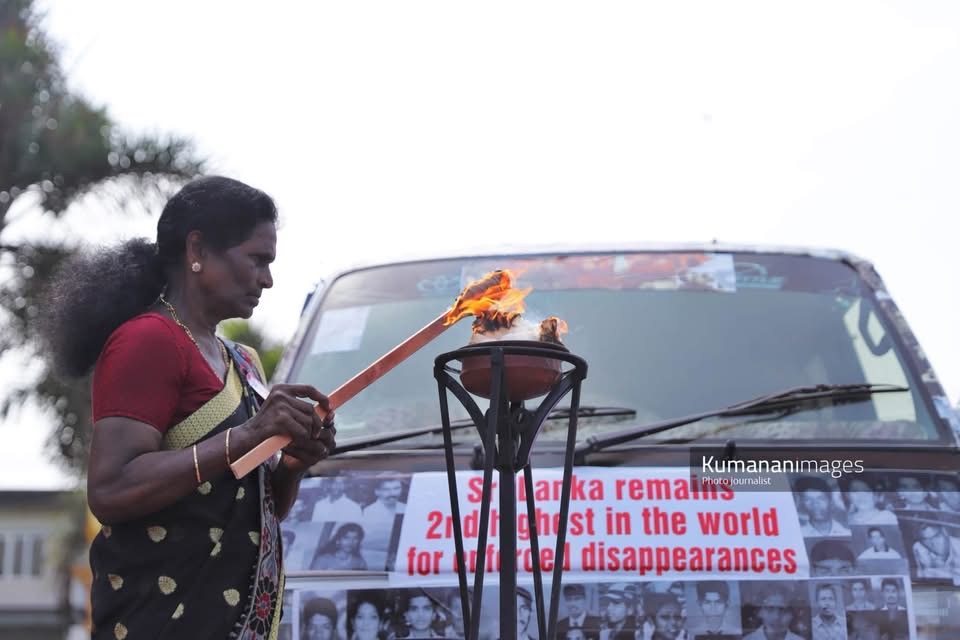
අතුරුදහන් වූවන්ගේ ජාත්‍යන්තර දිනය සලකුණු කරමින් පැවැත්වූ “යුක්තිය උදෙසා වූ දීර්ඝ මාවත” සම්මේලනයේ කොටසක් ලෙස, 2026 අගෝස්තු 30 වන දින යාපනයේදී පවත්වන ලද, උතුර සහ නැගෙනහිර අතුරුදහන් වූවන්ගේ ඥාතීන්ගේ සංගමය විසින් සංවිධානය කරන ලද විරෝධතා රැලියකදී විරෝධතාකරුවෙකු විසින් චාරිත්‍රානුකූල පහනක් දල්වනු ලබයි. ඡායාරූපය කුමරන් කනාගෙනි.

හැබැයි ඒ අපරාධ ලැයිස්තුගත කළාට විතරක් දේශපාලනිකව මොනවත් වෙන්නේ නැහැ. අපි දේශපාලන සංවිධානයක් — ශ්‍රී ලංකාවේ සහ දකුණු ආසියාවේ කම්කරු පන්තියේ සමාජවාදී පූර්වගාමී නායකත්වය ලෙස ගොඩනගන ට්‍රොට්ස්කිවාදී දේශපාලන නායකත්වයක් මිසක්, මානව හිමිකම් වාර්තා සකසන NGO එකක් නෙවෙයි. අපගේ කාර්යභාරය වන්නේ අපරාධකාර කණ්ඩායම් දෙකක් අතර සදාචාරාත්මක සමානතාවක් පෙන්වීම නෙවෙයි. අපගේ කාර්යභාරය වන්නේ මේ අපරාධවල පන්තිමය ස්වරූපය, ඒවායින් සේවය වුණේ කාටද, සහ කම්කරු පන්තිය ඊට ප්‍රතිචාර දැක්විය යුත්තේ කෙසේද යන්න කම්කරු පන්තියට පැහැදිලි කර දීමයි.

LTTE භීෂණය මූලෝපායක්, පිස්සුවක් නොවේ

LTTE එක මේ සියලු අපරාධ කළේ නිශ්චිත දේශපාලන වැඩපිළිවෙළක් වෙනුවෙන්: එනම් දෙමළ ජාතික බෙදුම්වාදය — එනම්, දෙමළ ධනපති පන්තියට සහ ජාත්‍යන්තර මූල්‍ය ප්‍රාග්ධනයට දෙමළ කම්කරු ශ්‍රමය සූරාකෑමට හැකි වෙනම අධිරාජ්‍යවාදී-ගැති ධනපති රාජ්‍යයක් පිහිටුවීම සඳහාය. මේ වැඩපිළිවෙළට තිබුණු ප්‍රධානම තර්ජනය ශ්‍රී ලංකා මිලිටරිය නෙවෙයි. ප්‍රධානම තර්ජනය වුණේ උතුරේ, නැගෙනහිර සහ කොළඹ ජීවත්වෙන දෙමළ කම්කරුවන් සහ පීඩිතයන්, පන්ති අරගලයේ පදනම මත ජාතික ප්‍රශ්නයට පොදු විසඳුමක් සොයාගැනීමට සිංහල කම්කරු පන්තිය සමඟ එකමුතු වීමේ හැකියාවයි. එකී එකමුතුව — එනම් සිංහල සහ දෙමළ කම්කරුවන් තමන්ගේ පොදු පන්ති සතුරාට එරෙහිව එකතු වීම — LTTE යට දේශපාලනිකව දරාගත නොහැකි වූ එකම වර්ධනය වුණා. 

ඒ නිසා LTTE ය ක්‍රමානුකූලව කටයුතු කළේ එය වැළැක්වීමටයි. භේද කිරීම යනු ඔවුන්ගේ දේශපාලන ඔක්සිජන් වුණා. දෙමළ සහ සිංහල ජනතාව අතර බද්ධ වෛරයක් වැපිරීම ඔවුන්ගේ මූලෝපායේ අතුරු ඵලයක් නෙවෙයි — එය එහි මූලිකම කොටස වුණා. LTTE එක කවමදාවත් සිංහල කම්කරුවන්ට පන්තිමය ආමන්ත්‍රණයක් නොකළේ මෙන්න මේ නිසයි. සිංහල ජාතිය තමන්ගේ සතුරා ලෙස අර්ථ දක්වන වාර්ගික ජාතිකවාදී සංවිධානයකට ව්‍යූහාත්මකවම එබඳු ආමන්ත්‍රණයක් කරන්න බැහැ. ඒ වෙනුවට ඔවුන් කළේ සිංහල ජනතාව භීතියට පත් කිරීමයි: කොළඹ ජනාකීර්ණ වීදි සහ දුම්රිය ස්ථානවල බෝම්බ ප්‍රහාර එල්ල කිරීම, මායිම් ගම්මානවල සිටි සිංහල සහ මුස්ලිම් ගොවි ජනතාව සමූලඝාතනය කිරීම, සහ සිංහල බෞද්ධ සංස්කෘතියේ මුදුන් මල්කඩ ලෙස සැලකෙන දළදා මාලිගාවට ප්‍රහාර එල්ල කිරීම සිදු කළා. බෙදුම්වාදී ව්‍යාපාරයක් ලෙස, වාර්ගික සුද්ද කිරීම හරහා තමන් හිමිකම් කී ප්‍රදේශ ජනගහන පදනමෙන් තහවුරු කරගැනීමටත් ඔවුන් මේ ප්‍රහාර එල්ල කළා.

මේවා උමතු ක්‍රියා හෝ සරල පළිගැනීමේ ක්‍රියාවන් නෙවෙයි. ඒවා වාර්ගිකවාදී භීෂණය මගින් තමන්ගේ බෙදුම්වාදී වැඩපිළිවෙළට සේවයක් වන බව ඉතා දැඩි ලෙස තේරුම් ගත් නායකත්වයක් විසින් ගත් ගණන් බලන ලද (calculated) දේශපාලන තීන්දුයි. කොළඹ මගී දුම්රියක පිපිරුණු සෑම බෝම්බයක්ම, යුද්ධයම ප්‍රශ්න ගත කිරීමට ඉඩ තිබූ සිංහල කම්කරුවන්ව නැවතත් පාලක පන්තියේ විලංගුවට තල්ලු කළා. මායිම් ගම්මානවල සිදු වූ සෑම සමූලඝාතනයක්ම, සිංහල ගොවියන්ට තමන්ගේ දෙමළ අසල්වැසියන්ව “කොටියෙකු” හෝ “ත්‍රස්තවාදියෙකු” ලෙස මිස වෙන යම් ආකාරයකින් දැකීම දේශපාලනිකව කළ නොහැකි තත්ත්වයට පත් කළා. මේක හිතාමතාම, මූලෝපායිකව වෛරය නිෂ්පාදනය කිරීමක් වුණා — එනම් පන්ති දේශපාලනය වෙනුවට වාර්ගික භීෂණයත්, කම්කරු පන්තික එකමුතුව වෙනුවට වාර්ගිකවාදී භේදයත් ආදේශ කිරීමයි.

දේශපාලන සහජීවනයක්: එල්ටීටීඊය සහ දකුණේ පාලක පන්තිය

අනෙක් අතට සිංහල-දෙමළ විතැන්වීම (alienation) උත්සන්න කිරීම තමයි දකුණේ පාලක පන්තියටත් හරියටම ඕන කළේ — මාක්ස්වාදී විශ්ලේෂණයකින් පමණක් පැහැදිලිව පෙනෙන තීරණාත්මක දේශපාලන කාරණය වන්නේ මෙයයි. ඇත්තටම ගත්තොත්, LTTE එක මේ අපරාධ සිදු කිරීමම තමයි දකුණේ පාලක පන්තියට අවශ්‍ය වෙලා තිබුණේ.

1948 ඊනියා නිදහසෙන් පස්සේ, පාලක ආණ්ඩු විසින් ගෙනගිය දේශපාලන වැඩපිළිවෙළ සකස් වුණේ කම්කරු හා පීඩිත ජනතාවගේ එකමුතුවට එරෙහිව ක්‍රමානුකූලව යොදවන ලද දෙමළ හා මුස්ලිම් විරෝධී ස්වෝත්තමවාදය (chauvinism) මතයි. 1948 පුරවැසි පනත මගින් වතුකරයේ දෙමළ ජනතාව ලක්ෂ දහයකගේ ඡන්ද අයිතිය අහෝසි කළා. 1956 රාජ්‍ය භාෂා පනත මගින් දෙමළ ජාතික පීඩනය ආයතනගත කළා. 1972 ආණ්ඩුක්‍රම ව්‍යවස්ථාව මගින් බෞද්ධ ආධිපත්‍යයවාදය (supremacism) තහවුරු කළා. සිංහල කම්කරු පන්තිය තමන්ගේ විප්ලවීය විභවය පෙන්නුම් කළ අවස්ථාවේදී — එනම්, සියලු  වාර්ගිකත්වවල කම්කරුවන් එකතු කර එක්සත් ජාතික පක්ෂ ආණ්ඩුව දණගැස්වූ 1953 හර්තාලයේදී — පාලක පන්තිය ශ්‍රී ලංකා නිදහස් පක්ෂය ගොඩනැගුවේ ඒ එකමුතුව නැවත ඇතිවීම වැළැක්වීමේ සිංහල ස්වෝත්තමවාදී පදනම මතයි. 1980 දී සාධාරණ වේතන ඉල්ලා රාජ්‍ය අංශයේ කම්කරුවන් ශ්‍රී ලංකා ඉතිහාසයේ විශාලතම මහ වැඩවර්ජනය දියත් කළ විට, ජයවර්ධන ආණ්ඩුව කම්කරුවන් ලක්ෂයක් රැකියාවලින් දොට්ට දමා, දෙමළ කොළඹ ගිනිබත් කරමින් පූර්ණ පරිමාණ සිවිල් යුද්ධයක් ආරම්භ කළ 1983 කළු ජූලි වාර්ගික හිංසන (pogrom) සංවිධානය කළා.

ශ්‍රී ලංකාවේ ධනපතියෝ මේ “බෙදා පාලනය කිරීමේ” මූලධර්මය ඉගෙනගත්තේ බ්‍රිතාන්‍ය අධිරාජ්‍යවාදීන්ගෙන් — ඉන්දියාව බෙදා වෙන්කිරීමේ ඛේදවාචකයේ පාඩම මගින් පෙන්නුම් කළේ ඒකයි — ඔවුන් එය ඉතා විනාශකාරී ලෙස එක දිගටම භාවිත කළා. LTTE එක සිදු කළේත් මේ දේශපාලන ක්‍රමවේදයම එහි ඉතාම ම්ලේච්ඡ ස්වරූපයෙන් ක්‍රියාත්මක කිරීමයි. උපායමාර්ගිකව, සිංහල කම්කරුවන් හා ගොවියන් භීතියට පත් කරමින් සෑම දෙමළ මනුස්සයෙකුම “කොටියෙකු” ලෙස දැකීමට සැලැස්වීමෙන්, ඔවුන් දෙමළ තරුණයන්ව බෙදුම්වාදී දේශපාලන ආවෘත අන්තයක  සිරකර, සිංහල පන්ති මිතුරන්ගෙන් ඔවුන්ව වෙන් කර, ඔවුන්ගේ කෝපය හා කැපකිරීම එහි මිලිටරි අනුකණ්ඩ වලට බලහත්කාරයෙන් යොදාගත්තා. මූලෝපායිකව, කම්කරු පන්තික එකමුතුව මර්දනය කිරීමට, මිලිටරි අයවැය සාධාරණීකරණය කිරීමට, යුද විරෝධය නිහඬ කිරීමට සහ යුද්ධය විවේචනය කරන සෑම කෙනෙකුම ත්‍රස්තවාදී හිතවාදියෙකු ලෙස හංවඩු ගැසීමට දකුණේ පාලක පන්තියට අවශ්‍ය වූ වාර්ගික ධ්‍රැවීකරණය LTTE එක විසින් ලබාදුන්නා.

අදටත් මේ වාර්ගික විතැන්කිරීම ඉදිරියට අරගෙන යන, සිංහල ස්වෝත්තමවාදී සමාජ මාධ්‍ය තුළ දෙමළ මුල්ලිවයික්කාල් සැමරුම්වලට එරෙහිව වෛරය පතුරුවන, “රණවිරු” මිථ්‍යාව උත්කර්ෂයට නංවන තරුණයෝ සහ කම්කරුවෝ කියන්නේ LTTE එකේත් දකුණේ පාලක පන්තියේත් මේ තුච්ඡ දේශපාලනයේ ගොදුරුයි. LTTE එකේ ත්‍රස්තවාදය සහ පාලක පන්තියේ ස්වෝත්තමවාදය කියන්නේ එකිනෙකට විරුද්ධ බලවේග නෙවෙයි. ඒවා එකිනෙකා මත යැපුණු දේශපාලන සහජීවනයක් (symbiosis) වුණා වගේම, දෙපාර්ශවයේම කම්කරු ජනතාව බිලිදෙමින් එක් පාර්ෂවයක් විසින් ඔවුන්ගේ ජනතාව තම ග්‍රහණයට ගැනීම සඳහා අනෙක් පාර්ෂවය උදව් වුණා. මේ ගතිකයන් සියල්ල පැහැදිලිව පෙනෙන්නේ මාක්ස්වාදී විශ්ලේෂණයක් ඇතුළේ විතරයි.

සැබවින්ම LTTE එකේ මේ බෙදුම්වාදී දේශපාලනයේ කොටසක් වුණේ එහි භීෂණය හරහා සිංහල ජනතාව දෙමළ ජනතාවගෙන් බිඳවීම සහ ඒ හරහා සිංහල ස්වෝත්තමවාදය පෝෂණය කිරීමයි. අද දක්වා දෙමළ ජනතාවට එරෙහිව මේ සිංහල ස්වෝත්තමවාදය ඉදිරියට ගෙනියන අය කරන්නේ දකුණේ ධනපති පන්තියත්, LTTE එකත් එක්ව පූර්ණත්වයට පත් කළ දේශපාලන මූලෝපාය ඉදිරියට ගෙනයෑමයි. මේ නිශ්චිත ඓතිහාසික අර්ථයෙන් ගත්තොත්, LTTE යේ දේශපාලන පීතෲත්වය හිමි වන්නේ කොළඹ පාලක පන්තියටයි — 1980 මහ වැඩවර්ජනයට සහ සිංහල-දෙමළ කම්කරු පන්තික එකමුතුවේ තර්ජනයට පිළිතුරු ලෙස වර්ගවාදී යුද්ධයක් නිර්මාණය කළ පාලක පන්තියක දුෂ්ට ඵලයක් තමයි LTTE එක.

වගවීම මගින් අපරාධකරුවන් ආරක්ෂා කළ රාජ්‍යය හෙළිදරව් කරයි

දැන්, අපි පැහැදිලිව කියනවා: ඔය අපරාධවලට වගකිව යුතු LTTE නායකත්වයක් ජීවතුන් අතර ඉන්නවා නම් ඔවුන්ව වගවීමට ලක් කරන්න ඕනේ. මෙතැනදී දැනට පවතින ඇත්ත තත්ත්වය මොකක්ද කියලා අපි නිශ්චිතව තේරුම් ගන්න අවශ්‍යයි.

LTTE එකේ ඉහළම දේශපාලන සහ මිලිටරි නායකත්වය — ප්‍රභාකරන්, සූසෙයි, චාල්ස්, බාලසිංහම් සහ අනෙකුත් අය — 2009 දී හෝ ඊට පෙර මියගොස් අවසන්. හැබැයි ඊට වගකිව යුතු සියලුදෙනාම මියගොස් නැහැ. කරුණා අම්මාන් (විනයාගමූර්ති මුරලිදරන්) — නැගෙනහිර පළාතේ LTTE බලඇණි මෙහෙයවූ අතර, අරන්තලාව සංහාරය ඇතුළු එහි සිදු වූ අපරාධවල අණදීමේ වගකීම දරනවා. 2004 දී සංවිධානයෙන් වෙන් වීමෙන් පසු, ශ්‍රී ලංකා මිලිටරි බුද්ධි අංශයේ ආරක්ෂාව යටතේ LTTE විරෝධී පැරාමිලිටරි නායකයෙකු ලෙස කටයුතු කළ පිල්ලෙයාන් — සිවනේසතුරෙයි චන්ද්‍රකාන්තන් — ළමා සෙබළුන් පැහැරගැනීම් සහ දේශපාලන ඝාතන සම්බන්ධයෙන් වගකිව යුතු ආණ්ඩු හිතවාදී පැරාමිලිටරි බලඇණිවලට නායකත්වය දුන්නා. කේ.පී. (කුමරන් පත්මනාදන්) — LTTE එකේ ආයුධ මිලදී ගැනීම් සහ ජාත්‍යන්තර ජාලයන් මෙහෙයවූවා. මේ තිදෙනාම අද ජීවතුන් අතර ඉන්නවා.

සමස්ත පද්ධතියේම තීරණාත්මක හෙළිදරව්ව තියෙන්නේ මෙන්න මෙතැනයි: අපි LTTE එකේ අපරාධ ගැනත් කතා කරන්න ඕනේ කියලා බලකරන දකුණේ සිංහල ස්වෝත්තමවාදී රාජ්‍යය කියන්නේ, කරුණා අම්මාන්ට රාජ්‍යතාන්ත්‍රික ගමන් බලපත්‍ර ලබාදුන්, පිල්ලෙයාන්ව නැගෙනහිර පළාත් මහ ඇමති ලෙස පත්කළ, සහ අරන්තලාව ඇතුළු ඔවුන් කළ අපරාධවලින් ඔවුන්ව ආරක්ෂා කරමින් තමන්ගේම දේශපාලන යාන්ත්‍රණයට මොවුන්ව එකතු කරගත් රාජ්‍යයමයි. ඒ නිසා LTTE එකේ යුද අපරාධ ගැන කෙරෙන ඕනෑම සැබෑ පරීක්ෂණයකින් කරුණා සහ පිල්ලෙයාන් ආරක්ෂා කිරීමට රාජ්‍යයේ ඇති අපරාධකාරී සම්බන්ධය විතරක් නෙවෙයි හෙළිවෙන්නේ — 1983 කළු ජූලිය සහ දශක ගණනාවක ක්‍රමානුකූල දෙමළ විරෝධී මර්දනය හරහා LTTE එක නිර්මාණය කිරීමේ රාජ්‍යයේ දේශපාලන වගකීමත්, මුල්ලිවයික්කාල්, චෙම්මනි, මන්නාරම සහ වසර තිහක මිලිටරි පාලනය පුරා රාජ්‍යය විසින්ම සිදු කළ සෘජු යුද අපරාධත් එළියට එනවා. දකුණේ රාජ්‍යය ඊට සූදානම් නැහැ. කොළඹ පාලක පන්තිය විසින් එබඳු කිසිදු පරීක්ෂණයකට කිසිදිනක ඉඩ නොදෙන්නේත්, පාර්ශව දෙකේම අපරාධවල සත්‍යය එකවිට යටගසන්නේත් මෙන්න මේ නිසයි.

සදාචාරයේ ගිණුම් පොත නොව, දේශපාලන ප්‍රශ්නයයි වැදගත්

දකුණේ රාජ්‍යය කියන්නේ දේශපාලනික හා මර්දනකාරී ආයතනයක් මිසක්, අපරාධ කළ පුද්ගලයන් කිහිපදෙනෙකුගේ එකතුවක් විතරක් නෙවෙයි. සමූලඝාතන, අතුරුදහන් කිරීම්, චෙම්මනි සමූහ මිනීවලවල් — මේවා අහම්බෙන් සිදු වූ බලය ඉක්මවා යාම් නෙවෙයි. ඒවා ධනපති ක්‍රමය ආරක්ෂා කිරීම සඳහා යොදවන ලද රාජ්‍ය භීෂණයේ ව්‍යූහාත්මක ක්‍රියාත්මක කිරීම්. ඒ රාජ්‍යය අදටත් හෙටටත් මේ අපරාධ නැවත කිරීමට සූදානමින් ඉන්නවා — දෙමළ ජනතාවට එරෙහිව විතරක් නෙවෙයි, IMF කප්පාදු ක්‍රියාත්මක කරමින්, වැඩවර්ජන තහනම් කරමින්, ඊට එරෙහි වන කම්කරුවන්ට එරෙහිව මිලිටරිය යෙදවීමට ලෑස්ති වෙමින්, සමස්ත සිංහල, දෙමළ හා මුස්ලිම් කම්කරු පන්තියටම එරෙහිව ඔවුන් එය කරන්න සූදානම්. 

ඒ නිසා අපිට වැදගත් වෙන්නේ “පාර්ශව දෙකම සදාචාරාත්මකව වැරදියි” කියලා පෙන්වන්න අපරාධ ලැයිස්තු පෙළගස්වන එක නෙවෙයි. වඩාත්ම වැදගත් වෙන්නේ සදාචාරාත්මක ප්‍රශ්නය නෙවෙයි, දේශපාලන ප්‍රශ්නයයි. සදාචාරාත්මකව බැලුවොත් මේ සියලු අපරාධ, අපරාධම තමයි — අපි ඒ සියල්ල හෙළා දකිනවා. නමුත් දේශපාලනික වගවීම අතිමූලිකවම පැවරෙන්නේ දකුණේ සිංහල ස්වෝත්තමවාදී ධනපති රාජ්‍යයටයි. ඒක තමයි අනවරතව පවතින ආයතනය. ඒක තමයි සන්නද්ධ යාන්ත්‍රණය. තමන්ගේ අපරාධකරුවන් ආරක්ෂා කරමින්, අදටත් කම්කරු පන්තියට තර්ජනය කරමින් ආරක්ෂිතව පවතින පන්ති සතුරා වන්නේ එයයි.

දකුණේ කිසිදු සංස්ථාපිත මාධ්‍යයක් “රණවිරුවන්” උත්කර්ෂයට නැංවීමෙන් ඔබ්බට යන්නේ නැහැ. උතුරේ සහ නැගෙනහිර යුද්ධයේදී රාජ්‍ය හමුදා කළ අපරාධ සම්බන්ධයෙන් දකුණේ සියලු මාධ්‍යයන් නිහඬතාවක් රකිනවා. දේශපාලන පිරිවැයක් දරමින් ම මේ සත්‍යය හෙළිදරව් කරන ඉතා සුළු පිරිස අතර අපි ඉන්නවා — රාජ්‍යයෙන් වගේම LTTE එකෙන් අපේ ව්‍යාපාරයට සිදු වූ පීඩාවල ඉතිහාසය මගින් ඒක ඔප්පු වෙනවා. විප්ලවවාදී කොමියුනිස්ට් සංගමයේ (RCL) සාමාජිකයන් තිදෙනෙකු ජේවීපී (JVP) එක විසින් ඝාතනය කළා. සමාජවාදී සමානතා පක්ෂයේ (SEP) සාමාජිකයන් පස්දෙනෙකු LTTE එකෙන්ම පැහැරගනු ලැබුවා. අපි කවදාවත් ඒ දෙගොල්ලන්ටම යටත් වුණේ නැහැ.

එබැවින්, අපේ “ස්වාධීනත්වය” මැනීමේ පරීක්ෂණයක් ලෙස LTTE අපරාධ ගැන ලියන්න කියලා අපිට අභියෝග කරන සිංහල ස්වෝත්තමවාදීන්ට අපි මෙසේ කියනවා: උතුරේ සහ නැගෙනහිරදී දකුණේ සිංහල ආණ්ඩුවේ හමුදාව යුද අපරාධ කළ බව පිළිගන්න. 2009 සිට පත් වූ සෑම ආණ්ඩුවකටම සහ දකුණේ ප්‍රධාන මාධ්‍යවලට ඒ අපරාධ එකින් එක හෙළිදරව් කරන්න කියලා බල කරන්න. අරන්තලාව සමූල ඝාතනය සම්බන්ධයෙන් ඔබේම ආණ්ඩුව විසින් වැළැක්වූ නඩු කරුණාට එරෙහිව පවරන්න කියලා බල කරන්න. හැබැයි අපි ඔබට කියනවා: දැනුවත්ව හෝ නොදැනුවත්ව ඔබ සේවය කරන පාලක පන්තියටවත්, ඔබටවත් කිසිසේත්ම ඒක කරන්න බැහැ. මොකද එහෙම කළොත් ඔබ ආරක්ෂා කරන මුළු පද්ධතියම හෙළිදරව් වෙන නිසයි.

දකුණේ රාජ්‍යයේ අපරාධ මතු කළා කියලා LTTE එකේ අපරාධ අහෝසි වෙන්නේ නැහැ. සැබවින්ම, දකුණේ රාජ්‍යය තමන්ගේ අපරාධ යටගහලා සත්‍යය වසං කරන්න හදන නිසාම තමයි LTTE නායකත්වය සහ එහි ඉතුරු වෙලා ඉන්න කොටස්කරුවන් කරපු අපරාධවලටත් එරෙහිව වගවීමේ සැබෑ යාන්ත්‍රණයකට යන්න බැරි වෙලා තියෙන්නේ. එහෙම කරන්න නම් දකුණේ රාජ්‍යයේ යුද අපරාධ පිළිගන්න වෙනවා, ඒ වගේම කරුණා සහ පිල්ලෙයාන් LTTE එකෙන් වෙන් වුණාට පස්සේ කළ අපරාධ සම්බන්ධයෙන් රාජ්‍යයේ ඇති අපරාධනීය සහභාගීත්වයත් පිළිගන්න වෙනවා. දකුණේ රාජ්‍යය ඒකට ලෑස්ති නැහැ — ඒ නිසයි ඔවුන් මේ සියල්ලේ සත්‍යය යටගහන්නේ. ඒ නිසයි අපි සත්‍යය වෙනුවෙන් පෙනී සිටිමින්, සත්‍යය යටගැසීමේ සෑම උත්සාහයකටම එරෙහිව එය මතු කරන්න ඕනේ.

ඉදිරිය සඳහා ඇති එකම මාවත: ජාත්‍යන්තර සමාජවාදී එක්සත් කම 

තවත් බෙදුම්වාදී අන්තයන්ට, වාර්ගික ඝාතනයන්ට සහ අලුත් අපරාධයන්ට මේ රට තල්ලු වීම වැළැක්වීම සඳහා කම්කරුවන් සහ පීඩිත ජනතාව සංවිධානය කිරීමයි අපගේ ප්‍රධාන අරමුණ. යුද්ධය අවසන් වී දා හත් වසරකට පසුව, ජනගහනයෙන් සියයට 23ක් දිළිඳුකමේ පසුවෙද්දී, දෙමළ ජනතාවගේ ඉඩම් තවමත් මිලිටරි පාලනය යටතේ පවතිද්දී, අතුරුදහන් වූවන් ගැන තවමත් තොරතුරක් නැතිවෙද්දී, සහ JVP/NPP ආණ්ඩුව එක පැත්තකින් “රණවිරු දිනය” සමරමින් අනික් පැත්තෙන් සිංහල හා දෙමළ කම්කරුවන් එකසේ විනාශ කරන IMF කප්පාදු ක්‍රියාත්මක කරද්දී — දෙමළ ජාතික ප්‍රශ්නය විසඳී නැහැ. එය තවත් තීව්‍ර වෙලා තියෙනවා. දකුණේ ධනපති රාජ්‍යයට එය විසඳීමට නොහැකි තාක්, දෙමළ ජාතිකවාදී ධනපති නායකයෝ කරන්නේ දෙමළ ජනතාවගේ නොවිසඳුණු සැබෑ ප්‍රශ්න පාවිච්චි කරමින් නැවතත් බෙදුම්වාදය ඉදිරියට ගේන්න උත්සාහ කරන එකයි.

එය වැළැක්වීම සඳහා, මේ ධනපති රාජ්‍යයේ සහ එහි මර්දනකාරී මෙවලම්වල සැබෑ ස්වරූපය පිළිබඳව කම්කරු පන්තිය නිරන්තරයෙන් දැනුවත් කළ යුතුයි — එනම්, පාලක පන්තිය විසින් නිර්මාණය කරන, පවත්වාගෙන යන සහ ප්‍රයෝජනයට ගන්නා ජාති, ආගම් හෝ කුල මල බේද කිසිවක් නොසලකා, මේ රාජ්‍යය පිහිටුවා ඇත්තේ කම්කරුවන්ට සහ පීඩිත ජනතාවට එරෙහිව බවත්; එහි හමුදාව යනු එහි මර්දන යන්ත්‍රය බවත්; ඔවුන් උත්කර්ෂයට නංවන “රණවිරුවන්” යනු ඔවුන් විසින්ම ආරක්ෂා කරන යුද අපරාධකරුවන් බවත් ඒත්තු ගැන්විය යුතුයි. රාජ්‍යයේ අපරාධ, කාලයෙන් හෝ මර්දනයෙන් වැසී යාමට ඉඩ නොදිය යුතුයි. ඒවා මතුපිටට ගෙන සිහිපත් කළ යුත්තේ, ඒ ඉතිහාසය නොමැතිව අලුත් පරම්පරාවන්ට පවතින රාජ්‍යයේ සැබෑ ස්වරූපය වටහාගත නොහැකි නිසයි. නැවතත් මේ රට වාර්ගික සංහාරයන්ට යන එක වළක්වා ගැනීමට සිංහල කම්කරුවෝ, ගොවියෝ සහ තරුණයෝ මේ දේශපාලන යථාර්ථය හරියට තේරුම් ගන්න ඕනේ. ඒ වගේම, මුල්ලිවයික්කාල් හි සිදුවූ යුද අපරාධ සඳහා, අතුරුදහන් වූවන් සඳහා, සහ මිලිටරිය අත්පත් කරගත් ඉඩම් සඳහා යුක්තිය ඉටුකර ගැනීම දෙමළ ප්‍රභූන් නියෝජනය කරන දෙමළ ජාතිකවාදී පක්ෂවලින්වත්, භූ-දේශපාලනික අවශ්‍යතාවලට සේවය කරන අධිරාජ්‍යවාදී අධිකරණවලින්වත් ලබාගත නොහැකි බවත්, එය ලබාගත හැක්කේ සියලු ජාතීන්ගේ කම්කරු පන්තියේ එක්සත් අරගලයකින් පමණක් බවත් දෙමළ කම්කරුවෝ, ගොවියෝ සහ තරුණයෝ තේරුම් ගන්න ඕනේ.

පාලක දේශපාලන පන්තිය, රාජ්‍යය සමඟ පෙළගැසුණු බෞද්ධ බල ධූරාවලිය, පාලක පන්තික අවශ්‍යතාවලට සේවය කරන මාධ්‍ය පද්ධතිය, සහ ඔවුන්ගේ ඒජන්ත වර්ගවාදී  සංවිධාන නැවත වරක් දෙමළ හා මුස්ලිම් විරෝධී වාර්ගිකවාදය ඇවිළවීමට සූදානම් වෙනවා. දෙමළ ජනතාවගේ දුක්ගැනවිලි කෙරෙහි JVP/NPP ආණ්ඩුව දක්වන සීමිත හා මතුපිටින් කෙරෙන ප්‍රදර්ශනාත්මක පැලැස්තර — එනම්, මිලිටරි අත්පත් කරගැනීම් සහ මර්දන යාන්ත්‍රණය එලෙසම පවත්වා ගනිමින් දෙමළ ඡන්ද ලබාගැනීමට සිදු කරන ගණන් බලන ලද මැතිවරණ උපමාරු — දෙමළ ඩයස්පෝරාවට යටත් වීමක් සහ සිංහල ජාතිය පාවාදීමක් ය යන්නට “සාක්ෂි” ලෙස දක්වමින් ජාතිවාදී බලවේග විසින් ඒවා ආයුද බවට පත් කර ගැනීමට කටයුතු කරනවා. මේ ප්‍රචාරය සිතා මතා උවමනාවෙන්ම සිදු කරන බේගල් ඇදබෑමක්. දිසානායක ආණ්ඩුව දෙමළ ජනතාවගේ එකම මූලික ප්‍රජාතන්ත්‍රවාදී ඉල්ලීමක්වත් විසඳා නැහැ: මිලිටරිය තවමත් දෙමළ ඉඩම් අත්පත් කරගෙන ඉන්නවා, අතුරුදහන් වූවන් ගැන තොරතුරක් නැහැ, සහ  ත්‍රස්තවාදය වැළැක්වීමේ පනත (PTA) එලෙසම පවතිනවා. ස්වෝත්තමවාදීන් දෙමළ ජනතාවට දෙන ලද “සහන” ලෙස පෙන්වන්නේ, සිංහල ආධිපත්‍යයවාදී රාජ්‍ය බලයේ පූර්ණ යන්ත්‍රණය ක්‍රියාත්මක වෙද්දී මතුපිටින් දැමූ බොරු ආවරණයකට විතරයි. ගෝලීය ආර්ථික අර්බුදයේ සහ අධිරාජ්‍යවාදී යුද සූදානමේ බලපෑම රට තුළට කඩාවදින විට — වඩාත් දරුණු සමාජ කප්පාදු පටවමින්, වෘත්තීය සමිති නිලධාරිත්වයේ සහායෙන් දිසානායක ආණ්ඩුව විසින් කෘතිමව මර්දනය කර ඇති කම්කරු පන්තික අරගලවල පිපිරුම්කාරී වර්ධනයක් ඇතිවෙද්දී — පාලක පන්තිය අනිවාර්යයෙන්ම කම්කරු පන්තිය වාර්ගික හා ආගම් පදනමින් බෙදා වෙන්කිරීමේ අත්හදා බලා පිරික්සන ලද පැරණි ක්‍රමවේදයන් වෙත යොමුවෙනු ඇති. යුද්ධයෙන් පසු සිදු වූ මිලිටරීකරණය, “රණවිරු” දේශප්‍රේමී මිථ්‍යාව, සහ අනුප්‍රාප්තික ආණ්ඩු විසින් සිංහල-බෞද්ධ ආධිපත්‍යයවාදී සංවිධාන ක්‍රමානුකූලව පෝෂණය කිරීම මගින් ශ්‍රී ලාංකේය සමාජය තුළ ගොඩනගා ඇති නැගී එන ෆැසිස්ට්වාදී ප්‍රවණතාවයන් පිළිබඳව සියලු ජාතීන්ගේ කම්කරු පන්තිය සහ තරුණයන් විමසිලිමත් විය යුතුය — එකී ප්‍රවණතාවන්හි වඩාත්ම දෘශ්‍යමාන ප්‍රකාශනය වර්තමානයේ දෙමළ සහ මුස්ලිම් ප්‍රජාවන් ඉලක්ක කරගනිමින් ක්‍රියාත්මක වන සමාජ මාධ්‍ය ව්‍යාපාර තුළින් දැකිය හැකි අතර, ගැඹුරු වන ආර්ථික අර්බුදය සහ කම්කරු පන්තික අරගලයන්හි පිපිරුම්කාරී වර්ධනය විසින් ඉල්ලා සිටින විට, සංවිධානාත්මක වීදි හිංසනයක් ලෙස ඒවා බලමුලු ගැන්වීමට පාලක පන්තිය කිසිසේත්ම පසුබට නොවනු ඇත.

මේ කර්තව්‍යයන් සාක්ෂාත් කිරීම සඳහා, අපි ජාත්‍යන්තර සමාජවාදී ඉදිරිදර්ශනය යටතේ විප්ලවවාදී සමාජවාදී නායකත්වයක් ගොඩනගමින් සිටිනවා — එනම්, 1938 දී ලියෝන් ට්‍රොට්ස්කි විසින් පිහිටුවන ලදුව, හතරවන ජාත්‍යන්තරයේ ජාත්‍යන්තර කමිටුව (ICFI) විසින් ඉදිරියට ගෙන යනු ලබන හතරවන ජාත්‍යන්තරයේ ඉදිරිදර්ශනයයි. උතුරේ, දකුණේ සහ නැගෙනහිර තරුණයන්ට සහ කම්කරුවන්ට අතීත අපරාධ සහ වේදනාවන් තේරුම් ගනිමින්, පොදු පන්ති සතුරාට — එනම් ධනපති පාලක පන්තියට සහ එය ආරක්ෂා කරන පද්ධතියට — එරෙහිව එක්වීමටත්, 1987නොවැම්බර් ජාත්‍යන්තර කමිටුව ඉදිරිපත් කළ ඉදිරිදර්ශනය වන දකුණු ආසියාතික සමාජවාදී ජනරජයන්ගේ සම්මේලනයක කොටසක් ලෙස ශ්‍රී ලංකා සහ දෙමළ ඊළාම් සමාජවාදී ජනරජයක් වෙනුවෙන් එක්ව සටන් කිරීමටත් හැකිවෙන්නේ මෙබඳු ඉදිරිදර්ශනයක් යටතේ පමණයි. වාර්ගිකව වෙනම රාජ්‍ය කැබලිවලට බෙදීමක්  හෝ ධනපති රාජ්‍යත්වය වෙනුවට කම්කරු පන්තික බලය හරහා දෙමළ ජාතික ප්‍රශ්නය විසඳන මෙම රාමුව යටතේ පමණක්, නැවත බෙදුම්වාදයකට ඉඩක් නොමැති වන අතර, අලුත් සමූලඝාතන සාධාරණීකරණය කිරීමක් සිදු නොවන අතරම, මේ යුද්ධයේ සියලු විපතට පත්වූවන්ට සැබෑ යුක්තිය ඉටුවෙනු ඇත.

මේ අරගලය සඳහා අප හා එක්වන්න. අපි ශ්‍රී ලංකාවේ සහ දකුණු ආසියාවේ සමාජවාදී නායකත්වය (SLLA) යි. theSocialist.lk සමාජවාදී වෙබ් අඩවිය පළ කරන්නෙ අපි.

LTTE අපරාධ සහ රාජ්‍ය යුද අපරාධ: අපගේ ආස්ථානය පිළිබඳ දේශපාලනික පැහැදිලි කිරීමක් Read More »

A protester lights a ceremonial lamp at a rally organized by the Association of Relatives of the Enforced Disappeared in the North and East, held in Jaffna on 30 August 2026 as part of the “Long Road to Justice” conference marking the International Day of the Disappeared. Image courtesy of Kumara Kana.

LTTE Crimes and State War Crimes: A Political Clarification on our Position

By Sanjaya Jayasekera.

Comrades, Friends,

We must briefly clarify our position against false moralists and Sinhala chauvinist voices who falsely accuse us of being lenient toward the LTTE — claiming that we only highlight crimes committed by the military of the southern Sinhala state during the Northern-Eastern war, while failing to report the separate crimes of the LTTE.

We all know that the LTTE committed brutal war crimes. Nowhere have we denied this. We have every reason to reject those crimes, along with the reactionary political program and ideology that motivated them — and we do so unequivocally, completely, and without political qualification. The LTTE’s bombings of Sinhala civilians, the massacre of thirty-three Buddhist monks and novices at Aranthalawa in 1987, the ethnic cleansing of seventy-five thousand Muslims from the Northern Province in 1990, the assassination of political opponents and trade unionists, the abduction of Tamil children as soldiers, and the brutal suppression of every independent socialist and democratic tendency within Tamil society — these were all political crimes against the working class. We condemn them as such without reservation.

A protester lights a ceremonial lamp at a rally organized by the Association of Relatives of the Enforced Disappeared in the North and East, held in Jaffna on 30 August 2026 as part of the “Long Road to Justice” conference marking the International Day of the Disappeared. Image courtesy of Kumara Kana.

However, merely listing those crimes accomplishes nothing politically. We are a political organization — a Trotskyist political leadership being built as the socialist vanguard of the working class of Sri Lanka and South Asia, not an NGO compiling human rights reports. Our task is not to demonstrate moral equivalence between two sets of criminals. Our task is to explain to the working class the class nature of those crimes, who they served, and how the working class must respond to them.

The LTTE’s Terror was Strategy, Not Madness

The LTTE committed all these crimes in pursuit of a specific political program: Tamil ethnic separatism — the establishment of a separate pro-imperialist capitalist state in which the Tamil bourgeoisie and international finance capital could exploit Tamil labor. The primary threat to this program was not the Sri Lankan military. It was the possibility that Tamil workers and poor living in the North, East, and Colombo would unite with the Sinhala working class to find a common solution to the national question on the basis of class struggle. That unity — the unity of Sinhala and Tamil workers against their common class enemy — was the one development the LTTE could not survive politically.

Therefore, the LTTE systematically worked to prevent it. Division was its political oxygen. Instilling deep-seated hatred between Tamil and Sinhala communities was not a byproduct of its strategy — it was central to it. This is why the LTTE never made a class appeal to Sinhala workers. An ethnic nationalist organization that defines the Sinhala nation as the enemy is structurally incapable of making such an appeal. Instead, it pursued the deliberate terrorization of the Sinhala population: bomb attacks in crowded Colombo streets and railway stations, massacres of Sinhala and Muslim farming communities in border villages, the attack on the Temple of the Tooth Relic — the most sacred site of Sinhala Buddhist culture. As a separatist movement, it also carried out these attacks to demographically consolidate its claimed territory through ethnic cleansing.

These were not mad acts or simple reprisals. They were calculated political decisions by a leadership that understood — with cold clarity — that communal terror served its separatist program. Every bomb on a Colombo commuter train pushed Sinhala workers who might otherwise have questioned the war back into the arms of the ruling class. Every border village massacre made it politically impossible for Sinhala farmers to regard their Tamil neighbors as anything but “Tigers” or “terrorists.” This was the deliberate, strategic manufacture of hatred — the substitution of ethnic terror for class politics, the substitution of communal division for working-class unity.

A Political Symbiosis: LTTE and the Southern Ruling Class

On the other hand — and this is the decisive political point that only a Marxist analysis makes visible — escalating Sinhala-Tamil alienation was precisely what the ruling class in the South also required. In fact, the LTTE committing these crimes was exactly what the southern ruling class needed.

Following the so-called independence of 1948, the political program pursued by successive Colombo governments was built upon anti-Tamil and anti-Muslim chauvinism deployed systematically against the unity of working and oppressed people. The Citizenship Act of 1948 stripped a million Tamil plantation workers of their voting rights. The 1956 Sinhala-only language act institutionalized Tamil national oppression. The 1972 constitution entrenched Buddhist supremacism. And when the Sinhala working class demonstrated its revolutionary potential — in the 1953 hartal that brought workers of all communities together and drove the UNP government to its knees — the ruling class built the SLFP on a Sinhala chauvinist platform specifically to prevent that unity from repeating itself. When public sector workers launched the largest general strike in Sri Lankan history in 1980 demanding decent wages, Jayawardene sacked 100,000 of them — and then organized the 1983 pogrom that burned Tamil Colombo and ignited the full-scale civil war.

Sri Lankan capitalists learned the “divide and rule” method from British imperialists — as the catastrophic partition of India demonstrated — and applied it with devastating consistency. The LTTE executed this exact political method in its most barbaric form. Tactically, by terrorizing Sinhala workers and farmers into viewing every Tamil person as a “Tiger,” it trapped Tamil youth within a separatist political dead end, cutting them off from Sinhala class allies and conscripting their anger and sacrifice into its military battalions. Strategically, it handed the southern ruling class precisely the communal polarization it required to suppress working-class unity, justify military budgets, silence anti-war opposition, and brand every critic of the war as a terrorist sympathizer.

The youth and workers who carry this alienation forward today — who fill Sinhala chauvinist social media with hostility toward Tamil Mullivaikkal commemorations, who cheer the “War Heroes” mythology — are victims of this despicable politics jointly produced by both the LTTE and the southern ruling class. The LTTE’s terrorism and the ruling class’s chauvinism were not opposing forces. They were a political symbiosis, each sustaining the other’s grip on their respective populations at the expense of working people on both sides. These dynamics become clearly visible only within a Marxist analysis.

Indeed, part of the LTTE’s separatist politics was to sever the Sinhala people from the Tamil people through terror, and thereby to feed Sinhala chauvinism. Those who continue to advance this Sinhala chauvinism against the Tamil people today are merely carrying forward the political strategy first perfected jointly by the southern capitalist class and the LTTE. In this precise historical sense, the LTTE’s political paternity belongs to the Colombo ruling class — it was the monstrous product of a ruling class that manufactured racist war as its answer to the 1980 general strike and the threat of Sinhala-Tamil working-class unity.

Accountability Exposes the State that Protected the Criminals

Now, we say clearly: if there are LTTE leaders responsible for those crimes, they must be held accountable. And here we must be precise about what the current situation actually is.

The LTTE’s top political and military leadership — Prabhakaran, Soosai, Charles, Balasingham and others — are dead, killed in 2009 or before. But not all responsible figures are dead. Karuna Amman — Vinayagamoorthy Muralitharan — commanded LTTE forces in the Eastern Province and bears command responsibility for atrocities committed there, including the Aranthalawa massacre. Pillayan — Sivanesathurai Chandrakanthan — operating after 2004 defection as an anti-LTTE paramilitary under the protection of Sri Lankan military intelligence,  led pro-government paramilitary forces responsible for child soldier abductions and political assassinations. KP — Kumaran Pathmanathan — managed LTTE arms procurement and international networks. All three are alive today.

And here lies the decisive exposure of the entire system: the southern Sinhala supremacist state that demands we “also” discuss LTTE crimes is the same state that gave Karuna Amman a diplomatic passport, appointed Pillayan as Chief Minister of the Eastern Province, and integrated these figures into its own political apparatus — shielding them from any accountability for their crimes, including Aranthalawa. Any genuine inquiry into LTTE war crimes would therefore expose not only the state’s criminal complicity in protecting Karuna and Pillayan — it would expose the state’s own political responsibility for producing the LTTE through the 1983 pogrom and decades of systematic anti-Tamil oppression, and would drag into the light its own direct war crimes at Mullivaikkal, Chemmani, Mannar, and across thirty years of military occupation. The southern state is not prepared for that. This is precisely why no such inquiry will ever be permitted by the Colombo ruling class — and why they suppress the truth about both sets of crimes simultaneously.

The Political Question, Not the Moral Ledger

The state in the South is a political and repressive institution — not simply a collection of individuals who committed crimes. The massacres, the enforced disappearances, the mass graves at Chemmani — these were not accidental overreaches. They were the structural implementation of state terror, deployed to defend the capitalist order. That state stands ready to commit these crimes again today and tomorrow — not only against Tamil people, but against the Sinhala, Tamil, and Muslim working class as a whole, as it implements IMF austerity, criminalizes strikes, and prepares its military apparatus for deployment against workers who resist.

Therefore, what matters to us is not aligning lists of crimes to demonstrate that “both sides are morally wrong.” The most important matter is not the moral question but the political question. Morally speaking, all these crimes are indeed crimes — we condemn them all. But political accountability rests fundamentally with the Sinhala supremacist capitalist state of the South. That is the living institution. That is the armed apparatus. That is the class enemy that remains intact, shielding its own criminals, and threatening the working class today.

No mainstream media outlet in the South goes beyond glorifying “war heroes.” All southern media maintain silence regarding the crimes committed by state forces during the war in the North and East. We are among the very few exposing this truth — at political cost, as the history of our movement’s persecution by both the state and the LTTE demonstrates. Three Revolutionary Communist League members were murdered by the JVP. Five SEP members were kidnapped by the LTTE itself. We have never capitulated to either.

Therefore, to the Sinhala chauvinists who challenge us to write about LTTE crimes as a test of our “independence,” we say: admit that the southern Sinhala government’s military committed war crimes in the North and East. Demand that the southern mainstream media and every government since 2009 expose those crimes one by one. Demand the prosecution of Karuna for Aranthalawa — which your own government prevented. But we tell you: neither you nor the ruling class you serve, consciously or unconsciously, can ever do that. Because doing so would expose the entire system you are defending.

Highlighting the crimes of the southern state does not negate the crimes of the LTTE. In fact, precisely because the southern state attempts to cover up its own crimes and conceal the truth, it has been impossible to establish any genuine accountability mechanism for the crimes committed by the LTTE leadership and its surviving affiliates. To do so would require acknowledging the war crimes of the southern state, as well as the criminal complicity of the state in the post-defection crimes of Karuna and Pillayan. The southern state is not prepared for that — which is why it suppresses the truth about all of it. That is why we must stand for the truth and expose it against every attempt at suppression.

The Only Way Forward: International Socialist Unity

Our primary goal is to organize workers and oppressed people to prevent this country from being pushed into further separatist extremes, communal killings, and new crimes. Seventeen years after the war’s end, with 23 percent of the population in poverty, with Tamil land still under military occupation, with the disappeared still unaccounted for, and with the JVP/NPP government simultaneously hosting “War Heroes Day” ceremonies and implementing IMF austerity that devastates Sinhala and Tamil workers alike — the Tamil national question is not resolved. It has intensified. As long as the southern capitalist state cannot resolve it, Tamil nationalist capitalist leaders will attempt to bring separatism back to the forefront by exploiting the genuine, unaddressed grievances of the Tamil masses.

To prevent this, the working class must be continuously educated about the true nature of this capitalist state and its apparatuses of repression — that this state is established against the oppressed people and workers regardless of ethnicity, religion, or caste, the very divisions the ruling class manufactures, maintains, and capitalizes on; that its military is its repressive machine; that the “War Heroes” it glorifies are the war criminals it protects. The state’s crimes must not be buried by time or repression. They must be brought to the surface and remembered — because new generations cannot understand the true nature of the existing state without that history. Sinhala workers, farmers, and youth must properly understand this political reality to prevent this country from heading toward ethnic massacres once again. And Tamil workers, farmers, and youth must understand that justice for Mullivaikkal, for the disappeared, for the occupied lands — cannot come from Tamil nationalist parties representing the Tamil elite, nor from imperialist tribunals serving geopolitical interests, but only from the unified struggle of the working class of all communities.

The ruling political class, the Buddhist hierarchy aligned with the state, the media ecosystem serving ruling-class interests, and their racist proxy organizations are once again preparing to re-ignite anti-Tamil and anti-Muslim communalism. The JVP/NPP government’s limited and cosmetic gestures toward Tamil grievances — its carefully calibrated electoral manoeuvres designed to attract Tamil votes while maintaining the full apparatus of military occupation and suppression — are being weaponized by these forces as “proof” of capitulation to the Tamil diaspora and betrayal of the Sinhala nation. This propaganda is a deliberate falsification. The Dissanayake government has not resolved a single fundamental Tamil democratic demand: the military occupies Tamil land, the disappeared remain unaccounted for, and the Prevention of Terrorism Act remains intact. What the chauvinists present as “concessions” are the flimsiest of facades behind which the full machinery of Sinhala supremacist state power continues to operate. As the effects of the global economic crisis and imperialist war preparations encroach upon the country — forcing ever more severe austerity and driving an explosive growth of working-class struggles that the Dissanayake government has artificially suppressed with the collaboration of the trade union bureaucracy — the ruling class will inevitably resort to all its tried and tested methods of dividing the working class along ethnic and religious lines. The working class and youth of all nationalities must be alert to the rising fascistic tendencies that the post-war militarization, the “War Heroes” patriotism mythology, and the systematic cultivation of Sinhala-Buddhist supremacist organizations by successive governments have bred within Sri Lankan society — tendencies now finding their most visible expression in the social media campaigns targeting Tamil and Muslim communities, and which the ruling class will not hesitate to mobilize as organized street violence when the deepening economic crisis and the explosion of working-class struggles demand it.

To accomplish these tasks, we are building a revolutionary socialist leadership under the international socialist perspective — the perspective of the Fourth International, founded by Leon Trotsky in 1938, and carried forward by the International Committee of the Fourth International (ICFI). It is only under such a perspective that youth and workers in the North, South, and East can recognize past crimes and pain, unite against the common class enemy — the capitalist ruling class and the system it defends — and fight together for a Socialist Republic of Sri Lanka and Tamil Eelam as part of a Federation of Socialist Republics of South Asia, the perspective advanced by the ICFI in November 1987. Only under this framework, which resolves the Tamil national question through working-class power rather than communal partition or capitalist statehood, will there be no room for renewed separatism, no justification for new massacres, and genuine justice for all victims of this war.

Join us in this struggle. We are the Socialist Lead of Sri Lanka and South Asia (SLLA) and we publish theSocialist.lk.

LTTE Crimes and State War Crimes: A Political Clarification on our Position Read More »

Bogdan

We demand immediate and unconditional release of Bogdan Syrotiuk:  Overturn the Fascist Verdict!

Statement by the Socialist Lead of Sri Lanka and South Asia (SLLA)

Sent to the Pervomaisk City District Court (inbox@pm.mk.court.gov.ua) and the Mykolaiv Court of Appeal (inbox@mka.court.gov.ua), with a copy to the World Socialist Web Site (freebogdan@wsws.org)

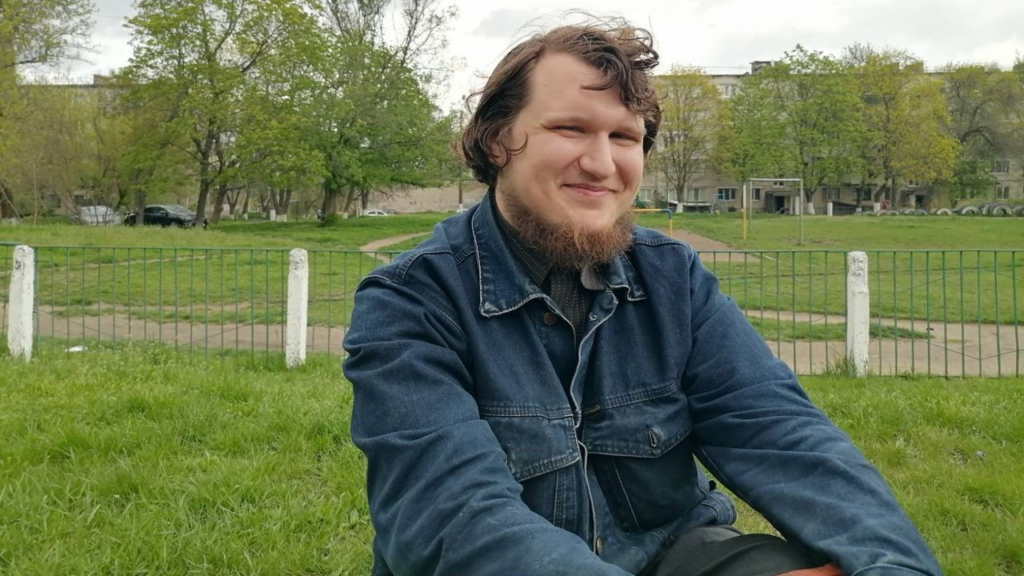
Bogdan Syrotiuk, April 2023

The Socialist Lead of Sri Lanka and South Asia (SLLA), fighting among the working class and youth to build the revolutionary leadership in South Asia, in solidarity with the international socialist perspective of the International Committee of the Fourth International (ICFI), condemns in the strongest terms the fascistic verdict handed down on August 10, 2026, by a district court in the Nikolaev region sentencing Bogdan Syrotiuk—a 27-year-old Ukrainian socialist, opponent of the US-NATO war against Russia, and leading member of the Young Guard of Bolshevik-Leninists—to 15 years in prison on the charge of “high treason under martial law.” We demand the immediate annulment of this verdict and Bogdan’s unconditional release.

Bogdan was arrested by the Security Service of Ukraine on April 25, 2024, on the unsubstantiated allegation that he was an agent of the Russian state. More than two years later, not a shred of evidence has ever been produced for that claim. What was in fact placed before the court was a set of six articles published on the World Socialist Web Site and a 2023 May Day speech, “For the Unity of the Working Class of Russia and Ukraine!” These writings called for the international unity of Ukrainian and Russian workers against the war launched by the Putin regime and prosecuted as a US-NATO proxy conflict; they exposed the Zelensky government’s rehabilitation of the Nazi collaborator Stepan Bandera, the Organization of Ukrainian Nationalists (OUN), and the Waffen-SS Galicia Division; and they documented the dismantling of elections and opposition politics in Ukraine. None of this constitutes treason under any legal standard that retains a shred of meaning. It is political speech, protected in principle by Article 10 of the European Convention on Human Rights, to which Ukraine is a signatory.

The state’s own forensic institutions could not sustain the case. A 65-page report by the veteran Ukrainian criminologist Yuri Irkhin found nothing in Bogdan’s writings amounting to propaganda for Russian aggression. When the court ordered a second, state-directed examination in the hope of a different result, even that body could identify no call for the overthrow of the government, no advocacy of the seizure of power, and no support for the alteration of Ukraine’s borders. The court disregarded its own experts. It disregarded the defense. It disregarded the law. What was handed down on August 10 was not a judicial verdict but a political directive from the Zelensky regime, aimed—as the judgment itself half-admits in citing the “socially dangerous consequences” of Bogdan’s positions—not at any act of espionage but at the growth of antiwar sentiment among Ukrainian workers and soldiers. Opinion polling in 2025 found 69 percent of Ukrainians favoring a negotiated end to the war, a complete reversal from 2022, while more than 300,000 criminal cases have been opened against Ukrainian soldiers for desertion since the invasion began. It is this mounting revolt from below, not any threat from Moscow, that the Zelensky dictatorship is moving to suppress through the imprisonment of Bogdan Syrotiuk.

The character of the regime that has produced this verdict must be stated plainly. Volodymyr Zelensky’s presidential term expired in May 2024. He rules today, more than two years later, by decree, under martial law, with elections suspended indefinitely. Communist parties and symbols have been banned since 2015. In 2022 the government suspended eleven opposition parties, subsequently banning outright the largest opposition bloc in parliament. The World Socialist Web Site itself has been blocked inside Ukraine since June 2024. Some 20,000 criminal cases have been opened under Ukraine’s treason and collaboration statutes, laws that Human Rights Watch has described as dangerously broad and vague, under which people who performed emergency services, construction and garbage removal in occupied territory have been prosecuted as traitors. The United Nations Human Rights Office reported as recently as September 2025 that it continues to document torture and ill-treatment of detainees in Ukrainian custody. The Council of Europe’s anti-torture committee has described conditions in Ukrainian pretrial facilities as potentially inhuman and degrading. A fifteen-year sentence inside this system, for a defendant whose health was already poor at the time of his arrest and who has for over two years been denied urgently needed medical care, is nothing less than a sentence of death by degrees.

We in Sri Lanka and South Asia have no difficulty recognizing this method of rule, because we have lived through its variants ourselves. The Sri Lankan state waged a communal civil war for decades under the banner of “national security,” using laws such as the Prevention of Terrorism Act to criminalize dissent, hold detainees without trial, and, in the war’s final phase, to carry out mass atrocities against the Tamil population that the state and its apologists continue to deny to this day. The Dissanayake-led JVP-NPP government, which came to power promising a break from this history, has instead deepened the IMF-dictated austerity program inherited from its predecessors, maintained the repressive apparatus of the state largely intact, and continued to suppress the democratic and social rights of workers, plantation labor, students, and the Tamil and Muslim minorities. Across South Asia, from the communal-nationalist project of Hindutva in India to military and civilian authoritarianism elsewhere in the region, the ruling classes respond to deepening economic crisis and mass social opposition not with concessions but with the criminalization of left-wing and antiwar politics. The persecution of Bogdan Syrotiuk is a sharp expression of a universal tendency of capitalism in its terminal, imperialist stage: as war and austerity generate irrepressible opposition from below, the ruling classes everywhere reach for dictatorship.

This is why the case of Bogdan Syrotiuk cannot be treated as a matter internal to Ukraine, to be left to the discretion of a court system that has already demonstrated, in the words of the World Socialist Web Site, its fascist contempt for the most basic democratic rights. It is a test for the international working class as a whole, including the working class and youth of Sri Lanka and South Asia. The imperialist powers that have armed and financed the Zelensky regime throughout this war—the United States above all, alongside the NATO powers and their allies—bear direct political responsibility for a war being escalated toward direct confrontation with Russia and, ultimately, toward a wider conflagration that already touches Iran, Venezuela, Lebanon and the flashpoints of the Indo-Pacific. Workers in Sri Lanka and across South Asia have a direct stake in this fight, both because the same imperialist powers that bankroll repression in Kyiv dictate the terms of austerity and militarization pursued by our own governments, and because the defense of Bogdan Syrotiuk is inseparable from the defense of the right of socialists everywhere—including in Colombo, Jaffna, Mumbai, Dhaka, Karachchi, and every other city of this region—to organize the working class against war, communalism and capitalist exploitation without fear of imprisonment.

Bogdan Syrotiuk’s only crime was to tell the truth: that this is an imperialist war, that Ukrainian and Russian workers share a common class enemy in their respective ruling classes, and that the celebration of Nazi collaborators as national heroes is a crime against historical memory. For this he faces fifteen years prison sentence. A 15-year sentence in Ukraine’s prison system, where overcrowding, denial of medical care, and deaths in custody are documented by the Council of Europe and the United Nations, is a death sentence. Bogdan, whose health was already poor at the time of his arrest, has been denied urgently needed medical treatment for over two years. He suffers from diabetes and cardiovascular disease, and the prison administration’s deliberate refusal to provide dental treatment — causing him severe, unrelenting pain — risks chronic infections that, left untreated, can lead to sepsis and death. Every day he remains behind bars is a threat to his life.

We call on the Pervomaisk City District Court and the Mykolaiv Court of Appeal to annul this verdict without delay and to order Bogdan Syrotiuk’s immediate and unconditional release. We call on workers, students, trade unionists, lawyers, intellectuals, artists and all defenders of democratic rights in Sri Lanka and throughout South Asia to take up this case as their own: to pass resolutions in their unions, workplaces, universities and organizations demanding Bogdan’s freedom, and to join the international campaign being built by the International Committee of the Fourth International.

Overturn the verdict. Free Bogdan Syrotiuk now!

Socialist Lead of Sri Lanka and South Asia (SLLA), in solidarity with the international socialist perspective of the International Committee of the Fourth International

We demand immediate and unconditional release of Bogdan Syrotiuk:  Overturn the Fascist Verdict! Read More »

Bogdan

Fascist Ukrainian court sentences Bogdan Syrotiuk, socialist opponent of war, to 15 years in prison

WSWS Editorial Board.

theSocialist.lk republishes the following statement by the WSWS Editorial Board published on WSWS.org on 10 August 2026. We call upon our readers to join the fight to ensure the immediate and unconditional release of Syrotiuk.

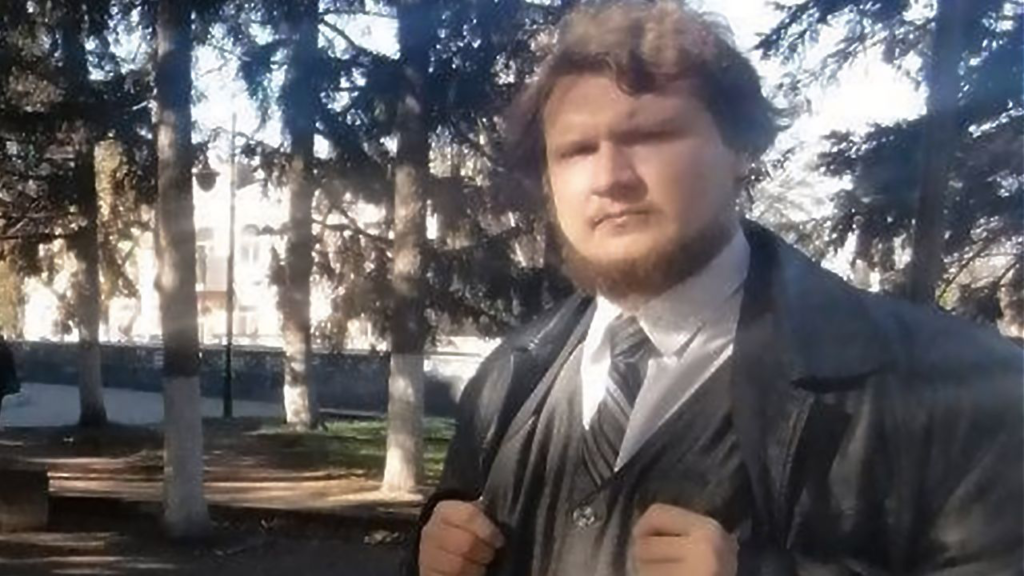
Bogdan Syrotiuk

On August 10, Bogdan Syrotiuk, a 27-year-old Ukrainian socialist and opponent of the US-NATO war against Russia, was sentenced to 15 years in prison. The verdict, handed down by a district court in the Nikolaev region, also orders the confiscation of his property and electronic devices and the destruction of the socialist books, leaflets and programmatic documents taken from him.

The World Socialist Web Site and the International Committee of the Fourth International denounce this verdict and call on workers, young people and all defenders of democratic rights around the world to demand Bogdan’s immediate release.

The verdict will be immediately appealed. Under Ukrainian law, the appeal must be filed within 30 days. We call on all supporters of democratic rights to back these legal actions and call for the annulment of the sentence.

Bogdan, a leading member of the Young Guard of Bolshevik-Leninists (YGBL), was convicted of “high treason … under martial law.” But the record of the case contains no act of treason—no espionage, no sabotage, no collaboration with any military force. The sole evidence presented against him consisted of his writings, published on the World Socialist Web Site, and his communications with the editors who published them.

The state’s experts examined 14 of Bogdan’s writings and included seven in the indictment. The court was then forced to drop one of the seven—an article on the military commissariats’ violent seizure of draft dodgers—after its own forensic commission could find nothing criminal in it. Bogdan has been sentenced to 15 years in prison for six articles.

What was the subversive content? According to the court, the articles contained “non-recognition of Ukraine’s legitimately elected political leadership and democratic processes,” “comparisons with fascists and Nazis,” “negative assessments of Ukraine’s Armed Forces” and “reinterpretation of national heroes and historical figures.”

In fact, everything written by Bogdan is politically and historically accurate. The “legitimately elected political leadership” is a president whose term of office expired in May 2024. Zelensky remains in power more than two years past his legal mandate, ruling by decree under a state of permanent martial law. Elections have been canceled and basic democratic rights suspended. Bogdan has been convicted of failing to recognize “democratic processes” in a country where no democratic processes exist. His is a verdict handed down by a regime of illegality.

As for the “national heroes” whom Bogdan is accused of “reinterpreting,” they are Stepan Bandera and the leaders of the OUN (Organization of Ukrainian Nationalists) and the Waffen-SS Galicia Division—Nazi collaborators who supported Hitler’s invasion of the Soviet Union in 1941 and were implicated in the mass murder of Jews and Poles. The court’s complaint about “comparisons with fascists and Nazis” refers to Bogdan’s exposure of the official rehabilitation and celebration of these forces. 

Among the “proofs” of treason cited by the court are Bogdan’s article “The crimes of the Banderovites against the Ukrainian people: Notes by a Ukrainian Trotskyist” and his 2023 May Day speech, “For the Unity of the Working Class of Russia and Ukraine!” In any country where democratic rights retain the slightest meaning, such writings are protected speech. In Ukraine under Zelensky, they carry a 15-year sentence.

When Bogdan was arrested by the Security Service of Ukraine (SBU) on April 25, 2024, the state claimed he was functioning as an agent of the Russian government. In the more than two years since, nothing was produced to substantiate that libelous allegation. In fact, the articles that are cited in the conviction make explicit Bogdan’s opposition to the Russian invasion and the Putin regime.

The verdict refers several times to the “socially dangerous consequences” of Bogdan’s positions. This exposes the fact that the prosecution of Bogdan is not about the manufactured pretext of support for Russia. Rather, it is aimed at the growing opposition to war and the Zelensky regime among Ukrainian workers and youth.

The evidence presented in Bogdan’s defense was never answered. A 65-page report by Yuri Irkhin, one of Ukraine’s leading criminologists, found in Bogdan’s writings no “statements, phrases, sentences, or word combinations that have signs of propaganda aimed at supporting the armed aggression of the Russian Federation.” Rather than respond to it, the court ordered a new examination from a state forensic institute—which, even so, found in the articles no calls for the overthrow of the state, the seizure of power, subversive acts or the alteration of Ukraine’s borders. 

The defense established that nothing in the record made out the elements of treason, and that Bogdan’s writings were political speech protected by Article 10 of the European Convention on Human Rights. The court swept all of this aside.

The verdict was not the outcome of a legal proceeding but the execution of a political directive from the Zelensky dictatorship. It states that Bogdan acted “on instructions from a representative of the World Socialist Web Site, under the pseudonym ‘David’”—identified in the judgment itself as David North, chairman of the International Editorial Board of the WSWS. The Ukrainian state is asserting the power to declare international socialist and antiwar publications criminal enterprises, and collaboration with them treason.

The decision to destroy the YGBL’s program, its brochures, leaflets and folders of printed articles exposes the real content of the verdict. The methods are those of fascist regimes: imprison the opposition, confiscate its materials, burn its writings. The court even ordered Bogdan to pay more than 178,000 hryvnia to cover the cost of the forensic “examinations” used to convict him.

The sentencing of Bogdan takes place in a country in which left-wing politics has been outlawed. Communist parties and symbols have been banned in Ukraine since the “decommunization” laws of 2015. In 2022, the Zelensky government suspended 11 opposition parties, including the largest opposition party in parliament, which was subsequently banned outright.

Some 20,000 criminal cases have been opened under Ukraine’s treason and collaboration statutes, according to the United Nations Human Rights Office, which reported in September 2025 that it “continues to document cases of torture and ill-treatment” of detainees held by the Ukrainian state. Human Rights Watch describes the collaboration laws as “overly broad and vague”; among those prosecuted are people who carried out “emergency services, construction, humanitarian relief and garbage removal” in occupied territory.

The World Socialist Web Site has been banned in Ukraine since June 6, 2024, six weeks after Bogdan’s arrest.

All of this has been buried and concealed from the public by the government and media outlets that claim the war is being waged in defense of Ukrainian democracy.

The frame-up of Bogdan is the act of a desperate regime. Opposition to the war is mounting within Ukraine itself. More than 300,000 criminal cases have been opened against soldiers for desertion or absence without leave since 2022, the majority of them in the past year. In 2025, 69 percent of Ukrainians told Gallup that the country should seek a negotiated end to the war, a complete reversal of opinion since 2022. Terrified of the growth of antiwar sentiment among workers and soldiers, the Zelensky government is intensifying repression at home while working to create the framework for the direct entry of the NATO powers into the war.

A sentence of 15 years in a Ukrainian prison is the equivalent of a death sentence. The conditions in Ukraine’s penitentiary system are well documented. At the United Nations Committee Against Torture’s review of Ukraine in April 2025, experts cited overcrowding, inadequate access to food and water, the absence of independent medical examinations and a rising toll of deaths in custody. The Council of Europe’s anti-torture committee, reporting on its October 2023 visit to Ukraine, described decaying facilities in which remand prisoners are confined to their cells for up to 23 hours a day and found conditions in one pretrial detention center so degraded that it judged them potentially “inhuman and degrading.”

Bogdan, whose health was already poor at the time of his arrest, has been denied urgently needed medical treatment for over a year, despite repeated promises from the prison administration. Every day behind bars is a threat to his life.

His fate cannot be left to the courts of a state that has just demonstrated its fascist contempt for democratic rights. Bogdan’s freedom will be won by the mobilization of the international working class, youth and all progressive organizations and individuals dedicated to the defense of democratic rights. We appeal to workers, trade unions, student and youth organizations, civil liberties groups, and socialist and anti-war movements in every country: Take up Bogdan’s case. Pass resolutions in your workplaces, unions, schools and universities demanding his release. Issue public statements of protest.

Send statements demanding the overturning of the verdict and Bogdan’s immediate release to the Pervomaisk City District Court at inbox@pm.mk.court.gov.ua, with copies to the World Socialist Web Site at freebogdan@wsws.org.

The fight to free Bogdan Syrotiuk is a fight against imperialist war, dictatorship and fascism. Fill out the form below to get involved.

Fascist Ukrainian court sentences Bogdan Syrotiuk, socialist opponent of war, to 15 years in prison Read More »

Mahara

Outside the Prison Walls: The Mahara Prison Riot and the Rise of Fascistic Ideology in Sri Lanka

By Sanjaya Jayasekera.

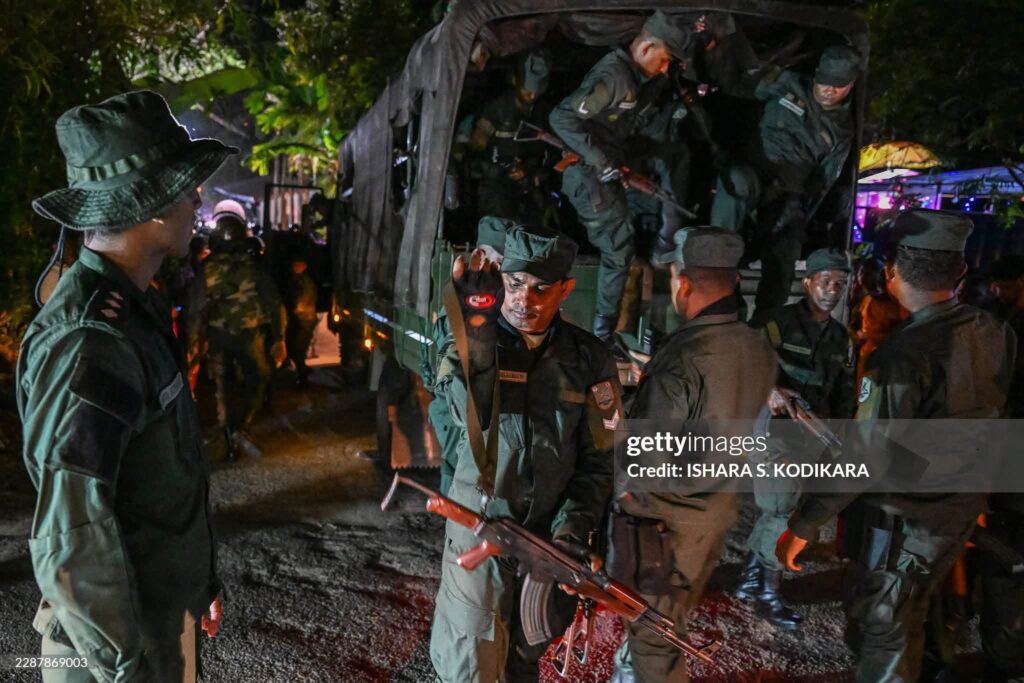
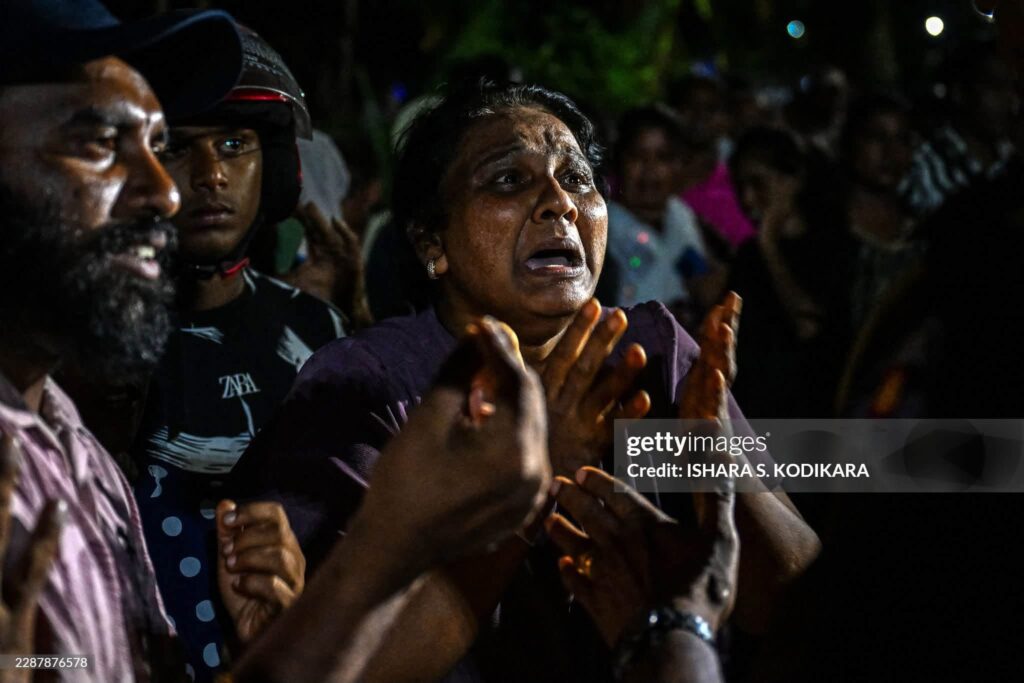
Relatives of the inmates demand not to shoot the prisoners, outside Mahara Prison on 1 August 2026. Photo credit: Ishara S. Kodikara

On August 1-2, 2026, a riot erupted at Mahara Prison, north of Colombo, causing severe damage to its already unlivable infrastructure and reportedly resulting in the death of one inmate. This is the second prison riot in less than a month and followed the massacre in the Negombo prison early last month.[1] The vast majority of detainees at Mahara — as throughout Sri Lanka’s prison system, where approximately 75 percent of inmates are unconvicted remand prisoners — are held in indefinite judicial limbo, warehoused in facilities built for 11,762 that now hold more than 42,000. The conditions are, by any objective standard, a form of systematic torture: prisoners forced to sleep standing, defecate into shopping bags, survive on food that “even cats and dogs” would reject, confined to as little as 1.2 square metres of space.[2] In 2023, 67.8 percent (31,822)  of those imprisoned were jailed due to their inability to pay fines — a form of criminalization of poverty. A recent National Audit Office report finds that over 15,000 remain in prolonged remand custody due to delay in government analyst reports. The riot was not an act of criminality. It was an explosion of outrage of human beings subjected to torturous conditions that the capitalist state has deliberately created and deliberately maintains.  

But it is not the riot itself that most starkly reveals the political trajectory of Sri Lankan society. It is the response — both of the state and of a significant and vocal section of the public.

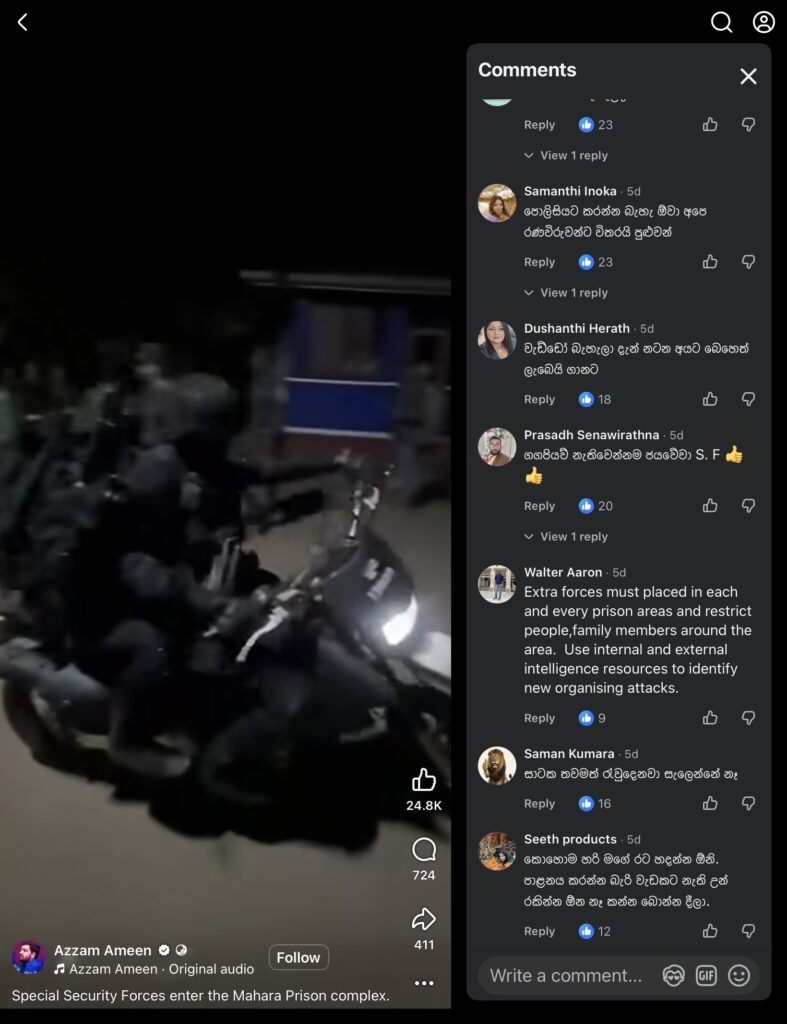
In the hours following the Mahara unrest, as was in the aftermath of the Negombo prison incident, a significant segment of society — concentrated in the Sinhala middle class of the south and amplified across social media — began openly proposing measures that belong to the lexicon of fascism. “Break their limbs.” “Shoot them in the head.” “Exterminate the drug residue.” These are not the mutterings of isolated cranks. They are the publicly expressed, socially sanctioned political proposals of a layer of the population that has been systematically prepared over decades to regard certain categories of human beings as unworthy of life. The comments sections of mainstream news outlets and the feeds of social media platforms have become open forums for the advocacy of extrajudicial murder, for the vilification of grieving families, for the glorification of the STF and the military, deployed by the JVP/NPP government, to crush prison riots. The corporate media has done nothing to challenge this — because it cannot, because the media itself has been a primary vehicle for the ideological preparation that has produced it.

Military deployed at the Mahara prison on 1 August 2026. Photo credit: Ishara S Kodikara

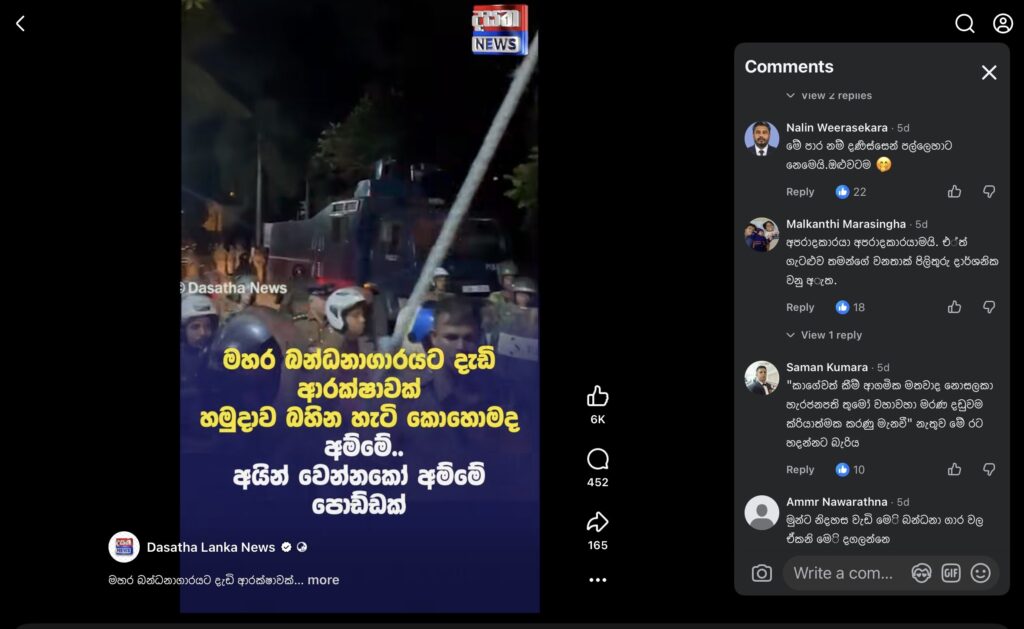
Following the Mahara unrest, in a video of an elderly mother of a remand prisoner, published on Dasatha News facebook page, she demanded the release of the names of inmates affected by the riot and subsequent military crackdown — including those killed, transferred to other prisons, or hospitalized. In the video, she holds the ruling class and the police accountable for creating a society dominated by drug lords who prey on the sons of impoverished mothers. She explains that her son was framed through drug planting — a widespread practice by the Sri Lanka Police, a routine mechanism for criminalizing poverty and filling the remand prisons with the sons and daughters of the poor.

Military deployed at Mahara prison to crush the riot and intimidate the relatives and the working class. Image Credit: Ishara S. Kodikara

The video attracted hundreds of scathing, inhumane, and morally bankrupt comments. Commentators vilified her for giving birth to her son, blamed her entirely for his drug addiction, and condemned her for failing to raise him properly. The same hostile barrage was directed at parents, siblings, and other relatives who gathered outside the Mahara and Negombo prisons during the riots and crackdowns to demand the safety of their loved ones — mothers weeping at the gates while gunfire echoed within, wives and children pleading for information, families who had traveled from distant villages only to be met with the deployment of armed drones, armored vehicles, and the Special Task Force.

Facebook comments
Social media reporting and comments

This is the face of the fascistic ideology now brewing in sections of the Sri Lankan middle class. It is not merely a political tendency expressed in abstract slogans about “law and order.” It is a social practice of systematic cruelty directed at the most vulnerable — at an elderly mother pleading for her son, at families demanding to know whether their loved ones are alive or dead. The same social media users who demand that prisoners be shot in the head are the ones who mock a mother’s grief, who blame her for the poverty into which her son was born, who insist that the state’s lethal violence is not merely justified but righteous.

This reaction reflects a profound moral decay. It is the ideological harvest of a society that has been taught, systematically and over generations, that lethal violence against the “enemy within” is not merely justified but heroic — and that those who love the enemy, who plead for the enemy, who gave birth to the enemy, are themselves contemptible. The elderly mother who demands to know whether her son is alive is not a grieving parent to be treated with compassion. She is an obstacle to the state’s campaign of terror, and the social media mob has been trained to treat her accordingly.

No public figure has yet gone on record in a formal media statement advocating the extrajudicial execution of prisoners. This tendency has not yet crystallized into an organized movement with a large social base. But it does not need to. The historical lesson of fascism — as demonstrated by the international resurgence of the far right — is that fascist movements are not mass movements from their inception. They begin as ideological currents within sections of the petty bourgeoisie, nurtured by the state and the media, that are activated and expanded when the ruling class requires a battering ram against the working class. The social media comments calling for prisoners to be shot, the mockery of a mother’s anguish, the vilification of families at the prison gates — these are the early ideological indicators of a tendency that the JVP/NPP government, facing mounting social opposition to IMF austerity, will seek to cultivate and mobilize.

The Genealogy of a Fascistic Ideology

The calls to shoot prisoners in the head did not emerge from nowhere. They are the latest expression of an ideological trajectory that can be traced with precision.

The 26-year communal war against the Liberation Tigers of Tamil Eelam (LTTE), concluded in 2009 with the slaughter of an estimated 40,000 Tamil civilians in the final months alone, was not merely a military campaign. It was a project of ideological mobilization on a mass scale. The state, Sinhala-Buddhist saffron forces, and the media jointly constructed a narrative in which the Tamil population — and by extension any population that could be designated as an internal threat — was dehumanized. The war was presented not as a conflict between the Sinhala and Tamil ruling classes, each seeking to exploit “their” workers, but as a civilizational struggle for the “Sinhala motherland” against a barbaric enemy. The Sri Lankan military mercilessly pounded the no-fire zone with artillery shells, deliberately targeting hospitals, aid centres and designated civilian areas. Grisly video evidence later emerged of Sri Lankan soldiers executing naked, bound and blindfolded men in cold blood. [3] When the LTTE defences collapsed, the military murdered surrendering LTTE leaders and herded some 300,000 civilians into army-controlled detention camps.

The Sri Lankan military was glorified as the savior of the nation. War heroes were celebrated in state ceremonies, their images plastered across billboards, their “sacrifices” invoked in political speeches. The military budget was expanded, not contracted, after the war ended. Military “leadership training” was imposed on university students. [4] The armed forces were integrated into the civil administration, including in schools, with retired and serving generals appointed to key government positions. The glorification of the military was inseparable from the cultivation of Sinhala-Buddhist chauvinism, which presented the Sinhala majority as the authentic nation and all others as threats to its integrity.

This ideological campaign did not end with the war. It was repurposed. As the Socialist Equality Party (SEP) warned in 2021: “The military and its brutal methods developed during the war are now being prepared for use against the working class, as unrest grows over the worsening social conditions facing working people.” [5] The “war on terror” became the “war on drugs,” which became the “war on the underworld.” The enemy was no longer the Tamil separatist but the drug dealer, the criminal, the “underworld figure” — categories that, in practice, encompass the poorest and most marginalized layers of the working class.

The World Socialist Web Site (WSWS) explained the logic of these campaigns as early as 2009: the “war on the underworld” was launched “to divert growing popular discontent and to justify the further strengthening of the state apparatus in preparation for social unrest.”[6] The same analysis applies with equal force today. The JVP/NPP government’s escalating “war on drugs” is a rehearsal for police-state measures, the main target of which is the working class that come into struggle.

The middle-class social media users who now call for prisoners to be shot in the head are the products of this decades-long ideological conditioning. They have been taught to see the state’s lethal violence as legitimate, to regard due process as an obstacle to “security,” and to view certain categories of the poor as subhuman. 

The Same Tendency, the Same Targets

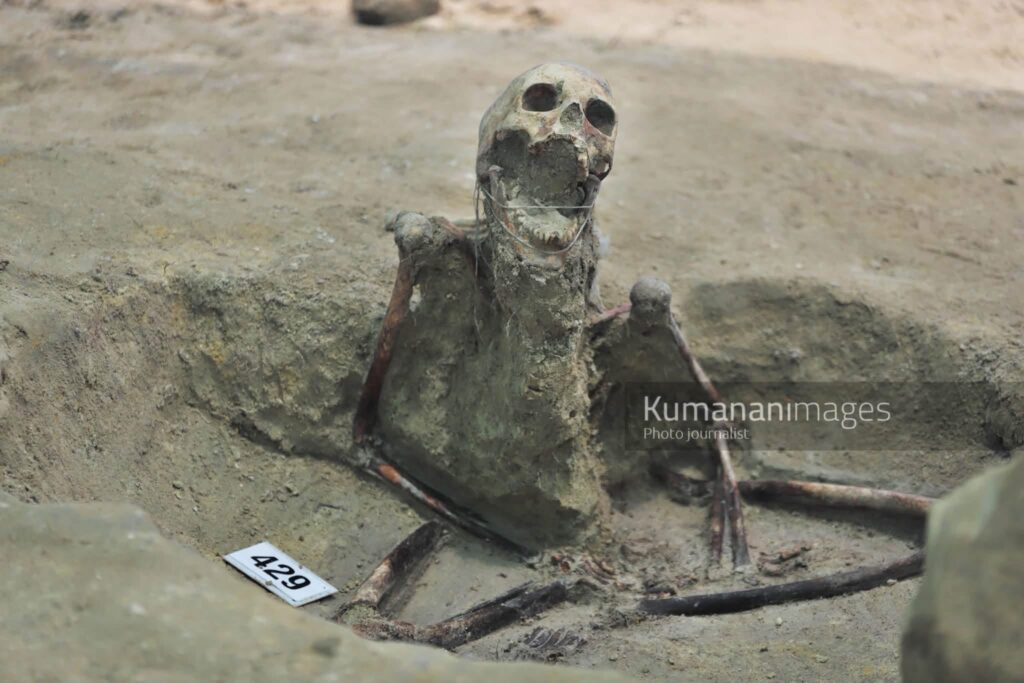
But this tendency is not new. It is the same social layer, animated by the same ideology, that has for the past few years populated the comments sections of mainstream media with the glorification of the military and the dehumanization of its victims. When the daily excavations of skeletal remains at the Chemmani-Siththupaththi mass grave are reported — the bones of Tamil men, women, and children who were “disappeared” by state forces, buried in unusual positions, and dumped together in shallow pits — this same social media mob posts comments calling to “make soup out of their bones and have it.” When Tamil communities in the North and East protest the military’s continued occupation of their lands — a permanent network of army camps established during the war and never dismantled — this same tendency demands the deployment of the army to crush them. When Tamil families who have spent decades searching for their loved ones demand accountability for the tens of thousands slaughtered in the final months of the war, this same social layer mocks their grief and insists the killings were justified. When the skeletal remains of 136 individuals were unearthed in Mannar after 74 days of excavation, the same voices jeered, defending the military.

The calls to shoot prisoners in the head are not a departure from this chauvinist culture. They are its extension. The ideological machinery that was built to dehumanize the Tamil “terrorist” has been repurposed to dehumanize the Sinhala “criminal.” The mechanism is identical: construct a subhuman category, mobilize revulsion against it, and demand that the state kill without process, without mercy, without accountability. The war against the LTTE provided the template. The “war on drugs” provides the new target. The underlying logic — that certain categories of human beings may be killed by the state with impunity, without trial, without process, without mercy and that those who call for their killing are patriots — is the same.

The decades-long campaign of militarization and Sinhala-Buddhist chauvinism has prepared this social layer to serve as the shock troops of reaction. The glorification of war heroes, the celebration of military “victory,” the refusal to acknowledge war crimes, the mockery of mass graves — all of this has cultivated an ideological disposition that regards lethal state violence not as a crime to be prosecuted but as a virtue to be celebrated. The middle-class youth who posts “shoot them in the head” on Facebook is not expressing an idiosyncratic opinion. He is expressing the logical endpoint of an ideology that has been systematically inculcated through the education system, the media, and the political culture of the post-war period. He is the product of a society that has never held its killers to account and has instead elevated them to the status of national heroes.

The same social layer revealed its moral character with unmistakable clarity during Israel’s genocidal war on Gaza, which since October 2023 has claimed the lives of tens of thousands of Palestinian civilians — men, women, and children slaughtered under the banner of “fighting terrorism.” Across social media, this section of the Sinhala middle class expressed vociferous indifference to the genocide and open support for Zionist Israel’s crimes. The same dehumanization mechanism was at work: Palestinians were “terrorists,” their deaths were “necessary,” their suffering was deserved. That the JVP/NPP government itself has conspicuously failed to condemn Israel’s planned seizure of Gaza, pointedly omitting any mention of genocide or ethnic cleansing from its official statements, is no coincidence. The ideological framework that justifies the slaughter of prisoners at Mahara or Negombo, the mockery of Chemmani’s dead, and the indifference to Gaza’s murdered children is one and the same: the conviction that lethal state violence against a dehumanized enemy is not a crime but a form of justice. This is the moral universe that decades of militarization and chauvinism have built.

The social base that the JVP/NPP government is cultivating is this. The party that opposed UN human rights investigations into war crimes, that integrated retired military officers into its political apparatus, that retains the Prevention of Terrorism Act and expands police-state powers — this party governs with the tacit support of the social media mob that demands bullets for prisoners and mocks the bones of the disappeared. It does not need to issue formal statements endorsing such sentiments. It needs only to continue what it is already doing: glorifying the security forces, refusing accountability for past and present massacres, and framing its “war on drugs” as a civilizational struggle against subhuman enemies. The social media tendency will do the rest, providing the popular ideological cover that the state requires to escalate its violence — against prisoners today, against striking workers and protesting youth tomorrow.

The JVP/NPP: Architects of Militarization

The present leaders of this militarization campaign are the Janatha Vimukthi Peramuna (JVP) and the National People’s Power (NPP) government. This is a fact of immense political significance that must be stated without equivocation.

The JVP campaigned for the 2024 elections on a platform of “systemic change.” It made promises to workers, peasants, and youth across every corner of society. It presented its program as a vision of social righteousness, of clean government, of a break with the corrupt and violent past. It rode to power on the back of the massive Aragalaya uprising of 2022, in which about a million working people rose up against the Rajapaksa regime and the unbearable social conditions produced by the crisis of Sri Lankan capitalism and the 2022 sovereign default.

Today, that same JVP/NPP holds power while actively driving militarization forward. It has retained the Prevention of Terrorism Act, which it explicitly promised to abolish. It has invoked essential services laws to criminalize strikes across key sectors. It has introduced the Protection of the State from Terrorism Act (PSTA), vastly expanding state repressive powers. It has announced a plan to recruit 10,000 retired military personnel into the police force — many of whom have combat experience from the 26-year anti-Tamil communal war. It has established over 14,000 Public Safety Committees across all village officer divisions, institutionalized as a force operating under the police — a revival of the intelligence-gathering committees set up by Gotabhaya Rajapaksa during the war, with JVP members reportedly appointed to them in almost all areas.[7]

The JVP’s collaboration with the military apparatus is not new. During the war, the Sinhala chauvinist JVP was a virulent advocate of the military campaign against the LTTE, demanding an all-out military solution and vehemently opposing any concessions to Tamils. [8] [9] [10] In 2010, it formed a sordid electoral alliance with former army commander Sarath Fonseka, the general who oversaw the final military offensives. In 2023, as it prepared for government, the JVP/NPP established formal collectives of retired military and police officers — the Retired Tri-forces Collective and the Retired Police Officers Collective — integrating figures most likely including individuals connected to crimes and human rights abuses during the war into its political apparatus.

The betrayal of the Tamil population of the North and East is among the most damning indictments of the JVP/NPP government. During the 2024 presidential and parliamentary election campaigns, Dissanayake and the JVP/NPP made explicit promises to Tamil voters: the release of all political prisoners, the return of civilian land seized by the military, and the provision of information to families of the tens of thousands of missing persons. On the basis of these pledges — and driven by deep disaffection with the traditional Tamil bourgeois parties that had betrayed them for decades — a significant section of Tamil voters swung behind the JVP/NPP in the November 2024 parliamentary election, handing the party a plurality of votes in all but one district in the North and East. Every one of these promises has been broken. The government now claims that political prisoners were convicted on criminal charges and therefore cannot be released. Some land has been returned, but an estimated 2,600 acres still remain under military control, and tens of thousands of acres seized from ordinary working people during the war remain in the hands of the armed forces. Instead of revealing the fate of the disappeared, the government proposes limited financial reparations to victims’ families while protecting the perpetrators. The JVP/NPP has categorically rejected United Nations Human Rights Council resolutions calling for investigations into war crimes. Its opposition to any human rights investigation flows from its Sinhala chauvinist politics and ardent support for the protracted anti-Tamil civil war and is insisting on the lie that the military committed no war crimes. The Tamil masses who voted based on promises of “systemic change”— in spite of the long record of JVP’s anti-Tamil chauvinism — have instead received the same military occupation, the same denial of justice, the same criminalization of their dead.

Now, the JVP Justice Minister visits the Sittupattu mass grave site (on 19 June), faces hundreds of protesters demanding truth and accountability, and walks past them to promise justice “within two years.” But the obscenity does not end there. After standing at Sri Lanka’s largest mass grave — over 400 skeletal remains, including the bones of infants — the minister, answering questions from people at a meeting held at the Jaffna Divisional Secretariat Office publicly cast doubt on whether Chemmani is even a mass grave at all, suggesting it may simply be a normal graveyard. He stated, “first of all, it is a cemetery, cause of death of bones should be inspected, and complaints are required before we can proceed with DNA identification”. In another press statement, the Minister raised doubts as to who the perpetrators were, attempting to discredit strong allegations against the armed forces.[11] This is not confusion. This is not ignorance. This is the language of cover-up. It is the language of impunity spoken aloud.

This is the party that now governs Sri Lanka. This is the party that presides over the prison massacres at Negombo and Mahara. This is the party whose media allies portray dead prison guards as “heroes” who “sacrificed their lives” — the right-wing Island newspaper declaring: “The drug mafia has flexed its muscle again. The government has embarked on an ambitious campaign to rid the country of narcotics, and rightly so.” [12] On August 3, its Sinhala language daily, Divina named the military-STF intervention in the Mahara prison as a “humanitarian mission”, which echoed the term used to refer to the military onslaught in the final phase of the civil war. This is the  party that is precisely accountable for the massive inhumanity, savagery, and moral decay represented by the calls to shoot prisoners in the head.

The Middle Class and the Fascist Mobilization

The social media posts proposing the extrajudicial execution of prisoners are not evenly distributed across the population. They emanate disproportionately from the Sinhala middle class of the south — the petty bourgeoisie, the lower-level professionals, the small business owners, the university-educated and unemployed youth who have been traditionally taught to see themselves as the guardians of the nation’s moral order. This is the classic social base of fascist movements, and its emergence in Sri Lanka follows a pattern that Marxism has long understood.

The middle class occupies a contradictory position in capitalist society. It is not part of the bourgeoisie — it does not own the means of production on a scale that frees it from the necessity of work. But it is terrified of falling into the proletariat, of losing its precarious status, of being swallowed by the poverty that surrounds it. In periods of capitalist crisis, when its economic position is threatened by inflation, unemployment, and the collapse of small enterprises, the middle class becomes politically volatile. It can be mobilized either in alliance with the working class against the bourgeoisie — or, as history has repeatedly demonstrated, as the shock troops of reaction against the working class.[13

The decades-long campaign of militarization and Sinhala-Buddhist chauvinism has prepared the Sri Lankan middle class to choose the latter path. The glorification of war heroes, the demonization of internal enemies, the constant invocation of “national security” — all of this has cultivated an ideological disposition that sees violence as the solution to social problems. What is developing among sections of the disgruntled Sinhala middle class is not a diffuse or generalized social conservatism. It is a far-right political current, bearing all the essential characteristics of fascism as the Marxist tradition has understood it: the glorification of lethal state violence as a social good, the systematic dehumanization of designated internal enemies, the contempt for due process and legal norms, and the conviction that extrajudicial killing is a legitimate instrument of “law and order.” 

This tendency may not yet have a large social base. It is concentrated among a significant section of social media users — particularly youth and the middle class — who wage this militaristic, demoralized, inhumane campaign as a matter of defending law and order and security. The JVP/NPP government is its political beneficiary and its tacit patron — because it understands that when working-class resistance intensifies, this far-right current will be available for mobilization as the street-level enforcers of state terror.

The government and the ruling class are aware of these developments and are tacitly encouraging them. This is the decisive political point. The social media mob that calls for bullets in prisoners’ heads is not acting against the state. It is acting in harmony with a state that has itself just carried out a shoot-to-kill operation at Negombo, that has deployed the STF and the military against unarmed prisoners, that has subjected transferred inmates to retaliatory torture resulting in at least two post-transfer deaths.[1] The state kills; the social media mob applauds; the government appoints a committee of retired judges to bury the truth. Each element reinforces the others.

SLPP as the direct institutional patron of the far-right 

This far-right current is not an amorphous social mood. It is being politically organized. Its most direct institutional patrons are the Rajapaksa family’s Sri Lanka Podujana Peramuna (SLPP), which has installed Namal Rajapaksa — the son of former president Mahinda Rajapaksa — as its national organizer, and the Buddhist clergy that vociferously backs him. 

The SLPP and its clerical allies portray the JVP/NPP government as betraying the Sinhala nation by granting concessions to Tamils in order to secure the support of the Tamil diaspora. This is a calculated distortion, but it contains a kernel of political reality. The JVP/NPP was indeed fully supported by sections of the Tamil diaspora — Tamil capitalist expatriates, the wealthy, and the elite — and continues to seek their backing. These layers in turn expect the government to deliver the full implementation of the Thirteenth Amendment to the constitution, including the devolution of police and land powers, as the price of their political loyalty. The JVP/NPP, however, has no intention of fulfilling these expectations. It has released only an insignificant extent of occupied lands, while military occupation of the North and East continues unabated. 

The SLPP exploits this contradiction to posture as the savior of Buddhism and the Sinhala nation, directly encouraging far-right fascistic elements who wage Sinhala-Buddhist racist provocations in the North — such as the illegal expansion of the Tissa Viharaya temple on seized Tamil land, the erection of Buddha statues as deliberate communal provocations in Trincomalee, and the ongoing campaign by Buddhist chauvinist groups to assert Sinhala-Buddhist supremacy over Tamil and Muslim communities. The SLPP’s aim is transparent: to outflank the JVP/NPP from the right, to mobilize the most backward and violent sections of the Sinhala middle class, and to position itself as the political leadership of the fascistic tendency now brewing in Sri Lankan society. 

The JVP/NPP, for its part, has repeatedly demonstrated that it will not confront this reactionary mobilization but will accommodate and appease it — because it shares its fundamental ideological premises and will require its services when working-class resistance intensifies. The middle-class social media mob that demands bullets for prisoners and mocks the Chemmani dead is not an isolated phenomenon. It is the raw material of a political movement that already has its leaders, its institutions, and its patrons — and that is being prepared for deployment against the working class.

The Trajectory: From Prisoners to Workers

The critical political question is: where does this trajectory lead?

The government will in due course direct these fascistic tendencies against working-class struggles. The middle class that today demands bullets for prisoners will tomorrow demand bullets for strikers. The social media mob that dehumanizes “drug residue” will be mobilized to dehumanize workers who defy essential services orders, youth who protest IMF austerity, peasants who resist land grabs. The ideological machinery that was built to prosecute the war against the LTTE and then repurposed for the “war on drugs” will be repurposed again for the war on the working class.

As the Socialist Lead of Sri Lanka and South Asia (SLLA) warned in November 2024, The JVP/NPP government is already preparing the ground. [14] The 14,000 Public Safety Committees, staffed with JVP members and operating under police supervision, are mechanisms for surveillance, intelligence gathering, and repression against political opponents and workers engaged in struggle. The recruitment of 10,000 retired military personnel into the police force is a direct preparation for the violent suppression of social unrest. The government expects strong resistance from youth and students and has already deployed the police to violently suppress teachers’ protests and student demonstrations. School Development Officers were beaten and detained by police in December 2024 for demanding their rights. Allied health science graduates were violently suppressed and arrested in March and April 2025.

The JVP/NPP is implementing the IMF austerity program to the letter. Dissanayake retains the main portfolios of finance and defence to ensure the government’s foremost task of ruthlessly implementing IMF austerity measures is directly in his hands. For 2026, the allocation of funds to the Ministry of Defence is 530 billion Rupees. On the very first day the majority-JVP/NPP parliament convened, the government jettisoned its election pledge to renegotiate the IMF bailout. The measures include significant tax increases targeting workers, the lowering of the income-tax threshold directly affecting the middle class, the slashing of vital public services and a fire-sale of state-owned enterprises, destroying hundreds of thousands of jobs. Parliament unanimously approved these IMF austerity measures in December 2024. Dissanayake’s budgets were fully dictated by the IMF. The working class and the poor suffer heavily due to sky-rocketing prices of consumer items, including essential food items, while the JVP-controlled majority trade unions have artificially suppressed the working class struggles. 

The government knows it sits on a social powder-keg. The austerity measures it implements will generate mass opposition. It is haunted by the 2022 Aragalaya. Its response is to build the repressive apparatus in advance, to cultivate the ideological climate in which lethal violence against protesters will be accepted, and to prepare the middle-class shock troops who will condemn and vilify the worker, hail the military-police crack-down and provide the political cover for state terror.

The JVP’s general secretary Tilvin Silva has declared that “there will be no other governments after this government.” President Dissanayake has said the government “cannot be shaken for decades.” These are not expressions of democratic confidence. They are threats. They announce that the JVP/NPP will not peacefully surrender power, that it is preparing to rule through force, that the fascistic ideology now being cultivated in the middle class is an essential component of its political strategy.

The Crisis of Sri Lankan Capitalism

The prison system — and the fascistic ideology that demands its victims be shot — is a concentrated expression of the broader social catastrophe produced by Sri Lankan capitalism. According to the United Nations Development Program (UNDP), the country was among the most unequal in the Asia-Pacific region by 2023. The Super-Rich comprise just 1 percent of the population but command a massive 31 percent of the total personal wealth in the country. The Working Class and the Poor comprise  half of the entire population but collectively own less than 4 percent of the overall national wealth. 

The plantation workers of the central hill country — the descendants of indentured laborers brought from India by British colonialism — continue to live in conditions of abject poverty. The urban poor of Colombo’s slums, the rural farmers crushed by debt and the removal of fertilizer subsidies, the youth who face permanent unemployment — these are the social layers from which the prison population is drawn.

They are the human products of a system that subordinates human need to private profit. And when they resist — when they protest, when they strike, when they explode — the state answers with bullets. When the middle class applauds those bullets, it is not expressing a pathology. It is expressing the logic of a system that requires the dehumanization of its victims in order to sustain itself.

The Warning and the Task

Workers must recognize this danger. The calls to shoot prisoners in the head are not a temporary aberration. They are a political warning. The same forces that today demand the extrajudicial execution of remand prisoners will tomorrow demand the same for striking workers, for protesting students, for anyone who threatens the “stability” that the ruling class requires to continue its exploitation. The social media tendency that mocks the bones of the Chemmani dead, vilifies a remand prisoner’s grieving mother, and calls for bullets in the heads of prisoners is being cultivated as the ideological battering ram of a government preparing for class war.

The revolutionary party must be conscious of these subtle developments in the social consciousness and expose the growing dangers. This means neither exaggerating the tendency into something it is not yet — a mass fascist movement — nor dismissing it as the harmless venting of online cranks. It means identifying it precisely for what it is: an emergent ideological current, rooted in the material crisis of the middle class, cultivated by decades of militarization and Sinhala-Buddhist chauvinism, and tacitly encouraged by a government that will require it when working-class resistance to austerity intensifies. It means exposing the continuity between the dehumanization of Tamils, the mockery of mass graves, and the demand for bullets in prisoners’ heads — because all three are expressions of the same logic, nurtured by the same state, and aimed at the same ultimate target: the working class.

The working class must defeat the ruling class’s militarization program and ideology. This requires an independent political mobilization, organized through action committees in every workplace and neighborhood, that breaks decisively with all capitalist parties — including the JVP/NPP — and their trade union appendages. It requires the building of a revolutionary party, armed with the program of socialist internationalism, that fights for the unity of Sinhala, Tamil, and Muslim workers across ethnic divisions and builds an alliance of the working class with all oppressed layers, the peasantry and the youth against the ruling class that foments divisions among them to strengthen capitalist class rule.

The fight against fascistic ideology cannot be separated from the fight against the capitalist system that produces it. The middle class that calls for prisoners to be shot is itself a product of a society in crisis — economically threatened, ideologically disoriented, politically manipulated by a ruling class that requires it as a battering ram against the working class. The only force capable of defeating this reactionary mobilization is the organized working class, united across all communal lines, advancing its own socialist program as the alternative to the barbarism of capitalism in decay.

The Negombo dead, the Mahara brutalized prisoners, the tens of thousands slaughtered at Mulliwaikkal, the tens of thousands of rural youth killed in 1988–89, the skeletons still being unearthed at Chemmani and Mannar, the forcibly disappeared, the tortured and the warehoused — The blood of the Sri Lankan working class and oppressed cries out against a system that produces only death and misery. The task of the SLLA is to build the revolutionary party to organize the working class, in alliance with the middle class, the petty-bourgeoisie, the rural poor and the urban impoverished, to put an end to it — through the revolutionary overthrow of capitalism and the construction of a workers’ state, in Sri Lanka, South Asia and internationally, as part of the world party of socialist revolution, the International Committee of the Fourth International.

[1] The Negombo Prison Massacre: Class Violence and the Capitalist State in Sri Lanka, The Socialist Lead of Sri Lanka and South Asia (SLLA) (11 July 2026).<https://www.thesocialist.lk/11-07-2026-the-negombo-prison-massacre-class-violence-and-the-capitalist-state-in-sri-lanka/>

[2] Inmates face torture after prison riots in Sri Lanka, Wasantha Rupasinghe (10 July 2026) <https://www.wsws.org/en/articles/2026/07/11/uohf-j11.html

[3] Video evidence of Sri Lankan government war crimes, Sarath Kumara (29 August 2009) <https://www.wsws.org/en/articles/2009/08/slkl-a29.html

[4] Sri Lanka: Military discipline for university students, Panini Wijesiriwardena (24 January 2011) <https://www.wsws.org/en/articles/2011/01/sril-j24.html

[5] Twelve years since the end of Sri Lanka’s communal war, Socialist Equality Party (Sri Lanka) (26 May 2021) <https://www.wsws.org/en/articles/2021/05/27/slwr-m27.html

[6] Sri Lankan government launches “war on the underworld” Sarath Kumara (3 August 2009) <https://www.wsws.org/en/articles/2009/08/slcr-a03.html

[7] Sri Lankan government to expand repressive police apparatus, N. Ranges (19 June 2025) <https://www.wsws.org/en/articles/2025/06/20/ioqy-j20.html

[8] An abrupt turn in Sri Lanka’s civil war once again reveals the fascist character of the JVP, Nanda Wickremasinghe (8 September 2000) <https://www.wsws.org/en/articles/2000/09/jvp-s08.html

[9] Sri Lanka: JVP vehemently opposes any concessions to Tamils, Wije Dias (11 June 2009) <https://www.wsws.org/en/articles/2009/06/sril-j11.html

[10] Sri Lankan government negotiates with JVP ally on program for all-out war, K. Ratnayake (28 August 2006) <https://www.wsws.org/en/articles/2006/08/sril-a28.html

[11] “We are currently exhuming bodies in Chemmani. First, we need to determine whether those deaths occurred naturally or due to trauma. The other issue is that within a very short period in that area, the LTTE was in control, the Indian Army was there, and other paramilitaries from that time were also there. The army came much later. Therefore, an investigation is underway to identify the relevant individuals. We will conduct it properly.” Adaderana Facebook on 29 July 2026. [“චෙම්මනි මිනී ගොඩගනිමින් අපි ඉන්නෙ. ඒව සමහරවිට ස්වභාවිකව වෙළා ද, එහෙම නැත්නම් ට්‍රොමා එකකින් උනාද කියල ඉස්සෙල්ල බේරගන්නට ඕන. අනික් ගැටලුව ඔය ප්‍රදේශයේ ඉතා කෙටි කාලයක් තුළ LTTE එකත් පාලනයේ ඉඳළ තියෙනව, ඉන්දියන් හමුදාවත් ඉඳළ තියෙනව, ඒකාලෙ හිටපු අනිත් පැරාමිලිටරිස් ඉඳළ තියෙනව. හමුදාව එන්නෙ ඊට ගොඩාක් පස්සෙ. ඒ නිසා අදාළ පුද්ගලයො හොයාගැනීමට විමර්ශන කටයුත්තක් තිබෙනව. ඒක අපි හරියට කරනව.”]

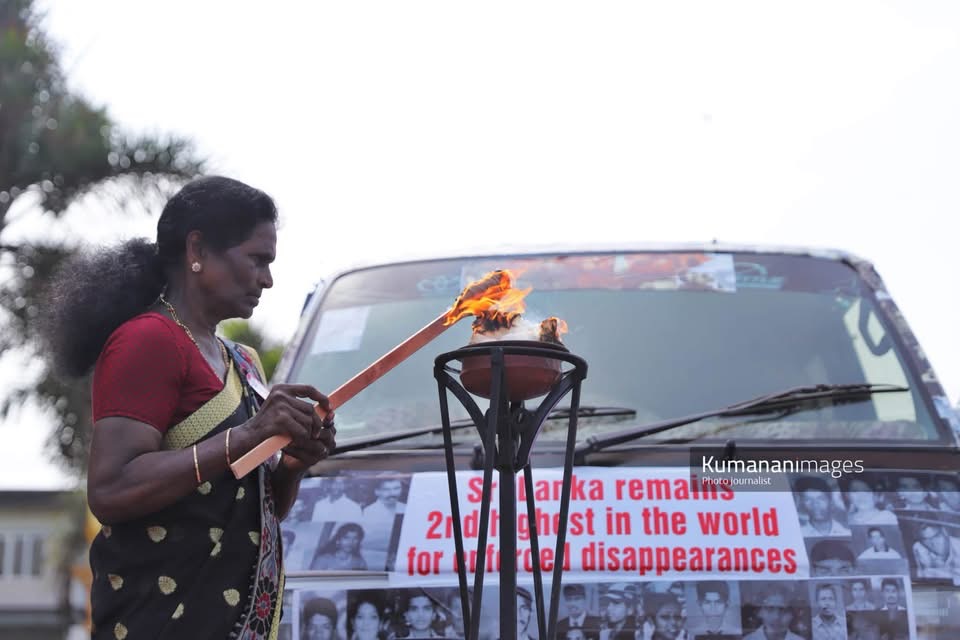
[12] Inmates face torture after prison riots in Sri Lanka, Wasantha Rupasinghe (10 July 2026)<https://www.wsws.org/en/articles/2026/07/11/uohf-j11.html

[13] Bourgeoisie, Petty Bourgeoisie and Proletariat: Jacobinism, Social Democracy and Fascism – The Political Programs of the Petty Bourgeoisie, Leon Trotsky, (August 1932) <https://www.marxists.org/archive/trotsky/1932/08/onlyroad2.htm >

[14] Sri Lanka’s ruling NPP secures a strong parliamentary majority to enforce IMF dictates: Build the SEP to fight the cuts! Statement of the Socialist Lead of Sri Lanka and South Asia (SLLA), the Revolutionary Left Faction (RLF) of the Socialist Equality Party (SEP) of Sri Lanka (16 November 2026) <https://www.thesocialist.lk/sri-lankas-ruling-npp-secures-a-strong-parliamentary-majority-to-enforce-imf-dictates-build-the-sep-to-fight-the-cuts/

Outside the Prison Walls: The Mahara Prison Riot and the Rise of Fascistic Ideology in Sri Lanka Read More »

මහා බලවතුන්ගේ ගැඹුරු වන එදිරිවාදිකම් මධ්‍යයේ යුරෝපීය අධිරාජ්‍යවාදීන් වෙළඳපල, ලාභ ශ්‍රමය සහ තීරණාත්මක අමුද්‍රව්‍ය වෙත ප්‍රවේශය සොයති —2 කොටස

ජෝර්ඩන් ෂිල්ටන් විසිනි. 

මෙහි පළවන්නේ ලෝක සමාජවාදී වෙබ් අඩවියේ (WSWS) 2026 ජුලි 9  දින “European imperialists seek access to markets, cheap labour and critical raw materials amid deepening great-power rivalries—Part 1යන හිසින් පළවූ ජෝර්ඩන් ෂිල්ටන් විසින් ලියන ලද කොටස් දෙකකින් යුතු ලිපි මාලාවේ පළමු කොටසේ සිංහල පරිවර්තනය යි. 

මෙය මෙම ලිපි මාලාවේ දෙවන සහ අවසාන කොටසයි. පළමු කොටස කියවන්න.

යුරෝපා සංගමය (EU – European Union), අප්‍රිකානු රටවල් සමඟ අමුද්‍රව්‍ය සහ සැපයුම් දාම පිළිබඳ මූලෝපායික හවුල්කාරිත්ව මාලාවකට ද අත්සන් තබා ඇත.

2022 දී බ්‍රසල්ස් [යුරෝපා සංගමය], දුර්ලභ පාංශු මූලද්‍රව්‍ය (rare earths), ලිතියම් සහ පුනර්ජනනීය හයිඩ්‍රජන් ආවරණය වන පරිදි නැමීබියාව සමඟ අවබෝධතා ගිවිසුමකට අත්සන් තැබීය. තඹ සහ කොබෝල්ට් නිස්සාරණය සහ ප්‍රවාහන යටිතල පහසුකම් සඳහා පුළුල් ආයෝජන ඇතුළත් කරමින් 2023 දී සැම්බියාව සමඟ වඩාත් පුළුල් අවබෝධතා ගිවිසුමකට එළඹෙන ලදී. ඩිජිටල් උපකරණ සඳහා ප්‍රධාන සංරචකයක් වන කොබෝල්ට් ලොව විශාලතම ප්‍රමාණයෙන් නිස්සාරණය කරන කොංගෝ ප්‍රජාතන්ත්‍රවාදී ජනරජය (DRC – Democratic Republic of Congo) සමඟ මූලෝපායික හවුල්කාරිත්වයක් එම වසරේම ඇති කර ගන්නා ලදී.

බෙන්ගුවෙලා (Benguela) දුම්රිය මාර්ගයේ සිතියම, කොංගෝ-කින්ෂාසා සහ සැම්බියාවේ දුම්රිය මාර්ග සමඟ සම්බන්ධ වන අයුරු [ඡායාරූපය: Hallel / CC BY-SA 4.0]

ලෝක වෙළඳපොළට අපනයනය කිරීම සඳහා ඇන්ගෝලාව හරහා අත්ලාන්තික් වෙරළ තීරයට DRC සහ සැම්බියාවෙන් අමුද්‍රව්‍ය ප්‍රවාහනය කිරීමට පහසුකම් සලසන ලොබිටෝ කොරිඩෝව (Lobito Corridor) පුළුල් කිරීමට යුරෝපා සංගමයට අවශ්‍ය වී ඇත. යුරෝපීය ආයෝජන බැංකුව (European Investment Bank) සහ පෞද්ගලික ආයතන විසින් අරමුදල් සපයනු ලබන මෙම යටිතල පහසුකම්, කලාපය තුළ චීන සහ එක්සත් ජනපද (US) බලපෑම සෘජුවම දුර්වල කිරීම අරමුණු කර ගත්තකි.

ඇමරිකා මහද්වීපය තුළ, මෙර්කෝසූර් (Mercosur) වෙළඳ ගිවිසුම මඟින් යුරෝපා සංගමය සහ තීරණාත්මක ඛනිජ (critical minerals) ලබා ගැනීමේ එහි වැදගත්ම හවුල්කරුවන් දෙදෙනෙකු වන ආර්ජන්ටිනාව සහ බ්‍රසීලය අතර ආර්ථික සබඳතා ශක්තිමත් කරයි. ආර්ජන්ටිනාව සමඟ එක්ව “ලිතියම් ත්‍රිකෝණයේ” (lithium triangle) කොටස්කරුවෙකු වන චිලී රාජ්‍යය, 2024 දී බ්‍රසල්ස් සමඟ වෙනම නිදහස් වෙළඳ ගිවිසුමකට (free trade agreement) එළඹුණි.

තවත් උතුරට වන්නට, සැලකිය යුතු ලෙස ප්‍රසාරණය වීමේ හැකියාවක් සහිත, තීරණාත්මක ඛනිජ සහ ස්වාභාවික වායු (natural gas) සැපයුම්කරුවෙකු ලෙස කැනඩාව සලකනු ලැබේ. කැනඩාව යුරෝපීය බලවතුන් සමඟ සබඳතා ගැඹුරු කර ගැනීමට උනන්දු වෙයි. ට්‍රම්ප් කැනඩාව 51 වන ප්‍රාන්තය ලෙස ඈඳා ගැනීමට තම අභිප්‍රාය ප්‍රකාශ කර ඇති අතර, එක්සත් ජනපද වෙළඳපොළ මත දැඩි ලෙස රඳා පවතින එහි ආර්ථිකය කඩාකප්පල් කරන බවට තර්ජනය කර ඇත.

මෑතකදී යෙරෙවන්හි (Yerevan) පැවැත්වුණු යුරෝපීය දේශපාලන ප්‍රජා (EPC – European Political Community) සමුළුවට එවැනි රැස්වීමකට සහභාගී වූ පළමු යුරෝපීය නොවන රාජ්‍ය නායකයා ලෙස කැනඩා අගමැති මාර්ක් කාර්නි සහභාගී වීම, සම්ප්‍රදායික අත්ලාන්තික් සාගරය හරහා සබඳතාවල (transatlantic relations) දරුණු බිඳවැටීම සහ වොෂින්ටනයේ තර්ජනවලට ප්‍රතිතුලනයක් (counterweight) ලෙස යුරෝපය සමඟ ආර්ථික සබඳතා ශක්තිමත් කර ගැනීමට කැනඩාවට ඇති උවමනාව පෙන්නුම් කළේය.

අමුද්‍රව්‍ය සහ ප්‍රතිසන්නද්ධකරණය

අමුද්‍රව්‍ය සහ වාණිජ වෙළඳපොළවල් සුරක්ෂිත කර ගැනීම සඳහා යුරෝපීය අධිරාජ්‍යවාදීන් ගේ ගෝලීය පීරා යෑම, තම ප්‍රතිවාදීන්ට එරෙහිව තම අවශ්‍යතා පැටවීමට සමත්, සටනට සූදානම් මිලිටරි බලකායක් අවශ්‍ය වේ. යුරෝපීය බලවතුන් තම මිලිටරි යන්ත්‍ර සඳහා යුරෝ බිලියන සිය ගණනක් වැය කරති. මේ ක්‍රියාදාමයේ සුවිශේෂිත තත්වයක පසුවන ජර්මනිය, ආණ්ඩුක්‍රම ව්‍යවස්ථාපිත ණය සීමාවන්ගෙන් මිලිටරි වියදම් නිදහස් කිරීම සඳහා තම මූලික නීතිය (Basic Law) සංශෝධනය කර ඇති අතර, එමඟින් හමුදාවට සහ අදාළ යටිතල පහසුකම් සඳහා අරමුදල් සැපයීමට යුරෝ ට්‍රිලියන 1 ක [ලංකා රුපියල් කෝටි කෝටි 3.9 ක්] ණය ලබා ගැනීමට එයට හැකි වී තිබේ. යුරෝපා සංගමය මිලිටරි ආයෝජන (military investments) සඳහා යුරෝ බිලියන 800 ක් වෙන් කර ඇත.

නූතන යුද යන්ත්‍රයක් තැනීමට අවශ්‍ය ද්‍රව්‍ය ලබා ගැනීමට යුරෝපීය අධිරාජ්‍යවාදීන් අපොහොසත් වුවහොත් මෙම මුදල්වලින් ඇති පලක් නැත. එක් ඇස්තමේන්තුවකට අනුව, එක්සත් ජනපදයේ නිෂ්පාදිත සෑම F-35 ප්‍රහාරක ජෙට් යානයක්ම නිපදවීම සඳහා දුර්ලභ පාංශු මූලද්‍රව්‍ය කිලෝග්‍රෑම් 400 ක් අවශ්‍ය වේ. යුධ ටැංකි, සන්නද්ධ වාහන සහ රේඩාර් පද්ධති සියල්ලම තීරණාත්මක ඛනිජවල ප්‍රධාන යෙදවුම් (inputs) මත රඳා පවතින අතර, යුරෝපා සංගම් රටවල් දැනට ඒවා ලබා ගන්නේ චීනයෙන්, රුසියාවෙන් හෝ ඔවුන්ගේ සෘජු පාලනය යටතේ නොමැති වෙනත් රටවලිනි. ප්‍රධාන යුධ ටැංකියක් (main battle tank – MBT) නිෂ්පාදනය කිරීමට අවශ්‍ය යෙදවුම් විස්තර කරමින් මූලෝපායික අධ්‍යයන සඳහා වන ජාත්‍යන්තර ආයතනය (IISS – International Institute for Strategic Studies) විසින් කරන ලද අධ්‍යයනයක මෙසේ සඳහන් වේ:

“නූතන ප්‍රධාන යුධ ටැංකියක (MBT) හැකියාව දැන් විනිශ්චය කරනු ලබන්නේ එහි සංවේදක සහ ඔප්ට්‍රොනික්ස් (optronics-විද්‍යුත්-ආලෝක තාක්ෂණය) වල නවීන-සංකීර්ණ කුසලතාවයන් මෙන්ම වෙඩි බලය, ආරක්ෂාව සහ සංචලතාව වැනි සම්ප්‍රදායික මිතිකයන් (මිනුම් දඬු) ගෙනි. මේ සම්බන්ධයෙන් ගත් කල, වඩා හොඳ සංවේදක මඟින් යුද පිටියේ වඩා හොඳ දැනුවත්භාවයක් (battlefield awareness) ලබා දෙන අතර, එමඟින් ඉලක්ක සොයාගැනීමේ, හඳුනාගැනීමේ සහ තහවුරු කරගැනීමේ (identification) පරාසයන් පුළුල් කිරීමට කාර්ය මණ්ඩලයට හැකියාව ලැබේ. සංවේදක වඩ වඩාත් සංකීර්ණ වන අතර තීරණාත්මක ද්‍රව්‍ය මාලාවක් මත රඳා පවතී. මූලික වීදුරු සහ දර්පණ සඳහා සිලිකන් සහ සෙරමික් භාවිතා කරන අතර, අඩු දෘශ්‍යතා සහිත පරිසරයන්හි ප්‍රධාන මෙවලම් වන අධෝරක්ත (IR – infrared) සහ රාත්‍රී දර්ශන (NV – night-vision) පද්ධතිවල රසදිය (mercury), කැඩ්මියම් ටෙලුරයිඩ් (cadmium telluride), ජර්මේනියම් (germanium), තඹ සහ ටැන්ටලම් (tantalum) අඩංගු විය හැක. ලේසර් දුර මනින උපකරණ (laser rangefinders) සහ වෙඩි කඳ යොමු සංවේදක (muzzle reference sensors) නූතන ටැංකිවල පොදු ලක්ෂණ වන අතර, ඉලක්කයක් දෘශ්‍යමය වශයෙන් හඳුනාගත් පසු වෙඩි තැබීමේ නිවැරදි කෝණ/විසඳුම් (firing solutions) සකස් කිරීම වේගවත් කිරීමට ඒවා උපකාරී වේ. මේවා සඳහා නියෝඩියමියම්-ඉට්‍රියම්-ඇලුමිනියම් ගානට් (neodymium–ytrium–aluminium garnet) සහ ඉන්ඩියම් (indium) හා අර්බියම් (erbium) භාවිතා කළ හැක. එක්සත් ජනපද භූ විද්‍යා සමීක්ෂණ ආයතනයට (USGS – US Geological Survey) අනුව, නියෝඩියමියම් සහ ඉට්‍රියම් යනු දුර්ලභ පාංශු මූලද්‍රව්‍ය (REEs – Rare Earth Elements) වන අතර ඉට්‍රියම් 94% ක්ම සපයනු ලබන්නේ චීනයෙනි.”

MBT සන්නිවේදන පද්ධති, “තඹ සහ ගැලියම් ආසනයිඩ් (gallium arsenide), ගැලියම් නයිට්‍රයිඩ් (gallium nitride), බෙරිලියම් (beryllium), සිලිකන්, රිදී සහ ඉන්ඩියම් වැනි අනෙකුත් තීරණාත්මක ද්‍රව්‍ය” මත රඳා පවතින බව එහි සඳහන් වේ. ටැංකියේ ප්‍රධාන තුවක්කුව සහ සන්නාහය (armour) සම්බන්ධයෙන් ගත් කල, ඒවාට “ඇන්ටිමනි (antimony), කාබන් (carbon), මැංගනීස් මිශ්‍ර ලෝහ (manganese alloys), ක්‍රෝමියම් (chromium), නිකල් (nickel), මොලිබ්ඩිනම් (molybdenum) සහ වැනේඩියම් (vanadium)” අවශ්‍ය වන අතර පතොරම් (ammunition) සහ සන්නාහය ඒවායේ දෘඪතාව හේතුවෙන් ටංස්ටන් (tungsten) සහ ටයිටේනියම් (titanium) මත රඳා පවතී.

2023 පෙබරවාරි 1 වන දින ජර්මනියේ ඔගස්ටස්ඩෝෆ්හි ෆීල්ඩ් මාර්ෂල් රොමෙල් බැරැක්කයේ බුන්ඩෙස්වෙහ්ර් (Bundeswehr – ජර්මානු සන්නද්ධ හමුදා) ටැංකි බලඇණිය 203 වෙත ජර්මානු ආරක්ෂක අමාත්‍ය බොරිස් පිස්ටෝරියස්ගේ සංචාරයකදී ලෙපර්ඩ් 2 (Leopard 2) ටැංකියක් දක්නට ලැබෙන අයුරු. [AP ඡායාරූපය/මාටින් මේස්නර්]

IISS අධ්‍යයනය නාවික සහ ගුවන් ක්ෂේත්‍රවල මිලිටරි උපකරණ සඳහා ද මෙවැනිම විස්තරයකට යයි. එහි හැඳින්වීමේ සඳහන් වන පරිදි: “බාහිර සැපයුම් මත, සහ විශේෂයෙන් බොහෝ විට එක් ස්ථානයක පමණක් සංකේන්ද්‍රණය වී ඇති තීරණාත්මක අමුද්‍රව්‍ය මත යුරෝපයේ ඉහළ යැපීම, යුරෝපීය ආරක්ෂක/මිලිටරි නිෂ්පාදනය (defence manufacturing) සඳහා සැලකිය යුතු සහ වර්ධනය වන අවදානමක් පෙන්නුම් කරයි.”

වෙළඳ හවුල්වල සිට ලෝක යුද්ධය දක්වා, සහ කම්කරු පන්තියේ සමාජවාදී ප්‍රතිචාරය

ස්වභාවික සම්පත් සහ ලාභ ශ්‍රමය සුරක්ෂිත කර ගැනීමට සහ වෙළඳපොළවල් පුළුල් කිරීම සදහා යුරෝපා සංගමය දරන උත්සාහයන් සිදුවන්නේ ගෝලීය ධනේශ්වර අර්බුදයක් මැද ය. එහි ප්‍රතිවිරෝධතා දැනටමත් තුන්වන ලෝක යුද්ධයක මුල් අවධියට මඟ පාදා ඇති අතර, ලෝකය නැවත බෙදා ගැනීමක් සඳහා ප්‍රධාන බලවතුන් පටලවා ඇත. ඕනෑම එක් බලවතෙකු තම සැපයුම් දාමයන් ස්ථාවර කිරීමට දරන උත්සාහය එහි ප්‍රතිවාදීන් සමඟ නව ආතතීන් ඇති කරයි. සියලුම බලවතුන් එකවර එසේ කිරීමට දරන උත්සාහය අනිවාර්යයෙන්ම අධිරාජ්‍යවාදී යුද්ධයක් දක්වා උත්සන්න විය යුතුය. යුරෝපය තුළ, යුරෝපා සංගමය යනු තනි බලවතෙකු නොව, ප්‍රංශය සහ ජර්මනිය අතර නැවත නැවතත් ආතතීන් ඇවිලීමෙන් පෙන්නුම් කරන පරිදි, අවශ්‍යතා එකිනෙකට වෙනස් වන අධිරාජ්‍යවාදී බලවතුන්ගේ සන්ධානයක් වීම මඟින්, මෙම තත්ත්වය තවත් සංකීර්ණ වෙයි.

මෙම ගැටුම්කාරී න්‍යාය පත්‍ර දැනටමත් යුක්රේනය තුළ පුපුරා ගොස් ඇති අතර, එහිදී එක්සත් ජනපදය සහ නේටෝව ක්‍රමානුකූලව යුක්රේනය තුළ රුසියාව සමඟ යුද්ධයක් අවුලුවාලීය. යුරෝපීය බලවතුන් මඟහරිමින් රුසියාව සමඟ එකඟතාවයකට පැමිණීමට වොෂින්ටනය දරන උත්සාහයේ කොටසක් ලෙස, ට්‍රම්ප් පසුගිය වසරේ යුක්රේනය සමඟ රටේ තීරණාත්මක ඛනිජ සූරාකෑම සදහා– යුරෝපීය අධිරාජ්‍යවාදීන් බැහැර කරන– ද්විපාර්ශ්වික ගිවිසුමකට එළඹුණි.

දේශගුණික විපර්යාස හේතුවෙන් ප්‍රවේශය සදහා විවෘත වන ආක්ටික් මුහුදු මාර්ගවල  හදවතේ ප්‍රධාන උපායමාර්ගික ස්ථානයක් හිමිකරගෙන සිටින, අමුද්‍රව්‍යවලින් පොහොසත් ඩෙන්මාර්ක ස්වයං පාලන ප්‍රදේශයක් වන ග්‍රීන්ලන්තය ඈඳා ගැනීමට නැවත නැවතත් තර්ජනය කරමින් ට්‍රම්ප් පසුගිය වසර පුරා යුරෝපීය බලවතුන් සමඟ ආතතීන් ගැඹුරු කළේය. එක්සත් ජනපද සොල්දාදුවන් සඳහා ස්ථිර කඳවුරු සුරක්ෂිත කර ගැනීමට සහ දූපතේ ඕනෑම ප්‍රධාන ආයෝජන තීරණයක් සම්බන්ධයෙන් වොෂින්ටනයට නිෂේධ බලය ලබා ගැනීමට එක්සත් ජනපදය ඩෙන්මාර්කය සහ ග්‍රීන්ලන්තය සමඟ සාකච්ඡා පවත්වමින් සිටින බව නිව් යෝර්ක් ටයිම්ස් පුවත්පත මැයි මාසයේදී වාර්තා කළේය.

උප ජනාධිපති ජේ.ඩී. වෑන්ස් ග්‍රීන්ලන්තයේ එක්සත් ජනපද මිලිටරියේ පිටුෆික් අභ්‍යවකාශ කඳවුරේදී අදහස් දක්වන අතර, බලශක්ති ලේකම් ක්‍රිස් රයිට් (වමේ) සහ ධවල මන්දිරයේ ජාතික ආරක්ෂක උපදේශක මයික් වෝල්ට්ස් බලා සිටිති, 2025 මාර්තු 28 සිකුරාදා. [AP ඡායාරූපය/ජිම් වොට්සන්

උප ජනාධිපති ජේ.ඩී. වෑන්ස් ග්‍රීන්ලන්තයේ එක්සත් ජනපද මිලිටරියේ පිටුෆික් අභ්‍යවකාශ කඳවුරේදී අදහස් දක්වන අතර, බලශක්ති ලේකම් ක්‍රිස් රයිට් (වමේ) සහ ධවල මන්දිරයේ ජාතික ආරක්ෂක උපදේශක මයික් වෝල්ට්ස් බලා සිටිති, 2025 මාර්තු 28 සිකුරාදා. [AP ඡායාරූපය/ජිම් වොට්සන්]

අධිරාජ්‍යවාදීන් අතර ප්‍රතිවිරෝධතා දැඩි වීම සහ ගැටුම්කාරී කන්ඩායම් විවෘතව නැවත ඉස්මතු වීම, දෙවන ලෝක යුද්ධයට පෙර පැවති සහ එය පෝෂණය කළ 1930 ගණන්වල තරඟකාරී වෙළඳ කාණ්ඩ ගැසීම් වලට සමාන වේ. හතරවන ජාත්‍යන්තරයේ ජාත්‍යන්තර කමිටුව (ICFI – International Committee of the Fourth International) මෙම ක්‍රියාවලියේ මූලාරම්භය එහි වර්ධනයේ වඩාත් මුල් අවධියකදී, එනම් 1990 ගණන්වල මුල් භාගයේදී, එක්සත් ජනපදයේ අභියෝගයට ලක් නොවූ ආධිපත්‍යය  මත පදනම් වූ පශ්චාත් යුද සමතුලිතතාවය බිඳවැටීමේදී හඳුනා ගත්තේය. එම වසරේ අගභාගයේදී බර්ලිනයේ කැඳවන ලද අධිරාජ්‍යවාදී යුද්ධයට සහ යටත්විජිතවාදයට එරෙහි ජාත්‍යන්තර සම්මේලනයක් සඳහා කැඳවුම් කරමින් ICFI එහි 1991 මැයි දින ප්‍රකාශනයේ මෙසේ ලිවීය:

“දෙවන ලෝක යුද්ධය අවසන් වීමෙන් පසු ජාත්‍යන්තර සබඳතාවල මෙවැනි අවිනිශ්චිතතාවයක් පැවතී නැත. සීතල යුද්ධය (Cold War) සමයේ ජාත්‍යන්තර රාජ්‍ය තාන්ත්‍රිකභාවය ගලා ගිය පෙර දැකිය හැකි නාලිකා සිදුවීම් විසින් අභිබවා ගොස් ඇත. පැරණි සන්ධානයන්  බිඳ වැටෙමින් පවතී; තවද නව සන්ධානයන් තවමත් ගොඩනැගීමේ ක්‍රියාවලියේ පවතී. ලෝක ආධිපත්‍යය සඳහා ප්‍රබල අන්තර්ජාතික සංගතවල අරගලය ජාත්‍යන්තර කටයුතුවලට බිහිසුණු ආතතියක් ලබා දෙයි… ‘මිතුරන්’ සහ ‘සතුරන්’ පෙළගැස්වීම තවමත් බොහෝ සෙයින් බලාපොරොත්තු නොවූ ස්වරූපයක් ගත හැකිය. නමුත් අධිරාජ්‍යවාදයේ  ස්වභාවයම, අවශ්‍යතාවල ගැටුම අනිවාර්යයෙන්ම යුද්ධය දෙසට ගමන් කරයි.

වසර තිස්පහකට පසු, ලෝක යුද්ධය තවදුරටත් අනාගත වියහැකියාවක් (prospect) නොව, කම්කරුවන්ගේ ඇස් පනාපිට දිග හැරෙන බිහිසුණු ක්‍රියාවලියකි. යුරෝපීය බලවතුන් එහි ආරම්භය ගැන තමන්ගෙන් සමග සාකච්ඡා  නොකකල බවට මැසිවිලි නගන අතරේම අනුමත කළ ඉරානයට එරෙහි නීතිවිරෝධී එක්සත් ජනපද/ඊශ්‍රායල යුද්ධය, සෝවියට් සංගමය බිඳවැටීම දක්වා දිවෙන සමස්ත ඓතිහාසික යුගයක උච්චතම අවස්ථාව විය. නමුත් අඛණ්ඩ යුද මාලාවක් හරහා මිලිටරි බලය යෙදවීමෙන් තම ආර්ථික පරිහානිය පියවා ගැනීමට ඇමරිකානු අධිරාජ්‍යවාදය දැරූ උත්සාහය අසාර්ථක වී ඇත.

ඉරානය සහ පුළුල් මැදපෙරදිග වේගයෙන් උත්සන්න වන තුන්වන ලෝක යුද්ධයක එක් පෙරමුණක් වන අතර, එම ලෝක යුද්ධය, රුසියාවට එරෙහි යුද්ධය සහ ඉන්දු-පැසිෆික් කලාපයේ චීනය සමඟ යුද්ධය සඳහා වන සූදානම ද ඇතුළත් කර ගනී. වෙළඳපොළවල්, ස්වභාවික සම්පත් සහ ලාභ ශ්‍රමය සඳහා වන ගෝලීය පොරබැදීමේදී යුරෝපීය බලවතුන් — මිලිටරි සැපයුම් සහ බුද්ධි තොරතුරු සඳහා එක්සත් ජනපදය මත බෙහෙවින් රඳා පවතින බැවින් — යම් මට්ටමක අත්ලාන්තික් සාගරයෙන් හරහා සහයෝගීතාවයක් පවත්වා ගැනීමට කටයුතු කරන අතරම, මෙම හිටපු මිතුරන් (erstwhile allies) ගෝලීය යුද්ධයේ සියලු පෙරමුණු වලදී එකිනෙකා ප්‍රතිවාදීන් ලෙස දැක ගනිති.

ලෙනින් පළමු ලෝක යුද්ධය සහ රුසියානු විප්ලවය විසින් විවෘත කරන ලද ඓතිහාසික අවධිය යුද්ධ සහ විප්ලවයන්ගේ යුගයක් ලෙස විස්තර කළේය. මන්ද, ධනවාදයේ ප්‍රතිවිරෝධතා අධිරාජ්‍යවාදී ලෝක යුද්ධයක් හෝ සමාජවාදී විප්ලවයක් හරහා මිස විසඳිය නොහැකි මට්ටමට මුහුකුරා ගොස් තිබූ බැවිනි. මෙම යුගය පිළිබඳ එම අවබෝධය ඇතිවය ICFI හි 1991 මැයි දින ප්‍රකාශය අවධාරණය කළේ මෙසේය:

“ඓතිහාසික අත්දැකීම් පැහැදිලිවම සාක්ෂි දරන්නේ ප්‍රශ්නය තීරණය කරන්නේ ධනපති දේශපාලඥයන්ගේ සදාචාරාත්මක මනස්තාප (moral qualms) හෝ ආත්මීය භීතීන් නොව, අධිරාජ්‍යවාදයේ වෛෂයික ප්‍රතිවිරෝධතා බවයි. තවත් ලෝක යුද්ධයක් වැලැක්විය හැකි ලොව එකම බලවේගය විප්ලවවාදී කම්කරු පන්තියයි.”

යුරෝපයේ කම්කරුවන්ගේ කර්තව්‍යය වන්නේ යුද්ධයට, ප්‍රතිසන්නද්ධකරණ අයවැයට, සමාජ කොන්දේසි වලට එල්ල කරන ප්‍රහාරවලට සහ ධනේශ්වර තරඟකාරිත්වයේ සමස්ත තර්කනයට එරෙහි වන ස්වාධීන දේශපාලන ව්‍යාපාරයක් ගොඩනැගීමයි. එමෙන්ම එය එක්සත් ජනපදය, රුසියාව, චීනය, යුක්රේනය, ඉන්දියාව, අප්‍රිකාව සහ ලොව පුරා සිටින කම්කරුවන් සමඟ සවිඥානික එකමුතුවකින් යුතුව සිදු කිරීමයි. සියලුම රටවල කම්කරුවන් සමාජයේ සමාජවාදී පරිවර්තනයක් සඳහා සටන් කළ යුතුය: ලාභය සඳහා වන නිෂ්පාදනය වෙනුවට මානව අවශ්‍යතා සඳහා වන නිෂ්පාදනය ආදේශ කිරීම සහ ජාතික රාජ්‍ය පද්ධතිය වෙනුවට සමාජවාදී සමූහාණ්ඩුවල සහෝදර සංගමයක් ආදේශ කිරීමයි.

මෙය හතරවන ජාත්‍යන්තරයේ ජාත්‍යන්තර කමිටුවේ වැඩපිළිවෙළයි. වත්මන් සමාජ ක්‍රමයේ (social order) සමස්ත තර්කනය මනුෂ්‍ය වර්ගයා තල්ලු කරමින් සිටින ව්‍යසනය  වැලැක්වීමට වෙනත් මඟක් නැත.

සමාප්තයි.

[අවධාරණය පරිවර්තනයේදී එකතු කෙරුණි]

මහා බලවතුන්ගේ ගැඹුරු වන එදිරිවාදිකම් මධ්‍යයේ යුරෝපීය අධිරාජ්‍යවාදීන් වෙළඳපල, ලාභ ශ්‍රමය සහ තීරණාත්මක අමුද්‍රව්‍ය වෙත ප්‍රවේශය සොයති —2 කොටස Read More »

Minerals race

මහා බලවතුන්ගේ ගැඹුරු වන එදිරිවාදිකම් මධ්‍යයේ යුරෝපීය අධිරාජ්‍යවාදීන් වෙළඳපල, ලාභ ශ්‍රමය සහ තීරණාත්මක අමුද්‍රව්‍ය වෙත ප්‍රවේශය සොයති—1 කොටස

ජෝර්ඩන් ෂිල්ටන් විසිනි. 

මෙහි පළවන්නේ ලෝක සමාජවාදී වෙබ් අඩවියේ (WSWS) 2026 ජුලි 8  දින “European imperialists seek access to markets, cheap labour and critical raw materials amid deepening great-power rivalries—Part 1යන හිසින් පළවූ ජෝර්ඩන් ෂිල්ටන් විසින් ලියන ලද කොටස් දෙකකින් යුතු ලිපි මාලාවේ පළමු කොටසේ සිංහල පරිවර්තනය යි. 

මෙය කොටස් දෙකකින් යුත් ලිපි මාලාවක පළමු කොටසයි. දෙවන කොටස කියවන්න.

යුරෝපයේ අධිරාජ්‍යවාදී බලවතුන් පසුගිය වසර කිහිපය තිස්සේ ලතින් ඇමරිකාව, අප්‍රිකාව සහ ඉන්දු-පැසිෆික් කලාපය පුරා විහිදෙන දුරදිග යන වෙළඳ ගිවිසුම් සහ අමුද්‍රව්‍ය හවුල්කාරිත්වයන් මාලාවකට එළඹ ඇත. ඩොනල්ඩ් ට්‍රම්ප් නැවතත් ධවල මන්දිරයට පැමිණීම සහ “ඇමරිකාව පළමුව” යන ගෝලීය වෙළඳ යුද්ධය වැලඳ ගැනීම මෙම ක්‍රියාවලිය සැලකිය යුතු ලෙස වේගවත් කර තිබේ.

මැයි මාසය ආරම්භයේදී, යුරෝපා සංගමය (EU) සහ මර්කෝසූර් (Mercosur) වෙළඳ හවුල අතර දිගු කලක් තිස්සේ සාකච්ඡා කරන ලද ගිවිසුම නිල වශයෙන් බලාත්මක විය. යුරෝපා සංගමයේ සාමාජික රටවල් 27 සහ ලතින් ඇමරිකානු රටවල් වන ආර්ජන්ටිනාව, බ්‍රසීලය, පැරගුවේ සහ උරුගුවේ අතර ඇති කරගත් මෙම ගිවිසුම, වෙළඳපල, අමුද්‍රව්‍ය සහ ආයෝජන අවස්ථා සඳහා ප්‍රවේශය ලබා ගැනීම වෙනුවෙන් ලෝකයේ ප්‍රධාන බලවතුන් අතර පවතින අරගලය තීව්‍ර වීම මනාව සංකේතවත් කරයි.

රොටර්ඩෑම් හි කන්ටේනර් පර්යන්තයක මිනිසුන් රහිත ස්වයංක්‍රීය නියෙමු (guided) වාහනයකට කන්ටේනරයක් පටවන ආකාරය [ඡායාරූපය: Quistnix / CC BY 1.0]

මර්කෝසූර් හවුල සහ ඉන්දියාව, මෙක්සිකෝව මෙන්ම නවසීලන්තය සමඟ ඇති කරගත් එවැනිම ගිවිසුම් නොවරදවාම “නිදහස් වෙළඳ ගිවිසුම්” ලෙස නම් කරනු ලැබේ. එහෙත් ඒවායින් නිරූපණය වන්නේ තම ප්‍රතිවාදීන්ගේ වියදමෙන් යුරෝපීය ප්‍රාග්ධනය සඳහා ප්‍රධාන වෙළඳපලවල් සහ සැපයුම් දාමයන් අත්පත් කර ගැනීමට ගන්නා උත්සාහයකි. එමෙන්ම, ඇමරිකානු අධිරාජ්‍යවාදයේ අභියෝගයට ලක් නොවූ ආධිපත්‍යය මත පදනම්ව දෙවන ලෝක යුද්ධයෙන් පසුව පිහිටුවන ලද ගෝලීය වෙළඳ විධිවිධාන තවදුරටත් බිඳවැටීමක් ද ඉන් අදහස් කෙරේ. වර්ධනය වන භූ-දේශපාලනික ගැටුම්කාරී තත්ත්වයන් යටතේ, ලෝක ධනවාදය තරඟකාරී කන්ඩායම්වලට බෙදී යමින් පවතින අතර, සෑම කන්ඩායමක්ම අනෙකාගේ වියදමෙන් වෙළඳපල, සම්පත් සහ උපායමාර්ගික වාසි තහවුරු කර ගැනීමට උත්සාහ කරති.

බ්‍රසල්ස්, බර්ලින් සහ පැරිස්, බුවනෝස් අයර්ස් සිට මුම්බායි දක්වා යුරෝපීය ප්‍රාග්ධනය සඳහා වෙළඳපල ප්‍රවේශය ඉල්ලා සිටින අතර, වොෂින්ටනයේ “ඇමරිකාව පළමුව” යන න්‍යාය පත්‍රය පදනම් වී ඇත්තේ ඇමරිකානු මහාද්වීපයේ ආර්ථික ජීවිතයෙන් සියලුම “අර්ධගෝලීය නොවන” (non-hemispheric) ප්‍රතිවාදීන් බැහැර කිරීම මත ය. මෙම ප්‍රතිවාදී කන්ඩායම් දෙකම එකවර චීනයට එරෙහිව එල්ල වී ඇති අතර, චීනයේ ආර්ථික ව්‍යාප්තිය සහ වෙළඳාම මෙන්ම ආයෝජන වර්ධනය කිරීමට ගන්නා උත්සාහය, බීජිං පාලනය උතුරු ඇමරිකානු සහ යුරෝපීය අධිරාජ්‍යවාදීන්ගේ කොල්ලකාරී අභිලාෂයන්ට ප්‍රධාන තර්ජනයක් බවට පත් වී ඇත.

ඉරානයට එරෙහි එක්සත් ජනපද/ඊශ්‍රායල යුද්ධය සහ යුක්‍රේනයේ රුසියාවට එරෙහි එක්සත් ජනපද/නැටෝ (NATO) යුද්ධය, දිනෙන් දින උත්සන්න වන ලෝකය නැවත බෙදා ගැනීමේ තුන්වන ලෝක යුද්ධයක ආරම්භක අදියරයන් සනිටුහන් කරයි. යුරෝපා සංගමයේ ව්‍යාප්ත වන වෙළඳ ගිවිසුම් සහ අමුද්‍රව්‍ය හවුල්කාරිත්ව ජාලය විශ්ලේෂණය කළ යුත්තේ මෙම සන්දර්භය තුළ ය.

යුරෝපීය අධිරාජ්‍යවාදය හුදෙක් ආර්ථික න්‍යාය පත්‍රයක් පමණක් ලුහුබඳින්නේ නැත; වෙළඳපල, ශ්‍රම සංචිත, අමුද්‍රව්‍ය සහ භූ-උපායමාර්ගික බලපෑම් අත්පත් කර ගැනීම සඳහා තම ප්‍රතිවාදීන්ට එරෙහිව කුරිරු මිලිටරි බලයක් යෙදවිය හැකි වන පරිදි ඔවුහු උපරිමයෙන් සන්නද්ධ වෙමින් සිටිති. මෙම ගමන, පශ්චාත් යුධ සමයේ වැඩි කාලයක් ආධිපත්‍යය දැරූ එක්සත් ජනපද අධිරාජ්‍යවාදය සහ යුරෝපීය බලවතුන් අතර අන්තර්- අත්ලාන්තික් සන්ධානය බිඳවැටීම වේගවත් කරමින් තිබේ.

යුරෝපය මුල් කරගත් වෙළඳ හවුලක් නිර්මාණය කිරීම

යුරෝපා සංගමයේ ආර්ථික කොල්ලකෑමේ සහ ලාභ ලබාගැනීමේ ගෝලීය මූලෝපායේ හදවතෙහි පවතින්නේ අනාගත කර්මාන්ත සහ ආක්‍රමණශීලී මිලිටරි මෙහෙයුම් යන දෙකම සඳහා තීරණාත්මක අමුද්‍රව්‍ය සුරක්ෂිත කර ගැනීමේ මෙහෙයුමයි. 2024 දී බලාත්මක වූ තීරණාත්මක අමුද්‍රව්‍ය පනත (The Critical Raw Materials Act-CRMA), විශේෂයෙන්ම චීනය වැනි තනි සැපයුම්කරුවන් මත යැපීම අවම කිරීම සඳහා පැහැදිලි ඉලක්ක කෙටුම්පත් කරයි. ලොව පුරා සිටින අනෙකුත් සැපයුම්කරුවන් සමඟ මූලෝපායික හවුල්කාරිත්වයන් ඇති කර ගැනීම, ඛනිජ ප්‍රතිචක්‍රීකරණය ඉහළ නැංවීම සහ දේශීය කැණීම් ව්‍යාපෘති ප්‍රවර්ධනය කිරීම යන කරුණුවල එකතුවක් මඟින් මෙය සාක්ෂාත් කර ගැනීමට එය අපේක්ෂා කරයි.

චීනය සැලකිය යුතු ප්‍රමාණයකින් තීරණාත්මක අමුද්‍රව්‍ය නිස්සාරණය නොකළද, වඩාත්ම වැදගත් මූලද්‍රව්‍ය සමහරක් පිරිපහදු කිරීම සහ සැකසීමේ ක්‍රියාවලිය සම්බන්ධයෙන් ඔවුන් ආධිපත්‍යය දරයි. උදාහරණයක් ලෙස, විද්‍යුත් වාහන (EV) සඳහා බැටරි නිපදවීමට, ඩිජිටල් උපකරණ සහ අනෙකුත් අධි-තාක්‍ෂණික මෙහෙයුම් සඳහා අත්‍යවශ්‍ය ද්‍රව්‍ය තුනක් වන ලෝකයේ බොහොමයක් මැංගනීස්, කොබෝල්ට් සහ මිනිරන් (ග්‍රැෆයිට්) පිරිපහදු කිරීමේ වගකීම දරන්නේ චීන පිරිපහදු මධ්‍යස්ථාන වේ. දශක ගණනාවක් තිස්සේ එක්සත් ජනපද සහ යුරෝපීය අධිරාජ්‍යවාදය චීනය ලෝකයේ ශ්‍රම සූරාකෑමේ මධ්‍යස්ථානය (sweatshop) ලෙස ගොඩනැගීම සඳහා එහි බිලියන සිය ගණනක් ආයෝජනය කර ඇත.

2010 දෙසැම්බර් 30 වන දින මධ්‍යම චීනයේ ජියැන්ග්සි පළාතේ ගන්ක්සියන් ප්‍රාන්තයේ දුර්ලභ පාංශු පතලක කම්කරුවන් යන්ත්‍රෝපකරණ භාවිතයෙන් කැණීම් කරන අයුරු. [AP ඡායාරූපය/Chinatopix via AP]

2010 දෙසැම්බර් 30 වන දින මධ්‍යම චීනයේ ජියැන්ග්සි පළාතේ ගන්ක්සියන් ප්‍රාන්තයේ දුර්ලභ පාංශු පතලක කම්කරුවන් යන්ත්‍රෝපකරණ භාවිතයෙන් කැණීම් කරන අයුරු. [AP ඡායාරූපය/Chinatopix via AP]

යුරෝපීය “තාක්‍ෂණික ස්වෛරීභාවය” සඳහා එනම්, එක්සත් ජනපදයෙන් සහ චීනයෙන් ස්වාධීනව විද්‍යුත් වාහන, පුනර්ජනනීය බලශක්ති යටිතල පහසුකම්, ස්මාර්ට්ෆෝන්, ඩිජිටල් යටිතල පහසුකම් සහ යුද්ධ කිරීම සඳහා වන උපකරණ නිෂ්පාදනය කිරීමේ හැකියාව සඳහා ලිතියම්, කොබෝල්ට්, දුර්ලභ පාංශු මූලද්‍රව්‍ය (REEs) සහ නිකල් වැනි ද්‍රව්‍ය කෙරෙහි සෘජු පාලනයක් තිබීම අත්‍යවශ්‍ය බවට වර්ධනය වන පිළිගැනීමක් CRMA පනතෙන් පිළිබිඹු වේ. යුරෝපා සංගම් කොමිසම සඳහන් කළේ, “බැටරි නිෂ්පාදනය සඳහා ලිතියම්, කොබෝල්ට් සහ නිකල් භාවිතා වේ; සූර්ය පැනල සඳහා ගැලියම් භාවිතා වේ; සුළං තාක්ෂණය සඳහා අමු බෝරෝන් භාවිතා වේ; අභ්‍යවකාශ සහ ආරක්ෂක අංශවල ටයිටේනියම් සහ ටංස්ටන් භාවිතා වේ” යනුවෙනි.

ඉදිරි දශක කිහිපය තුළ මෙම ද්‍රව්‍ය සමහරක් සඳහා ඇති ඉල්ලුම කිහිප ගුණයකින් වැඩි වනු ඇතැයි පුරෝකථනය කර ඇත. උදාහරණයක් ලෙස, යුරෝපා සංගමය 2024 දී පුරෝකථනය කළේ ලිතියම් සඳහා ඇති ඉල්ලුම 2030 වන විට 10 ගුණයකින් සහ 2040 වන විට 21 ගුණයකින් වැඩි වන අතර, එම කාලසීමාවන් තුළම දුර්ලභ පාංශු ලෝහ සඳහා ඇති ඉල්ලුම හය හෝ හත් ගුණයකින් ඉහළ යනු ඇති බවයි.

මෙයට ප්‍රතිචාර වශයෙන්, යුරෝපා සංගමය සම්පත් සබඳතා පිළිබඳ ගෝලීය ජාලයක් පිහිටුවීමට උත්සාහ කරයි.

ඉන්දු-පැසිෆික් කලාපය තුළ ඕස්ට්‍රේලියාව කේන්ද්‍රීය ස්ථානයක් ගනී. 2024 දී, යුරෝපා සංගමය ඕස්ට්‍රේලියාව සමඟ මූලෝපායික ඛනිජ පිළිබඳ අවබෝධතා ගිවිසුමකට අත්සන් තැබූ අතර, එමඟින් ලිතියම්, දුර්ලභ පාංශු මූලද්‍රව්‍ය, මිනිරන්, මැංගනීස් සහ කොබෝල්ට් සැපයුම ඉහළ නැංවීමේ යුරෝපා සංගමයේ අවශ්‍යතාවය හඳුනා ගන්නා ලදී. ඕස්ට්‍රේලියාවේ විශාල අමුද්‍රව්‍ය තැන්පතු වෙත ප්‍රවේශ වීම සඳහා යුරෝපීය ආයෝජන බැංකුවේ මූල්‍ය ආධාර ලැබෙනු ඇති අතර, පතල් කැණීමේ ව්‍යාපෘති, අමුද්‍රව්‍ය සැකසීම සහ ප්‍රවාහන යටිතල පහසුකම් සඳහා මූල්‍ය ආධාර සැපයීමට ඔවුන් 2025 අගභාගයේදී එකඟ විය.

මධ්‍යම ආසියාව යනු යුරෝපීය අධිරාජ්‍යවාදය එහි ස්වභාවික සම්පත් වෙනුවෙන් විනිවිදිමට අදිටන් කරගෙන සිටින තවත් එක් කලාපයක් වන අතර, එමඟින් යුරෝපා සංගමය, චීනයට, එක්සත් ජනපදයට සහ රුසියාවට එරෙහිව පෙළගැසෙයි. කසකස්තානය, උස්බෙකිස්තානය සහ ටජිකිස්තානය වැනි රටවල් සතුව යුරේනියම්, තඹ සහ දුර්ලභ පාංශු මූලද්‍රව්‍යවල (REEs) සැලකිය යුතු සංචිත පවතී. 2025 අප්‍රේල් මාසයේදී උස්බෙකිස්තානයේ සමර්කන්ඩ් හි පැවැති ප්‍රථම යුරෝපා සංගම්-මධ්‍යම ආසියානු සමුළුවේදී ද ඇතුළුව, මෙම කලාපය තුළ තම මැදිහත්වීම ගැඹුරු කිරීමට යුරෝපා සංගමය උත්සාහ කර ඇත. සමුළුවේ ප්‍රකාශය මඟින් යුරෝපා සංගමය සහ මධ්‍යම ආසියානු ජනරජයන් අතර “මූලෝපායික හවුල්කාරිත්වයක්” ඇති කිරීමට කැප වූ අතර, පසුව ඒකාබද්ධ සම්පත් ප්‍රයෝජනයට ගැනීමේ සැලසුම් සහ රුසියාව මඟ හැර යාම සඳහා ප්‍රවාහන කොරිඩෝ පිහිටුවීම පිළිබඳ සැලසුම් ගෙනහැර දක්වන ලදී.

සාම්ප්‍රදායිකව රුසියාවේ සමීප මිත්‍රයෙකු වන ආර්මේනියාවේ අගනුවර වන යෙරෙවන් හි මෑතකදී පැවැත්වුණු යුරෝපීය දේශපාලන ප්‍රජාවගේ සමුළුව, රුසියාව මඟහරිමින් මධ්‍යම ආසියාවේ සිට යුරෝපයට ගලා යන වෙළඳ ප්‍රවාහයන් සඳහා වන ප්‍රධාන ප්‍රවාහන මාර්ගයක් ලෙස එම රට පිහිටා තිබීම සමඟ බැඳී පැවතුනි. 2023 ආර්මේනියාව සහ අසර්බයිජානය අතර පැවැති යුද්ධයේදී අසර්බයිජානය විසින් නගෝර්නෝ-කරබාක් ප්‍රදේශය යටත් කර ගැනීමෙන් පසුව, අසර්බයිජානය තුර්කියෙන් වෙන් කරන ආර්මේනියානු භූමියේ සිහින් තීරුවක් වන සන්ගෙසුර් කපොල්ල (Zangezur Gap) හරහා ප්‍රවාහන කොරිඩෝවක් සංවර්ධනය කිරීමට එක්සත් ජනපදය මැදිහත් වූ අතර, එය ජාත්‍යන්තර සාමය සඳහා වන ට්‍රම්ප් මාර්ගය (Trump Route for International Peace) ලෙස නම් කර ඇත.

මතු සම්බන්ධයි.

[අවධාරණය පරිවර්තනයේදී එකතු කෙරුණි]

මහා බලවතුන්ගේ ගැඹුරු වන එදිරිවාදිකම් මධ්‍යයේ යුරෝපීය අධිරාජ්‍යවාදීන් වෙළඳපල, ලාභ ශ්‍රමය සහ තීරණාත්මක අමුද්‍රව්‍ය වෙත ප්‍රවේශය සොයති—1 කොටස Read More »

ජපානයේ ආරක්ෂක අමාත්‍යවරයා න්‍යෂ්ටික ආයුධ පිළිබඳ “තහංචිය” අවසන් කරන ලෙස ඉල්ලා සිටියි

බෙන් මැක්ග්‍රාත් විසිනි.

මෙහි පළවන්නේ ලෝක සමාජවාදී වෙබ් අඩවියේ (WSWS) 2026 ජුලි 23 දින “Japanese defense minister calls for end of “taboo” on nuclear weaponsයන හිසින් පළවූ බෙන් මැක්ග්‍රාත් විසින් ලියන ලද ලිපියේ සිංහල පරිවර්තනය යි. 

ෂින්ජිරෝ කොයිසුමි [AP Photo/Eugene Hoshiko, Pool]

ජපානයේ ආරක්ෂක අමාත්‍ය ෂින්ජිරෝ කොයිසුමි ජූලි 17 වන දින ප්‍රසිද්ධියේ ප්‍රකාශ කළේ, ජපානයට න්‍යෂ්ටික ආයුධ හඳුන්වා දීම පිළිබඳව ටෝකියෝව සාකච්ඡා කළ යුතු බවයි. දැනට ධුරයේ සිටින රජයේ සාමාජිකයෙකුගෙන් මෙවැනි අදහස් පළවීම දුර්ලභ වන අතර, චීනයට එරෙහිව ඇමරිකාව මෙහෙයවන යුද ව්‍යාපාරයේ කොටසක් ලෙස ටෝකියෝවේ වේගවත් වන ප්‍රතිසන්නද්ධ වීමේ (remilitarization) වැඩසටහන මෙයින් පෙන්නුම් කෙරේ.

ඔන්ලයින් වැඩසටහනක් වන ගෙන්රොන් ටීවී (Genron TV) වෙත සම්මුඛ සාකච්ඡාවක් දෙමින් කොයිසුමි ප්‍රකාශ කළේ, “මෙය ජපානයට සාකච්ඡා කිරීමට අපහසු විෂයයක් වුවද, අපට මගහැරිය නොහැකි එක් මාතෘකාවක් වන්නේ න්‍යෂ්ටික ආයුධයි” යනුවෙනි. මෙම අදහස් පළ වූයේ අන්ත-දක්ෂිණාංශික  ආරක්ෂක අමාත්‍යවරයා යුරෝපය බලා පිටත්ව යාමට ආසන්නව තිබියදීය. පැරිසිය සිය න්‍යෂ්ටික ආයුධ ගබඩාව  ඉහළ නැංවීමට සැලසුම් කරන අතරම, හෙල්සින්කි (ෆින්ලන්තය) මෑතකදී නේටෝ  න්‍යෂ්ටික ආයුධ එරට ස්ථානගත කිරීම පිළිබඳ තහනම ඉවත් කිරීම උපුටා දක්වමින්, ඔහු ප්‍රංශය සහ ෆින්ලන්තය යන රටවල් දෙකම අනුගමනය කළ යුතු උදාහරණ ලෙස පෙන්වා දුන්නේය.

පරමාණු බෝම්බ ප්‍රහාරයන්ගෙන් පීඩා විඳි එකම රට වන ජපානය තුළ න්‍යෂ්ටික ආයුධ සත්කාරකත්වය දැරීම (hosting) හෝ ලබා ගැනීම (acquire) “හදිසි අවස්ථාවකදී”  අත්‍යවශ්‍ය කරුණක් ලෙස කොයිසුමි ඉදිරිපත් කළේය. ඔහු තවදුරටත් මෙසේ පැවසීය: “මෙය සලකා බලන විට, ජපානය මුහුණ දී සිටින ආරක්ෂක පරිසරය තුළ කිසිදු තහනම් වචනයකින් (taboo) තොරව සාකච්ඡා කරමින් සහ ඉදිරියට යමින්, දැඩි අර්බුදකාරී හැඟීමකින් යුතුව සෑම ප්‍රතිපත්තියකටම අප එළඹිය යුතු බව පැහැදිලි කිරීමට අප මීටත් වඩා වැඩි උත්සාහයක් ගත යුතු යැයි මම විශ්වාස කරමි.”

යුක්‍රේනය තුළ රුසියාවට එරෙහිව ඇමරිකාව/නේටෝව විසින් ඇවුලූ යුද්ධය පුපුරා ගිය තැන් පටන්, ජපානයේ වේගවත් ප්‍රතිසන්නද්ධ වීම සඳහා නිදහසට කරුණක් (pretext) ලෙස චීනය තායිවානයට ප්‍රහාරයක් එල්ල කිරීමට සැලසුම් කරන බවට චෝදනා කරමින්, “අද යුක්‍රේනය හෙට නැගෙනහිර ආසියාව විය හැකිය”යි ටෝකියෝව නිතිපතා ප්‍රකාශ කර ඇත.

කෙසේ වෙතත්, වොෂින්ටනයේ න්‍යෂ්ටික ආයුධ ගබඩාව හෝ ජපානයේ න්‍යෂ්ටික අභිලාෂයන්ට ආරක්ෂාව සමඟ කිසිදු සම්බන්ධයක් නොමැත. ඉරානයට එරෙහිව අඩු ඵලදායී  (low-yield) න්‍යෂ්ටික ආයුධ භාවිතා කිරීම “කළ හැක්කක්ද” යන්න ඇමරිකානු ජනාධිපති ට්‍රම්ප් අසා ඇති බව වාර්තා වේ. චීනය සමඟ යුද්ධයක් ඇති වුවහොත්, ඇමරිකාව සැකයකින් තොරව මෙවැනි ආයුධ වෙත යොමු වනු ඇති අතර, ජපානය එවැනි ප්‍රහාර සඳහා විභව මෙහෙයුම් වේදිකාවක් (staging ground) බවට පත් කරනු ඇත.

ජපානය තුළ න්‍යෂ්ටික ආයුධ ස්ථානගත කිරීම මගින් ඉන්දු-පැසිෆික් කලාපය තවදුරටත් අස්ථාවර කරනු ඇති අතර, එය සැකයකින් තොරව පුළුල් ආයුධ තරඟයකට සහ න්‍යෂ්ටික යුද්ධයක ඊටත් වඩා විශාල අනතුරකට මග පාදනු ඇත.

කොයිසුමිගේ ප්‍රකාශයන්ට ප්‍රතිචාර දක්වමින් චීන විදේශ අමාත්‍යාංශයේ ප්‍රකාශක ලින් ජියාන් සඳුදා මෙසේ ප්‍රකාශ කළේය: “ජපන් බලධාරීන් න්‍යෂ්ටික කාරනාව පිළිබඳ ඔවුන්ගේ වැරදි ගණනය කිරීම්වල එල්බ සිටින්නේ නම්, න්‍යෂ්ටික-හරණ  මූලධර්ම ත්‍රිත්වය (three non-nuclear principles) සංශෝධනය කිරීමට වෙර දරන්නේ  නම් සහ මිත්‍ර පාක්ෂිකයින්ගේ න්‍යෂ්ටික ආයුධ ජපානයේ ස්ථානගත කරන්නේ නම්, ඔවුන් පශ්චාත්-යුධ (දෙවන ලෝක  යුද්ධයෙන් පසු) ජාත්‍යන්තර පිළිවෙත සහ ජාත්‍යන්තර න්‍යෂ්ටික අවි ව්‍යාප්ති පාලන තන්ත්‍රයට (international nuclear non-proliferation regime) බරපතල ලෙස අභියෝග කරනවා පමණක් නොව, සාමය සඳහා වූ කැපවීම උල්ලංඝනය කරමින්, ජපන් ජනතා අවශ්‍යතාවයන්ට පිටුපාන අතර, අවසානයේදී ඒ සඳහා අධික වන්දියක් ගෙවීමට ඔවුනට සිදුවනු ඇත.”

වොෂින්ටනය සහ ටෝකියෝව යන දෙපාර්ශවයම, ඉහළ මට්ටමේ රාජ්‍ය තාන්ත්‍රික දූත මෙහෙවරයන් දියත් කිරීමෙන්, තායිවාන් සමුද්‍ර සන්ධිය හරහා නාවික යුධ නැව් යැවීමෙන් හෝ දිවයිනේ නිදහසට පක්ෂපාතී මතවාදයන්ට අනුබල දීමෙන්, එක් චීනයක් ප්‍රතිපත්තියට (One China policy) අඛණ්ඩව අභියෝග කරමින් වසර ගණනාවක් තිස්සේ බෙයිජිං පාලනය කුපිත කර ඇත. තායිවානය නිදහස ප්‍රකාශ කළහොත්, එය චීන භූමිය අනාගතයේදී කැබලි කිරීම සඳහා පූර්වාදර්ශයක් සපයන අතරම අධිරාජ්‍යවාදී බලවතුන්ට ප්‍රධාන භූමියට එරෙහිව යුද කඳවුරක් සපයන බව සම්පූර්ණයෙන්ම වටහාගෙන සිටින බෙයිජිං පාලනය, මෙම විෂයය සම්බන්ධයෙන් අතිශයින් සංවේදී වේ.

ඇමරිකාව සහ ජපානය ඇතුළු ලොව පුරා රටවල් දශක ගණනාවක් තිස්සේ තායිවානය චීනයේ කොටසක් බව පිළිගනිමින් එක් චීනයක් ප්‍රතිපත්තියට අනුකූලව කටයුතු කර ඇත. ඇමරිකාව ලාභ චීන ශ්‍රමය ග්‍රහණය කර ගැනීමට සහ බෙයිජිං හා මොස්කව් අතර පැවති ආතතීන් ගසා කෑමට මාන බලමින්, 1979 දී වොෂින්ටනය බෙයිජිං සමඟ විධිමත් සබඳතා ඇති කර ගත්තේ එම පදනම මත ය.

පසුගිය නොවැම්බර් මාසයේදී, අන්ත දක්ෂිණාංශික අගමැති සානා ටකායිචි ප්‍රකෝපකාරී ලෙස ප්‍රකාශ කළේ තායිවානයේ “හදිසි අවස්ථාවක්” ජපානය සදහා”පැවැත්මට තර්ජනයක් වන තත්වයක්” (survival-threatening situation) නිර්මාණය කරන බවයි — එය “ආත්ම ආරක්ෂාව” (self-defense) නාමයෙන් චීනයට එරෙහි යුද්ධය සඳහා අවශ්‍ය නෛතික සාධාරණීකරණය සැපයීමකි.

කෙටි කාලීනව, වඩාත්ම සිදුවිය හැකි දර්ශනය වනුයේ ටෝකියෝව විසින් ජපන් භූමිය තුළ ඇමරිකානු න්‍යෂ්ටික ආයුධ සඳහා සත්කාරකත්වය දැරීමයි. කෙසේ වෙතත්, ටෝකියෝවට ඇමරිකාවේ කනිෂ්ඨ හවුල්කරුවෙකු (junior partner) පමණක් වීමේ අභිලාෂයක් නොමැත. ඒ වෙනුවට, ජපානය තුළ විවෘතව න්‍යෂ්ටික ආයුධ රඳවා තැබීමට ඇමරිකාවට ඉඩ දීම මගින් ටෝකියෝවට තවත් ඉදිරියට යාමටත්, තමන්ගේම න්‍යෂ්ටික ආයුධ ගබඩාවක් පිහිටුවා ගැනීමටත් පූර්වාදර්ශයක් සැපයෙනු ඇත. ජපානය සතුව අවම වශයෙන් කිලෝග්‍රෑම් 8,000 ක ආයුධ ශ්‍රේණියේ ප්ලූටෝනියම් (weapons-grade plutonium) තොගයක් පවතින අතර, එය න්‍යෂ්ටික ආයුධ 1,600 ක් සෑදීමට ප්‍රමාණවත් වේ. ජපානයේ තොග පිළිබඳ වෙනත් තක්සේරුවල අගයන් මීට වඩා සැලකිය යුතු ලෙස ඉහළ ය.

කලාපයේ ප්‍රධාන බලවතා ලෙස නැවත නැගී සිටීමට ගන්නා උත්සාහයේදී, ජපන් අධිරාජ්‍යවාදයට තමන්ගේම න්‍යෂ්ටික ආයුධ සහිත වීම,  ඇමරිකාවේ වියදමින් පවා තමන්ගේම ආර්ථික හා මූලෝපායික අවශ්‍යතා තහවුරු කර ගැනීම සදහා වැඩි හැකියාවක් ලැබෙනු ඇත.

කොයිසුමිගේ මෑතම අදහස් දැක්වීම්වල අරමුණ වන්නේ ජපානයේ න්‍යෂ්ටික අභිලාෂයන් ආවරණය කර ගැනීම වන අතරම, යුද්ධය සාධාරණීකරණය කිරීම සඳහා චීනය කෙරෙහි මහජනතාව තුළ බියක් ඇති කිරීමයි. ඔක්තෝබර් මාසයේ බලයට පත්වූ තැන් සිට, ටකායිචි සහ ඇගේ රජයේ අනෙකුත් ප්‍රමුඛයින් ජපානය තමන්ගේ භූමිය තුළ න්‍යෂ්ටික ආයුධ ළඟ තබා නොගන්නා බවට, නිෂ්පාදනය නොකරන බවට හෝ ඉඩ නොදෙන බවට ප්‍රකාශ කෙරෙන ජපානයේ “න්‍යෂ්ටික-හරණ මූලධර්ම තුන” සංශෝධනය කිරීමට ඉඟි කර ඇත.

න්‍යෂ්ටික-හරණ මූලධර්ම තුන ප්‍රථමයෙන් ගෙනහැර දක්වන ලද්දේ 1967 දී ය, නමුත් ඒවා නීත්‍යානුකූලව බැඳ නොතබන අතර අතීතයේදී උල්ලංඝනය කර ඇත. 2024 දී, නිහොන් විශ්ව විද්‍යාලයේ (Nihon University) සම්මානිත මහාචාර්ය  ටකාෂි ෂිනොබු ලේඛන හෙළිදරව් කරමින් පෙන්වා දුන්නේ, ඇමරිකා-ජපාන ආරක්ෂක ගිවිසුම සංශෝධනය කිරීම සඳහා 1958 සහ 1960 අතර පැවති සාකච්ඡා අතරතුර, ජපන් රජය විමසීමකින් තොරව න්‍යෂ්ටික ආයුධ රැගත් ඇමරිකානු යුධ නැව් ජපන් වරායන්හි නැංගුරම් ලෑමට රහසිගතව ඉඩ දීමට ජපානය එකඟ වූ බවයි.

2017 දී ඇමරිකාව විසින් රහසිගතභාවයෙන් මුදාහළ (declassified) 1969 ලියවිල්ලකින් ද පෙන්නුම් කළේ, 1972 දී එම ප්‍රදේශය ජපානයට ආපසු ලබා දීමේ කොන්දේසියක් ලෙස “හදිසි පදනමක්” යටතේ ඔකිනාවා වෙත න්‍යෂ්ටික ආයුධ ගෙන ඒමට වොෂින්ටනයට ඉඩ දීමට ටෝකියෝව එකඟ වූ බවයි.

ජූලි 6 වන දින, ප්‍රධාන මිලිටරි ලේඛන තුන සංශෝධනය කිරීමේදී “න්‍යෂ්ටික-හරන මූලධර්ම තුන” සමාලෝචනය කිරීම පිළිබඳ ප්‍රශ්නයකට පිළිතුරු දෙමින් ටකායිචි ප්‍රකාශ කළේ, තමා “සෑම විෂයයක්ම සාකච්ඡාව සඳහා අනිවාර්යයෙන්ම මේසය වෙත ගෙන එන” බවයි. දෙසැම්බර් මාසයේදී, නම සඳහන් නොකළ රජයේ නිලධාරියෙකු ද ජපානයට න්‍යෂ්ටික ආයුධ අවශ්‍ය බව  ප්‍රසිද්ධියේ ප්‍රකාශ කළේ යැයි ප්‍රසිද්ධ විකාශන සේවයක් වන NHK වාර්තා කළේය.

ජපානය, සැලසුම් කළ කාලයට වසරකට පෙර, එනම් 2026 අග වන විට අදාළ ප්‍රධාන සන්නද්ධ ලේඛන තුන සංශෝධනය කිරීමට සැලසුම් කරයි. මෙම ලේඛන තුන 2022 දී සංශෝධනය කරන ලද අතර, 2027 වන විට මිලිටරි වියදම් දළ දේශීය නිෂ්පාදිතයෙන් (GDP) සියයට දෙක දක්වා දෙගුණ කිරීමේ සැලසුමක් ගෙනහැර දැක්වීය. ටකායිචි රජය පසුගිය වසර අවසානයේදී එම ඉලක්කයට ළඟා වූ අතිරේක අයවැයක් සම්මත කළේය. අනුගමනය කළ යුතු ආකෘති ල්‍රෙස සියයට 3.5 ක් වැය කිරීමට නේටෝ රටවල් සහ දකුණු කොරියාව ලබා දී ඇති පොරොන්දු රජය උපුටා දක්වන බැවින් අනාගත වියදම් ඊටත් වඩා වැඩි විය හැකිය.

ජපානය තුළ න්‍යෂ්ටික ආයුධ සඳහා වන ඉල්ලීම් අලුත් දෙයක් නොවේ. උදාහරණයක් ලෙස, හිටපු අගමැති ෂින්සෝ අබේ 2022 පෙබරවාරි මාසයේදී ප්‍රකාශ කළේ, ටෝකියෝව යුරෝපීය රටවල අඩිපාරේ යමින් ඇමරිකානු න්‍යෂ්ටික ආයුධ සඳහා සත්කාරකත්වය දැක්විය යුතු බවයි. “සාකච්ඡා කරමින් පැවතෙන බව ” යන භාෂාවෙන් ආවරණය කරන මෙම යෝජනාවල ප්‍රවේශම් සහගත ස්වභාවය, කම්කරු පන්තිය තුළ පවතින පුළුල් විරෝධයේ ප්‍රතිඵලයකි. අසාහි ෂිම්බුන් (Asahi Shimbun) පුවත්පත මගින් අප්‍රේල් මාසයේදී පවත්වන ලද සමීක්ෂණයකදී, 75% ක ජනතාවක් ජපානයේ න්‍යෂ්ටික-හරණ  ප්‍රතිපත්ති තුනෙහි කිසිදු වෙනසක් කිරීමට විරුද්ධ වූහ. මැයි මාසයේදී ජපානයේ මිලිටරි ව්‍යාප්තිය හෙළා දකිමින් විශාල විරෝධතා පැවැත්විණි.

ලොව දෙවන විශාලතම ආර්ථිකය ලෙස චීනය විසින් අභිබවා යනු ලැබීමෙන් පසුව, ජපානය මිලිටරි බලය ඇතුළු සියලු මාර්ගවලින් සිය පසුබැසීම ආපසු හැරවීමට උත්සාහ කරයි. මෙයට පාලක පන්තියේ ව්‍යාජ “සාමකාමීත්වයට” (pacifism) ඇලී සිටීම අතහැර දැමීම පමණක් නොව, සමස්තයක් ලෙස කම්කරු පන්තියේ ප්‍රජාතන්ත්‍රවාදී අයිතිවාසිකම් සහ අවශ්‍යතාවයන් නොතකා කටයුතු කිරීම ද අවශ්‍ය වේ.

[අවධාරණය පරිවර්තනයේදී එක් කෙරුණි.]

ජපානයේ ආරක්ෂක අමාත්‍යවරයා න්‍යෂ්ටික ආයුධ පිළිබඳ “තහංචිය” අවසන් කරන ලෙස ඉල්ලා සිටියි Read More »

Sangeethsan

LTTE තහනම අප සැමටම එරෙහි ආයුධයකි: සංගීත්සන් අත්අඩංගුවට ගැනීම සහ රාජ්‍ය මර්දනයේ සැබෑ තර්කනය

සංජය ජයසේකර, ශ්‍රී ලංකා සමාජවාදී සමානතා පක්ෂයේ (සසප) විප්ලවවාදී වාම කණ්ඩායම වන, ශ්‍රී ලංකාවේ සහ දකුණු ආසියාවේ සමාජවාදී නායකත්වයේ (SLLA) සාමාජික. සසප යනු, ලෝක සමාජවාදී වෙබ් අඩවිය (WSWS) ප්‍රකාශයට පත් කරන හතරවන ජාත්‍යන්තරයේ ජාත්‍යන්තර කමිටුවේ (ICFI) ශ්‍රී ලංකා ශාඛාවයි.

මෙම ලිපිය 2026 ජුනි 11 දින theSocialist.lk වෙබ් අඩවියේ “The LTTE Ban is a Weapon against All of Us: The Arrest of Sangeethsan and the Real Logic of State Repression යන සිරසින් ඉංග්‍රීසි බසින් පළ කෙරුණි. 

Sangeethsan
සංගීත්සන් (සංගීත්සන් ෆේස්බුක් පිටුව)

කිලිනොච්චියට සාමාන්‍ය දිනයක් විය යුතුව තිබූ දිනක (ජූනි 2 වනදා), චාවකච්චේරි පොලිසිය හරහා ක්‍රියාත්මක වූ යාපනය දිස්ත්‍රික් අපරාධ විමර්ශන කාර්යාංශය විසින් 24 හැවිරිදි සංගීතඥයෙකු අත්අඩංගුවට ගන්නා ලදී. ඔහුගේ නම ගනේෂ් කුමාර් සංකීතන් (සංගීත්සන්) වන අතර, ඔහු “හිප් හොප් සංගී” (HipHop Sangee – යූටියුබ් නාලිකාවේ නම) යන වේදිකා නාමයෙන් ප්‍රසිද්ධය. රජයට අනුව ඔහු කල අපරාධය වන්නේ, බෙදුම්වාදී දෙමළ ඊළාම් විමුක්ති කොටි (LTTE) සංවිධානය වක්‍රව උත්කර්ෂයට නංවන බවට පොලිසිය චෝදනා කරන ගීත අන්තර්ජාලයට උඩුගත කිරීමයි. ත්‍රස්තවාදය වැලැක්වීමේ පනතේ (PTA) 3(h) වගන්තිය යටතේ ඔහුව සති දෙකකට රක්ෂිත බන්ධනාගාරගත කර ඇති බව ඔහුගේ නීතිඥ කේ. සයන්තන් අපට තහවුරු කළේය.

සමාජීය විවේචන සහ සංස්කෘතික කථාන්දර එකිනෙක මුසු කරමින් නිර්මාණය කරන ලද ගීත හේතුවෙන්, රැප් ගායකයෙක් වන සංගීත්සන් දේශීය දෙමළ හිප්-හොප් ප්‍රජාව අතර පුළුල් පිළිගැනීමක් ලබා ඇත. ඔහුගේ නිර්මාණ බොහොමයක් ඔහුගේ සමාජ මාධ්‍ය ගිණුම් ඔස්සේ ලබාගත හැකිය. අප මේ පිළිබඳව තවදුරටත් ගැඹුරින් සොයා බැලීමට පෙර, එම ගීතවලින් එකක අන්තර්ගතය කුමක්දැයි සලකා බලමු. එය හුදු අපැහැදිලි සංස්කෘතික ප්‍රකාශනයක් හෝ නොපැහැදිලි කලාත්මක උපමාවක් නොවේ. එහි වේලුපිල්ලේ ප්‍රභාකරන් හැඳින්වීම සඳහා ඊළාම් දෙමළ දේශපාලන සංස්කෘතිය තුළ භාවිතා වන ‘අන්නන්’ (වැඩිමහල් සහෝදරයා) යන පදය යොදා ගනී. ජයග්‍රාහී ලෙස පැමිණෙන කොටි ධජය පිළිබඳව එහි සඳහන් වේ. එමෙන්ම, මියගිය LTTE සාමාජිකයන් වන ‘මාවීරන්’ (මහා වීරයන්) ඔවුන්ගේ නම්වලින් සහ ඔවුන්ගේ කැපකිරීම්වල ප්‍රතිරූපයන් මඟින් එහිදී ගෞරවයට පාත්‍ර වේ. නැවත පැමිණ දේශය ගොඩනඟන ලෙස එය ඔවුන්ගෙන් ඉල්ලා සිටියි. තවද, LTTE සංවිධානයේ මියගිය අය වෙනුවෙන් වාර්ෂිකව පවත්වනු ලබන “මාවීරර් නාල්” සැමරුම් මාසය වන “කාර්තිකෙයි” (නොවැම්බර්) මාසය එහි හැඟීම්බර සහ සංකේතාත්මක පසුබිම ලෙස භාවිත කර ඇත: එහිදී මියගිය අය වෙනුවෙන් මල් රැගෙන එන අතර, ඔවුන් වෙනුවෙන් හඬා වැලපෙන පවුල්වල සාමාජිකයෝ ඔවුන්ට ආමන්ත්‍රණය කරති; අවසානයේදී දේශය ගොඩනැඟීම සඳහා මියගිය අයට නැවත කැඳවීමක් කරනු ලබයි.

මේවා, යුද්ධයෙන් පීඩා විඳි දිස්ත්‍රික්කයක උපත ලබා, ශෝකය මැද හැදී වැඩුණු තරුණයෙකුගේ පද රචනයන් වේ. 2009 මැයි මාසයේ සිට තම ප්‍රජාවට ප්‍රසිද්ධියේ ප්‍රකාශ කිරීමට ප්‍රජාතන්ත්‍රවාදී නොවන අයුරින් තහනම් කර ඇති දේ, කලාව තුළින් ඉදිරිපත් කිරීමට ඔහු සංගීතය උපයෝගී කරගෙන ඇත.

අප මෙම කරුණු ප්‍රකාශ කරන්නේ සංගීත්සන්ව දිගින් දිගටම සිරකූඩුවක රඳවා තබා ගැනීමට අවශ්‍ය අයට අනුබල දීමට නොවේ. අප මේවා ප්‍රකාශ කරන්නේ, ශ්‍රී ලංකා රජය සහ සමාජ මාධ්‍ය ජාලාවල සිටින එහි අන්තවාදී ආධාරකරුවන් විනාශ කිරීමට එකලෙස උත්සාහ කරන එක්තරා මූලධර්මයක් වෙනුවෙන් මෙම ලිපිය පෙනී සිටින බැවිනි. එනම්, අවංක දේශපාලනයක් ආරම්භ විය යුත්තේ තමන්ට වාසිදායක දේ පමණක් තෝරාගෙන ඉතිරිය මඟ හැරීමෙන් නොව, සත්‍යය පදනම් කර ගනිමිනි. අප ඉදිරියේ ඇති ගැටලුව වන්නේ සංගීත්සන්ගේ පද රචනා මඟින් අප අනුමත කරන දේශපාලන වැඩපිළිවෙළක් ප්‍රකාශ කෙරේද යන්න නොවේ. ඒවායින් එවැන්නක් ප්‍රකාශ නොවන අතර, ඊට හේතුව ඉදිරි ඡේදවලදී අප නිහතමානීව හා පැහැදිලිව විස්තර කරන්නෙමු. අප ඉදිරියේ ඇති ප්‍රශ්නය මීට වඩා වෙනස් මෙන්ම මූලික එකකි: එනම් තරුණයෙකු තම ගීතවල අඩංගු දේශපාලන කරුණු හේතුවෙන් සිරගත කිරීමට කිසියම් හෝ ප්‍රජාතන්ත්‍රවාදී සමාජයකට අයිතියක් තිබේද? යන්නයි.

එයට ඇති පිළිතුර නැත යන්නයි. නිසැකවම, නැත යන්නයි. 

වැරදි, නොමඟ ගිය හෝ අන් අයගේ දැඩි විරෝධයට ලක්වන දේශපාලන මතවාදයන් ප්‍රකාශ කිරීමේ නිදහස ද ඇතුළුව දේශපාලනික අදහස් ප්‍රකාශ කිරීමේ නිදහස  යනු කම්කරු පන්තිය විසින් උපරිම අවධානයෙන් යුතුව ආරක්ෂා කරන අයිතිවාසිකමකි. ඒ සඳහා පවතින්නේ එකම එක් මූලධර්මාත්මක සහ කිසිසේත් එකඟ විය නොහැකි ව්‍යතිරේකයකි: එනම් ෆැසිස්ට්වාදී කතා සහ ෆැසිස්ට්වාදී සංවිධානයයි. එය හැර, අප අන් සියලුම, අදහස් ප්‍රකාශ කිරීම් ආරක්ෂා කරන්නේ සියලුම දේශපාලන අදහස් එකලෙස නිවැරදි බැවින් නොවේ. දෙමළ ජනතාවගේ ශෝකය නිහඬ කිරීම සඳහා අද දින නිර්මාණය කර ඇති මර්දනකාරී නීතිමය යාන්ත්‍රණය, හෙට දින වැඩවර්ජනය කරන කම්කරුවන්ට, විරෝධතා පවත්වන සිසුන්ට සහ ධනේශ්වර රාජ්‍යයේ බලයට අභියෝග කරන වෙනත් ඕනෑම අයෙකුට එරෙහිව හරවනු ලබන්නේ, එම යාන්ත්‍රණයම වන බැවිනි. මෙය හුදු න්‍යායාත්මක අනතුරු ඇඟවීමක් නොවේ. මෙය ලංකාවේ ත්‍රස්තවාදය වැළැක්වීමේ පනත (PTA), අනෙකුත් ආරක්ෂක නීති සහ අත්‍යවශ්‍ය සේවා නීති පිළිබඳ ලේඛනගත ඉතිහාසයයි. මෙම නීති සිංහල ග්‍රාමීය තරුණයන්ට, සිසුන්ට, මුස්ලිම් තරුණයන්ට, දෙමළ මාධ්‍යවේදීන්ට, වතු කම්කරුවන්ට, විදුලිබල කම්කරුවන්ට සහ වරාය කම්කරුවන්ට එරෙහිව එකලෙස සහ වෙනසකින් තොරව සාහසික ලෙස භාවිත කර ඇත. 

මෙම ලිපිය මූලික වශයෙන්ම ලියැවෙන්නේ, අප මෙහි සාකච්ඡා කරන කරුණු තම දෛනික අත්දැකීම බවට පත්ව ඇති ජනතාව උදෙසා නොවේ. මෙය ලියැවෙන්නේ සිංහල තරුණ තරුණියන්, කොළඹ, මහනුවර සහ ගාල්ලේ මධ්‍යම පන්තික පවුල් මෙන්ම වතුවල සහ කර්මාන්තශාලාවල සේවය කරන කම්කරුවන් වෙනුවෙනි. ඔවුන්ට තම ජීවිත කාලය පුරාම අසන්නට ලැබුණේ 2009 මැයි මාසයේදී දෙමළ ප්‍රශ්නය විසඳා අවසන් වූ බවත්, “ත්‍රස්තවාදය” පරාජය කළ බවත්, දෙමළ දේශපාලන ප්‍රකාශනයන් කෙරෙහි දක්වන ඕනෑම අනුකම්පාවක් රටට එරෙහි කුමන්ත්‍රණයක් බවත්ය. මෙය ලියැවෙන්නේ, සමාජ මාධ්‍ය ඔස්සේ සංගීත්සන්ගේ පද රචනා සංසරණය වනු දැකීමෙන්, එහි ඇත්තේ කොටි කොඩිය, ප්‍රභාකරන්, දෙමළ ඊළම ආදිය ‍යන්නත්, ත්‍රස්තවාදය වැළැක්වීමේ පනත (PTA) තියෙන්නේ හරියටම මෙන්න මේ වගේ දේවල්වලට තමයි යනුවෙනුත් ස්වයංක්‍රීය ප්‍රතිචාරය දැක්වීමට හුරු කරන ලද වූ පිරිස් වෙනුවෙනි. 

මෙය ලියැවෙන්නේ මෙසේ ප්‍රශ්න කිරීමටය: එම ස්වයංක්‍රීය ප්‍රතිචාරය ඇති කර ගැනීමට ඔබට කියා දුන්නේ කවුද? එයින් වාසි ලබන්නේ කවුද? එමෙන්ම, සිංහල පුද්ගලයෙකු ලෙස නොව, කම්කරුවෙකු ලෙස, තරුණයෙකු ලෙස, සහ දෙමළ තරුණයන් හා කලාකරුවන්ගෙන් රිමාන්ඩ් බන්ධනාගාර පුරවන එම රාජ්‍යය විසින්ම තමන්ගේ ජීවන තත්ත්වය විනාශ කරනු ලැබ පවතින අයෙකු ලෙස, ඒ වෙනුවෙන් ඔබට ගෙවීමට සිදුව ඇති වන්දිය කුමක්ද?

LTTE තහනමේ එල්ලය ත්‍රස්තවාදයට එරෙහිව සටන් කිරීම නොව, එය නිර්මාණය කිරීමය

හමුදාවේ අවසාන ප්‍රහාරයෙන් සිවිල් යුද්ධය අවසන් වීමට මාස කිහිපයකට පෙර, එනම් 2009 ජනවාරි මාසයේදී මහින්ද රාජපක්ෂ රජය විසින් ගැසට් පත්‍රයක් මඟින් LTTE ය තහනම් කළ දා සිට මේ දක්වා එම නිල තහනම අඛණ්ඩව පවත්වාගෙන ගොස් ඇත. 2011 වසරේ නිකුත් වූ අවසාන ගැසට් පත්‍රය මඟින් මෙම තහනම තවදුරටත් ශක්තිමත් කළ අතර “ඊට අදාළ ක්‍රියාකාරකම්” ද ඇතුළත් වන පරිදි එය දීර්ඝ කරන ලදී. එතැන් සිට සිරිසේන, වික්‍රමසිංහ, ගෝඨාභය සහ දැන් පවතින දිසානායකගේ JVP/NPP රජය ඇතුළුව බලයට පත් සෑම රජයක්ම, මෙම නීතිමය රාමුව කිසිදු වෙනසකින් තොරව එලෙසම පවත්වාගෙන ගොස් ඇත.

සමාජවාදී සමානතා පක්ෂය (සසප/SEP) 2009 දී පැනවූ මුල් තහනමට විරුද්ධ වූ අවස්ථාවේදී, එම තහනම සැබවින්ම පැනවූයේ කුමකටද යන්න ඉතා නිවැරදිව පැහැදිලි කළේය. එකල නිකුත් කරන ලද ප්‍රකාශයේ සඳහන් වූයේ මෙම තහනමෙන් “LTTE සංවිධානයට සෘජු බලපෑමක් නොමැති බවයි, මන්ද ආණ්ඩුව ඒ වන විටත් එම දෙමළ බෙදුම්වාදී සංවිධානයට එරෙහිව යුද්ධය දියත් කර තිබූ බැවිනි.” LTTE සංවිධානය සමඟ “සම්බන්ධ හෝ එය නියෝජනය කරන” සංවිධාන තහනම් කිරීමට මෙම නියෝගය මඟින් ලැබෙන පුළුල් බලතල, “පාර්ලිමේන්තු දේශපාලන පක්ෂයක් වන දෙමළ ජාතික සන්ධානයට (TNA) එරෙහිව වහාම භාවිත කළ හැකි බවට” ද එමඟින් අනතුරු අඟවන ලදී. එමෙන්ම, “මෙවැනි පුළුල් අර්ථකථනයන්, රජයේ විරුද්ධවාදීන් ලෙස සැලකෙන දේශපාලන පක්ෂ, වෘත්තීය සමිති හෝ ශිෂ්‍ය සංවිධාන ඇතුළු ඕනෑම සංවිධානයකට එරෙහිව වුවද භාවිත කළ හැකි බව” සසප පූර්ණ නිරවද්‍යතාවයකින් යුතුව අනාවැකි පළ කළේය.[1]

වසර දාහතකට පසු, එම අනතුරු ඇඟවීම් එකින් එක සැබෑ වී ඇති බව විවිධ සිදුවීම් මඟින් තහවුරු වී ඇත. ත්‍රස්තවාදය වැළැක්වීමේ පනත (PTA) භාවිත කරමින් දෙමළ රැඳවියන් නඩු විභාගයකින් තොරව වසර ගණනාවක් තිස්සේ සිරගත කර තැබීමටත්, අයිසිස් (ISIS) සංවිධානය සහ අධිරාජ්‍යවාදී යුද්ධය හෙළා දකිමින් කවි ලිවීම හේතුවෙන් අහ්නාෆ් ජසීම් නම් තරුණ මුස්ලිම් කවියෙකුට වධ හිංසා පැමිණවීමටත්, දෙමළ මාධ්‍යවේදීන්ට හිරිහැර කිරීමටත් කටයුතු කර ඇත. ත්‍රස්තවාදය වැළැක්වීමේ පනත අහෝසි කරන බවට වූ පොරොන්දුව මත බලයට පත් වූ JVP/NPP රජය, ගාසා වර්ග සංහාරයට සිය විරෝධය පළ කළ මුස්ලිම් තරුණයන්ට එරෙහිව මේ වන විටත් මෙම පනත භාවිත කර තිබේ. 2025 අගෝස්තු මාසයේදී, උතුරු පළාතේ සමූහ මිනීවළවල් පිළිබඳව වාර්තා කළ දෙමළ මාධ්‍යවේදියෙකුගෙන් ත්‍රස්ත විමර්ශන කොට්ඨාසය (TID) ප්‍රශ්න කරන ලදී. ත්‍රස්තවාදය වැළැක්වීමේ පනත වෙනුවට හඳුන්වා දීමට කෙටුම්පත් කරමින් පවතින නව ත්‍රස්තවාදයෙන් රාජ්‍යය ආරක්ෂා කිරීමේ පනත (PSTA) මඟින් එහි මූලික ලක්ෂණ එලෙසම රඳවාගෙන ඇති අතර, “මහජනතාව බිය ගැන්වීම” හෝ “යම් ක්‍රියාවක් කිරීමට හෝ එයින් වැළකී සිටීමට රජයට බල කිරීම” ඇතුළත් වන පරිදි “ත්‍රස්තවාදී ක්‍රියාවක්” ලෙස අර්ථ දැක්විය හැකි පරාසය තවදුරටත් පුළුල් කර ඇත. මෙම නීතිමය භාෂාව වෘත්තීය සමිති වැඩවර්ජන, මහජන විරෝධතා සහ ඕනෑම ආකාරයක සංවිධානාත්මක ප්‍රතිරෝධයක් අපරාධයක් බවට පත් කිරීම සඳහා භාවිත කළ හැකිය.

භාවිත කරන මෙවලම වෙනස් වේ. නමුත් එහි අරමුණ එලෙසම පවතී: එනම් ඕනෑම අවස්ථාවක, ඕනෑම අයෙකුට එරෙහිව එල්ල කළ හැකි, අවශ්‍ය ආකාරයකින් නිර්වචනය කර යොදා ගත හැකි නීතිමය ආයුධයක් ධනේශ්වර රාජ්‍යයේ අතට පත් කිරීමයි.

මතකය අපරාධකරණය කිරිම අහම්බයක් නොවේ

කිලිනොච්චියේ වෙසෙන 24 හැවිරිදි රැප් ගායකයෙකු දෙමළ ඊළාම් පිළිබඳව ගීත ගැයීම හේතුවෙන් රිමාන්ඩ් බන්ධනාගාරගතව සිටින්නේ මන්දැයි වටහා ගැනීමට නම්, කිලිනොච්චිය යනු කෙබඳු ප්‍රදේශයක්ද යන්න සහ කිසිවිටෙකත් නමකින් හෝ හැඳින්විය නොහැකි බවට රජය බලකර සිටින්නේ කෙබඳු තුවාලයක් පිළිබඳවද යන්න ඔබ තේරුම් ගත යුතුය.

කිලිනොච්චිය යනු LTTE පාලන ප්‍රදේශයේ පරිපාලන අගනුවර විය. එය යුද්ධයේ අවසාන වසරවලදී, වඩාත්ම දරුණු සටන් සහ සිවිල් වැසියන් අවතැන් වීම් සිදු වූ ප්‍රදේශයක් ද විය. එක්සත් ජාතීන්ගේ ඇස්තමේන්තුවලට අනුව, දසදහස් සංඛ්‍යාත දෙමළ සිවිල් වැසියන් පිරිසක් මියගිය එම ගැටුමේ අවසාන අදියරයන් ක්‍රියාත්මක වූයේ ඒ අවට පිහිටි වන්නි කලාපය තුළය. එම මහා විපතින් දිවි ගලවා ගත්, එනම් තම පියවරුන්, මව්වරුන්, ස්වාමිපුරුෂයන් සහ දරුවන් අහිමි වූ, රඳවා තැබීමේ කඳවුරුවල මාස ගණනාවක් ගත කිරීමට සිදු වූ සහ සුන්බුන් අතරින් සිය ජීවිත නැවත ගොඩනඟා ගත් පවුල්, අද ජීවත් වන්නේ එම අත්දැකීම් ප්‍රසිද්ධියේ ප්‍රකාශ කිරීම පවා අපරාධමය ක්‍රියාවක් ලෙස සැලකිය හැකි සමාජයකය.

සංගීත්සන් යනු ත්‍රස්තවාදියෙකු නොවේ. ඔහු එම මහා විපතින් පසු බිහි වූ වටපිටාවක හැදී වැඩුණු, කලාකරුවන් (සංගීතඥයන්) සාමාන්‍යයෙන් තමන්ට දැනෙන දේ ප්‍රකාශ කරන එකම ක්‍රමය වන සංගීතය ඔස්සේ එම අත්දැකීම් විග්‍රහ කිරීමට උත්සාහ කළ තරුණයෙකි. දේශපාලනිකව මෙන්ම සදාචාරාත්මකව මෙහි ඇති සැබෑ අවදානම තේරුම් ගැනීමට නම්, ඔහු සැබවින්ම ගායනා කළේ කුමක්දැයි අප කියවා බැලිය යුතුය. ඉන්පසුව අප ඇසිය යුත්තේ අප එහි සෑම වචනයක් සමඟම එකඟ වන්නේද යන්න නොව, ඒවා ගැයීම හේතුවෙන් තරුණයෙකු රිමාන්ඩ් සිරකූඩුවක සිරකර තැබීම කිසියම් හෝ ප්‍රජාතන්ත්‍රවාදී සමාජයකට සාධාරණීකරණය කළ හැකිද යන්නයි.

මෙය ත්‍රස්තවාදය වැළැක්වීමේ පනතේ (PTA) තර්කනයට අහඹු ලෙස එකතු වූවක් නොවේ. ත්‍රස්තවාදය වැළැක්වීමේ පනතේ සැබෑ තර්කනය එයම වේ.  LTTE සංවිධානයට නැවත හමුදාමය වශයෙන් හිස එසවීමට ව්‍යුහාත්මකව කිසිසේත්ම හැකියාවක් නොමැති බවත්, එවැනි තර්ජනයක් ප්‍රායෝගිකව නොපවතින බවත් රජය ඉතා හොඳින් දනී. LTTE සංවිධානයට අයත් ශක්තිමත් ආයතනික ව්‍යුහයක්, හමුදාමය අණදෙන මූලස්ථානයක් හෝ ක්‍රියාකාරී සන්නද්ධ බලකායක් පවතින බවට කිසිදු සාක්ෂියක් නොමැත. මෙම තහනම දිගින් දිගටම පවත්වාගෙන යනු ලබන්නේ LTTE සංවිධානයෙන් තර්ජනයක් පවතින නිසා නොවේ; මෙම තහනම පිටුපස ඇති නීතිමය යාන්ත්‍රණය වෙනත් නිශ්චිත අරමුණක් සඳහා අතිශයින්ම ප්‍රයෝජනවත් වන බැවිනි. එනම්: දේශපාලන අතෘප්තිය සාපරාධී ක්‍රියාවක් බවට පත් කිරීමටත්, ස්මරණය කිරීම සාක්ෂි බවට පරිවර්තනය කිරීමටත්, සිරගත කිරීමේ බිය උපදවමින් දෙමළ ජනතාව ස්ථිර දේශපාලන නිහඬතාවයකට ඇද දැමීමටත් ය.

රාජ්‍යතාන්ත්‍රික අරමුණු වෙනුවෙන් දෙමළ ඩයස්පෝරා කණ්ඩායම් කිහිපයක තහනම ඉවත් කිරීමට වික්‍රමසිංහ ආණ්ඩුව කටයුතු කළ අතිවිශේෂ ගැසට් නිවේදනය මගින්ම, මෙම තහනම් රාමුව තවදුරටත් පවත්වාගෙන යාමට පියවර ගත් අවස්ථාවේදී, එනම් 2022 අගෝස්තු මාසයේදී, සමාජවාදී සමානතා පක්ෂය (SEP) මෙසේ නිරීක්ෂණය කළේය: “දෙමළ සහ මුස්ලිම් කණ්ඩායම් දිගින් දිගටම තහනම් කර තැබීම, රටේ පීඩිත සුළුතරයන්ට එරෙහිව සිංහල ස්වෝත්තමවාදය සහ වෙනස්කොට සැලකීම් අවුලුවාලීම සඳහා එකින් එක බලයට පත් වූ රජයන් විසින් ගනු ලබන අඛණ්ඩ උත්සාහයන් හි කොටසකි. කම්කරුවන්ගේ සහ දුප්පත් ජනතාවගේ දැවැන්ත මහජන විරෝධයට මුහුණ දී සිටින, අර්බුදයෙන් පීඩිත වික්‍රමසිංහ පාලන තන්ත්‍රය, වාර්ගික ආතතීන් ජීවමානව තබා ගැනීමටත් මර්දනකාරී පියවරයන් තීව්‍ර කිරීමටත් දැඩි ලෙස අධිෂ්ඨාන කරගෙන සිටී.” [2]

නිදහසින් පසු යුගයේ බලයට පත් වූ සෑම රජයක් තුළම මෙම රටාව එකසේ දක්නට ලැබේ. එජාප (UNP), ශ්‍රීලනිප (SLFP), පොදුජන එක්සත් පෙරමුණ (PA), එජනිස (UPFA), ශ්‍රීලපොපෙ (SLPP), ජවිපෙ/ජාජබ (JVP/NPP) ලෙස නාමයන් වෙනස් වුවද, ප්‍රතිපත්තිය වෙනස් නොවේ. මෙය අහම්බයක් නොවේ. ලංකාව තුළ වාර්ගිකවාදය (communalism) විසින් සැමවිටම ඉටුකර ඇති කාර්යභාරය මෙයයි. නිදහසින් පසු 60 වසරක ඉතිහාසය පිළිබඳ තම විශ්ලේෂණයේදී සමාජවාදී සමානතා පක්ෂය සඳහන් කළ පරිදි, “නිදහසින් පසු ගතවූ දශක හයක කාලය සාමාන්‍ය වැඩකරන ජනතාවට උරුම කර දී ඇත්තේ වාර්ගික ගැටුම්, දිනෙන් දින උග්‍ර වන සමාජ පීඩනය සහ වර්ධනය වන ප්‍රජාතන්ත්‍ර-විරෝධී පාලන ක්‍රමවේදයන් පමණි.” එම ක්‍රියාවලියේ ප්‍රතිලාභීන් කිසිවිටෙකත් සාමාන්‍ය සිංහල වැඩකරන ජනතාව නොවීය. එහි ප්‍රතිලාභ ලැබුවේ බෙදුණු රටක් පාලනය කිරීම සඳහාත්, තමන්ගේ ජනවාර්ගිකත්වය කුමක් වුවත් සමස්ත වැඩකරන ජනතාවම පීඩාවට පත් කරමින් ප්‍රාග්ධනයට (ධනපති පන්තියට) සේවය කරන ආර්ථික ප්‍රතිපත්ති පටවනු ලැබීම සඳහාත් මෙම ජාතික බෙදීම භාවිත කළ පාලක පන්තියයි.[3]

පදවැල කියවන්න — ඉන්පසු නිවැරදි ප්‍රශ්නය විමසන්න

අප ඉහත සඳහන් කළ ගීතයෙන් සංගීත්සන් ගායනා කළ දේ පිළිබඳව අපි අවංක වෙමු. ඔහුගේ පදවැල් අපැහැදිලි සංස්කෘතික නොස්ටැල්ජියාවක් (අතීතකාමයක්) නොවේ. ගීය “අන්නන්” (அண்ணன்), එනම් වැඩිමහල් සහෝදරයා යන වචනය උපයෝගී කරගනියි. ඊළාම් දෙමළ දේශපාලන සංස්කෘතිය තුළ මෙම යෙදුමෙන් සෘජුවම අදහස් කෙරෙන්නේ වේලුපිල්ලේ ප්‍රභාකරන්වය. ජයග්‍රාහී ලෙස පැමිණෙන කොටි ධජයක් ගැන එය කතා කරයි. LTTE සංවිධානයේ මියගිය සාමාජිකයන් වෙනුවෙන් පමණක් වෙන් වූ විශේෂිත ගෞරව නාමය වන “මාවීරන්” (மாவீரன்), එනම් ශ්‍රේෂ්ඨ වීරයා යන යෙදුම එය භාවිතා කරයි. ගීය’කාර්තිකෙයි’ (கார்த்திகை/නොවැම්බර්) මාසය සිහිපත් කරන අතර, එය LTTE සංවිධානයේ මියගිය අය වෙනුවෙන් පවත්වනු ලබන වාර්ෂික සැමරුම වන “මාවීරර් නාල්” (වීරදින සැමරුම) යෙදෙන මාසයයි. එම වීරයන්ට “නැවත පැමිණ” “දේශය ගොඩනඟන ලෙස” ගීයෙන් ඉල්ලා සිටියි. “සල්ෆර් සුවඳැති ශරීර සුළඟ සමඟ මුසු වූ” රණශූරයන් ගැන පද වැල් කතා කරයි. මෙහිදී යුද පිටියේ වෙඩි බෙහෙත් සුවඳ නිරූපණය කර ඇත්තේ පරිත්‍යාගයේ සුවඳ ලෙසය. මෙය පැහැදිලිවම LTTE සංවිධානයේ මියගිය සටන්කාමීන් සහ ඔවුන්ගේ නායකයා වෙනුවෙන් ශෝකය ප්‍රකාශ කිරීමක් මෙන්ම ඔවුන්ව ඇගයීමට ලක් කිරීමක් ද වන ගීතයකි. එහි පදවැලෙන් කොටසක් [පරිවර්තනය] මෙසේය:

අපගේ ලොකු අයියාගේ කොටි ධජය පැමිණෙමින් තිබේ, ඉඩ සලසා මාවත හෙළි පෙහෙළි කරන්න!

දෙමළ ඊළාම් දේශය මහත් ජයග්‍රාහී උදම් අනමින් නර්තනයේ යෙදෙයි, ඔහුගේ නාමය සෑම දෙසින්ම දෝංකාර දෙයි!

මව්බිම  සුරැකීම වෙනුවෙන් මියගිය ශ්‍රේෂ්ඨ වීරවරුනි, කාලය කිසිදා ඔබව අමතක නොකරනු ඇත!

ඔබගේ වීරත්වය ප්‍රදර්ශනය කිරීමට සහ දේශය ගොඩනැඟීම සඳහා, කරුණාකර නැවත එන්න, නැවත එන්න, නැවත වරක් පැමිණෙන්න! [වඩාත්ම ආසන්න සිංහල පරිවර්තනය] 

ගීතයෙන් ප්‍රකාශ කර ඇති පරිදි මෙම අදහස්, කිසිදු අත්අඩංගුවට ගැනීමක් සාධාරණීකරණය නොකරයි. ඕනෑම බරපතල දේශපාලන විශ්ලේෂණයක් යථාර්ථයෙන් ආරම්භ විය යුතු බැවින්, අපි මෙහි අන්තර්ගතය වටහා ගනිමු. නමුත් මෙම ගීතය ලිවීම සහ ගායනා කිරීම වෙනුවෙන් කිලිනොච්චියේ පදිංචි 24 හැවිරිදි තරුණයා බන්ධනාගාරගත නොකළ යුතු බව අපි නිසැකවම ප්‍රකාශ කර සිටිමු.

සංගීත්සන්ගේ ගීතය ෆැසිස්ට්වාදී ප්‍රකාශනයක් නොවේ. කම්කරු පන්තිය ෆැසිස්ට්වාදී ප්‍රකාශන වෙනුවෙන් පෙනී නොසිටින අතර, ඔවුන් ඉල්ලා සිටින්නේ ෆැසිස්ට් කණ්ඩායම්වලට සහ ඔවුන්ගේ මූල්‍ය අනුග්‍රාහකයන්ට එරෙහිව නීතිමය පියවර ගන්නා ලෙසයි. මෙම වෙනස අත්තනෝමතික එකක් නොවේ. එය ෆැසිස්ට්වාදයේ ස්වභාවය තුළම මුල් බැස ඇත: වෙනත් ඕනෑම දේශපාලන ප්‍රවණතාවක් කෙතරම් වැරදි වුවද, ඒවායින් වෙනස්ව, ෆැසිස්ට්වාදය උත්සාහ කරන්නේ දේශපාලන තර්ක ජය ගැනීමට නොව, දේශපාලන තර්කනයකට පැවතිය හැකි වටපිටාවම සහමුලින්ම විනාශ කිරීමටයි. සංගීත්සන්ගේ ගීතය යනු සංගීතය ඇසුරින් ප්‍රතිනිර්මාණය කරන ලද, දැඩි ශෝකයට හා පීඩාවට පත් ජනතාවකගේ සැබෑ ප්‍රකාශනයයි. නමුත්, ශ්‍රී ලංකාවේ සමස්ත පශ්චාත් නිදහස් ඉතිහාසය තුළ කිසිදු සුවිශේෂී ව්‍යතිරේකයකින් තොරව,  දෙමළ ජනතාවගේ ශෝකය සහ කම්කරු පන්තියේ ප්‍රතිරෝධය නිශ්ශබ්ද කිරීම සඳහා නිර්මාණය කර ඇති මෙම නීතිමය යාන්ත්‍රණය, පාලක පන්තිය විසින් පන්ති අරගලය තීව්‍ර වන අවස්ථාවන්හිදී, හදා වඩා, අරමුදල් සපයා සහ රැකවරණය සපයනු ලබන සිංහල ස්වෝත්තමවාදී සහ වාර්ගිකවාදී කණ්ඩායම්වලට එරෙහිව කිසිවිටෙකත් ක්‍රියාත්මක වූයේ නැත. බොදු බල සේනාවේ මුස්ලිම් විරෝධී ප්‍රචණ්ඩත්වයන් හෝ සිහල උරුමයේ වාර්ගික උසිගැන්වීම් ආදී මෙයින් කිසිවකට ත්‍රස්තවාදය වැළැක්වීමේ පනතේ (PTA) දරුණු කඩාපැනීම එල්ල වූයේ නැත. රාජ්‍යය සිය ත්‍රස්ත විරෝධී යාන්ත්‍රණය වාර්ගිකවාදී බලවේග දෙසට යොමු කරන්නේ නැත. එය යොමු කරන්නේ පන්ති අරගලයේ බලවේග දෙසටය. එම අසමතුළිතභාවය එම යාන්ත්‍රණයට ආනුශංගික එකක් නොවේ. එහි සම්පූර්ණ අරමුණම එයයි.

දෙමළ තරුණ පරපුරට සිතට එකඟව උදව් වීමට සහ කුමක් සිදුවෙමින් පවතී දැයි වටහාගත යුතු සිංහල කම්කරුවන් සමඟ අවංකවම කතා කිරීමට නම්, රාජ්‍ය මර්දනය මඟින් කිසිවෙකු විසින් ඇසීම වලක්වා ඇති වඩාත් දුෂ්කර ප්‍රශ්නය අප ඇසිය යුතුය: කිලිනොච්චිය, යාපනය සහ මුලතිව් ප්‍රදේශවල දෙමළ තරුණ පරපුර ප්‍රභාකරන්ට අවංකවම ආදරය කරන්නේය සහ LTTE සංවිධානයේ මියගිය අය වෙනුවෙන් අවංකවම ශෝක වන්නේය යන්නෙහි සැබෑ අර්ථය කුමක්ද? 

එයින් අදහස් වන්නේ සැබෑ වූත් වේදනාකාරී වූත් යමක් ය. කලින් සඳහන් කළ පරිදි, මෙම තරුණ තරුණයන් හැදී වැඩුණේ ලේවැකි යුද්ධයක නටබුන් අතර ය. ඔවුන් හැදී වැඩුණේ අඛණ්ඩ හමුදා අත්පත් කරගැනීමකට යටත් වූ ප්‍රදේශයක ය; එහි තවමත් හමුදා භටයන් විසින් දෙමළ ඉඩම් පාලනය කරනු ලබන අතර, නිරන්තර විමර්ශනය සහ නිරීක්ෂණය එදිනෙදා ජීවිතයේ යථාර්ථයක් වී තිබේ. තවද, ඔවුන්ගේ වැඩිහිටියන් අතුරුදහන් කරනු ලැබුණු අතර, සමූහ මිනීවලවල් තවදුරටත් සොයාගනු ලැබෙමින් පවතී. 2022 ආර්ථික කඩාවැටීමට පවා පෙර මූලතිව් දිස්ත්‍රික්කයේ දරිද්‍රතා මට්ටම සියයට 40 දක්වා ළඟා වූ දිස්ත්‍රික්කවල ඔවුහු හැදී වැඩුණහ. මෙම යථාර්ථය හමුවේ, ප්‍රභාකරන් යනු ඔවුන්ට දේශපාලන වැඩපිළිවෙළක් නොවේ. ඔහු ඔවුන්ට යම් දිනෙක යමෙකු කෙළින් නැගී සිට පෙරළා සටන් වැදුනේය යන අදහසේ සංකේතයකි.

එම ශෝකය සැබෑ එකකි. එම කෝපය සාධාරණ ය. අභිමානය (dignity) උදෙසා වන එම අපේක්ෂාව හුදෙක් මානුෂීය ගුණාංගයක් පමණක් නොව, එය දේශපාලනික වශයෙන් ද අත්‍යවශ්‍ය වන්නකි. එමෙන්ම, සංගීත්සන්ගේ ගීතය වැනි නිර්මාණ තුළට දෙමළ තරුණ පරපුර වක්කරන උද්‍රෝගී අපේක්ෂාවේ හැඟීම, තමන්ට විශ්වාසය තැබිය හැකි යමක් සොයා දැඩි ලෙස වෙහෙසෙන පරපුරකට අවශ්‍ය මූලික අමුද්‍රව්‍ය සපයයි.

එබැවින්, අපගේ විප්ලවවාදී ව්‍යාපාරය මතු කරන ප්‍රශ්නය වන්නේ, “අපි මෙම දැඩි උද්‍රෝගය (passion) මර්දනය කරන්නේ කෙසේද?” යන්න නොවේ. අපගේ ප්‍රශ්නය වන්නේ, “මෙම දැඩි උද්‍රෝගය  සමාජවාදී දේශපාලනය දෙසට ගලා එනු වෙනුවට දෙමළ ජාතිකවාදය දෙසට ගලා යන්නේ ඇයි?” යන්නයි. එම ප්‍රශ්නයට ලැබෙන පිළිතුර, අපව සෘජුවම නැවත කොළඹ පාලක පන්තිය වෙත සහ සිංහල කම්කරු පන්තියේ සුවිශේෂී වගකීම මෙන්ම, දෙමළ කම්කරුවන් සහ දුප්පත් ජනතාව සමඟ සැබෑ සහෝදරත්වයකින් කටයුතු කිරීමට ඔවුන් සතුවන විභවය වෙත යොමු කරයි. සංගීත්සන්ගේ ගීතය අපරාධයක් ලෙස සලකන මෙම රාජ්‍යය, හුදෙක් දෙමළ තරුණ පරපුර පීඩාවට පත් කරනවා පමණක් නොවේ. ඔවුන්ගේ එම දැඩි උද්‍රෝගය කිසිවිටෙකත් නිවැරදි දේශපාලන ඉලක්කයක් කරා ළඟා නොවන බව තහවුරු කර ගැනීම සඳහා ද මෙම රාජ්‍යය ක්‍රියාකාරීව කටයුතු කරමින් සිටියි.

රවටනු ලබන්නේ කවුද, සහ ඒ ඇයි ?

මෙතැනදී අප මෙම ලිපියේ සිංහල පාඨකයන්ට — විශේෂයෙන්ම, සමාජ මාධ්‍ය තුළ සංගීත්සන්ගේ අත්අඩංගුවට ගැනීම ගැන සාකච්ඡා වූ විට, ‘ඔහු දෙමළ ඊළාම් ගැන ගීත ගායනා නොකළ යුතුව තිබුණා, ඒක LTTE මතවාදයේ සීමාවන්, LTTE ය නැගිටවීම හැර ඔහු කුමක් බලාපොරොත්තු වුණාද?’ වැනි ස්වාභාවික ප්‍රතිචාරයක් හැඟෙන්නට ඇති තරුණ තරුණයන්ට — සෘජුවම කතා කළ යුතුය.

එම ප්‍රතිචාරය ඔබගේම එකක් නොවේ. එය ඔබ තුළ කාවද්දන ලද එකකි.

දශක ගණනාවක් තිස්සේ, ශ්‍රී ලංකාවේ පාලක පන්තිය සහ ඔවුන්ගේ ආයතනික මාධ්‍ය විසින් සමාජය මිලිටරීකරණය කිරීමේ සහ දේශපාලනිකව හැඩගැස්වීමේ ක්‍රමවත් වැඩපිළිවෙළක් ක්‍රියාවට නංවා ඇත. සිංහල දරුවන් හැදී වැඩුනේ ජාතික ඉතිහාසය පිළිබඳ එක්තරා කතාන්දරයක් සමඟිනි; එහිදී ප්‍රජාතන්ත්‍රවාදී අයිතිවාසිකම් සඳහා වූ දෙමළ ජනතාවගේ අරගලය, එහි ආරම්භයේ සිටම විදේශීය කුමන්ත්‍රණයක් සහ ත්‍රස්තවාදී ව්‍යාපෘතියක් ලෙස නිරූපණය කර තිබුණි. 1956 ක්‍රමානුකූල භාෂාමය වෙනස්කම් කිරීම් වලට මගපෑදීම, 1958, 1977 සහ 1983 දෙමළ විරෝධී කලබල (pogroms), සහ රාජ්‍ය රැකියා මෙන්ම විශ්වවිද්‍යාල ප්‍රවේශයන්ගෙන් දෙමළ ජනතාව චේතනාන්විතව බැහැර කිරීම ආදී, දෙමළ ජාතික ව්‍යාපාරය බිහිවීමට හේතු වූ සාධාරණ දුක්ගැනවිලි, මහජන මතකයෙන් අතුගා දමන ලදී. ඒ වෙනුවට, භීතිය වැපිරීම මත පදනම් වූ ස්ථිර ආරක්ෂක කතිකාවක් ආදේශ කෙරුණි: “අපි තර්ජනයට ලක්ව සිටිමු, අපි අවධානයෙන් සිටිය යුතුයි, දෙමළ අනන්‍යතාවය කෙරෙහි දක්වන ඕනෑම අනුකම්පාවක් ත්‍රස්තවාදයට දක්වන අනුකම්පාවකි” යන්න එම මතයයි. යුද්ධය අත්‍යවශ්‍ය දෙයක් ලෙස සාධාරණීකරණය කර ඇති අතර, ජාතික බෙදීම් අභිබවා එකමුතු වන කම්කරු පන්තියේ ඕනෑම අරගලයකට එරෙහිව යෙදවීමට සූදානම් කර ඇති හමුදාව, “රණවිරුවන්” ලෙස උත්කර්ෂයට නංවා ඇත.

මෙම වාර්ගිකවාදී ව්‍යාපෘතිය කිසිවිටෙකත් සිංහල සංස්කෘතියේ හෝ බුද්ධාගමේ ස්වාභාවික වර්ධනයක් නොවීය. එය, කොන්සර්වේටිව් (ගතානුගතික) එක්සත් ජාතික පක්ෂය අභිබවා යාම සඳහා වූ මැතිවරණ උපායමාර්ගයක් ලෙස 1956 දී ශ්‍රී ලංකා නිදහස් පක්ෂය විසින් දියත් කරන ලද චේතනාන්විත දේශපාලන නිර්මාණයකි. ඉන්පසුව, පාලක පන්තියේ සෑම කල්ලියක් විසින්ම එය දිගින් දිගටම පවත්වාගෙන යනු ලැබුවේ, එයින් ඔවුන්ගේ වැදගත් පන්තිමය අවශ්‍යතාවයක් ඉටු වූ බැවිනි: එනම්, සිංහල සහ දෙමළ කම්කරු පන්තියට තම පොදු අවශ්‍යතා හඳුනා ගැනීමට සහ තමන් දෙපිරිසම සූරාකෑමට ලක් කරන පද්ධතියට එරෙහිව එක්සත් වීමට තිබූ ඉඩකඩ එමඟින් වළක්වාලීමයි.

එහි ප්‍රතිඵලය අද ටික්ටොක් (TikTok), ෆේස්බුක් (Facebook) සහ එක්ස් (X) සමාජ මාධ්‍ය ඔස්සේ දැකගත හැකිය. දෙමළ කලාකරුවෙකු, මාධ්‍යවේදියෙකු හෝ සාමාන්‍ය පුරවැසියෙකු තම ඉතිහාසයට අදාළ වචන, එනම් “දෙමළ ඊළාම්”, “නිජබිම”, “ජනසංහාරය”, “වගවීම”, “යුද අපරාධ”, “සමරුව” ආදිය භාවිත කරන සෑම අවස්ථාවකදීම, සිංහල සමාජ මාධ්‍ය අවකාශයේ ඇතැම් කොටස්වලින් ඊට එරෙහිව දැඩි විරෝධයක් සහ දෝෂාරෝපණයක් එල්ල වෙයි. මෙම සමාජ මාධ්‍ය හැසිරෙන්නන් තමන් රාජ්‍යයේ මෙවලම් ලෙස සලකන්නේ නැත. ඔවුන්ගෙන් බොහෝ දෙනෙක් ද උතුරේ සහ නැඟෙනහිර දෙමළ කම්කරුවන් මුහුණ දෙන ආකාරයේම ආර්ථික විනාශයකින්, එනම් රැකියා විරහිතභාවය, උද්ධමනය, ජාත්‍යන්තර මූල්‍ය අරමුදලේ (IMF) දැඩි කප්පාදු පියවර සහ කඩාවැටෙන පොදු සේවාවන්ගෙන් බැටකන්නෝ වෙති. එහෙත්, ඔවුන්ගේ අවධානය වෙනතකට යොමු කිරීමට පාලකයින් සමත්ව ඇත. ඔවුන්ට පෙන්වා දී ඇති සතුරා වන්නේ තමන්ව පාලනය කරන පන්තිය නොව, වෙනත් භාෂාවක් කතා කරන සහ වෙනත් වේදනාවක් දරා සිටින තම අසල්වැසියා බවයි. 

පාලක පන්තිය දශක හතක් තිස්සේ පවත්වාගෙන ආ, එමෙන්ම සිංහල කම්කරුවන් සහ තරුණයින් අනිවාර්යයෙන්ම තේරුම් ගත යුතු අපෝහකය මෙයයි : එනම්, සිංහල ස්වෝත්තමවාදය විසින් දෙමළ ජාතිකවාදය බිහි කරන අතර, දෙමළ ජාතිකවාදය විසින් නැවතත් සිංහල ස්වෝත්තමවාදය ශක්තිමත් කරනු ලබයි. මෙම ප්‍රවණතා ද්විත්වයම එකක් අනෙකාගේ කැඩපත් ප්‍රතිබිම්බය මෙන්ම අනෙකා පෝෂණය කරන ඉන්ධනය ද වෙයි. 1956 දී කොළඹ පාලනය විසින් දෙමළ භාෂා අයිතිවාසිකම්වලට එරෙහිව වෙනස්කම් සිදුකළ විට, එය දෙමළ දේශපාලන බලමුලු ගැන්වීමක් සඳහා අවශ්‍ය පසුබිම නිර්මාණය කළේය. එම බලමුලු ගැන්වීමට සාධාරණ විසඳුම් වෙනුවට වාර්ගික කලබලවලින් පිළිතුරු ලැබුණු විට, එය දෙමළ සන්නද්ධ බෙදුම්වාදයක් සඳහා මාවත සකස් කළේය. දෙමළ බෙදුම්වාදය විසින් සිංහල සිවිල් වැසියන්ට එරෙහිව ප්‍රහාර දියත් කළ විට, සිංහල පාලක පන්තිය එය භාවිත කළේ දෙමළ ජනතාවට එරෙහිව තවත් රාජ්‍ය භීෂණයක් සාධාරණීකරණය කිරීමට සහ මෙම ප්‍රයෝගය හඳුනාගත හැකිව තිබූ සිංහල කම්කරුවන් බිය ගැන්වීමටය. දැන් රාජ්‍යය විසින් ප්‍රභාකරන් හෝ දෙමළ ඊළාම් ගැන ගායනා කිරීම හේතුවෙන් 24 හැවිරිදි තරුණයෙකු අත්අඩංගුවට ගන්නා විට, එමඟින් තවත් දෙමළ තරුණ පරම්පරාවකට – ඔවුන් වැරදි වුවද, අපට ඔවුන්ව තේරුම්ගත හැකි පරිදිම – දෙමළ ජාතිකවාදය හැර වෙනත් ඉදිරි මාවතක් නොමැති බව තීරණය කිරීමට අවශ්‍ය පසුබිම සලසා දෙයි. 

LTTE සංවිධානයේ දේශපාලන වැඩපිළිවෙළ වූයේ තම පාලනයක් පිහිටුවා ගැනීම අපේක්ෂා කළ දෙමළ ධනේශ්වර පන්තියේ වැඩපිළිවෙළක් මිස, දෙමළ කම්කරු පන්තියේ වැඩපිළිවෙළක් නොවේ. LTTEයේ පරාජය පිළිබඳ හතරවන ජාත්‍යන්තරයේ ජාත්‍යන්තර කමිටුවේ (ICFI) විශ්ලේෂණය පැහැදිලි කරන පරිදි, සිංහල කම්කරුවන් වෙත දේශපාලනික ආමන්ත්‍රණයක් කිරීමට LTTEය සම්පූර්ණයෙන්ම අසමත් විය. ඊට නිශ්චිතම හේතුව වූයේ ඔවුන්ගේ ඉදිරි දර්ශනය පන්ති අරගලයක් මත නොව වාර්ගික අරගලයක් මත පදනම් වීමයි. එමෙන්ම, කොළඹ ආණ්ඩුවේ අපරාධ වෙනුවෙන් සමස්ත සිංහල ජනතාවටම දෝෂාරෝපණය කිරීම මඟින්, සියල්ල වෙනස් කළ හැකිව තිබූ කම්කරු පන්ති එකමුතුව ඇතිවීමේ ඉඩකඩ ඔවුන් විසින් සදහටම අහිමි කරනු ලැබීය. [4] සාමාන්‍ය සිංහල සිවිල් වැසියන්ට එරෙහිව LTTE  සංවිධානය එල්ල කළ ප්‍රචණ්ඩකාරී ප්‍රහාරවලින් ද ඉටු වූයේ ආණ්ඩුවේ සිංහල ආධිපත්‍යවාදයෙන් (supremacism) ඉටු වූ එම ප්‍රතිගාමී අරමුණම ය: එනම්, කම්කරු පන්තිය වාර්ගික, ආගමික සහ භාෂාමය පදනමින් බෙදා වෙන් කිරීම සහ එමඟින් කොළඹ සිටින සිංහල ස්වෝත්තමවාදී බලවේගයන්ගේ අත ශක්තිමත් කිරීමයි. 2009 දී LTTEය ලැබූ මිලිටරි පරාජයෙන් කිසිදු ප්‍රශ්නයක් විසඳුණේ නැත. එමඟින් දෙමළ මහජනතාවගේ ප්‍රජාතන්ත්‍රවාදී අයිතිවාසිකම් තවදුරටත් අහිමි කර, ඔවුන්ගේ ඉඩම් තවදුරටත් හමුදා ග්‍රහණයට නතු කර, ඔවුන්ගේ තරුණයින් තවදුරටත් දේශපාලන මඟපෙන්වීමක් සොයන තත්ත්වයකට ඇද දමනු ලැබීය.

සංගීත්සන්ගේ ගීත වැනි නිර්මාණ ආමන්ත්‍රණය කරන්නේ අන්න එම දේශපාලන රික්තකයටයි. ඒවා අපරාධ ලෙස සලකා මර්දනය නොකළ යුතුය. ඒ වෙනුවට ඒවාට පිළිතුරු දිය යුත්තේ, ප්‍රභාකරන්ට කිසිදා ලබා දිය නොහැකි වූ දෙයක් දෙමළ කම්කරුවන්ට ලබා දෙන සමාජවාදී වැඩපිළිවෙළක් මඟිනි: එනම්, තමන් සියලු දෙනාම පීඩාවට පත් කරන ධනේශ්වර රාජ්‍යයට එරෙහි පොදු සටනේදී, සිංහල සහ මුස්ලිම් කම්කරු පන්තිය සමඟ ඇති වන සැබෑ එකමුතුවයි.

සංගීත්සන්ව සිරගත කරන රාජ්‍යය ඊළඟට පැමිණෙන්නේ ඔබ සොයා ය

සංගීත්සන්ගේ අත්අඩංගුවට ගැනීම තමන්ගේ ප්‍රශ්නයක් නොව දෙමළ ජනතාවගේ ප්‍රශ්නයක් ලෙස දැකීමට පෙළඹිය හැකි සිංහල කම්කරුවන් සහ තරුණයින් විසින් වඩාත්ම පැහැදිලිව වටහා ගත යුතු කරුණ වන්නේ මෙයයි.

ත්‍රස්තවාදය වැළැක්වීමේ පනත 1979 දී පනවන ලද්දේ දෙමළ සන්නද්ධ සංවිධාන මර්දනය කිරීම සඳහාය. නමුත්, එය කිසිවිටෙකත් දෙමළ ජනතාවට පමණක් සීමා වූවක් නොවීය. 1988-1990 කාලසීමාවේ පැවති ජනතා විමුක්ති පෙරමුණේ නැඟිටීම් ලේවැකි අයුරින් මර්දනය කිරීමට ද එය භාවිත කෙරුණු අතර, එමඟින් පීඩිත සිංහල ග්‍රාමීය තරුණයින් දසදහස් ගණනක් ඝාතනය කෙරුණි. එය සිංහල මාධ්‍යවේදීන්ට, වෘත්තීය සමිති ක්‍රියාකාරීන්ට සහ දේශපාලන ප්‍රතිවාදීන්ට එරෙහිව ද භාවිත කර ඇත. එමෙන්ම, මෙම පනත අහෝසි කරන බවට පොරොන්දු වෙමින් බලයට පත් වූ ජනතා විමුක්ති පෙරමුණ/ජාතික ජන බලවේගය (JVP/NPP) රජය යටතේ ද, මුස්ලිම් සහ දෙමළ තරුණයින්ට එරෙහිව ත්‍රස්තවාදය වැළැක්වීමේ පනත ක්‍රියාවට නංවා ඇති අතර, විරෝධතාවල නිරත වූ විදුලිබල මණ්ඩල සේවකයින්ට සහ වර්ජනයේ නිරත වූ තැපැල් සේවකයින්ට එරෙහිව අත්‍යවශ්‍ය මහජන සේවා පනත ද භාවිත කර ඇත.

සෑම අවස්ථාවකදීම මෙහි පවතින තර්කනය එක හා සමානය: දෙමළ සංස්කෘතික ප්‍රකාශනයන් “ත්‍රස්තවාදය” ලෙස අර්ථ දක්වන එම රාජ්‍ය යාන්ත්‍රණයම, එයට අවශ්‍ය සුදුසු ඕනෑම අවස්ථාවක ඔබේ වැඩවර්ජනය, ඔබේ විරෝධතාවය හෝ ජාත්‍යන්තර මූල්‍ය අරමුදල (IMF) විවේචනය කරමින් ඔබ සමාජ මාධ්‍ය වෙත එකතු කරන සටහන ද “ත්‍රස්තවාදය” ලෙස අර්ථ දක්වනු ඇත. නව ත්‍රස්තවාදය වැළැක්වීමේ පනත (PSTA) තුළට ඇතුළත් කරමින් පවතින නම්‍යශීලී අර්ථ දැක්වීම්, එනම් “මහජනතාව බිය ගැන්වීම” හෝ “යම් ක්‍රියාවකින් වැළකී සිටීමට රජයට බල කිරීම” වැනි ක්‍රියාවන්, දැනට නොපවතින LTTE සංවිධානයක් හෝ වෙනත් එවැනි කණ්ඩායමක් ඉලක්ක කරගත් ඒවා නොවේ. ඒවා සමස්ත කම්කරු පන්තියම ඉලක්ක කරගත් ඒවාය. සිංහල, දෙමළ, මුස්ලිම් ඒ සියලු දෙනාම ඊට ඇතුළත්ය.

LTTE සංවිධානයේ නැවත නැඟිටීමක් වැළැක්වීමේ නාමයෙන් 2009 වසරේ සිට උතුරු සහ නැඟෙනහිර පළාත්වල පවත්වාගෙන යනු ලබන ඔත්තු බැලීමේ (surveillance) සහ මිලිටරි වාඩිලෑමේ යටිතල ව්‍යුහය, ඕනෑම අවංක නිරීක්ෂකයෙකුට පැහැදිලිව හඳුනාගත හැකි තවත් දෙවන කාර්යයක් ඉටු කරයි: එනම්, සමාජ සහ ආර්ථික අර්බුදය තීව්‍ර වන විට, පාලක පන්තිය විසින් දිවයිනේ දකුණු ප්‍රදේශයට ද ව්‍යාප්ත කිරීමට අදහස් කරන රාජ්‍ය පාලන ක්‍රමවේදයේ සජීවී ආකෘතියක් සහ අච්චුවක් ලෙස එය ක්‍රියා කිරීමයි. යුද්ධය අවසන් වී වසර දහහතක් ගත වූ පසුවත් සමස්ත ජනගහනයක්ම මිලිටරි නිරීක්ෂණයට ලක් කර තබා ගන්නා වූ ද, තම ගීත පද මාලාව හේතුවෙන් 24 හැවිරිදි සංගීතඥයෙකු සිරගත කරන්නා වූ ද රාජ්‍යය, ප්‍රජාතන්ත්‍රවාදී පාලනයක් පිළිබඳ ඕනෑම ආකාරයක මවාපෑමක් බොහෝ කලකට පෙරම අත්හැර දමා ඇති රාජ්‍යයකි.

ඉදිරි මාවත: ධනපති රාජ්‍යයට එරෙහිව කම්කරු පන්තියේ එකමුතුව 

සංගීත්සන්ව වහාම සහ කොන්දේසි විරහිතව නිදහස් කළ යුතුය. ඔහුට එරෙහිව ඇති චෝදනා ඉල්ලා අස්කර ගත යුතුය. ත්‍රස්තවාදය වැළැක්වීමේ පනත අහෝසි කළ යුතු අතර, නව ලේබලයක් සහිත එම ආයුධයම වන එහි අනුප්‍රාප්තික පනත් කෙටුම්පත වන රාජ්‍යය ත්‍රස්තවාදයෙන් ආරක්ෂා කිරීමේ පනත (PSTA) සම්මත නොකළ යුතුය. උතුරු සහ නැගෙනහිර පළාත්වල පවතින හමුදා වාඩිලෑම අවසන් කළ යුතුය. මෙම නීති යටතේ රඳවාගෙන සිටින සියලුම දේශපාලන සිරකරුවන් නිදහස් කළ යුතුය.

මේවා දමිළ ජනතාවගේ ඉල්ලීම් පමණක් නොවේ. මේවා සමස්ත කම්කරු පන්තියේම ඉල්ලීම් වේ. මන්ද, කම්කරු පන්තියේ ඕනෑම කොටසක ප්‍රජාතන්ත්‍රවාදී අයිතිවාසිකම් යනු සමස්ත කම්කරු පන්තියේම ප්‍රජාතන්ත්‍රවාදී අයිතිවාසිකම් වන බැවිනි.

ශ්‍රී ලංකාවේ හා දකුනු ආසියාවේ සමාජවාදී නායකත්වය (SLLA) නමින් සමාජවාදී සමානතා පක්ෂයේ (SEP) විප්ලවවාදී ප්‍රවණතාවක් නියෝජනය කරන අපි, පක්ෂය විප්ලවවාදී කොමියුනිස්ට් සංගමය (RCL) ලෙස ආරම්භ කළ දින සිට, වසර 26ක සමස්ත සිවිල් යුද්ධය පුරාම සහ ඉන් පසුවද කිසිදු අපගමනයකින් තොරව මෙම ස්ථාවරය පවත්වාගෙන ගොස් ඇත්තෙමු. ජනතා විමුක්ති පෙරමුණ  වර්ගවාදී යුද්ධයට සහයෝගය දක්වන විට අපි ඊට විරුද්ධ වුණෙමු. වෘත්තීය සමිති නිලධාරිවාදය නිශ්ශබ්දව සිටියදී අපි දමිළ ජනතාවගේ ප්‍රජාතන්ත්‍රවාදී අයිතිවාසිකම් වෙනුවෙන් පෙනී සිටියෙමු. වෙනත් කිසිදු දේශපාලන පක්ෂයක් ඉදිරිපත් නොවූ මොහොතක, ත්‍රස්තවාදය වැළැක්වීමේ පනත යටතේ නඩු විභාගයකින් තොරව රඳවාගෙන සිටි දමිළ රැඳවියන් නිදහස් කිරීම සඳහා අපි උද්ඝෝෂණය කළෙමු. අප සැමවිටම එසේ කළේ පැහැදිලි පන්ති විශ්ලේෂණයක් පදනම් කරගෙන ය: එසේ කළේ දමිළ කම්කරුවන්ගේ සහ ගොවීන්ගේ නොව, දමිළ ධනේශ්වරයේ එක් කොටසකගේ අවශ්‍යතා නියෝජනය කළ ද්‍රවිඩ ඊළාම් විමුක්ති කොටි (LTTE) සංවිධානයේ බෙදුම්වාදයට අප දේශපාලන සහයෝගය දුන් නිසා නොව [අප ඊට විරුද්ධව සටන් කළෙමු], ප්‍රජාතන්ත්‍රවාදී අයිතිවාසිකම් ආරක්ෂා කිරීම කම්කරු පන්තියේ එක්සත්කමෙන් වෙන් කළ නොහැකි බැවිනි; එමෙන්ම, දමිළ කම්කරුවන්ට සහ ගොවීන්ට තමන්ගේම අවශ්‍යතා ආරක්ෂා කර ගත හැක්කේ ධනවාදයට එරෙහි පොදු අරගලයකදී සිංහල වැඩකරන ජනතාව සමඟ එක්සත් වීමෙන් පමණක් වන බැවිනි.

මෙම ගීතවලට ඇලුම් කරන, නොවැම්බර් මාසයේදී ඉටිපන්දම් දල්වා මහා වීරවරුන් වෙනුවෙන් ශෝක වන දමිළ තරුණ තරුණියනි: ඔබේ වේදනාව වැරදි තැනක පිහිටුවා නැති අතර ආත්ම අභිමානය උදෙසා ඔබ තුළ ඇති උද්‍යෝගය දේශපාලන සම්පතක් මිස මානසික ව්‍යාධියක් නොවේ. එහෙත් ප්‍රභාකරන්ගේ වැඩපිළිවෙළ අසාර්ථක විය. ඒ ජාත්‍යන්තර ප්‍රජාව ඔහුව පාවා දුන් නිසා හෝ හමුදා තුවක්කුව හමුවේ ඔහු පරාජය වූ නිසා නොව, වෙනම දමිළ ධනපති රාජ්‍යයකට කළ හැක්කේ නව ධජයක වර්ණ යටතේ දමිළ කම්කරුවන් දැනටමත් විඳදරාගන්නා දරිද්‍රතාවය සහ සූරාකෑම නැවත ප්‍රතිනිෂ්පාදනය කිරීම පමණක් වන බැවිනි. වෙනස්කොට සැලකීමට සහ ජාතිවාදී මර්දනයට පිළිතුර සොයාගත හැක්කේ වෙනම රාජ්‍යයකින් නොව, සමාජවාදී විප්ලවය සඳහා වූ පොදු අරගලයක් තුළ පීඩිතයන් ඒකාබද්ධ කිරීමෙනි. ත්‍රස්තවාදය වැළැක්වීමේ පනත මඟින් දමිළ ජනතාවගේ අභිලාෂයන් ඝාතනය කරන රාජ්‍යයම යනු ජාත්‍යන්තර මූල්‍ය අරමුදලේ (IMF) සමාජ කප්පාදු කිරීම් මඟින් සිංහල කම්කරුවන්ගේ ජීවන තත්ත්වයන් විනාශ කරන රාජ්‍යයම වේ. ඔබේ සතුරා කොළඹ කර්මාන්තශාලාවක වැඩ කරන සිංහල කම්කරුවා නොවේ. ඔබේ සතුරා වන්නේ ඒ දෙපාර්ශවයම පාලනය කරන පන්තියයි. ඔබේ අයිතිවාසිකම් වෙනුවෙන් සැබවින්ම සටන් කළ විප්ලවවාදී සම්ප්‍රදාය, එනම් ජනතා විමුක්ති පෙරමුණ (JVP)  යුද්ධයට ප්‍රීති ඝෝෂා කරන විට ඊට විරුද්ධ වූ, වෙනත් කිසිදු පක්ෂයක් ඉදිරිපත් නොවූ මොහොතක දමිළ දේශපාලන සිරකරුවන් වෙනුවෙන් උද්ඝෝෂණය කළ, උතුරු සහ නැගෙනහිර පළාත්වලින් හමුදාව ඉවත් කරගන්නා ලෙස ඉල්ලා සිටි සම්ප්‍රදාය වන්නේ සමාජවාදී සමානතා පක්ෂයේ ට්‍රොට්ස්කිවාදී සම්ප්‍රදායයි. ඔබේ උද්‍යෝගය සහ සටන හිමිවිය යුතු සැබෑ සම්ප්‍රදාය එයයි.

සංගීත්සන්ගේ අත්අඩංගුවට ගැනීම හුදකලා සිදුවීමක් නොවේ. එය නිදහසින් පසු ශ්‍රී ලාංකේය ධනවාදය නිර්වචනය කළ මූලෝපායේ නවතම ප්‍රකාශනයයි: එනම්, පීඩිතයන් වාර්ගික පදනම මත බෙදා වෙන් කිරීම, පීඩිතයන්ගේ මතකයන් සාපරාධීකරණය කිරීම සහ ප්‍රාග්ධනයේ ආධිපත්‍යයට තර්ජනයක් වන ඕනෑම ව්‍යාපාරයක් මර්දනය කිරීම සඳහා ත්‍රස්තවාදය වැළැක්වීමේ නීති යාන්ත්‍රණය භාවිතා කිරීමයි. සෑම ආණ්ඩුවක්ම මෙම ක්‍රීඩාව කර ඇත. ප්‍රජාතන්ත්‍රවාදී ප්‍රතිසංස්කරණ පිළිබඳ පොරොන්දු දෙමින් 2022 අරගලයේ නැගිටීමේ රැල්ල මත බලයට පැමිණි ජනතා JVP/NPP ආණ්ඩුවද දැන් කරමින් සිටින්නේ එයම ය.

මෙම උපායමාර්ගයට පිළිතුර, ලක්ෂ සංඛ්‍යාත ජීවිත ප්‍රමාණයක් අහිමි කළ ආවෘත අන්තයක්  බවට ඔප්පු වී ඇති දමිළ බෙදුම්වාදය නොවේ. එමෙන්ම, රාජ්‍ය භීෂණයේ සෑම ක්‍රියාවකටම මතවාදී ආවරණයක් ලෙස සේවය කර ඇති සිංහල බෞද්ධ ස්වෝත්තමවාදය ද නොවේ.[5] මෙයට පිළිතුර වන්නේ, ධනපති පන්තියේ සියලුම කල්ලීන්ගෙන් සහ එහි සියලුම පක්ෂවලින් ස්වාධීනව සංවිධානය වූ, ජාත්‍යන්තර මූල්‍ය අරමුදලේ (IMF) කප්පාදුවලට එරෙහිව, මිලිටරිවාදයට එරෙහිව සහ සමස්ත වාර්ගිකවාදී රාජ්‍ය මර්දන යාන්ත්‍රණයට එරෙහිව, සියලු කම්කරු ජනතාවගේ අවශ්‍යතා සපුරාලන සමාජවාදී ජාත්‍යන්තරවාදයේ පොදු වැඩපිළිවෙළක් වෙනුවෙන් සටන් වදින සිංහල, දමිළ සහ මුස්ලිම් කම්කරුවන්ගේ දේශපාලන එක්සත්කමයි. මෙම එක්සත්කම සඳහා, පාලක පන්තිය අප සැම මත පටවා ඇති වාර්ගික බෙදීම්වලට කොටු වීම කොන්දේසි විරහිතව සහ සෘජුවම ප්‍රතික්ෂේප කිරීම අවශ්‍ය වේ.

සංගීත්සන්ව වහාම නිදහස් කරනු! ත්‍රස්තවාදය වැළැක්වීමේ පනත (PTA) අහෝසි කරනු—ඊට ආදේශක පනත් එපා! කම්කරු පන්තියේ එක්සත් සමාජවාදී ව්‍යාපාරය ගොඩනගනු!

[1] SEP opposes Sri Lankan government’s ban on LTTE, The Socialist Equality Party (Sri Lanka), 24 January 2009 <https://www.wsws.org/en/articles/2009/01/sril-j24.html

[2] Sri Lankan government continues proscription of Tamil and Muslim groups and individuals, Saman Gunadasa 17 August 2022 <https://www.wsws.org/en/articles/2022/08/17/wfcd-a17.html

[3] Sri Lankan independence: 60 years of communalism, social decay and war, The Socialist Equality Party (Sri Lanka) 4 February 2008 <https://www.wsws.org/en/articles/2008/02/sril-f04.html>  

[4] Sri Lanka: the defeat of the LTTE and the dead-end of nationalism, Bill Van Auken, 21 May 2009 <https://www.wsws.org/en/articles/2009/05/pers-m21.html

[5] දමිළ බෙදුම්වාදය, එහි වැඩපිළිවෙළ කෙතරම් වැරදි සහගත වුවද, මතු වූයේ ක්‍රමානුකූල ජාතික මර්දනයට ප්‍රතිචාරයක් වශයෙනි. සිංහල බෞද්ධ ස්වෝත්තමවාදය (chauvinism) යනු පීඩක ජාතියේ පාලක පන්තියේ මතවාදයයි—එය තම මූලික පදනමෙන්ම ආධිපත්‍යවාදී (supremacist) වන අතර, රාජ්‍ය විසින් වෙනස්කොට සැලකීම්, වාර්ගික සංහාර (pogroms) සහ මිලිටරිමය භීෂණය සාධාරණීකරණය කිරීමක් ලෙස අනෙකුත් සියලුම ප්‍රජාවන්ට වඩා සිංහල බෞද්ධ අනන්‍යතාවයේ ප්‍රමුඛතාවය තහවුරු කරයි. ‘Chauvinism’ (ස්වෝත්තමවාදය) යනු පාලක පන්තියේ සේවය සඳහා යොදවනු ලබන ආක්‍රමණශීලී, ආධිපත්‍යවාදී ජාතිකවාදය හැඳින්වීම පිණිස මාක්ස්වාදී වාග් මාලාවේ භාවිත වන පාරිභාෂික වචනයකි; එය නම් කර ඇත්තේ අන්ධ, ආක්‍රමණශීලී ජාතික ශ්‍රේෂ්ඨත්වය පිළිබඳ සංකේතය වූ නිකොලස් ශෝවින් (Nicolas Chauvin) ඇසුරෙනි. සිංහල බෞද්ධ පන්ති ආධිපත්‍යයට (Sinhala Buddhist class hegemony) අදාලව, “ජාතිකවාදය” (nationalism) යන වචනයෙන් ප්‍රකාශ නොවන නිවැරදි දේශපාලන බර මෙම වචනය තුළ ගැබ් කර ගනී.

LTTE තහනම අප සැමටම එරෙහි ආයුධයකි: සංගීත්සන් අත්අඩංගුවට ගැනීම සහ රාජ්‍ය මර්දනයේ සැබෑ තර්කනය Read More »

චෙම්මනි සමූහ මිනීවළේ මළගියවුන් කතා කරයි

දිනේශ් ශක්ති විසිනි. 

මෙම ලිපිය 2026 ජුලි 20 දින theSocialist.lk වෙබ් අඩවියේ “The Dead Speak at the Chemmani Mass Grave” යන සිරසින් පළකෙරුණි. 

2026 ජූලි 19 වන දින චෙම්මනි සමූහ මිනීවළෙන් සොයාගත් අංක 429 දරන මානව අවශේෂ. ඡායාරූපය කුමානන් කණා විසිනි.

චෙම්මනි සමූහ මිනීවළේ කැණීම් කටයුතුවල 3 වන අදියරේ 37 වන දිනය වූ ඊයේ (19) ගොඩගන්නා ලද 429 වන මිනිස් ඇට සැකිල්ල, හිඳගෙන සිටින ඉරියව්වකින් වළලා තිබියදී සොයා ගන්නා ලදී. එනම්, දෙපා නමා, දෑත් උකුල මත තබා, සිරුර ඊසාන දෙසට යොමු වන සේ තිබී ඇත. මෙලෙස සොයාගත් දෙවන අවස්ථාව මෙයයි. 2025 වසරේ සිදුකළ 2 වන අදියරේදී සොයාගන්නා ලද 227 වන මිනිස් සැකිල්ලද මෙවැනිම ඉරියව්වකින් තිබී සොයාගන්නා ලදී. දකුණේ ස්ථාපිත කිසිදු ජනමාධ්‍ය ආයතනයකට මෙම සොයාගැනීම් කිසිවක් පුවතක් බවට පත් නොවීය.

යමෙකු විසින් මෙම පුද්ගලයා සිතාමතාම, යම් කිසි විශේෂිත දිශානතියකට යොමු කර වළලා ඇත. එම කාරණාව, කිසිදිනෙක වසා දැමිය නොහැකි තුවාලයකි.

චෙම්මනි-සිට්ටුපට්ටි යනු මේ වන විට ශ්‍රී ලංකාවේ විශාලම සමූහ මිනීවළයි. එහි ළදරුවන් හයදෙනෙකු ඇතුළුව ළමයින් 18 දෙනෙකුගේ ශේෂයන් ද ඇතුළත්ව, මිනිස් ඇටසැකිලි කොටස් 400 කට වඩා පවතී. 2025 පෙබරවාරි මාසයේදී ආදාහනාගාරයක අත්තිවාරමක් කැපීමේදී ගොඩනැගිලි කම්කරුවන්ට අහම්බෙන් ඇටකටු හමු වීම නිසා පමණක් කැණීම් කටයුතු ආරම්භ විය. මියගියවුන් සැබවින්ම පොළොව යටින් මතු විය. 

මෙම මිනීවළවල්වල ඉතිහාසය, ශ්‍රී ලංකා යුද හමුදාව යාපනය නැවත අත්පත් කරගත් 1995-96 කාලසීමාව දක්වා දිව යයි. දෙමළ පාසල් ශිෂ්‍යාවක වූ ක්‍රිෂාන්ති කුමාරස්වාමි දූෂණය කර ඝාතනය කිරීම සම්බන්ධයෙන් වරදකරු වූ හමුදා කෝප්‍රල්වරයෙක් 1998 දී අධිකරණය හමුවේ පාපොච්චාරණය කළේය. එනම්, ජ්‍යෙෂ්ඨ හමුදා නිලධාරීන්ගේ නියෝග මත “සැකකරුවන්”, පැහැරගනු ලැබූවන් සහ අතුරුදහන් වූවන් ඇතුළු දෙමළ සිවිල් වැසියන් සිය ගණනක් ඝාතනය කර මෙහි රහසිගතව වළලා දැමූ බවයි. අවසානයේ හමුදා නිලධාරීන් හත්දෙනෙකු සඳහා අත්අඩංගුවට ගැනීමේ වරෙන්තු නිකුත් කරන ලදී. නමුත් ඔවුන් සියලු දෙනා ඇප මත මුදා  හැරුණි. 2004 වන විට, මුළු නඩුවම නිහඬවම යටපත් කර දමන ලදී.

දශක තුනකට ආසන්න කාලයක් තිස්සේ පත්වූ අනුප්‍රාප්තික ආණ්ඩු, එනම් එජාප, පොදුජන එක්සත් පෙරමුණ, ශ්‍රීලනිප, නැවතත් එජාප, පොහොට්ටුව (SLPP), සහ 2009 හමුදා “ජයග්‍රහණය” සමරන ලද වත්මන් ජේවීපී /එන්පීපී ආණ්ඩුව ආදී සියල්ලම අන් හැමටම වඩා එක් දෙයක් තහවුරු කර ඇත. එනම්, ඝාතකයන්ට ලබා දී ඇති අපරාධවලින් නිදහස් වීමේ මුක්තියයි.

අද ජේවීපී අධිකරණ අමාත්‍යවරයා එම ස්ථානයට පැමිණෙන අතර (ජූනි 19), සත්‍යය සහ වගවීම ඉල්ලා සිටින සිය ගණනක් විරෝධතාකරුවන්ට මුහුණ දෙමින්, “වසර දෙකක් ඇතුළත” සාධාරණය ඉටු කරන බවට පොරොන්දු වෙමින් ඔවුන් මගහැර ගියේය. නමුත් එම නින්දිත ක්‍රියාව එතැනින් අවසන් වන්නේ නැත. කුඩා දරුවන්ගේ ඇටකටු ද ඇතුළුව, අස්ථි කොටස් 400 කට වඩා ඇති ශ්‍රී ලංකාවේ විශාලම සමූහ මිනීවළ අසල සිටගෙන සිටීමෙන් පසුව, යාපනය ප්‍රාදේශීය ලේකම් කාර්යාලයේ පැවැති හමුවකදී ජනතාව නැගූ ප්‍රශ්නවලට පිළිතුරු දෙමින් අමාත්‍යවරයා, චෙම්මනි යනු සමූහ මිනීවළක් ද යන්න පිළිබඳව ප්‍රසිද්ධියේ සැක පහළ කළ අතර, එය සාමාන්‍ය සුසාන භූමියක් විය හැකි බවට අඟවනු ලැබිය. ඔහු ප්‍රකාශ කළේ, “ඉස්සෙල්ලම මෙතන cemetery යක් තියෙන්නෙ, dating කර ගන්න ඕන, bones වල cause of death බලන්න ඕන” බවත්, “[අනන්‍යතාවය] identify කර ගත්තොත්, පැමිණිල්ලක් ආවොත් DNA අරගත්තට පස්යෙ තමයි culprit කෙනෙක් හොයන්න වෙන්නෙ” යනුවෙනි. මෙය ව්‍යාකූලත්වයක් නොවේ. මෙය නොදැනුවත්කම ද නොවේ. හින්දු ආදාහනාගාර භූමියක පස යට මළ සිරුරු 400 ක්, ඒ අතර කුඩා දරුවන් හයදෙනෙකුගේ සිරුරු ද තිබියදී, අඩි 1.6 ක වැනි ඉතා අඩු ගැඹුරක මළ සිරුරු සමූහ වශයෙන් වළලා තිබියදී, සහ ඝාතනවලට අණදුන් ජ්‍යෙෂ්ඨ නිලධාරීන්ගේ නම් සඳහන් කරමින් වරදකරු වූ යුද හමුදා කෝප්‍රල්වරයෙකු අධිකරණය හමුවේ දිවුරා දුන් සාක්ෂි තිබියදී  මෙයට “සාමාන්‍ය සුසාන භූමියක්” ලෙස හැඳින්වීම වසන් කිරීමේ භාෂාවයි. එය ප්‍රසිද්ධියේ කතා කරන දණ්ඩමුක්තියේ  භාෂාවයි.

එය ජේවීපී  අමාත්‍යවරයෙකුගේ මුවින් පිටවීම සුදුසුය. එම පක්ෂයම වසර 26 ක යුද්ධය පුරාම හමුදා ජයග්‍රහණයක් උදෙසා වර්ගවාදී ප්‍රචාරණ ව්‍යාපාරයක නිරත වූ, දැන් පසෙන් මතු කරගනු ලබන ලේඛනගත කළ අපරාධ සිදු කළ රාජපක්ෂවරුන්ගේ බලය සක්‍රීයව ශක්තිමත් කළ, සහ ද්‍රවිඩ සිවිල් වැසියන් 40,000 ක් ඝාතනය කර තිබියදීත් 2009 “යුද ජයග්‍රහණය” සැමරූ පක්ෂයයි. ප්‍රතිපාදන නිදහස් කිරීම ප්‍රතික්ෂේප කරමින් දෙවන අදියරේ කැණීම් මාස අටක් තිස්සේ අත්හිටවූයේත්, උතුරු හා නැගෙනහිර ප්‍රදේශයන්හි 100,000 කට අධික සෙබළුන් පිරිසක් තවදුරටත් රඳවා තබා ගන්නේත්, පසුගිය වසරේදී ජාත්‍යන්තර යුද අපරාධ පරීක්ෂණයක් සඳහා වූ එක්සත් ජාතීන්ගේ මානව හිමිකම් කවුන්සිලයේ ඉල්ලීම ප්‍රතික්ෂේප කළේත් මෙම රජයමය. අමාත්‍යවරයාගේ මෙම සැකය අහම්බයක් නොවේ. එය කිසිදු ලැජ්ජාවකින් තොරව ප්‍රකාශිත රජයේ ප්‍රතිපත්තියයි.

තවද චෙම්මනි පමණක් හුදෙකලාව නැත. මන්නාරම. තිරුකේතීශ්වරම්. කොක්කුතොඩුවායි. කලාවංචිකුඩි ආදී ප්‍රදේශ ද වේ. උතුර සහ නැගෙනහිර යනු සලකුණු නොකළ සමූහ මිනීවලවල්වලින් පිරුණු භූමියකි.

මෙම ධනපති රාජ්‍යයෙන් කිසිදු සාධාරණයක් ඉටු වන්නේ නැත. ජේවීපී (JVP) පාලනයක් යටතේවත්, යූඑන්පී (UNP) පාලනයක් යටතේවත්, ශ්‍රී ලංකා නිදහස් පක්ෂ(SLFP) පාලනයක් යටතේවත්, සමස්ත දේශපාලන ක්‍රමයම දෙමළ විරෝධී වාර්ගවාදය මත ගොඩනඟන ලද සිංහල ධනපති පන්තියේ කිසිදු සැකැස්මක් යටතේවත් එය සිදු නොවේ. එසේම, මුළු යුද්ධය පුරාම ශ්‍රී ලංකා හමුදාවට ආයුධ සපයමින්, පුහුණුව ලබා දෙමින්, අරමුදල් සපයමින් සහ දේශපාලනිකව සහය දක්වමින්, පසුව 2009 දී වන්නියේදී 40,000 ක සාමාන්‍ය සිවිල් වැසියන් ඝාතනය වෙද්දී අහක බලාගත් වොෂින්ටනය, ලන්ඩනය, බ්‍රසල්ස් වැනි “ජාත්‍යන්තර ප්‍රජාවගෙන්” පිහිට පතන දෙමළ ජාතිකවාදී පක්ෂ වලින්ද සාධාරණයක් ඉටු වන්නේ නැත. අද දිනයේ ගාසා හි ඊශ්‍රායල ජන සංහාරයට සහය දක්වන්නේද මෙකී අධිරාජ්‍යවාදී බලවතුන්මය.

එමෙන්ම කිසිදු සැකයක් තබා නොගත යුතුය: LTTE සංවිධානයේ සහ එයින් කැඩී ගිය කණ්ඩායම්වල අපරාධ සඳහාද යුක්තිය ඉටු විය යුතුය. බලහත්කාරයෙන් ළමා සොල්දාදුවන් ලෙස බඳවා ගැනීම, දෙමළ දේශපාලන ප්‍රතිවාදීන් ඝාතනය කිරීම, උතුරෙන් ජනයා වාර්ගිකව ශුද්ධ කිරීම සහ සිංහල සිවිල් වැසියන්ට එල්ල කළ බෝම්බ ප්‍රහාර ආදිය ඊට ඇතුළත් ය. යුද්ධය පිළිබඳ කම්කරු පන්තියේ සැබෑ, ස්වාධීන, වගවීමට ලක් කිරීමේ ක්‍රියාදාමයක් මර්දනය කිරීම තුළ තමන්ගේම අභිමතාර්ථ තිබෙන දෙමළ ධනපති පන්තියද රැඳී ඇති මෙම ධනපති රාජ්‍ය ක්‍රමය යටතේ මේ අපරාධ සම්බන්ධයෙන් කිසිදා අවංක ඇගයීමක් සිදු නොවනු ඇත.

දෙපා නමාගෙන, දෑත විවේකීව තබාගනිමින්, ඊසාන දෙසට මුහුණ ලා වාඩි වී සිටින මෙම සැකිල්ල, අණ පිළිපැදි සෙබළුන් විසින් හදිසියේ වළදමන ලද, ජනාධිපතිවරුන්ගේ ආරක්ෂාව ලැබූ ජෙනරාල්වරුන් විසින් වසර තිහක් පුරා වසා දමන ලද, එකිනෙකාට එරෙහිව බෙදා දමන ලද බහු-වාර්ගික සමාජයක් පාලනය කරන විට ධනපති ක්‍රමය විසින් බිහි කරනු ලබන ප්‍රතිඵල පිළිබඳ ජීවමාන සාක්ෂියකි.

වළදමන ලද මිනිසුන් සැමදා වළදමා තැබිය නොහැක. නමුත් යුක්තිය කිසිදිනෙක මෙම පද්ධතිය තුළින් ඉටු නොවනු ඇත.

එම සාධාරණය ඉටු වනුයේ,  දෙමළ, සිංහල සහ මුස්ලිම් කම්කරුවන්, කිසිදු ධනපති පක්ෂයක් පිටුපස හෝ අධිරාජ්‍යවාදී ‘ජාත්‍යන්තර ප්‍රජාව’ පිටුපස නොගොස්,  චෙම්මනි  වැනි ඛේදනීය සිදුවීම්වලට මග පෑදූ ධනපති ක්‍රමය පෙරළා දැමීමටත්, ශ්‍රී ලංකා සහ ඊළාම් සමාජවාදී ජනරජයක් ගොඩනැගීමටත් පොදු අරගලයකට එකමුතු වූ විට පමණි.

එතෙක්, මේ පොළොව නොනවත්වාම හඬ අවදි කරනු ඇත.

චෙම්මනි සමූහ මිනීවළේ මළගියවුන් කතා කරයි Read More »

Scroll to Top