Weekly Political Report

IMG 0756

Weekly Political Report — Week Ending 14 March 2026

This political report for the week of March 8-14, 2026, is compiled based on coverage from the World Socialist Web Site (WSWS).

I. Imperialism and War: The US-Israeli Assault on Iran Enters Its Third Week

The dominant political fact of the week was the accelerating and catastrophic escalation of the illegal US-Israeli war against Iran, now in its second and third week. The situation compels the sharpest analysis: this is not a limited military operation but the most dangerous eruption of imperialist aggression since the Second World War.

Image Not Found
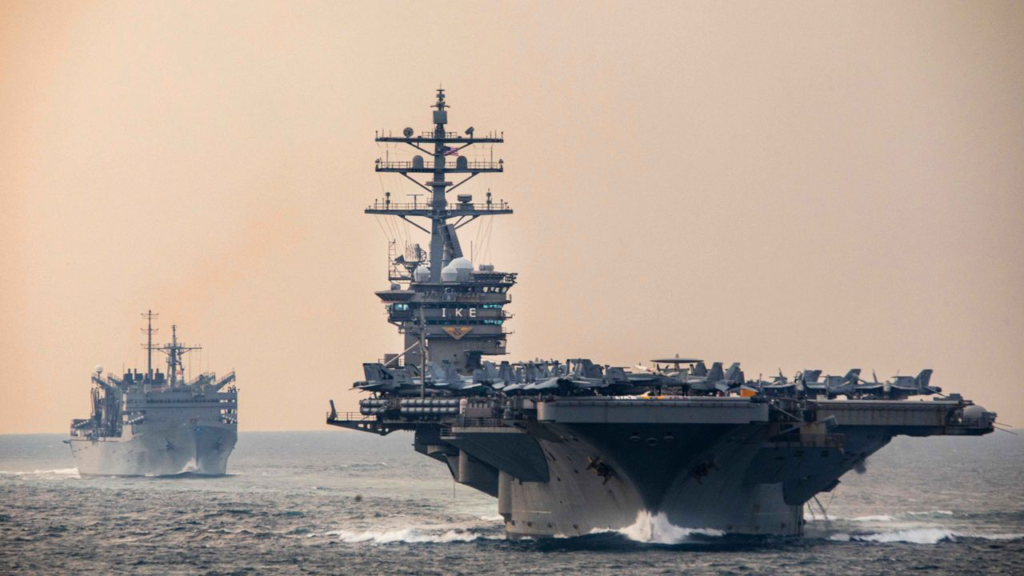
The aircraft carrier USS Dwight D. Eisenhower and the fast combat support ship USNS Supply transit the Strait of Hormuz, Dec. 14, 2023. [Photo: Navy Petty Officer 2nd Class Keith Nowak]

The week opened with Pentagon statements and press reports confirming that the Trump administration is actively preparing a ground invasion of Iran. US Treasury Secretary Scott Bessent announced on 13 March that the Navy would begin escorting commercial vessels through the Strait of Hormuz — a waterway just 21 miles wide at its narrowest point, within direct range of Iranian anti-ship missiles — placing American forces on the threshold of open naval combat.[1] Secretary of War Pete Hegseth, in language stripped of all diplomatic pretence, declared the Strait “will not be allowed to remain contested.” By 14 March, the WSWS confirmed preparations for what it characterised as a potential Gallipoli-scale ground campaign that would engulf the entire region and carry a real risk of nuclear escalation.[2]

The human toll already documented is staggering. A Pentagon investigation, corroborated by open-source analysis and reported by the WSWS on 12 March, confirmed that a US Tomahawk missile struck the Shajarah Tayyebeh girls’ elementary school in Minab on 28 February during the opening strike package, killing at least 150–175 schoolgirls aged 7 to 12.[3] Trump responded not with accountability but with a brazen lie, telling reporters the school was destroyed by Iran. By 11 March, the total death toll had surpassed 1,255, with over 12,000 wounded and nearly 20,000 civilian structures damaged, including 77 healthcare centres and 69 schools. Iran remains under near-total internet blackout. Israel simultaneously launched a renewed ground incursion into Lebanon, ordered the evacuation of over 100 villages and the entire Dahiyeh district of Beirut, and has killed more than 600 people and displaced 800,000. Gaza’s total siege was intensified on 1 March with the closure of all border crossings.[4]

Iran closed the Strait of Hormuz within days of the war’s outbreak on 28 February. Shipping traffic has plummeted more than 90 percent. Zero LNG tankers passed through in the week under review. The four largest container shipping lines in the world — Maersk, MSC, Hapag-Lloyd and CMA CGM — have suspended all operations. Oil surged above $120 a barrel, and the International Energy Agency described it as the largest supply disruption in the history of the global oil market.[5] Global financial markets experienced wild swings throughout the week, with oil shocks cascading into bond markets and risk-asset volatility threatening systemic instability.

European imperialism joined the coalition. On 12 March, the WSWS documented how France, Germany, Spain, the Netherlands, Italy and Greece moved to deploy warships toward the Middle East, with Macron announcing the Charles de Gaulle carrier would ultimately participate in “restoring freedom of navigation” through the Strait — in all but name, a declaration of war against Iran by the European powers.[6] On 12 March, German Foreign Minister Wadephul visited Israel, publicly endorsing US-Israeli war aims. The UN Security Council, on 13 March, passed Resolution 2817 condemning Iran’s retaliatory strikes while entirely failing to condemn the US-Israeli bombardment; Russia and China abstained, allowing the resolution to pass, exposing the imperialist character of all these multilateral institutions.

The WSWS ICFI emergency webinar on 10 March convened thousands internationally to outline a socialist anti-war strategy. The SEP and IYSSE held an urgent public meeting in Colombo on 17 March to explain the geo-strategic roots of the assault and to build the foundations of an independent international working-class anti-war movement.[7] Workers and students across Sri Lanka were interviewed by SEP and IYSSE campaigners, showing deep opposition to the war and Sri Lanka’s own exposure as a conduit for US imperialism, documented by a leaked US State Department cable revealing that Colombo acted at US and Israeli insistence to detain Iranian sailors and restrict their return.[8]

II. Working-Class Opposition to the War and Bureaucratic Containment

The breadth of working-class opposition to the war was documented in a series of significant WSWS reports. London postal workers at Mount Pleasant Mail Centre and bus drivers at West London garages spoke candidly with SEP campaigners. Workers made the direct connection between imperialist war and capitalist exploitation: “We’re fighting this war for the banks,” said one bus driver; “They treat Iran as a petrol pump,” said another.[9] Workers identified the need for a general strike but raised the central obstacle: union bureaucracies and the threat of scabbing.

Thousands marched in central London on 8 March, but the WSWS exposed how the Palestine Coalition — Stop the War, the PSC, CND — directed this mass anti-war energy into futile appeals to Prime Minister Keir Starmer and parliamentary pressure, reproducing the same political dead end that allowed the Gaza genocide to proceed and now facilitates Britain’s participation in the Iran assault.[10] Workers’ testimony at the demonstration expressed far sharper sentiments — “it’s always money and power” — than the platform politics of reformist organisers.

The same crisis of leadership was exposed in the response of British trade union bureaucracies. Eighteen union general secretaries issued a joint statement condemning the war but called only for diplomacy and appeals to government, making no call for workplace action, no strike, no industrial disruption. The TUC similarly confined itself to platitudes. The WSWS identified this as a classical function of the union apparatus: containing and defusing opposition while channelling mass sentiment back toward the very institutions that enable war.

The UK Labour government of Keir Starmer moved simultaneously to ban the Al-Quds Day march in London — an authoritarian measure against mass anti-war protest — and to slash asylum rights and expand anti-migrant enforcement, fusing war policy with internal repression and xenophobia to discipline the working class.

The Jacobin magazine was criticised by the WSWS for publishing commentary that soft-pedalled opposition to the war and subordinated anti-war rhetoric to accommodation with US imperialist strategy — a clear example of the pseudo-left’s function in disarming the working class politically. Similarly, New Zealand pseudo-left forces organised a meeting titled “No War With Iran” that provided platforms to Labour, the Greens and union officials — figures who have actively supported NZ’s integration into US military alliances.[11]

In the United States, Detroit autoworkers interviewed by the WSWS gave expression to a deepening politicisation: workers compared Trump and Hegseth to Nazis and linked rising fuel prices and job insecurity directly to imperialist war. “The working class has to stop the war,” one worker stated, adding that if the Italians could hold a general strike, Americans could too.[12] The bipartisan character of imperialism was starkly confirmed: 21 House Democrats provided the decisive margin to pass a $1.2 trillion spending bill funding the military through September 2026, and leading Senate Democrats expressed the private conviction that Iran “ultimately needed to be dealt with militarily.” The US media simultaneously normalised strikes, massacres and war crimes.

III. Austerity, Corporate Offensive and Class Struggle

The week provided stark evidence that the capitalist offensive against the working class intensifies in direct proportion to the escalation of war.

Volkswagen Group CEO Oliver Blume announced a further intensification of the company’s jobs massacre: 50,000 positions to be eliminated in Germany alone, broken down as 35,000 at the core VW brand, 7,500 at Audi, 1,900 at Porsche and 1,600 at the software subsidiary Cariad. The IG Metall works council chair Daniela Cavallo immediately signalled her support, even floating armaments production as a future for threatened plants.[13] The WSWS draws the necessary conclusion: this is a class offensive in which the trade union apparatus functions not as a defender of workers but as a co-manager of capitalist restructuring, with IG Metall representatives personally enriched for their services as supervisory board members.

In the US healthcare sector, the six-month strike by 750 nurses and case workers at Henry Ford Genesys Hospital in Grand Blanc, Michigan, continued under intense management strikebreaking and pressure from the Teamsters bureaucracy to settle on employer terms. Simultaneously, approximately 10,000 Corewell Health nurses across Michigan voted on strike authorisation over essentially identical issues of unsafe staffing, wages and patient safety — a potential combined struggle of nearly 11,000 healthcare workers that the Teamsters apparatus has deliberately prevented from forming.[14]

BP Whiting refinery workers overwhelmingly rejected a six-year concessionary contract that would have cut wages by $8–10 per hour, eliminated roughly 100 jobs, expanded contractor use and permitted AI implementation without protections. The International Workers Alliance of Rank-and-File Committees called for national coordination to defeat the employer’s attempt to use Whiting as a pattern for the industry.[15] Colorado meatpacking workers announced a coordinated strike — the largest in the sector in 40 years — over pay, safety and contracts, demonstrating significant industrial leverage in critical supply chains.

At the University of California system, 40,000 academic workers had voted 93.3 percent for strike authorisation but were kept on the job by UAW Local 4811 officials even after contracts expired on 1 March. Around 600 picketers at Berkeley and 300 at UCLA held “last chance” pickets to no avail — the UAW bureaucracy prioritised institutional accommodation over enforcing the democratic mandate of its members. In San Diego, deep education budget shortfalls produced hundreds of classified layoffs; union leaders, having previously authorised strikes, called them off and enabled the cuts to proceed. The UK Labour government’s SEND “reform” — gutting support for children with special educational needs — was exposed as a classical austerity attack dressed in the language of “efficiency.”

Tesla’s Grünheide plant in Berlin saw IG Metall-backed works council candidates defeated in elections, signalling real erosion of bureaucratic control and a potential opening for genuine rank-and-file organisation.

IV. Authoritarian Consolidation and Democratic Rights

The authoritarian dimensions of the ruling class’s response to social crisis deepened across multiple fronts during the week.

The Trump administration nominated far-right Senator Markwayne Mullin to lead the Department of Homeland Security, a move that won tacit bipartisan accommodation including from sections of the Teamsters leadership — a demonstration of how the union apparatus colludes in the expansion of the repressive state. Trump also moved to push federal voter suppression and anti-transgender legislation, using “culture war” pretexts to divide and weaken the working class.

ICE arrested dozens of Amazon Flex couriers — predominantly immigrant gig workers — in southeast Michigan, using enforcement actions to discipline a precarious and fragmented workforce. Letters from detained children at a Texas immigration facility described nine months of abuse and conditions amounting to torture. Canada’s Liberal government maintained the Safe Third Country Agreement with the US, forcing asylum seekers back into a country conducting mass deportations.

The Academy Awards, the BAFTA and Brit Award ceremonies all became sites of cultural censorship: broadcasters cut or bleeped artists’ anti-genocide statements, reflecting coordinated ruling-class pressure to enforce ideological conformity on imperialist war. The Toronto Film Critics Association faced internal collapse over the same censorship of pro-Palestinian speech. In Kazakhstan, authorities demolished a building historically associated with Leon Trotsky — an act of state erasure of revolutionary memory reflecting the reactionary character of post-Soviet nationalist regimes.

Istanbul’s elected Mayor Ekrem İmamoğlu faced politically motivated trials in Turkey — instruments of the bourgeois state used to suppress political opposition while maintaining the fiction of democratic legitimacy.

V. The Political Bankruptcy of Reformism and Pseudo-Leftism

The week provided abundant evidence of the political bankruptcy of all forms of reformism and pseudo-left politics in the face of imperialist war and capitalist crisis.

In Germany, the SPD suffered a major collapse in the Baden-Württemberg state elections — the logical outcome of years of administering austerity and rearmament while posturing as a workers’ party. This is not an isolated setback but a symptom of the organic crisis of social democracy across the capitalist world. The parallel trajectory of the UK Labour Party — waging imperialist war, banning protests, cutting migrant rights and attacking SEND provision — confirms that these parties are instruments of capitalist rule, not vehicles for reform.

Argentina’s President Milei delivered a reactionary congressional address, with pseudo-left forces offering complicity or silence — exposing once again how middle-class “left” formations capitulate before reaction when it is in power. In New Zealand, the Labour Party and Greens issued perfunctory criticisms of the Iran war while continuing every policy that integrates New Zealand into US strategic structures. Trump’s “Shield of the Americas” summit militarised Latin America under US leadership, with comprador regimes across the hemisphere lining up behind Washington.

The six-year anniversary of COVID-19 was marked by the WSWS with a sober reckoning: the pandemic’s enormous ongoing death toll and the media’s near-total silence reflect the ruling class’s deliberate abandonment of public health as a social responsibility — the same logic now governing the conduct of a war that has killed over a thousand civilians and destroyed hospitals, schools and healthcare infrastructure in Iran.

Summing-up 

The week ending 14 March 2026 crystallises the historical crisis of the capitalist system with extraordinary clarity. The US-Israeli war on Iran is not an aberration but the concentrated expression of imperialist rivalry, capitalist decline and the drive of the ruling class toward authoritarian rule at home and military barbarism abroad. The massive scale of opposition — in London and Frankfurt, among US autoworkers and nurses, among students in Australia and Sri Lanka — demonstrates the objective social force that exists to stop the war. What is missing is not mass sentiment but revolutionary political leadership. The building of rank-and-file committees in workplaces, independent of union bureaucracies, and the construction of sections of the ICFI as the political leadership of the international working class is not an abstract prescription — it is the urgent requirement of this historical moment.

[1] Treasury Secretary Bessent announces Strait of Hormuz naval escorts: https://www.wsws.org/en/articles/2026/03/13/vpgn-m13.html

[2] Trump is planning a ground invasion of Iran: https://www.wsws.org/en/articles/2026/03/14/zchg-m14.html

[3] Trump threatens ground troops, assassinations in escalating Iran war: https://www.wsws.org/en/articles/2026/03/09/dhei-m09.html

[4] US media and Democratic Party enable Trump’s war of extermination against Iran: https://www.wsws.org/en/articles/2026/03/11/dkif-m11.html

[5] Iran death toll surges past 1,200 as Israel bombs two more schools: https://www.wsws.org/en/articles/2026/03/06/weph-m06.html

[6] European imperialism joins the illegal US-Israeli war on Iran: https://www.wsws.org/en/articles/2026/03/12/lgjr-m12.html

[7] SEP/IYSSE Colombo public meeting announcement: https://www.wsws.org/en/articles/2026/03/09/xwus-m09.html

[8] US memo exposes Sri Lankan “humanitarian” posturing over Iranian sailors: https://www.wsws.org/en/articles/2026/03/11/ocid-m11.html

[9] “We are fighting this war for the banks”: London post and transport workers: https://www.wsws.org/en/articles/2026/03/08/tpoz-m08.html

[10] London demonstration against Iran war deflected into appeals to Starmer: https://www.wsws.org/en/articles/2026/03/08/ntnd-m08.html

[11] NZ pseudo-left meeting promotes Labour, Greens and unions: https://www.wsws.org/en/articles/2026/03/14/tuye-m14.html

[12] “The working class has to stop the war”: US workers denounce war with Iran: https://www.wsws.org/en/articles/2026/03/10/fbnv-m10.html

[13] VW Group increases job cuts to 50,000: https://www.wsws.org/en/articles/2026/03/13/yibx-m13.html

[14] Henry Ford Genesys walkout enters 6th month, Corewell nurses vote on strike: https://www.wsws.org/en/articles/2026/03/11/qjvr-m11.html

[15] BP Whiting workers reject concessions contract: https://www.wsws.org/en/articles/2026/03/12/xxxx-m12.html

Weekly Political Report — Week Ending 14 March 2026 Read More »

IMG 0750

Weekly Political Report — Week Ending 7 March 2026

This political report for the week of March 1-7, 2026, is compiled based on coverage from the World Socialist Web Site (WSWS.org).

I. Imperialism and War: The US-Israeli War of Extermination Against Iran

The defining political reality of the week ending 7 March 2026 is the continuation and intensification of the criminal US-Israeli war of annihilation against Iran, which entered its second week with a mounting toll of devastation and an explicit escalation of imperialist objectives.

On 7 March, President Donald Trump declared publicly that there would be “no deal with Iran except UNCONDITIONAL SURRENDER”—the most extreme formulation yet of American war aims, signalling the intention to wage permanent war until Iranian society is physically destroyed.[1] Trump spelled out the content of this demand in genocidal terms: surrender means either that Iran announces it, “or when they can’t fight any longer because they don’t have anyone or anything to fight with.” The White House simultaneously raised the prospect of direct deployment of US ground troops inside Iran. These are not the statements of a government seeking a diplomatic settlement. They are the declarations of an imperialist power pursuing regime change and the neo-colonial subjugation of a nation of 90 million people.

Image Not Found
Plumes of smoke rise as strikes hit the city during the illegal US–Israeli military campaign in Tehran, Iran, Thursday, March 5, 2026. [AP Photo/Vahid Salemi]

By week’s end, more than 1,200 Iranians had been killed, including 200 children, and over 12,000 wounded. Nearly 30 clinical facilities had been damaged and 10 forced to close. Israeli strikes had reopened a major offensive in Lebanon, with blanket evacuation orders issued for the Dahiyeh district of Beirut and Israeli ground forces crossing into southern Lebanon. The WSWS/SEP statement “Stop the criminal US-Israeli war against Iran!” framed the offensive as an expression of capitalist imperialist rivalry—chiefly the drive by US imperialism to reassert global hegemony against its rivals, above all China, and to seize control of the world’s principal oil-exporting region.[2] The assault was launched while US-Iranian negotiators were still meeting in Geneva—a deliberate deception exposing the pretence of diplomacy as a cover for aggression.

The most egregious single crime of the week was the torpedoing of the unarmed Iranian naval frigate IRIS Dena in the Indian Ocean on 4 March—a war crime committed without warning in international waters, thousands of miles from any combat theatre.[3] The vessel had participated in India’s International Fleet Review 2026 and the multinational MILAN 2026 exercises at Visakhapatnam, invited alongside 73 other nations including the United States. The exercise rules prohibited munitions. The IRIS Dena was unarmed and homeward bound when a US submarine attacked it without warning, sending more than 140 sailors to the bottom of the Indian Ocean. The crime was then celebrated at a Pentagon press briefing by the Secretary of War himself. Confirmation that Australian naval personnel were aboard the submarine directly implicated the Albanese Labor government in the commission of a war crime.[4]

The complicity of imperialist governments was total. Germany’s Chancellor Friedrich Merz declared support for the assault, stating that Israel was doing “the dirty work… for all of us.” The G7 issued a statement casting Iran as the aggressor and greenlighting further escalation. France’s Emmanuel Macron deployed the carrier Charles de Gaulle and other assets to the eastern Mediterranean without a pretence of parliamentary debate. Britain’s Keir Starmer was exposed by leaked National Security Council documents as having been informed of the initial strikes more than two weeks in advance and as having worked with Washington to craft legal cover for British participation. Spain initially postured with anti-war rhetoric under Prime Minister Sánchez, then rapidly dispatched the frigate Cristóbal Colón to the eastern Mediterranean after Trump threatened to cut off US-Spanish trade—a graphic illustration of how bourgeois anti-war posturing evaporates the moment imperialist pressure is applied. Japan, New Zealand, Canada, and Australia similarly endorsed US and Israeli war aims. Washington announced that the US Navy would begin escorting commercial tankers through the Strait of Hormuz—a dramatic escalation placing American warships directly off the Iranian coast—while the US announced further medium-range missile deployments to the Philippines as part of the broader strategic encirclement of China.

The WSWS warned that oil price surges and shipping disruptions through the Strait of Hormuz would deepen the global economic crisis, imposing severe costs through inflation, job losses, and intensified austerity. Asian markets took major losses, with semiconductor and export sectors particularly hard hit.

II. Authoritarian Consolidation and State Repression

The war abroad proceeded in lockstep with an intensification of repression at home and across the capitalist world.

In the United States, a Senate Judiciary Committee hearing exposed the bipartisan character of anti-immigrant repression: DHS Secretary Kristi Noem defended ICE killings and refused to apologise, while Democratic senators simultaneously resisted calls for the abolition of ICE and CBP. The Trump administration seized immigrant student Ellie Aghayeva from Columbia University, illustrating the militarisation of campuses. A Nashville journalist was detained by ICE while documenting immigration raids—a direct assault on press freedom and the suppression of coverage of state violence. Republicans exploited a shooting in Austin to inflame anti-Muslim hysteria and push for expanded DHS funding. ICE detention conditions continued to claim lives, with the death of immigrant detainee Nenko Gantchev in a Michigan facility exposing the Democratic Party’s “oversight” as a façade sustaining rather than restraining a murderous apparatus. Florida carried out the execution of Billy Leon Kearse, part of a resumed pattern of state executions targeting the poor and racialised. Charges against Chinese researchers at the University of Michigan were dismissed, but the politicised “China spy” witch hunt on campuses intensified—serving as a tool of geopolitical scaremongering.

In Germany, the Cologne Administrative Court handed a legal victory to the far-right Alternative for Germany, demonstrating that bourgeois legalism shields rather than curtails fascist organisation. Germany simultaneously announced plans for the largest military buildup on the European continent since World War II and advanced sweeping new restrictions on migrants and refugees. France’s state moved to designate Mélenchon’s LFI as “extreme left”—deploying legal categories to justify the repression of political opposition. Germany’s government also attempted to police political expression at the Berlinale film festival, censoring critical voices while promoting its own geopolitical line.

In Kenya, President Ruto’s government arrested a popular TikToker for satirical content and detained left activists including Communist Party leader Booker Omole. A Birmingham Labour council secured a High Court injunction to prevent solidarity with striking bin workers—proof that Labour administrations function as instruments of capitalist class power regardless of their electoral base.

III. Austerity, the Global Economy, and Class Attacks

The Iran war triggered immediate and severe global economic shocks whose costs landed on the working class. Oil prices surged sharply. Asian markets fell heavily, with semiconductor sectors and export industries facing supply chain disruptions. These consequences prefigure a deepening global economic crisis to be paid for through inflation, rising fuel costs, and intensified austerity.

In Philadelphia, a $2.8 billion “Master Plan” proposed shuttering 18 schools—the commodification of public education in service of capital. In Australia, the South Australian election exposed billions being funnelled into AUKUS war spending while public education and housing budgets collapsed. The housing crisis deepened as government pledges proved hollow and market-led demolitions displaced working-class communities.

Tech industry executives boasted about AI-driven mass layoffs, celebrating workforce reductions as shareholder value creation—automation deployed to eliminate jobs and intensify exploitation. The United Steelworkers’ refinery contract was exposed as locking in uninterrupted fuel flows benefiting oil company profits and, indirectly, the war itself. Canada Post’s proposed settlement, endorsed by union leadership, sacrificed job security to protect corporate interests. Severe drought in the US Southwest deepened conflicts over water rights, with environmental crisis produced by the capitalist profit drive being weaponised to discipline labour.

The WSWS placed these developments in the framework of capitalist crisis: war and austerity as twin fronts of the same ruling-class offensive, financed by cuts to Medicaid, Social Security, and every social programme workers depend on for survival.

IV. Class Struggle and Bureaucratic Betrayal

The week documented significant episodes of working-class resistance alongside the systematic effort of union bureaucracies to contain and strangle that resistance.

In Lorain County, Ohio, 140 Job and Family Services workers entered their third week of strike action over wages, staffing, and healthcare.[5] Workers described being paid poverty wages so low that some qualified for the very social benefits they administered to clients. Starting pay was as low as $15 an hour for caseworkers handling Medicaid, SNAP, and childcare assistance. The UAW bureaucracy was exposed as isolating the strike and refusing to call for unified action with JFS workers across Ohio. Contract faculty at New York University announced an official strike date over wages, job security, and academic precarity. Entertainment industry workers continued their walkout against studios over pay, AI-driven job displacement, and conditions.

In Germany, the train drivers’ union leadership agreed to a contract imposing real wage cuts—a textbook act of bureaucratic betrayal, with the union apparatus functioning as a stabilising mechanism for capital against its own members. IG Metall leadership at Bosch moved to suppress internal opposition from workers challenging concessions. The Hanover trial of Deutsche Bahn over the death of rail apprentice Simon Hedemann put corporate cost-cutting on record as directly responsible for a young worker’s life.

Victorian early childhood educators in Australia struck for the second time in a campaign for pay parity and adequate staffing. Turkish miners broke through gendarmerie barricades and seized control of a mine in a militant wildcat action—demonstrating the latent social power of the working class when it acts independently of bureaucratic constraint. Workers’ struggle roundups across the Americas, Europe, Asia, Africa, and the Pacific documented recurring disputes over wages, conditions, and privatisation at every point on the globe.

The US trade union bureaucracy’s silence over the Iran war was the subject of specific WSWS analysis. The AFL-CIO and the great majority of union federations issued no statements against the assault, leaving the working-class majority politically unorganised at the very moment when its industrial power—in ports, logistics, transport, and production—could be decisive in disrupting the war machine. In Quebec, trade union federations renewed their alliance with the Parti Québécois even as the PQ embraced anti-immigrant, pro-business, and far-right positions. The WSWS condemned this as a fundamental betrayal of class independence—channelling working-class anger into bourgeois nationalism that defends capitalist interests and legitimises anti-immigrant scapegoating. Ontario students protested cuts to the Ontario Student Assistance Program, linking educational austerity to the broader class offensive.

V. The Political Bankruptcy of Reformism and the Pseudo-Left

The week provided abundant and unambiguous evidence of the political bankruptcy of every reformist and pseudo-left formation.

Germany’s Left Party chairman Jan van Aken celebrated the assassination of Iranian leaders—“May Khamenei rot in hell”—while nominally condemning the war as criminal and illegal. The WSWS exposed this as the characteristic method of pseudo-left politics: verbal criticism combined with legitimisation of imperialism’s aims and outcomes. Spain’s PSOE-Sumar government demonstrated in miniature how the entire social-democratic tradition operates: Sánchez’s “No to war” posture collapsed the moment Washington applied economic pressure, exposing it as a political calculation to contain domestic opposition rather than a genuine break with NATO.

Venezuela’s Chavista leadership reached a diplomatic normalisation with the United States on terms handing Wall Street access to Venezuelan oil, gold, and critical minerals—reproducing dependency under the banner of “stability.” Australia’s Albanese Labor government endorsed the assault within three hours of Trump’s announcement, was directly implicated in the sinking of the IRIS Dena through AUKUS personnel, and used the ASEAN Special Summit in Melbourne to deepen Australia’s integration into US war planning against China. Congress voted down resolutions to restrict war powers, confirming that the US legislative apparatus—across both parties—has become an instrument of imperialist policy. Legalistic remedies within the framework of the bourgeois state cannot stop imperialist war. Baden-Württemberg’s state election campaign offered workers nothing but competing concessions to big business, confirming that electoral competition between bourgeois parties produces only distributional jockeying for capital’s benefit.

VI. The Revolutionary Tasks of the Working Class

The week ending 7 March 2026 demonstrates with stark clarity the inseparability of imperialist war, domestic austerity, state repression, and the betrayal of the working class by union bureaucracies and pseudo-left formations. Every capitalist government—“Labour,” “Socialist,” “social-democratic,” or conservative—is serving the same ruling-class interests: expanding militarism, imposing austerity, repressing dissent.

American workers captured the class consciousness at the heart of the anti-war sentiment: “We have more in common with the Iranian people than we do with billionaires.” Detroit autoworkers declared, “We shouldn’t be bombing people, period.” This sentiment must be developed into a politically conscious, internationally organised movement that breaks decisively from the trade union bureaucracies, Labour and social-democratic parties, and pseudo-left formations that have lined up behind imperialist war.

The WSWS and the ICFI call on workers and youth to build rank-and-file committees independent of the union apparatus, forge international coordination and join the Socialist Equality Parties to fight for the socialist and revolutionary strategy alone capable of stopping the war and overthrowing the capitalist system that produces it.

Footnotes

[1] “Trump demands unconditional surrender from Iran as war enters second week,” WSWS, 7 March 2026. https://www.wsws.org/en/articles/2026/03/07/uxtr-m07.html 

[2] “Stop the criminal US-Israeli war against Iran!” WSWS / SEP National Committee, 2 March 2026. https://www.wsws.org/en/articles/2026/03/02/ulqw-m02.html 

[3] “Mass murder in the Indian Ocean: The torpedoing of the IRIS Dena,” WSWS, 6 March 2026. https://www.wsws.org/en/articles/2026/03/06/poyw-m06.html 

[4] “Australian naval personnel involved in US sinking of Iranian ship: Oppose the pro-imperialist Labor government and war against Iran!” WSWS / Socialist Equality Party (Australia), 7 March 2026. https://www.wsws.org/en/articles/2026/03/07/bckg-m07.html 

[5] “Lorain County, Ohio family service workers strike enters third week: ‘We are fighting everyone’,” WSWS, 7 March 2026. https://www.wsws.org/en/articles/2026/03/07/mxws-m07.html 

Weekly Political Report — Week Ending 7 March 2026 Read More »

IMG 0717

Weekly Political Report — Week Ending 28 February 2026

This political report for the week of February 22–28, 2026, is compiled based on coverage from the World Socialist Web Site (WSWS.org).

I. Imperialism and War: The Accelerating Drive Toward Catastrophe

The week ending 28 February 2026 was dominated by the ever-sharpening US imperialist drive toward a military assault on Iran. Despite public claims of ongoing “talks,” the Trump administration has amassed a massive armada in the Middle East — carriers, aircraft, and logistical assets repositioned for what US officials described as a “sustained, weeks-long” campaign. The WSWS made clear that the diplomatic theatre serves as cover: Trump, in his State of the Union address, escalated threats against Tehran while menacing the American working class at home with authoritarian consolidation. The WSWS issued an urgent anti-war call, demanding that the international working class mobilise independently of all bourgeois parties to halt the march toward catastrophe.[1]

Image Not Found
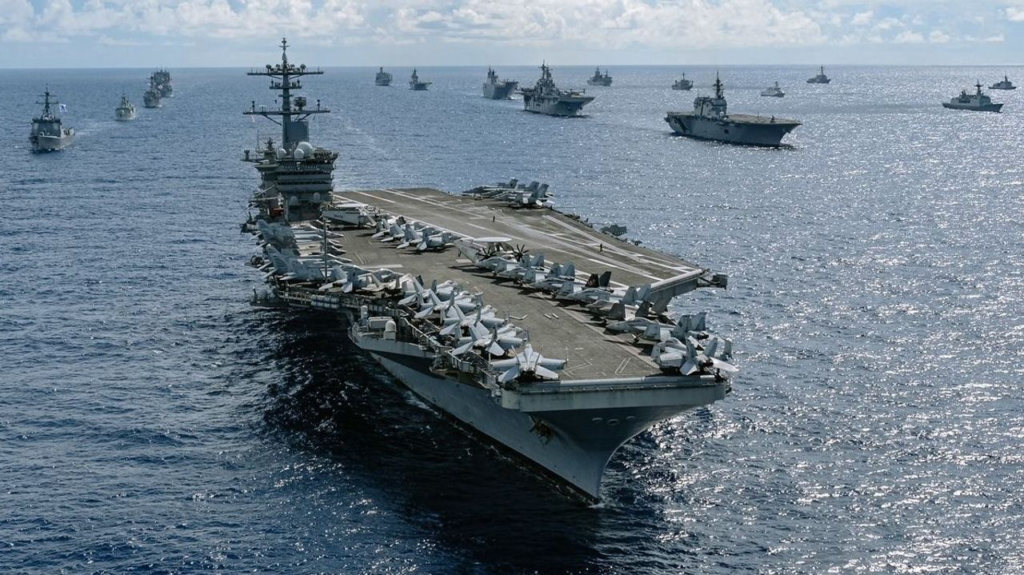
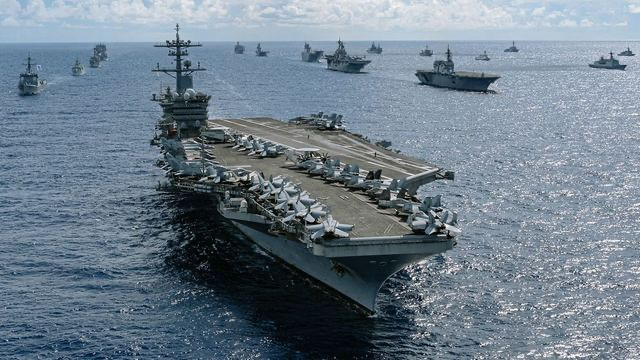
The USS Abraham Lincoln aircraft carrier now deployed off Iran in formation during Rim of the Pacific exercises in July 2022. [Photo: Canadian Armed Forces photo by Cpl. Djalma Vuong-De Ramos]

The week also saw Indian Prime Minister Modi in Tel Aviv, deepening the India-Israel strategic axis — intelligence, defence, and security cooperation — directly as Washington and Tel Aviv were preparing their assault on Iran. New imperial alignments are accelerating the globalisation of warmaking. Canada’s Liberal government, meanwhile, declared it would not establish diplomatic relations with Iran “unless there is a regime change,” endorsed sanctions, and promoted the exiled monarchist Reza Pahlavi — subordinating itself entirely to Washington’s and Tel Aviv’s imperialist agenda. Ottawa simultaneously released its Defence Industrial Strategy, accelerating military procurement and tying Canadian industry more tightly to the machinery of war.[2]

Japan’s newly elected far-right government moved to expand security and military measures, aligning with US strategic objectives in Asia, while New Zealand’s right-wing commentariat openly floated political union with Australia to consolidate military capacity. Globally, the ruling classes are on a war footing, converting civilian society into a war machine on the basis of capitalist austerity.

The 2026 Winter Olympics in Milan provided a vivid illustration of this contradiction: remarkable athletic achievement was poisoned by nationalist chauvinism and commercialisation. Massive protests erupted against the presence of ICE and the Trump administration at the Games; dockworkers’ strikes delayed arms shipments; athletes publicly criticised ICE from international platforms. These internationalist impulses demonstrate the real social forces that can be mobilised — but they require conscious socialist political leadership to be transformed into sustained anti-imperialist action.

II. Authoritarian Consolidation and State Repression

The Trump administration continued its drive toward authoritarian rule. Reports confirmed that Trump allies are preparing executive orders to seize administrative control over US midterm election structures — a direct attack on democratic procedures. Epstein files naming Trump as an attacker were deliberately withheld by the DOJ, demonstrating how the ruling class uses legal instruments to protect the powerful while pursuing lawfare against the working class and its fighters.

The criminalisation of dissent intensified. Two Pennsylvania high school students remained imprisoned for four days after an anti-ICE protest; the “Quakertown 5” face felony charges designed to terrorise youth into silence. In Australia, police confiscated an anti-genocide placard at a Ramadan festival in Lakemba, using expanded “hate speech” legislation to police political expression. The apparatus of state repression is being normalised, step by step, against migrant defenders, youth protesters, and any expression of anti-war, anti-genocide sentiment.

Palestinian activist Nerdeen Kiswani filed a civil rights lawsuit under the Ku Klux Klan Act against Zionist Betar USA for violent attacks and organised intimidation on US campuses. While legal action can play a tactical role, the WSWS insists that mass working-class mobilisation — not reliance on bourgeois courts — is the essential instrument for defending democratic rights and the safety of oppressed peoples.

Jay Bhattacharya, co-author of the Great Barrington Declaration, was named acting director of both NIH and CDC by the Trump administration. This centralisation of public health authority in a figure associated with deliberate mass-infection policy coincides with surging measles cases and plummeting vaccine confidence. The politicisation and evisceration of public health institutions to serve capitalist accumulation exposes the ruling class’s readiness to treat the working class as expendable.[3]

III. Austerity, Economic Warfare, and AI-Driven Job Destruction

The IMF hailed Sri Lanka’s economic programme as a “success story” even as its austerity agenda deepens poverty, unemployment, and social devastation across the island. IMF “success” means the triumph of capital over the working class: the enforcement of debt repayment to international creditors at the expense of living standards, public services, and human dignity.

Australian logistics software maker WiseTech announced the elimination of roughly 2,000 jobs, citing AI automation. This follows the broader pattern of corporate layoffs accelerating to Great Recession levels. Capitalists are deploying AI not to liberate human labour but to discipline the workforce, destroy jobs, and protect profits. Workers must organise to demand social solutions: shorter working hours with no loss of pay, public investment in socially necessary employment, and democratic oversight of technological change.[4]

Greece’s main trade union confederation, GSEE, was engulfed in a corruption scandal, reinforcing its record of collaboration with governments on austerity. Institutional union corruption is not an aberration but a structural feature of bureaucracies that have integrated themselves into the management of capitalism.

Argentina’s contested labour reform vote and the abrupt shutdown of a tire factory laid bare the betrayal by bureaucratic unions and pseudo-left formations that failed to defend jobs. In New Zealand, a union pushed through a pay cut for 12,300 health workers. The pattern is consistent across continents: union apparatuses act as industrial policemen for capital, containing militancy and delivering concessions.

IV. Class Struggle and Bureaucratic Betrayal

The most politically significant labour development of the week was the abrupt suspension of the four-week strike of 31,000 Kaiser Permanente healthcare workers in California and Hawaii. UNAC/UHCP bureaucrats shut down the strike without a contract, ordering members back to work while claiming there was “movement at the table” — a classic bureaucratic manoeuvre to demobilise a powerful working-class action at the very moment its leverage was greatest. The WSWS sharply condemned this betrayal and called for the formation of democratic rank-and-file committees to continue the fight, link up across sectors, and resist both management and union sellout.[^5]

In Los Angeles, 30,000 school support workers — custodians, bus drivers, cafeteria workers, and paraprofessionals — voted overwhelmingly to authorise a strike over pay, staffing, benefits, and safety. This vote is an expression of the eruption of working-class resistance to austerity gripping the United States. Union bureaucracies will seek to contain and negotiate away this power; the urgent task is to build rank-and-file committees and cross-sector coordination to transform it into decisive action.

UAW presidential candidate Will Lehman called for solidarity with Turkish miners who launched wildcat strikes over pay and safety, linking labour struggles across borders and demonstrating the potential for internationalist rank-and-file politics. His campaign — which continued to attract broad working-class support — was targeted by DSA-linked slanders, exposing once again the pseudo-left’s role in policing acceptable labour politics and shielding bureaucratic structures from genuine rank-and-file challenge.

The week’s workers’ struggle roundups — covering Europe, the Middle East, Africa, Asia, Australia, and the Pacific — documented rising strike militancy in healthcare, transport, education, and logistics. These struggles reflect shared material conditions under capitalism: austerity, inflation, understaffing, and management offensives. Their success depends on democratically organised, international rank-and-file coordination and a political programme that directly challenges the capitalist state.

V. Elite Criminality and Political Decay

The Epstein files affair continued to expose the systematic protection of ruling-class criminals by the state. DOJ’s suppression of documents naming Trump as an attacker is not a bureaucratic oversight but a political decision to safeguard the powerful. Simultaneously, a Drop Site investigation revealed that a sophisticated Israeli surveillance and security system was installed at an Epstein-controlled Manhattan apartment building — pointing to the intersection of intelligence operations, criminal networks, and the ruling class.

In the South Pacific, former Fijian Prime Minister Bainimarama was arrested on charges of inciting mutiny, a symptom of the political instability convulsing ruling establishments across the globe as capitalist crisis deepens. In Britain, Labour suffered a crushing wipe-out in the Gorton and Denton by-elections, with the Greens making substantial gains at Labour’s expense — reflecting mass disaffection with Labour’s pro-capitalist management, even as the Greens offer no genuine alternative.

South Australia’s Labor government ran its election campaign on support for property developers, austerity, expanded policing, and militarisation — indistinguishable in substance from its conservative rivals. Labor parties internationally have completed their transformation into straightforward managers of capitalist crisis.

VI. The Political Bankruptcy of Reformism

The week provided a sharp illustration of the foreword to the German edition of Where is America Going?, published by the WSWS: Trump is not an aberration but the political weaponisation of oligarchy and capitalist decomposition. The fight against fascism and war demands a complete break with bourgeois parties — including not only the Republicans but the Democrats, Labor, the Greens, and the entire spectrum of reformist and pseudo-left formations that channel working-class anger back into the institutions of capitalist rule.

The corruption of the GSEE in Greece, the shutdown of the Kaiser strike by UNAC/UHCP bureaucrats, the DSA’s slanders against Will Lehman, the South Australian Labor government’s developer-friendly programme, and the British Labour wipe-out in by-elections all express a single political truth: the existing leaderships of the labour movement, and all self-styled “left” alternatives within the parliamentary framework, cannot and will not defend the working class.

The IMF’s praise for Sri Lanka’s “success” while social crisis deepens is the economic counterpart to this political reality. Technocratic austerity managed by bourgeois institutions — whether right-wing or nominally social-democratic — inflicts suffering on the working class while protecting capital and imperialist creditors.

The necessary response is independent working-class political organisation on an international basis, rooted in the Trotskyist programme of the International Committee of the Fourth International: for socialist policies that prioritise human need over profit, for the expropriation of the banks and major corporations under workers’ control, for international solidarity against imperialist war, and for the construction of a revolutionary leadership capable of leading the working class to power.

Prepared by theSocialist.lk on the basis of WSWS.org coverage for the week ending 28 February 2026.

[1] WSWS, US planes flood UK bases in preparation for attack on Iran https://www.wsws.org/en/articles/2026/02/22/adkd-f22.html

WSWS, Washington preparing military strikes against Iran https://www.wsws.org/en/articles/2026/02/10/wpjo-f10.html 

[2] WSWS, “Canada’s Liberal government backs imperialist regime change in Iran” — https://www.wsws.org/en/articles/2026/02/23/zllb-f23.html 

[3] WSWS, “Great Barrington Declaration author Jay Bhattacharya takes control of CDC as measles cases surge” — https://www.wsws.org/en/articles/2026/02/23/zgqh-f23.html 

[4] WSWS,  Artificial Intelligence in the entertainment industry and the necessary socialist response https://www.wsws.org/en/articles/2025/08/26/bdjz-a26.html 

[5] WSWS, “UNAC/UHCP bureaucrats shut down Kaiser Permanente strike without a contract” — https://www.wsws.org/en/articles/2026/02/24/aidf-f24.html  

Weekly Political Report — Week Ending 28 February 2026 Read More »

Metz

Weekly Political Report — Week Ending 21 February 2026

This political report for the week of February 15–21, 2026, is compiled based on coverage from the World Socialist Web Site (WSWS.org).

Metz
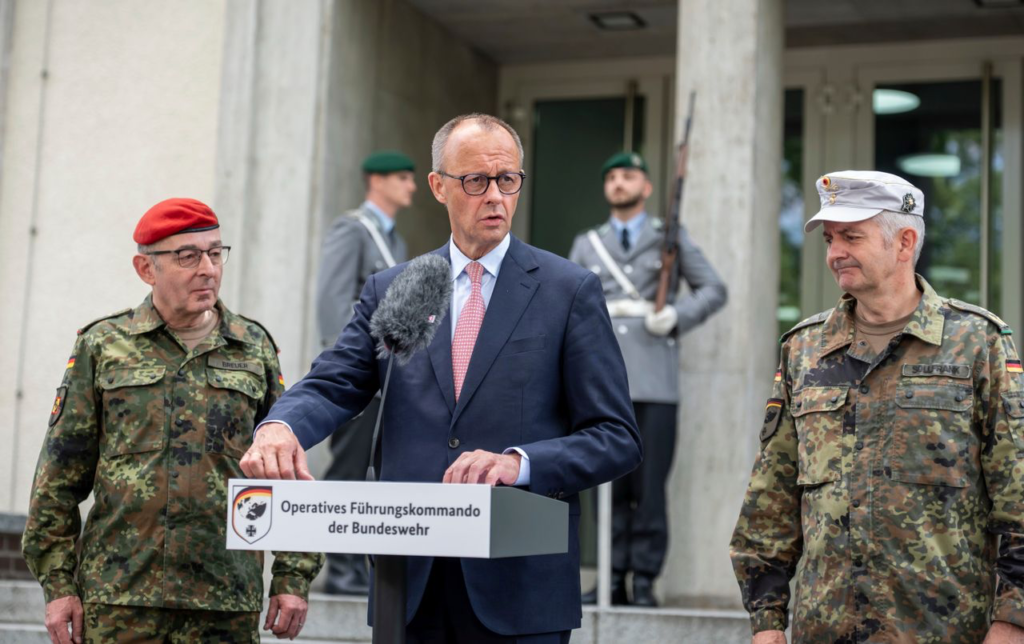
German Chancellor Friedrich Merz, peaks standing between Alexander Sollfrank, right, Commander of the Operational Command and Carsten Breuer, Inspector General of the Bundeswehr, during his first visit to the Operational Command of the Bundeswehr in Brandenburg, Schwielowsee, Saturday, June 28, 2025. [AP Photo/Michael Kappeler/DPA via AP, Pool]

I. Imperialism and War

US War Preparations Against Iran

The most urgent development of the week is the accelerating US preparation for war against Iran. Washington drew up plans for “leadership change” and “targeting of individuals” in any Iran strike, while US forces were repositioned in the region in readiness for what military planners described as a “sustained, weeks-long” campaign.[1] The USS Abraham Lincoln carrier strike group was already operational in the Arabian Sea and the USS Gerald R. Ford — the world’s largest warship — transited the Strait of Gibraltar and entered the Mediterranean. More than 50 fighter jets, two carrier strike groups and dozens of refueling tankers were deployed.[2]

Trump and Netanyahu held a three-hour war council at the White House to coordinate strategy.[3] European imperialist powers — Britain, Germany and others — lined up behind regime-change in Tehran. This is not a bilateral US-Iran crisis but an expression of inter-imperialist competition for regional dominance, energy resources and geostrategic control. The working class internationally must oppose this war drive through mass mobilisation, linking anti-war demands to opposition to the domestic austerity imposed to finance rearmament.

Gaza: Slaughter Continues Amid Diplomatic Theatre

Israeli air strikes killed 12 Palestinians on the eve of Trump’s “Board of Peace” meeting — a cynical exercise in diplomatic theatre that masks Washington’s unconditional backing for genocide. Eyewitness testimony from Gaza published during the week, recounting the brutal killing of a Palestinian child and the systematic denial of medical care, cuts through every abstraction and exposes the class basis of imperialist violence. More than 100 international film artists condemned the Berlinale festival for censoring artists who oppose Israel’s actions, while Germany’s parliament president conducted an embedded visit to Gaza, signalling Berlin’s endorsement of the genocidal campaign. European institutions are not neutral bystanders — they are complicit partners in imperialist crime.

Militarisation of Europe

The heads of British and German armed forces called this week for “whole-of-society” mobilisation and massive increases in defence spending, demanding that Europe’s populations be made ready for war. Factories in ailing industrial regions of Berlin are being repurposed for military weapons production. This is a declaration of class war: rearmament will be paid for by workers through wage cuts, service reductions and political repression. The working class must respond with international anti-war mobilisation and rank-and-file committees to resist the austerity that militarisation demands.

II. Authoritarian Consolidation and State Repression

ICE: Spearhead for Dictatorship

ICE raids intensified across the United States during the week. Masked ICE agents conducted operations outside GM’s Factory Zero in Detroit; two Amazon Flex drivers were abducted during enforcement actions; a two-month-old infant was deported after falling gravely ill in a south Texas detention facility; and a former Cass Tech student, Alcides Caceres, was held in what lawyers described as an illegal “domestic Guantánamo.” Immigration attorney Eric Lee warned that the mass detention infrastructure being constructed by the Trump administration is the spearhead of a broader drive toward authoritarianism and domestic dictatorship.

Pennsylvania high school students who walked out in protest against ICE operations were met with violent police repression. The UAW bureaucracy remained silent as agents operated outside Factory Zero. This silence is not accidental — it reflects the union apparatus’s accommodation to state and employer power. The defence of immigrant workers is inseparable from the defence of the entire working class, and requires workplace committees prepared to shut down production in defence of coworkers.

Trump’s Assault on Democratic Rights

Trump signalled plans for an executive order restricting voting procedures ahead of midterm elections. The jailing of a former South Korean president for coup-related offences, contrasted with Trump’s continued occupation of the White House, illustrates the decomposition of bourgeois democratic forms under the weight of capitalist crisis. These are not isolated authoritarian manoeuvres — they form part of a systematic consolidation of executive power that requires mass, independent working-class political resistance, including preparedness for a general strike.

State Repression Internationally

In Hungary, German anti-fascist Maja T. was sentenced to eight years in prison in a politically orchestrated show trial. France’s mainstream politics lurched further right following the death of a prominent fascist figure. The ANC government in South Africa moved to deploy the army domestically to suppress worker unrest. Russia banned WhatsApp. The Albanese Labor government in Australia moved to bar women and children interned in Syria from returning home. France’s human rights commission documented torture, mass detentions and systematic discrimination against the Kanak people during 2024 unrest in New Caledonia. The common thread is the international capitalist class reaching for repression as its preferred instrument of social management.

III. Global Economy and Corporate Restructuring

IMF Presses China; Inter-Imperialist Economic Rivalry Sharpens

The IMF this week called on China to halve industrial subsidies from 4 to 2 percent of GDP and pivot from export-led manufacturing to domestic consumption, warning of international “spillovers” from China’s growing trade surplus and rising share of global manufacturing. Beijing rejected the framing, defending its competitiveness as innovation-driven — signalling that no major course correction will follow and that economic confrontation, above all with Washington, will intensify. The IMF’s prescriptions are not neutral technical advice but coordinated imperialist pressure to constrain China’s industrial rise. Workers in China and internationally must reject both IMF-dictated restructuring and nationalist protectionism as twin instruments of rival capitalist classes.

Wages, Jobs and Corporate Profits

The week’s economic reporting exposed the class content of the global “cost of living crisis” with precision. In Australia, new data confirmed real wages have fallen to their lowest level in 15 years — nominal growth of 3.4 percent against inflation of 3.8 percent — while major corporations simultaneously announced record profits and accelerated job cuts. Volkswagen announced plans to impose a 20 percent cost reduction across all its brands by 2028, equivalent to €60 billion annually, with entire plant closures envisaged — an escalation beyond the 35,000 job cuts and real wage reductions of up to 18 percent already certified by IG Metall in December 2024. UPS simultaneously prepared a second round of driver buyouts ahead of 30,000 planned layoffs in 2026, while the Los Angeles Unified School District moved to eliminate hundreds of positions. The US Department of Labor’s annual tally recorded 5,070 workers killed on the job in 2024 — not accidents but the structural outcome of deregulation, staffing cuts and production speedups driven by the profit motive, with union bureaucracies and weakened regulators normalising lethal conditions. In Argentina, Javier Milei’s Labour Modernisation Law — slashing protections and facilitating mass layoffs — passed despite a national general strike, as the CGT and allied bureaucracies deliberately confined action to a symbolic 24-hour stoppage. India’s BJP budget raised defence spending by approximately 15 percent while cutting the share of social expenditure and shifting rural relief costs onto cash-strapped states, combining military build-up with attacks on workers’ rights through new labour “reforms.”

Militarisation of Production and Civilian Infrastructure

The economic offensive is inseparable from the drive toward war. In Berlin, factories in declining industrial regions are being bought up and retooled for military weapons production. Walter Reed military hospital formalised an agreement with Kaiser Permanente to coordinate mass-casualty care for future wars — the subordination of civilian healthcare to military contingency planning. Veolia, the multinational water services corporation, was implicated in New Zealand’s wastewater crisis, exposing how the privatisation of essential infrastructure produces environmental disaster and social harm. Across every sector, the picture is the same: capital extracts record profits, destroys jobs, slashes wages, converts civilian production to military ends — and charges the working class for it all. The working class must reject the austerity that funds militarism, build independent rank-and-file committees to resist corporate restructuring, and link these struggles across borders and sectors into a unified international movement.

IV. Austerity and Economic Warfare

India: Guns Before Butter

The BJP government’s 2026–27 budget raised defence spending by approximately 15 percent while cutting the share of social spending and shifting rural relief costs to debt-ridden states. Corporate subsidies and infrastructure CAPEX were expanded alongside labour “reforms” that erode workers’ rights. The budget encapsulates capitalism’s response to global strategic instability: privilege military capacity and corporate accumulation while attacking living standards. The tens of millions who joined a one-day national strike against Modi’s class war assault the prior week demonstrated the scale of mass anger — but the Stalinist-led federations channelled that energy toward bourgeois electoral alternatives rather than independent working-class struggle.

Argentina: Bureaucracy Enables Historic Counterreform

In Argentina, a 24-hour general strike failed to halt the passage of Javier Milei’s Labour Modernisation Law, which slashes worker protections and facilitates mass layoffs.[4] The CGT and allied bureaucracies deliberately bottled up the struggle, enabling the ruling class to ram through anti-labour reforms that constitute the most sweeping attack on working-class rights in decades. The lesson is unambiguous: a single-day strike controlled by bureaucracies that refuse to paralyse production is not a general strike — it is a safety valve.

Volkswagen: 20 Percent Cost Reduction Across All Brands

Volkswagen announced a corporate plan to cut costs by 20 percent across all brands, threatening plant closures, job losses and intensified speed-ups. Co-management institutions and union bureaucracies will facilitate these cuts unless workers build rank-and-file committees to coordinate cross-plant resistance and international solidarity across global supply chains.

Falling Real Wages and Public Service Collapse

Real wages continued to fall in Australia. Seven Los Angeles County public health clinics announced the end of clinical services. The Los Angeles school district moved to eliminate hundreds of positions. Washington D.C. declared a public emergency after a major sewer collapse. The US Department of Labor reported 5,070 workers killed on the job in 2024 — an annual death toll that reflects not accidents but the structural outcome of capitalism’s drive for profit under conditions of deregulation and staffing cuts.

V. Class Struggle and Bureaucratic Betrayal

US Healthcare: The Central Arena of Struggle

The Kaiser Permanente strike of 31,000 healthcare workers entered its fourth week, with operating engineers from IUOE Local 501 joining the action, broadening the dispute to technical trades whose withdrawal threatens hospital functioning.[5] Nurses at NewYork-Presbyterian simultaneously defied the New York State Nurses Association’s attempt to impose a second sellout agreement through a rushed snap ratification vote. Rank-and-file nurses had overwhelmingly rejected the first tentative agreement — nearly 74 percent voted it down; the bureaucracy responded by engineering a second vote under conditions designed to maximise management-friendly outcomes and minimise membership oversight.[6]

These strikes reveal a healthcare system driven by profit, executive pay and marketisation. The decisive question is whether they remain fragmented or develop into a unified national fight. That depends on the construction of democratic rank-and-file committees across hospitals, unions and regions, capable of coordinating industrial strategy, enforcing strike discipline and expanding the struggle beyond the boundaries set by bureaucratic leaders.

Mexican Auto Parts Workers Occupy Plants

Workers at six First Brands maquiladora plants occupied factories across northern Mexico after mass shutdowns and the firing of over 4,000 employees, physically preventing the removal of machinery.[7] The occupations echo the historic sit-down strikes of the 1930s and demonstrate the willingness of workers to assert direct control over production. This struggle exposes the transnational integration of auto supply chains: UAW bureaucratic nationalism and employer collaboration must be broken by international rank-and-file coordination. UAW rank-and-file candidate Will Lehman publicly backed the occupations and linked them to his campaign for democratic restructuring of the union.[8]

San Francisco Teachers and the NYSNA Sellout

The UESF bureaucracy in San Francisco ended a four-day strike with a tentative agreement containing minimal raises, a no-strike clause, and acceptance of austerity parameters — while the district warned of imminent budget cuts and layoffs. In New York, the NYSNA forced a second snap vote on a contract for NewYork-Presbyterian nurses that fails to secure safe staffing or meaningful job protections. Both episodes exemplify the same dynamic: union bureaucracies choreograph controlled stoppages that dissipate militant momentum while accepting the fundamental terms of the employers’ austerity agenda.

BP Whiting Refinery Workers and the USW Betrayal

Workers at BP’s Whiting refinery, who voted 98 percent for strike authorisation, were left on the job under day-to-day extensions while the United Steelworkers International negotiated a national pattern deal in secret. Workers publicly denounced the union for isolating their facility. The USW’s pattern deals normalise concessions, fragment industrial power and prevent the coordinated national strike that alone can defend wages, jobs and safety.

Royal Mail: CWU as Industrial Enforcer

At Royal Mail’s Mount Pleasant Mail Centre in London, workers circulated the Postal Workers Rank-and-File Committee statement exposing the CWU leadership’s role in implementing the Optimised Delivery Model — a restructuring scheme that extends delivery spans, intensifies workloads and entrenches two-tier pay. The CWU has disappeared into closed-door talks with management and the EP Group. The breakdown of service is not the result of operational difficulties but of deliberate asset-stripping backed by the union apparatus. The only path forward is democratically controlled rank-and-file committees that restore power to workers on the shop floor.

VI. Elite Criminality and Political Decay

The Epstein Files and the Monarchy

Former Prince Andrew was arrested on suspicion of Misconduct in Public Office after documents from the Jeffrey Epstein releases linked him to the sharing of confidential information and access with Epstein’s network. Searches were conducted at royal residences.[9] Further documents forced high-profile billionaires, corporate lawyers and executives to resign. US corporate media simultaneously framed public outrage over the files as “conspiracy theories,” protecting elite networks from accountability.[10]

The arrest and the ongoing revelations do not represent justice — they represent factional damage control within a decomposing ruling class. The Epstein files expose the intimate integration of the monarchy, the state and the global financial oligarchy.[11] Newly released documents also confirmed Noam Chomsky’s extensive personal accommodation with Epstein — travel on his plane, stays at his properties, private counsel during Epstein’s 2019 media crisis — exposing the capacity of sections of the petty-bourgeois intelligentsia to be co-opted by the ruling class while posturing as moral critics.[12] The lesson: meaningful opposition to oligarchy cannot rest on celebrity dissent. It requires independent working-class organisation.

VII. The Political Bankruptcy of Reformism

Fortress Europe: Social Democracy’s Capitulation

The European Parliament approved a revised Asylum Procedure Regulation and Return Border Procedure Regulation, creating an EU-level list of “safe countries of origin” (including Egypt, Morocco, Tunisia, India, Bangladesh, Colombia and Kosovo) and expanding powers to deport migrants to external “return hubs.”[13] The measures passed with notable defections and abstentions from social-democratic deputies in Denmark, Malta, Romania and Sweden. This is not a technocratic tightening of asylum law but a political offensive — the continentalisation of “Fortress Europe.” Social-democratic parties have abandoned any substantive defence of migrants or democratic rights, aligning with conservatives and the far right to militarise borders and outsource repression. The measures serve capitalist interests: disciplining labour markets, deflecting social unrest into xenophobia and consolidating the authoritarian tools the ruling class requires for class war at home.

The Pseudo-Left as Bureaucratic Enforcer

The DSA launched personal attacks and smears against UAW rank-and-file candidate Will Lehman, whose campaign for union president — built on abolishing the Solidarity House bureaucracy and establishing rank-and-file committees — drew wide grassroots support from autoworkers in the US and Canada. The DSA’s intervention exposes the pseudo-left’s function: to police acceptable labour politics and divert militancy into safe institutional channels. In Catalonia, union bureaucracies and the regional government moved rapidly after a mass teachers’ strike to contain rank-and-file anger through negotiated settlements. New York Mayor Zohran Mamdani threatened a 9.5 percent property tax rise on workers while shelving rental voucher expansions and accommodating Governor Hochul — the DSA mayor managing capitalist budgets rather than challenging Wall Street.[14]

David North’s Lectures in Ankara

David North, chairman of the International Editorial Board of the WSWS and national chairman of the Socialist Equality Party (US), delivered lectures at Bilkent University and METU in Ankara titled “Where is America headed? The American volcano and the global tsunami.” The lectures connected the US political crisis — domestic democratic erosion, rising inequality, aggressive imperialism — to Trotsky’s analysis of the epoch and the necessity of world socialist revolution. The strategic tasks posed are clear: build political independence from bourgeois institutions, construct rank-and-file and party-building organs across borders, and prepare the working class to lead the struggle against war, austerity and dictatorship.

***

The developments of this week confirm the central thesis advanced by the International Committee of the Fourth International: capitalist crisis produces simultaneous austerity, repression and imperialist war, while union bureaucracies and reformist parties function as the enforcers of the ruling class within the workers’ movement. The necessary answer is the independent, international organisation of the working class around a Trotskyist programme — rank-and-file committees in workplaces and schools, coordinated across national boundaries, and the construction of sections of the Fourth International capable of providing revolutionary leadership.

—theSocialist.lk

References:

[1] “US draws up plans for ‘leadership change’ and ‘targeting individuals’ in Iran strike,” WSWS, 21 February 2026. https://www.wsws.org/en/articles/2026/02/21/abbz-f21.html

[2]: “US forces in position for illegal attack on Iran,” WSWS, 20 February 2026. https://www.wsws.org/en/articles/2026/02/20/lhql-f20.html

[3]: “Trump and Netanyahu hold Iran war conclave,” WSWS, 12 February 2026. https://www.wsws.org/en/articles/2026/02/12/wali-f12.html

[4]: “National strike in Argentina fails to halt historic labor counterreform and mass layoffs,” WSWS, 21 February 2026. https://www.wsws.org/en/articles/2026/02/21/bdeb-f21.html

[5]: “Expanding nurses strikes in California and New York raise need for unified struggle,” WSWS, 18 February 2026. https://www.wsws.org/en/articles/2026/02/18/uyrg-f18.html

[6]: “New York nurses in ‘uprising’ against union boss’s attempts to sabotage strike,” WSWS, 18 February 2026. https://www.wsws.org/en/articles/2026/02/18/rtmw-f18.html

[7]: “Auto parts workers occupy plants across northern Mexico after 4,000 jobs cut,” WSWS, 18 February 2026. https://www.wsws.org/en/articles/2026/02/18/whph-f18.html

[8]: “Will Lehman backs plant occupations by Mexican auto parts workers against mass layoffs,” WSWS, 20 February 2026. https://www.wsws.org/en/articles/2026/02/20/jczl-f20.html

[9]: “Former prince Andrew Mountbatten-Windsor arrested in Epstein investigation,” WSWS, 19 February 2026. https://www.wsws.org/en/articles/2026/02/19/xxkq-f19.html

[10]: “US corporate media slanders anger over Epstein cover-up as ‘conspiracy theories’,” WSWS, 18 February 2026. https://www.wsws.org/en/articles/2026/02/18/pbbm-f18.html

[11]: “Andrew’s arrest, the British monarchy, and the international oligarchy,” WSWS, 20 February 2026. https://www.wsws.org/en/articles/2026/02/20/zcdn-f20.html

[12]: “Noam Chomsky’s contemptible friendship with Jeffrey Epstein,” WSWS, 15 February 2026. https://www.wsws.org/en/articles/2026/02/15/f305-f15.html

[13]  “Sections of European social democrats vote with conservatives and far-right to pass anti-migrant policies,” WSWS, 15 February 2026. https://www.wsws.org/en/articles/2026/02/15/zvsc-f15.html

[14] Zohran Mamdani threatens to increase property tax on New York City workers” WSWS, 19 February 2026

https://www.wsws.org/en/articles/2026/02/19/zqky-f19.html

Weekly Political Report — Week Ending 21 February 2026 Read More »

IMG 0672

Political Report for the Week ending 14 February 2026

This political report for the week of February 8–14, 2026, is compiled based on coverage from the World Socialist Web Site (WSWS.org).

Image Not Found
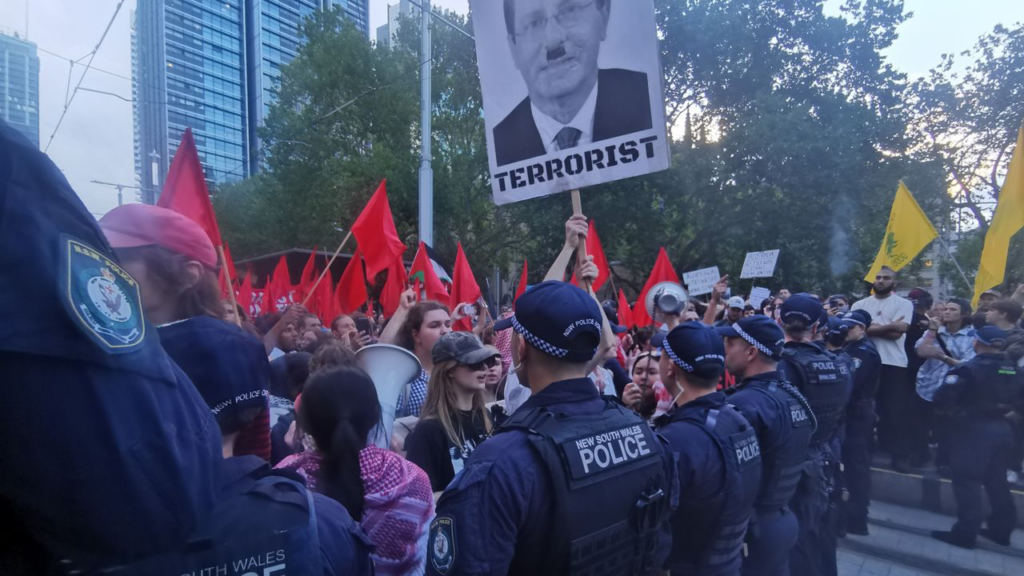
Demonstrators hemmed in by NSW Riot Squad Police at Sydney Town Hall, February 9, 2026

1. Imperialism and War

    Preparations for War Against Iran

    The United States has repositioned substantial military assets—including the USS Abraham Lincoln carrier group, additional aircraft and logistics infrastructure—to prepare for what officials describe as a “sustained, weeks-long” military campaign against Iran. This build-up accompanies tightened sanctions and continued diplomatic manoeuvring, with high-level Trump–Netanyahu conclaves coordinating strategy and escalatory rhetoric toward Tehran. The repositioning signals an expectation of reciprocal strikes and prolonged regional confrontation, occurring alongside sharp transatlantic diplomatic tensions at the Munich Security Conference.

    This military mobilisation represents imperialist decision-making divorced from democratic accountability, driven by competition for regional dominance and resource control. War preparations will deepen social misery both in Iran and across the region while accelerating global polarisation. The working class internationally must mount independent anti-war mobilisations: strikes, mass actions and political organisation to block military adventurism and the domestic austerity that invariably accompanies rearmament spending.

    Complicity in Israeli Genocide

    Israeli policies in the West Bank have escalated dramatically, with expanded settlement construction, tightened movement restrictions and explicit annexationist measures designed to “bury the idea of a Palestinian state.” German officials, including Parliament President Klöckner, visited Israel in what amounts to tacit endorsement of genocidal policies, signalling Berlin’s political alignment with Israeli security doctrine. Meanwhile, Australian police violently suppressed mass protests opposing Israeli President Herzog’s state visit to Sydney, deploying riot squads, horse charges and kettling tactics that left demonstrators—including filmmaker James Ricketson—bloodied and arrested. Labor governments imposed protest bans and extended police-state powers to protect visiting war criminals.

    These actions confirm that European and allied governments are active accomplices in imperialist aggression. The suppression of dissent through state violence exposes the class character of bourgeois democracy: when challenged on fundamental questions of war and genocide, ruling elites deploy repression regardless of party labels. Workers must oppose their own governments’ participation in imperialist crimes through international solidarity and industrial action, not appeals to the very state institutions orchestrating repression.

    Militarisation and Inter-Imperialist Rivalry

    Germany is transforming a regional airport into a military fortress as part of NATO’s eastern-flank expansion, deepening preparations for imperialist confrontation. The Munich Security Conference revealed sharp US–EU tensions over strategy, burden-sharing and confrontations with Russia and China, exposing fissures within NATO alliances. Social-democratic parties across Europe are converting wholesale to pro-war positions: Germany’s SPD is drafting a programme stressing military readiness and “national strengthening,” while conscription plans advance despite youth opposition organised by socialist student groups.

    Inter-imperialist rivalry intensifies the danger of global conflict as capitalist powers compete for markets, resources and geopolitical advantage. Workers must oppose their own governments’ militarism and build international solidarity to prevent war profiteering and the conversion of Europe into a staging ground for imperialist confrontation.

    2. Authoritarian Consolidation and State Repression

      Criminalisation of Dissent

      Türkiye imprisoned 77 members of the Socialist Party of the Oppressed (ESP) and placed six Left Party members under house arrest, with charges relying on informant testimony that conflated legal party activism with terrorism. Evidence presented in court included routine political literature such as copies of The Communist Manifesto. In Australia, new “prohibited hate group” laws echo 1951 Cold War-era attempts to ban communism, while Queensland’s LNP government matched Labor by banning “prescribed phrases” at protests. Princeton University abruptly cancelled a scheduled discussion by Norman Finkelstein on Gaza, implementing new policies to limit campus dissent and free speech.

      These measures demonstrate how bourgeois states weaponise counter-terror and hate-speech legislation to criminalise legal socialist organising and suppress opposition to imperialist policy. The expansion of police-state powers is bipartisan: Labor and conservative governments alike deploy repression to defend capitalist interests. The defence of democratic rights requires mass working-class mobilisation and political independence, not reliance on bourgeois courts or appeals to the same state apparatus orchestrating repression.

      Immigration Enforcement as State Terror

      ICE operations have intensified across the United States, with mass workplace raids targeting Amazon Flex drivers in Michigan, meatpacking workers in Colorado facing deportation threats to break strike authorisations, and routine abductions dwarfing media-sensationalised individual kidnapping cases. The Department of Justice moved to gut asylum rights through regulatory changes designed to accelerate deportations. At the Dilley detention centre, a toddler’s near-fatal medical neglect case exposed life-threatening conditions and systematic denial of care. Palestinian detainee Leqaa Kordia suffered a delayed medical emergency after one year of detention at a Texas ICE facility.

      Immigration detention operates as a racist, punitive apparatus designed to discipline precarious labour and fragment working-class solidarity. Deportation threats function as employers’ weapons to intimidate workers and prevent collective action. The defence of immigrant workers requires workplace solidarity committees, mass mobilisation against detention regimes and political organisation that links immigrant rights to broader working-class struggles against state repression.

      Police Violence and Authoritarian Measures

      Minnesota police rioted against protesters outside the Whipple Federal building, deploying indiscriminate baton charges and mass arrests. NSW riot police violently attacked demonstrators opposing Herzog’s visit, with eyewitness accounts documenting kettling, horse charges and denial of medical attention to injured protesters in custody. Massive security operations in Milan deployed snipers and heavy policing against protests opposing Trump administration presence at the Winter Olympics, though dockworker strikes delayed arms shipments and athletes publicly criticised ICE.

      State violence is escalating to protect imperialist policy and criminalise dissent. The international coordination of repression—from Australia to the United States to Europe—reveals the class function of bourgeois states under crisis. Defensive mobilisation requires united working-class action and democratic organising, not appeals to the institutions wielding violence.

      3. Austerity and Economic Warfare

        Corporate Restructuring and Worker Attacks

        Stellantis recorded a $26 billion charge tied to its electric-vehicle strategy reversal and simultaneously delayed plant reopenings, cut dividends and pushed buyout schemes affecting American workers. UPS is preparing a second driver buyout program while planning 30,000 layoffs in 2026, shifting labour costs despite sustained profitability. BYD’s Xi’an high-voltage electrical equipment factory imposed steep cuts to piece-rate bonuses that reduced many workers’ take-home pay below 2,000 yuan monthly, provoking wildcat strikes met with police repression.

        Corporate crisis is weaponised to intensify exploitation: immense private wealth accrues to billionaire owners while workers face precarious pay, forced exits and degraded conditions. Buyout programmes and “voluntary” redundancies are designed to weaken collective strength and force exits that erode bargaining power. The strategic response requires coordinated rank-and-file mobilisation, rejection of unilateral management schemes and international solidarity to resist the global race to the bottom.

        Public Service Destruction

        The UK lost WHO measles elimination status due to falling vaccination rates and deliberate public-health neglect—a direct outcome of neoliberal austerity that prioritises profit over population health. New Zealand’s capital faces environmental disaster from a massive sewage leak, exposing capitalist underinvestment in essential infrastructure. Los Angeles authorities moved to dismantle federal oversight of homelessness as the crisis deepens, shifting responsibility to avoid redistributive demands. A UN report warned of global “water bankruptcy” affecting billions, with scarcity and contamination exacerbated by private control of resources and climate breakdown.

        The rollback of public health, infrastructure and essential services is rooted in the capitalist drive to divert social resources toward private accumulation and war preparation. Restoring public goods requires mass working-class pressure to force socialised control, democratic planning and international cooperation—issues only resolvable through political struggle against capitalist property relations.

        Trade War and Economic Coercion

        Trump threatened to block the opening of the Gordie Howe International Bridge as part of escalating economic warfare against Canada, weaponising infrastructure to extract concessions. New Zealand’s coalition government fractured over the India Free Trade Agreement, with populist objections masking the reality that such deals serve corporate profit and intensify wage competition, privatisation and precarious labour.

        Economic warfare is an extension of imperialist diplomacy. Free-trade agreements deepen exploitation and cross-border wage competition while populist nationalism channels working-class anger into reactionary scapegoating. Workers on both sides of borders must unite internationally to resist bourgeois brinkmanship and oppose both neoliberal trade regimes and chauvinist diversion.

        4. Class Struggle and Bureaucratic Betrayal

          Healthcare Workers’ Resistance

          Nurses at NewYork-Presbyterian overwhelmingly rejected a tentative agreement that the New York State Nurses Association attempted to force through via an illegitimate snap vote, continuing their strike under rank-and-file defiance. The Kaiser healthcare workers’ strike expanded as 3,000 pharmacy and laboratory workers joined 31,000 already on strike, significantly widening disruption. San Francisco’s 6,400 educators struck for the first time since 1979, drawing mass rallies and broad community support before union bureaucrats and Democratic Party figures brokered a tentative agreement that concedes austerity and fails special-education demands.

          These struggles expose the gulf between rank-and-file militancy and union apparatus. Bureaucratic sellouts are imposed to protect political ties with the Democratic Party and stabilise capitalist rule. The NYSNA’s snap-vote manoeuvre, the attempt to isolate Kaiser strikers and the intervention of Nancy Pelosi to contain San Francisco educators all demonstrate that union leaderships function as barriers to sustained class struggle. Winning safe staffing, liveable wages and healthcare as a social right requires democratically elected strike committees, strike pay drawn from union assets, expansion of strikes across facilities and sectors, and political independence from both union bureaucrats and bourgeois parties.

          Industrial Militancy and Betrayal

          Refinery workers denounced the United Steelworkers’ national pattern deal as a sellout prioritising corporate interests, with BP Whiting workers facing isolation if concessions are accepted. The UAW hailed a Volkswagen Tennessee contract as “historic” amid rank-and-file criticism that gains are modest and concessions linger. Will Lehman, a Mack Trucks rank-and-file activist, launched a campaign for UAW president demanding abolition of the Solidarity House bureaucracy and creation of workplace committees. In Norway, a union organised a sham strike that imposed financial burdens on members while failing to press management, forcing workers to pay for bureaucratic theatre.

          National pattern agreements and bureaucratic compromises fragment struggle and normalise concessions. Union apparatuses routinely betray workers by containing mobilisation, isolating militants and deferring to management. The necessary alternative is democratic coordination across plants, refusal of bureaucratic imposition and preparation for escalated, coordinated strike action under workers’ control.

          International Worker Struggles

          Tens of millions of Indian workers joined a one-day national strike against the Modi government’s labour “reforms” and removal of employment guarantees, though participation remained politically confined by Stalinist-linked federations channelling dissent toward bourgeois opposition parties. Peru saw mass protests uniting transport workers, students and families of state-repression victims against austerity and violence. Colorado meatpacking workers authorised strike action over dangerous conditions despite ICE deportation threats. High school students in Carson, Royal Oak and Detroit suburbs staged walkouts protesting ICE raids, authoritarianism and war, joining broader youth mobilisations.

          These struggles demonstrate the international scope of working-class resistance and the potential for cross-generational, cross-border solidarity. However, episodic protests and one-day token strikes cannot substitute for sustained, politically independent organisation. Without rank-and-file leadership breaking from nationalist and reformist containment, such mobilisations risk canalisation into bourgeois electoral channels or bureaucratic dead-ends.

          5. Elite Criminality and Political Decay

            Revelations tying Lord Peter Mandelson to Jeffrey Epstein networks have engulfed Keir Starmer’s Labour government, producing resignations and police inquiries. Jeremy Corbyn called for a Chilcot-style inquiry while insisting much remain shielded on “national security” grounds, demonstrating the political bankruptcy of Corbynism: seeking establishment solutions that protect state secrets and preserve bourgeois stability rather than mobilising independent working-class opposition. Leaked Epstein files implicate Trump and other political figures, with testimony at the Bondi hearing exposing cover-ups and secret “domestic terrorist” lists targeting dissidents. The FBI identified billionaire Leslie Wexner as a co-conspirator in 2019 but took no action.

            The Mandelson-Epstein scandal exposes intimate links between political elites and the financial oligarchy, revealing how the ruling class operates with systemic impunity. Parliamentary inquiries and legalistic remedies cannot break oligarchic power because state institutions exist to shield ruling-class crimes. Only mass working-class mobilisation and independent political organisation can hold elites accountable and overturn the structures protecting them.

            6. Political Bankruptcy of Reformism

              Corbynism and Pseudo-Left Opportunism

              Internal battles within Your Party saw factional purges and contrasting programmes, with Zarah Sultana’s Grassroots Left emphasising parliamentary reform and alliances with NGOs, unions and identity-based coalitions. Corbyn’s historical record of accommodation to Labour’s Blairite right and Sultana’s reformist trajectory both reproduce illusions that have repeatedly failed the working class. Alexandria Ocasio-Cortez’s appearance at the Munich Security Conference signals her full integration into establishment foreign-policy circles, providing pseudo-left cover for imperialist strategy.

              Corbynism’s “broad church” historically subordinated the left to Blairite interests; Sultana-style reformism proposes parliamentary solutions that will capitulate under capitalist crisis. Figures like AOC function to contain working-class anger within bourgeois institutions. Objective economic developments—globalisation, financial oligarchy, declining profitability—have rendered social-democratic reformism impotent. Only revolutionary organisation rooted in workplaces, independent of bourgeois parties and grounded in international socialist strategy, can defend social rights.

              Stalinist Betrayal

              The Communist Party Marxist–Kenya published a diatribe openly defending Stalin and endorsing Stalinist historical falsifications while aligning with reactionary bourgeois regimes. The Turkish Communist Party held a mass Ankara rally glorifying Stalinist figures and promoting revisionist Soviet narratives. In Venezuela, Morenoite currents formed alliances with Stalinist parties supporting bourgeois nationalist regimes through electoral manoeuvres.

              Praising Stalin today is not abstract historiography but a political programme that betrays working-class independence by subordinating socialist aims to bourgeois nationalism and petty-bourgeois interests. Stalinist tendencies function as props for capitalist regimes, providing pseudo-left legitimacy for reactionary policies and undermining international solidarity. Trotskyism remains the necessary continuity of revolutionary Marxism against both Stalinist bureaucratic liquidation and nationalist illusions.

              Electoralism and Municipal Dead-Ends

              DSA-aligned councilmember Nithya Raman entered the Los Angeles mayoral race presenting symbolic progressive rhetoric while actual policy remains confined within bourgeois constraints. New York City Mayor Mamdani announced symbolic tax-the-rich rhetoric while cutting homelessness support, prioritising market interests. The military-aligned Bhumjaithai Party won Thailand’s election through defections and right-wing consolidation, reflecting the bankruptcy of nominally “democratic” bourgeois parties.

              Electoral manoeuvres cannot substitute for independent workplace organisation. Symbolic reforms and progressive branding deflect from fundamental class conflict while subordinating working-class demands to capitalist institutional limits. Parliamentary routes have been exhausted; only mass organisation and direct working-class action can secure social rights.

              7. The Revolutionary Alternative

                The week’s events confirm a central reality: global capitalist crisis produces simultaneous assaults on living standards, democratic rights and international peace. Imperialism drives toward war in the Middle East while intensifying repression domestically. Austerity destroys public services and infrastructure. Corporate restructuring weaponises crisis to deepen exploitation. Elite criminality operates with systemic impunity.

                Against these attacks, working-class resistance is mounting: nurses rejecting bureaucratic sellouts, educators striking, refinery and meatpacking workers authorising action, youth walking out against ICE terror, millions in India protesting labour destruction. Yet episodic militancy remains fragmented and politically contained by union bureaucracies, reformist parties and pseudo-left opportunism.

                The strategic answer is the independent, international organisation of the working class around a Trotskyist programme: democratically elected rank-and-file committees in every workplace and school; coordination across industries, borders and continents; political independence from all bourgeois and reformist parties; and the construction of a mass revolutionary party to expropriate the oligarchy, end imperialist war and place social power in workers’ hands. The International Committee of the Fourth International (ICFI) and the Socialist Equality Parties organise this political work. Workers seeking to connect their struggles to organised resistance can join at https://www.wsws.org/en/special/pages/sep/us/join.html.​​​​​​​​​​​​​​​​

                Political Report for the Week ending 14 February 2026 Read More »

                White house

                Political Report for the Week ending 07 February 2026

                This political report for the week ending 07 February 2026 is compiled based on coverage from the World Socialist Web Site (WSWS.org).

                White house
                President Donald Trump smiles after signing a spending bill that ends a partial shutdown of the federal government in the Oval Office of the White House, Tuesday, Feb. 3, 2026, in Washington. [AP Photo/Alex Brandon]

                The week ending February 7, 2026 witnessed an intensification of inter-imperialist rivalry, the acceleration of domestic repression in the United States, and a global surge in working-class militancy met with systematic betrayal by trade union bureaucracies. From preparations for regime change in Iran to mass strikes in healthcare and education, the international crisis of capitalism manifested in parallel assaults on democratic rights, living standards, and public services. This report synthesizes key developments across four domains: imperialist war preparations and geopolitical realignment; the consolidation of authoritarian rule and state repression; capitalist austerity and economic warfare; and the eruption of class struggle against union bureaucratic containment.

                I. Imperialism and War: Escalation Toward Iran and Regional Realignment

                European Powers Line Up Behind Regime Change in Iran

                European governments openly aligned with Washington’s escalation toward regime change in Tehran. The EU placed Iran’s Revolutionary Guards on its “terror” list while European leaders—including Germany’s Friedrich Merz and UK Prime Minister Keir Starmer—publicly backed US threats and prepared rhetoric for a “transition” in Iran. This coordination followed prior US and Israeli strikes and represents strategic repositioning by European imperialism to secure access to energy resources and geopolitical influence.

                Core analysis: The WSWS situates European actions as integral to imperialist rivalry and the scramble for markets and spheres of influence. Liberal imperialism cloaks predatory aims in “humanitarian” language, but the underlying logic is capitalist competition driving preparations for inter-imperialist war. Only an international working-class anti-war movement grounded in revolutionary socialist politics can halt the slide toward regional and global conflagration.

                Turkey Attempts Mediation as NATO Ally

                As US preparations for possible military action against Iran escalated, Turkey sought to mediate between Washington and Tehran. Ankara’s diplomacy aimed to limit regional destabilization while protecting Turkish geopolitical and economic interests, revealing the contradictions of a junior NATO power attempting to maneuver within imperialist rivalry.

                Core analysis: Turkish mediation is not peaceful diplomacy but a junior imperialist power managing fallout from US militarism. Imperialist competition, not negotiation, drives the crisis; only international working-class anti-war mobilization can block regional war.

                Merz’s Gulf Tour: Alliance with Dictators for German Great Power Politics

                German Chancellor Friedrich Merz toured Gulf monarchies—Saudi Arabia, Qatar, UAE—meeting personally with Mohammed bin Salman and pledging strategic partnerships, arms deals, and energy cooperation despite documented human rights crimes. The visit frankly asserted German great-power ambitions subordinating all ethical concerns to capitalist and geostrategic interests.

                Core analysis: Imperialist states ally with dictators to secure energy and markets. Workers must oppose rearmament and foreign-policy adventurism through an international socialist program that rejects nationalist accommodation to imperialism.

                II. Authoritarian Consolidation and State Repression

                Trump Administration’s Assault on Democratic Norms

                Federal Election Seizure Plans: President Trump publicly urged federal takeover of state election administration and directed FBI operations in Fulton County, Georgia, threatening to “nationalize” elections in targeted cities. These moves signal preparation to rig or cancel the 2026 elections.

                Core analysis: This represents an overt break with democratic norms by sections of the capitalist state preparing for dictatorship. The principal obstacle to a coup is the working class; the necessary response is independent political mobilization through rank-and-file organizations and preparation for general strike, not reliance on the Democratic Party.

                Federal Purges: The administration announced sweeping purges of federal civil service employees, replacing career officials with political loyalists to centralize control—measures framed as rooting out “disloyalty.”

                Core analysis: Politicized purges characterize authoritarian consolidation, removing institutional checks on presidential power. Defense of democratic rights requires independent working-class organizing and mass political resistance.

                Racist Provocations: Trump posted a racist video depicting Barack and Michelle Obama as apes, one in a series of overt racist provocations from the White House designed to mobilize racist sentiment, terrorize minorities, and divide the working class.

                Mass Surveillance Infrastructure

                The Trump administration expanded mass-surveillance networks—databases, facial recognition, cross-agency sharing—to track immigrants and political protesters, integrating private tech contractors into state repression apparatus.

                Core analysis: Surveillance is a political tool to suppress dissent and enforce social control for the oligarchy. Defense of democratic rights requires independent working-class mobilization and dismantling surveillance apparatuses through mass action.

                Immigrant Repression and Detention Center Horrors

                Measles Outbreak at Dilley: A measles outbreak tore through the South Texas Family Residential Center in Dilley, confining hundreds of asylum-seeking families and children. Overcrowding, poor sanitation, and rationed medical care created conditions for rapid spread amid a nationwide measles resurgence (2,267 confirmed cases in 2025) following mass purges at HHS and CDC.

                Core analysis: The outbreak demonstrates Trump’s program of criminalizing and caging migrants while dismantling scientific public health, subordinating life to profit and political repression. Both Republican and Democratic parties share complicity in detention regimes and public-health defunding.

                Vindictive Deportation: After protests forced the release of five-year-old Liam Conejo Ramos from Dilley, DHS filed a motion to expedite deportation proceedings against his family—vindictive state repression designed to terrorize immigrants and suppress dissent.

                ICE Workplace Raids: ICE conducted workplace raids including at an Amazon facility in Hazel Park, Michigan, weaponizing enforcement to intimidate immigrant and non-immigrant workers alike, deepen labor discipline, and facilitate corporate flexibility.

                University Republican Club Calls for Assassinations

                The Illini Republicans at the University of Illinois Urbana-Champaign posted on Instagram celebrating political killings and calling for assassination of opponents; the administration refused discipline, citing “protected speech.”

                Core analysis: This evidences deepening fascist and white-supremacist currents fostered by capitalism resorting to political violence. The university’s selective “free speech” shields reactionary violence while repressing left protests. Defense of democratic rights requires independent working-class mobilization against both fascism and the bipartisan state protecting it.

                Repression of Nurses and Protesters

                New York Nurses Arrested: At least 13 striking nurses were arrested outside Greater New York Hospital Association headquarters on Day 25 of their strike, with NYPD riot units deployed amid pressure from Mayor Zohran Mamdani and Governor Kathy Hochul to end the action through emergency orders facilitating out-of-state replacements.

                Core analysis: The arrests demonstrate state readiness to use force defending corporate healthcare interests. Union bureaucracy’s containment strategy isolates nurses; expansion of the strike, full strike pay, and national coordination through rank-and-file committees are essential.

                Mamdani’s Betrayal: DSA Mayor Embraces Police State

                New York Mayor Zohran Mamdani praised an NYPD shooting of a 22-year-old Bangladeshi man experiencing a mental-health crisis and endorsed Governor Hochul’s strike-breaking measures, revealing continuity with pro-police policies despite earlier populist branding.

                Core analysis: DSA-style figures integrate into the capitalist state, converting electoral radicalism into administrative collaboration with police and oligarchy. The working class must not be misled; independent organization and rank-and-file control are essential.

                III. Austerity, Economic Warfare, and Capitalist Crisis

                US Economic Warfare Against Cuba and Venezuela

                Cuba Blockade: The US energy blockade threatened Cuba with humanitarian “collapse” as the UN Secretary-General warned of imminent crisis. Washington’s executive order threatened tariffs on countries supplying Cuba with oil; Mexico and other suppliers faced pressure to cease shipments, precipitating blackouts and shortages.

                Core analysis: The blockade constitutes genocidal imperialist coercion aimed at regime overthrow, with complicity from regional bourgeois governments and nationalist-left leaders who capitulate. Only international working-class solidarity can oppose imperialist economic warfare.

                Venezuela Privatization: Following the US abduction of Nicolás Maduro, Venezuela’s interim authorities rapidly overhauled hydrocarbons law, opening oil to foreign control and subordinating resources to US and corporate interests.

                Core analysis: This exposes the failure of chavismo and bourgeois-nationalist projects that cannot defend resources or working-class gains under imperialism. Only working-class revolution and international socialist policy can break imperialist domination.

                Corporate Layoffs Accelerate to Great Recession Levels

                January job-cut announcements by US corporations tripled, with large tech, media, and retail firms leading the wave. The increase signals renewed corporate restructuring and mass unemployment approaching Great Recession scale.

                Core analysis: Layoffs flow from falling profitability and overaccumulation; corporate efforts to restore margins enforce political choices subordinating labor to capital. The response must be mass industrial organization, strikes, and rank-and-file committees defending jobs and fighting for nationalization under workers’ control.

                Washington Post Slashes Newsroom: The Washington Post eliminated roughly one-third of its newsroom (over 300 jobs), closing entire desks while billionaire owner Jeff Bezos’s wealth surged. This media purge is part of capitalist restructuring and concentration of cultural power under the oligarchy, using “efficiency” rationales to mask political decisions shrinking independent journalism.

                1,200 GM Layoffs in Canada: General Motors ended the third shift at its Oshawa plant, laying off approximately 1,200 autoworkers as part of production rationalization.

                Austerity Across Multiple Fronts

                Australia: The Labor government drove up housing prices through developer-friendly policies, cut arts funding (forcing Writers Victoria to close), raised interest rates deepening household debt crises, and approved National Cabinet measures removing tens of thousands of children from disability support. Labor also pressed ahead with demolition of Melbourne public housing towers, displacing residents under privatized redevelopment schemes.

                UK: A major charity reported deepening poverty under the Starmer Labour government, documenting rising food insecurity, housing stress, and benefit shortfalls. Starmer’s administration implements austerity while claiming respectability.

                SNAP Cuts: Trump administration changes to SNAP eligibility set 2.4 million people at risk of losing food assistance by 2034, shifting the burden onto working people to finance corporate and military priorities.

                Homeless Death in Kalamazoo: A homeless man froze to death in Kalamazoo, Michigan while the city allocated $515 million to build a new arena—a stark juxtaposition of social neglect and pro-business public spending.

                Kaiser Permanente Medicare Fraud

                Kaiser agreed to a $556 million settlement over allegations of inflating Medicare Advantage risk scores, generating roughly $1 billion in alleged overpayments—while claiming inability to meet demands from striking healthcare workers.

                Core analysis: “Non-profit” healthcare corporations are profit-driven entities using public funds for private gain. Fraud settlements are routine costs of business while frontline workers and patients suffer austerity.

                IV. Class Struggle and Union Bureaucratic Betrayal

                Healthcare Workers’ Strikes

                Kaiser Strike Enters Third Week: The strike by 31,000 Kaiser healthcare workers continued into its third week, with 4,000 pharmacy and lab workers (UFCW) preparing to join. Management pursued legal and PR strategies while union bureaucracy sought localized talks fragmenting the struggle.

                New York Nurses: 15,000 nurses remained on strike facing threats of permanent replacement, with escalated repression (arrests, state emergency orders) and union bureaucracy retreat toward concessions.

                Boston Nurses: Despite an overwhelming strike vote, the union bureaucracy left 650 nurses at Boston Medical Center Brighton working, fragmenting leverage and isolating the struggle.

                Core analysis: Healthcare strikes contain the embryo of a national movement defending public health, but unions seek containment. Only rank-and-file organization could transform disputes into unifying working-class struggles. The fight centers on whether workers accept permanent understaffing or build nationwide, worker-led movements.

                Education Workers’ Mobilization

                San Francisco Teachers’ Strike: 6,400 educators in San Francisco Unified School District voted overwhelmingly to strike over chronic understaffing, poverty wages, unaffordable healthcare costs, and class-size caps—the first district-wide walkout since 1979.

                Core analysis: The strike occurs amid obscene regional inequality driven by tech billionaires and Democratic-party austerity. Union bureaucratic entanglement with Democrats must be broken; independent rank-and-file committees should link educators across districts for statewide and national action.

                Ann Arbor: Educators worked under expired contracts amid massive cuts and restructuring.

                Australia: The WSWS called for building rank-and-file committees among educators and students to oppose mass job cuts, course closures, and integration of universities into the military-industrial complex under the Universities Accord.

                Industrial Workers’ Struggles

                Birmingham Refuse Workers: Over a year into indefinite strike action, Birmingham loaders and drivers opposed pay cuts up to £8,000 and abolition of safety roles, facing intimidation, court injunctions, agency labor, and £33 million council deployment to break the strike—backed by the Starmer government declaring a “major incident.”

                Core analysis: This is a test case for Starmer’s austerity drive and labor bureaucracy’s capacity to contain conflict. The dispute can only be won through independent rank-and-file organization, democratic worker control of strategy, and national solidarity exposing government use of state power to enforce austerity.

                USW Refinery Sellout: The United Steelworkers announced a tentative national agreement for 30,000 refinery workers offering 15% over four years with no binding protections against AI or job cuts; rank-and-file anger erupted over the perceived betrayal.

                Core analysis: The WSWS denounced the USW bureaucracy’s sellout and called for immediate formation of elected rank-and-file refinery committees to reject the deal, coordinate national strike, and use union assets to sustain prolonged action.

                Royal Mail: The Communication Worker Union’s Martin Walsh attacked rank-and-file initiatives calling for nationwide fightback against the Optimised Delivery Model and asset-stripping, collaborating with EP Group management.

                German Public Transport: Verdi leadership limited warning strikes over pay and conditions, negotiating incremental deals rather than escalating militant potential.

                Pattern of Bureaucratic Containment

                Teachers’ Unions Suppress Resistance: Teachers’ union bureaucracies issued directives forbidding participation in anti-fascist walkouts and protests, framing suppression under “student safety” and contractual pretexts. 

                Core analysis: Union bureaucracies act to preserve capitalist order by containing rank-and-file militancy and preventing cross-sector solidarity. Democratic rank-and-file committees are essential to defend educational professionals’ rights and broader anti-dictatorship mobilizations.

                International Labour Developments

                Mediterranean Dockworkers: Dockworkers across Mediterranean ports planned coordinated protests opposing use of port infrastructure for military logistics and arms shipments.

                German Hospital Workers: Strikes and protests spread across regions over understaffing, wage stagnation, and cost-cutting as patient safety deteriorates.

                University of Sheffield Lock-out: Management locked out staff adhering to action short of striking, withholding pay—an unprecedented enforcement of unpaid labor to punish industrial action.

                V. Elite Criminality and Systemic Corruption

                Epstein Files Expose Ruling Class Impunity

                The DOJ released millions of Epstein-related documents revealing extensive elite contacts; the Trump White House sought to minimize revelations while DOJ downplayed prosecution prospects and redactions selectively protected prominent individuals. Materials implicated UK figures including Peter Mandelson and Prince Andrew, threatening Starmer’s “clean-government” stance.

                Core analysis: The files expose systemic criminality and class impunity at capitalism’s summit. The ruling class protects its own through legal cover-ups and media manipulation. Justice cannot be delivered by capitalist courts or parties; accountability requires mass political mobilization of the working class and dismantling oligarchic power.

                Financial Oligarchy and Fed Appointment

                Wall Street figures rallied to secure Kevin Warsh’s nomination to lead the Federal Reserve, demonstrating fusion between state power and financial oligarchy. Central-bank appointments serve capitalist interests by stabilizing conditions for private profit rather than defending working-class living standards.

                VI. Political Bankruptcy of Reformism

                Colombian President Petro’s Capitulation

                Colombian President Gustavo Petro visited the White House for talks with Trump days after military threats related to Venezuela, signaling sharp realignment with pledges of collaboration, intelligence sharing, and economic cooperation.

                Core analysis: Petro’s capitulation confirms the bankruptcy of bourgeois nationalist “lefts” attempting reforms within imperialist frameworks. His turn toward Washington facilitates US neocolonial objectives and suppresses independent working-class alternatives.

                Costa Rica Election

                A Trump-aligned, right-of-centre candidate won Costa Rica’s presidency, displacing traditional pink-tide forces and marking electoral weakness of reformist nationalist-left projects.

                Core analysis: This exposes the failure of nationalist or reformist regimes to defend working-class interests; only independent socialist politics rooted in the working class can offer an anti-imperialist alternative.

                Conclusion

                The week’s developments confirm the WSWS analysis: capitalism’s crisis is driving simultaneous escalation toward imperialist war, consolidation of authoritarian rule, intensification of austerity, and explosion of working-class resistance. The central political question is leadership: will struggles be contained and betrayed by union bureaucracies and bourgeois parties (including their pseudo-left appendages), or will workers build independent, democratically controlled rank-and-file committees capable of coordinating international resistance?

                The necessity of the hour is the construction of an international socialist movement of the working class, organized independently of all capitalist parties and union apparatuses, and guided by the program and perspective of the International Committee of the Fourth International. Only such a movement—linking healthcare workers, educators, refinery workers, dockworkers, students, and immigrant communities across national boundaries—can halt the drive to dictatorship and war, defend democratic rights and living standards, and open the road to socialist transformation of society.​​​​​​​​​​​​​​​​

                Political Report for the Week ending 07 February 2026 Read More »

                IMG 0657

                Political Report for the Week ending 31 January 2026

                Compiled by SocialismAI.com 

                This report synthesises and analyses the main political, geopolitical and economic developments covered by the World Socialist Web Site in the week ending 31 January 2026. It locates events within the deeper dynamics of class struggle, imperialism and the global capitalist crisis, and draws the immediate political conclusions and tasks for the international working class.

                1. Imperialism on the march — preparations for new wars

                The central story of the week was the open escalation of US imperialism. The Trump administration’s mounting threats and military deployments toward Iran were documented and analysed as preparations for a major new act of aggression, not isolated bellicose rhetoric. The WSWS outlined the scale and danger of the US build-up of forces, the carrier strike group deployments and the propaganda pretexts being assembled to legitimise strikes on Iran (Trump administration threatens new war against Iran). The UN Security Council posturing and Washington’s invocation that “all options are on the table” were exposed as part of a regime-change strategy that follows Washington’s recent attack on Venezuela and its abduction of President Maduro (Washington menaces Iran at UN Security Council; After Venezuela, Trump targets Iran).

                From an international-class perspective, WSWS emphasises that these moves are expressions of imperialism’s strategic imperative to control resources, markets and trade routes (notably oil and gas), to attempt to subordinate rivals such as China and to shore up domestic political authority through foreign adventurism. The analysis rejects humanitarian or “democratic” pretexts and situates the drive to war in the logic of capitalist rivalry and the breakdown of lawful institutions.

                2. Repression at home — war and dictatorship as two sides of capitalist rule

                The week reinforced the WSWS argument that war abroad and repression at home are inseparable. Coverage tied the Trump government’s domestic assaults—paramilitary policing, the killing of migrants and threats to invoke the Insurrection Act—to the same oligarchic interests driving foreign aggression (New Year Fund appeal on the rise of dictatorship and war). The ruling class’s resort to exceptional measures is explained as an attempt to impose social discipline and to defend the profits and privileges of the financial oligarchy amid global economic turmoil.

                3. Intensifying class conflict — strikes and workplace resistance worldwide

                While imperialist tensions dominate geopolitics, the working class continued to push back across continents. WSWS’s regular “Workers Struggles” reports registered growing militancy: Belgian rail workers launched a five-day national strike against austerity and pension attacks; French bank employees struck over pay and restructures despite record bank profits; and hospital, education and municipal workers staged sustained actions in the UK, Italy and Africa (Workers Struggles: Europe, Middle East & Africa). In Asia and the Pacific, mass actions by gig workers, ambulance crews and casino staff testified to mounting resistance to wage cuts, precarious contracts and privatisation moves (Workers Struggles: Asia and Australia).

                These labour struggles reflect the material pressures produced by austerity, inflation and corporate profit-seeking. They demonstrate the objective potential power of the working class, but WSWS warns that this potential is being squandered by union bureaucracies that isolate workers and broker sellouts.

                4. Material forces driving the crisis

                WSWS analyses the above dynamics as rooted in the global capitalist crisis: mounting sovereign and private debt, falling rates of profit, currency instability and the scramble for strategic raw materials. The ruling elites respond with a two-pronged strategy—intensify exploitation at home through austerity and wage suppression, and secure imperial advantage abroad via military force. The result is the simultaneous escalation of poverty, layoffs and militarism.

                5. Political implications and class tasks

                • Build political independence: WSWS insists that workers must break from bourgeois parties and pseudo-left forces that either collaborate with imperialism or reduce resistance to parliamentary petitions. The only credible barrier to war and austerity is the organised power of the working class.
                • Organise rank-and-file committees: To counter union sellouts and unify struggles across workplaces and borders, the WSWS calls for the formation of rank-and-file committees and an International Workers Alliance of Rank-and-File Committees.
                • Defend democratic rights: Immediate campaigns must be mounted to oppose police militarisation, arbitrary detention and censorship; the fight for democratic rights is inseparable from the fight against war and austerity.
                • Political education and leadership: WSWS stresses the urgent need to rebuild revolutionary political leadership rooted in Marxism. Initiatives such as Socialism AI and WSWS educational work are presented as tools to equip workers and youth with theory and organisation.

                6. Action guidance

                Workers should link strikes and local struggles to an international political strategy: refuse austerity bargains that trade away living standards; demand immediate protections for democratic rights; and build cross-border solidarity committees to coordinate industrial and political action. To connect understanding with organised resistance, the WSWS urges workers to join efforts to build an independent socialist movement and to consider affiliating with the Socialist Equality Party’s organising work: https://www.wsws.org/en/special/pages/sep/us/join.html

                — World Socialist Web Site / International Committee of the Fourth International

                Political Report for the Week ending 31 January 2026 Read More »

                Scroll to Top