Sri Lanka

Sangeethsan

The LTTE Ban is a Weapon against All of Us: The Arrest of Sangeethsan and the Real Logic of State Repression

By Sanjaya Jayasekera, Member, The Socialist Lead of Sri Lanka and South Asia (SLLA), the Revolutionary Left Faction of the Socialist Equality Party (SEP) of Sri Lanka. SEP is the Sri Lankan section of the International Committee of the Fourth International (ICFI), which publishes the World Socialist Web Site (WSWS). 

Sangeethsan
Sangeethsan (Sangeethsan Facebook page)

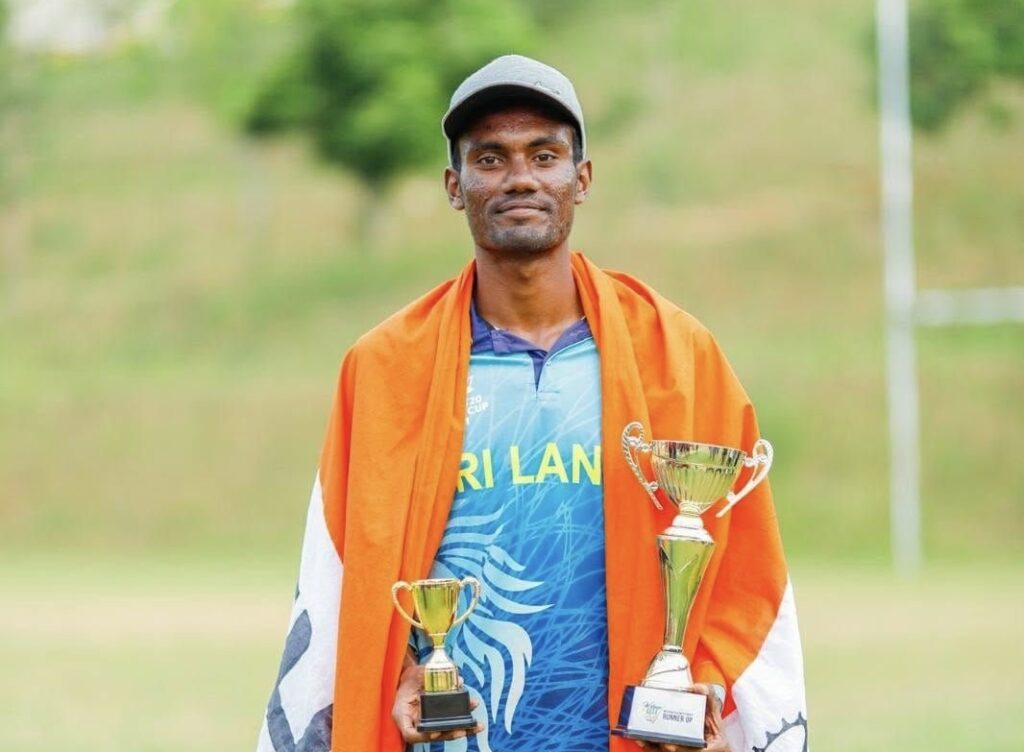
On a day (June 2) that should have passed unremarkably in Kilinochchi, the Jaffna Police Crime Division arrested a 24-year-old musician. His name is Ganesh Kumar Sankeethan (Sangeethsan) — known by his stage name “HipHop Sangee” (YouTube Channel name) — and his crime, according to the state, was uploading songs that the police allege indirectly glorify the separatist Liberation Tigers of Tamil Eelam (LTTE). He was remanded for two weeks under Section 3(h) of the Prevention of Terrorism Act (PTA), his lawyer K. Sayanthan verified.

Sangeethsan, a rapper, has earned widespread recognition within the local Tamil hip-hop community for compositions that combine social commentary with cultural storytelling. Many of his works are available through his social media accounts. Before we go any further, let us consider what one of those songs contains. It is not vague cultural expression or ambiguous artistic metaphor. It invokes அண்ணன் — Elder Brother — the term used in Eelam Tamil political culture to refer to Velupillai Prabhakaran. It speaks of the Tiger flag arriving in triumph. It honors the மாவீரன் — the Great Heroes, the fallen LTTE cadres — by name and by the imagery of their sacrifice. It calls on them to return and build the nation. It invokes கார்த்திகை — November — the month of Maaveerar Naal, the annual mourning of the LTTE dead, as its emotional and symbolic landscape: flowers are brought to the fallen, their weeping families cry out to them, and the dead are called back to build the nation.

These are the lyrics of a young man from a war-ravaged district who grew up surrounded by grief, who found in music a way to articulate what his community has been undemocratically forbidden to say openly since May 2009.

We state these facts not to hand ammunition to those who want Sangeethsan kept in a cell. We state them because this article is committed to a principle that the Sri Lankan state and its chauvinist supporters on social media are equally committed to destroying: that honest politics must begin with the truth, not with convenient omissions. The question before us is not whether Sangeethsan’s lyrics express a political program we endorse. They do not — and we will explain why, plainly and without condescension, in the paragraphs that follow. The question before us is a different and more fundamental one: does any democratic society have the right to imprison a 24-year-old for the political content of his songs?

The answer is no. Unequivocally, no.

Freedom of political expression — including the freedom to express a politics that is wrong, mistaken, or even one that others find deeply objectionable — is a right that the working class defends with the greatest vigilance, with one principled and non-negotiable exception: fascist speech and fascist organization. We defend such expressions not because all political ideas are equally correct, but because the repressive legal machinery constructed to silence Tamil grief today is the same machinery that will be turned on striking workers, protesting students, and anyone else who challenges the authority of the capitalist state tomorrow. This is not a theoretical warning. It is the documented history of the PTA, other security laws and essential services laws in Sri Lanka, which have been used against Sinhala rural youth, students, Muslim youth, Tamil journalists, plantation workers, electricity workers and port workers with equal and indiscriminate brutality.

This article is not written primarily for those for whom what we discuss here is their daily experience. It is written for Sinhala youth, for middle-class families in Colombo and Kandy and Galle, for workers on plantations and in factories, who have been told their entire lives that the Tamil question was settled in May 2009, that “terrorism” was  defeated, and that any sympathy for Tamil political expression is a conspiracy against the nation. It is written for those who, upon seeing Sangeethsan’s lyrics circulated on social media, may have felt the trained reflex: Tiger flag, Prabhakaran, Tamil Eelam — this is exactly what the PTA is for.

It is written to ask: who taught you to feel that reflex? Who benefits from it? And what has it cost you — not as a Sinhala person, but as a worker, as a young person, as someone whose living standards are being destroyed by the same state that is filling its remand prisons with Tamil youth and artists?

A Ban Designed Not to Fight Terror, But to Manufacture It

The formal proscription of the LTTE has been maintained continuously since the government of Mahinda Rajapakse banned it by gazette in January 2009, just months before the military’s final offensive ended the civil war. A final gazette in 2011 consolidated and extended this proscription to cover “related activities.” Every government since — Sirisena’s, Wickremesinghe’s, Gotabaya’s, and now Dissanayake’s JVP/NPP government — has maintained this framework intact.

When the Socialist Equality Party (SEP) opposed the original 2009 ban, it explained with precision what the ban was actually for. The statement issued at the time noted that the ban “has no direct bearing on the LTTE — the government is already waging war against the Tamil separatist organisation.” It warned that the decree’s sweeping powers to proscribe organisations “connected with or representing” the LTTE could “immediately be used against the Tamil National Alliance, a parliamentary political party.” And it predicted, with complete accuracy, that “such broad definitions, however, could be applied to any organisations, including political parties, trade unions or student bodies, that are regarded as opponents of the government.”[1]

Seventeen years later, those warnings have been borne out in case after case. The PTA has been used to imprison Tamil detainees for years without trial, to torture a young Muslim poet named Ahnaf Jazeem for writing verse that condemned ISIS and imperialist war, and to harass Tamil journalists. The JVP/NPP government — elected on a promise to abolish the PTA — has already used the Act against Muslim youth who expressed opposition to the Gaza genocide. In August 2025, the Counter Terrorism and Investigation Division (TID) questioned a Tamil journalist who reported on mass graves in the North. The new Protection of the State from Terrorism Act (PSTA) being drafted to replace the PTA reproduces its essential features while expanding the scope of what can be defined as a “terrorist act” to include actions that “intimidate the public” or “compel the government to do or abstain from doing any act” — language that could criminalize strikes, protests, and any form of organized resistance.

The instrument changes. The purpose remains identical: to place in the hands of the capitalist state an infinitely elastic legal weapon that can be pointed at anyone, at any time.

The Criminalization of Memory is Not an Accident

To understand why a 24-year-old rapper from Kilinochchi sits in a remand prison for singing about Tamil Eelam, you have to understand what kind of region Kilinochchi is, and what kind of wound the state is insisting must never be named.

Kilinochchi was the administrative capital of LTTE-controlled territory. It was also the site of some of the most intense fighting and civilian displacement in the final years of the war. The surrounding region of the Vanni was the theater of the last stages of a conflict in which, according to United Nations estimates, tens of thousands of Tamil civilians were killed. The survivors of that catastrophe — the families who lost fathers, mothers, husbands and children, who spent months in detention camps, who rebuilt lives from rubble — now live in a society where any public expression of that experience can be treated as a criminal act.

Sangeethsan is not a terrorist. He is a young man who grew up in the aftermath of that catastrophe, processing it in the only way artists know how: through music. To understand what is really at stake — politically and morally — we must read what he actually sang, and then ask not whether we agree with every word, but whether any democratic society can justify locking a young person in a remand cell for singing them.

This is not incidental to the logic of the PTA. It is the logic of the PTA. The state knows perfectly well that a military revival of the LTTE is structurally impossible and virtually non-existent. There is no evidence of serious LTTE organizational infrastructure, no military command, no armed force in the field. The proscription is maintained not because the LTTE poses a threat, but because the legal apparatus of the proscription remains extraordinarily useful — for precisely this: to convert political grievance into criminality, to transform memory into evidence, and to force the Tamil population into a permanent condition of political silence under pain of imprisonment.

This is what the SEP observed in August 2022, when the Wickremesinghe government, in the very same extraordinary gazette in which it delisted some Tamil diaspora groups for diplomatic purposes, continued to maintain the proscription framework: “The continued proscription of Tamil and Muslim groups is part of ongoing efforts by one government after another to whip up Sinhala chauvinism and discrimination against the country’s oppressed minorities. Facing the mass opposition of workers and the poor, the crisis-ridden Wickremesinghe regime is determined to keep communal tensions alive and deepen the repressive measures.” [2]

The pattern is consistent across every government of the post-independence era. The names change — UNP, SLFP, PA, UPFA, SLPP, JVP/NPP. The policy does not. This is not an accident. This is the function that communalism has always served in Sri Lanka: as the SEP noted in its analysis of 60 years of post-independence history, “Six decades of independence have brought ordinary working people nothing but communal conflict, deepening social misery and increasingly anti-democratic methods of rule.” The beneficiaries of that dynamic have never been ordinary Sinhala working people. They have been the ruling class, which has used ethnic division to rule a fractured country and impose economic policies that serve capital at the expense of all working people, regardless of their ethnicity.[3]

Read the Lyrics — Then Ask the Right Question

Let us be honest about what Sangeethsan sang in one of his songs. His lyrics are not ambiguous cultural nostalgia. They invoke அண்ணன் — Elder Brother — a term that in the context of Eelam Tamil political culture refers unambiguously to Velupillai Prabhakaran. They speak of a Tiger flag arriving in triumph. They use the term மாவீரன் (Maaveeran) — Great Hero — the specific honorific reserved for fallen LTTE cadres. They invoke the month of கார்த்திகை (Karthikai/November), which is the month of Maaveerar Naal, the annual commemoration of the LTTE’s dead. They call upon the heroes to “come back” and “build the nation.” They speak of warriors whose “sulfur-scented bodies blended into the wind” — the gunpowder of the battlefield rendered as the smell of sacrifice. This is explicitly a song of mourning for, and celebration of, the LTTE’s slain fighters and their leader. The lyrics read, in part:

The Tiger flag of our Elder Brother is arriving, make way and clear the path!

Tamil Eelam dances in roaring triumph, his name echoes in every direction! 

O great heroes who died protecting the soil, time shall never forget you! 

Come back, come back, please come back again, to display your bravery and to build the nation! [most approximate English Translation]

These sentiments, as expressed, justify no arrest. We understand the content of it because any serious political analysis must begin with reality. But we unequivocally say that the  24-year-old youth from Kilinochchi should not be imprisoned for writing and singing this song.

Sangeethsan’s song is not fascist speech. The working class does not defend fascist speech — it demands the prosecution of fascist outfits and their financial backers. This distinction is not arbitrary. It is rooted in the nature of fascism itself: unlike any other political tendency, however wrong, fascism does not seek to win political argument — it seeks to annihilate the very conditions under which political argument is possible. Sangeethsan’s song is the very expression of a grief-stricken and oppressed people rendered in music. But this legal machinery, constructed to silence Tamil grief and working-class resistance, is never — without a single exception in the entire post-independence history of Sri Lanka — the machinery turned against the Sinhala chauvinist and communalist outfits that the ruling class courts, funds, and shelters precisely when the class struggle sharpens. The fascist JVP’s death squads of 1988–1990, the Bodu Bala Sena’s anti-Muslim pogroms, the Sihala Urumaya’s ethnic incitement — none of these drew the ferocity of the PTA. The state does not point its anti-terror machinery at the forces of communalism. It points it at the forces of class struggle. That asymmetry is not incidental. It is the entire point.

To genuinely serve Tamil youth — and to speak honestly to Sinhala workers who need to understand what is happening — we must ask the harder question that state repression is designed to prevent anyone from asking: What does it mean that a generation of Tamil youth in Kilinochchi and Jaffna and Mullaithivu genuinely love Prabhakaran and genuinely mourn the LTTE’s dead?

It means something real and painful. As already said, these young people grew up in the rubble of a bloody war. They grew up in a region under continuous military occupation, where soldiers still control Tamil lands, where surveillance is a fact of daily life, where their elders were disappeared, where mass graves continue to be discovered. They grew up in districts where, even before the 2022 economic collapse, poverty levels in Mullaithivu district reached 40 percent. In this reality, Prabhakaran is not a political program to them. He is a symbol of the idea that someone, once, stood up and fought back.

The grief is real. The anger is legitimate. The desire for dignity is not only human — it is politically necessary. And the passion that Tamil youth pour into songs like Sangeethsan’s is the raw material of a generation searching desperately for something to believe in.

The question that our revolutionary movement poses is therefore not: “How do we suppress this passion?” The question is: “Why is this passion flowing into Tamil nationalism instead of socialist politics?” And the answer to that question leads us directly back to the Colombo ruling class — and to the specific responsibility of the Sinhala working class and its potential for genuine solidarity with Tamil workers and the poor. The state that criminalizes Sangeethsan’s song is not only persecuting Tamil youth. It is actively working to ensure that their passion never finds its correct political destination.

Who is being Deceived, and Why

Here we must speak directly to the Sinhala readers of this article — especially to young people who, when Sangeethsan’s arrest was discussed on social media, may have felt that instinctive reaction: he shouldn’t have been singing about Tamil Eelam, that’s LTTE territory, what did he expect?

That reaction is not yours. It was installed in you.

For decades, the Sri Lankan ruling class and its corporate media have conducted a systematic program of militarization of the society and political conditioning. Sinhala children grew up with a version of national history in which the Tamil struggle for democratic rights was, from its very origins, portrayed as a foreign conspiracy and a terrorist project. The legitimate grievances that produced the Tamil national movement — the systematic language discrimination of 1956, the anti-Tamil pogroms of 1958, 1977, and 1983, the deliberate exclusion of Tamils from state employment and university admissions — were erased from public consciousness. In their place was substituted a permanent security narrative of fear mongering: we are under threat, we must be vigilant, any sympathy for Tamil identity is sympathy for terrorism. War has been rationalized as necessary, and the military has been glorified as “war heroes” (Rana Viru), ready to be deployed against any struggle of the working class united across ethnic divisions.

This communalist project was never a natural outgrowth of Sinhala culture or Buddhism. It was a deliberate political construction, launched by the Sri Lanka Freedom Party in 1956 as an electoral strategy to outbid the conservative UNP, and then reproduced by every faction of the ruling class because it served a vital class function: it prevented the Sinhala and Tamil working class from recognizing their common interests and uniting against the system that exploited them both.

The result can be seen today on TikTok, Facebook, and X. The moment a Tamil artist, journalist, or ordinary citizen uses the vocabulary of their own history — “Tamil Eelam,” “homeland,” “genocide,” “accountability”, “war crimes”, “commemoration” — sections of Sinhala social media erupt in denunciation. These users do not consider themselves tools of the state. Many of them are themselves suffering from the same economic devastation — unemployment, inflation, the IMF’s austerity measures, collapsing public services — that Tamil workers in the North and East are suffering. They have been successfully redirected. The enemy they have been given is not the class that rules them, but the neighbor who speaks a different language and carries a different wound.

Here is the dialectic that the ruling class has maintained for seven decades, and which it is essential for Sinhala workers and youth to understand: Sinhala chauvinism produces Tamil nationalism, and Tamil nationalism, in turn, reinforces Sinhala chauvinism. Each tendency is the mirror image and the fuel of the other. When Colombo discriminated against Tamil language rights in 1956, it created the conditions for Tamil political mobilization. When that mobilization was met not with redress but with pogroms, it created the conditions for Tamil armed separatism. When Tamil separatism launched attacks on Sinhala civilians, it was used by the Sinhala ruling class to justify yet more state terror against Tamils — and to intimidate Sinhala workers who might otherwise have seen through the charade. And when the state now arrests a 24-year-old for singing about Prabhakaran or Tamil Eelam, it ensures that another generation of Tamil youth will conclude — understandably, though incorrectly — that there is no path forward except through Tamil nationalism.

The LTTE’s political program was the program of an aspiring Tamil bourgeoisie, not the Tamil working class. As the ICFI analysis of the LTTE’s defeat made clear, the LTTE was utterly incapable of making a political appeal to Sinhala workers precisely because its perspective was based on ethnic struggle rather than class struggle — and its denunciations of the entire Sinhala population for the crimes of the Colombo government ensured that the very working-class unity that could have changed everything was permanently foreclosed.[4] The LTTE’s violent attacks on ordinary Sinhalese civilians served the same reactionary purpose as the government’s Sinhala supremacism: to divide the working class along ethnic, religious and linguistic lines and thereby strengthen the hand of Sinhala chauvinist forces in Colombo. The LTTE’s military defeat in 2009 resolved nothing. It left the Tamil masses with their democratic rights still denied, their land still occupied, their poor still impoverished — and their youth still searching for a political direction. 

That is the political vacuum into which songs like Sangeethsan’s speak. They should not be criminalized and suppressed. They should be answered — with a socialist program that offers Tamil workers what Prabhakaran could never offer: genuine unity with the Sinhala and Muslim working class in a common fight against the capitalist state that oppresses all of them.

The State that Imprisons Sangeethsan will come for You Next

This is the point that must be grasped most clearly by Sinhala workers and youth who might be tempted to view Sangeethsan’s arrest as a Tamil problem, not their problem.

The PTA was enacted in 1979 to suppress Tamil militant organizations. But, it was never only about Tamils. It was used to bloodily suppress the JVP uprisings of 1988–1990 — killing tens of thousands of oppressed Sinhala rural youth. It has been used against Sinhala journalists, trade unionists, and political opponents. And under the JVP/NPP government that came to power promising to abolish it, the PTA has been invoked against Muslim and Tamil youth and it has used the Essential Public Services Act against electricity workers who protested and postal workers who struck.

The logic is identical in every case: the same state apparatus that defines Tamil cultural expression as “terrorism” will define your strike, your protest, your social media post criticizing the IMF as “terrorism” whenever it becomes convenient. The elastic definitions being written into the new PSTA — acts that “intimidate the public” or “compel the government to abstain from doing any act” — are not aimed at a nonexistent LTTE or any other such outfit. They are aimed at the working class. All of it. Sinhala, Tamil, Muslim.

The infrastructure of surveillance and military occupation maintained in the North and East since 2009, nominally to prevent an LTTE revival, serves a second function that should be legible to any honest observer: it is a standing model and template for the kind of state control that the ruling class intends to extend southward as the social and economic crisis deepens. A state that has kept an entire population under military surveillance for seventeen years after the end of a war, that imprisons a 24-year-old musician for his song lyrics, is a state that has long since abandoned any pretense of democratic governance.

The Way Forward: Unity of the Working Class against the Capitalist State

Sangeethsan must be released immediately and unconditionally. The charges against him must be dropped. The PTA should be abolished, and its successor legislation, the PSTA — which is the same weapon with a new label — should not pass. The military occupation of the North and East must end. All political prisoners held under these laws must be freed.

These are not Tamil demands. They are the demands of the entire working class, because the democratic rights of any section of the working class are the democratic rights of all of it.

The Socialist Equality Party, in which we, the SLLA, represent a revolutionary tendency, has maintained this position without deviation since its founding as the Revolutionary Communist League, through the entire 26 years of the civil war and its aftermath. We opposed the communal war when the JVP was supporting it. We defended Tamil democratic rights when the trade union bureaucracies were silent. We campaigned for the release of Tamil detainees held without trial under the PTA when no other political party would. And we have always done so on the basis of a clear class analysis: not because we gave political support to the LTTE’s separatism — which program represented the interests of a section of the Tamil bourgeoisie, not Tamil workers and farmers — but because the defense of democratic rights is inseparable from the unity of the working class, and because Tamil workers and farmers could defend their own interests only by uniting with Sinhala working people in a common struggle against capitalism.

To Tamil youth who love these songs, who light candles in November and weep for the Maaveerar: your grief is not misplaced, and your passion for dignity is a political resource, not a pathology. But Prabhakaran’s program failed — not because he was betrayed by the international community or outgunned by the army, but because a separate Tamil capitalist state could only ever reproduce the poverty and exploitation that Tamil workers already endure, in a new flag’s colors. The answer to discrimination and communal oppression is not to be found in a separate state, but in the unification of the oppressed in a common struggle for socialist revolution. The state that murders Tamil aspirations with the PTA is the same state that destroys Sinhala workers’ living standards with IMF austerity. Your enemy is not the Sinhala worker in a factory in Colombo. Your enemy is the class that rules them both. The revolutionary tradition that actually fought for your rights — that opposed the communal war when the JVP was cheering it on, that campaigned for Tamil political prisoners when no other party would, that demanded the withdrawal of the military from the North and East — is the Trotskyist tradition of the Socialist Equality Party. That is the tradition worthy of your passion and your fight.

The arrest of Sangeethsan is not an isolated incident. It is the latest manifestation of a strategy that has defined Sri Lankan capitalism since independence: divide the oppressed along ethnic lines, criminalize the memory of the oppressed, and use the machinery of anti-terrorism law to suppress any movement that threatens the rule of capital. Every government has played this game. The JVP/NPP, which rode to power on the wave of the 2022 Aragalaya uprising with promises of democratic reform, is playing it now.

The answer to this strategy is not Tamil separatism, which has proven a dead end that cost hundreds of thousands of lives. Nor is it Sinhala Buddhist chauvinism, which has served as the ideological cover for every act of state terror. [5] The answer is the political unity of Sinhala, Tamil, and Muslim workers, organized independently of all factions of the capitalist class and all its parties, fighting for the common program of socialist internationalism that addresses the interests of all working people against the IMF’s austerity, against militarism, against the entire apparatus of communalist state repression. This unity demands an unconditional and outright refusal to be trapped by the communal divisions that the ruling class has imposed on all of us.

Free Sangeethsan Now! Abolish the PTA—No Replacement! Build the united socialist movement of the working class!

[1] SEP opposes Sri Lankan government’s ban on LTTE, The Socialist Equality Party (Sri Lanka), 24 January 2009 <https://www.wsws.org/en/articles/2009/01/sril-j24.html

[2] Sri Lankan government continues proscription of Tamil and Muslim groups and individuals, Saman Gunadasa 17 August 2022 <https://www.wsws.org/en/articles/2022/08/17/wfcd-a17.html>

[3] Sri Lankan independence: 60 years of communalism, social decay and war, The Socialist Equality Party (Sri Lanka) 4 February 2008 <https://www.wsws.org/en/articles/2008/02/sril-f04.html

[4] Sri Lanka: the defeat of the LTTE and the dead-end of nationalism, Bill Van Auken, 21 May 2009 <https://www.wsws.org/en/articles/2009/05/pers-m21.html

[5] Tamil separatism, however mistaken its program, arose as a response to systematic national oppression. Sinhala Buddhist chauvinism is the ideology of the oppressor nation’s ruling class — it is supremacist in its very foundations, asserting the primacy of Sinhala Buddhist identity over all other communities as a justification for state discrimination, pogroms, and military terror. “Chauvinism” is the Marxist term of art for aggressive, supremacist nationalism deployed in the service of a ruling class — named after Nicolas Chauvin, the symbol of blind, belligerent national superiority. It carries the correct political charge that “nationalism” does not, in relation to Sinhala Buddhist class hegemony.

The LTTE Ban is a Weapon against All of Us: The Arrest of Sangeethsan and the Real Logic of State Repression Read More »

Fire in Horana

The Mawpiya Sevana Fire: Twelve Dead because Capitalism has no use for the Elderly

By Sanjaya Jayasekera, Member, The Socialist Lead of Sri Lanka and South Asia (SLLA), the Revolutionary Left Faction of the Socialist Equality Party (SEP) of Sri Lanka.

Fire in Horana
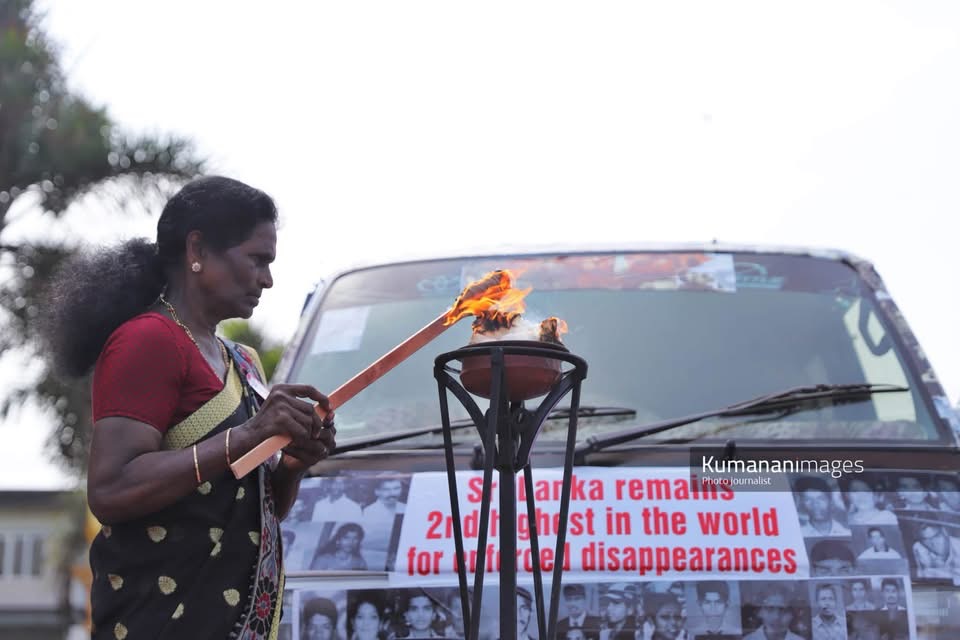
Mawpiya Sevana Home engulfed in flames. Image courtesy of nagalandpost.com

On the evening of June 3, 2026, fire consumed the Mawpiya Sevana care facility in Batagoda, Anguruwatota, near Horana in the Kalutara District. Twelve residents — elderly men and women, people living with mental illness, people with intellectual disabilities — died. Eight more were severely injured. Seventy-one human beings were packed into a building designed for fifteen. The first instinct of the bourgeois press, the political establishment, and the state apparatus is to render this a story about regulatory failure: the home was unregistered, the owner has been arrested, the Defence Secretary visited the ruins. Officials speak of stricter enforcement, mandatory inspections, and compliance frameworks. A proprietor sits in remand custody. The machinery of bourgeois law performs its theatre of accountability.

We reject this framing entirely. The deaths at Mawpiya Sevana are not a regulatory scandal. They are a systemic indictment — the concentrated and visible expression of what capitalist society does to human beings who can no longer be profitably exploited.

The Fundamental Logic: Discarded Lives

To understand this tragedy scientifically, one must begin with the logic of capital itself. Under capitalism, the value of a human being — in the brutal calculus of the system — is indexed to their capacity to generate surplus value. The worker sells their labour power; capital extracts from that labour power more value than it returns in wages; the difference constitutes profit, the lifeblood of the system. This is the elementary truth established by Marx in Capital and confirmed by every hour of every working day across the planet.

What, then, of those who can no longer labour? What of the elderly, the severely disabled, those living with serious mental illness? In the language of capital, they are unproductive. They generate no surplus value. They are, from the standpoint of the system, a cost — a drain on resources that could otherwise be directed toward accumulation. Capitalism does not produce sentimentality toward those it cannot exploit. It produces neglect, abandonment, and, at the sharp end of underdevelopment, mass death.

This is the political truth behind the twelve corpses at Mawpiya Sevana. These were human beings whom the system had already written off. They had no social security worth the name. They had no public institutions capable of housing and caring for them with dignity. They were deposited — warehoused — in an overcrowded, unregistered private facility, in a building designed for fifteen, because their families, themselves workers ground down by decades of austerity, had no alternative. The capitalist state knew this was happening. It tolerated it, because the alternative — a publicly funded, adequately staffed, universally available system of elder care and disability support — would require precisely the kind of social expenditure that the ruling class and its international creditors have placed beyond political possibility.

The IMF and the Deliberate Dismantling of Social Provision

This brings us to the immediate political context, which is inseparable from the structural one. Sri Lanka is presently in the grip of one of the most savage austerity programs in its history, administered under the direct supervision of the International Monetary Fund. The 2022 foreign debt default and the social explosion that swept former President Gotabaya Rajapaksa from power opened the door to an IMF bailout — and with it, the full subordination of Sri Lankan economic and social policy to the demands of international finance capital.

Every government since — from Wickremesinghe to the present JVP/NPP administration of Anura Kumara Dissanayake — has functioned as a transmission belt for IMF dictates. The 2026 budget allocates a staggering 4.5 trillion rupees (450,000 crores Rupees. Approximately US $13 billion) for debt servicing alone — money extracted from the labour of Sri Lankan workers and the rural poor and transferred to international bondholders, banks, and multilateral creditors. To meet this obligation, the government has slashed public expenditure across every social domain: health, education, welfare.

The health system is collapsing under the pressure of these cuts. Public hospitals run out of essential medicines — insulin, antibiotics, cancer drugs, psychiatric medications. Patients wait over a year for MRI scans and die during the wait. Nurses are so overworked and under-resourced that they have no chairs to sit on. The government’s own health minister, confronted with the medicine shortage, told patients to “buy them from the cheapest places.” This is not negligence. This is deliberate policy, enforced under IMF conditionality and praised by international financial institutions as evidence of “fiscal discipline.”

Into this landscape of deliberate social destruction, the question of elder care and disability support does not even register as a policy priority. The JVP/NPP government moved in late 2025 to slash the Aswesuma welfare program — a meagre cash transfer scheme paying between 5,000 and 17,500 rupees per month (approximately US$16 to $57) to the disabled, the elderly, kidney patients, and the extreme poor. Even this minimal safety net is under attack, with the World Bank pressing for a reduction in the number of beneficiaries and a JVP minister publicly declaring that welfare recipients should “feel ashamed” — calling it “legal begging.” As the World Socialist Web Site (WSWS) has noted, this language carries chilling historical echoes: it frames the destitute not as victims of a system, but as parasites upon it.

It is in this context that Mawpiya Sevana existed. The state did not build, fund, or staff adequate public residential facilities for the elderly and the disabled — not because it lacked the administrative capacity to do so, but because the entire fiscal framework of Sri Lankan capitalism, as restructured by the IMF, prohibits such expenditure. The government allocates debt repayments nearly nine times the health budget. There are simply no resources directed toward the systematic, universal care of those who cannot work. In their place, a black market of unregistered, unregulated, overcrowded private facilities fills the vacuum — precisely because working-class and poor families, themselves crushed by falling real wages, rising prices, and the destruction of social services, cannot provide the full-time care that the state refuses to provide.

The State Knew, and the State Did Not Care

It would be politically dishonest to attribute what happened at Mawpiya Sevana to ignorance or inattention on the part of state authorities. The Director of the National Secretariat for Elders has confirmed that the facility was known to the authorities, that it was unregistered, and that it had previously been warned to comply with regulations. Officials knew. They did not act, not because the machinery of enforcement was insufficiently developed, but because the state had no institutional alternative to offer the residents. To shut down Mawpiya Sevana without providing a publicly funded substitute would have been to condemn seventy-one people to destitution or homelessness. The state permitted the facility’s continued operation because the alternative — genuine social provision — is structurally excluded by the political and economic priorities of the ruling class.

This is the functioning logic of the capitalist state in an underdeveloped country operating under IMF tutelage. It is not an aberration from the normal functioning of the system. It is the system functioning normally. The capitalist state in Sri Lanka — as in every neocolonial country — is not an instrument of social welfare. It is an instrument of capital accumulation, debt repayment, and the maintenance of the conditions necessary for the exploitation of labour. Those who cannot be exploited — the elderly, the severely disabled, those with serious mental illness — fall outside this framework entirely. They are residue. They are waste. The system does not know what to do with them except minimize the cost of their existence and, when they die in preventable fires, process the deaths through the criminal justice system to defuse political pressure.

The Feudal Supplement and Its Limits

In the absence of any meaningful social security system, the burden of care for the elderly and disabled in Sri Lanka — as throughout the countries of the periphery — falls on the feudal-cultural obligations of family and kinship networks. Sons and daughters are expected to provide, to sacrifice their own economic lives, to absorb the cost that the state refuses to bear. This system of informal social reproduction (provision of public goods — healthcare, education, social security — necessary to maintain a productive workforce) does not represent cultural high standards. It is a structural necessity for capital: it permits the ruling class to avoid the costs of social reproduction that workers in more developed capitalist countries extracted through generations of struggle — pension systems, public health systems, residential care facilities, disability support.

But this feudal supplement is itself being eroded by the same forces of capitalist development and austerity that make it necessary. As real wages collapse — down 24 percent in the public sector and 14 percent in the private sector since 2022, according to World Bank data — working-class families have fewer resources to provide informal care. Emigration, driven by economic desperation, separates families across continents. The nuclear family unit, under the pressure of capitalist commodity (property) relations and austerity, cannot substitute for the collective social infrastructure that only a socialist society can build and sustain.

The result is the proliferation of informal, unregistered, unregulated private facilities like Mawpiya Sevana — a catastrophic market response to a catastrophic social failure. People with nowhere to go, and nowhere else to put their relatives, are concentrated in buildings not designed to hold them, run by proprietors operating outside any regulatory framework, because the regulated, publicly funded alternative does not exist. The owner of Mawpiya Sevana now faces criminal charges. He may be guilty of negligence. But the system that created the conditions in which he operated — the IMF, the successive Colombo governments, the entire apparatus of neocolonial austerity — faces no charges at all.

The Question of Political Responsibility

The JVP/NPP government of Anura Kumara Dissanayake bears direct political responsibility for the conditions that produced this tragedy. This is a government that came to power presenting itself — fraudulently — as a movement of the working people, invoking the language of “people’s power” and social transformation. Its actual record is one of ruthless implementation of IMF directives, attacks on welfare recipients, the deployment of the military against striking postal workers, the invocation of Essential Services legislation to suppress workers opposing privatization, and the systematic underfunding of health and education.

But responsibility does not end with the current government. Every government that has administered Sri Lankan capitalism since independence — the SLFP, the UNP, the SLPP, and now the JVP/NPP — has presided over the gradual destruction of whatever social provision existed and its replacement with the “free market”: privatization, commercialization, the withdrawal of the state from any domain of social reproduction that cannot generate profit for capital. The entire political establishment is complicit. The opposition parties — the SJB, the SLPP, the UNP — offer only “token criticisms” while accepting the IMF framework in its entirety.

The trade union bureaucracies, which claim to represent the interests of working people, are equally implicated. They have systematically suppressed independent workers’ action, called off strikes on the basis of empty promises, and functioned as transmission belts for the very governments and institutions that are dismantling social provision. Their loyalty is to the capitalist system, not to the workers they nominally represent.

The Only Answer: Socialist Transformation

The twelve people who died at Mawpiya Sevana on June 3, 2026, cannot be brought back. But the conditions that killed them can, and must, be ended — not through regulatory reform, not through stricter enforcement of existing laws, not through the arrest of a single proprietor, but through the socialist transformation of society.

The Socialist Lead of Sri Lanka and South Asia (SLLA), in solidarity with the programme of the International Committee of thenFourth International (ICFI), insist on this with complete clarity: there is no solution to the crisis of elder care, disability support, public health, or any other domain of social reproduction within the framework of capitalism and IMF austerity. The resources required to build a genuine, universal, publicly funded system of care for those who cannot work — the elderly, the disabled, the mentally ill — exist. They are being extracted from the labour of Sri Lankan workers and transferred to international creditors in the form of 4.5 trillion rupees in annual debt repayments. They are being accumulated by the corporate elite whose tax rates the JVP/NPP government has left intact. They are being hoarded in the offshore accounts and investment portfolios of those who profit from the exploitation of Sri Lankan labour.

These resources must be expropriated — through the repudiation of the foreign debt, the nationalization of the banks and major corporations under democratic workers’ control, and the reorganization of production to serve human need rather than private profit. Public residential care, universal healthcare, free education, disability support, and social security for the elderly are not luxuries. They are social rights, achievable only through the defeat of capitalism and the construction of a socialist society.

This requires the independent political mobilization of the working class — against the JVP/NPP government, against the IMF, against the entire capitalist political establishment, and against the trade union bureaucracies that serve as its labour lieutenants. It requires the building of rank-and-file action committees in workplaces, plantations, and communities, independent of all capitalist parties and institutions, coordinating a unified movement for a workers’ and peasants’ government committed to a socialist program.

The deaths at Mawpiya Sevana are a concentrated expression of a social order in terminal crisis. The answer to them is not to manage that crisis more humanely — it is to end it, through the international socialist revolution that the Fourth International was founded to advance.

We, the SLLA demand: full public accountability for the deaths at Mawpiya Sevana; immediate public funding for a universal system of residential care for the elderly and disabled; the cancellation of IMF debt obligations and the reallocation of all debt-servicing funds to social provision; and the expropriation of the major banks, corporations, and private hospital networks under democratic workers’ control.

The Mawpiya Sevana Fire: Twelve Dead because Capitalism has no use for the Elderly Read More »

Jaffna library arson

“ආයෙත් නම් කවදාවත් එපා” – යාපනය මහජන පුස්තකාලය ගිනිබත් කිරීමේ 45 වැනි සමරුව

මේ කතාව 2026 මැයි 31 දින thesocialist.lk හි “Never Again” — 45th Commemoration of the Jaffna Public Library Arson යන හිසින් ඉංග්‍රීසි බසින් පල කෙරුණි. 

1981 මැයි මාසයේදී යාපනය මහජන පුස්තකාලය ගිනිබත් කරපු සිද්ධියට අද රාත්‍රියේදී අවුරුදු 45 ක් පිරෙනවා. ලංකාවේ සමාජවාදී සමානතා පක්ෂයේ (SEP) විප්ලවවාදී වාම කණ්ඩායම (Revolutionary Left Faction) වන, ලංකාවේ සහ දකුණු ආසියාවේ සමාජවාදී නායකත්වය (Socialist Lead of Sri Lanka and South Asia – SLLA) සංවිධානය විදිහට අපි, අද දවසේ යාපනය මහජන පුස්තකාලය ඉස්සරහ පැවැත්වෙන සමරුවකට සහභාගි වී අපගේ සිංහල, දෙමළ හා මුස්ලිම් සහෝදර සහෝදරියන්, මිතුරන්, සහ සහෝදරවරුන්ගෙන් සමන්විත පිරිසක් අමතන්න ලැබුණා නම්, අපි කරන්නේ පහත දේශනයයි:

සංජය ජයසේකර, ශ්‍රී ලංකාවේ සහ දකුණු ආසියාවේ සමාජවාදී නායකත්වයේ (SLLA) සාමාජික.

Jaffna library arson
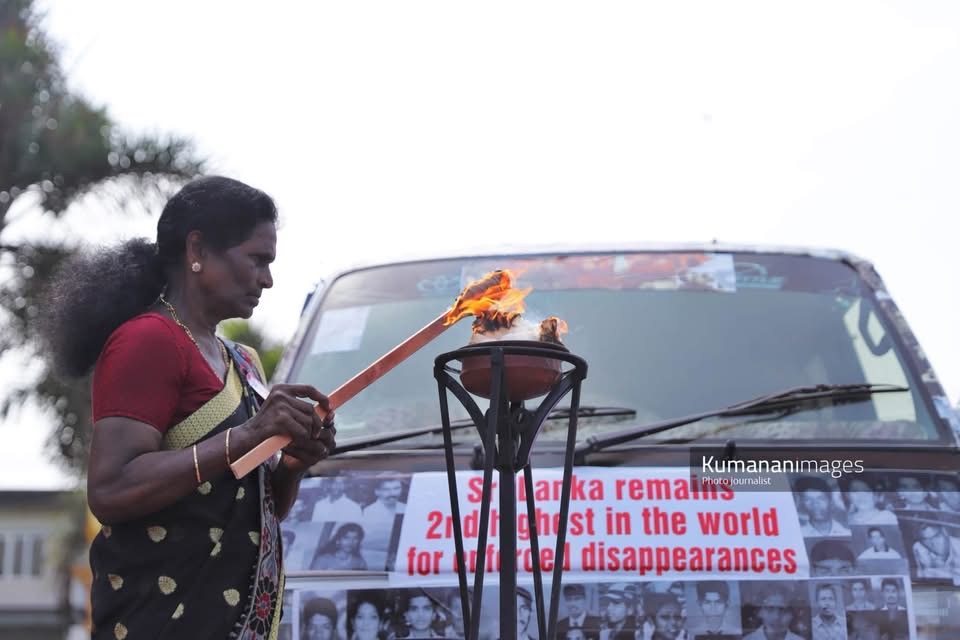
ගිනි තැබීමෙන් පසු යාපනය මහජන පුස්තකාලය. ඡායාරූපය CPA X අනුග්‍රහයෙනි.

මිතුරනි, සහෝදරවරුනි, ඒ වගේම සහෝදර සහෝදරියනි — දෙමළ, සිංහල, මුස්ලිම්, ඒ වගේම මිනිස් ගරුත්වයේ අර්ථය අගය කරන ඔබ හැමගෙන්ම අවසරයි,

අදට අවුරුදු හතළිස් පහකට කලින්, හරියටම අද වගේ දවසක කරුවල රෑක, දකුණු ආසියාවේ තිබුණ වටිනාම සංස්කෘතික නිධානයක් ගින්නට බිලිවුණා. පොත්පත් 97,000 කට වඩා, ඒ වගේම ආදේශ කරන්න බැරි පුස්කොළ අත්පිටපත්, පැරණි ඉතිහාස ලේඛන, ජීවමාන මතකයන් වගේම ශතවර්ෂ ගණනාවක් තිස්සේ එකතු වුණ දෙමළ ජනතාවගේ බුද්ධිමය උරුමය ගබඩා කරලා තිබුණ යාපනය මහජන පුස්තකාලය අළු දූවිලි බවට පත්වුණා. ඒක අහම්බෙන් වෙච්ච දෙයක් නෙවෙයි. සොබාදහමෙන් සිද්ධ වෙච්ච දෙයකුත් නෙවෙයි. ඒක කළේ හිතාමතාම සැලසුම් කරපු මිනිස් අත්වලින්: ඒ කියන්නේ ජේ.ආර්. ජයවර්ධනගේ එක්සත් ජාතික පක්ෂ (UNP) ආණ්ඩුවේ ආරක්ෂාව වගේම මඟපෙන්වීම යටතේ දකුණෙන් එවපු, නිල ඇඳුම් ඇඳගත්ත පොලිස් නිලධාරීන් සහ සංවිධානාත්මක මැර කල්ලි විසින්. “බුද්ධාගම රැකගන්න” සිංහලයන් නැගී සිටින්න ඕනේ කියලා ප්‍රසිද්ධියේම ලියලා පුරසාරම් දොඩපු ගාමිණී දිසානායක (Gamini Dissanayake) වගේම සිරිල් මැතිව් (Cyril Mathew) කියන ඇමතිවරු මේ මෙහෙයුම පුද්ගලිකවම අධීක්ෂණය කරන්න යාපනයට ආවා. දෙමළ මිනිස්සු හතරදෙනෙක්ව තමන්ගේ ගෙවල්වලින් එළියට ඇදලා දාලා මරලා දැම්මා. ගෙවල් දොරවල්, කඩසාප්පු, කාර්යාල, ඒ වගේම ‘ඊළනාඩු’ (Ealanadu) කියන දෙමළ පුවත්පතේ මුද්‍රණාලය ගිනිබත් කළා. පාරවල් මංසන්ධිවල තිබුණ දෙමළ සංස්කෘතික නායකයන්ගේ පිළිම බිමට සමතලා කරලා දැම්මා.

මේක එකපාරටම මතු වුණ ස්වයංසිද්ධ පිපිරීමක් නෙවෙයි. ඒක කොළඹදී ගත්ත දේශපාලන තීරණයක්, යාපනයේද ක්‍රියාත්මක කරපු එකක්, ඒ වගේම මුළු මහත් දේශපාලන සංස්ථාපිතයයි එයාලට කීකරු මාධ්‍යයි විසින් නිහඬවම වහලා දාපු එකක්. පුස්තකාලය විනාශ කිරීම ගැන කිසිම නිල පරීක්ෂණයක් කවදාවත් පැවැත්වුණේ නැහැ. කාටවත් විරුද්ධව නඩු පැවරුණේ නැහැ. කිසිම ඇමතිවරයෙක් නීතිය ඉස්සරහට ගෙනාවේ නැහැ. 1981 මැයි 31 වැනිදා රෑ පත්තු වුණ ඒ ගින්න ඇවිලෙව්වේ මේ දූපතේ පාලක පන්තියයි — ඒ වගේම නිදහසේ ඉඳන් එක්සත් ජාතික පක්ෂය වගේම ශ්‍රී ලංකා නිදහස් පක්ෂය (SLFP) කියන ප්‍රධාන දේශපාලන පක්ෂ හැම එකක්ම ශ්‍රී ලාංකික සමාජයේ ලේ ධාතුවට එන්නත් කරපු දශක ගණනාවක වාර්ගික විෂ ඒකට ඉන්ධන සපයලා තිබුණා.

අපි අද මෙතනට එකතු වෙලා ඉන්නේ ශෝක වෙන්න විතරක් නෙවෙයි. අපි එකතු වෙලා ඉන්නේ තේරුම් ගන්න. හැම යුගයකම, හැම පක්ෂයකම පාලක පන්තිය මේ දූපතේ මිනිස්සු තේරුම් ගන්නවාට වඩාත්ම බය වුණ වගේම තේරුම් ගන්න එක වළක්වන්න මහන්සි වුණ ඒ පාඩම් අවභෝධ ගන්නයි අපි මෙතනට එකතු වෙලා ඉන්නේ.

 ඒ රෑ විනාශ වුණේ මොනවාද?

ගිනිබත් වුණ පොත් අතර ආදේශ කරන්න බැරි ඒවා තිබුණා— යාපනයේ ඉතිහාසය ලියවුණ ‘යාල්පානම් වෛපවමාලෙයි’ පොතේ තිබුණේ එකම එක පිටපතක් විතරයි, ඒකත් ඒ ගින්නෙන් විනාශ වෙලා ගියා. හැබැයි ලංකාවේ පාලකයෝ එතනදී ප්‍රධාන වශයෙන්ම කළේ පොත් පත් පුච්චපු එක විතරක් නෙවෙයි. ඒගොල්ලෝ පිච්චුවේ ජනතාවකට තමන් ගැනම තිබුණ ආත්ම අභිමානයයි. දෙමළ සුළුතරයට තමන්ගේ සංස්කෘතික අනන්‍යතාවය, අඛණ්ඩතාවය වගේම විශ්වාසය ගැන තිබුණ හැඟීමයි ඒගොල්ලෝ ගිනිබත් කළේ. ඒගොල්ලෝ ගින්නෙන් ලියපු පණිවිඩයක් තමයි ඒ හරහා යැව්වේ: ඒ කියන්නේ ‘ඔයාලා මෙහෙට අයිති නෑ. ඔයාලගේ ඉතිහාසයෙන් වැඩක් නැහැ. ඔයාලගේ සංස්කෘතිය ඕනෙ වෙලාවක විසික් කරන්න පුළුවන් එකක්. ඔයාලගේ ජීවිත පවතින්නේ අපේ අවසරය උඩ විතරයි’ කියන එක.

මේක තමයි සිංහල ජාතිවාදයේ (chauvinism) භාෂාව — ඒක පැත්තක කොන්වෙච්ච මතවාදයක් නෙවෙයි, ඒක තමයි රාජ්‍යයේ නිල මතවාදය. 1956 ‘සිංහල පමණයි’ පනතින්, දෙමළ විරෝධී විශ්වවිද්‍යාල ප්‍රමිතිකරණ ක්‍රමවලින්, ඒ වගේම බුද්ධාගමට උත්තරීතරම ස්ථානය දෙමින් රාජ්‍ය ආගම මට්ටමට ව්‍යවස්ථාවට ඇතුළත් කිරීමෙන් මේ ජාතිවාදය ජනරජයේ ආණ්ඩුක්‍රම ව්‍යවස්ථාව ඇතුළටම කාවද්දලයි තිබුණේ. ඒ වගේම, වාර්ගික වෛරය තමන්ගේ පාලන මෙවලමක් විදිහට පාවිච්චි කරපු පාලක පන්තියක භාෂාව තමයි ඒක. තමන්ගේම ජීවිත විනාශ කරමින් තිබුණ ආර්ථික ප්‍රතිපත්ති — ඒ කියන්නේ සමාජ වියදම් කප්පාදුකිරීම්, විවෘත වෙළඳපොළ “ලිබරල්කරණය”, වැටුප් වගේම පොදු සේවාවන්ට කරපු ප්‍රහාරයන් — මෙවා ගැන සිංහල දුප්පත් සහ කම්කරු පන්තියේ අවධානය වෙනතකට හරවන්න, දෙමළ කම්කරුවන්ගේ ජීවිත වගේම සිංහල කම්කරුවන්ගේ ජීවිතත් බිලිගත්ත ආයුධයක් විදිහටයි පාලකයෝ මේ වාර්ගික වෛරය පාවිච්චි කළේ.

යාපනය පුස්තකාලය ගිනිබත් කිරීම කියන්නේ ආරම්භය නෙවෙයි. ඒ වගේම ඒක අවසානයත් නෙවෙයි. ඒක හැරවුම් ලක්ෂ්‍යයක් — 1983 ජූලි මහා කලබලයට (July 1983 pogrom) අවුරුදු දෙකකට කලින් පත්තු කරපු අනතුරු ඇඟවීමේ සංඥා එළියක්. ඒ 83 ජූලි මාසයේදී රාජ්‍ය ආයතනවලින් ලබාදුන්න ඡන්දහිමි නාමලේඛන අතට ගත්ත සංවිධානාත්මක සිංහල මැර කල්ලි, කොළඹ වගේම මුළු දිවයින පුරාම ගෙයින් ගෙට ගිහින් දෙමළ මිනිස්සු පවුල් පිටින් පණපිටින් පුච්චලා මැරුවා. කළු ජූලිය විසින් දශක තුනකට ආසන්න කාලයක් තිස්සේ ඇවිලිලා ගිය, දසදහස් ගණනකගේ ජීවිත බිලිගත්ත, ඒ වගේම දෙමළ-සිංහල මුළු මහත් සමාජයන්ම විනාශ කරපු සිවිල් යුද්ධයක් නිර්මාණය කළා. ඒක කෙළවර වුණේ 2009 මැයි මාසයේ මුල්ලිවයික්කාල්වල (Mullivaikkal) සිද්ධ වුණ අවසාන මිලිටරි ප්‍රහාරයෙන්. එතනදී දසදහස් ගණනක් දෙමළ සිවිල් වැසියන්ව මහා පරිමාණයෙන් ඝාතනය කෙරුණා. මුළු ලෝකයම අහක බලාගෙන ඉන්නකොට සිද්ධ වුණ මේ දේවල් යුධ අපරාධ වෙන්න ඉඩකඩ තියෙනවා කියලා එක්සත් ජාතීන්ගේ සංවිධානය පවා පිළිගත්තා.

කලකට ඉහතදී ගින්නෙන් වෙලාගෙන තිබුණ, මේ විශිෂ්ට ස්මාරකයේ බිත්ති දෙස බලාගෙන අද දවසේ අපි මෙතන ඉඳන් ශබ්ද නඟලා කියන්න ඕනේ, “ආයෙත් නම් කවදාවත් එපා” (Never Again) කියලා. තවත් නම් එපා කියන එකේ ඇත්තම තේරුම වෙන්න ඕනේ: ආයෙ කවදාවත් පුස්තකාල පුච්චන්න දෙන්න බැහැ. ආයෙ කවදාවත් කළු ජූලියක් වෙන්න දෙන්න බැහැ. ආයෙ කවදාවත් මුල්ලිවයික්කාල් එකක් වෙන්න දෙන්න බැහැ කියන එකයි.

හැබැයි “ආයෙත් නම් කවදාවත් එපා” (Never Again) කියන එක නිකම්ම නිකන් ප්‍රාර්ථනාවක් විතරක් වෙන්න බැහැ. ඒක දේශපාලන වැඩපිළිවෙළක් වෙන්නම ඕනේ.

2009 මැයි මාසයේදී තුවක්කුවල සද්දේ නැවතිලා දැන් අවුරුදු දාහතක් ගතවෙලා ඉවරයි. මොනවාද වෙනස් වෙලා තියෙන්නේ? යුද්ධය ඉවරයි — හැබැයි යුද්ධය ඇතිකරපු තත්ත්වයන් තවමත් ඉවර වෙලා නැහැ. මිලිටරිය තවමත් උතුර වගේම නැගෙනහිර පළාත් අල්ලගෙන ඉන්නවා. දෙමළ ජනතාවගේ ඉඩම් තවමත් මිලිටරි පාලනය යටතේ අත්පත් කරගෙනයි තියෙන්නේ. මුල්ලිවයික්කාල් අණුස්මරණ — ඒ කියන්නේ තමන්ගේ මියගිය අය වෙනුවෙන් වැලපෙන්න තියෙන මූලිකම අයිතිය පවා — රාජ්‍ය අනුග්‍රහය ලබන මැර කල්ලි වගේම ආරක්ෂක අංශ විසින් බලහත්කාරයෙන් කඩාකප්පල් කරනවා. දෙමළ විරෝධතාකරුවන්ට ජාතිවාදී මැරයන්ගෙන් හිරිහැර වෙනවා, ඒ වගේම ඒගොල්ලන්ව අත්අඩංගුවට ගන්නවා. තමන්ගේ ඉතිහාසය, තමන්ගේ ශෝකය, එහෙම නැත්නම් තමන්ගේ අයිතිවාසිකම් ගැන කතා කරන හැම දෙමළ මනුස්සයෙක්වම ත්‍රස්තවාදියෙක්, LTTE හිතවාදියෙක්, නැත්නම් බෙදුම්වාදියෙක් විදිහට හංවඩු ගහන දරුණු සමාජ මාධ්‍ය වෛරී ප්‍රචාරණයක් සැලසුම් සහගතව වගේම සම්බන්ධීකරණය කරලා ක්‍රියාත්මක කරනවා. “ජාතික සමගිය” කියන කපටි ලේබලය යටතේ දෙමළ ලේඛකයන්ගේ පොත්පත් ආණ්ඩුවේ වාරණ මණ්ඩල විසින් තහනම් කරනවා. අද දවසේ මේ හැමදේකටම නායකත්වය දෙන්නේ අනුර කුමාර දිසානායකගේ ජනතා විමුක්ති පෙරමුණ (JVP) / ජාතික ජන බලවේගය (NPP) ආණ්ඩුවයි — JVP කියන්නේ දෙමළ විරෝධී යුද්ධයට මුල පටන්ම උද්‍යෝගිමත් සහයෝගයක් දීලා තමන්ගේ දේශපාලන ගමන හදාගත්ත, දෙමළ ජනතාවගේ ප්‍රජාතන්ත්‍රවාදී අයිතිවාසිකම්වලට දෙන හැම සහනයකටම විරුද්ධ වුණ, ඒ වගේම සිංහල ජාතිවාදී ප්‍රචාරයන්ට නිදහසේ පැතිරෙන්න ඉඩ දීලා දැන් “ජාතික සමගියේ” ආණ්ඩුවක් විදිහට පෙනී ඉන්න පක්ෂයක්.

අපි මේක කෙලින්ම කියන්න ඕනේ: උතුර මිලිටරිකරණය කිරීම යුද්ධයත් එක්ක ඉවර වුණේ නැහැ. ඒක තවදුරටත් ඉදිරියටම ගිහින් තවත් දැඩි වෙලා තියෙනවා. රාජපක්ෂ ඉඳන් වික්‍රමසිංහ හරහා දිසානායක දක්වා බලයට පත්වුණ හැම ආණ්ඩුවක්ම දෙමළ වැසියන්ගේ ජීවිත උඩ තියෙන මිලිටරි පාලනය ඒ විදිහටම තියාගත්තේ ඇයි? මොකද මිලිටරිය කියන්නේ සිංහල ධනේශ්වර පන්තියේ වුවමනාවන් වෙනුවෙන් පාලනය ගෙනයන, ඒ වගේම වාර්ගික මර්දනයේ මෙවලමක් විදිහට වැඩකරන ධනපති රාජ්‍යයේ යකඩ කුලු ගෙඩිය නිසා. මිලිටරිය උත්කර්ෂයට නැංවීම — ඒ කියන්නේ යුද ජයග්‍රහණ පෙළපාලි, යුද ස්මාරක, සොල්දාදුවා වන්දනාමාන කිරීම — මේක පුරුද්දට කරන දෙයක් නෙවෙයි. ඒක තමයි පාලක පන්තිය විසින් සිංහල මහජනතාවට මිලිටරිවාදය තමන්ගේ ජාතික අනන්‍යතාවය විදිහට පිළිගන්න උගන්වන ක්‍රමය. ඒ වගේම ඒ හරහා දෙමළ වගේම සිංහල කම්කරුවන්ගේ ඒකාබද්ධ අරගලයකින් මේ පවතින සමාජ ක්‍රමයට අභියෝගයක් එල්ල වෙන එක වළක්වනවා.

අද සිංහල සමාජය ඇතුළේ ඔයාලා දකින සදාචාරාත්මක පිරිහීම — ඒ කියන්නේ ගුරුවරුන්ට වඩා සොල්දාදුවන්ව සැමරීම, ජාතිවාදී සමාජ මාධ්‍ය භාවිතය ඉවසීමෙන් දරාගැනීම, දෙමළ ජනතාව පත්කරන අවමානයන් නිහඬව පිළිගැනීම, ඒ වගේම අතීතයේ සිද්ධ වුණ ප්‍රචණ්ඩත්වය, මහා ඝාතන වගේම විනාශ කිරීම් ආයෙත් කරන්න කියලා ඉල්ලන එක — ඒක සිංහල ජනතාවගේ ස්වභාවික ගුණාංගයක් නෙවෙයි. ඒක කෘතිමව හදපු තත්ත්වයක්. සිංහල කම්කරුවන්ට, දෙමළ කම්කරුවන් තමන්ගේ සහෝදරවරු විදිහට දකිනවාට වඩා තමන්ගේ හතුරෝ විදිහට දකින්න අවශ්‍ය වුණ පාලක පන්තිය විසින් දශක ගණනාවක් තිස්සේ මේක කෘතිමව නිර්මාණය කළා. මේක මිලිටරිවාදය, ජාතිවාදය, බය, ඒ වගේම බොරුව උඩ ගොඩනගපු දේශපාලන සංස්කෘතියක සැලසුම් සහගත ප්‍රතිඵලයක් — මොකද දෙමළ කම්කරුවන්ට වෛර කරන සිංහල කම්කරුවෙක් කියන්නේ කවදාවත් තමන්ව ඇත්තටම මර්දනය කරන පාලකයා දෙසට හැරිලා බලන්නේ නැති කම්කරුවෙක් නිසයි.

මෙන්න මේ පසුබිම ඇතුළෙ තමයි දශක හතක පාවාදීම්වලින් ලැබුණ පාඩම් දිහාට අපි හැරෙන්න ඕනේ.

ලංකාවේ ඛේදවාචකය කියන එක, කාලෙකට කලින් වැඩකරන පන්තිය වෙනුවෙන් කතා කරනවා කියලා කියාගත්ත පක්ෂ විසින් කරපු පාවාදීමේ ඉතිහාසයෙන් වෙන් කරන්න බැහැ. ට්‍රොට්ස්කිවාදී සම්ප්‍රදායෙන් මතු වුණ ලංකා සමසමාජ පක්ෂය (LSSP) කාලෙකදී දකුණු ආසියාවේ තිබුණ ලොකුම කම්කරු පක්ෂය. සමාජවාදී ජාත්‍යන්තරවාදය පදනම් කරගෙන සිංහල වගේම දෙමළ කම්කරුවන්ව එකතු කරන්නත්, ජාතිවාදය එහි මුල්වලින්ම විනාශ කරන්නත්, ඒ වගේම හැම ජාතික සුළුතරයකටම සමාන අයිතිවාසිකම් සහතික කරන වැඩකරන පන්තියේ ආණ්ඩුවක් වෙනුවෙන් සටන් කරන්නත් අවශ්‍ය කරන දේශපාලන මෙවලම් ඒගොල්ලන්ගේ අතේ තිබුණා. ඒ වෙනුවට, 1964 දී ලංකා සමසමාජ පක්ෂයේ නායකත්වය පන්ති සහයෝගිතාවයට (class collaboration) දණ නමලා සිරිමා බණ්ඩාරනායකගේ ධනපති හවුල් ආණ්ඩුවට එකතු වුණා — ඒ වගේම දෙමළ මර්දනය ජනරජයේ ව්‍යවස්ථාව ඇතුළටම දාලා මුද්‍රා තැබුවා. කාලෙකදී හතරවැනි ජාත්‍යන්තරය (Fourth International)  වෙනුවෙන් සටන් කරපු කොල්වින් ආර්. ද සිල්වා, ඇමතිවරයෙක් විදිහට ඉඳගෙන සිංහල පමණක් භාෂණ ප්‍රතිපත්තිය ව්‍යවස්ථාව ඇතුළේ තහවුරු කිරීමට නායකත්වය දුන්නා. මේක පොඩි වැරදීමක් නෙවෙයි. මේක ලෝක ඓතිහාසික පාවාදීමක්. ඊට පස්සේ සිද්ධ වුණ හැම ජන හිංසනයකටම, හැම යුද අපරාධයකටම වගේම හැම සංස්කෘතික ගිනිබත් කිරීමටම පාර කැපුවේ මෙන්න මේ පාවාදීමයි.

ධනවාදයට ලංකාවේ ජාතික ගැටලුව විසඳන්න බැහැ. යුද්ධය අවසන් වීමෙන් දෙමළ ජාතික ප්‍රශ්ණය විසඳුණේ නැහැ, ඒ වගේම පාලක පන්තිය එදා ඉඳන්ම මේ විසඳෙන්නේ නැති ප්‍රශ්නයෙන් තමන්ගේ වාසි ප්‍රයෝජන ගන්නවා. නිදහස ලැබිලා ගතවුණ අවුරුදු හැත්තෑ අට පුරාම මේකෙන් බිහිවුණේ වාර්ගික යුද්ධයයි, ආර්ථික විනාශයයි විතරයි. දෙමළ ධනපති පක්ෂ — ඒ කියන්නේ TULF, TNA වගේම ඒවයෙන් පස්සේ ආපු පක්ෂ — දෙමළ කම්කරුවන්ව වගේම තරුණයන්වත් ඒ හා සමානවම සම්පූර්ණයෙන්ම පාවා දීලා තියෙනවා. ඒගොල්ලෝ දෙමළ ජනතාවගේ සාධාරණ දුක්ගැනවිලි කොළඹ පාලක පන්තිය එක්ක කරන පාර්ලිමේන්තු ගනුදෙනුවලටයි, කවදාවත් දෙමළ ජනතාවගේ වුවමනාවන්ට වැඩ නොකරපු (ඉදිරියටත් වැඩ කරන්නේ නැති) විදේශ අධිරාජ්‍යවාදී බලවතුන්ට කරන ආයාචනාවලටයි සීමා කළා. LTTE එකේ බෙදුම්වාදී වැඩපිළිවෙළ, දෙමළ තරුණයන්ගේ සාධාරණ කෝපයෙන් මතු වුණ එකක් වුණත්, ඒකට මූලික යථාර්ථය ජයගන්න බැරි වුණා. ඒ කියන්නේ, වෙන්වුණ දෙමළ ධනපති රාජ්‍යයක් කියන්නේ කොළඹ මිලිටරිය සන්නද්ධ කරලා නඩත්තු කරපු ඒ අධිරාජ්‍යවාදී බලවතුන් මතම යැපෙන, ආර්ථික වශයෙන් දුර්වල කුඩා කොටසක් විතරයි කියන එක. ඒ වගේම ඒකට උතුර සහ නැගෙනහිර ඇතුළේ වගේම පිටතත් ජීවත් වෙන දෙමළ ජනතාවගේ අයිතිවාසිකම් සහතික කරන්නවත්, මූලික පන්තිමය ප්‍රශ්නයට විසඳුම් දෙන්නවත් පුළුවන්කමක් තිබුණේ නැහැ.

ඉදිරියට තියෙන පාර බෙදී වෙන්වීම නෙවෙයි. ඒක දෙමළ වගේම සිංහල ප්‍රභූන් අතර සිද්ධ වෙන වාර්ගික ගනුදෙනුවකුත් නෙවෙයි. ඒක තමයි, දශක හතක් තිස්සේ තමන්ගේ පාලන මෙවලමක් විදිහට ජාතිවාදය (communalism) පාවිච්චි කරපු ධනපති ක්‍රමයට එරෙහිව පොදු අරගලයක් ඇතුළේ ලංකාවේ වැඩකරන පන්තිය — ඒ කියන්නේ දෙමළ, සිංහල, වගේම මුස්ලිම් කම්කරුවන් — ඒකාබද්ධ වීම.

“ආයෙත් නම් කවදාවත් එපා” (Never Again) කියන එක අපෙන් ඉල්ලන්නේ මොනවාද?

අපි “තවත් නම් එපා” කියලා කියනකොට, අපි කරන්නේ හැඟීම්බර ආයාචනයක් නෙවෙයි. අපි කරන්නේ දේශපාලන කැපවීමක්.

ආයෙ කවදාවත් පුස්තකාල ගිනිබත් කරන්න දෙන්නේ නැහැ කියන එකේ තේරුම තමයි ආයෙ කවදාවත් පාලක පන්තියට කිසිම ජනකොටසක සංස්කෘතික උරුමයන් පුච්චලා දාන්න අපි ඉඩ දෙන්නේ නැහැ කියන එක — මොකද ඒ ගින්න ඇවිලෙව්වේ ජාතිවාදී වෛරය තමන්ගේ මෙවලම විදිහට පාවිච්චි කරපු පන්ති පාලනයේ (class rule) අතින්මයි කියන එක අපි තේරුම් ගන්න නිසා.

ආයෙ කවදාවත් කළු ජූලියක් වෙන්න දෙන්නේ නැහැ කියන එකේ තේරුම තමයි තමන්ගේ පන්ති සහෝදර සහෝදරියන්ව මහා පරිමාණයෙන් ඝාතනය කරනකොට සිංහල කම්කරුවෝ ආයෙ කවදාවත් පැත්තකට වෙලා බලාගෙන ඉන්නේ නැහැ කියන එක — මොකද ඒ මහා ජන හිංසනය (pogrom) දෙමළ ජනතාවට එරෙහිව සංවිධානය කළේ පාලක පන්තියට තර්ජනයක් වෙන ඒ පන්ති එකමුතුව (class unity) වළක්වන්නයි කියන එක අපි තේරුම් ගන්න නිසා.

ආයෙ කවදාවත් මුල්ලිවයික්කාල් එකක් වෙන්න දෙන්නේ නැහැ කියන එකේ තේරුම තමයි සමාජයීය වගේම දේශපාලන ප්‍රශ්නයක් වෙච්ච දේකට ආයෙ කවදාවත් වැඩකරන පන්තිය “මිලිටරි විසඳුමක්” පිළිගන්නේ නැහැ කියන එක — මොකද දෙමළ සිවිල් වැසියන් සමූල ඝාතනය (massacre) කිරීමෙන් සේවය වුණේ සිංහල කම්කරුවන්ගේ වුවමනාවන්ට නෙවෙයි, ඊට පස්සේ සමාජ වියදම් කපාහැරීම් (austerity), මර්දනය, ඒ වගේම ප්‍රජාතන්ත්‍රවාදී අයිතිවාසිකම් විනාශ කිරීම් හරහා තමන්ගේ තුවක්කු සිංහල කම්කරුවන් දෙසටම හරවපු මිලිටරි යාන්ත්‍රණයකයි පාලක පන්තියකයි වුවමනාවන්ට විතරයි කියන එක අපි තේරුම් ගන්න නිසා.

අද දවසේ තමන්ගේ ජාතික අභිමානය තියෙන්නේ මිලිටරි පෙළපාලිවලයි දෙමළ ස්මරණ යටපත් කිරීමෙයි කියලා විශ්වාස කරන්න සලස්වල තියෙන සිංහල කම්කරුවො, තරුණයො, — ඒගොල්ලෝ මංකොල්ලකෑමකට ලක්වෙලයි ඉන්නේ. ඒගොල්ලන්ගේ පන්ති විඥානය (class consciousness), තමන්ගේම සහෝදර කම්කරුවන් එක්ක තියෙන සහෝදරත්වය (solidarity), ඒ වගේම තමන්ගේම නිදහස වෙනුවෙන් සටන් කරන්න තියෙන හැකියාව කියන ඒව තමයි ඒගොල්ලන්ගෙන් මංකොල්ලකාලා තියෙන්නේ. යාපනය පුස්තකාලය ගිනි තියපු ඒ පාලක පන්තියම තමයි සිංහල කම්කරුවන් මතටත් දරිද්‍රතාවය, අනියම් ශ්‍රම සූරාකෑම, ඒ වගේම ජාත්‍යන්තර මූල්‍ය අරමුදලේ (IMF) කප්පාදු බර පටවලා තියෙන්නේ. මුල්ලිවයික්කාල්වලදී දෙමළ වැසියන්ව සමූල ඝාතනය කරපු ඒ මිලිටරියම තමයි වර්ජනය කරන කම්කරුවන්ව හිරේ දාන, ඒ වගේම වෘත්තීය සමිති කඩලා බිඳලා දාන රාජ්‍යයක මෙවලම විදිහට වැඩකරන්නේ. දෙමළ කම්කරුවන්ගේ හතුරාම තමයි සිංහල කම්කරුවන්ගේත් හතුරා වෙන්නේ. ඒ හතුරාගේ නම දෙමළ හරි සිංහල හරි නෙවෙයි. ඒකේ නම තමයි ප්‍රාග්ධනය (Capital), එහෙම නැත්නම් ධනපති පන්ති පාලනය.

අපි සටන් කරන්නේ මොනවා වෙනුවෙන්ද?

තමන්ව විතරක් නියෝජනය කරන ප්‍රභූන් විසින් මැදිහත් වෙලා කරන ජාතික සමගි සන්ධාන (reconciliation) ව්‍යාපාරයක් නෙවෙයි, මෙන්න මේ අපි කියන්න යන දේවල් වෙනුවෙන් සටන් කරන වැඩකරන පන්තියේ ඒකාබද්ධ ව්‍යාපාරයක් ගොඩනගන්න කියලා දෙමළ වගේම සිංහල කම්කරුවන්, තරුණයන්, ගුරුවරුන්, ශිෂ්‍යයන්, ඒ වගේම බුද්ධිමතුන්ගෙන් අපි ඉල්ලා සිටිනවා:

උතුර වගේම නැගෙනහිර පළාත් මිලිටරිය මඟින් අත්පත් කරගෙන ඉන්න එක වහාම නතර කිරීම, ඒ වගේම අත්පත් කරගෙන තියෙන හැම දෙමළ ඉඩමක්ම ඒවයේ නියම අයිතිකරුවන්ට ආපහු ලබාදීම. කිසිම හිරිහැරයක්, කඩාකප්පල් කිරීමක්, එහෙම නැත්නම් අපරාධකරණය කිරීමක් නැතුව මුල්ලිවයික්කාල්වලදී වගේම දරුණු අපරාධ සිද්ධ වුණ හැම තැනකදීම මියගිය දෙමළ ජනතාව සිහිපත් කිරීමේ අයිතිය ලබාදීම. තමන්ටම ආවේණික වෙච්ච ජාතිවාදී පීඩාවලට මුහුණ දීපු මුස්ලිම් ජනතාව ඇතුළු දෙමළ වගේම හැම ජාතික සුළුතරයකටම සම්පූර්ණ භාෂාමය, සංස්කෘතික, වගේම ප්‍රජාතන්ත්‍රවාදී අයිතිවාසිකම් ලබාදීම. සිංහල සමාජය ඇතුළට වස විදිහට කාවද්දලා තියෙන, මිනීමැරීම උත්කර්ෂයට නංවන, ඒ වගේම සහෝදරත්වය යටපත් කරන මිලිටරිවාදී සංස්කෘතිය අවසන් කිරීම. කළු ජූලියේ ඉඳන් මුල්ලිවයික්කාල් දක්වා සිද්ධ වුණ යුද අපරාධ වගේම මනුෂ්‍යත්වයට එරෙහි අපරාධවලට වගකිවයුතු අයට විරුද්ධව නඩු පැවරීම. ඒ වගේම හැමදේටම වඩා — මේ දිවයිනේ තියෙන සම්පත් — ඒ කියන්නේ ඉඩම්, ශ්‍රමය, වගේම නිෂ්පාදන ධාරිතාවය — සිංහල, දෙමළ, වගේම මුස්ලිම් වැඩකරන ජනතාවගේ ප්‍රජාතන්ත්‍රවාදී පාලනය යටතට පත්කරන සමාජවාදී දේශපාලන වැඩපිළිවෙළක් ක්‍රියාත්මක කිරීම. ඒ හරහා දරිද්‍රතාවය, වාර්ගික බෙදීම් වගේම පාලක පන්තියේ උගුල් ඒවයේ මුල්වලින්ම අතුගාලා දාන්න පුළුවන් වෙනවා.

යාපනය පුස්තකාලය ඇතුළේ තිබුණේ ශිෂ්ටාචාරයක මතකයක්. ඒක ඇතුළේ ආයෙ කවදාවත් හොයාගන්න බැරි පොත්පත් තිබුණා. හැබැයි ඒක අපිට ආදේශ කරන්න බැරි දේශපාලන පාඩමකුත් ඉතිරි කරලා තියෙනවා: ඒ කියන්නේ පුස්තකාලයක් පුච්චන්න ලෑස්ති පාලක පන්තියක් කියන්නේ තමන්ගේ බලයයි ලාභයයි ආරක්ෂා කරගන්න ඕනෙම දෙයක් පුච්චන්න ලෑස්ති පාලක පන්තියක් කියන එකයි — ඒගොල්ලෝ ගම්මාන පුච්චන්න, සිවිල් වැසියන් සමූල ඝාතනය කරන්න, ඒ වගේම මුළු මහත් ජනකොටස්ම විනාශ කරන්න වුණත් ලෑස්ති අය.

අදට අවුරුදු 45 කට කලින් මේ රෑ විනාශ කරපු දේවල්වල මතකය අපි ස්මරණය කරන්නේ නිකම්ම නිකන් වැලපීමෙන් විතරක් නෙවෙයි, කැපවීමෙන් — ඒ කියන්නේ මේ වගේ විනාශයන් සිද්ධ කරන්න අවශ්‍ය කරන ක්‍රමය අවසන් කරලා, ඒ වගේ විනාශයන් කරන්න කවදාවත් ඉඩ නොදෙන දේශපාලන ව්‍යාපාරයක් ගොඩනැගීමට කැපවීමෙන්.

උරුමයක් අළු දූවිලි බවට පත් කෙරුණා. ඒත් අරගලය තවමත් ජීවමානයි!

උතුරේ වගේම දකුණේ වැඩකරන පන්තියේ එකමුතුවෙන් — “ආයෙත් නම් කවදාවත් එපා!”

“ආයෙත් නම් කවදාවත් එපා” – යාපනය මහජන පුස්තකාලය ගිනිබත් කිරීමේ 45 වැනි සමරුව Read More »

Jaffna speech

“Never Again” — 45th Commemoration of the Jaffna Public Library Arson

Tonight marks the 45th anniversary of the burning of the Jaffna Public Library in May 1981. If we, the Socialist Lead of Sri Lanka and South Asia (SLLA), the Revolutionary Left Faction of the Socialist Equality Party of Sri Lanka, were present at a commemoration event before the Jaffna Public Library today, and asked to address an audience of our Sinhalese, Tamil and Muslim brothers and sisters, friends and comrades, we would have delivered the following speech.  


By Sanjaya Jayasekera, member SLLA. 

Jaffna library arson
Jaffna Public Library after Arson. Image courtesy of CPA X.


Friends, comrades, brothers and sisters — Tamils, Sinhalese, Muslims, and all who cherish the meaning of human dignity,

Forty-five years ago today, in the dead of night, flames consumed one of the greatest cultural treasures of South Asia. The Jaffna Public Library — home to over 97,000 volumes, to irreplaceable ola leaf manuscripts, to ancient chronicles and living memory, to the intellectual heritage of the Tamil people accumulated across centuries — was reduced to ashes. Not by accident. Not by nature. But by deliberate human hands: uniformed police and organized thugs, dispatched from the south under the protection and direction of the United National Party government of J.R. Jayawardena. Ministers Gamini Dissanayake and Cyril Mathew — who boasted in print that the Sinhalese must rise to “protect Buddhism” — arrived in Jaffna to oversee the operation. Four Tamil men were dragged from their homes and killed. Homes, shops, offices, and the press of Tamil newspaper Ealanadu were burned. Statues of Tamil cultural figures were demolished at road junctions.

This was not a spontaneous eruption. It was a political decision, made in Colombo, carried out in Jaffna, and covered up in silence by an entire political establishment and a compliant media. No official inquiry was ever held into the destruction of the library. No one was prosecuted. No minister faced justice. The fire that burned on the night of May 31, 1981 was lit by the ruling class of this island — and it was fueled by decades of communalist poison that every major political party, UNP and SLFP alike, had been injecting into the bloodstream of Sri Lankan society since independence.

We gather here today not only to grieve. We gather to understand. We gather to draw the lessons that the ruling class — of every party, of every era — has worked hardest to prevent the people of this island from drawing.

What was destroyed that night?

The books that burned were irreplaceable — Yalpanam Vaipavama, the history of Jaffna, existed in only one copy, and it perished in the fire. But the rulers of Sri Lanka were not primarily burning books. They were burning a people’s sense of themselves. They were burning the confidence, the continuity, and the cultural selfhood of the Tamil minority. They were sending a message, written in fire: You do not belong here. Your history does not count. Your culture is disposable. Your lives are contingent on our permission.

This was the language of Sinhala chauvinism — not a fringe ideology, but the official state ideology, entrenched in the very constitution of the republic by the Sinhala Only Act of 1956, by the anti-Tamil university admissions schemes, by Buddhism’s enshrinement as the state religion. And it was the language of a ruling class that used communal hatred as a tool of governance, a weapon to distract the Sinhalese poor and working class from the economic policies — the austerity, the open-market “liberalization,” the assault on wages and public services — that were devastating their own lives alongside the lives of Tamil workers.

The burning of the Jaffna Library was not the beginning. And it was not the end. It was a turning point — a signal flare fired two years before the July 1983 pogrom, in which organized Sinhala mobs, with voter registration lists in hand provided by state institutions, went from door to door, burning Tamil families alive in Colombo and across the island. Black July ignited a civil war that would consume nearly three decades, claim tens of thousands of lives, shatter entire communities — Tamil and Sinhalese — and culminate in the final military assault of May 2009 at Mulivaikkal, where tens of thousands of Tamil civilians were massacred in what the United Nations itself acknowledged as potential war crimes, while the world looked away.

Standing today here facing the once flame-engulfed walls of this magnificent monument, we should say loudly, “Never Again”.  Never again must mean: never again a burned library. Never again a Black July. Never again a Mulivaikkal.

But “never again” cannot be a wish. It must be a program.

Seventeen years have passed since the guns fell silent in May 2009. What has changed? The war is over — but the conditions that produced the war are not. The military still occupies the North and East. Tamil lands remain seized under military control. Mulivaikkal commemorations — the most basic act of mourning the dead — are physically disrupted by state-backed mobs and security forces. Tamil protesters are harassed by racist mobs and are arrested. A vicious social media hate campaign, coordinated and deliberate, brands every Tamil who speaks of their history, their grief, or their rights as a terrorist, an LTTE sympathizer, a separatist. Tamil writers find their books blocked by government censors under the cynical banner of “national unity.” And presiding over all of this today is the JVP/NPP government of Anura Kumara Dissanayake — a party that built its political career on enthusiastic support for the anti-Tamil war, that opposed every concession to Tamil democratic rights, and that now poses as a government of “national unity” while allowing Sinhala chauvinist propaganda to circulate freely.

We must say this plainly: the militarization of the North has not ended with the war. It has continued and deepened. Successive governments — from Rajapaksa to Wickremesinghe to Dissanayake — have maintained the military stranglehold on Tamil life because the military is the iron fist of a capitalist state that rules in the interests of the Sinhalese bourgeoisie and serves as the instrument of communal oppression. The glorification of the military — the victory parades, the war monuments, the cult of the soldier — is not incidental. It is how the ruling class educates the Sinhalese masses into accepting militarism as their national identity, while ensuring that no united struggle of Tamil and Sinhalese workers can challenge the social order.

The moral disorientation you see in Sinhalese society today — the celebration of soldiers over teachers, the tolerance of racist social media, the passive acceptance of Tamil humiliation and even calls for the repeat of the historical violence, massacres and vandalism — is not the natural condition of the Sinhalese people. It is a manufactured condition. It has been manufactured, across decades, by a ruling class that needed Sinhalese workers to see Tamils as their enemy rather than their comrades. It is the deliberate product of a political culture built on militarism, chauvinism, fear, and lies — because a Sinhalese worker who hates Tamil workers is a worker who will never turn to face his actual oppressor.

It is in this context that we should turn to the lessons of seven decades of betrayal

The tragedy of Sri Lanka is inseparable from the history of betrayal by the parties that once claimed to speak for the working class. The Lanka Sama Samaja Party — which emerged from the Trotskyist tradition — was once the largest workers’ party in South Asia. It had, within its hands, the political means to unite Tamil and Sinhalese workers on the basis of socialist internationalism, to oppose communalism at its roots, and to fight for a government of the working class that guaranteed equal rights for all national minorities. Instead, in 1964, the LSSP leadership capitulated to class collaboration, joined the bourgeois coalition of Sirima Bandaranaike — and sealed Tamil oppression into the very constitution of the republic. Colvin R. de Silva, once a fighter for the Fourth International, presided as a minister over the entrenchment of Sinhala-only language policy. This was not a minor error. It was a world-historical betrayal. It opened the road to every pogrom, every war crime, every burned library that followed.

Capitalism cannot solve the national question in Sri Lanka. The ending of the war did not solve the Tamil national question, and the ruling class has been capitalizing this unresolved problem ever since. Throughout the seventy-eight years of independence it has produced only communal war and economic devastation. The Tamil bourgeois parties — the TULF, the TNA and its successors — have failed Tamil workers and youth just as comprehensively, channeling legitimate grievances into parliamentary deals with Colombo and appeals to foreign imperialist powers that have never served Tamil interests and never will. The LTTE’s separatist program, whatever its origins in the just anger of Tamil youth, could not overcome the fundamental reality that a separate Tamil capitalist state would be a small, economically weak entity, dependent on the same imperialist powers that armed and sustained Colombo’s military, unable to guarantee the rights of Tamils who live within and outside the North and East, and incapable of addressing the root class question.

The path forward is not separation. It is not a communal deal brokered between Tamil and Sinhalese elites. It is the unification of the Sri Lankan working class — Tamil, Sinhalese, and Muslim — in a common struggle against the capitalist system that has used communalism as its instrument of rule for seven decades.

What does “Never Again” demand of us?

When we say “never again,” we do not make a sentimental appeal. We make a political commitment.

Never again a Jaffna Library arson means: never again will we allow the ruling class to burn the cultural heritage of any people — because we understand that the hand that lit that fire was the hand of class rule, using racial hatred as its instrument.

Never again a Black July means: never again will Sinhalese workers stand aside while their class brothers and sisters are massacred — because we understand that the pogrom was organized against Tamils to prevent the unity that would threaten the ruling class.

Never again a Mulivaikkal means: never again will the working class accept a “military solution” to what is a social and political problem — because we understand that the massacre of Tamil civilians served not the interests of Sinhalese workers but the interests of a military apparatus and a ruling class that then turned its guns on Sinhalese workers in austerity, repression, and the destruction of democratic rights.

The Sinhalese workers and youth who are told today that their national glory consists in military parades and the suppression of Tamil commemorations — they are being robbed. They are being robbed of their class consciousness, of their solidarity with fellow workers, of their capacity to fight for their own emancipation. The same ruling class that burned the Jaffna Library has imposed poverty, casualized labor, and IMF austerity on Sinhalese workers. The same military that massacred Tamils at Mulivaikkal is the instrument of a state that imprisons striking workers and breaks trade unions. The enemy of Tamil workers is the enemy of Sinhalese workers. His name is not Tamil or Sinhalese. Its name is Capital.

What are we fighting for?

We call upon Tamil and Sinhalese workers, youth, teachers, students, and intellectuals to build a united movement — not a movement of ethnic reconciliation brokered by elites who represent no one but themselves, but a movement of the working class, fighting for:

The immediate end to military occupation of the North and East, and the return of all seized Tamil lands to the rightful owners. The right to commemorate the Tamil dead at Mulivaikkal and all sites of atrocity — without harassment, disruption, or criminalization. Full linguistic, cultural, and democratic rights for Tamils and all national minorities, including the Muslim community which has faced its own waves of racist persecution. An end to the militarist culture that has been poisoned into Sinhalese society — a culture that glorifies killing and suppresses solidarity. The prosecution of those responsible for war crimes and crimes against humanity, from Black July through to Mulivaikkal. And above all — a socialist political program that places the resources of this island — its land, its labor, its productive capacity — under the democratic control of its working people, Sinhalese, Tamil, and Muslim alike, so that poverty, communal division, and ruling-class manipulation can be swept away at their roots.

The Jaffna Library held the memory of a civilization. It held books that no one can recover. But it also holds, for us, an indelible political lesson: that a ruling class willing to burn a library is a ruling class willing to burn everything — willing to burn villages, willing to massacre civilians, willing to destroy entire peoples — in defense of its power and profit.

We honor the memory of what was destroyed on this night 45 years ago not by grief alone, but by commitment — the commitment to build the political movement that makes such destruction impossible, by ending the system that makes it necessary.

A heritage was rendered ashes. But the struggle lives on!

Never again — through the unity of the working class of the North and the South!

“Never Again” — 45th Commemoration of the Jaffna Public Library Arson Read More »

Theepachelvan Piratheepan

The NPP/JVP Government’s Assault on Tamil Historical Memory: State Censorship, Class Repression and Intellectual Complicity

The Socialist Lead of Sri Lanka and South Asia condemns the detention of Theepachelvan Piratheepan’s books and demands their immediate and unconditional release

By Sanjaya Jayasekera.

The Socialist Lead of Sri Lanka and South Asia (SLLA) and thesocialist.lk  unconditionally condemn the detention by Sri Lanka Customs of two books by Kilinochchi-based Tamil author Theepachelvan Piratheepan — Elluttal Nan Yuttam Ceykiren (“I Wage War Through Writing”), a collection of interviews, and Ippothum Inge Irandu Thesangalil (“Now Too Here Are Two Nations”), a collection of essays on the war — and demands their immediate and unconditional release. This act of state censorship, carried out with the direct institutional involvement of the Ministry of Defence and under the rubber-stamp of cultural bureaucracies subordinated to the security apparatus, is not an administrative irregularity. It is a political act, rooted in the class interests of the Sri Lankan bourgeoisie and its state, and it must be understood and combated as such.

The Facts of the Case Expose the Repressive Machinery under the NPP/JVP government

On 18 March 2026, Sri Lanka Customs seized a consignment of books imported from Chennai, India, by Onereach Lanka (Pvt) Ltd, under CusDec No. 47995. The consignment included four books by Theepachelvan Piratheepan. Customs officers, purportedly suspecting a threat to national security, initiated a review process — with the Director General of Customs, Seevali Arukgoda, subsequently stating that the suspicion arose from one book’s cover, which depicted a map of Tamil Eelam separated from the rest of Sri Lanka, and what he described as a “limited inspection of the contents.”

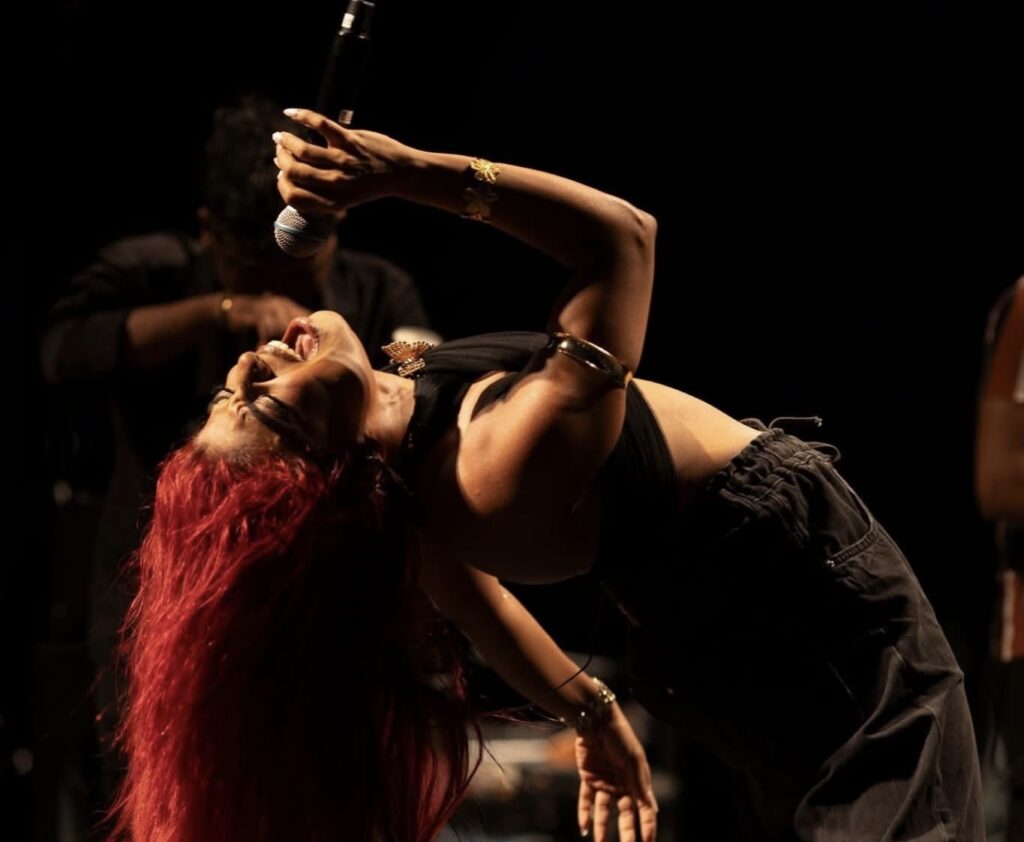
Theepachelvan

What followed was a cascade of bureaucratic evasion and institutional complicity that lays bare the functioning of the capitalist state. The Defence Ministry recommended that Customs detain all four books, while the Culture Ministry recommended the release of the two novels. Customs then returned to the Defence Ministry seeking a “no objection” for the novels’ release, which was granted. Based on the recommendations of the Arts Council of Sri Lanka, the State Panel of Literature of the Ministry of Buddhasasana, Religious and Cultural Affairs, and the Ministry of Defence, two books — Elluttal Nan Yuttam Ceykiren and Ippothum Inge Irandu Thesangalil — were formally withheld, with Customs citing provisions under section 120 of the Penal Code, a colonial law, read with Schedule B of the Customs Ordinance.

The Defence Ministry did not respond to questions as to how it determined that the books incited “disaffection” or posed a threat to national security. Crucially, the two books that were eventually released were not first editions and had already been distributed and made available at Tamil bookshops across Sri Lanka. The logical absurdity of this position — that books freely circulating in Tamil bookshops nonetheless require Defence Ministry clearance to re-enter the country through customs — exposes the purely political, punitive character of the censorship directed against Theepachelvan’s work on the war and its aftermath.

When The Examiner inquired whether Customs had reached out to the Attorney General for his opinion, Director General Arukgoda replied: “Why should we consult the AG’s department?” — asserting that Defence Ministry observations are sufficient and that “this has been the practice for as long as he can remember.” Here, in the unguarded candour of a senior bureaucrat, is the operating logic of the Sri Lankan security state: the military-intelligence apparatus has, through decades of communal war and “anti-terrorism” legislation, assumed permanent, unaccountable authority over political expression.

The detention of Theepachelvan’s books is not an isolated incident but part of a systematic and sustained campaign by the NPP/JVP government to suppress Tamil literary and political expression through the Defence Ministry’s permanent stranglehold over the circulation of ideas in the north and east. Writer and actor Antonythasan Jesuthasan — known by his pseudonym Shobasakthi — has revealed that copies of his book 1990: Leidenthivu – Mandaithivu Massacres and Mass Graves, documenting the massacres and mass graves of the war, sent from Chennai to poet Karunakaran’s address in Kilinochchi in late 2025, were seized by Customs at the Jaffna Post Office in November 2025 and forwarded to the Defence Ministry where they remain suppressed to this day — a complaint to Jaffna District NPP MP Rajeevan having yielded nothing, confirming that the censorship of Tamil historical memory is not a bureaucratic malfunction tolerated by the NPP government but its deliberate and continuing political policy.

The Human Rights Commission of Sri Lanka has warned that detaining publications without clear evidence of inciting communal disharmony could violate constitutional protections, including freedom of expression and equality before the law, and that such actions may amount to a misuse of power and a potential human rights violation. These expressions of institutional “concern,” however, will remain toothless so long as the fundamental class character of the state — and the NPP government that now administers it — goes unexamined and unchallenged.

The Class Character of the NPP’s Censorship

The detention of Theepachelvan’s books is not an aberration of the National People’s Power government; it is a manifestation of its essential political character. The NPP, led by the Janatha Vimukthi Peramuna (JVP) of Anura Kumara Dissanayake, rose to power on the wave of mass popular revulsion demonstrated in the 2022 aragalaya uprising — a spontaneous movement of workers, youth and the oppressed masses against decades of IMF-dictated austerity, official corruption and elite plunder. Having exploited that mass anti-establishment sentiment to win the presidency and parliamentary majority, the NPP has proceeded to do precisely what every bourgeois government before it has done: implement IMF austerity with renewed vigour, maintain and expand the security-state apparatus inherited from the Rajapaksa and Wickremesinghe eras, and deploy the machinery of repression against those who challenge its authority.

The JVP’s historical trajectory makes this entirely predictable. The JVP, which twice launched armed insurrections in the south — in 1971 and from 1987 to 1989 — and which conducted savage political violence, including the assassination of trade union leaders and left-wing opponents, subsequently transformed itself into a parliamentary party deeply integrated into the structures of the Sri Lankan capitalist state. Its “left” and “progressive” credentials — always petty-bourgeois in their class content, reformist in their political program and nationalist in their ideological framework — have served as a political cover for its absorption into bourgeois politics. Its “anti-corruption” and “good governance” rhetoric during the aragalaya period and the 2024 election campaign was not the language of class struggle but the language of the petty-bourgeois intelligentsia appealing to middle-class frustrations within the framework of capitalist rule.

Now in government, the NPP/JVP administers the very security apparatus whose colonial-era legal instruments — including Section 120 of the Penal Code, the draconian Public Security Ordinance and the Prevention of Terrorism Act — were wielded by Sinhala-chauvinist governments against the Tamil people for decades. Tamil writers in Sri Lanka live under constant surveillance of the security state. In 2024, Theepachelvan himself was summoned and interrogated by the Terrorist Investigation Division (CTID), and was subjected to nearly three hours of questioning over a book launch event. This persecution has not ceased under the National People’s Power government. The NPP’s “change” amounts to the continuation of the communal-security state with a new parliamentary facade and a refreshed managerial personnel.

Theepachelvan Piratheepan — born on 24 October 1983 in Kilinochchi — is one of the most significant Tamil literary voices to emerge from the lived experience of the war and its devastating human consequences. His poetry, essays and interviews document the suffering of the Tamil people through the armed conflict, the mass atrocities of the final military offensive, and the grinding social desolation of the post-war north and east. It is precisely because his work constitutes an act of bearing witness — of preserving the collective historical memory of a people subjected to systematic violence and dispossession — that the state seeks to suppress it. The detained books represent documentary historical testimony from below: the kind of testimony that the bourgeois state, regardless of which party administers it, has an enduring material interest in silencing.

The Intelligentsia’s Capitulation: Performing Criticism, Defending the Capitalist State

I. Nirmal Ranjith Dewasiri: The Government Supporter as Critic

No examination of this crisis would be complete without addressing the role played by the layers of academic and intellectual figures who occupy the space of “civil society” dissent in Sri Lanka — and who perform, with cultivated theatrical effect, the function of absorbing and neutralising working-class and democratic opposition to the capitalist state. The case of Professor Nirmal Ranjith Dewasiri demands particular attention, because in the Theepachelvan affair his political intervention reveals, with unusual transparency, the precise mechanism by which the pseudo-left intelligentsia serves the class interests of the bourgeoisie.

Nirmal Dewasiri
Nirmal Ranjith Dewasiri

On 19 April 2026, Dewasiri published a video statement on his YouTube channel — History with Nirmal — titled in Sinhala: “The greatest political defeat the Malima [NPP] government received in the case of Theepachelvan!” The framing is significant before a single word of analysis is delivered: the detention of a Tamil author’s books about the war is characterised not as a state assault on democratic rights and on the historical memory of the Tamil people — but as a political defeat for the government. The suffering of the Tamil author, the democratic principle of freedom of expression, the class content of the censorship — all of this is pushed to the background. What remains is a problem of government optics, of public relations management, of the NPP’s political credibility.

In the body of that statement, Dewasiri makes three things clear, each of which must be examined with precision.

First, having campaigned for the NPP/JVP electoral win, he asserts himself a supporter of the NPP/JVP government. This is an admission of class alignment. Dewasiri — the former secretary of the X-Group, the one-time FUTA president, the 2010 Cultural and National Heritage Ministry advisor, the key civil-society architect of the 2015 Sirisena “good governance” election victory — has now completed the arc of petty-bourgeois left politics in Sri Lanka: from student politics, through post-JVP academic radicalism, through “civil society” coalition-building for bourgeois electoral formations, to open and declared support for the NPP government that is today implementing IMF austerity and maintaining the security-state apparatus of the Rajapaksa era. This trajectory is not an individual aberration; it is the class trajectory of the petty-bourgeois intelligentsia in the epoch of imperialism.

Second, Dewasiri invokes the argument that in the digital age, banning physical books is an act of political absurdity — that in an era of internet access, detaining a printed consignment at customs only amplifies the work’s reach and drives readers to seek out the censored material. On the surface, one may see it as a critique of the government. In reality, it is something far more insidious: it is the argument of a government supporter advising his preferred government on how to conduct its affairs more effectively. The “digital age” argument does not challenge the ‘right’ of the state to suppress political literature; it argues that this particular act of suppression is tactically counterproductive. It is the counsel of a sympathetic advisor, not the principled opposition of a democrat.

Third, and most revealing, Dewasiri’s video statement conveys that he is worried about the NPP government losing credibility in public perception, and urges it to act quickly to resolve the problem. Here the contradiction at the heart of his entire political trajectory is exposed with unusual clarity — and it is a contradiction that deserves to be taken seriously rather than dismissed.

It would be a political error to characterise Dewasiri as someone indifferent to Tamil democratic rights. The record is otherwise. He has written at length on the ideological mechanisms by which Sinhala-Buddhist nationalist hegemony suppresses Tamil historical claims, on the illegitimacy of post-war “reconciliation” frameworks that deny devolution and Tamil political agency, and on the dangers of allowing dominant historical narratives to erase the lived experience of the Tamil people. These are not trivial positions — they represent a formal intellectual recognition of the very injustice that the detention of Theepachelvan’s books embodies. However, this critique is made entirely within the service of “post-war reconciliation” — a framework that accepts the Sri Lankan unitary capitalist state as the boundary within which Tamil political claims must be accommodated. Dewasiri argues for a more pluralist, less chauvinist bourgeois order — not for the right of the Tamil nation to self-determination, and certainly not for a class analysis of the national question that would expose the bourgeois state itself as the structural source of national oppression. His formal intellectual defence of Tamil historical memory therefore operates within the very political framework that generates the suppression he critiques.

This contradiction is precisely what makes his intervention in the Theepachelvan case so revealing — and so politically instructive. A man who has written extensively on how Sinhala-Buddhist historical consciousness suppresses Tamil historical memory, who has argued that post-war reconciliation is impossible without confronting that suppression, and who has documented in analytical detail the JVP’s own degeneration into Sinhala-Buddhist nationalist politics, now urges swift action by the NPP/JVP government that is suppressing Tamil historical testimony — not in order to vindicate the principle he has spent years articulating, but in order to protect the government’s political standing with the electorate. The defence of Theepachelvan Piratheepan’s books — of the Tamil people’s right to possess, circulate and build upon their own historical testimony of the war — is subordinated entirely to the political management needs of a bourgeois government Dewasiri has openly declared he supports. What his academic framework identifies as an ideological injustice demanding structural confrontation becomes, in the moment of concrete political decision, a governmental embarrassment requiring swift damage control. The principle survives in the academic publications; it dissolves entirely when the government he supports is the one doing the suppressing.

This is not hypocrisy in the ordinary personal sense. It is the structural logic of petty-bourgeois left politics in the epoch of imperialism. What must be stated with precision is the distinction between historical acknowledgement and political principle: Dewasiri’s academic credentials as a critic of Sinhala-Buddhist nationalism make his political function as a government defender more effective rather than less — allowing him to perform the role of principled critic while the substance of his intervention is the protection of a capitalist government that continues the security-state suppression of the very historical memory he has written about. The writings establish his credentials; his political conduct reveals his class allegiance.

The SLLA does not question the sincerity of Dewasiri’s academic work on Tamil historical oppression. We question its political value in the absence of the class independence that alone could give it practical force. Academic recognition of Tamil historical suffering, combined with political support for the bourgeois government that perpetuates it, does not advance the democratic rights of the Tamil people by a single degree. It provides intellectual legitimacy to the political management of their oppression.

This is not the first time Dewasiri has played this role. His trajectory — from X-Group intellectual and cultural radicalism, through ministerial advisor in 2010, to key civil-society architect of the 2015 Sirisena “good governance” coalition, to declared NPP supporter in 2026 — is the biography of the Sri Lankan pseudo-left intelligentsia’s absorption into the structures of bourgeois political management. At every stage, the rhetorical register changes — radical academic, trade union activist, “civil society” democrat, progressive government supporter — while the underlying political function remains constant: to channel mass discontent into safe institutional waters, to dress bourgeois politics in the language of popular aspiration, and to prevent the emergence of an independent, class-conscious political movement of the working class.

The SLLA’s critique of Dewasiri is not personal. It is the application of historical materialism to the concrete political role of a social layer. The pseudo-left intelligentsia does not invent the positions it holds; those positions are determined by its class position, its institutional dependencies, and its material and ideological integration into the structures of bourgeois society. Understanding this is essential to building the independent working-class political alternative that the Theepachelvan case — like every case of state repression before it — demands.

II. Jayathilaka Kammellaweera: The Literary Establishment as Cultural Gendarme

The response of figures like Dewasiri represents one mode of capitulation to the bourgeois state among those aligned with the NPP/JVP. The intervention of renowned Sinhala author and literary critic Jayathilaka Kammellaweera represents something qualitatively different and more openly reactionary: not the management of political embarrassment dressed in progressive credentials, but the direct rationalisation of censorship in the language of Sinhala cultural nationalism itself — a position that does not merely fail to defend Tamil democratic rights but actively argues for their suppression.

Jayathilaka Kammellaweera

Kammellaweera’s position is unambiguous. He argued that books containing ideas damaging to “national reconciliation” could legitimately be detained on the grounds that they harm “social cohesion.” He knows — from what he “heard” about the books — precisely what they contain: the historical memory of the Tamil oppressed nation, the testimonies of the war, the mass atrocities, the dispossession of a people subjected to decades of Sinhala-chauvinist state violence. It is on this basis that he endorses their suppression. His acknowledgement that he has not read the exact text is therefore entirely marginal to his political position — reading the books would not alter his stance by a single degree, because his position is not formed from the specific arrangement of words on specific pages but from what those pages represent: Tamil historical testimony that the Sinhala cultural establishment, aligned with the NPP government, requires to be silenced.

The terms Kammellaweera deploys — “national reconciliation,” “social cohesion” — require class analysis, not liberal restatement. In the political vocabulary of the Colombo establishment since the military defeat of the LTTE in 2009, “national reconciliation” has functioned consistently as a euphemism for Tamil acquiescence to the terms of the Sinhala-Buddhist state’s military victory. “Social cohesion” refers not to the freely expressed unity of equal peoples but to the managed coexistence of unequal communities within the framework of the unitary Sinhala-Buddhist state — a framework in which Tamil historical memory is treated as a threat to stability precisely because it is true. Kammellaweera’s argument is therefore not a liberal position on the limits of free expression made in good faith. It is a Sinhala chauvinist argument made in the language of social harmony: it subordinates the right of the Tamil people to preserve and circulate their own historical memory of national oppression to the political requirements of a Sinhala-dominated state’s management of post-war ethnic relations.

The SLLA states this directly and without qualification: Kammellaweera’s position is objectively racist in its political content and consequences. It assumes the right of the Sinhala cultural establishment — aligned with a Sinhala-chauvinist government of the South — to determine what Tamil writers may say about the Tamil people’s experience of the war, and legitimises the suppression of Tamil historical testimony as a public service. When the NPP state detains Tamil books through the Defence Ministry and aligned literary intellectuals rationalise that act in the language of social cohesion, we witness the complete operation of bourgeois ideological control: the state provides the coercive instrument and the cultural intelligentsia provides the legitimising discourse. These two functions are inseparable. Kammellaweera’s statement is a cultural expression of the JVP/NPP’s deep roots in Sinhala chauvinism — the WSWS has warned that true to its vile record and the reactionary traditions of the Sri Lankan bourgeoisie, the JVP/NPP government will whip up anti-Tamil Sinhala-Buddhist chauvinism in an attempt to divide and weaken the working class — and it confirms that this tendency finds its reflection not only in the state apparatus but in the literary establishment that serves it.

The SLLA condemns Kammellaweera’s statement in the strongest possible terms. The defence of Theepachelvan Piratheepan’s right to write, publish and circulate his testimony of the war is not merely a Tamil democratic demand. It is a demand of the entire working class — Sinhala, Tamil and Muslim — for the right to know its own history, free from the censorship of any state and any literary establishment that has traded its critical independence for proximity to bourgeois political power.

Equally revealing is the conduct of the Arts Council of Sri Lanka, whose chairperson, Keerthi Welisarage declared — with breathtaking cynicism — that “there are no restrictions on freedom of expression in Sri Lanka” even as his institution’s recommendations formed part of the bureaucratic chain that kept Theepachelvan’s books in Customs detention. Cultural institutions subordinated to the state and its security apparatus do not defend artists; they police them — and the liberal intelligentsia that staffs and defends such institutions performs the same function in the domain of “civil society.”

The Continuity of State Repression and the Lessons of the SEP’s Record

The detention of Theepachelvan’s books must be situated within the pattern of sustained state repression against artists, writers and political dissenters in Sri Lanka that has intensified under every successive government. The Socialist Equality Party (SEP) and its affiliated Action Committee for the Defence of Freedom of Art and Expression (ACDAE) (now defunct) have fought consistently against this repression — defending writer Shakthika Sathkumara when he was imprisoned on trumped-up blasphemy charges; campaigning for the release of Tamil poet Ahnaf Jazeem, held for months by the Terrorism Investigations Division under the Prevention of Terrorism Act for the content of a poetry collection; and standing with film director and playwright Malaka Devapriya when he was subjected to intimidatory investigation by the Criminal Investigation Department. These were not isolated or tokenistic acts of solidarity. They expressed a principled, politically grounded understanding that the defence of democratic rights — including freedom of expression and artistic freedom — is inseparable from the struggle of the working class against the capitalist state.
The SLLA, as the Revolutionary Left Faction of the SEP, grounds its response to the current attack on Theepachelvan in the same political foundation. The defence of his books is not a matter of abstract liberal principle. It is a class question. The suppression of Tamil literary testimony about the war is an attack on the democratic rights of the Tamil masses and on the ability of the entire working class — Sinhala, Tamil and Muslim alike — to form independent political consciousness, to know its own history, and to build the movement necessary to defend its interests against austerity, communalism and authoritarianism.

What Must Be Done

The SLLA and thesocialist.lk demand:

1. Immediate and unconditional release of both detained books —  Elluttal Nan Yuttam Ceykiren and Ippothum Inge Irandu Thesangalil — by Theepachelvan Piratheepan, with no conditions, no ongoing surveillance and no further harassment of the author. We also demand immediate release of all books of other authors including those of writer and actor Antonythasan Jesuthasan.

2. Abolition of the practice whereby the Ministry of Defence — an institution of military-intelligence power — exercises authority over the import and circulation of literary works. The subordination of cultural institutions and customs procedures to the security apparatus must be ended. The repeal of all colonial-era and post-independence legal provisions — including parts of the Schedule B of the Customs Ordinance and its invocation of Section 120 of the Penal Code — used to suppress political literature and artistic expression is an urgent democratic necessity.

3. Full public accountability: the Defence Ministry must be compelled to explain publicly, on the record, on what specific grounds it determined that these literary works constituted a threat to national security. Secret, unaccountable determinations by the military-intelligence apparatus over the domain of political and artistic expression are fundamentally incompatible with democratic rights.

4. Mobilisation of workers, artists, students and youth: the SLLA calls for the broadest possible mobilisation in defence of Theepachelvan and of freedom of expression. Writers, publishers, academics, teachers, trade unionists and students must come together in independent democratic committees — in workplaces, universities and communities — to coordinate this defence outside and against the institutions of bourgeois civil society, which have proved incapable of providing principled opposition to state censorship.

5. Link the defence of democratic rights to socialist politics: the struggle against censorship, against the suppression of Tamil historical memory, and against the NPP government’s continuation of the security state cannot be separated from the struggle against IMF austerity, against the exploitation of the working class, and against the capitalist system that generates communalism and repression as instruments of class rule. The SLLA calls on workers and youth to break with the NPP, the JVP and all parties of the bourgeoisie, and to build an independent socialist political movement grounded in the program and perspectives of the International Committee of the Fourth International.

The SLLA and theSocialist.lk stand in unconditional solidarity with Theepachelvan Piratheepan. His work — bearing witness to the anguish, the loss, the resistance and the aspirations of the Tamil people — belongs to the historical memory not only of the Tamil nation but of the international working class. No security ministry, no colonial-era customs ordinance, and no NPP government that has betrayed the masses who trusted it can legitimately suppress that testimony.

The defence of art and free expression is the defence of the working class. The struggle for democratic rights is the struggle for socialism.

The NPP/JVP Government’s Assault on Tamil Historical Memory: State Censorship, Class Repression and Intellectual Complicity Read More »

Scroll to Top