This political report for the week ending 07 February 2026 is compiled based on coverage from the World Socialist Web Site (WSWS.org).
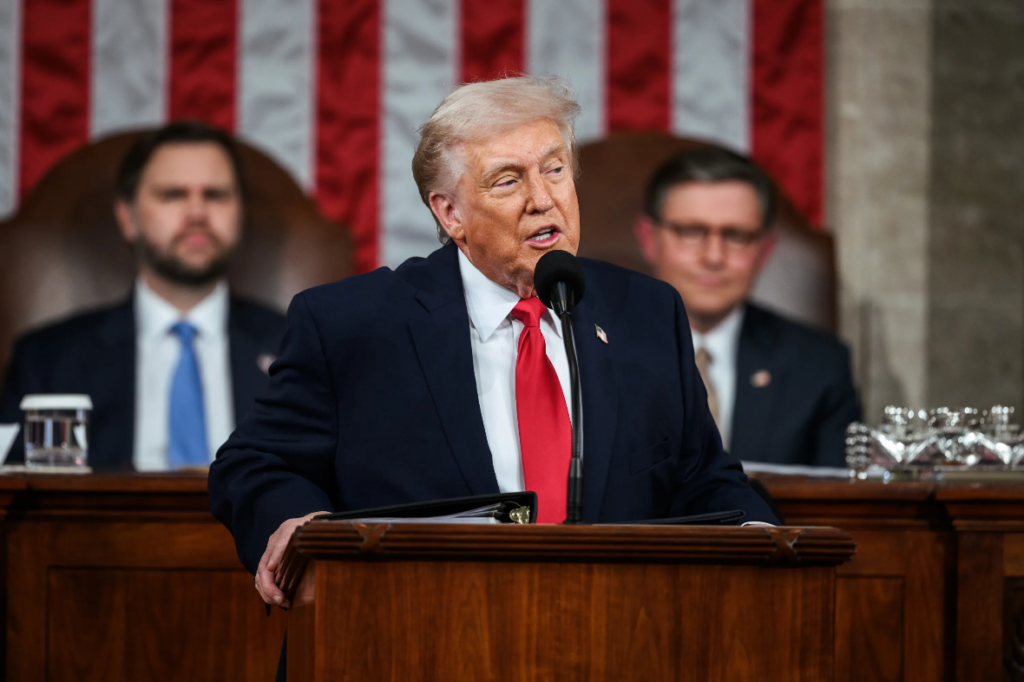
President Donald Trump smiles after signing a spending bill that ends a partial shutdown of the federal government in the Oval Office of the White House, Tuesday, Feb. 3, 2026, in Washington. [AP Photo/Alex Brandon]
The week ending February 7, 2026 witnessed an intensification of inter-imperialist rivalry, the acceleration of domestic repression in the United States, and a global surge in working-class militancy met with systematic betrayal by trade union bureaucracies. From preparations for regime change in Iran to mass strikes in healthcare and education, the international crisis of capitalism manifested in parallel assaults on democratic rights, living standards, and public services. This report synthesizes key developments across four domains: imperialist war preparations and geopolitical realignment; the consolidation of authoritarian rule and state repression; capitalist austerity and economic warfare; and the eruption of class struggle against union bureaucratic containment.
I. Imperialism and War: Escalation Toward Iran and Regional Realignment
European Powers Line Up Behind Regime Change in Iran
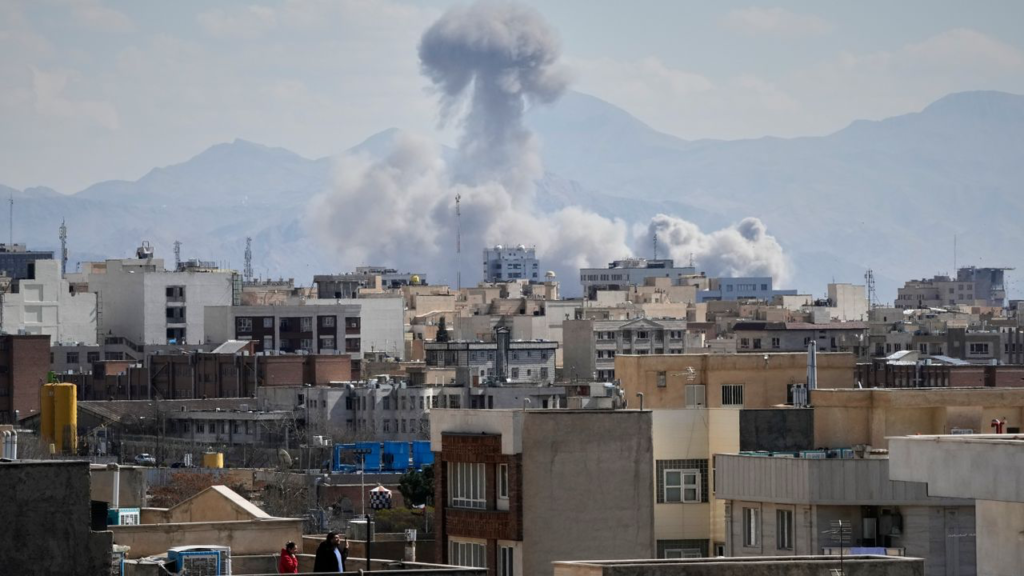
European governments openly aligned with Washington’s escalation toward regime change in Tehran. The EU placed Iran’s Revolutionary Guards on its “terror” list while European leaders—including Germany’s Friedrich Merz and UK Prime Minister Keir Starmer—publicly backed US threats and prepared rhetoric for a “transition” in Iran. This coordination followed prior US and Israeli strikes and represents strategic repositioning by European imperialism to secure access to energy resources and geopolitical influence.
Core analysis: The WSWS situates European actions as integral to imperialist rivalry and the scramble for markets and spheres of influence. Liberal imperialism cloaks predatory aims in “humanitarian” language, but the underlying logic is capitalist competition driving preparations for inter-imperialist war. Only an international working-class anti-war movement grounded in revolutionary socialist politics can halt the slide toward regional and global conflagration.
Turkey Attempts Mediation as NATO Ally
As US preparations for possible military action against Iran escalated, Turkey sought to mediate between Washington and Tehran. Ankara’s diplomacy aimed to limit regional destabilization while protecting Turkish geopolitical and economic interests, revealing the contradictions of a junior NATO power attempting to maneuver within imperialist rivalry.
Core analysis: Turkish mediation is not peaceful diplomacy but a junior imperialist power managing fallout from US militarism. Imperialist competition, not negotiation, drives the crisis; only international working-class anti-war mobilization can block regional war.
Merz’s Gulf Tour: Alliance with Dictators for German Great Power Politics
German Chancellor Friedrich Merz toured Gulf monarchies—Saudi Arabia, Qatar, UAE—meeting personally with Mohammed bin Salman and pledging strategic partnerships, arms deals, and energy cooperation despite documented human rights crimes. The visit frankly asserted German great-power ambitions subordinating all ethical concerns to capitalist and geostrategic interests.
Core analysis: Imperialist states ally with dictators to secure energy and markets. Workers must oppose rearmament and foreign-policy adventurism through an international socialist program that rejects nationalist accommodation to imperialism.
II. Authoritarian Consolidation and State Repression
Trump Administration’s Assault on Democratic Norms
Federal Election Seizure Plans: President Trump publicly urged federal takeover of state election administration and directed FBI operations in Fulton County, Georgia, threatening to “nationalize” elections in targeted cities. These moves signal preparation to rig or cancel the 2026 elections.
Core analysis: This represents an overt break with democratic norms by sections of the capitalist state preparing for dictatorship. The principal obstacle to a coup is the working class; the necessary response is independent political mobilization through rank-and-file organizations and preparation for general strike, not reliance on the Democratic Party.
Federal Purges: The administration announced sweeping purges of federal civil service employees, replacing career officials with political loyalists to centralize control—measures framed as rooting out “disloyalty.”
Core analysis: Politicized purges characterize authoritarian consolidation, removing institutional checks on presidential power. Defense of democratic rights requires independent working-class organizing and mass political resistance.
Racist Provocations: Trump posted a racist video depicting Barack and Michelle Obama as apes, one in a series of overt racist provocations from the White House designed to mobilize racist sentiment, terrorize minorities, and divide the working class.
Mass Surveillance Infrastructure
The Trump administration expanded mass-surveillance networks—databases, facial recognition, cross-agency sharing—to track immigrants and political protesters, integrating private tech contractors into state repression apparatus.
Core analysis: Surveillance is a political tool to suppress dissent and enforce social control for the oligarchy. Defense of democratic rights requires independent working-class mobilization and dismantling surveillance apparatuses through mass action.
Immigrant Repression and Detention Center Horrors
Measles Outbreak at Dilley: A measles outbreak tore through the South Texas Family Residential Center in Dilley, confining hundreds of asylum-seeking families and children. Overcrowding, poor sanitation, and rationed medical care created conditions for rapid spread amid a nationwide measles resurgence (2,267 confirmed cases in 2025) following mass purges at HHS and CDC.
Core analysis: The outbreak demonstrates Trump’s program of criminalizing and caging migrants while dismantling scientific public health, subordinating life to profit and political repression. Both Republican and Democratic parties share complicity in detention regimes and public-health defunding.
Vindictive Deportation: After protests forced the release of five-year-old Liam Conejo Ramos from Dilley, DHS filed a motion to expedite deportation proceedings against his family—vindictive state repression designed to terrorize immigrants and suppress dissent.
ICE Workplace Raids: ICE conducted workplace raids including at an Amazon facility in Hazel Park, Michigan, weaponizing enforcement to intimidate immigrant and non-immigrant workers alike, deepen labor discipline, and facilitate corporate flexibility.
University Republican Club Calls for Assassinations
The Illini Republicans at the University of Illinois Urbana-Champaign posted on Instagram celebrating political killings and calling for assassination of opponents; the administration refused discipline, citing “protected speech.”
Core analysis: This evidences deepening fascist and white-supremacist currents fostered by capitalism resorting to political violence. The university’s selective “free speech” shields reactionary violence while repressing left protests. Defense of democratic rights requires independent working-class mobilization against both fascism and the bipartisan state protecting it.
Repression of Nurses and Protesters
New York Nurses Arrested: At least 13 striking nurses were arrested outside Greater New York Hospital Association headquarters on Day 25 of their strike, with NYPD riot units deployed amid pressure from Mayor Zohran Mamdani and Governor Kathy Hochul to end the action through emergency orders facilitating out-of-state replacements.
Core analysis: The arrests demonstrate state readiness to use force defending corporate healthcare interests. Union bureaucracy’s containment strategy isolates nurses; expansion of the strike, full strike pay, and national coordination through rank-and-file committees are essential.
Mamdani’s Betrayal: DSA Mayor Embraces Police State
New York Mayor Zohran Mamdani praised an NYPD shooting of a 22-year-old Bangladeshi man experiencing a mental-health crisis and endorsed Governor Hochul’s strike-breaking measures, revealing continuity with pro-police policies despite earlier populist branding.
Core analysis: DSA-style figures integrate into the capitalist state, converting electoral radicalism into administrative collaboration with police and oligarchy. The working class must not be misled; independent organization and rank-and-file control are essential.
III. Austerity, Economic Warfare, and Capitalist Crisis
US Economic Warfare Against Cuba and Venezuela
Cuba Blockade: The US energy blockade threatened Cuba with humanitarian “collapse” as the UN Secretary-General warned of imminent crisis. Washington’s executive order threatened tariffs on countries supplying Cuba with oil; Mexico and other suppliers faced pressure to cease shipments, precipitating blackouts and shortages.
Core analysis: The blockade constitutes genocidal imperialist coercion aimed at regime overthrow, with complicity from regional bourgeois governments and nationalist-left leaders who capitulate. Only international working-class solidarity can oppose imperialist economic warfare.
Venezuela Privatization: Following the US abduction of Nicolás Maduro, Venezuela’s interim authorities rapidly overhauled hydrocarbons law, opening oil to foreign control and subordinating resources to US and corporate interests.
Core analysis: This exposes the failure of chavismo and bourgeois-nationalist projects that cannot defend resources or working-class gains under imperialism. Only working-class revolution and international socialist policy can break imperialist domination.
Corporate Layoffs Accelerate to Great Recession Levels
January job-cut announcements by US corporations tripled, with large tech, media, and retail firms leading the wave. The increase signals renewed corporate restructuring and mass unemployment approaching Great Recession scale.
Core analysis: Layoffs flow from falling profitability and overaccumulation; corporate efforts to restore margins enforce political choices subordinating labor to capital. The response must be mass industrial organization, strikes, and rank-and-file committees defending jobs and fighting for nationalization under workers’ control.
Washington Post Slashes Newsroom: The Washington Post eliminated roughly one-third of its newsroom (over 300 jobs), closing entire desks while billionaire owner Jeff Bezos’s wealth surged. This media purge is part of capitalist restructuring and concentration of cultural power under the oligarchy, using “efficiency” rationales to mask political decisions shrinking independent journalism.
1,200 GM Layoffs in Canada: General Motors ended the third shift at its Oshawa plant, laying off approximately 1,200 autoworkers as part of production rationalization.
Austerity Across Multiple Fronts
Australia: The Labor government drove up housing prices through developer-friendly policies, cut arts funding (forcing Writers Victoria to close), raised interest rates deepening household debt crises, and approved National Cabinet measures removing tens of thousands of children from disability support. Labor also pressed ahead with demolition of Melbourne public housing towers, displacing residents under privatized redevelopment schemes.
UK: A major charity reported deepening poverty under the Starmer Labour government, documenting rising food insecurity, housing stress, and benefit shortfalls. Starmer’s administration implements austerity while claiming respectability.
SNAP Cuts: Trump administration changes to SNAP eligibility set 2.4 million people at risk of losing food assistance by 2034, shifting the burden onto working people to finance corporate and military priorities.
Homeless Death in Kalamazoo: A homeless man froze to death in Kalamazoo, Michigan while the city allocated $515 million to build a new arena—a stark juxtaposition of social neglect and pro-business public spending.
Kaiser Permanente Medicare Fraud
Kaiser agreed to a $556 million settlement over allegations of inflating Medicare Advantage risk scores, generating roughly $1 billion in alleged overpayments—while claiming inability to meet demands from striking healthcare workers.
Core analysis: “Non-profit” healthcare corporations are profit-driven entities using public funds for private gain. Fraud settlements are routine costs of business while frontline workers and patients suffer austerity.
IV. Class Struggle and Union Bureaucratic Betrayal
Healthcare Workers’ Strikes
Kaiser Strike Enters Third Week: The strike by 31,000 Kaiser healthcare workers continued into its third week, with 4,000 pharmacy and lab workers (UFCW) preparing to join. Management pursued legal and PR strategies while union bureaucracy sought localized talks fragmenting the struggle.
New York Nurses: 15,000 nurses remained on strike facing threats of permanent replacement, with escalated repression (arrests, state emergency orders) and union bureaucracy retreat toward concessions.
Boston Nurses: Despite an overwhelming strike vote, the union bureaucracy left 650 nurses at Boston Medical Center Brighton working, fragmenting leverage and isolating the struggle.
Core analysis: Healthcare strikes contain the embryo of a national movement defending public health, but unions seek containment. Only rank-and-file organization could transform disputes into unifying working-class struggles. The fight centers on whether workers accept permanent understaffing or build nationwide, worker-led movements.
Education Workers’ Mobilization
San Francisco Teachers’ Strike: 6,400 educators in San Francisco Unified School District voted overwhelmingly to strike over chronic understaffing, poverty wages, unaffordable healthcare costs, and class-size caps—the first district-wide walkout since 1979.
Core analysis: The strike occurs amid obscene regional inequality driven by tech billionaires and Democratic-party austerity. Union bureaucratic entanglement with Democrats must be broken; independent rank-and-file committees should link educators across districts for statewide and national action.
Ann Arbor: Educators worked under expired contracts amid massive cuts and restructuring.
Australia: The WSWS called for building rank-and-file committees among educators and students to oppose mass job cuts, course closures, and integration of universities into the military-industrial complex under the Universities Accord.
Industrial Workers’ Struggles
Birmingham Refuse Workers: Over a year into indefinite strike action, Birmingham loaders and drivers opposed pay cuts up to £8,000 and abolition of safety roles, facing intimidation, court injunctions, agency labor, and £33 million council deployment to break the strike—backed by the Starmer government declaring a “major incident.”
Core analysis: This is a test case for Starmer’s austerity drive and labor bureaucracy’s capacity to contain conflict. The dispute can only be won through independent rank-and-file organization, democratic worker control of strategy, and national solidarity exposing government use of state power to enforce austerity.
USW Refinery Sellout: The United Steelworkers announced a tentative national agreement for 30,000 refinery workers offering 15% over four years with no binding protections against AI or job cuts; rank-and-file anger erupted over the perceived betrayal.
Core analysis: The WSWS denounced the USW bureaucracy’s sellout and called for immediate formation of elected rank-and-file refinery committees to reject the deal, coordinate national strike, and use union assets to sustain prolonged action.
Royal Mail: The Communication Worker Union’s Martin Walsh attacked rank-and-file initiatives calling for nationwide fightback against the Optimised Delivery Model and asset-stripping, collaborating with EP Group management.
German Public Transport: Verdi leadership limited warning strikes over pay and conditions, negotiating incremental deals rather than escalating militant potential.
Pattern of Bureaucratic Containment
Teachers’ Unions Suppress Resistance: Teachers’ union bureaucracies issued directives forbidding participation in anti-fascist walkouts and protests, framing suppression under “student safety” and contractual pretexts.
Core analysis: Union bureaucracies act to preserve capitalist order by containing rank-and-file militancy and preventing cross-sector solidarity. Democratic rank-and-file committees are essential to defend educational professionals’ rights and broader anti-dictatorship mobilizations.
International Labour Developments
Mediterranean Dockworkers: Dockworkers across Mediterranean ports planned coordinated protests opposing use of port infrastructure for military logistics and arms shipments.
German Hospital Workers: Strikes and protests spread across regions over understaffing, wage stagnation, and cost-cutting as patient safety deteriorates.
University of Sheffield Lock-out: Management locked out staff adhering to action short of striking, withholding pay—an unprecedented enforcement of unpaid labor to punish industrial action.
V. Elite Criminality and Systemic Corruption
Epstein Files Expose Ruling Class Impunity
The DOJ released millions of Epstein-related documents revealing extensive elite contacts; the Trump White House sought to minimize revelations while DOJ downplayed prosecution prospects and redactions selectively protected prominent individuals. Materials implicated UK figures including Peter Mandelson and Prince Andrew, threatening Starmer’s “clean-government” stance.
Core analysis: The files expose systemic criminality and class impunity at capitalism’s summit. The ruling class protects its own through legal cover-ups and media manipulation. Justice cannot be delivered by capitalist courts or parties; accountability requires mass political mobilization of the working class and dismantling oligarchic power.
Financial Oligarchy and Fed Appointment
Wall Street figures rallied to secure Kevin Warsh’s nomination to lead the Federal Reserve, demonstrating fusion between state power and financial oligarchy. Central-bank appointments serve capitalist interests by stabilizing conditions for private profit rather than defending working-class living standards.
VI. Political Bankruptcy of Reformism
Colombian President Petro’s Capitulation
Colombian President Gustavo Petro visited the White House for talks with Trump days after military threats related to Venezuela, signaling sharp realignment with pledges of collaboration, intelligence sharing, and economic cooperation.
Core analysis: Petro’s capitulation confirms the bankruptcy of bourgeois nationalist “lefts” attempting reforms within imperialist frameworks. His turn toward Washington facilitates US neocolonial objectives and suppresses independent working-class alternatives.
Costa Rica Election
A Trump-aligned, right-of-centre candidate won Costa Rica’s presidency, displacing traditional pink-tide forces and marking electoral weakness of reformist nationalist-left projects.
Core analysis: This exposes the failure of nationalist or reformist regimes to defend working-class interests; only independent socialist politics rooted in the working class can offer an anti-imperialist alternative.
Conclusion
The week’s developments confirm the WSWS analysis: capitalism’s crisis is driving simultaneous escalation toward imperialist war, consolidation of authoritarian rule, intensification of austerity, and explosion of working-class resistance. The central political question is leadership: will struggles be contained and betrayed by union bureaucracies and bourgeois parties (including their pseudo-left appendages), or will workers build independent, democratically controlled rank-and-file committees capable of coordinating international resistance?
The necessity of the hour is the construction of an international socialist movement of the working class, organized independently of all capitalist parties and union apparatuses, and guided by the program and perspective of the International Committee of the Fourth International. Only such a movement—linking healthcare workers, educators, refinery workers, dockworkers, students, and immigrant communities across national boundaries—can halt the drive to dictatorship and war, defend democratic rights and living standards, and open the road to socialist transformation of society.
[1] “Oppose Trump’s criminal invasion of Venezuela! Release Maduro!” WSWS, 4 January 2026, <https://www.wsws.org/en/articles/2026/01/04/avdu-j04.html>
[2] “US imperialist bandits parade kidnapped Maduro in show trial,” WSWS, 6 January 2026
[3] “Trump and Miller’s ‘iron law’ of imperialist barbarism,” WSWS, 7 January 2026, <https://www.wsws.org/en/articles/2026/01/07/erjx-j07.html>
[4] “After Venezuela attack: White House threatens Venezuelan acting president, Cuba and Greenland,” WSWS, 5 January 2026, <https://www.wsws.org/en/articles/2026/01/05/crzb-j05.html>
[5] “Trump and Miller’s ‘iron law’ of imperialist barbarism,” WSWS, 7 January 2026
[6] Ibid.
[7] Ibid.
[8] “US imperialist bandits parade kidnapped Maduro in show trial,” WSWS, 6 January 2026 , <https://www.wsws.org/en/articles/2026/01/06/zyve-j06.html>
[9] “Latin America’s bourgeois governments bow to US attack on Venezuela,” WSWS, 6 January 2026, <https://www.wsws.org/en/articles/2026/01/06/slwp-j06.html>
[10] “Oppose Trump’s criminal invasion of Venezuela!” WSWS, 4 January 2026
[11] “After Trump’s attack on Venezuela: Germany’s Left Party supports European imperialism,” WSWS, 7 January 2026, <https://www.wsws.org/en/articles/2026/01/07/sfqt-j07.html>
[12] Ibid.
[13] “Trump and Miller’s ‘iron law’ of imperialist barbarism,” WSWS, 7 January 2026
[14] Ibid.
[15] “Oppose Trump’s criminal invasion of Venezuela!” WSWS, 4 January 2026
This report synthesises and analyses the main political, geopolitical and economic developments covered by the World Socialist Web Site in the week ending 31 January 2026. It locates events within the deeper dynamics of class struggle, imperialism and the global capitalist crisis, and draws the immediate political conclusions and tasks for the international working class.
1. Imperialism on the march — preparations for new wars
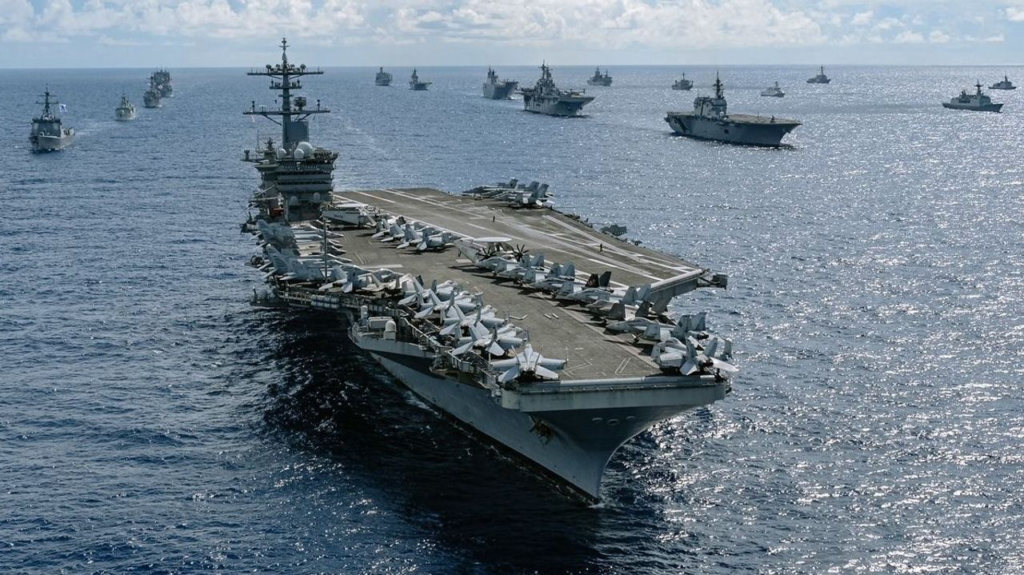
The central story of the week was the open escalation of US imperialism. The Trump administration’s mounting threats and military deployments toward Iran were documented and analysed as preparations for a major new act of aggression, not isolated bellicose rhetoric. The WSWS outlined the scale and danger of the US build-up of forces, the carrier strike group deployments and the propaganda pretexts being assembled to legitimise strikes on Iran (Trump administration threatens new war against Iran). The UN Security Council posturing and Washington’s invocation that “all options are on the table” were exposed as part of a regime-change strategy that follows Washington’s recent attack on Venezuela and its abduction of President Maduro (Washington menaces Iran at UN Security Council; After Venezuela, Trump targets Iran).
From an international-class perspective, WSWS emphasises that these moves are expressions of imperialism’s strategic imperative to control resources, markets and trade routes (notably oil and gas), to attempt to subordinate rivals such as China and to shore up domestic political authority through foreign adventurism. The analysis rejects humanitarian or “democratic” pretexts and situates the drive to war in the logic of capitalist rivalry and the breakdown of lawful institutions.
2. Repression at home — war and dictatorship as two sides of capitalist rule
The week reinforced the WSWS argument that war abroad and repression at home are inseparable. Coverage tied the Trump government’s domestic assaults—paramilitary policing, the killing of migrants and threats to invoke the Insurrection Act—to the same oligarchic interests driving foreign aggression (New Year Fund appeal on the rise of dictatorship and war). The ruling class’s resort to exceptional measures is explained as an attempt to impose social discipline and to defend the profits and privileges of the financial oligarchy amid global economic turmoil.
3. Intensifying class conflict — strikes and workplace resistance worldwide
While imperialist tensions dominate geopolitics, the working class continued to push back across continents. WSWS’s regular “Workers Struggles” reports registered growing militancy: Belgian rail workers launched a five-day national strike against austerity and pension attacks; French bank employees struck over pay and restructures despite record bank profits; and hospital, education and municipal workers staged sustained actions in the UK, Italy and Africa (Workers Struggles: Europe, Middle East & Africa). In Asia and the Pacific, mass actions by gig workers, ambulance crews and casino staff testified to mounting resistance to wage cuts, precarious contracts and privatisation moves (Workers Struggles: Asia and Australia).
These labour struggles reflect the material pressures produced by austerity, inflation and corporate profit-seeking. They demonstrate the objective potential power of the working class, but WSWS warns that this potential is being squandered by union bureaucracies that isolate workers and broker sellouts.
4. Material forces driving the crisis
WSWS analyses the above dynamics as rooted in the global capitalist crisis: mounting sovereign and private debt, falling rates of profit, currency instability and the scramble for strategic raw materials. The ruling elites respond with a two-pronged strategy—intensify exploitation at home through austerity and wage suppression, and secure imperial advantage abroad via military force. The result is the simultaneous escalation of poverty, layoffs and militarism.
5. Political implications and class tasks
Build political independence: WSWS insists that workers must break from bourgeois parties and pseudo-left forces that either collaborate with imperialism or reduce resistance to parliamentary petitions. The only credible barrier to war and austerity is the organised power of the working class.
Organise rank-and-file committees: To counter union sellouts and unify struggles across workplaces and borders, the WSWS calls for the formation of rank-and-file committees and an International Workers Alliance of Rank-and-File Committees.
Defend democratic rights: Immediate campaigns must be mounted to oppose police militarisation, arbitrary detention and censorship; the fight for democratic rights is inseparable from the fight against war and austerity.
Political education and leadership: WSWS stresses the urgent need to rebuild revolutionary political leadership rooted in Marxism. Initiatives such as Socialism AI and WSWS educational work are presented as tools to equip workers and youth with theory and organisation.
6. Action guidance
Workers should link strikes and local struggles to an international political strategy: refuse austerity bargains that trade away living standards; demand immediate protections for democratic rights; and build cross-border solidarity committees to coordinate industrial and political action. To connect understanding with organised resistance, the WSWS urges workers to join efforts to build an independent socialist movement and to consider affiliating with the Socialist Equality Party’s organising work: https://www.wsws.org/en/special/pages/sep/us/join.html
— World Socialist Web Site / International Committee of the Fourth International
This article was originally published on the World Socialist Web Site on 27 January 2026.
The Trump administration released its 2026 National Defense Strategy on Friday, a 34-page document that openly proclaims American military domination of North and South America as a platform for global war. The strategy, issued by the newly renamed “Department of War,” is a blueprint for imperialist conquest.
President Donald Trump walks onto the field with Lt. Gen. Steven Gilland, superintendent of the U.S. Military Academy at West Point, left, and Lt. Gen. Michael Borgschulte, superintendent of the U.S. Naval Academy, right, before the start of the 126th Army-Navy NCAA college football game at M&T Bank Stadium, Saturday, Dec. 13, 2025, in Baltimore. [AP Photo/Julia Demaree Nikhinson]
The National Defense Strategy introduces the concept of “Homeland and Hemisphere,” effectively expanding the definition of the American “homeland” to include all of North and South America.
Building on the National Security Strategy released in December, which declared a “Trump Corollary to the Monroe Doctrine,” the document asserts that defending American territory requires military control of the entire Western Hemisphere. It declares: “We will actively and fearlessly defend America’s interests throughout the Western Hemisphere. We will guarantee U.S. military and commercial access to key terrain, especially the Panama Canal, Gulf of America, and Greenland.”
The document explicitly invokes 19th-century imperialism, noting that “our predecessors recognized that the United States must take a more powerful, leading role in hemispheric affairs” and that “it was this insight that gave rise to the Monroe Doctrine and subsequent Roosevelt Corollary.” Under the Roosevelt Corollary (named after Theodore Roosevelt, president from 1901 to 1909), US Marines invaded Nicaragua, Haiti, the Dominican Republic and Cuba. The Trump administration declares these crimes the model for 21st-century foreign policy: “This is the Trump Corollary to the Monroe Doctrine—a commonsense and potent restoration of American power and prerogatives in this hemisphere.”
The Pentagon is committed to “provide the President with credible options to guarantee U.S. military and commercial access to key terrain from the Arctic to South America.”
“Homeland and Hemisphere” recalls the Nazi slogan “Heim ins Reich”—”Home into the Reich”—used to justify Germany’s annexation of Austria and the Sudetenland in 1938. Just as Hitler declared that German-speaking territories belonged to Greater Germany, the Trump administration asserts that Greenland, Panama, and the Gulf of Mexico are American possessions to be secured by force.
While proclaiming hemispheric domination, the National Defense Strategy claims the military will “no longer be distracted by interventionism, endless wars, regime change, and nation building.” The document’s claim to oppose “regime change” is rendered absurd by the fact that it was released days after the administration carried out one of the most flagrant acts of regime change in American history—the kidnapping of Venezuelan President Nicolás Maduro.
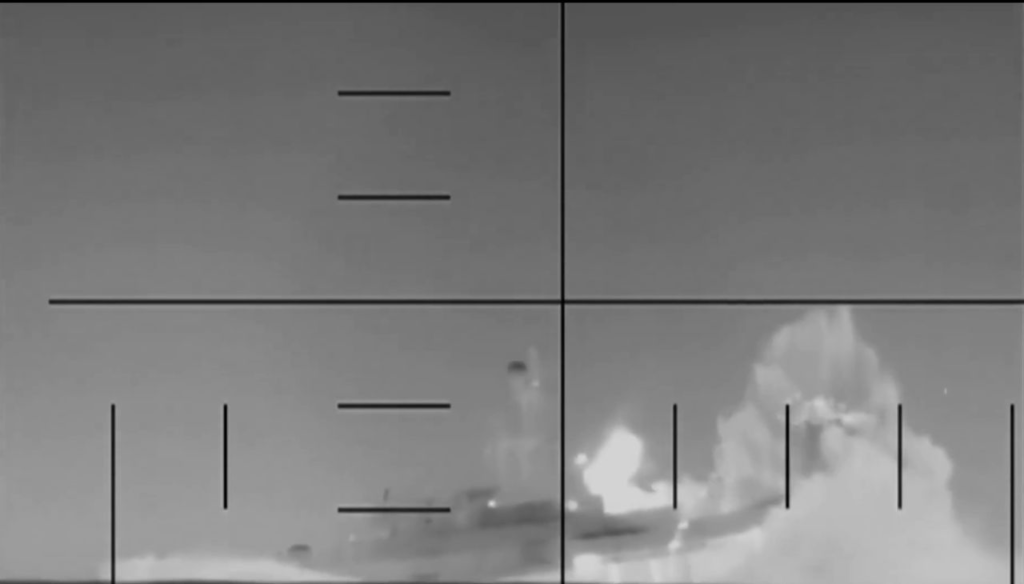
The claim was published as US warships steam toward Iran. On Monday, the USS Abraham Lincoln carrier strike group approached the Middle East. On Friday, Trump told reporters: “We have a big flotilla going in that direction, and we’ll see what happens. We have a big force going toward Iran.” This follows his bombing of Iranian nuclear facilities last year.
The National Defense Strategy makes clear that US domination of the hemisphere is not a retreat from global domination, but what the Trump administration sees as a prerequisite. It insists that “ours is not a strategy of isolation” but rather “one of focused engagement abroad.”
While claiming that “President Trump seeks a stable peace, fair trade, and respectful relations with China,” the National Defense Strategy frames hemispheric domination as preparation for great-power war. It acknowledges that China is “already the second most powerful country in the world—behind only the United States—and the most powerful state relative to us since the 19th century,” adding that despite internal challenges, “the fact is that its power is growing.”
To prepare for this conflict, Trump has called for a 50 percent increase in military spending, demanding a $1.5 trillion military budget for 2027. The National Defense Strategy demands that all US allies follow suit: “President Trump has set a new global standard for defense spending at NATO’s Hague Summit—3.5% of GDP on core military spending and an additional 1.5% on security-related spending, for a total of 5% of GDP.”
Five percent of GDP would represent the largest peacetime military buildup in modern history—exceeding $1.3 trillion annually for the United States alone, and tripling German military expenditure. The resources demanded for this military expansion will be extracted from the working class through austerity, the gutting of social programs, and the further impoverishment of billions of people worldwide.
On nuclear weapons, the document demands the modernization of US nuclear forces “with focused attention on deterrence and escalation management amidst the changing global nuclear landscape.” It declares that “the United States should never—will never—be left vulnerable to nuclear blackmail.” The reference to “escalation management” is military jargon for preparing to fight and “win” a nuclear war.
The document concludes: “We will restore the warrior ethos. We will refocus the American military on its core, irreplaceable goal of winning the nation’s wars decisively.”
The Democratic Party supports this military buildup. On Thursday, the House passed combined defense and consolidated spending bills by a vote of 341-88, with 149 Democrats voting yes and only 64 voting no. The $839 billion military budget—$8.4 billion above what Trump requested—funds the weapons systems, carrier strike groups and military infrastructure required for the wars outlined in the National Defense Strategy. Both parties represent the same ruling class, and there is bipartisan consensus for militarism and global domination.
Venezuelan President Nicolas Maduro. Image courtesy of www.aa.com.trn
The January 3, 2026 U.S. military assault on Venezuela and the forcible seizure of President Nicolás Maduro constitute a watershed in the degeneration of American imperialism and the collapse of the post-1945 juridical order. This was not a rogue “raid” or law-enforcement operation but a war of aggression conducted to impose control over strategic resources and geopolitical space. As the World Socialist Web Site emphasized, the operation represents “a total repudiation by the Trump regime of any semblance of legality… an unprovoked war of aggression launched in flagrant violation of international law.”[1] The deployment of over 150 aircrafts launched from 20 bases across the Western Hemisphere, heavy bombardment across Caracas and surrounding states, a naval blockade, and at least 100 deaths—including 32 Cuban military personnel—underscore the operation’s character as large-scale military conquest rather than counter-narcotics action.
Material Foundations: Oil, Finance Capital and Geopolitical Rivalry
The assault must be understood through the material interests driving contemporary imperialism. Venezuela possesses the world’s largest proven oil reserves alongside substantial deposits of gold, bauxite, diamonds, copper, nickel, manganese, coltan and uranium. Control of these resources is central to U.S. finance capital and the oil majors’ strategic aims. Trump made the predatory motive explicit, declaring that “we’re going to have our very large United States oil companies, the biggest anywhere in the world, go in, spend billions of dollars.”[2] Reportedly,Trump briefed oil executives about the assault before it occurred while deliberately withholding information from Congress and the American people.
The operation simultaneously aims to reverse China’s and Russia’s deepening economic penetration of Latin America. U.S. demands to interim President Delcy Rodríguez revealed the geopolitical objectives: Venezuela must “kick out China, Russia, Iran and Cuba and sever economic ties,” then “agree to partner exclusively with the US on oil production and favor America when selling heavy crude.”[3] Secretary of State Marco Rubio framed this explicitly: “Why does China need their oil? Why does Russia need their oil? They’re not even in this continent. This is the Western Hemisphere.”[4] The raid therefore expresses both the search for surplus value through direct plunder and the sharpening geo-political rivalry born of US imperialism’s systemic crisis.
This crisis has deep historical roots. As Lenin analyzed in Imperialism, the Highest Stage of Capitalism, monopoly capital’s need to secure sources of raw materials, investment outlets and markets drives the violent redivision of the world among rival powers. The contemporary period witnesses this process in acute form: decades of financialization, debt expansion and speculative excess have failed to resolve capitalism’s fundamental contradiction—the tendency of the rate of profit to fall. The globalization of production from the late 1970s represented a temporary response based on accessing cheap labor and strategic territories, but that framework is now disintegrating as American imperialism confronts eroding economic dominance and intensifying competition from rival powers.
From Juridical Pretense to the “Iron Law” of Force
The assault signifies American imperialism’s abandonment of postwar legal constraints—UN Charter norms, sovereignty protections, diplomatic process—which had served as inter-imperialist settlement for the ‘peaceful’ neocolonial plunder of former colonies, their resources and cheap labor. Historically, US imperialism never wanted to be restrained by these international limitations. Today US administration officials dismiss such constraints with unprecedented candor. Deputy Chief of Staff Stephen Miller declared: “We live in a world that is governed by strength, that is governed by force, that is governed by power,” dismissing international law as mere “international niceties.”[5] Miller made explicit that “the United States of America is running Venezuela… we are in charge, because we have the United States military stationed outside the country. We set the terms and conditions.”[6]
This represents government doctrine enacted through military operations, not rhetorical excess. The WSWS correctly characterized Miller’s formulations as “the language of the Nazis, drawn from Hitler’s Mein Kampf and its talk of ‘iron laws of Nature’ in relation to races and racial-state conflict.”[7] The Manhattan spectacle of parading Maduro in chains before federal courts—a sitting head of state declared a “prisoner of war” and denied even the opportunity to complete his statement of identity—aims to legitimize seizure through pseudo-legal theater while humiliating a sovereign nation.[8]
The postwar institutions that once helped regulate inter-imperialist rivalry and provided a veneer of legitimacy for neocolonial extraction have become, under conditions of acute capitalist crisis, obstacles to plunder. That order has collapsed. Trump’s invocation of what he terms the “Donroe Doctrine”—superseding the Roosevelt Corollary to the Monroe Doctrine—and his declaration that “this is OUR hemisphere” make explicit that Washington treats Latin America as colonial property. The willingness to threaten even NATO ally Denmark over Greenland, combined with explicit orders to expel foreign economic partners from Venezuela, demonstrates that the U.S. oligarchy now regards legal constraints as impediments to be swept aside. The long-standing fiction that American policy is shaped by principles other than naked imperialist interests is now being openly set aside.
An Escalation Built on Prolonged Aggression
The assault on Venezuela followed shortly after the release of the December 2025 National Defense Strategy, which explicitly designated the Western Hemisphere as an “American sphere of influence” where Washington would reject any involvement by “extra-hemispheric powers.” This strategic document identified China as the primary adversary and demanded U.S. military control over “energy dominance” by securing strategic resources across Latin America and the Middle East. The Venezuelan intervention represents the doctrine’s inaugural execution.
The Maduro abduction completed a sustained campaign of military pressure and economic strangulation. Throughout 2025, the U.S. assembled a massive naval armada in the Caribbean, conducted repeated deadly strikes on Venezuelan vessels, seized oil tankers, and imposed an effective naval quarantine—measures constituting acts of war and a de facto blockade. In late December 2025, the CIA conducted the first strike on Venezuelan territory, targeting a port facility. By early January, the military buildup had reached culmination point, with special forces rehearsing the raid using models of Maduro’s compound while Trump approved the final operation before Christmas.
This trajectory followed a deliberate escalation ladder: designation of the “Cartel of the Suns”—which the state department alleged was helped manage and ultimately led by Maduro—as a Foreign Terrorist Organization, expansion of sanctions targeting Maduro’s family and oil shipments, demands for the return of nationalized assets seized from U.S. corporations in 2007, and finally direct military assault. The pattern reveals systematic preparation for regime change and resource seizure, with direct military intervention undertaken only after attempts to orchestrate a political coup failed due to lack of popular support for the opposition.
The Bankruptcy of Bourgeois Nationalism and the Pink Tide
The raid exposed with surgical precision the class character and political bankruptcy of Latin America’s national bourgeoisies. Brazil’s Lula da Silva, Mexico’s Claudia Sheinbaum, Colombia’s Gustavo Petro and other “Pink Tide” leaders offered tepid condemnations that carefully avoided breaking with imperialism or mobilizing popular opposition. As the WSWS documented, “the rotten and reactionary response of all sections of the Latin American bourgeoisie to the US invasion of Venezuela must be taken by the working class as a testament to the inadequacy of all nationalist perspectives in the epoch of imperialism.”[9]
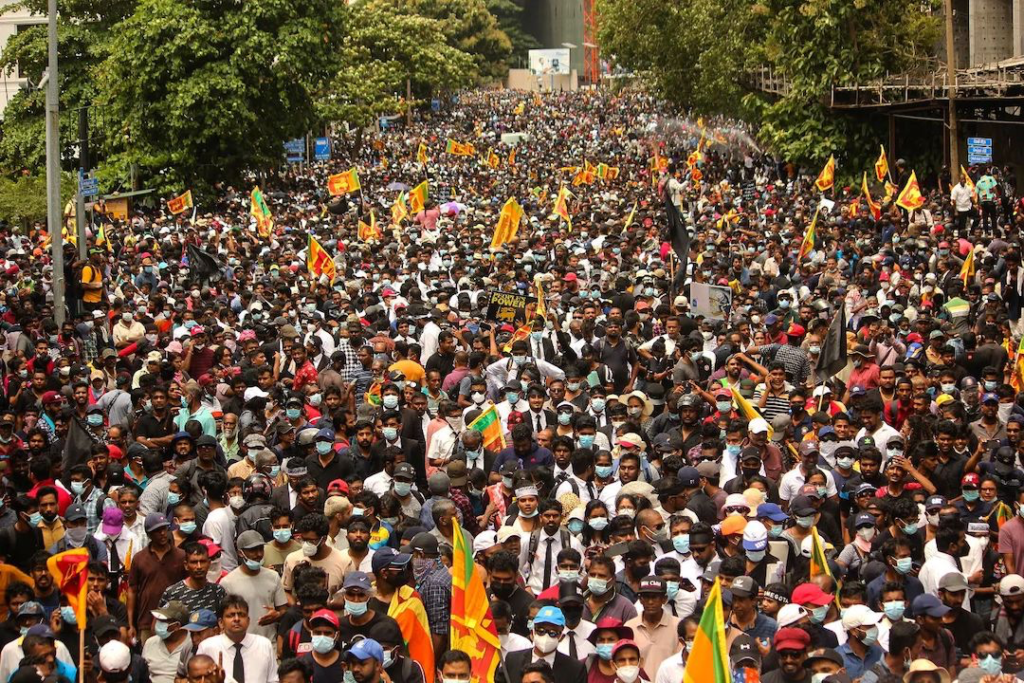
The same pattern of cowardice and betrayal emerged across South Asia. In Sri Lanka, while the Janatha Vimukthi Peramuna (JVP) issued a statement on January 4 condemning the U.S. assault and declaring that “powerful countries do not have the right to violate this principle” of sovereignty, the NPP government adopted a markedly different position. Foreign Minister Vijitha Herath, a politburo member of JVP, explicitly distinguished between the party and NPP government, stating that while “political parties can have their own opinions,” the government “represents all sides” and must work through UN mechanisms. The official Foreign Ministry statement expressed mere “deep concern” while urging “dialogue” and “peaceful resolution”—the language of diplomatic evasion that refuses to name the aggressor or mobilize popular opposition. This split exposes the fundamental contradiction at the heart of bourgeois nationalist governance: the party that once postured as anti-imperialist now defends defense cooperation agreements with Washington and New Delhi, fearful of jeopardizing its integration into imperialist economic and military frameworks.
India’s Modi government demonstrated even more abject servility. The Ministry of External Affairs issued a statement over 24 hours after the assault expressing “deep concern” but conspicuously avoiding naming the United States or condemning the military strikes. India’s response on 04 January carefully avoided naming Washington, instead calling vaguely for “all concerned to address issues peacefully through dialogue.” The Modi government’s calculation is transparent: trade negotiations with Trump, potential access to Venezuelan oil payments owed to ONGC, and strategic partnership with Washington take precedence over any principled opposition to imperialist aggression.
Pakistan’s military-dominated regime and Bangladesh’s U.S.-backed interim government maintained predictable silence, offering no statements of condemnation. Across South Asia, bourgeois nationalist parties and governments—whether presenting themselves as left-progressive, Hindu-chauvinist, or Islamist—demonstrated their organic incapacity to resist imperialism when confronted with its naked assertion of force.
This confirms Leon Trotsky’s theory of permanent revolution and his analysis of the incapacity of the national bourgeoisie in dependent countries to carry forward anti-imperialist or democratic tasks. In Results and Prospects (1906) and The Permanent Revolution (1928), Trotsky demonstrated that the belated development of capitalism in backward countries produces a bourgeoisie organically tied to imperialism and landed property, terrified of independent working-class mobilization, and therefore incapable of leading struggle against foreign domination. The Pink Tide represents merely the latest chapter in Latin American bourgeois nationalism’s history of accommodation and betrayal.
Right-wing and fascistic governments went further, openly celebrating the assault. The Brazilian far-right, architects of the January 8, 2023 coup attempt in Brasília, seized on the operation to advance their own dictatorial aims under newly favorable international conditions. Trump’s threats against Colombian President Petro—“He has to watch his ass”—and declarations that Cuba and Nicaragua “will not survive” his administration signal that the Venezuela operation establishes precedent for unlimited violence throughout the hemisphere.[10]
The Counter-Revolutionary Role of the Pseudo-Left
Pseudo-left currents, reformist parties and NGOs that locate opposition to imperialism in international law, diplomatic institutions or alliances with rival capitalist powers play an objectively counter-revolutionary role. They funnel popular anger into impotent appeals and national strategies that leave capitalist property relations—and imperialist domination—fundamentally untouched.
Germany’s Left Party exemplified this tendency. While formally condemning Trump’s actions as “state terrorism,” the party directed its criticism not against imperialism but toward demanding that Europe assert its own great-power ambitions more aggressively. As the WSWS analyzed, the Left Party “criticises Chancellor Merz not from the left, but from the right,” calling for sanctions against the United States and “a concrete European plan” to counter American actions—thereby functioning as “aggressive apologists for German and European imperialism.”[11] Similar patterns emerged across pseudo-left organizations internationally, each subordinating working-class opposition to their respective national bourgeoisies’ geopolitical interests.
These tendencies propagate fatal illusions: that imperialism can be restrained through appeals to bourgeois institutions, that “multipolar” capitalist competition offers progressive alternatives, that identity politics or reformist parliamentarism can substitute for independent class struggle. As the WSWS emphasized, “the struggle against war is inseparably linked to the struggle against its cause: the capitalist system. It must be led by the working class, with the aim of building an independent political movement, overcoming capitalism and reorganising society on the basis of social needs rather than private profit.”[12]
The Domestic Dimension: War Abroad, Dictatorship at Home
The turn to militarism overseas proceeds inseparably from authoritarian consolidation domestically. The WSWS identified this essential connection: “the same illegality, the same ruthlessness, the same criminality that is expressed in the kidnapping of Maduro is expressed in the assault on democratic rights at home—the mass deportations, attacks on the press, purging of the civil service, deployment of the military against the population.”[13] Perpetual war finances and is employed to legitimize police-state measures while directing social anger outward rather than against the ruling class itself.
This pattern reflects objective necessity for the oligarchy. As Marx demonstrated, capitalism’s internal contradictions generate both external expansion and internal repression. Trump represents “a criminal oligarchy that has amassed its wealth through fraud, speculation and plunder… the chosen instrument of the American ruling class, a gangster vomited up by the oligarchy to enforce policies that can no longer be pursued through democratic or legal means.”[14] The simultaneous assault on Venezuela and acceleration of authoritarian measures domestically express unified class interests of finance capital confronting deepening crisis.
Revolutionary Tasks and the Road Forward
The assault on Venezuela demonstrates that the fight against imperialist war is inseparable from the fight against capitalism itself. Defensive measures are urgent: mobilize mass anti-war action, build rank-and-file committees in workplaces to oppose military preparations, forge international links of workers’ solidarity—especially between U.S. workers and their Latin American class brothers and sisters.
But defensive measures must connect to revolutionary perspective. The expropriation of the banks and multinationals, formation of workers’ councils and workers’ governments, construction of sections of the International Committee of the Fourth International (ICFI) to lead an international socialist alternative—these constitute the only realistic defense of oppressed nations and working people everywhere. As the WSWS stated: “The answer must be to make 2026 a year of class struggle and the development of a mass movement for socialism. The fight against war is a fight against the capitalist system that breeds it.”[15]
The objective conditions for revolutionary struggle are maturing with extraordinary rapidity. Across the United States, the kidnapping of Maduro has provoked widespread anger and concern among workers in factories and workplaces. This opposition must be organized on independent class foundations, rejecting all factions of the bourgeoisie and pseudo-lefts that secure capitalism’s rule. Latin American workers must orient not toward their “own” national bourgeoisies but toward their class brothers and sisters internationally in unified struggle to overthrow imperialism.
Only through the independent political mobilization of the international working class and the oppressed masses, armed with a Marxist program and the historical lessons embodied in the ICFI, can the descent into barbarism and annihilation be halted and the conditions created for genuine human emancipation through world socialist revolution.
References:
[1] “Oppose Trump’s criminal invasion of Venezuela! Release Maduro!” WSWS, 4 January 2026, <https://www.wsws.org/en/articles/2026/01/04/avdu-j04.html>
[2] “US imperialist bandits parade kidnapped Maduro in show trial,” WSWS, 6 January 2026
[3] “Trump and Miller’s ‘iron law’ of imperialist barbarism,” WSWS, 7 January 2026, <https://www.wsws.org/en/articles/2026/01/07/erjx-j07.html>
[4] “After Venezuela attack: White House threatens Venezuelan acting president, Cuba and Greenland,” WSWS, 5 January 2026, <https://www.wsws.org/en/articles/2026/01/05/crzb-j05.html>
[5] “Trump and Miller’s ‘iron law’ of imperialist barbarism,” WSWS, 7 January 2026
[6] Ibid.
[7] Ibid.
[8] “US imperialist bandits parade kidnapped Maduro in show trial,” WSWS, 6 January 2026 , <https://www.wsws.org/en/articles/2026/01/06/zyve-j06.html>
[9] “Latin America’s bourgeois governments bow to US attack on Venezuela,” WSWS, 6 January 2026, <https://www.wsws.org/en/articles/2026/01/06/slwp-j06.html>
[10] “Oppose Trump’s criminal invasion of Venezuela!” WSWS, 4 January 2026
[11] “After Trump’s attack on Venezuela: Germany’s Left Party supports European imperialism,” WSWS, 7 January 2026, <https://www.wsws.org/en/articles/2026/01/07/sfqt-j07.html>
[12] Ibid.
[13] “Trump and Miller’s ‘iron law’ of imperialist barbarism,” WSWS, 7 January 2026
[14] Ibid.
[15] “Oppose Trump’s criminal invasion of Venezuela!” WSWS, 4 January 2026