This political report for the week of March 29—April 04, 2026, is compiled by thesocialist.lk based on coverage from the World Socialist Web Site (WSWS).
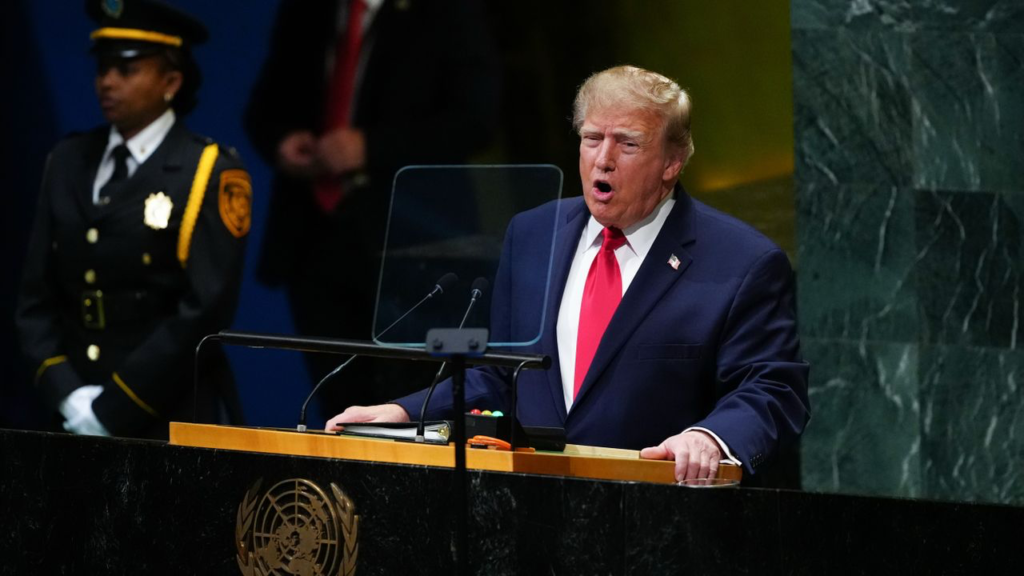
President Donald Trump arrives from the Blue Room to speak about the Iran war from the Cross Hall of the White House on Wednesday, April 1, 2026, in Washington. (AP Photo/Alex Brandon, Pool) [AP Photo]
I. Imperialist War on Iran: Escalation Toward Regional Catastrophe
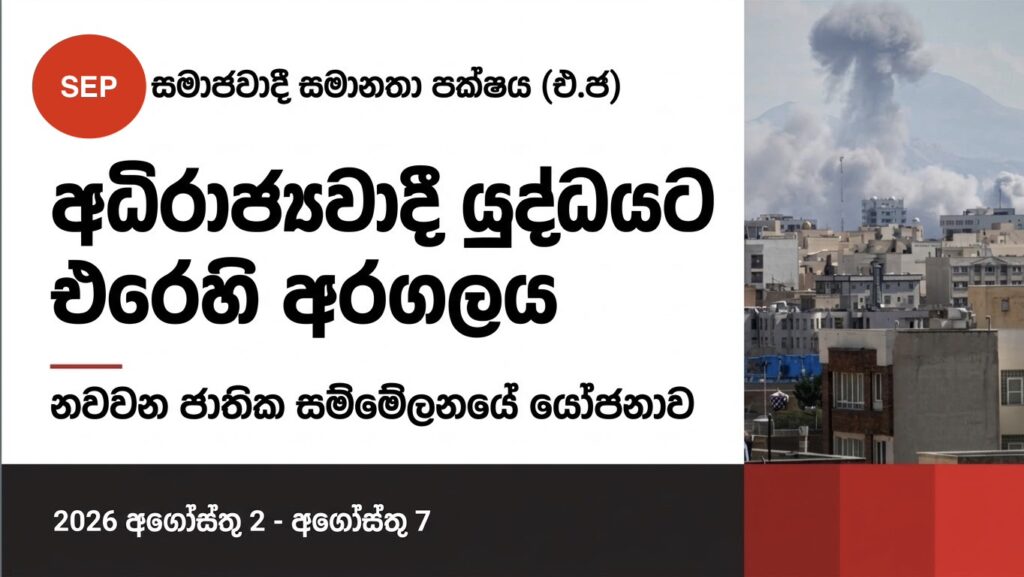
The defining development of the week was the accelerating and increasingly catastrophic US-Israeli war on Iran, now entering its fifth week. On 31 March, as thousands of Marines, paratroopers and additional ground forces arrived in the Gulf region and B-52 bombing missions commenced, President Trump threatened publicly to “obliterate” Iran’s electric grid, oil wells, desalination plants and bridges—in his own words, to bring the country “back to the Stone Ages.” The systematic assassination of Iran’s political and military leadership, the destruction of over 61,000 homes, 500 schools, and the killing of more than 6,500 civilians confirm the criminal and genocidal character of this war of aggression.[1]
The escalation reached a new threshold on 4 April, when Iranian forces shot down a US F-15E and an A-10 aircraft, prompting US special forces to conduct a rescue operation inside Iranian territory. The incident took place alongside massive military deployments—Marines, airborne brigades and three carrier strike groups—signalling preparations for a possible ground invasion.[2] The unspoken strategic aim of the war, as WSWS analysis made clear, extends beyond Iran: the US seeks to strangle China’s access to Gulf oil and shipping routes, targeting Beijing’s economic foundations as part of its broader drive for global hegemony.[3]
The imperialist alliance showed signs of fracture. Italy denied US access to its Sigonella air base, citing parliamentary procedural requirements—a reflection of domestic anti-war mass sentiment threatening the Meloni government. Britain convened a forty-nation virtual summit on the Strait of Hormuz crisis amid a public breakdown of relations with Washington, as European powers confronted both the economic panic of closed shipping lanes and their own inability to act independently. These manoeuvres are tactical, not pacifist: all European powers remain integrated into the structures of US military imperialism and are accelerating their own rearmament programmes.
The war’s economic reverberations struck Asian economies with a double blow: surging oil prices and currency falls against the dollar, producing capital outflows, inflationary pressure and stock market declines. India, New Zealand, and smaller economies across Asia-Pacific confronted severe social disruption. Australia, meanwhile, was exposed as an active participant. The Albanese Labor government—while publicly denying any ground involvement—secretly deployed approximately 90 SAS commandos to the Al Minhad Air Base in the UAE, in addition to an E-7A Wedgetail advanced battle management aircraft, 85 military personnel, air-to-air missiles, and full Pine Gap intelligence integration.[4] The government also banned some 7,000 Iranian nationals holding tourist visas from entering Australia under emergency powers—a cynical deployment of immigration policy to stoke chauvinism.
The ICFI gave powerful political expression to mass opposition. David North, chairman of the WSWS International Editorial Board, filmed a statement at the Nuremberg Palace of Justice condemning the war as a crime against peace—the same legal category established by the Nuremberg Tribunal—which rapidly spread internationally.[5] North’s subsequent book presentations in Leipzig, Berlin and Nuremberg on Where Is America Going? Fascism or Socialism? drew large, engaged audiences of students and workers, confirming the growing popular openness to socialist anti-war politics.
II. The “No Kings” Protests and the Crisis of Political Leadership
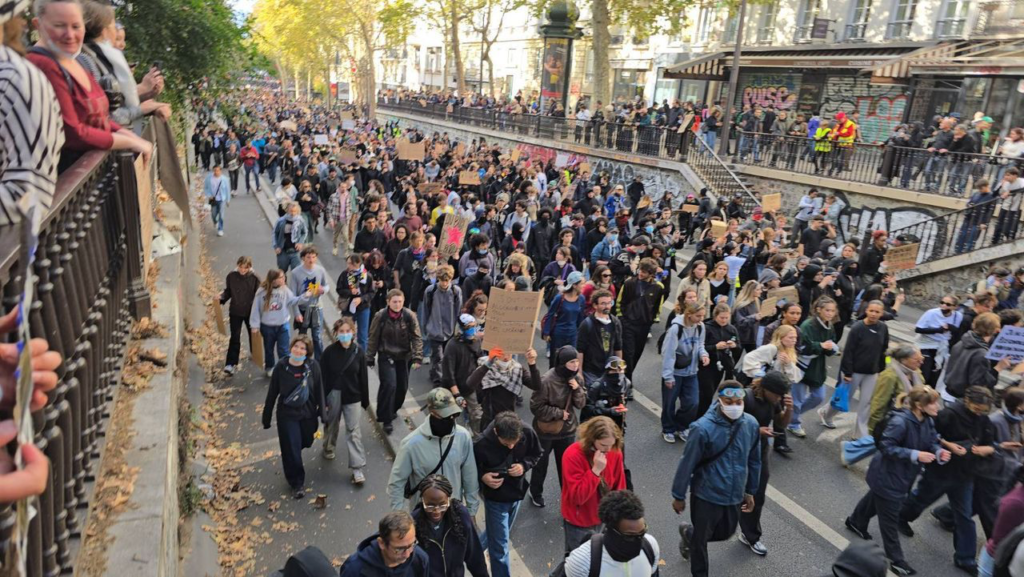
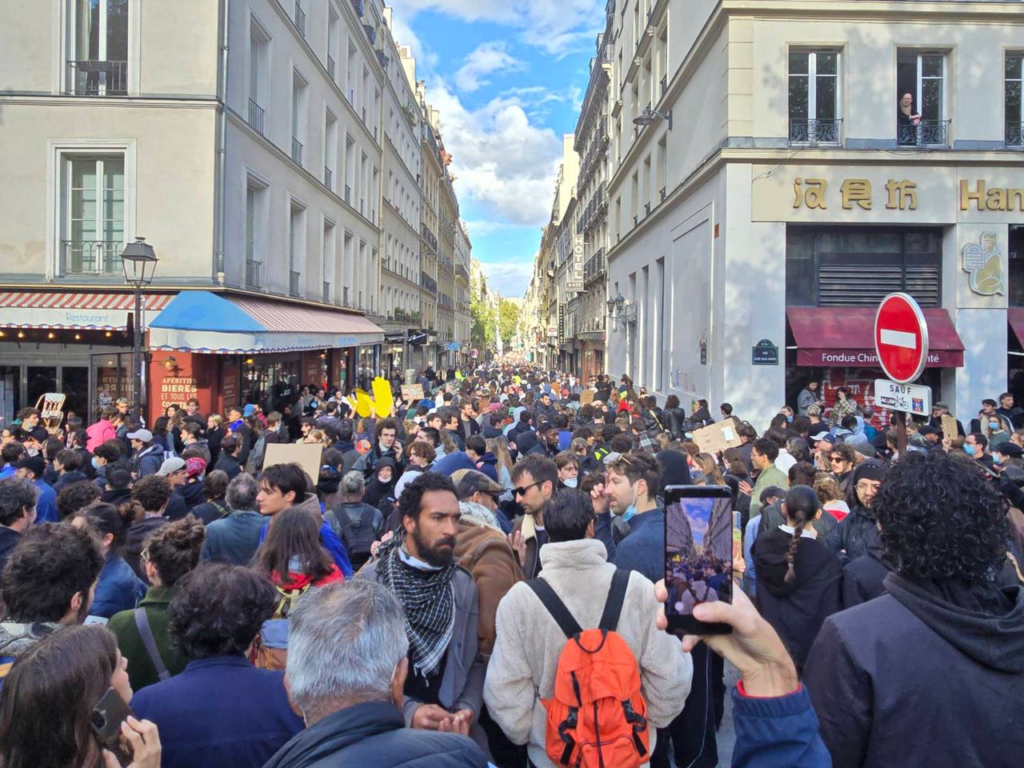
The third round of “No Kings” demonstrations on 28 March drew an estimated eight million people across the United States in what was the largest single-day protest in American history. Rallies in over 3,300 locations—including 350,000 in New York, 200,000 in Chicago, and 180,000 in Boston—expressed deep popular opposition to the Trump administration’s drive toward dictatorship and war. Sixty-two percent of Americans “strongly oppose” sending ground troops to Iran. No war in American history has been so unpopular at its outset.[6]
The WSWS drew the essential political lessons: the scale of mass opposition stands in sharp contrast to the absence of independent working-class leadership. Democratic Party politicians and union officials systematically downplayed or ignored the war at the rallies, channelling the movement into electoral remedies. AFT President Randi Weingarten captured the Democratic programme in a single phrase: “No kings today and we vote in November.” David North was physically barred from speaking at the Nuremberg rally by Democratic Party operatives who refused to allow any condemnation of the Iran war. The Democratic Party, which funded the war with its $839 billion defence budget vote, serves not as an opponent of Trump but as his enabler. Any subordination of the mass movement to the Democratic Party will prove fatal to the struggle against fascism and war.
III. Trump’s War Budget: Social Counter-Revolution to Finance World War
On 4 April, the Trump administration unveiled its FY2027 budget blueprint—a document of historic class significance. The White House sought congressional approval for approximately $1.5 trillion for military spending, a 40 percent increase over already record Pentagon allocations, to be financed by sweeping cuts to Social Security, Medicare, Medicaid, childcare and domestic agencies.[7] Trump made the class logic explicit at a White House Easter lunch, declaring that the government could not afford daycare, Medicare or Medicaid because it “needed the money to wage war”—dismissing these programs as “little scams.” This is a blueprint for financing world war through social counter-revolution at home.
The structural financial system fragility that will carry this burden was laid bare in a major WSWS analysis on 31 March. Financial markets showed growing instability as the war entered its fifth week: the S&P 500 had fallen 7 percent for the month, with both the NASDAQ and Dow in correction territory. Bond yields spiked. A Bank of America survey of global fund managers found 63 percent identified private equity and private credit as the most likely source of a systemic financial event, echoing pre-2008 alarms. The war is not a market disruption but the accelerant of a structural crisis rooted in overleveraged finance, speculative bubbles and military expenditures that will be paid by the working class through austerity and inflation.[8]
Pete Hegseth’s financial advisor was exposed by the Financial Times as having placed roughly $9.4 million into defence contractors and ETFs in the weeks immediately before the opening strikes on Iran—positions that surged approximately 38 percent after the war began. The Pentagon replied with denials and threats rather than disclosures. The episode confirms that imperialist war is simultaneously a vehicle for private enrichment and a fusion of state, military and finance capital that expresses the rotten, criminal character of capitalist rule.[9]
IV. Authoritarian Consolidation and the Attack on Democratic Rights
The Trump administration’s domestic authoritarian consolidation proceeded in parallel with the war. Armed ICE officers were deployed to airports nationwide following the DHS funding crisis; congressional action by both parties moved to fund DHS components while excluding any meaningful restraint on ICE or Border Patrol. The deployment—facilitating data-sharing with TSA and normalising armed federal agents in civilian settings—represents a rehearsal for the broader militarisation of domestic policing. Trump also advanced measures to restrict citizenship and voting rights, framing these as wartime national security necessities.
The criminalisation of political dissent intensified. In Britain, Palestine solidarity activists Ben Jamal and Chris Nineham were convicted in prosecutions that fit a wider state campaign to suppress anti-genocide protest. In the United States, the assassination plot against Palestinian activist Nerdeen Kiswani—a New Jersey man affiliated with a JDL-type network who plotted to firebomb her home—was directly connected to months of coordinated harassment, bounties and public incitement by extremist Zionist organisations, conducted in an atmosphere of state-cultivated impunity for political violence.[10] A Chinese postdoctoral researcher at the University of Michigan took his own life after interrogation by federal agents, in a pattern of xenophobic prosecution and harassment of Chinese scholars that weaponises racism and criminalises scientific collaboration.
In Canada, the Carney Liberal government appealed to the Supreme Court to reverse lower court rulings that had found the 2022 invocation of the Emergencies Act—including the freezing of bank accounts—unconstitutional. The appeal is a class political move to preserve a permanent toolkit for suppressing mass dissent. Germany’s SPD Finance Minister Lars Klingbeil unveiled an “Agenda”-style programme attacking pensions, welfare and labour protections, echoing Schröder’s Agenda 2010, coordinated with Chancellor Merz to finance rearmament through social cuts. The SPD, historically presented as a workers’ party, acts openly as an instrument of capitalist restructuring and militarism.
V. Class Struggle: Rank-and-File Rebellion and Bureaucratic Containment
The most significant labour development of the week was the 96.2 percent rejection by Nexteer auto parts workers in Saginaw, Michigan, of a UAW-backed concessions contract that would establish a “third class” wage tier at $19.05/hour for new hires, expand two-tier pay, and raise healthcare costs.[11] The 1,300 workers produce steering systems for the Chevrolet Silverado, GMC Sierra, Ford F-150 and Dodge Ram—occupying a strategic node in the global supply chain. UAW presidential candidate Will Lehman called for the immediate formation of a Nexteer rank-and-file committee, strike preparation, and solidarity from Big Three assembly workers refusing to handle scab parts.[12]
Separately, approximately 150 workers at Freudenberg-NOK in Findlay, Ohio, struck for higher wages and healthcare after UAW Local 1327 talks collapsed. The plant supplies GM, Ford and Stellantis; workers hold strategic leverage to disrupt assembly chains. The UAW bureaucracy failed to organise wider support.
The Bath Iron Works naval shipyard strike—engineers and designers at a key destroyer manufacturer—was shut down by the UAW bureaucracy, which ratified a multi-year contract while framing concessions as patriotic necessity. The Teamsters pre-empted a threatened strike by 6,000 DHL workers with a last-minute tentative agreement offering a nominal 20 percent wage rise over four years, while leaving automation and precarious conditions largely intact. Germany’s IGBCE union concluded chemical industry bargaining that freezes wages for nine months and delivers only 2.1–2.4 percent nominal increases from 2027—a real wage cut amid ongoing mass layoffs. Workers’ Struggles roundups documented rising industrial unrest across Asia, Australia and the Americas, reflecting the objective deterioration of living standards under the inflationary impact of the war.
The pattern across all these disputes is identical: workers display readiness and leverage; union bureaucracies act as industrial stabilisers for capital, containing struggles, brokering sellouts and subordinating workers to war production and corporate profit. The formation of democratically controlled rank-and-file committees, independent of the apparatus, is the central organisational task.
VI. The Bankruptcy of Pseudo-Left Reformism
The week furnished further evidence of the political bankruptcy of pseudo-left formations internationally. In Canada, Avi Lewis won the NDP leadership on a “left populist” platform promising to “fight the billionaire class”—while supporting NATO policy on Ukraine and intending to cooperate with right-wing provincial NDP governments, leaving capitalist property relations intact.[13] The NDP’s historical function is to contain working-class struggle within parliamentary reformism and union bureaucratic control; Lewis’ victory will channel worker unrest into parliamentary illusion.
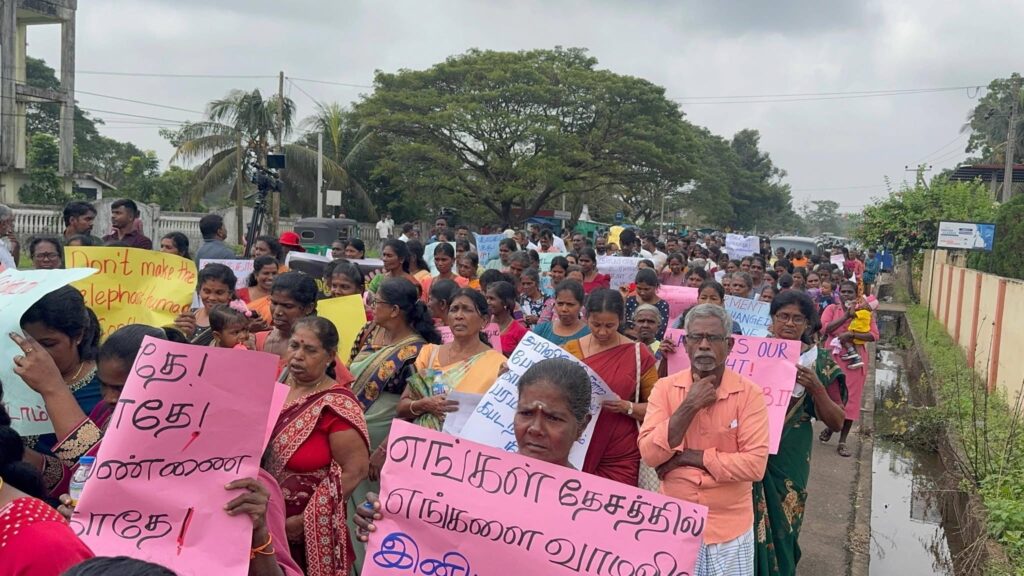
In Mexico, the Movement of Socialist Workers (MTS) and allied organisations channelled a growing strike wave into support for US-backed “independent” unions rather than independent rank-and-file organisation, functioning as a pseudo-left cover for pro-imperialist union apparatuses. In Sri Lanka, major Tamil bourgeois parties either tacitly supported or remained silent on the US-Israeli assault on Iran, consistent with their long record of appeals to imperialist powers rather than mobilising working-class struggle.[14] In Turkey, a joint statement by eleven parties calling for “peace and democracy” avoided any principled opposition to US-Israeli aggression—pacifist opportunism that channels workers into elite mediation rather than independent class struggle.
Summation
The week’s developments reveal, with exceptional clarity, the single political reality confronting the international working class: capitalism in crisis is driving imperialist war, social counter-revolution and authoritarian consolidation simultaneously. The Trump administration’s genocidal war on Iran, its $1.5 trillion war budget financed by gutting social programmes, the mass criminalisation of dissent, and the parallel militarisation of European and Australian capitalism—these are not aberrations but expressions of a system in mortal crisis.
The mass anti-war sentiment expressed in the “No Kings” protests of 28 March, the historic rejection of the Nexteer sellout, the strikes spreading across multiple continents—all reflect the objective conditions for the development of a powerful working-class movement. But the decisive question is that of political leadership. Social democratic parties (SPD, Labor), pseudo-left formations (NDP, MTS, DSA), and trade union bureaucracies act uniformly to contain and betray this movement. Only the building of rank-and-file committees, independent of the apparatus, linked internationally through the IWA-RFC, and guided by the programme of the ICFI, can transform the growing mass opposition into the political force required to end imperialist war and the capitalist system that produces it.
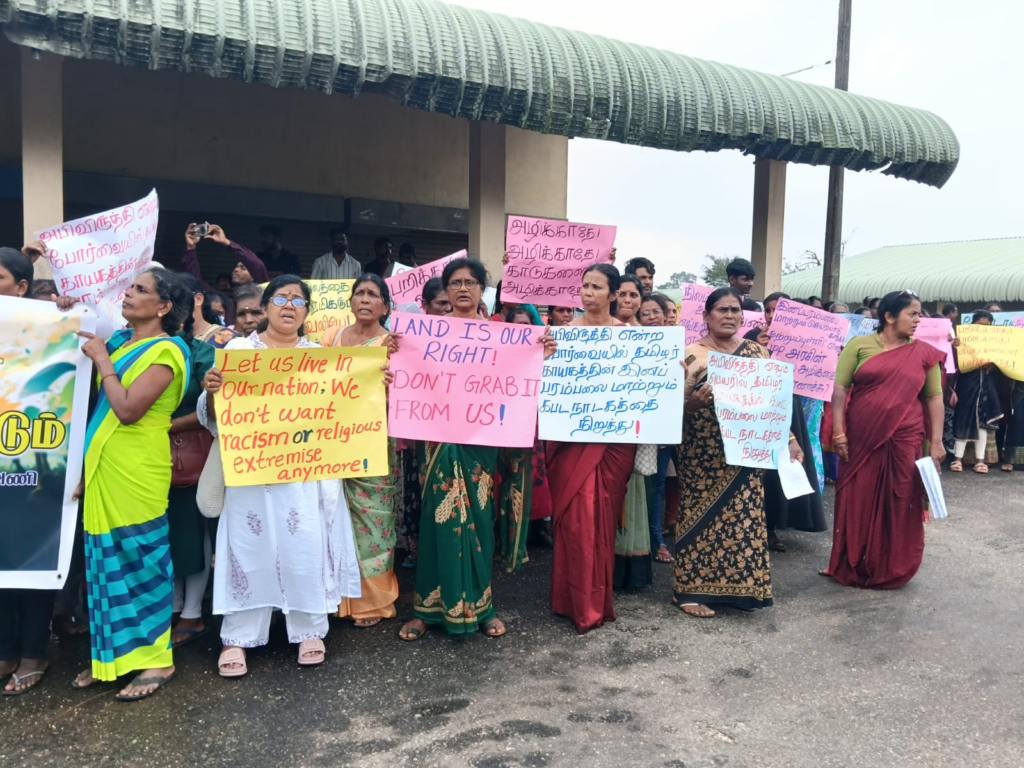
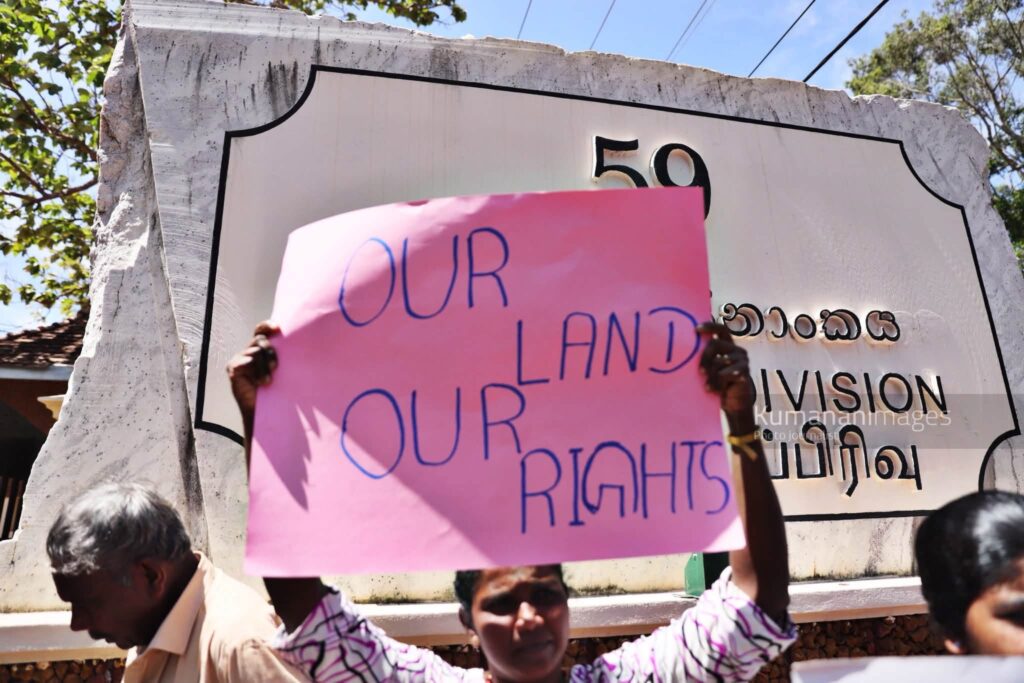
Emergency Statement by the Editorial Board of theSocialist.lk and the Socialist Lead of Sri Lanka and South Asia (SLLA)
President Donald Trump speaks with reporters in the James Brady Press Briefing Room at the White House, Monday, April 6, 2026, in Washington. [AP Photo/Mark Schiefelbein]
Today, 7 April 2026, US President Donald Trump posted on Truth Social: “A whole civilization will die tonight, never to be brought back again. I don’t want that to happen, but it probably will.”
This is not political bluster. This is the public declaration of genocidal intent by the head of state of the most heavily armed military power in history — a power that possesses thousands of nuclear weapons and has already been bombing Iran for forty days.
As the World Socialist Web Site stated today in its emergency perspective: “Every word Trump said implicates the government of the United States in a crime of Hitlerian proportions. He says openly what the Nazi leaders discussed behind closed doors.” Trump has already threatened to destroy every power plant, every bridge, every desalination facility — the entire infrastructure of civilised life for 93 million people. He has declared this will be accomplished “over a period of four hours.” He was asked by a reporter whether this constitutes war crimes. His answer: “No, not at all.”
Iran is the heir to one of the oldest and most profound civilisations in human history. Thousands of its civilians — including 168 children killed in a US missile strike on the Shajareh Tayyebeh girls’ school on the first day of the war — have already been slaughtered. Hospitals, universities, residential districts and schools have been systematically bombed. The logic of escalation, as the WSWS has warned, is inexorable: from intensified bombing to ground invasion, to the occupation of Iranian cities, and ultimately — in the face of mounting US casualties and military failure — to the resort to nuclear weapons.
This is not a hypothetical. This is the trajectory of a war that has been underway for forty days, escalating each week, with no serious force within the capitalist political system placing any brake upon it.
The Democratic Party of the United States — which funded the war with its own vote for the $839 billion defence budget — now calls Trump a “madman” and “unhinged.” But not a single Democrat has proposed concrete action to halt the war. They are complicit. They are terrified that any genuine mass mobilisation against the war would not stop at the war — it would raise the entire question of the distribution of wealth, the power of the financial oligarchy, and the social order both parties exist to defend.
The parliaments of Europe, the governments of Australia, Canada and the United Kingdom — all are implicated. Australia has secretly deployed SAS commandos, Wedgetail battle-management aircraft and its Pine Gap intelligence station to the war. Britain hosts the Hormuz summit. Germany rearming. The United Nations Security Council paralysed. International law demolished.
The capitalist state system has proved, beyond any doubt, that it cannot stop this war. Only the international working class can.
theSocialist.lk and the Socialist Lead of Sri Lank and South Asia (SLLA) aligned with the International Committee of the Fourth International, calls on workers, youth and all those in opposition to this criminal war:
Strike: Workers in the United States, Britain, Australia, Germany and across the world must take immediate industrial action — in ports, airports, logistics hubs, defence manufacturing plants and transport networks — to deny the war machine the means to function. The AFL-CIO, the UAW, the TUC and every major trade union federation has maintained criminal silence. Workers must act through their rank-and-file committees, independently of the bureaucracy, to halt the flow of arms, fuel and supplies to this war.
Occupy: Workers and youth must occupy workplaces, campuses and public spaces — not to petition governments that have proven themselves servants of the war, but to assert the independent political power of the working class. The eight million who marched on 28 March in the United States alone must be transformed from a protest movement into an organised political force with a program, a strategy and a leadership.
Organise internationally: The war on Iran is not a national question. It is a world question. Workers in Sri Lanka, workers in South Korea, workers in Japan — whose governments are cutting separate deals with Iran to secure oil supplies even as the bombs fall — must join this struggle. The IRGC’s warning that it will “deprive the US and its allies of the region’s oil and gas for years” is a measure of how close the world stands to an economic and military catastrophe of civilisational proportions. The only answer is international working-class solidarity, organised through the International Workers Alliance of Rank-and-File Committees (IWA-RFC).
Trump’s threat today must be understood for what it is: a declaration of war not merely against Iran, but against all the accumulated gains of human civilisation — against international law, against the prohibition on targeting civilian infrastructure, against the most fundamental norms of humanity that were codified after the horrors of World War II and the Nazi Holocaust. As David North stated at the Nuremberg Palace of Justice: this war meets every legal and political criterion established at the Nuremberg Trials for a “crime against peace” — the supreme international crime.
If today, 7 April 2026, becomes the date on which Iranian civilisation is destroyed, it will also be the date that the capitalist world order signs its own death warrant in the eyes of humanity. It must instead become the date on which the international working class rises to say: Not in our name. Not with our labour. Not with our silence.
The Socialist Equality Party (SEP) sections of the ICFI are organising this resistance. We call on all workers, youth and socialist-minded people in Sri Lanka, South Asia and internationally to join them.
Demand the immediate, unconditional cessation of the US-Israeli war on Iran.
Demand the withdrawal of all imperialist forces from the Middle East.
Build rank-and-file committees. Strike. Organise. Fight for socialism.
Solidarity With the people of Iran, Palestine, Lebanon, Cuba — International Working Class Unity!
Hands Off Iran — Stop Imperialist War!
No More Genocide — Stop Trump’s War Machine!
Workers’ Power Against War and Austerity!
Ports Closed to War — Workers Unite!
Not One Penny for War — Fund Hospitals, Schools, Jobs!
Imperialist and Zionist Troops Out from the Middle East!
Stop the War Criminals — Nuremberg for Imperialist Aggression!
This political report for the week of March 22–28, 2026, is compiled by theSocialist.lk based on coverage from the World Socialist Web Site (WSWS).
I. Imperialism and War: The Iran Catastrophe Deepens
The dominant political development of the week was the further catastrophic escalation of the US-Israeli war against Iran, now entering its fourth week. On Saturday, 22 March, President Trump posted an ultimatum on his social media platform demanding that Iran “fully open, without threat, the Strait of Hormuz within 48 hours,” threatening to “obliterate” Iran’s power infrastructure, beginning with its largest power plant. The WSWS characterised this as a threat of genocidal violence without precedent in the post-World War II era, comparable only to the Truman administration’s nuclear ultimatum to Japan in 1945.[1]
The scale of the threat was not rhetorical. The Damavand Combined Cycle Power Plant — Iran’s largest, located 35 kilometres from Tehran’s centre — supplies electricity to approximately ten million people. Any strike on the Bushehr Nuclear Power Plant, Iran’s sole operating commercial reactor, risks catastrophic radioactive release. The IAEA Director General has warned that even severing the facility’s power supply lines could trigger a reactor meltdown. Iran responded by declaring all US and Israeli energy infrastructure across the region as legitimate targets, with Gulf states whose populations depend on electricity-powered desalination plants facing a potential humanitarian catastrophe of their own.
By week’s end, the trajectory had moved unambiguously toward ground invasion. Trump, in an interview with the Financial Times, declared openly: “Maybe we take Kharg Island, maybe we don’t. We have a lot of options.” The Wall Street Journal reported that the Pentagon was preparing for “weeks of ground operations,” and approximately 1,000 soldiers from the 82nd Airborne Division were reported to be readying for deployment. The 82nd Airborne’s Immediate Response Force — a 3,000-strong rapid-deployment brigade — was identified by the New York Times as a candidate force for seizing Kharg Island, through which 90 percent of Iran’s oil exports pass.
Defence Secretary Pete Hegseth provided the clearest statement of the administration’s actual position: “We negotiate with bombs. You have a choice as we loiter over the top of Tehran.” This cynical formulation — coupling public talk of negotiations with accelerating military preparations — exposes the character of US imperialism: diplomacy as a screen for war, with mass violence as both means and end.
In Lebanon, Israeli Prime Minister Netanyahu ordered a further expansion of the “security zone” in the south. More than 1,238 people have been killed and 3,500 wounded since the Israeli ground assault began on 2 March. More than 1.2 million people have been displaced. Three journalists were killed in a targeted Israeli airstrike on a marked press vehicle in Jezzine. Human rights documentation through Day 25 of the Iran war recorded at least 6,530 killed, including 640 confirmed civilians.
The WSWS insists that these are not individual acts of militarist excess but the systematic expression of a capitalist imperialist order in deep crisis, using war to secure control of energy resources, chokepoints and global hegemony. The Newroz 2026 statement of the Sosyalist Eşitlik Partisi (Turkey/SEP) — issued on 22 March — placed the war in this broader framework, linking imperialist aggression against Iran, Lebanon and Gaza to the political interests of regional bourgeoisies and the strategic requirements of US world dominance. The statement called for the building of rank-and-file committees across factories, ports, mines, hospitals and schools, the withdrawal of all US forces from the Middle East, the closure of NATO bases including those in Türkiye, and the formation of a Socialist Federation of the Middle East.[2]
II. The Political Bankruptcy of Reformism
Spain provided the week’s starkest illustration of pseudo-left capitulation to imperialism. The PSOE-Sumar coalition — which weeks earlier had revived the “No to war” slogan associated with the 2003 anti-Iraq War mass movement — announced a €1 billion military aid package for Ukraine following a meeting between Prime Minister Sánchez and Volodymyr Zelenskyy, bringing Spain’s total commitment to approximately €4 billion. The frigate Cristóbal Colón was simultaneously dispatched to the eastern Mediterranean. A token €5 billion social subsidy package — temporary tax cuts and a symbolic rent freeze attempt — was offered as political cover.[3]
The manoeuvre was transparent. The PSOE-Sumar government made this announcement against the backdrop of an unprecedented wave of industrial action across Spain: a nationwide doctors’ strike involving more than 175,000 workers, a three-day national railway strike, airport ground handling stoppages threatening to paralyse Easter travel, regional education strikes — with Catalonia’s culminating in more than 100,000 people on the streets of Barcelona — and general strikes in the Basque Country on 17 March. The working class in struggle was answered with rearmament and tokenism.
The WSWS is unequivocal: PSOE-Sumar’s anti-war posture was never anything other than a political calculation to contain domestic opposition. Its rapid re-integration into NATO war logistics — complementing Spain’s earlier facilitation of US strikes on Iran — exposes the class interests that animate such formations. Sumar, positioned as the “left” partner of the coalition, is identified as a direct instrument of imperialism, channelling dissent into manageable parliamentary terrain while voting through military budgets and suppressing class struggle.
Sri Lanka’s Frontline Socialist Party (FSP) received analogous treatment. Its call for “global people’s power” against the Iran war — superficially radical in rhetoric — was subjected to sharp political critique as pseudo-left opportunism. The FSP’s initiative, the WSWS argued, reflects a nationalist parliamentary logic that accommodates bourgeois parties and dissipates class power through appeals that refuse to break with the capitalist state. The SEP insists that genuine anti-war struggle must be grounded in proletarian internationalism and independent socialist organisation.[4]
III. Authoritarian Consolidation and Democratic Rights
The Trump administration continued its domestic militarisation offensive during the week. ICE deployments to airports in force — framed publicly as immigration enforcement — were characterised by the WSWS as a deliberate erosion of democratic norms and a rehearsal for the normalisation of federal paramilitary presence in civilian public life. The SEP connects this directly to the war drive: the same oligarchic project that prosecutes imperialist war abroad constructs the police state apparatus at home.
Australia’s Labor government provided a parallel illustration of bourgeois democracy’s hollowing out. Having lost a High Court ruling on offshore detention, the Albanese government circumvented the decision by transporting former asylum seekers to Nauru. The SEP described this as demonstrating the capitalist state’s readiness to flout its own legal constraints in order to uphold racist border regimes — which serve both capitalist labour market requirements and imperialist geopolitical alliances.
Cuba’s humanitarian crisis deepened further as a nationwide blackout struck the island amid US restrictions blocking incoming Russian fuel shipments. This is imperialist economic warfare targeting working people directly, using energy denial as a weapon of coercion.
The German city of Duisburg maintained its entry ban against Mohamedou Ould Slahi — the Mauritanian — a Guantánamo survivor and author, in a measure that exemplifies the integration of state repression, anti-democratic precedent and the ongoing brutalisation of those processed through imperialist detention machinery.
IV. Class Struggle and Bureaucratic Betrayal
Class struggle intensified across multiple fronts, with the trade union bureaucracy consistently functioning as the principal obstacle to the conversion of industrial militancy into political power.
In London, more than 300 Unite members at Stagecoach’s Bow garage struck for four days (19–22 March) against punishing rosters, inadequate rest breaks and dangerous fatigue — conditions forcing drivers to fall asleep at the wheel. Stagecoach mounted a systematic strikebreaking operation, importing replacement drivers from other cities and billeting them in hotels. Unite responded by sabotaging the action: officials called off a coordinated strike at Lea Interchange Bus Company — a Stagecoach subsidiary a few miles away — and declared a “win” based on a three-year deal pegging future increases to CPI rather than the previously demanded RPI, while leaving victimisation of union reps unaddressed. The Rail, Maritime and Transport union simultaneously suspended rolling stoppages by 1,800 London Underground drivers for closed-door talks.[5]
The WSWS analysis is direct: the union apparatus acts not as an instrument of working-class power but as a managerial layer whose function is to contain, fragment and ultimately defeat industrial resistance. The strategic response is the formation of rank-and-file committees that link garages and sectors, set non-negotiable safety demands, coordinate unified action, and raise the demand for democratic workers’ control of public transport.
In Australia, Tasmanian teachers conducted rolling statewide strikes over real-wage cuts and deteriorating conditions — the third round of action since September 2025 — while the AEU bureaucracy deliberately staggered the action by region (northwest on Tuesday, north on Wednesday, south on Thursday) to minimise its impact and prevent coordination with the simultaneous Victorian teachers’ strike. The tactic is well-established: token industrial action that creates the appearance of struggle while preserving the bureaucracy’s role as negotiating intermediary and absorber of militancy.[6]
Spain’s strike wave — the full breadth of which crossed healthcare, transport, rail, education and the public sector — demonstrated the objective depth of class anger. The Catalan education strike, supported by 90 percent of educators and culminating in 100,000 on the streets of Barcelona, is among the most significant educational mobilisations in recent Spanish history. That this emerged simultaneously with the PSOE-Sumar government’s announcement of a billion-euro military package for Ukraine underscores the central political contradiction: the same government which presides over real wage cuts and social austerity now channels resources to militarism while deploying union bureaucracies and its pseudo-left partners to contain the resistance.
V. Economic Warfare and Global Instability
The week’s economic developments were inseparable from the war drive. The Iran conflict’s threat to the Strait of Hormuz — through which roughly one-fifth of global oil passes — continued to generate financial turbulence across Asian markets. The imperialist war is simultaneously a political project and an act of structural economic destabilisation that strikes workers internationally through energy price inflation, supply chain disruption and currency volatility.
Cuba’s energy crisis — intensified by US restrictions on Russian fuel shipments — illustrates how imperialist economic coercion operates as a form of warfare targeting entire populations. The IMF, which had previously lauded Sri Lanka as an austerity “success story,” continued to provide ideological cover for the social devastation its programmes produce. These are not disconnected crises but expressions of the same capitalist order in its period of accelerating decay.
VI. The Revolutionary Tasks
The week’s events collectively underscore the axis of ICFI/SEP political analysis: war, dictatorship, austerity and bureaucratic betrayal are not separate phenomena but interlinked expressions of the capitalist system’s terminal crisis. Trump’s 48-hour ultimatum is not an aberration but the language of a ruling class prepared to obliterate the infrastructure of a nation of 90 million people to secure strategic and economic objectives. The pseudo-left formations — PSOE-Sumar, the FSP, the trade union bureaucracies — function consistently to contain and divert the social opposition that these conditions generate.
The correct working-class response — as the WSWS insists — is the building of rank-and-file committees in workplaces and communities, international coordination through the International Workers Alliance of Rank-and-File Committees, political independence from all bourgeois parties, and the construction of sections of the Fourth International to provide the revolutionary socialist leadership that the objective situation demands.
This political report for the week of March 15-21, 2026, is compiled by thesocialist.lk based on coverage from the World Socialist Web Site (WSWS).
I. Imperialism and War: The Escalating Offensive Against Iran and the Middle East
The dominant political fact of the week was the accelerating US-Israeli war against Iran and the wider Middle East, now crossing into qualitatively new and more dangerous territory. The Trump administration formally requested over $200 billion in supplemental war funding from Congress — a figure that exceeds the peak annual cost of the Iraq war and dwarfs the entire US expenditure on arming Ukraine over three years. Defence Secretary Hegseth confirmed the figure could “move” upward. This astronomical request, on top of the existing $839 billion defence budget, is not a contingency measure but a preparation: the administration is actively deliberating ground-invasion scenarios, including the seizure of Kharg Island — the hub for 90 percent of Iran’s oil exports — and the securing of Iran’s enriched uranium stockpiles.[1]
Fire and plumes of smoke rises after a drone struck a fuel tank forcing the temporary suspension of flights. near Dubai International Airport, in United Arab Emirates, early Monday, March 16, 2026. [AP Photo/AP Photo]
The USS Tripoli, carrying approximately 2,200 Marines of the 31st Marine Expeditionary Unit, was confirmed steaming through the Strait of Malacca toward the Persian Gulf. Republican senators and congressmen openly called for the seizure of Kharg Island, with Senator Lindsey Graham posting: “He who controls Kharg Island, controls the destiny of this war.” US intelligence official Joe Kent resigned his post at the National Counterterrorism Center, declaring he could not “in good conscience support the ongoing war in Iran” and stating that Iran had posed no imminent threat — a rare fissure within the ruling apparatus that nonetheless does not alter imperialism’s strategic drive.[2]
The war has already produced mass civilian casualties and cultural devastation in Iran. US-Israeli air strikes struck museums, historical sites and cultural infrastructure alongside residential areas, with Iran’s Red Crescent reporting at least 47,000 residential units destroyed. The bombing of Iran’s cultural heritage is not incidental but structural: a deliberate strategy to break social cohesion and erase national memory in order to facilitate imperial domination.
Israel’s ground invasion of Lebanon opened a new and bloody front in this expanding war. Israel moved from intensive air and artillery strikes to a large-scale ground operation across southern Lebanon, with plans — confirmed by Axios — to seize the entire area south of the Litani River. Senior Israeli officials stated openly: “We are going to do what we did in Gaza.” In Lebanon, over 960 people had been killed and at least 2,400 wounded since Israel launched its assault on 2 March, including at least 110 children. The invasion is not a “border security” action but a planned occupation modelled on the genocidal campaign in Gaza, conducted under the full military and political umbrella of Washington.[3]
European powers moved to deepen their complicity. EU governments circulated conditions for participation in operations tied to the Iran war, including “freedom of navigation” missions in the Strait of Hormuz. Iran formally warned the UK that allowing US bombers to use RAF Fairford and other British bases constituted direct participation in aggression. Germany and Canada’s prime ministers attended a massive NATO Arctic exercise explicitly preparing for confrontation with Russia, demonstrating that the drive toward generalised war is not confined to the Middle East.
India’s alignment with the imperialist aggression was also exposed: New Delhi co-sponsored UN language condemning Iran’s defensive responses while refusing to condemn US-Israeli aggression, tightening military and economic ties that reflect India’s own geostrategic ambitions within the imperialist world order.
The WSWS placed the war in its broadest context: military spending on this scale will be paid for through the destruction of social programmes. Within 24 hours of the $200 billion request being confirmed, the Postmaster General warned Congress that the USPS would run out of cash within a year. Trump’s “One Big Beautiful Bill” had already imposed $1 trillion in cuts to Medicaid over a decade, $536 billion to Medicare, and $186 billion to food assistance — the largest cut to food aid in US history. War and social devastation are two arms of a single class offensive.[4]
II. The Rising Class Struggle and the Treachery of the Union Bureaucracy
The week was marked by a powerful upsurge of working-class resistance in the United States and internationally — and by the systematic efforts of trade-union bureaucracies to contain, isolate, and betray these struggles.
The JBS meatpacking strike at Greeley, Colorado entered its third day and remained the focal point of the WSWS’s class-struggle coverage. Approximately 3,800 workers — the overwhelming majority immigrants, speaking over 50 languages — struck the largest beef plant in the US in the largest meatpacking stoppage since the Hormel strike of 1985–86. Workers walked out over poverty wages (starting at $23 an hour), murderous line speeds, dangerous chemical exposures, inadequate PPE, abusive supervision, and housing abuses affecting Haitian workers lured to the plant through TikTok advertisements. As one worker stated: “We cannot continue to be worked like slaves.”[5]
The WSWS documented the central contradiction in the strike: the enormous militant energy of the rank and file, constrained and threatened by the UFCW bureaucracy. UFCW Local 7 had already signalled it would limit the strike to two weeks; the national UFCW had deliberately kept Greeley outside the 2025 national JBS contract to isolate these workers. The company moved immediately to divert cattle to its Cactus, Texas plant, with UFCW Local 540 in Cactus offering no solidarity. The IWA-RFC issued a perspective calling on workers to form independent rank-and-file strike committees, appeal to workers at every JBS facility, and build international solidarity against this Brazilian-owned multinational whose ultimate masters are BlackRock, Vanguard, and the global financial oligarchy.[6]
BP locked out approximately 900 workers at its Whiting, Indiana refinery after workers voted 98.3 percent against the company’s “last, best and final” offer. The proposed contract would have cut hourly wages by $8–$10, eliminated 100 union positions, introduced AI with no job protections, and closed the environmental department. BP moved to operate the refinery with temporary and contract workers — a dangerous provocation in a facility surrounded by residential neighbourhoods on the shore of the world’s largest freshwater body. The WSWS called for national and international solidarity and warned that the USW apparatus would seek to impose concessions.
The UAW bureaucracy’s role as “management’s enforcer” at Columbia University was exposed when Region 9A officials threatened the student workers’ local with “receivership” if it did not narrow its demands, particularly those tied to campus democratic rights. UAW presidential candidate Will Lehman condemned the apparatus’s conduct directly, calling it subordination of worker militancy to managerial and state imperatives.
The betrayal of the Kaiser Permanente strike was confirmed and deepened. The UNAC/UHCP bureaucracy had abruptly ended the 31,000-worker walkout in California and Hawaii without a contract, without a tentative agreement, and without a membership vote. A partial “settlement” cut workers’ wage demands from nearly 30 percent to 21.5 percent over four years — barely keeping pace with inflation — and secured no retroactive pay. Workers at Kaiser subsequently staged a 25,000-strong one-day sympathy strike in defence of mental healthcare. The WSWS called for a decisive “No” vote on the sellout and the formation of rank-and-file committees at every Kaiser facility.[7]
The UAW–University of California tentative agreement was similarly denounced: weak raises, preserved no-strike clauses, and a deal rushed through without adequate membership review for 48,000 UC academic workers. The WSWS called for a “No” vote and independent rank-and-file committees.
In Los Angeles, UTLA and SEIU announced a possible April 14 LAUSD strike, with thousands of educators rallying against layoffs, understaffing, and the war on Iran. The WSWS drew the sharpest lessons from the San Francisco teachers’ betrayal, where the union bureaucracy, acting hand in glove with the Democratic Party, shut down a powerful four-day strike on the district’s terms — and within days, preliminary layoff notices were issued.[8]
Other labour flashpoints included: 6,000 DHL Express Teamsters voting overwhelmingly to authorise strike action; the RMT bureaucracy calling off planned driver strikes on the London Underground without a settlement; American Axle workers speaking out against UAW betrayals ahead of contract talks; a Ford worker, Gregory Knopf, killed at the Sharonville Transmission Plant when a press machine activated during maintenance; and Australian educators at the University of Newcastle striking over real pay cuts, with a pivotal Victorian educator strike set for 24 March.
The overall pattern confirms the WSWS analysis: the trade-union bureaucracies function not as instruments of workers’ struggle but as institutional stabilisers of capitalist rule, working systematically to isolate strikes, suppress rank-and-file initiative, and subordinate workers to management and the state.
III. Austerity, Social Catastrophe and the Crisis of Capitalism
The war has not interrupted but intensified the social catastrophe capitalism imposes on the working class. The US Federal Reserve, gripped by uncertainty as the war drives oil prices upward and disrupts supply chains, admitted that its forecasts were unreliable. Fed officials were simultaneously discussing rate cuts and potential hikes — a paralysis that reveals capitalism’s inability to reconcile competing imperatives. The social costs will, as always, be borne by workers through inflation, unemployment, and austerity.[9]
Los Angeles registered six homeless deaths per day — a direct structural product of the commodification of housing and healthcare. Michigan was struck by the worst tornadoes since 1980, killing four, exposing how decades of austerity have hollowed out public infrastructure and emergency preparedness. A meningitis outbreak in the UK, linked to chronic underfunding of public health services, claimed multiple fatalities. In Australia, the central bank raised interest rates again amid recession warnings, punishing workers for inflation. Portugal’s celebrated 2025 economic “miracle” was exposed as a bourgeois construction: corporate profits rose while wages stagnated and public services deteriorated.
These are not isolated incidents but expressions of a single, systemic reality: capitalism generates wealth for the few by imposing social catastrophe on the many.
IV. Authoritarian Consolidation and Democratic Rights
The assault on democratic rights accelerated in multiple forms during the week. In North Texas, activists were convicted under sweeping “material support for terrorism” statutes for political solidarity activities — a landmark case criminalising dissent. Amazon workers were locked out of a warehouse during a tornado warning, footage showing managers denying shelter; the company prioritised property over lives.
In Australia, Queensland police arrested two protesters for displaying the slogan “from the river to the sea” under new LNP “hate speech” legislation. In Germany, cultural censorship intensified: municipal authorities moved to exclude left-wing bookshops from fairs, and the culture minister cancelled presentation of the Booksellers’ Prize at the Leipzig Book Fair under political pressure.
Italy’s Meloni government advanced judicial “reforms” — the Nordio Reform — to separate the careers of judges and prosecutors and weaken checks on executive power. The WSWS identified this not as a “technical” adjustment but as a political preparation for state suppression of mass opposition to war and austerity. Trump’s CDL Final Rule stripped approximately 200,000 immigrant truck drivers of commercial licences — a direct attack on immigrant labour designed to discipline and destabilise worker organisation.
ICE expanded its terror: hundreds of immigrants were illegally detained in Michigan; a Haitian asylum seeker died in Pittsburgh following ICE detention; ICE raids in Vermont and Kansas continued with expanded detention infrastructure.
These measures are not aberrations but the logical expression of a capitalist ruling class preparing to crush the mass opposition it knows is coming.
V. The Political Bankruptcy of Reformism and the Defence of Trotskyism
The WSWS devoted significant coverage to exposing the political role of pseudo-left and reformist formations in disorienting the working class at a moment of acute historical crisis.
Kshama Sawant was profiled and critiqued: bold socialist rhetoric combined with repeated accommodation to municipal politics and reformist outcomes that leave capitalist power structures intact. The Australian Greens’ posturing against the Iran war was exposed as performing contained dissent within parliamentary channels, providing no genuine opposition to imperialist aggression. Canada’s NDP and affiliated unions similarly offered rhetorical opposition while remaining subordinated to the framework of the capitalist state. Spanish trade unions watered down anti-war positions to avoid antagonising the PSOE government.
The Morenoite rebrand as the Permanent Revolution Current was dissected as a revisionist manoeuvre: new branding masking continuity with nationalist and opportunist politics that dilute genuine Trotskyism and derail working-class revolutionary leadership.
The London meeting of the SEP (UK)— marking the 40th anniversary of the struggle that led to the expulsion of the Workers Revolutionary Party from the ICFI — was a centrepiece of the week’s political coverage. Addressed by David North, Chris Marsden, and Peter Schwarz, the meeting reaffirmed that the 1985–86 split was a decisive defence of Trotskyism against the petty-bourgeois, nationalist, and opportunist degeneration embodied by the Healy-Slaughter-Banda leadership. The speakers drew the direct connection between the historical struggle against revisionism and the present tasks: as the ICFI argued then and reiterated in London, the survival of revolutionary leadership requires uncompromising defence of the theory of Permanent Revolution, proletarian internationalism, and programmatic clarity. David North warned that the imperialist drive toward war — in the Middle East and beyond — aims to abolish the political gains of the 20th century and can only be answered by the international, politically independent working class.[10]
The week’s events confirm the ICFI’s perspective: the objective crisis of capitalism is driving the working class toward mass resistance. The decisive question is the construction of revolutionary leadership — the building of rank-and-file committees independent of the union apparatus, their international coordination, and the development of mass socialist parties capable of transforming class struggle into a conscious political offensive for workers’ power.